⚡ FLASH SALE: Get 60% OFF All Premium 3D & STL Models! ⚡

In the dynamic world of digital content creation, the demand for high-quality 3D assets is ever-present, particularly within the automotive sector. From breathtaking photorealistic visualizations to immersive game environments and interactive AR/VR experiences, meticulously crafted 3D car models form the bedrock of compelling projects. Among the vast array of vehicles, certain designs transcend mere transportation, becoming cultural icons. The Mercedes-Benz G-Class is undoubtedly one such icon, a vehicle that perfectly blends rugged capability with undeniable luxury and a distinctive, timeless aesthetic.
This enduring appeal extends to its digital counterparts. A well-executed 3D model of the G-Class offers unparalleled versatility for designers, developers, and artists across various industries. Today, we’ll delve deep into the technical intricacies, professional workflows, and boundless creative opportunities presented by such an asset, specifically focusing on the exceptional Mercedes-Benz G Class 2013 3D Model available at 88cars3d.com. This model isn’t just a digital representation; it’s a gateway to accelerating your projects with a pre-optimized, highly detailed, and production-ready vehicle.
Creating a truly accurate and usable 3D car model is an intricate process that demands a blend of artistic vision and technical precision. It goes far beyond simply mimicking a vehicle’s silhouette; it requires an understanding of real-world physics, material properties, and the specific demands of diverse digital pipelines. The Mercedes-Benz G Class 2013, with its distinctive boxy form and intricate details, serves as an excellent case study for what constitutes a truly premium 3D asset.
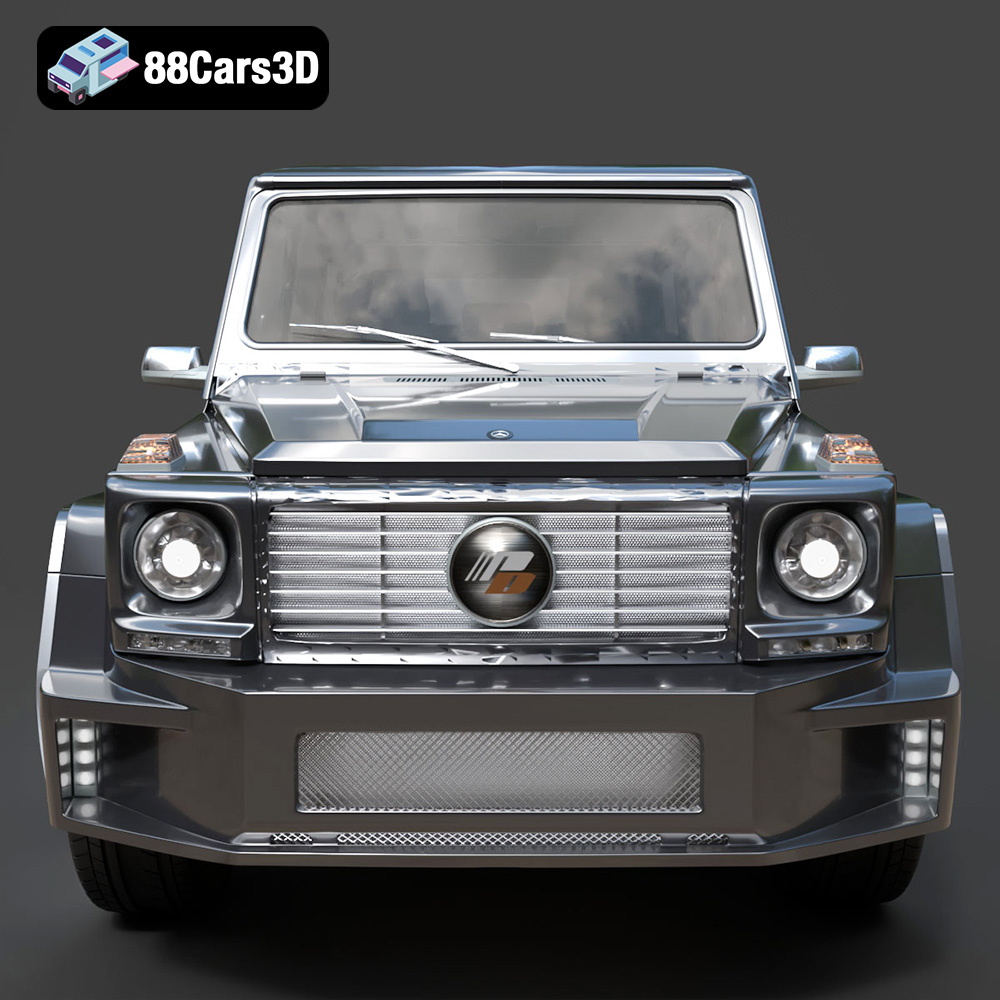
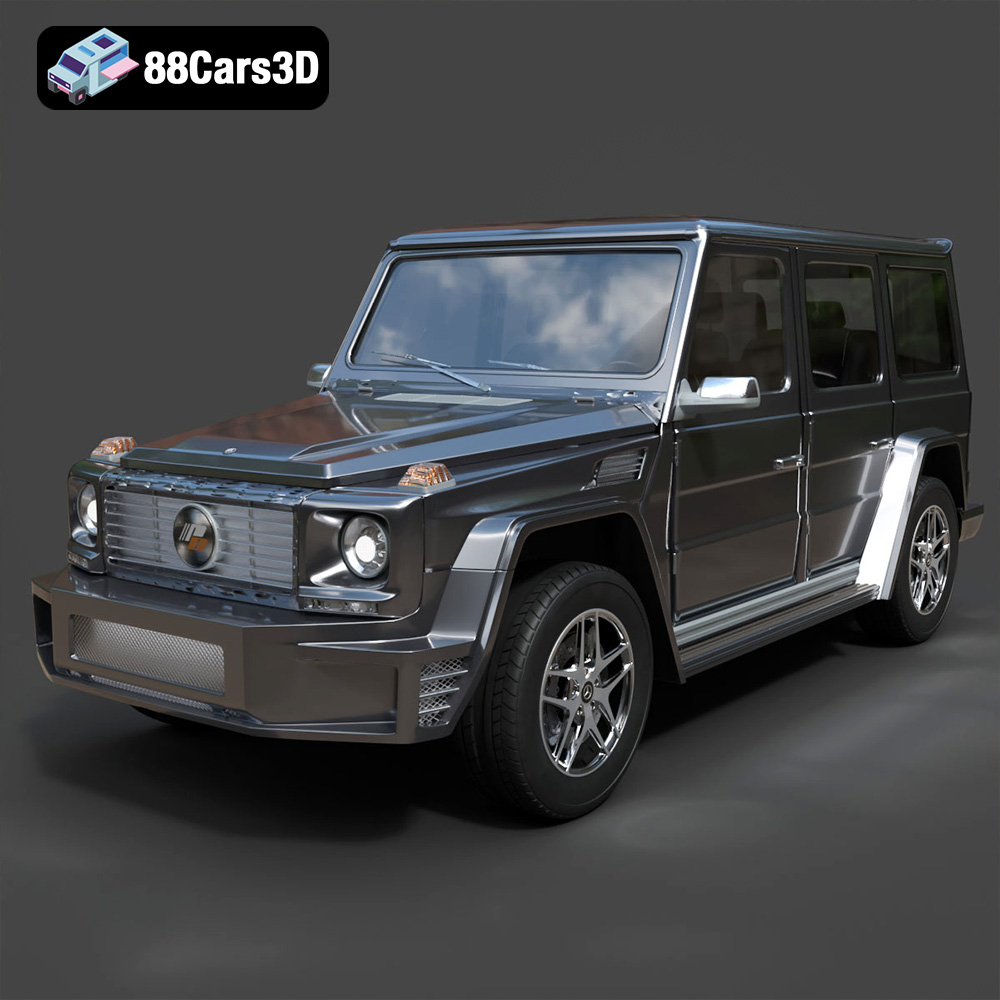
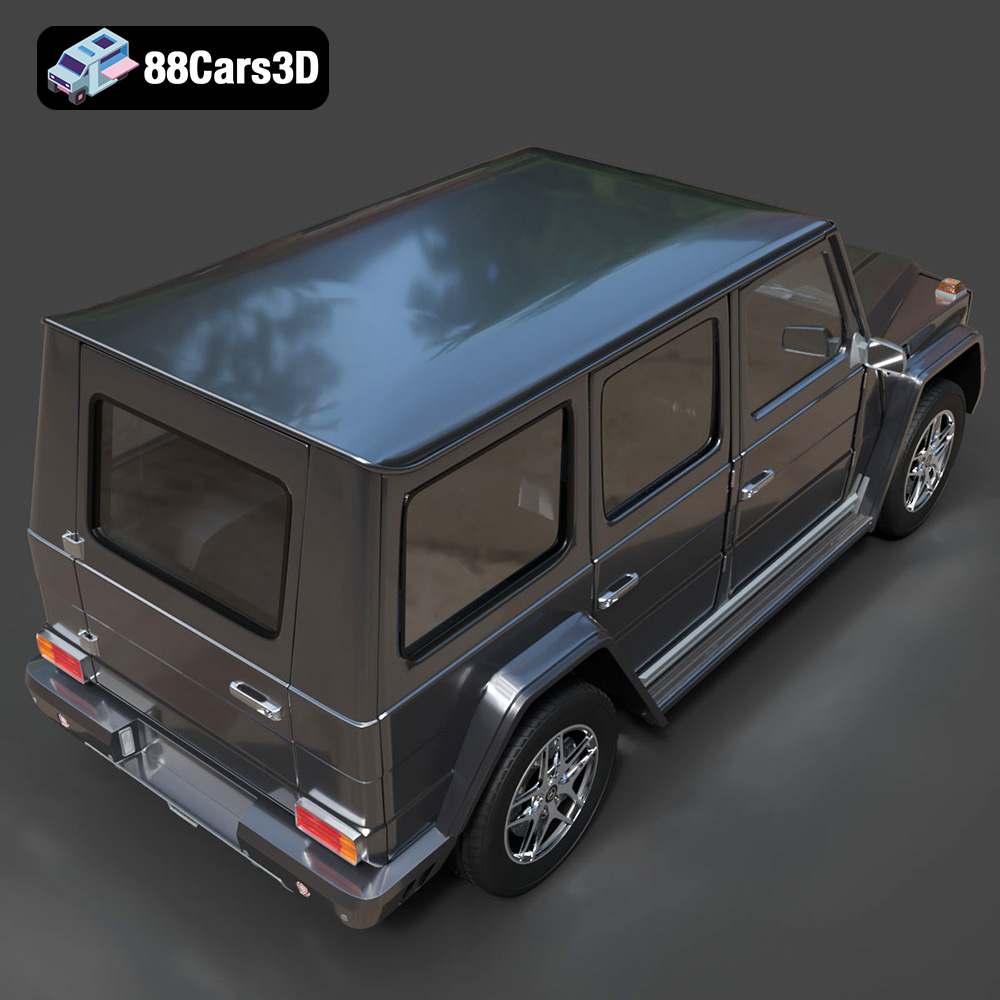
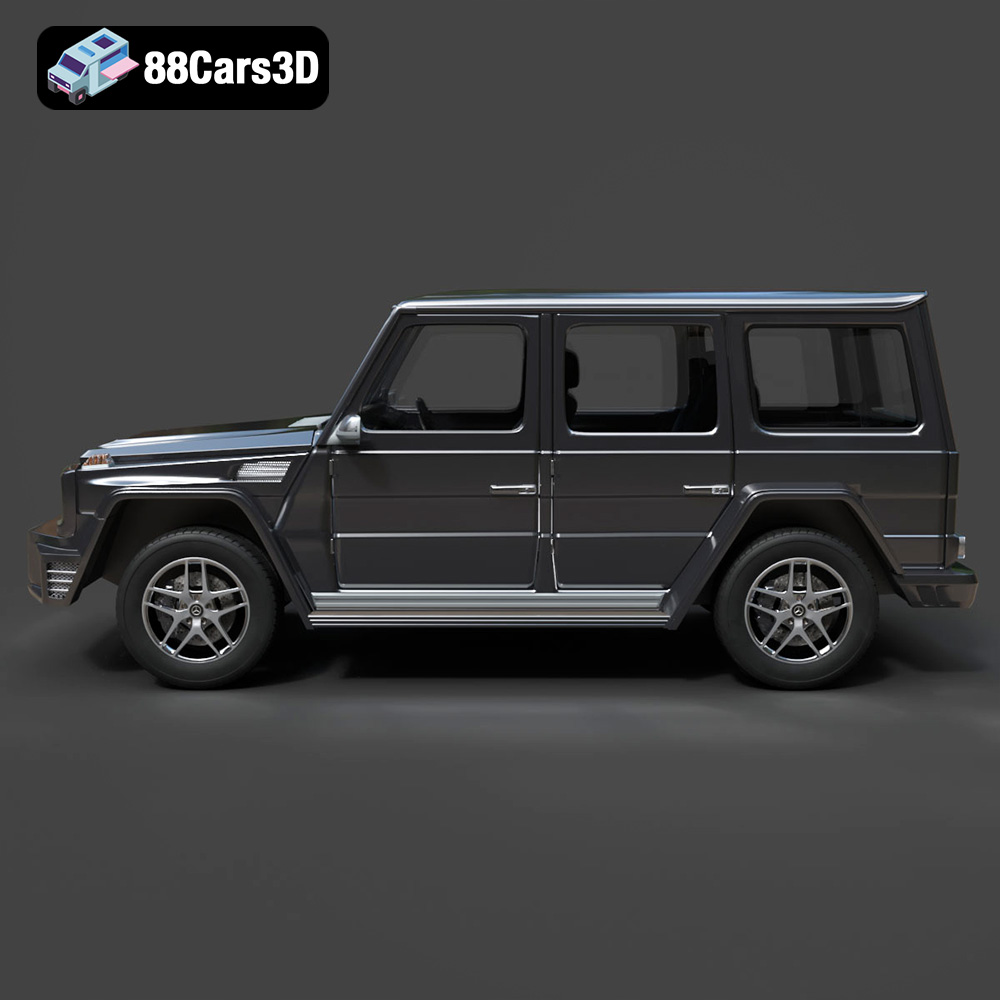
For any serious automotive rendering project, accuracy is paramount. The difference between a convincing visual and one that falls flat often lies in the subtle nuances of proportion, surface curvature, and detail. The Mercedes-Benz G Class 2013 3D Model embodies this commitment to precision. Its accurate 2013 G-Class body proportions, signature boxy silhouette with sharp panel edges, and detailed front grille with emblem placement are not mere artistic interpretations but faithful digital recreations. These elements are critical for projects requiring photorealism, such as marketing materials for luxury brands, dealership visuals, or cinematic sequences where the vehicle needs to be instantly recognizable and visually impeccable.
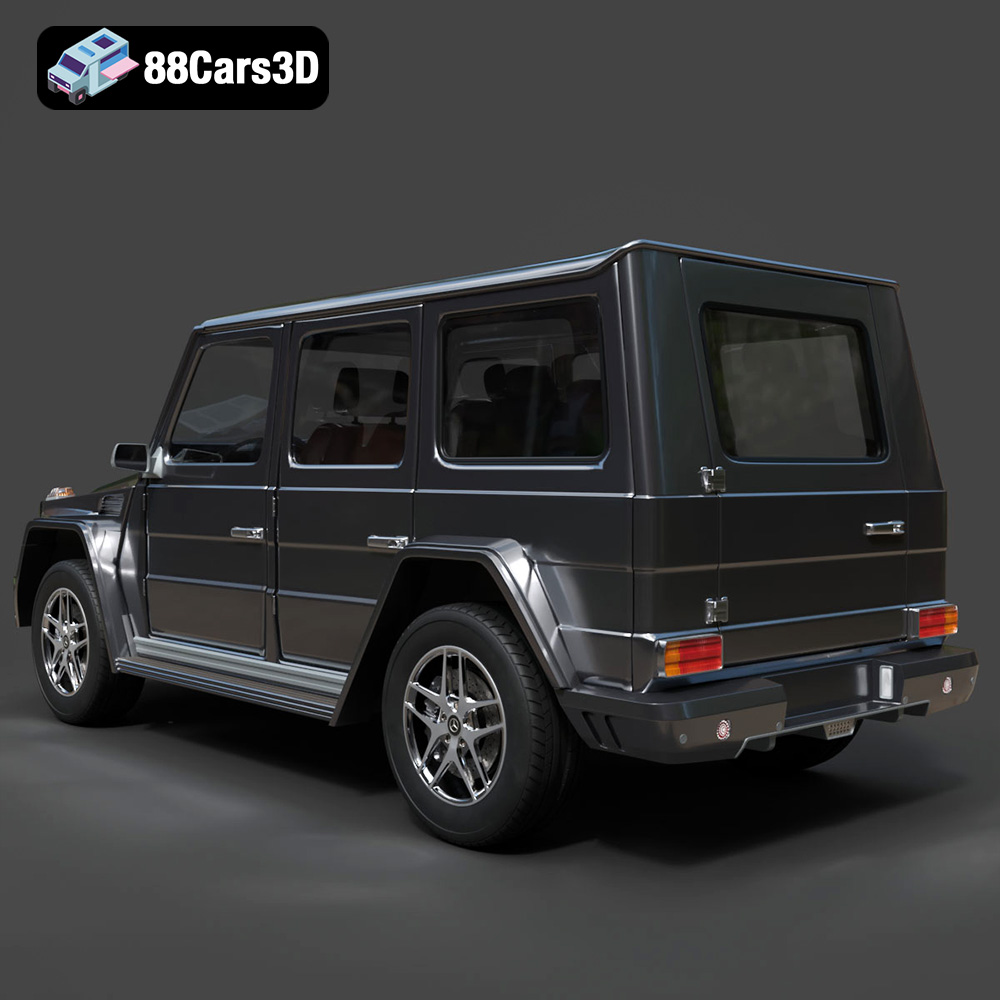
Furthermore, details like the round headlight and indicator design, rear-mounted spare wheel housing, and large alloy wheels with off-road tire geometry are meticulously modeled. Such attention to detail ensures that the asset holds up under close-up shots and various lighting conditions, making it an invaluable tool for professional visualization artists who cannot compromise on realism.
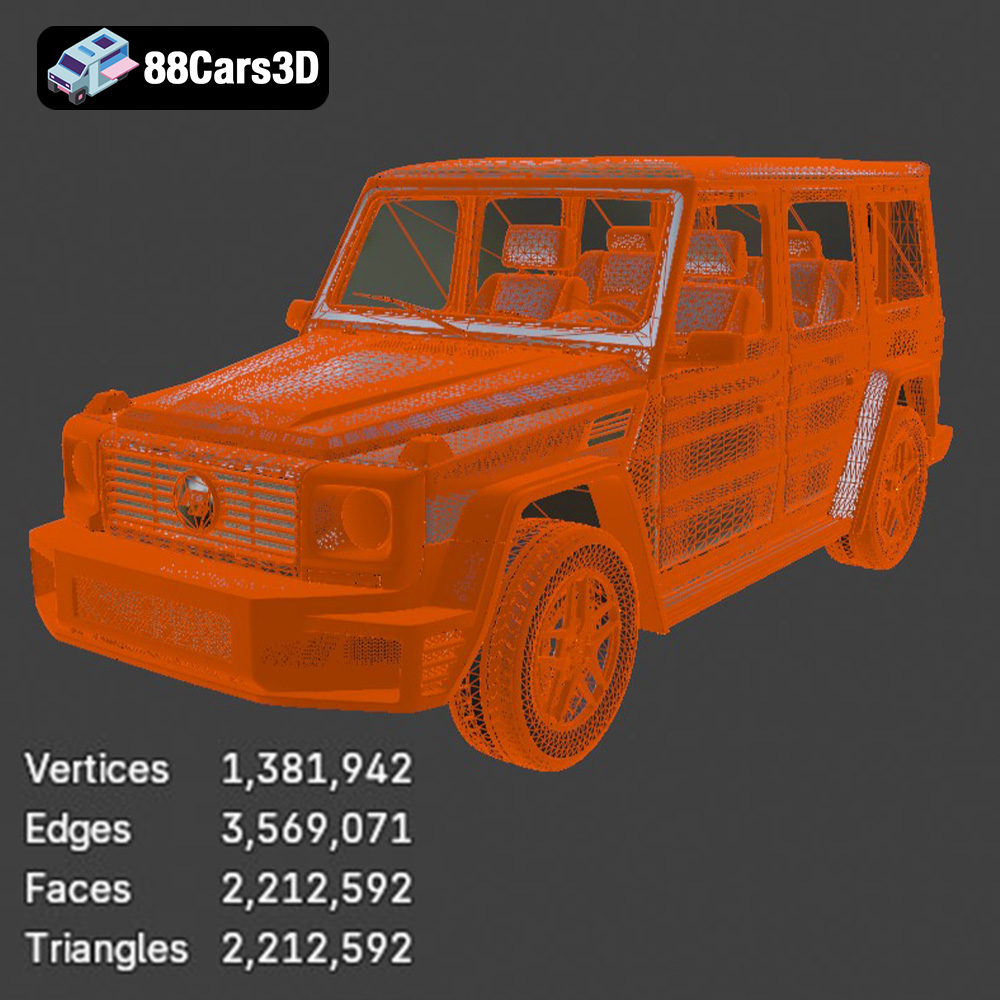
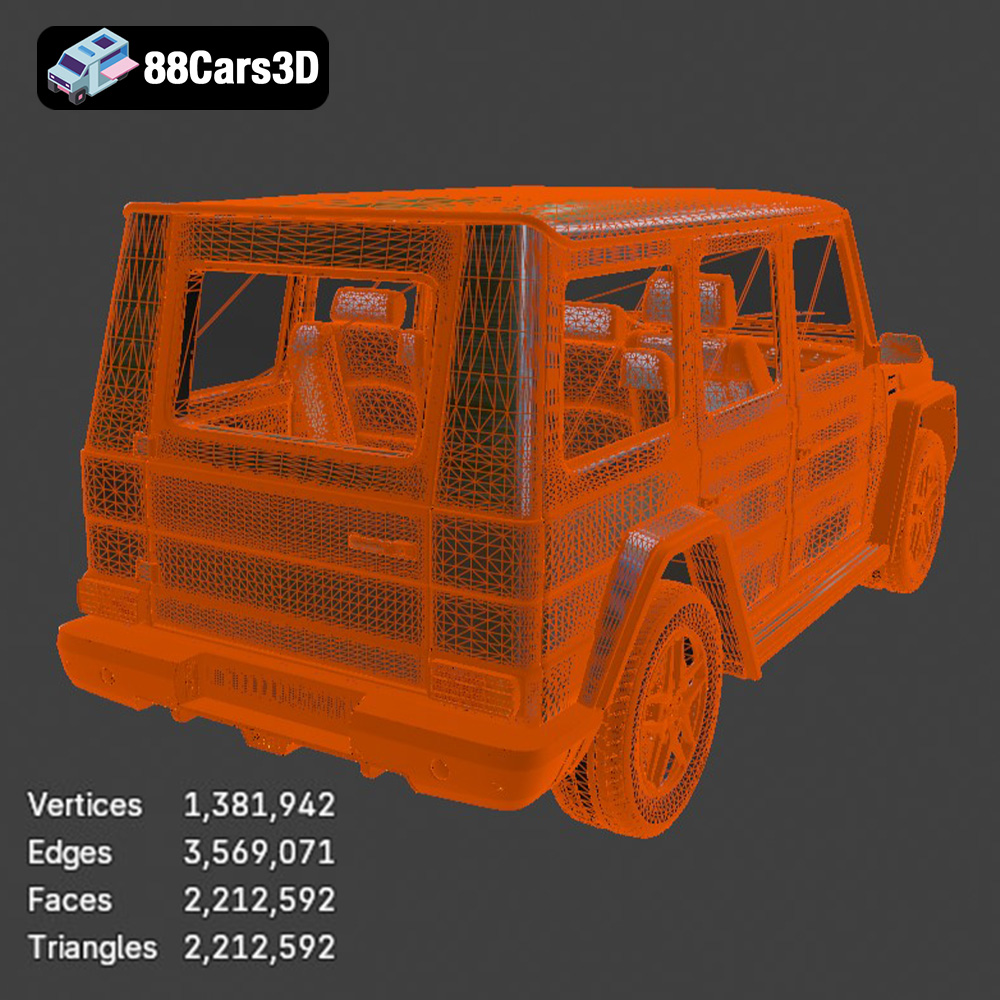
The journey from an initial concept to a production-ready 3D car model is fraught with technical challenges. Ensuring clean and well-organized mesh structure, real-world scale accuracy, and proper pivot setup for steering and wheel rotation are fundamental requirements. These technical advantages directly translate to ease of use and superior performance within any 3D environment. The Mercedes-Benz G Class 2013 3D Model from 88cars3d.com comes with a comprehensive suite of included formats, ensuring maximum flexibility for any project. Understanding the nuances of each is essential for professional creators.
The .blend format is native to Blender, an incredibly versatile and increasingly popular open-source 3D creation suite. A .blend file typically contains the complete scene, including mesh data, materials, textures, lighting, animation, cameras, and even physics simulations. This makes it ideal for users who primarily work in Blender, offering full editability and the ability to seamlessly integrate the G-Class model into existing Blender projects. It preserves all native Blender features, modifiers, and node-based materials, providing the most robust starting point for customization and further development within the Blender ecosystem.
.fbx (Filmbox) is arguably the most widely adopted proprietary 3D exchange format, developed by Autodesk. It excels at transferring 3D model data between different software applications, especially those in the animation and game development sectors like Unreal Engine and Unity. An .fbx file can carry geometry, materials (with references to textures), animation data (skeletons, skinning, keyframes), cameras, and lights. Its strength lies in its ability to encapsulate complex scene information, making it an ideal choice for pipelines that involve multiple 3D packages or for exporting game assets into real-time engines. The G-Class .fbx ensures a smooth transition into these demanding environments, preserving hierarchy and pivot information critical for rigging and animation.
The .obj (Wavefront OBJ) format is one of the oldest and most universally supported 3D formats. It’s a simple, text-based format primarily used for transferring mesh data (vertices, normals, texture coordinates, and faces). While it can reference external material (.mtl) files, its material support is basic compared to .fbx or .blend. However, its widespread compatibility makes it an excellent fallback or starting point for projects requiring cross-software interoperability where complex animations or advanced material setups aren’t the primary concern. It’s robust for raw mesh data and works almost anywhere.
.glb (GLB format for glTF) is an increasingly important format, especially for web-based 3D, AR (Augmented Reality), and VR (Virtual Reality) applications. It’s a binary representation of the glTF (GL Transmission Format), designed to be a compact, efficient, and runtime-ready format for the transmission and loading of 3D scenes and models. A .glb file packages all assets—geometry, materials, textures, animations—into a single file, making it incredibly easy to share and deploy. For interactive virtual showrooms or browser-based configurators featuring the G-Class, .glb is the definitive choice for performance and ease of integration.
.stl (STereoLithography) is the de facto standard file format for 3D printing. It represents a 3D model as a collection of unconnected triangular facets, defining only the surface geometry of the object without color, texture, or material information. While simplistic, its ubiquity in the 3D printing world is unmatched. The availability of the G-Class model in .stl format directly enables its physical manifestation, allowing for the creation of collectible SUV scale models, display miniatures, or even prototypes. For successful prints, the model’s geometry must be “manifold” or “water-tight,” which high-quality assets like this one ensure.
.ply (Polygon File Format or Stanford Triangle Format) is a file format for storing 3D data, particularly data from 3D scanners. It can store a variety of properties, including color, transparency, surface normals, and texture coordinates, for each vertex and face. While less common for general 3D asset exchange, .ply is valuable in specific engineering, reverse engineering, or scientific visualization contexts where precise mesh data, often derived from CAD or laser scans, is required. It offers a robust framework for handling dense point clouds and polygons with additional per-vertex or per-face information.
The .unreal format signifies an asset specifically optimized and packaged for direct use within Unreal Engine. While .fbx is the common import method, an .unreal asset often implies a higher level of integration, potentially including pre-configured materials (PBR setups), collision meshes, LODs (Levels of Detail), and blueprint functionality designed to work seamlessly within Unreal’s ecosystem. This format dramatically streamlines the workflow for game developers and real-time visualization artists, minimizing setup time and ensuring optimal performance for the G-Class within a demanding game environment.
The .max format is the native file type for Autodesk 3ds Max, a powerful 3D modeling, animation, rendering, and compositing software. Like .blend, a .max file stores the entire scene, including geometry, materials, textures, lighting, cameras, animation keyframes, and plugins. It’s the preferred format for professionals working in architectural visualization, product design, and high-end cinematic rendering who leverage 3ds Max’s robust toolset and renderers like V-Ray or Corona. The G-Class .max file provides full creative control within 3ds Max, allowing for complex scene setups and advanced material shaders.
The true value of a versatile 3D asset, such as the is engineered to excel in diverse applications, from interactive digital experiences to tangible physical replicas.
For game developers, the Mercedes-Benz G Class 2013 is an ideal premium game asset. Its optimized polygon flow, clean mesh structure, and proper pivot setup for steering and wheel rotation are crucial for performance and believable physics in game engines. Whether it’s an urban driving simulator, an off-road adventure game, or a virtual car collection, the G-Class provides a high-quality, pre-rigged (or easily riggable) vehicle. Developers can integrate it into vehicle systems, apply custom physics constraints, and create unique gameplay scenarios. The model’s detailed exterior and interior further enrich the player’s experience, offering a sense of luxury and authenticity even in a virtual environment.
The burgeoning fields of Augmented Reality (AR) and Virtual Reality (VR) demand highly optimized yet detailed 3D models. The G-Class model’s availability in the .glb format is particularly advantageous here. .glb files are designed for efficient loading and rendering in AR/VR applications, allowing for seamless integration into interactive virtual showrooms, product configurators, or immersive training simulations. Imagine users being able to walk around, open doors, and inspect the intricate details of the 2013 G-Class in a virtual space, or even project it into their real-world environment via AR. The high-quality model ensures that these close-up inspections maintain realism and engagement.
One of the most exciting aspects of a meticulously crafted 3D model is its potential to transcend the digital realm and become a physical object. The inclusion of the .stl format, along with specific 3D print settings, positions the Mercedes-Benz G Class 2013 3D Model as an excellent candidate for 3D printing. This allows enthusiasts and professionals to create collectible SUV scale models, desktop displays, or even functional prototypes. The provided print settings (recommended scales like 1:32, 1:24, 1:18, 1:14; layer height, wall thickness, infill, supports) are vital guidelines to achieve a successful and high-quality physical print. Clean, manifold geometry, as found in this model, is essential for avoiding printing errors and ensuring structural integrity, resulting in a miniature replica that faithfully captures the iconic G-Class design.
A truly versatile 3D asset provides not only a strong foundation but also ample opportunity for customization and creative integration into diverse visual narratives. The Mercedes-Benz G Class 2013 3D Model stands out as an exemplary asset, meticulously crafted to meet the rigorous demands of professional workflows across numerous industries. Its faithful recreation of an automotive icon, coupled with a comprehensive package of technical advantages and diverse file formats, positions it as an indispensable tool for designers, animators, game developers, and AR/VR creators.
From stunning automotive rendering in 3ds Max and Blender to seamless integration as a robust game asset in Unreal Engine, and even its potential for tangible output via 3D printing, this model offers unparalleled flexibility. It empowers creators to focus on their artistic vision and technical execution, rather than spending valuable time on foundational modeling work. For those seeking to elevate their projects with a truly premium vehicle model that promises both fidelity and adaptability, the Mercedes-Benz G Class 2013 3D Model from 88cars3d.com represents an excellent choice, ready to accelerate your creative journey.
The Mercedes-Benz G Class 2013 3D Model is a high-detail digital recreation of the iconic luxury off-road SUV known for its boxy design, rugged capability, and premium craftsmanship. The 2013 G-Class blends military-inspired durability with refined interior comfort, making it a timeless symbol of performance and prestige. This 3D model accurately represents the distinctive squared body shape, bold front grille, round headlights, exposed door hinges, roof rails, spare wheel rear mount, and elevated ground clearance. Designed with clean topology and real-world scale accuracy, it is ideal for rendering, animation, automotive visualization, game development, and AR/VR experiences. Perfect for urban luxury scenes, off-road environments, desert simulations, cinematic projects, and SUV driving games. Includes .blend, .fbx, .obj, .glb, .stl, .ply, .unreal, and .max formats.
$60