⚡ FLASH SALE: Get 60% OFF All Premium 3D & STL Models! ⚡

In the vast tapestry of aviation history, certain aircraft transcend their utilitarian origins to become legendary. The Polikarpov Po-2, affectionately known as the “Kukuruznik” (corn duster), is undoubtedly one such machine. This unassuming Soviet biplane, originally designed for training and agricultural work, gained renown for its versatility, resilience, and crucial role in various conflicts, particularly World War II. Its lightweight wooden structure, fabric-covered wings, and steadfast performance made it an icon of Soviet ingenuity. Today, the fascination with this historical workhorse continues, not just in museums and restoration projects, but increasingly in the digital realm.
For 3D artists, game developers, historians, and enthusiasts, bringing such a venerable aircraft to life requires meticulous attention to detail and an understanding of complex 3D modeling principles. A high-quality digital recreation isn’t just a static object; it’s a gateway to immersive experiences, accurate simulations, and stunning visualizations. This is precisely where the Polikarpov Po-2 3D Model from 88cars3d.com shines, offering an unparalleled level of detail and versatility for a wide array of professional and creative applications. This isn’t just a model; it’s a meticulously crafted digital artifact designed to fit seamlessly into the most demanding production pipelines, from cinematic rendering to real-time game environments and even physical 3D printing.
The utility of any 3D model, no matter how detailed, is largely determined by its compatibility and the file formats it comes in. The Polikarpov Po-2 3D Model is exceptionally versatile, provided with a comprehensive suite of file formats, each serving distinct purposes in various professional workflows. Understanding these formats is crucial for leveraging the model’s full potential.
The .blend format represents the native project file for Blender, the powerful open-source 3D creation suite. When you receive a .blend file, you’re not just getting a model; you’re getting a fully editable scene complete with materials, textures, lighting, camera setups, and often even animation data. For artists working primarily in Blender, this format offers the most flexibility for customization, material tweaks, rigging, and animation. It ensures that all original scene data, including modifiers and node-based materials, is preserved, allowing for deep modification and integration without loss of information.
Autodesk’s .fbx format is a cornerstone of the 3D industry, prized for its robust support for geometry, materials, textures, bones, and animation. It’s the go-to format for transferring assets between different 3D software packages and, critically, for integrating models into game engines like Unreal Engine and Unity. Its efficiency in handling complex scene data makes it ideal for real-time pipelines where performance and fidelity must coexist. The Po-2’s .fbx ensures seamless export with proper pivot points for animation, ready for immediate use as a game asset or simulation object.
The .obj (Wavefront Object) format is one of the oldest and most universally supported 3D file types. While it primarily stores geometric data (vertices, normals, texture coordinates), it’s highly compatible across virtually all 3D software. For simple mesh transfers or when maximum compatibility is required, .obj is an excellent choice. It’s a clean, text-based format that is easy to parse, making it a reliable fallback. Though it might not carry complex material setups as efficiently as .fbx, it guarantees that the core mesh of the Polikarpov Po-2 3D Model can be opened and worked on in any professional 3D application.
As the GL Transmission Format (glTF) binary version, .glb is specifically designed for efficient transmission and loading of 3D scenes and models in web and immersive applications. It bundles the 3D model, textures, and animations into a single file, making it incredibly streamlined for AR/VR experiences, browser-based viewers, and mobile applications. For interactive historical simulations or digital museum exhibits featuring the Polikarpov Po-2, the .glb format offers optimal performance and ease of integration into modern web and AR/VR platforms.
The .stl (Stereolithography) format is the undisputed standard for 3D printing. It describes only the surface geometry of a 3D object using a tessellated mesh of triangles. For creating physical scale models of the Polikarpov Po-2, the .stl file is indispensable. It’s the bridge from the digital world to tangible collectibles, allowing enthusiasts to bring this historic aircraft to their desktops or display cases, complete with accurate proportions and fine details suitable for FDM or resin printing.
The .ply (Polygon File Format or Stanford Triangle Format) is known for its ability to store a wide range of properties beyond just geometry, including color, transparency, texture coordinates, and even reliability information for each face or vertex. While less common for general asset exchange, it’s often used in scientific applications, 3D scanning, and CAD/CAM workflows where data integrity and precision are paramount. For detailed analysis or specialized manufacturing processes, the .ply format offers a robust data container for the Po-2 model.
The .unreal format refers to assets specifically configured and often directly exported or imported into Unreal Engine projects. While usually an .fbx is imported and converted, a dedicated “unreal” package implies a pre-optimized, engine-ready asset with collision meshes, LODs (Levels of Detail), and material setups already configured for optimal performance within the engine. This significantly reduces setup time for game developers and simulation creators, allowing for immediate integration of the Po-2 into dynamic real-time environments.
Similar to .blend for Blender, the .max format is the native file type for Autodesk 3ds Max, a leading software for 3D modeling, animation, and rendering, particularly in architecture and product visualization. The .max file for the Polikarpov Po-2 3D Model provides access to the original scene, including hierarchies, modifiers, materials, lighting, and animation rigs within a 3ds Max environment. This is invaluable for professionals who use 3ds Max as their primary tool, enabling full creative control and the ability to integrate the model into complex rendering pipelines for stunning cinematic results or high-end visualizations.
The true value of a digital asset lies in its meticulous construction and adherence to technical best practices. The Polikarpov Po-2 3D Model exemplifies this, offering a blend of historical accuracy and modern optimization, making it a standout among 3D car models and aircraft assets available today.
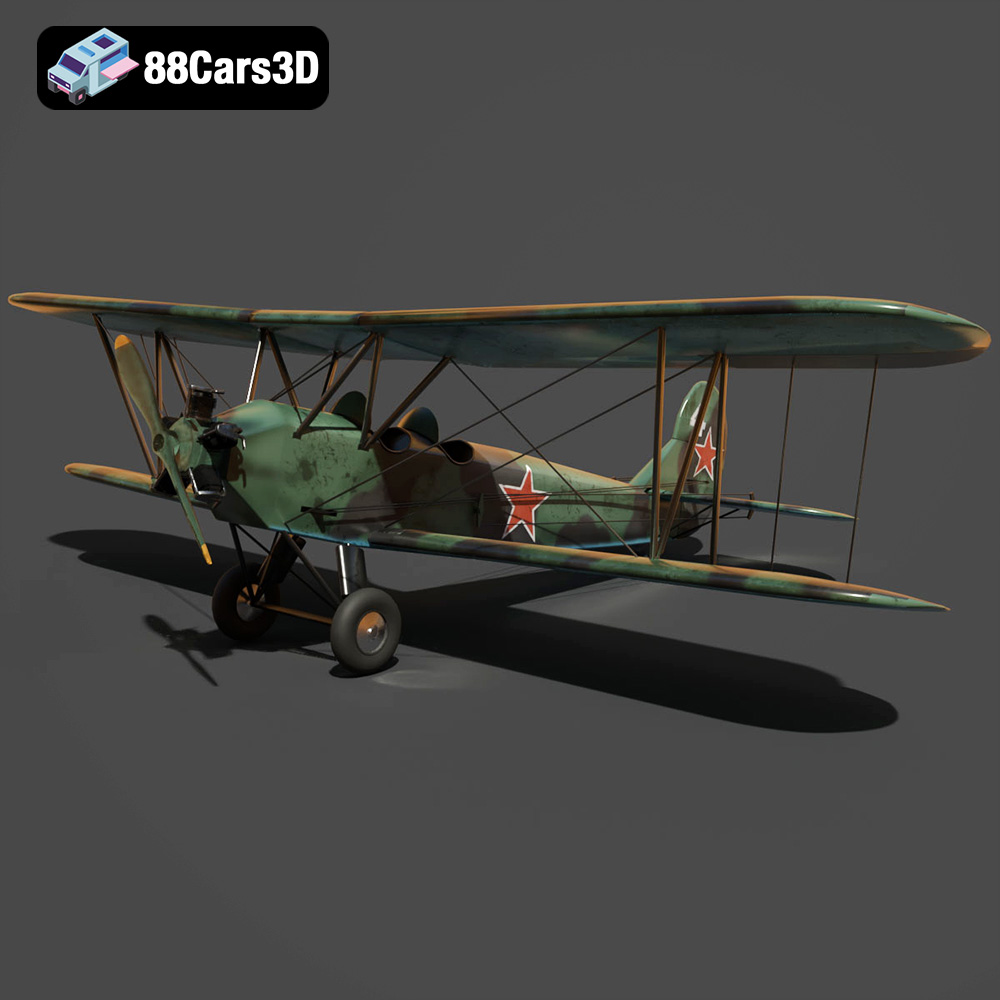
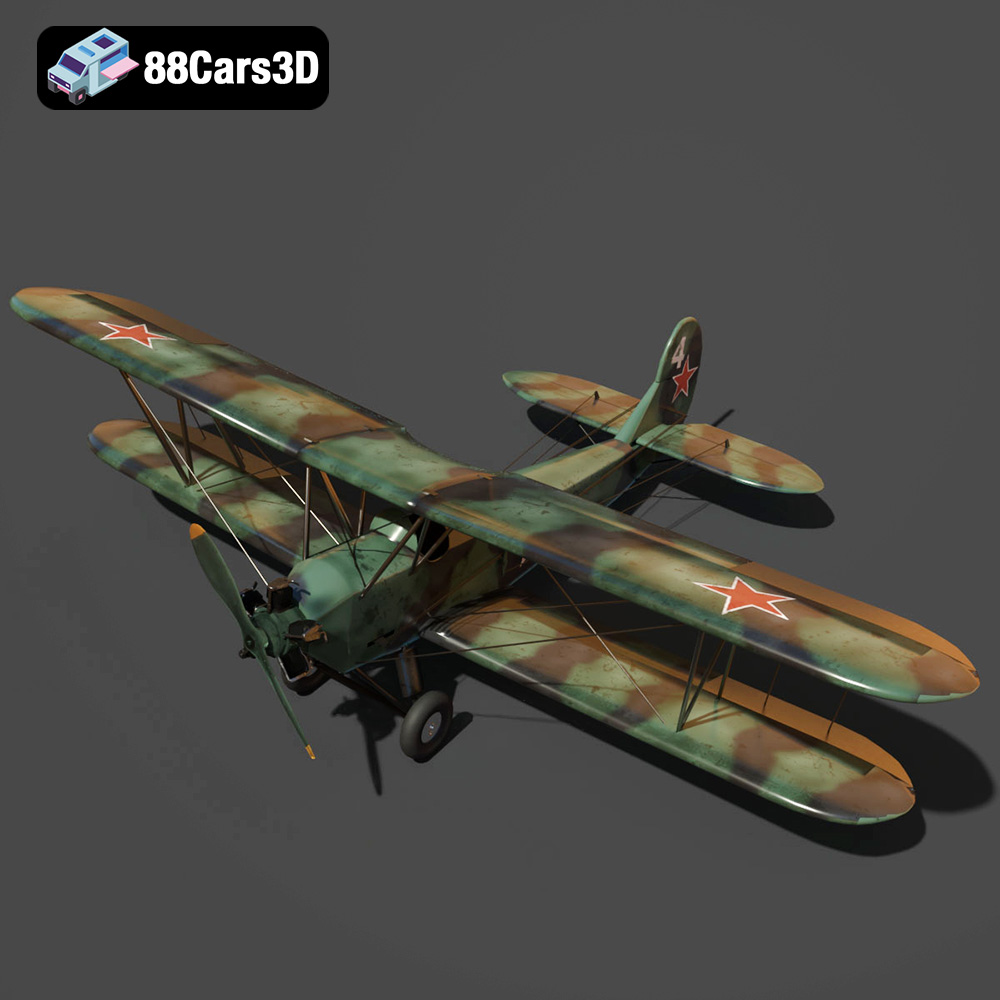
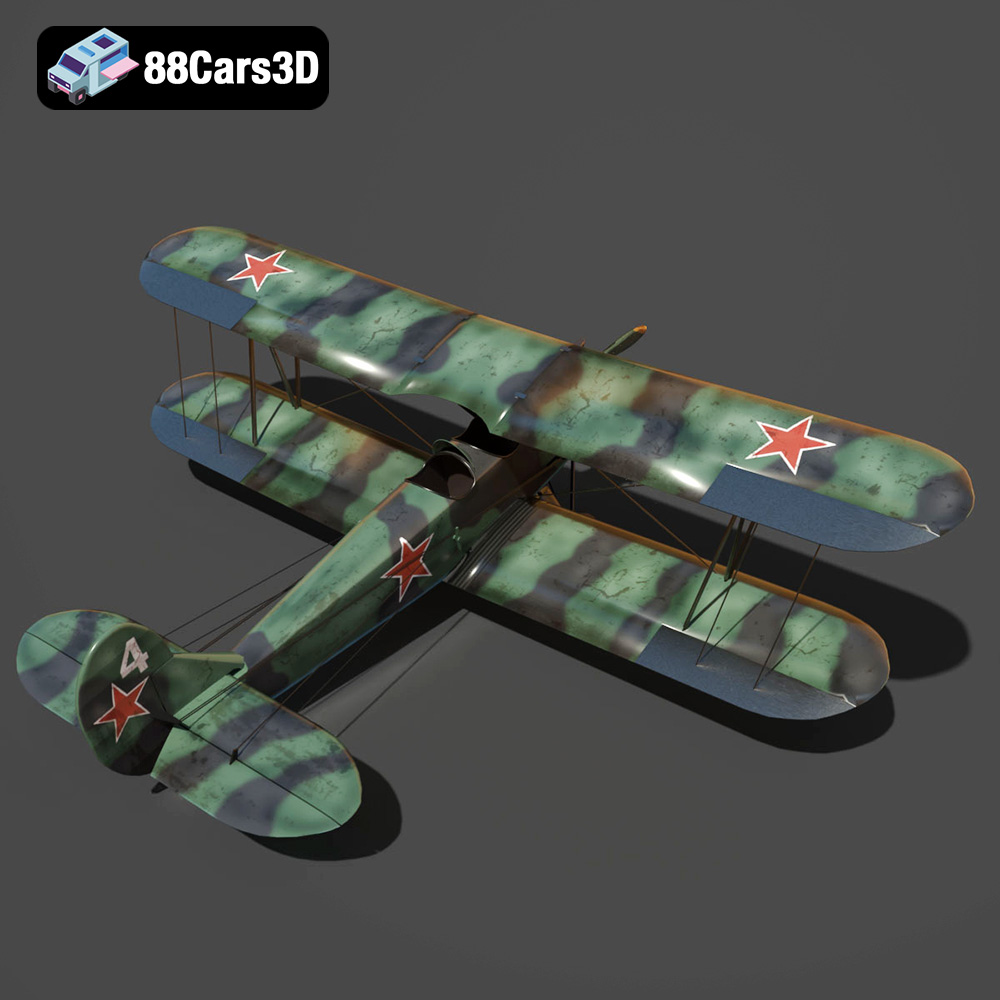
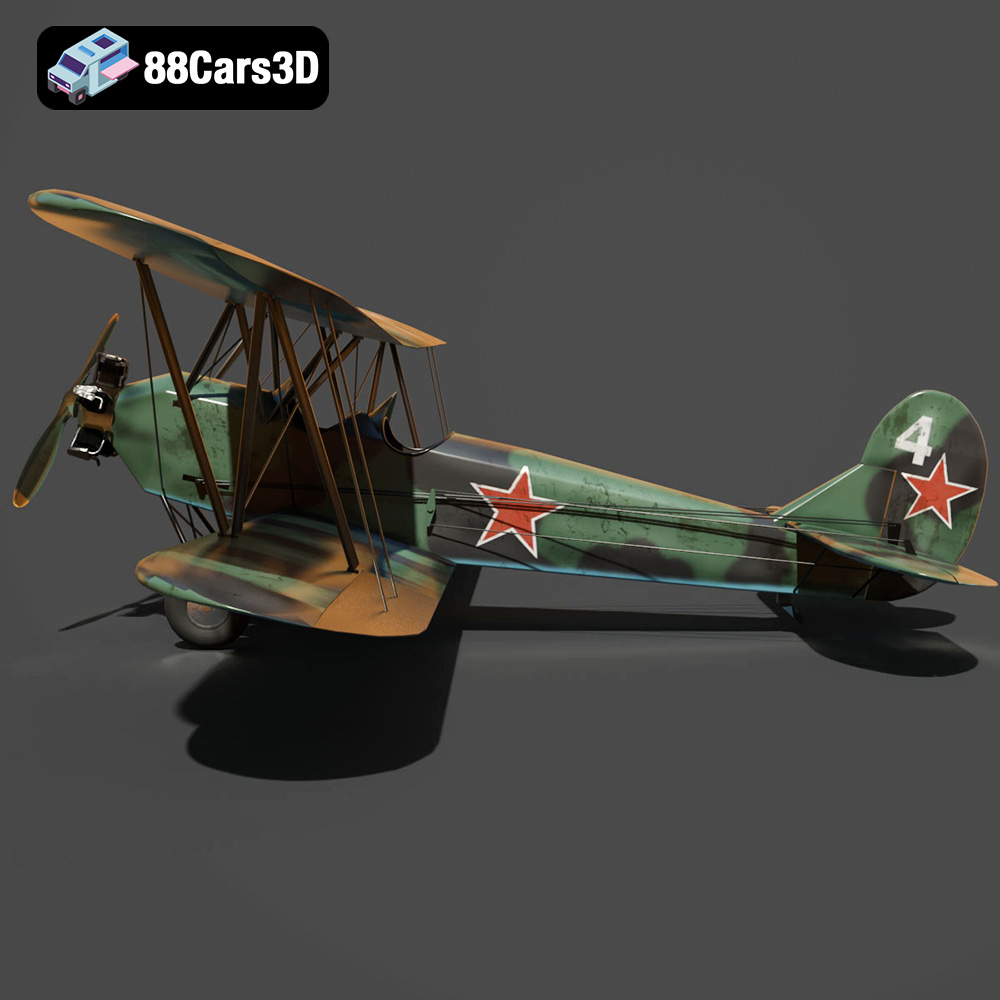
The exterior of the Polikarpov Po-2 is a testament to careful research and precise modeling. The distinctive biplane wing structure with its intricate support struts is accurately replicated, capturing the robust yet elegant engineering of the original aircraft. The detailed radial engine cowling is rendered with precision, hinting at the powerful yet simple M-11 engine it housed. The realistic propeller assembly is not merely decorative but designed for animation, with proper pivot points. Furthermore, the fabric-style control surfaces (ailerons, rudder, elevators) capture the lightweight construction that defined the Po-2, adding an authentic texture and visual interest crucial for realistic rendering.
Beyond the primary components, subtle details like the fixed landing gear with tailwheel and period-correct fuselage proportions ensure the model is instantly recognizable and historically accurate. These elements are vital for any project aiming for historical fidelity, from documentaries to immersive simulations.
While often overlooked in external models, the interior of the Polikarpov Po-2 3D Model provides essential context and detail for close-up shots or interactive experiences. The modeled dual-seat cockpit layout, though open, provides a sense of the pilot’s environment. Key elements like the instrument panel detailing, control stick and rudder pedals, and basic seat and harness structure are all present. This level of interior detail means the model can withstand scrutiny in animated sequences or virtual reality walkthroughs.
A significant technical advantage is the inclusion of separate propeller and control surfaces for animation, along with proper pivot setup for propeller rotation and control surface animation. This pre-rigged functionality saves countless hours for animators, allowing them to instantly bring the aircraft to life without needing to set up complex hierarchies or pivot points.
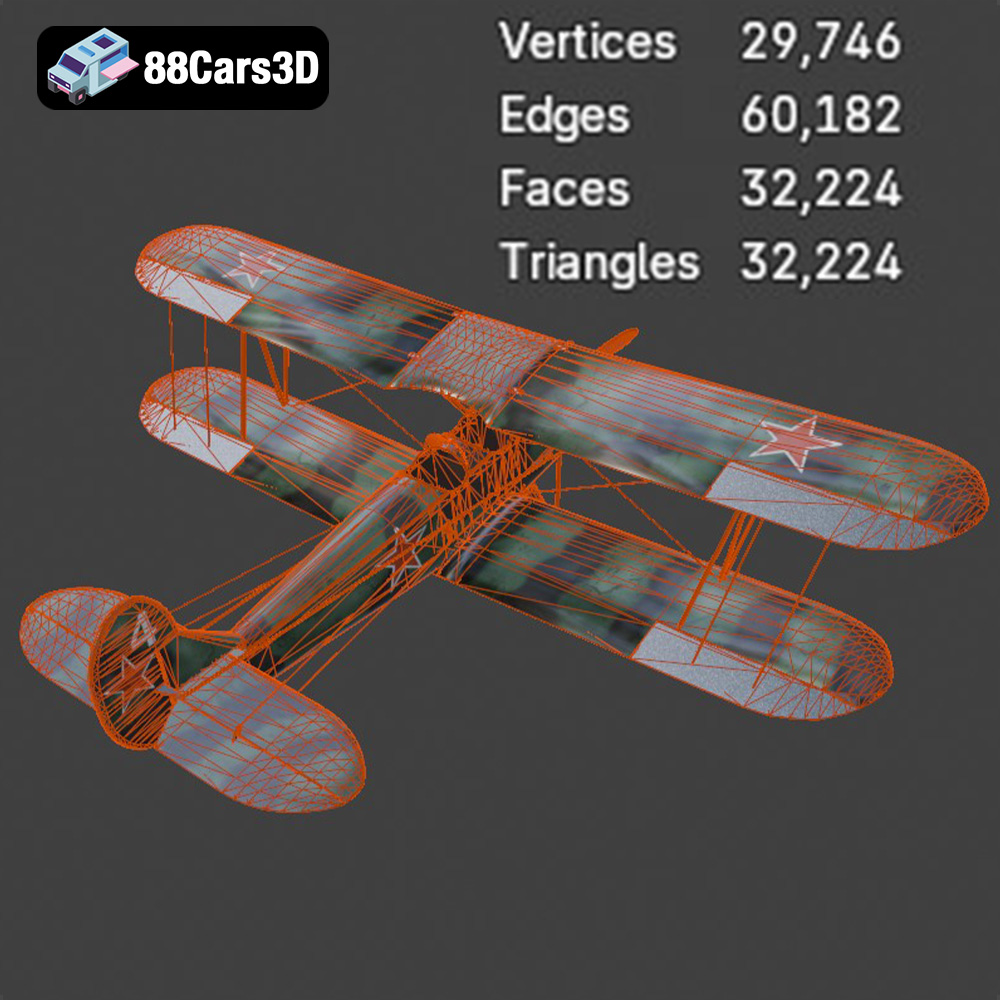
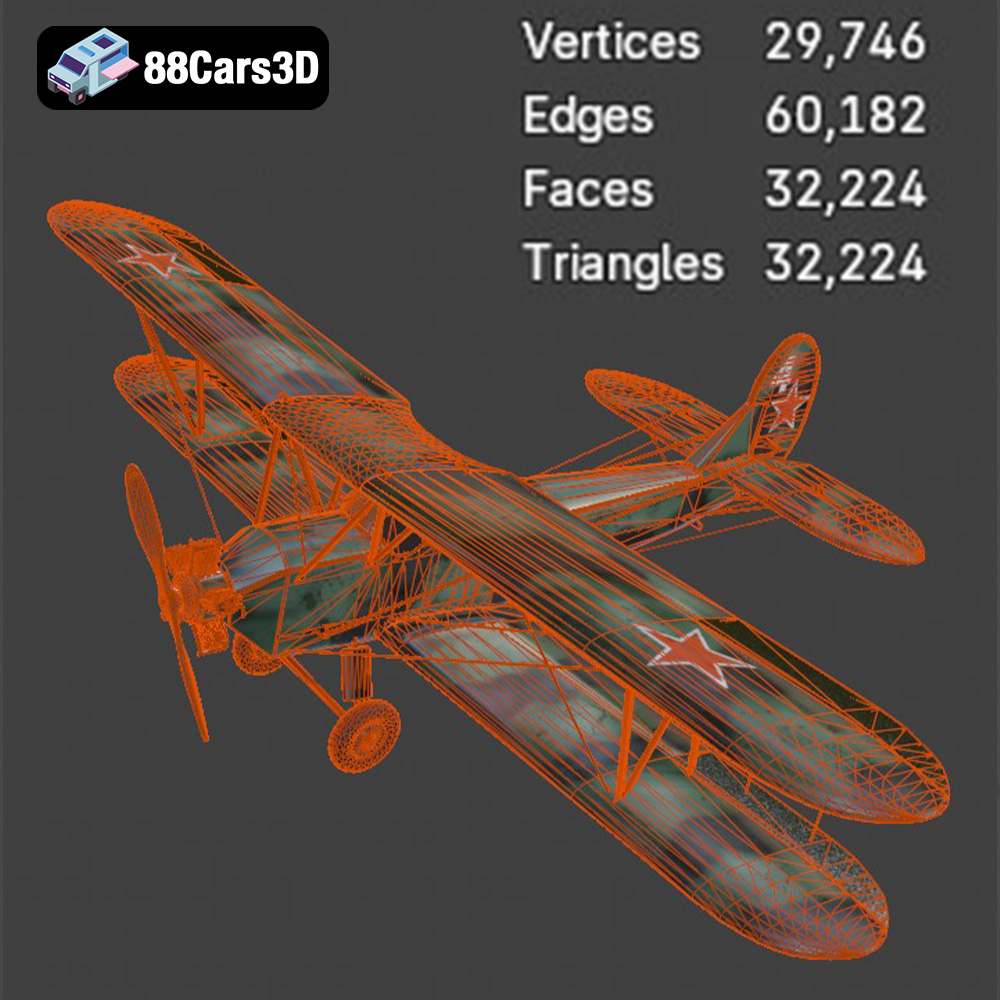
At the core of a high-quality 3D asset is its underlying geometry. The Polikarpov Po-2 3D Model boasts a clean and well-organized mesh structure with optimized polygon flow. This is crucial for both performance in real-time engines and for ensuring smooth deformations if additional rigging is required. A clean mesh is easier to texture, rig, and subdivide, providing flexibility for various levels of detail.
The model adheres to real-world scale accuracy, a fundamental requirement for believable simulations and integrating into existing scenes. This attention to scale prevents common issues when importing models into environments, ensuring the Polikarpov Po-2 sits correctly alongside other objects, whether they are historical buildings or other 3D car models. Overall, the optimized geometry for real-time engines and high-quality renders ensures that this model performs admirably across the spectrum of 3D applications.
The versatility and technical quality of the Polikarpov Po-2 3D Model make it an indispensable asset for a diverse range of professional applications. Its design caters to the specific needs of various industries, from film production to interactive simulations.
For artists focused on creating stunning visuals, whether for an aviation documentary, a historical reenactment, or marketing materials, the Po-2 model is an ideal candidate. Using software like 3ds Max or Blender, artists can leverage the model’s clean topology and accurate geometry to produce breathtaking renders. This often involves:
The demand for high-quality game assets that are also optimized for real-time performance is ever-growing. The Polikarpov Po-2 3D Model is perfectly suited for modern game engines like Unreal Engine and Unity, offering both visual fidelity and efficiency. Its .fbx and .unreal formats are specifically tailored for these environments.
Beyond entertainment, the Polikarpov Po-2 3D Model serves critical roles in education and historical preservation. Museums, educational institutions, and defense contractors often utilize highly accurate 3D models for:
One of the most exciting aspects of modern 3D modeling is the ability to bridge the gap between the digital and physical worlds through 3D printing. The Polikarpov Po-2 3D Model is explicitly designed with this in mind, offering an .stl format that makes it perfect for collectible scale aircraft models and display miniatures.
3D printing a complex model like the Po-2 requires careful consideration of settings. The product description offers excellent guidance:
Once printed, the physical model requires some attention to achieve a professional finish. The suggested post-processing steps are standard for high-quality scale models:
A truly professional 3D model offers more than just fidelity; it provides a canvas for creative expression and adaptation. The Polikarpov Po-2 3D Model allows for extensive customization, empowering artists to tailor it to their specific project needs.
The history of the Po-2 is rich with diverse liveries, from standard green military camouflage to bright yellow training schemes, and even civilian agricultural configurations. The model provides a solid base for artists to:
Beyond visual customization, the model’s design facilitates dynamic scene creation:
The Polikarpov Po-2 is more than just an aircraft; it’s a symbol of resilience and versatility, and its digital counterpart, the Polikarpov Po-2 3D Model, captures this spirit perfectly. From its meticulously recreated exterior and interior details to its optimized geometry and extensive file format compatibility, this model stands as a premium asset for any professional or enthusiast.
Whether your project demands a high-fidelity render for a cinematic production, a performant game asset for an immersive simulator, or a precision model for 3D printing, this Polikarpov Po-2 model delivers. Its thoughtful design, encompassing animation-ready components and adaptability for various rendering pipelines (including those typically used for automotive rendering), makes it a truly versatile tool. The comprehensive range of file formats, including .blend, .fbx, .obj, .glb, .stl, .ply, .unreal, and .max, ensures seamless integration into virtually any workflow, saving valuable development time.
For those seeking top-tier 3D car models and aircraft assets, 88cars3d.com remains a trusted source for quality and technical excellence. The Polikarpov Po-2 3D Model is a prime example of the caliber of products available, providing not just a model, but a foundation for countless creative and historical endeavors. Invest in a piece of aviation history, meticulously crafted for the digital age, and let your imagination take flight.
The Polikarpov Po-2 3D Model is a high-detail digital recreation of the legendary Soviet multi-role biplane widely used for training, reconnaissance, and light bombing missions during the mid-20th century. Known for its lightweight wooden structure and fabric-covered wings, the Po-2 became one of the most produced biplanes in aviation history. This 3D model accurately represents the aircraft’s dual-wing configuration, strut-supported wing assembly, radial engine housing, fixed landing gear, open cockpit layout, tailwheel structure, and fabric-textured control surfaces. Designed with clean topology and real-world scale accuracy, it is ideal for rendering, animation, historical visualization, simulation, and game development. Perfect for WWII scenes, historical reconstructions, aviation museums, flight simulators, and cinematic war projects. Includes multiple formats for compatibility and is ready for 3D printing.
$15.9
.aircraft3dmodel
.arvr
.aviation
.biplane
.blend
.fbx
.flightsimulator
.gameasset
.glb
.historicalaircraft
.max
.obj
.ply
.po2
.polikarpov
.rendering
.simulation
.stl
.unreal
.wwiiaircraft