⚡ FLASH SALE: Get 60% OFF All Premium 3D & STL Models! ⚡

In the exhilarating world of automotive design, visualization, and interactive media, the quality of a 3D model can make or break a project. From the pixel-perfect precision required for cinematic renders to the optimized geometry crucial for real-time game engines, digital car models are the fundamental building blocks of engaging experiences. Today, we’re diving deep into an exceptional example that truly embodies this ethos: the Porsche 918 Spyder (With Detachable Roof) 3D Model.
The Porsche 918 Spyder is more than just a car; it’s a statement. As one-third of the modern “Holy Trinity” of hypercars, it masterfully blended a high-revving V8 engine with cutting-edge electric propulsion, setting new benchmarks for performance and efficiency. Capturing such an icon in the digital realm demands an equally meticulous approach, and this 3D model delivers precisely that. Developed for discerning professionals and enthusiasts alike, it offers unparalleled fidelity and versatility, making it a cornerstone asset for automotive rendering, game development, AR/VR experiences, and even precision 3D printing.
Whether you’re developing the next-generation racing simulator, crafting a stunning commercial visualization, or designing an immersive virtual showroom, the demands for realism and performance are constantly evolving. A high-quality 3D asset like the Porsche 918 Spyder (With Detachable Roof) 3D Model, available on 88cars3d.com, provides the perfect foundation, offering both aesthetic excellence and technical robustness. Let’s explore the intricacies that make this model an indispensable tool in any digital artist’s arsenal.
The digital landscape for 3D assets is incredibly diverse, with numerous file formats each serving specific purposes and workflows. Understanding which format to use for a particular application is paramount for efficiency, compatibility, and achieving the desired outcome. The Porsche 918 Spyder (With Detachable Roof) 3D Model is generously offered in a comprehensive suite of formats, ensuring maximum flexibility across various professional pipelines.
The .blend format is Blender’s native file type. When you download a .blend file, you’re getting a complete Blender scene, often including cameras, lighting setups, modifiers, and all materials configured within Blender’s Cycles or Eevee render engines. For artists primarily working in Blender, this is often the most convenient format as it requires no import/export translation, preserving all aspects of the original scene. It’s fully editable, allowing for easy modification of geometry, textures, and animations. This makes the .blend version of the Porsche 918 Spyder model perfect for users who want to dive straight into a familiar environment for advanced customization or animation work.
Autodesk’s .fbx (Filmbox) format has become the de facto standard for exchanging 3D data between different software applications. It excels at preserving models, animations, cameras, and even some material properties. For game development, .fbx is indispensable, ideal for importing assets into Unreal Engine, Unity, and other real-time pipelines. Its robust support for skeletal animation, mesh data, and blend shapes makes it a workhorse for character and vehicle assets. The .fbx version of the 918 Spyder model ensures smooth integration into these environments, maintaining all its distinct features like the detachable roof and properly pivoted wheels for rigging and animation.
The .obj (Wavefront Object) format is one of the oldest and most widely supported 3D file formats. It’s known for its simplicity and universality, primarily storing geometric data (vertices, normals, texture coordinates) and references to external material files (.mtl). While it doesn’t support animation or advanced scene data like .fbx, its widespread compatibility makes it an excellent choice for cross-software transfers when you need a clean mesh. For architectural visualization, product design, or importing into less common 3D packages, the .obj version of the Porsche 918 Spyder model provides a reliable geometric foundation.
.glb (GLB/glTF Binary) is a relatively newer format designed for efficient transmission and loading of 3D scenes and models in web and real-time applications. It encapsulates models, textures, animations, and PBR (Physically Based Rendering) materials into a single, compact file, making it ideal for AR/VR experiences, browser-based configurators, and mobile applications. The .glb version of the 918 Spyder model is particularly suited for creating interactive digital showrooms or augmented reality presentations of this iconic hypercar, due to its optimized size and performance characteristics.
The .stl (Stereolithography) format represents a 3D model as a series of connected triangles, defining its surface geometry without color, texture, or other properties. It is the universal standard for 3D printing. When preparing the Porsche 918 Spyder model for physical production, converting or providing an .stl file is essential. This format ensures that the model’s geometry is manifold and printable, making it perfect for hobbyists looking to create detailed scale replicas or for engineers needing a physical prototype of the car’s components. The provided .stl allows for direct engagement with additive manufacturing processes.
The .ply (Polygon File Format) is another format for storing 3D data, often used in scientific and CAD applications. It can store a wider range of data than .obj, including color, transparency, and normal vectors for each vertex or face. While less common for general artistic asset exchange, it’s valuable for precise geometric analysis, reverse engineering, or when exporting models for specific manufacturing or scanning workflows. For highly technical applications requiring detailed mesh information, the .ply variant of the 918 Spyder offers that layer of precision.
The .unreal format, often indicating an asset package or a specific import pipeline for Unreal Engine, signifies an asset specifically prepared for this robust real-time platform. This typically means optimized meshes, correctly configured materials (using Unreal’s PBR workflow), and proper collision setups. Having the 918 Spyder model pre-packaged or optimized for Unreal can significantly reduce development time for game designers and cinematic artists working within the engine, ensuring seamless integration and optimal performance right out of the box.
Similar to .blend for Blender, .max is the native file format for Autodesk 3ds Max. This format retains all scene information, including complex material setups, lighting, animation data, and modifiers specific to 3ds Max. For artists who rely on 3ds Max for high-end rendering, architectural visualization, or sophisticated animation, the .max file provides full access to the original project. This allows for deep customization, complex rigging, and leveraging 3ds Max’s powerful rendering capabilities to produce stunning cinematic shots of the Porsche 918 Spyder.
The availability of such a diverse range of formats for the Porsche 918 Spyder (With Detachable Roof) 3D Model underscores its professional-grade nature, ensuring that regardless of your software of choice or your project’s ultimate destination, you have the right tool for the job.
A truly exceptional 3D model goes beyond mere visual representation; it embodies technical precision, thoughtful optimization, and a deep understanding of the subject matter. The Porsche 918 Spyder (With Detachable Roof) 3D Model stands out in these aspects, providing a robust foundation for a myriad of creative endeavors.
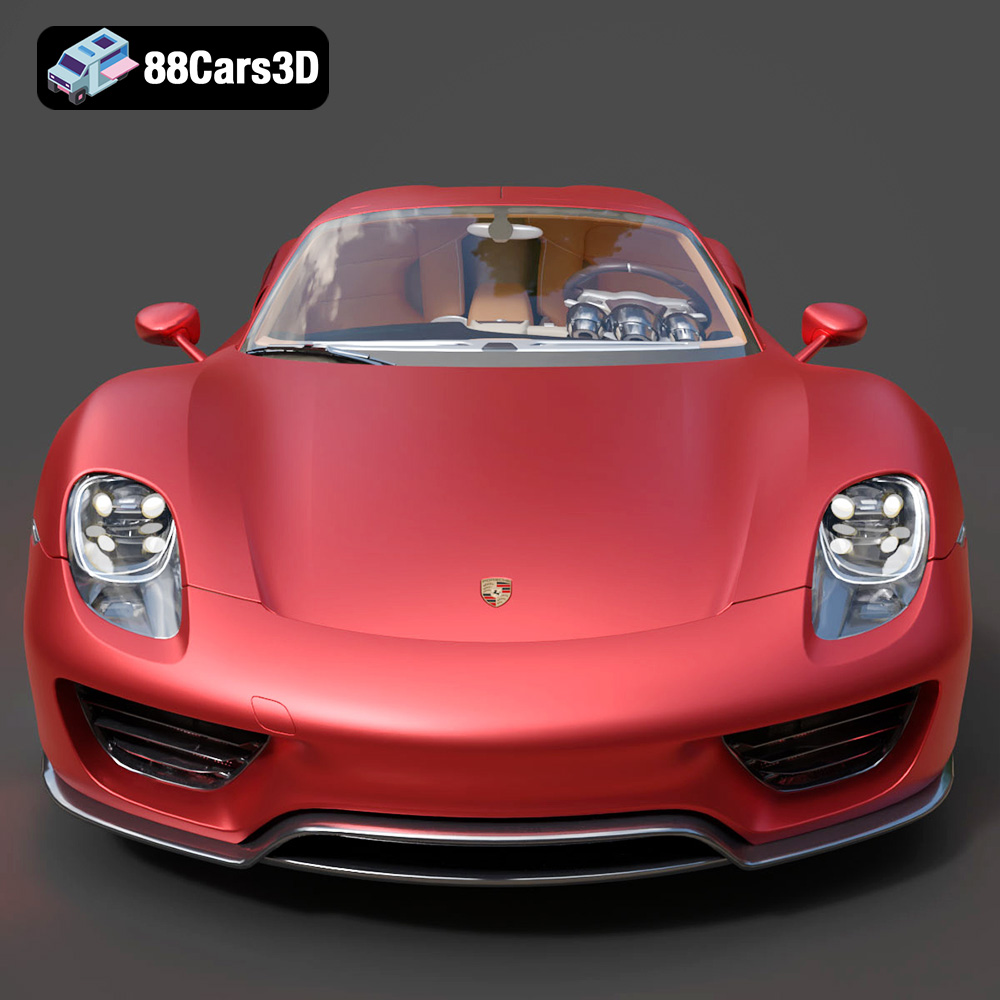
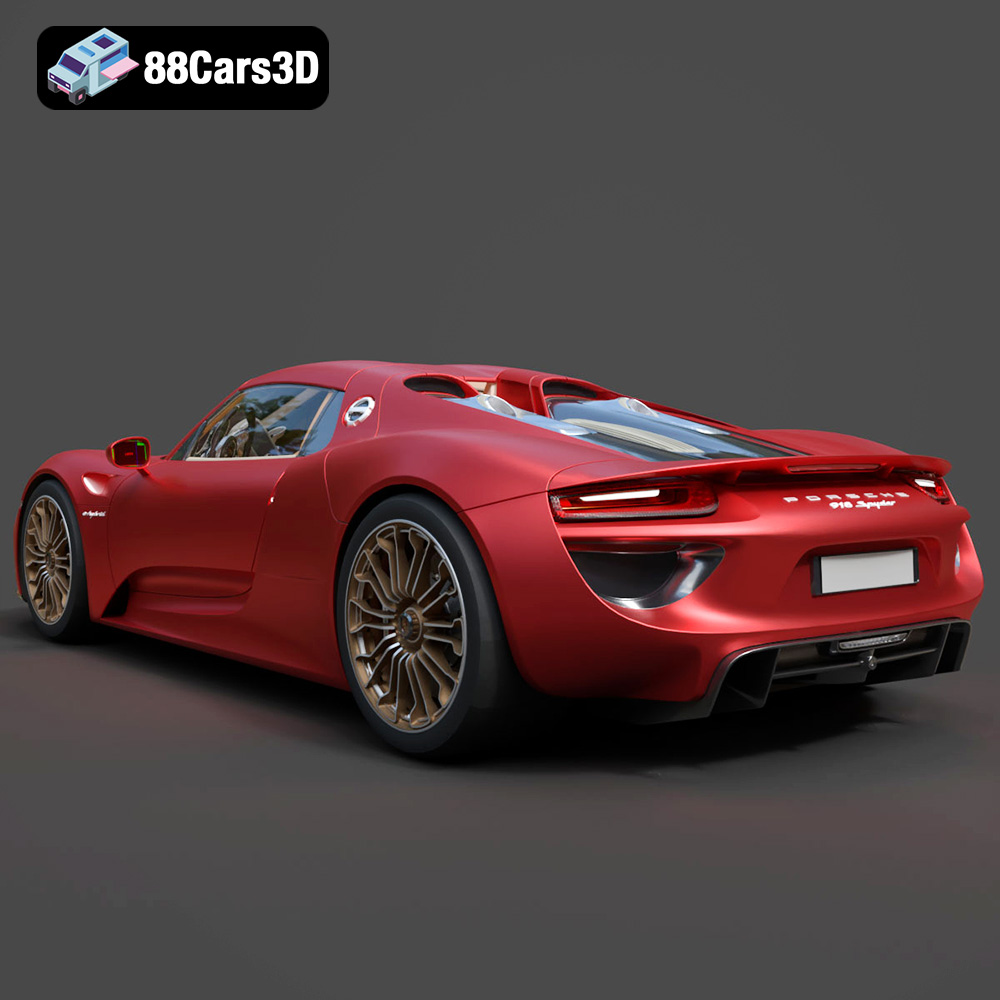
The Porsche 918 Spyder is a triumph of engineering and design, with every curve and vent serving an aerodynamic purpose. This 3D model meticulously replicates those precise proportions and cutting-edge aerodynamic geometries. From the aggressive front splitter to the distinctive active rear wing, the digital recreation mirrors the real-world vehicle’s design philosophy. Such accuracy is critical for realistic automotive rendering, where subtle variations can drastically affect the visual credibility of a scene. Designers can be confident that reflections will behave correctly over the car’s surfaces, and the overall silhouette will be instantly recognizable to automotive enthusiasts.
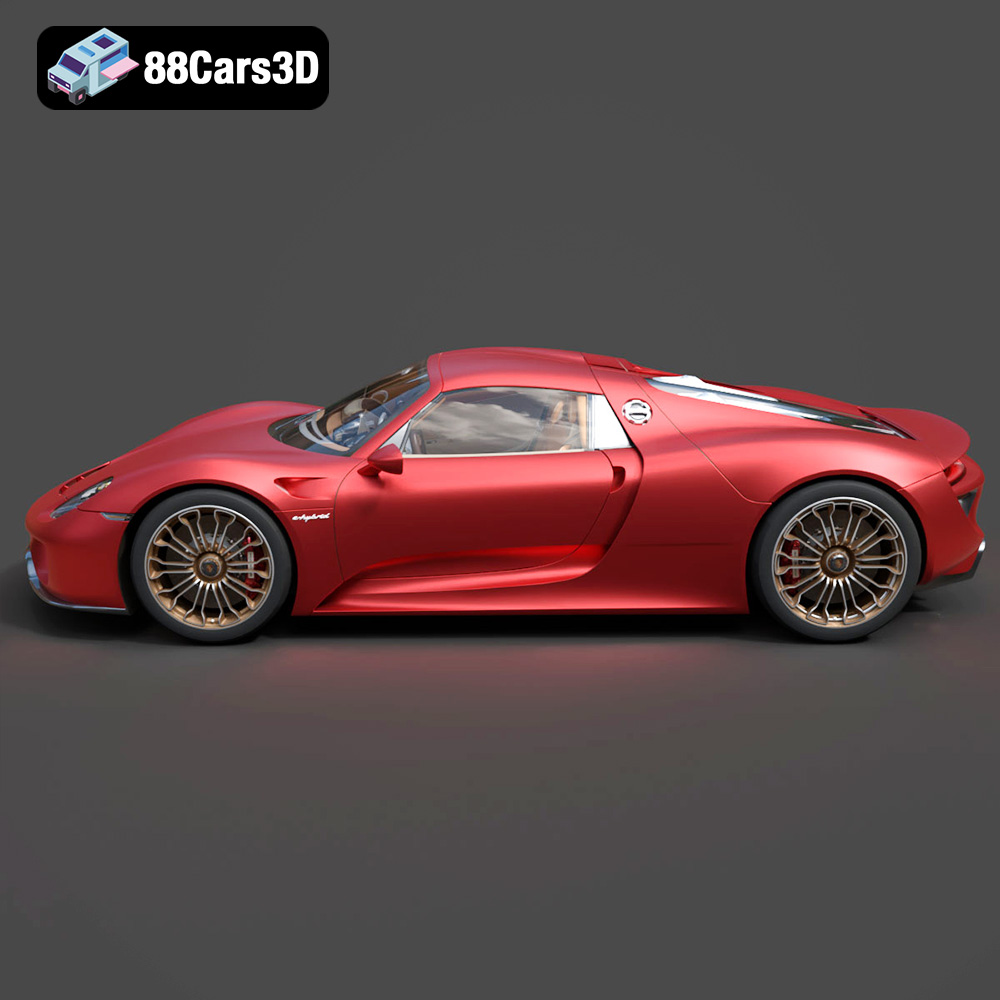
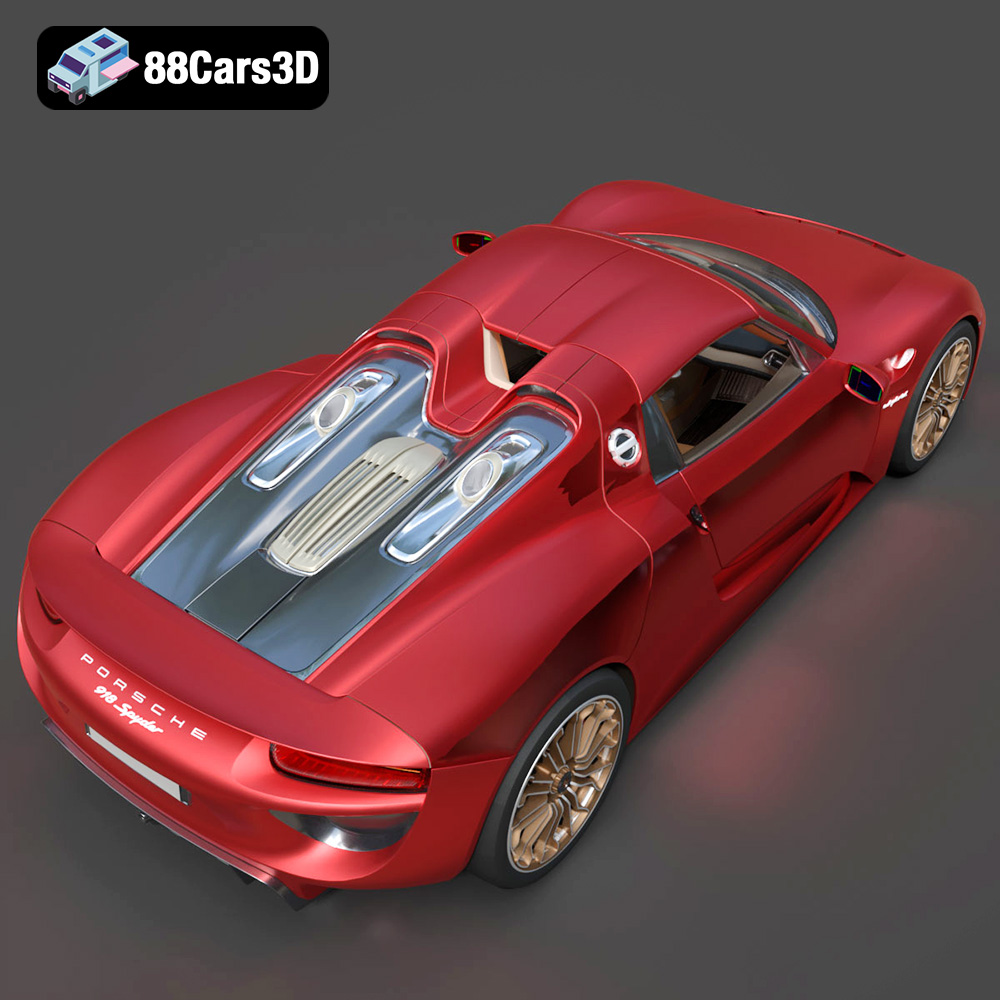
One of the standout features of this specific 3D model is its fully detachable Targa-style roof panels. This isn’t just a static detail; the model is configured for easy removal and animation. This dynamic capability opens up a wealth of creative possibilities: transitioning from a closed-coupe track profile to an open-air Spyder configuration for cinematics, interactive showrooms, or even in-game customization. Beyond the roof, the model also features separate wheels, steering components, and doors, all set up with proper pivots. This crucial detail allows for realistic animation and rigging, essential for high-fidelity driving simulators, compelling automotive commercials, or dynamic product showcases.
The model doesn’t just excel on the outside; it offers a detailed interior that captures the Porsche 918 Spyder’s unique driver-centric cockpit. With sweeping, elevated center console geometry featuring digital displays, premium sport bucket seats, and the signature sport steering wheel with its driving mode selector dial, the interior is ready for close-up shots and first-person perspectives. Exterior details are equally impressive: the iconic top-exit exhaust system, distinctive four-point LED headlights, sleek 3D taillight blades, and detailed forged alloy wheels revealing massive carbon-ceramic brake calipers all contribute to an unparalleled level of realism. This comprehensive detailing makes it suitable for demanding applications like VR experiences where users can virtually sit inside the car, or for high-resolution renders showcasing the vehicle’s luxurious appointments.
The true value of a high-quality 3D asset lies in its seamless integration into various professional workflows. The Porsche 918 Spyder (With Detachable Roof) 3D Model is designed with this versatility in mind, making it a powerful addition to projects across multiple disciplines.
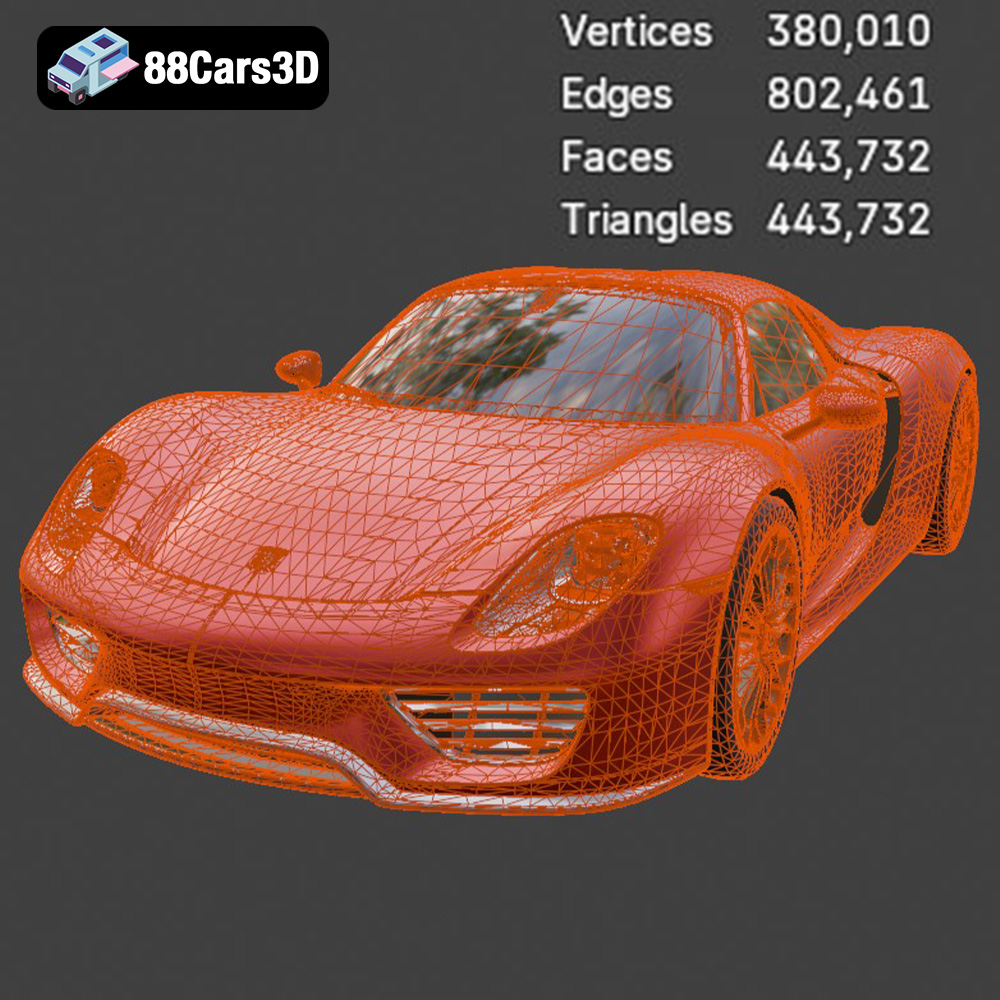
For game developers, performance and visual fidelity must strike a delicate balance. With just over 443,000 triangles, this model hits a sweet spot, making it perfectly optimized for real-time game engines like Unreal Engine and Unity. It’s ideal for use as a “hero” drivable hypercar in current-gen racing games, open-world titles, or highly detailed driving simulators. The clean, quad-based topology ensures smooth deformations for animation and efficient processing by rendering engines. Its properly separated and pivoted components (wheels, steering, doors, roof) are game-ready, allowing for straightforward rigging and physics integration. Imagine a player customizing their 918 Spyder, detaching the roof mid-race, or seeing dynamic shadows cast by its active rear wing – all made possible by the thoughtful construction of this asset.
Automotive rendering demands perfection. Commercial visualizations, luxury automotive galleries, and architectural renders require models that can withstand intense scrutiny under dramatic studio lighting. The Porsche 918 Spyder 3D Model excels here. Its high visual fidelity, combined with accurate real-world scale and detailed geometry, makes it perfect for producing photorealistic imagery. Artists using 3ds Max, Blender, Cinema 4D, or other rendering suites can leverage its clean topology for flawless subdivision, intricate material setups, and cinematic camera angles. The customization options – from applying legendary “Weissach Package” wraps to adjusting exterior paint colors to match factory PTS options – further enhance its utility for creating bespoke visual narratives.
Augmented Reality (AR) and Virtual Reality (VR) are revolutionizing how consumers interact with products, especially in the luxury automotive sector. The optimized poly count of this 918 Spyder model makes it an excellent choice for interactive digital showrooms and mobile AR experiences. Its lightweight nature ensures smooth performance on a variety of devices, preventing lag and maintaining immersion. Imagine a potential buyer exploring the car in full 3D from their living room via AR, or experiencing a VR tour of the cockpit, observing every detail of the sweeping center console and Alcantara-ready sport seats. The .glb format, specifically designed for web and real-time AR/VR applications, further streamlines this process, allowing for rapid deployment of engaging, interactive content.
The utility of a premium 3D model extends far beyond traditional screen-based rendering and game development. With advancements in technology, assets like the Porsche 918 Spyder (With Detachable Roof) 3D Model are finding exciting applications in AR/VR and even physical creation through 3D printing.
The automotive industry is rapidly embracing AR/VR for marketing, sales, and customer engagement. High-fidelity, optimized 3D car models are the backbone of these experiences. The Porsche 918 Spyder model, with its balanced polygon count (approximately 443k triangles), is ideally suited for creating interactive digital showrooms. Imagine a user wearing a VR headset, walking around the 918 Spyder, opening its detachable roof, inspecting the top-exit exhausts, and even sitting inside to examine the driver-centric cockpit. For AR, the model can be projected into real-world environments via a smartphone, allowing potential customers to visualize the car in their driveway or garage, changing paint colors or wheel options in real-time. The clean geometry and efficient mesh ensure these experiences are fluid and visually stunning, without taxing device resources.
The journey from a digital asset to a tangible object is a captivating one, and the Porsche 918 Spyder 3D Model is engineered to make this transition seamless. It is convertible to the .stl format, the universal standard for 3D printing, catering to hobbyists who desire a physical representation of this automotive masterpiece. Whether for display-scale 1:18 or 1:24 supercar diecast collectors, or for creating custom prototypes, the model provides a solid, manifold geometry. For best results, resin printing is highly recommended to capture the sharp aerodynamic edges, intricate wheel spokes, and the distinctive top exhausts. Detailed print settings are provided, including recommended layer heights (0.04–0.12 mm), wall thickness (1.2–2.0 mm), and necessary supports for elements like side mirrors and the aggressive front splitter. Post-processing with sanding, primer, and striking Porsche colors like Liquid Metal Silver or Guards Red, accented with Acid Green hybrid brake caliper details, can yield a truly remarkable physical collectible.
Achieving a perfect balance between stunning visual quality and optimal performance is a constant challenge in 3D production. The Porsche 918 Spyder (With Detachable Roof) 3D Model exemplifies thoughtful optimization, showcasing how meticulous attention to poly count and UV mapping creates a versatile and high-performance asset.
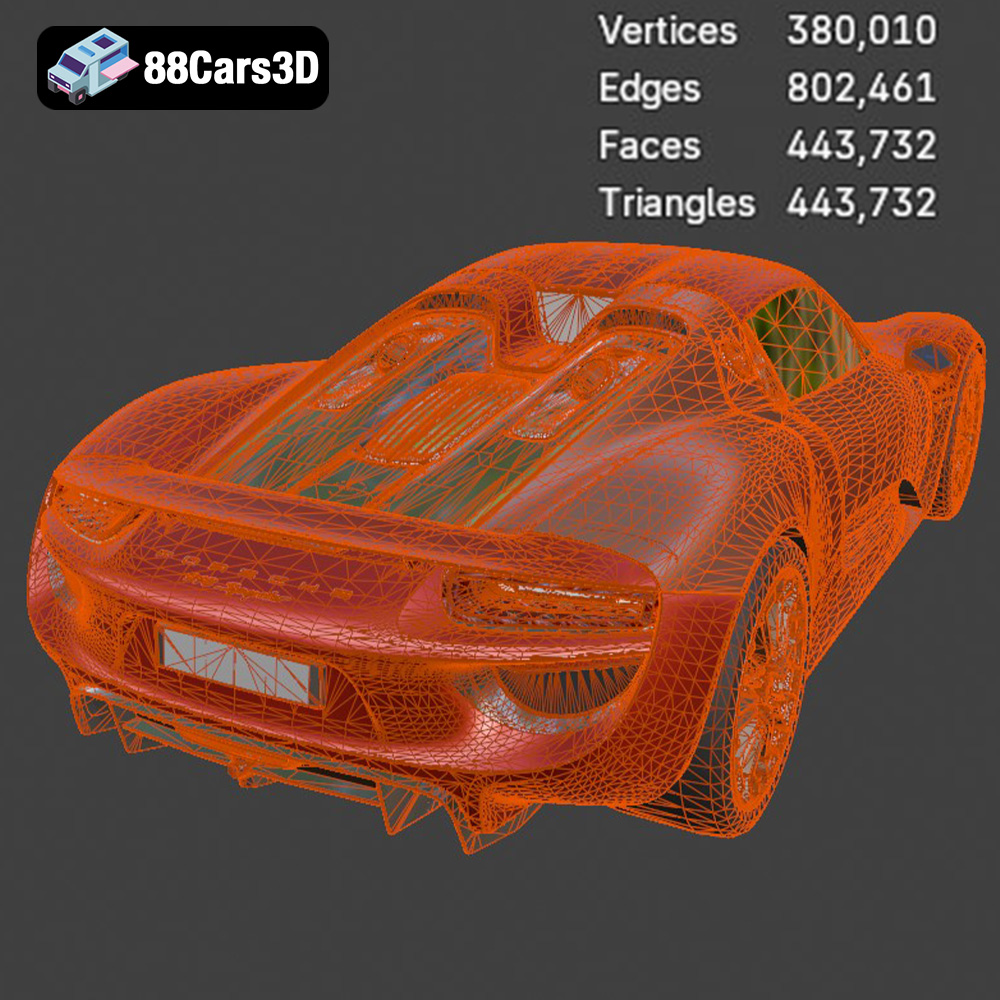
The technical specifications of this model reveal its carefully considered design: 380,010 vertices, 802,461 edges, and 443,732 faces/triangles. This isn’t an arbitrary number; it represents a “sweet spot” for modern 3D assets. At ~443k triangles, the model is detailed enough to be a high-end cinematic asset, capable of holding up under extreme close-ups and high-resolution renders. The clean, quad-based flow of its topology (as evident in wireframe renders) is crucial. Quads deform better than triangles, making the model easier to animate and allowing for smooth subdivision without introducing artifacts. Simultaneously, this poly count is optimized enough to run smoothly as a “hero” car in Unreal Engine or Unity, maintaining high frame rates without sacrificing visual appeal. This thoughtful balance ensures maximum flexibility, reducing the need for extensive re-topology or creating multiple LOD (Level of Detail) versions for different applications.
Authenticity in 3D modeling extends beyond visual details to fundamental structural accuracy. This 918 Spyder model boasts real-world scale accuracy, based on Porsche factory dimensions. This is vital for integrating the car into environments (e.g., architectural visualizations) or physics simulations in games, where incorrect scale can lead to disproportionate lighting, collision issues, or simply an unnatural feel. Furthermore, the model features a proper pivot setup for key animatable components like steering, wheel rotation, and, critically, the roof removal mechanism. Correct pivots are non-negotiable for realistic animation, eliminating the need for artists to manually adjust pivot points, saving valuable production time and ensuring precise movements.
While the product description highlights the model’s geometry, the mention of “Texture: Yes | Material: Yes” in the meta description is a strong indicator of its readiness for advanced rendering. A professional 3D car model typically comes with well-organized UV maps, allowing for seamless application of textures (diffuse, normal, roughness, metallic, etc.) based on a Physically Based Rendering (PBR) workflow. This ensures that the digital surfaces react to light in a way that accurately mimics real-world materials like the car’s paint, carbon fiber accents, glass, and interior Alcantara. High-quality UVs mean textures can be applied without stretching or distortion, maximizing the visual fidelity and allowing artists to quickly re-texture or apply custom liveries, such as the legendary Martini Racing or Salzburg liveries for the Weissach Package options.
The versatility and technical prowess of the Porsche 918 Spyder (With Detachable Roof) 3D Model unlock a myriad of creative possibilities across diverse industries.
A leading game studio is developing an open-world racing simulator set in a photorealistic digital environment. They require a “hero car” that not only looks stunning but also performs flawlessly within the game engine. The Porsche 918 Spyder (With Detachable Roof) 3D Model from 88cars3d.com becomes a crucial asset. Its optimized 443k triangle count means it can be rendered in real-time without significant performance drops, even with multiple vehicles on screen. The included .fbx and .unreal formats allow for direct import and rapid integration into their Unreal Engine pipeline. The pre-set pivots for wheels, steering, and the detachable roof enable the development team to quickly rig the car for complex physics and animation, allowing players to dynamically remove the roof during gameplay or customize the car’s appearance with different paint schemes and the “Weissach Package” liveries. This saves months of modeling and optimization time, allowing the team to focus on gameplay mechanics and environmental design.
An advertising agency is tasked with creating a high-octane commercial for a luxury brand, showcasing the pinnacle of automotive engineering. They need a hypercar model that can withstand extreme close-ups and dramatic lighting. The Porsche 918 Spyder (With Detachable Roof) 3D Model, with its accurate proportions, detailed exterior and interior, and clean topology, is the perfect choice. Using 3ds Max and a powerful renderer like V-Ray or Corona, artists can leverage the .max file to set up intricate studio lighting, animate the detachable roof panels in a dynamic sequence, and create breathtaking slow-motion shots that highlight the car’s iconic top-exit exhausts and four-point LED headlights. The real-world scale ensures accurate reflections and refractions, making every frame indistinguishable from reality. The ability to customize paint colors to striking factory PTS options further enhances the creative freedom, allowing the agency to match client branding or specific campaign aesthetics.
A technology startup is building a cutting-edge virtual showroom for high-end luxury vehicles, allowing potential buyers to explore cars from anywhere in the world. The Porsche 918 Spyder is a must-have in their virtual collection. The optimized geometry and the availability of the .glb format make this model ideal for their AR/VR application. Its lightweight nature ensures a smooth, immersive experience even on mobile AR devices or less powerful VR headsets. Users can virtually walk around the car, open the doors, remove the roof panels, and even step inside to experience the meticulously detailed interior from a first-person perspective. The model’s fidelity allows for a truly engaging and interactive demonstration of the vehicle’s features, blurring the lines between the digital and physical showroom experience, driving engagement and sales for luxury automotive brands.
The digital realm offers unprecedented opportunities to experience, visualize, and interact with the world’s most iconic automobiles. The Porsche 918 Spyder (With Detachable Roof) 3D Model stands as a testament to this potential, providing a meticulously crafted, technically robust, and exceptionally versatile asset for professionals across various industries. From its stunning visual fidelity and accurate proportions to its intelligent optimization and dynamic features like the detachable roof, every aspect of this model has been designed to empower creators.
Whether your passion lies in crafting hyper-realistic automotive renders, developing the next blockbuster racing game, designing immersive AR/VR experiences, or even bringing a digital icon into the physical world through 3D printing, this 3D model offers the foundational quality required for excellence. Its comprehensive suite of file formats – from .blend and .max for native software users to .fbx for universal exchange and .glb for web-based AR/VR – ensures seamless integration into virtually any professional pipeline.
Investing in a premium 3D asset like the Porsche 918 Spyder (With Detachable Roof) 3D Model means investing in efficiency, quality, and creative freedom. It’s more than just a model; it’s a gateway to bringing your most ambitious automotive visions to life. Explore this exceptional asset and many more high-quality 3D car models at 88cars3d.com, and elevate your projects to the next level of digital automotive artistry.
The Porsche 918 Spyder 3D Model is a breathtaking digital recreation of one of the most legendary German hypercars ever produced. Forming one-third of the automotive world’s modern “Holy Trinity,” the 918 Spyder redefined the supercar landscape by pairing a high-revving naturally aspirated V8 with advanced dual electric motors. This 3D model accurately captures the sleek, aerodynamically sculptured aesthetic of the hybrid hypercar. Most notably, this model features the signature fully detachable Targa-style roof panels, allowing you to seamlessly switch between the closed-coupe track profile and the open-air Spyder configuration. It also features the iconic top-exit exhaust pipes, four-point LED headlights, aggressive rear diffuser, and active aerodynamic rear wing. Built with an incredibly efficient, clean mid-polygon topology (just over 443k triangles), it provides flawless visual fidelity for stunning close-up automotive renders while remaining perfectly lightweight for real-time game engines. Perfect for high-speed racing simulators, luxury automotive galleries, cinematic commercial visualizations, and AR/VR supercar showrooms.
$55