⚡ FLASH SALE: Get 60% OFF All Premium 3D & STL Models! ⚡

In the rapidly evolving landscape of automotive marketing, traditional static imagery and pre-rendered videos are giving way to dynamic, interactive real-time experiences. Consumers today expect more than just to see a car; they want to experience it, customize it, and immerse themselves in its design before it even rolls off the production line. This shift is powered by sophisticated real-time engines, with Unreal Engine leading the charge.
Unreal Engine has transcended its gaming origins to become an indispensable tool for automotive visualization, offering unparalleled photorealism, interactivity, and scalability. From creating stunning virtual showrooms and personalized configurators to powering cinematic marketing campaigns and virtual production pipelines, Unreal Engine provides the comprehensive toolkit necessary to captivate modern audiences. For professionals seeking high-quality assets to fuel these ambitious projects, marketplaces like 88cars3d.com offer an extensive library of meticulously crafted 3D car models, pre-optimized for immediate integration into Unreal Engine. This article will delve deep into the technical workflows and creative possibilities that Unreal Engine unlocks for automotive marketing, guiding you through project setup, material creation, lighting, interactivity, optimization, and advanced production techniques.
Embarking on an automotive visualization project in Unreal Engine begins with a solid foundation: proper project setup and the seamless integration of your 3D car models. This initial phase is crucial for ensuring optimal performance, visual fidelity, and an efficient workflow throughout the development cycle. Understanding the specific requirements for automotive assets, particularly high-quality models sourced from platforms like 88cars3d.com, will streamline your process significantly.
When starting a new Unreal Engine project, select the “Film, Television, and Live Events” or “Architecture, Engineering, and Construction” template for a good starting point, as they often come with relevant plugins enabled and appropriate project settings for high-quality visuals. Essential plugins for automotive visualization include “Datasmith Importer” for robust CAD data import, “Alembic Importer” for complex animations, and “OpenXR” or “SteamVR” if targeting AR/VR. For advanced rendering, ensure “Ray Tracing” and “Lumen” are enabled in Project Settings under the “Rendering” section. Setting the default RHI to “DirectX 12” is also recommended for optimal performance with modern rendering features. Furthermore, consider enabling the “High Quality Media Export” plugin for creating pristine video outputs directly from Sequencer.
The quality of your 3D car models is paramount. When sourcing automotive assets from marketplaces such as 88cars3d.com, you benefit from models often pre-optimized for real-time engines, featuring clean topology, proper UV mapping, and PBR-ready materials. For importing, FBX is a common and reliable format, offering excellent compatibility for meshes, materials, and skeletal data. For more complex scenes or future-proofing, consider the USD (Universal Scene Description) format, which is gaining traction for its ability to handle large, complex scenes and collaborate across various DCC applications. Upon import, ensure the model’s scale is correct (Unreal Engine uses centimeters by default) and its pivot point is accurately placed at the center of the vehicle’s base for intuitive manipulation. It’s good practice to inspect the mesh for any flipped normals or overlapping UVs using Unreal’s built-in Mesh Editor. For models not yet utilizing Nanite, optimize polygon counts where feasible without sacrificing visual fidelity. High-quality 3D car models typically range from 200,000 to 1,000,000 triangles for a full vehicle, which Nanite can handle efficiently, but older workflows might require LODs (Levels of Detail).
Photorealism in automotive visualization largely hinges on the quality and accuracy of your materials. Unreal Engine’s Physically Based Rendering (PBR) system is designed to simulate how light interacts with surfaces in the real world, producing incredibly convincing results when properly configured. Crafting PBR materials for vehicles requires a deep understanding of metallic, rough, and specular properties, especially for complex surfaces like car paint, glass, and tires.
At the core of PBR are a few key principles: energy conservation (light doesn’t magically appear or disappear), and the concept of materials reacting to light based on their physical properties. For automotive surfaces, this translates to specific texture maps: Base Color (albedo), Metallic, Roughness, Normal, and optionally Ambient Occlusion. The Base Color dictates the intrinsic color, while Metallic defines how “metal-like” a surface is (0 for dielectric, 1 for metallic). Roughness controls the microsurface detail, influencing how sharp or blurry reflections appear (0 for perfectly smooth, 1 for completely rough). Normal maps add fine surface detail without increasing polygon count, crucial for subtle details like body panel lines or tire treads. Understanding how these maps interact is vital; for instance, a metallic surface will have a very dark or black Base Color, with its primary color information coming from its reflection, dictated by the Metallic map and its intrinsic color from the ‘specular’ property.
Unreal Engine’s Material Editor is a node-based interface that allows for intricate material construction. For car paint, a sophisticated material often involves a clear coat layer, achieved using the “Clear Coat” and “Clear Coat Roughness” inputs in the Material node. This mimics the protective clear layer found on real car finishes, allowing for complex Fresnel reflections and subtle depth. For paint flakes, a layered material approach or custom shader logic using a noise texture combined with UV distortion can simulate metallic flecks under the clear coat. Glass materials require careful setup, often using a translucent blend mode, a low Roughness value, and a high Specular value, combined with custom refraction logic or the built-in refraction input. For headlights and taillights, emissive properties combined with detailed normal maps for internal optics are essential. Tires demand a robust material with strong normal mapping for tread detail, a moderate roughness, and an appropriate Base Color, often incorporating some dirt or wear masks for added realism. Utilizing Material Instances allows artists to quickly iterate on color variations, roughness adjustments, or paint flake intensity without recompiling the base material, drastically speeding up the design process for car configurators.
Lighting is the soul of any visually compelling real-time scene, and automotive visualization is no exception. Unreal Engine 5 introduces revolutionary technologies like Lumen and Nanite, alongside robust hardware-accelerated Ray Tracing, offering unprecedented levels of realism and dynamic lighting possibilities. Harnessing these features correctly is key to showcasing your 3D car models in the most photorealistic way possible.
Lumen is Unreal Engine 5’s fully dynamic global illumination and reflections system, eliminating the need for baking static lighting or pre-computing lightmaps. For automotive scenes, Lumen provides incredibly realistic bounced light, soft shadows, and vibrant color bleeding, making interiors feel more natural and exteriors react accurately to environmental changes. To enable Lumen, simply go to Project Settings > Rendering > Global Illumination and Reflections, and set the method to “Lumen.” For optimal quality, ensure your scene’s light sources (e.g., Directional Light for sun, Sky Light for ambient, Spot Lights for studio setups) are configured to be “Movable.” Lumen operates by analyzing the scene geometry and light distribution in real-time, making it perfect for interactive experiences where lighting conditions might change (e.g., time-of-day cycles or configurable environments). Performance considerations for Lumen include limiting the number of dynamic lights casting shadows and ensuring the scene geometry isn’t overly complex, although Nanite helps manage geometric detail effectively.
While Lumen handles global illumination and reflections dynamically, hardware-accelerated Ray Tracing in Unreal Engine offers pixel-perfect reflections, soft area shadows, ambient occlusion, and transparency. For the highly reflective surfaces of a car, such as metallic paint, chrome, and glass, Ray Tracing provides an unmatched level of fidelity that standard screen-space reflections cannot achieve. To enable Ray Tracing, navigate to Project Settings > Rendering > Ray Tracing and check the “Ray Tracing” option. You’ll then have individual controls for Ray Traced Global Illumination (if not using Lumen exclusively), Reflections, Shadows, and Ambient Occlusion. For car paints, Ray Traced Reflections are particularly impactful, accurately reflecting the surrounding environment and adding significant depth and realism. For studio renders, carefully placed area lights with Ray Traced Shadows can produce beautiful, soft shadows that mimic professional photography setups. It’s crucial to balance Ray Tracing features with performance targets, as they are computationally intensive. Often, a hybrid approach using Lumen for GI and Ray Tracing for specific elements like reflections and shadows on the car itself yields excellent results while maintaining good framerates.
The true power of Unreal Engine in automotive marketing lies in its ability to create immersive, interactive experiences. Beyond just beautiful visuals, allowing users to customize, explore, and manipulate the vehicle in real-time transforms a passive viewing into an engaging interaction. This is primarily achieved through Unreal Engine’s visual scripting system, Blueprint, and its user interface designer, UMG (Unreal Motion Graphics).
A car configurator is a prime example of an interactive automotive experience. Using Blueprint, you can empower users to change paint colors, swap rim designs, select interior trims, and even toggle between different body kits. The core logic involves creating functions or events in a Blueprint Class (e.g., your Car Blueprint) that receive input from UI elements. For instance, clicking a color swatch in the UI would trigger an event in the Car Blueprint that sets a new material instance parameter for the car paint material. For swapping entire components like rims, you might have multiple static mesh components hidden by default, and Blueprint logic would toggle their visibility. Variables for color (LinearColor), material (Material Instance Dynamic), or mesh (Static Mesh Component references) are frequently used. This modular approach allows for extensive customization without needing to hardcode every possibility. When building your car models, ensure different customizable parts are separate meshes or have distinct Material IDs to facilitate dynamic material or mesh swaps via Blueprint.
A compelling interactive experience needs intuitive controls and a clear user interface. UMG is Unreal Engine’s powerful UI system, allowing you to design interactive menus, buttons, sliders, and text displays using a drag-and-drop interface. For a car configurator, you’d design a Widget Blueprint containing buttons for categories (Exterior, Interior), color swatches, and possibly sliders for camera zoom or rotation. Each UI element can be bound to Blueprint events that communicate with your Car Blueprint or Player Controller. For example, a “Next” button for camera views could cycle through predefined camera positions using the Sequencer’s Camera Cuts track or by simply setting the camera’s world transform. Implementing smooth camera controls, such as orbital rotation around the car or dynamic zooming, can be done within the Player Controller Blueprint using input events (mouse, gamepad) and interpolation nodes (e.g., VInterpTo, RInterpTo) to create a fluid, professional feel. Ensuring the UI is responsive and adapts to different screen resolutions is also important for broader deployment. The ability to quickly prototype and iterate on these interactive elements in Blueprint and UMG makes Unreal Engine an incredibly agile tool for developing engaging automotive marketing tools.
While visual fidelity is crucial, performance is equally vital, especially when targeting diverse platforms from high-end workstations to mobile AR/VR devices. Unreal Engine offers a suite of powerful optimization tools, including Nanite for geometry, LODs for distance-based detail, and specific considerations for augmented and virtual reality, ensuring your automotive experiences run smoothly across the board.
Nanite, Unreal Engine 5’s virtualized geometry system, is a game-changer for automotive visualization. It allows artists to import film-quality assets with millions or even billions of polygons directly into Unreal Engine without manual polygon reduction or complex LOD setup. This means models from 88cars3d.com, with their intricate details and high polygon counts, can be seamlessly integrated and rendered at incredible fidelity. Nanite intelligently streams and processes only the necessary detail at any given moment, ensuring performance remains high regardless of geometric complexity. To enable Nanite on a Static Mesh, simply open the mesh editor, navigate to the “Nanite Settings” section, and check “Enable Nanite Support.” For optimal results, ensure your original mesh is triangulated and has clean geometry. While Nanite significantly reduces the burden of polycount optimization, it’s still good practice to maintain clean, well-constructed meshes, as they will still influence performance in other systems like collision and Lumen’s software ray tracing. Nanite is especially powerful for highly detailed car bodies, interiors, and engine components, allowing every curve and seam to be rendered with cinematic precision.
While Nanite handles primary mesh geometry efficiently, other assets and situations still benefit from traditional Levels of Detail (LODs). For instance, animated characters, foliage, or very distant background elements might still use LODs. For non-Nanite meshes, manual or automatic LOD generation in Unreal Engine’s Static Mesh Editor allows you to create progressively simpler versions of your mesh that swap in at different distances from the camera. This drastically reduces the polygon count rendered for objects further away, improving framerate. A typical automotive scene might have 3-5 LODs per mesh, with polygon counts reducing by 50-70% at each step. Beyond geometry, texture resolutions also need careful management. Using texture streaming and appropriate resolutions (e.g., 4K for primary car body textures, 2K for less prominent parts, 1K for small details) helps control VRAM usage. Monitoring performance metrics like framerate (FPS), GPU and CPU utilization, and VRAM usage using Unreal Engine’s built-in profilers (e.g., Stat FPS, Stat GPU, Stat RHI) is crucial for identifying bottlenecks and making informed optimization decisions. Setting clear performance budgets for polygon counts, draw calls, and texture memory per frame helps maintain a consistent target across all target platforms.
Augmented Reality (AR) and Virtual Reality (VR) experiences for automotive visualization demand even stricter performance considerations due to the need for high, stable framerates (e.g., 72-90 FPS per eye) to prevent motion sickness.
For AR, ensuring accurate world-tracking, robust anchor placement, and realistic object scaling are also critical. Testing on target devices throughout development is non-negotiable to achieve a smooth and immersive AR/VR automotive experience.
Beyond interactive configurators, Unreal Engine excels at creating breathtaking cinematic content and driving cutting-edge virtual production workflows for automotive marketing. Leveraging tools like Sequencer, combined with real-world production techniques, elevates brand storytelling to new heights, showcasing vehicles in dynamic, emotional, and visually spectacular ways.
Unreal Engine’s Sequencer is a powerful non-linear cinematic editor that allows you to create high-quality, pre-rendered marketing videos or in-engine cutscenes. Think of it as a virtual film studio where you control cameras, lights, animations, visual effects, and audio over a timeline.
When rendering out, utilize the “High Quality Media Export” plugin for pristine image sequences (EXR, PNG) or video files (ProRes, H.264), often leveraging Movie Render Queue for advanced features like temporal anti-aliasing and accumulation rendering for superior final output quality.
Virtual Production, especially with LED walls and in-camera VFX (ICVFX), is revolutionizing how automotive commercials and marketing content are made. Unreal Engine acts as the real-time brain, generating the virtual environments displayed on massive LED screens surrounding the physical vehicle. This allows filmmakers to capture final pixel shots directly in-camera, eliminating green screen complications and expensive location shoots.
Furthermore, realistic vehicle dynamics and physics simulations are crucial for authenticity. Unreal Engine’s built-in Chaos Physics engine, or external physics engines integrated via plugins, allows for sophisticated suspension, tire, and body physics. You can simulate realistic driving behavior, crashes, or specific performance characteristics. Implementing a robust vehicle physics system involves creating a Chaos Vehicle Component, carefully setting up wheel colliders, suspension parameters, engine torque curves, and gear ratios. This allows for not just gameplay but also highly realistic motion for cinematic sequences, demonstrating handling and performance in a believable manner.
The synergy of high-quality 3D car models, advanced real-time rendering, and powerful interactive tools like those provided by Unreal Engine, opens up a world of possibilities for automotive marketing. From engaging configurators that put the customer in the driver’s seat of their dream car to virtual production sets that redefine commercial filmmaking, the potential is boundless.
Unreal Engine stands as an unparalleled platform for automotive marketing, driving the industry towards a future defined by interactive, immersive, and visually stunning experiences. We’ve journeyed through the intricate processes of setting up projects, integrating high-fidelity 3D car models (like those readily available on 88cars3d.com), mastering the art of PBR materials, and illuminating scenes with dynamic technologies like Lumen and hardware Ray Tracing. Furthermore, we explored the transformative power of Blueprint for crafting engaging interactive configurators, and how UMG empowers the creation of intuitive user interfaces.
The discussion extended to critical optimization strategies, leveraging Nanite for managing complex geometry, implementing strategic LODs for performance across diverse hardware, and tailoring experiences for AR/VR. Finally, we delved into the cinematic capabilities of Sequencer and the cutting-edge realm of virtual production, highlighting how Unreal Engine is redefining content creation for automotive brands. By embracing these tools and workflows, automotive companies can create compelling narratives, foster deeper customer engagement, and showcase their vehicles in ways previously unimaginable. The transition from static imagery to dynamic, real-time interactivity is not just an evolution; it’s a revolution in how vehicles are presented and perceived, setting a new benchmark for marketing excellence.

Texture: Yes | Material: Yes | 3D Printable: Yes. Download the Italian Thoroughbreds Bundle featuring 5 iconic 3D models: Lamborghini Huracán Performante, Ferrari 458 Italia, Lamborghini Urus, Diablo SV, and Maserati GT. Optimized for 4K rendering and 3D printing (STL included). Save 50% with this ultimate Italian vehicle collection.
Price: $199.99

Download the Elite Future Mobility Bundle featuring 4 highly optimized 3D models: Tesla Model S, Avatr 11, Li L9, and Zoox Robotaxi. Perfect for ArchViz, Smart City renders, and game dev. Optimized for Unreal Engine and Blender. Includes .fbx, .obj, and .max formats.
Price: $99

🚗 5 Iconic German Cars (BMW M4 G82, M5 CS, X3, 1 Series & Mercedes E-Class). ✅ Optimized for ArchViz: Ready for Corona & V-Ray. 💰 Save €71 with this limited-time collection! 🚀 Instant Download after purchase.
Price: $119

Download the Extreme Off-Road & Survival 3D Models Bundle! Includes the Brabus 800 Adventure, Dodge Ram Bigfoot, Spec Truck, and a Caravan. Save over €210 on this premium 4-in-1 off-grid vehicle pack for ArchViz and game development.
Price: $149.99

Download the Heavy Duty & Commercial Logistics 3D Models Bundle! Includes the Ford Sterling, Caterpillar CT680, Mercedes Citaro Bus, and Vito Van. Save over €130 on this massive, game-ready 4-in-1 industrial vehicle pack.
Price: $109.99

Download the Ultimate Custom Motorcycles 3D Models Bundle. Includes a Custom Chopper, Ducati 916 Café Fighter, Harley XR1200X, and BMW K100. Perfect premium props for luxury ArchViz garages. Save over €250 today!
Price: $159.99

Download the ultimate JDM Street Racing 3D Models Bundle! Includes the Nissan GT-R, Toyota Supra, Mazda RX-7, Lancer Evo IX, and Honda NSX. Save big on this highly optimized, game-ready 5-in-1 Japanese legend car pack.
Price: $129.99

Download the ultimate American Muscle & Cinematic Classics 3D Models Bundle! Includes the Dodge Charger ’68, Mustang Eleanor GT500, Camaro Z28 ’79, and a custom ’69 Mustang. Save over €240 on this game-ready, premium 4-in-1 pack.
Price: $149.99

Download the Everyday City Traffic 3D Models Bundle. Includes the VW Golf, Kia Picanto, Hyundai Tucson, Toyota Yaris, and a DHL Ford Transit Van. Save big on this 5-in-1 pack, perfectly optimized for realistic ArchViz streets and game traffic.
Price: $99.99
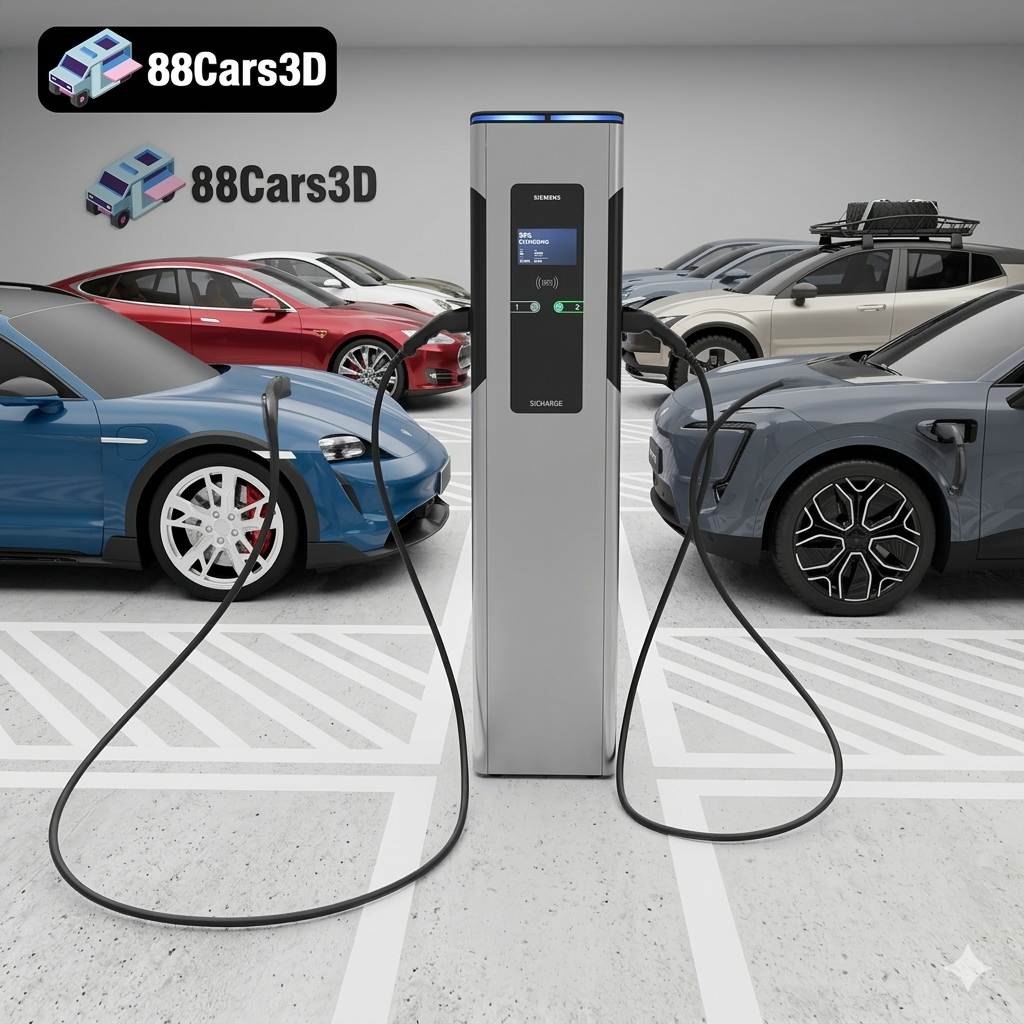
Download the Future of Mobility EV 3D Models Bundle. Includes the Volvo EX30, Tesla Model S, AVATR 11, Porsche Taycan, and a Siemens EV Charger. Save big on this highly optimized 5-in-1 pack for ArchViz and game development!
Price: $89.99

