⚡ FLASH SALE: Get 60% OFF All Premium 3D & STL Models! ⚡

In the expansive world of 3D modeling, where photorealism and intricate detail reign supreme, there’s a unique charm in recreating vehicles that once defined an era. Beyond the sleek lines of sports cars and the robust presence of modern SUVs, lie the humble workhorses – the utilitarian vehicles that shaped daily life and commerce. These machines, often overlooked in popular media, offer a rich tapestry for digital artists, game developers, and visualization specialists to explore. Recreating such a vehicle in 3D isn’t just about modeling; it’s about capturing a piece of automotive history and providing versatile assets for a multitude of applications.
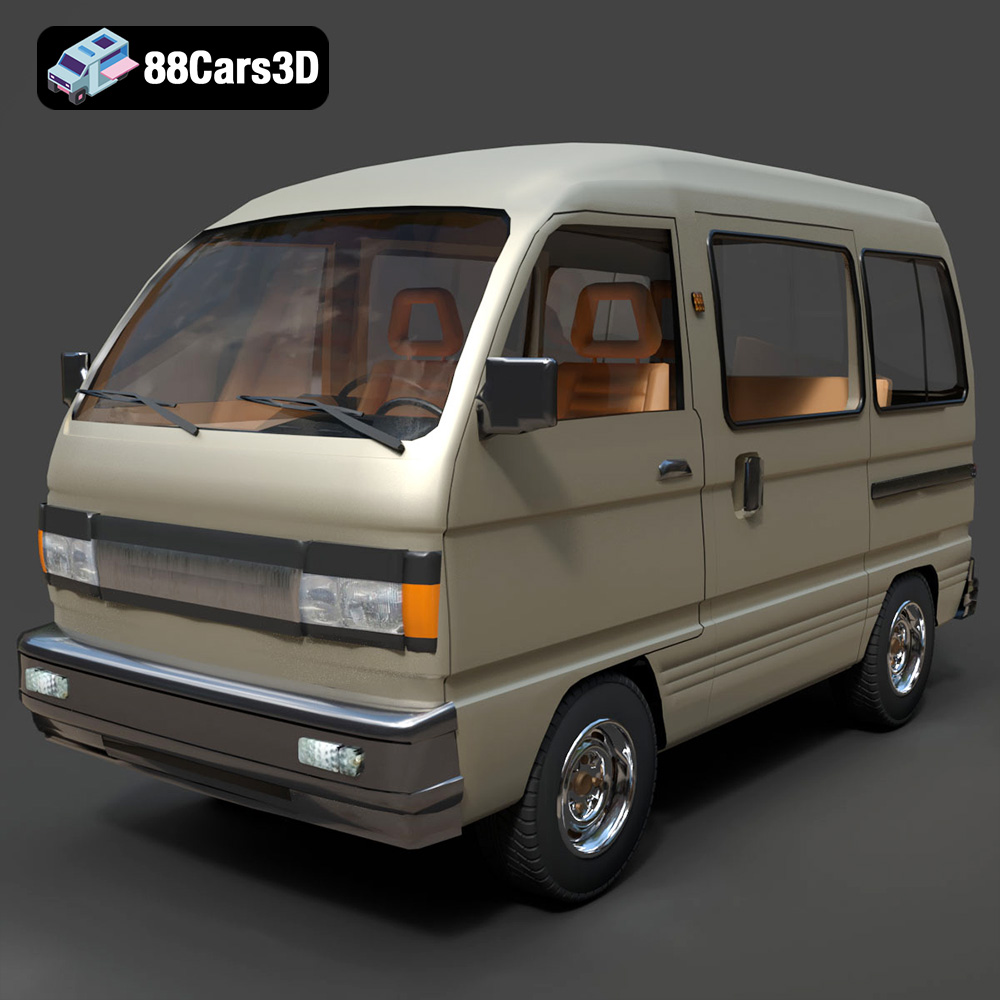
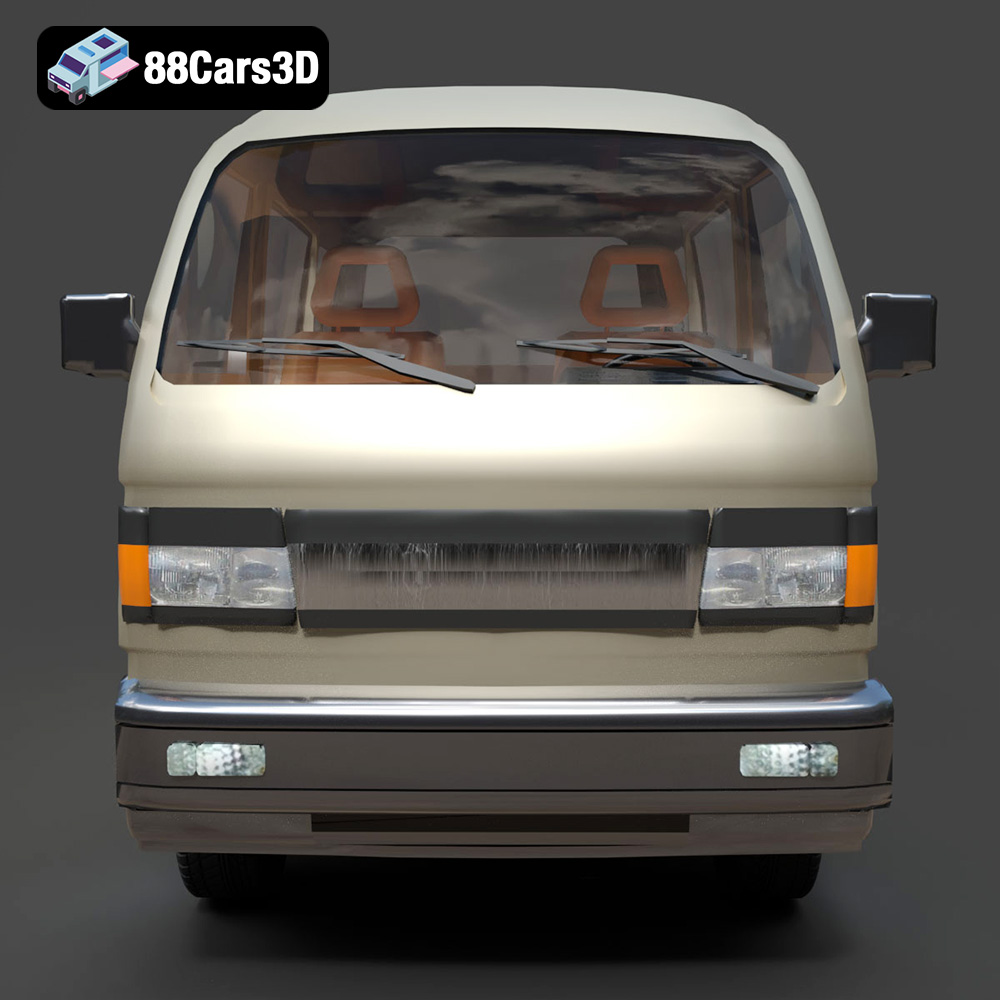
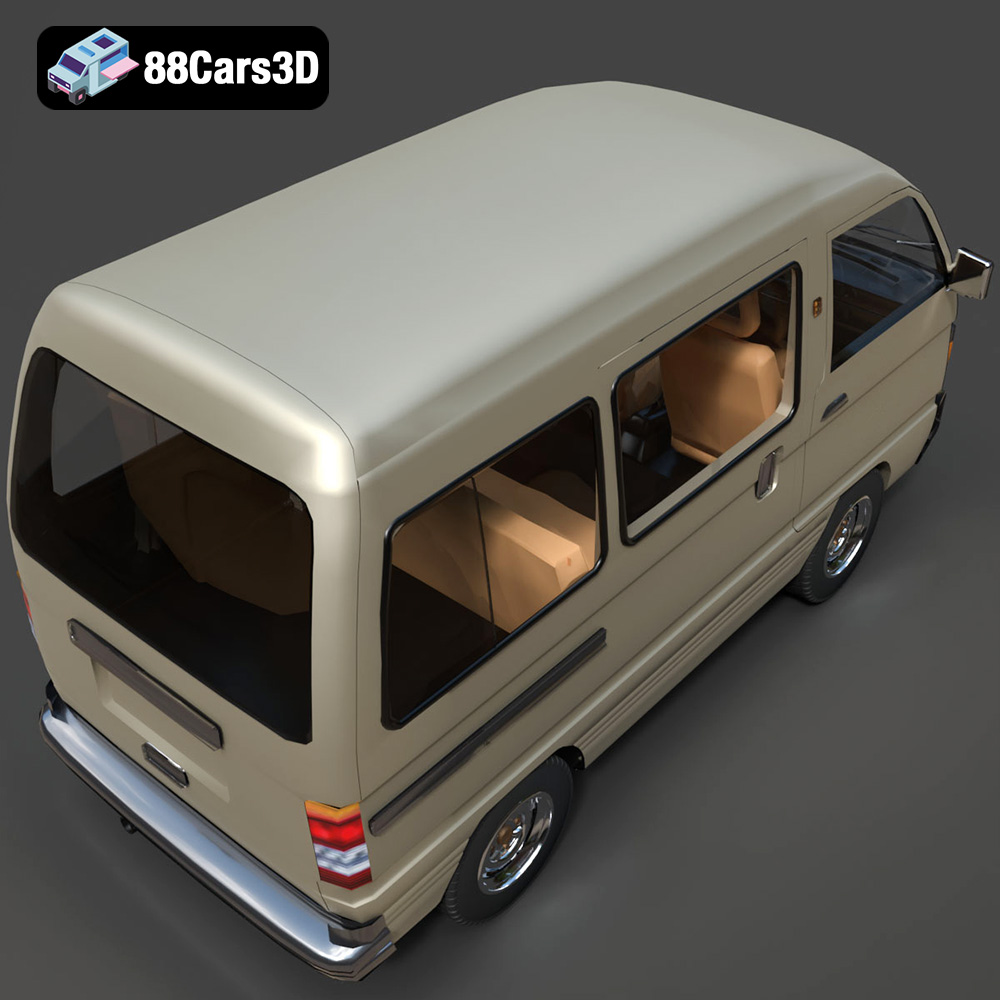
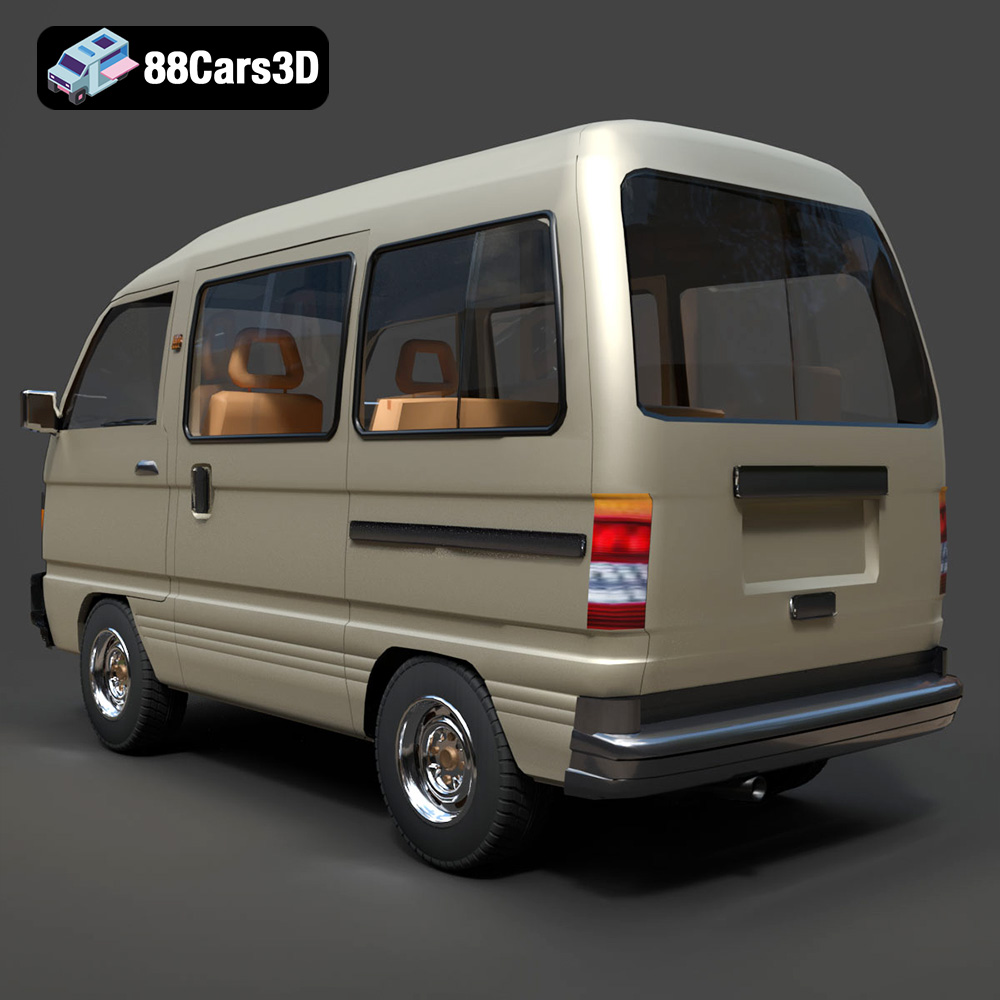
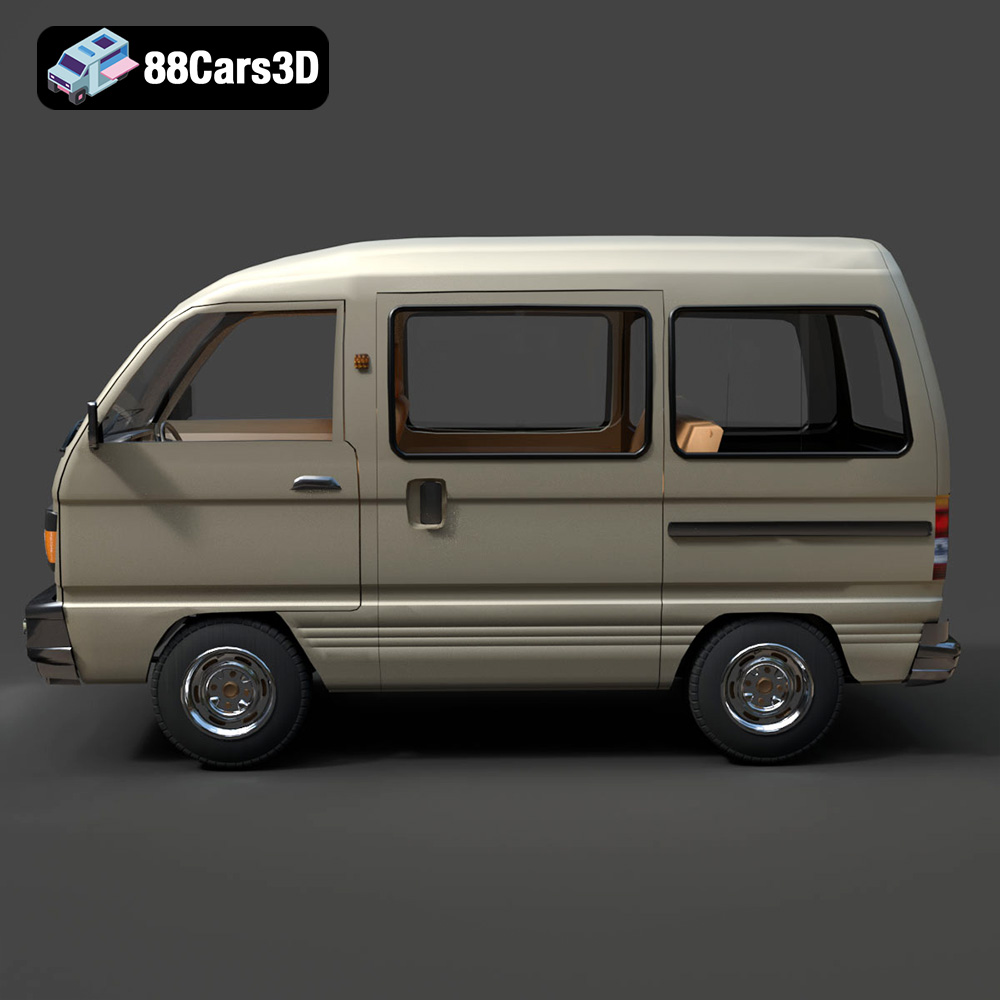
Today, we delve into the meticulous craft of developing and utilizing high-quality 3D car models, exemplified by a standout product from 88cars3d.com: the Suzuki Super Carry 1000 Microvan 3D Model. This iconic compact utilitarian workhorse from the 1980s and 1990s, known for its incredible space efficiency and rugged simplicity, presents an excellent case study for discussing the technical considerations, workflow advantages, and creative possibilities that a professionally developed 3D asset brings to the table. Whether for architectural visualization, game development, AR/VR experiences, or even detailed 3D printing, a well-crafted model like the Super Carry opens doors to diverse creative projects.
The flexibility and usability of a 3D model are often defined by the file formats it supports. For professionals working with 3D car models, understanding these formats is crucial for seamless integration into various software pipelines, optimizing for specific applications, and ensuring data integrity. The Suzuki Super Carry 1000 Microvan 3D Model, offered by 88cars3d.com, exemplifies this versatility by including a comprehensive suite of file types.
The .blend format is native to Blender, a powerful open-source 3D creation suite. When a model is provided in .blend, it typically means the entire Blender scene is included. This offers full editability, preserving all original modeling data, modifiers, materials, textures, rigging, and animation setups. For users deeply integrated into the Blender ecosystem, a .blend file is ideal as it allows direct access to the asset creator’s workflow, enabling advanced customization, material tweaks, or even re-topology if specific poly-counts are required for real-time applications.
.fbx (Filmbox) is arguably the most widely adopted proprietary file format for 3D data exchange, particularly favored in game development (Unreal Engine, Unity) and film/VFX pipelines. It efficiently stores 3D models, animations, rigs, cameras, and lights. For the Suzuki Super Carry model, .fbx ensures that its detailed geometry, pivot points for animation (like sliding doors and wheel rotation), and materials can be reliably transferred between different software packages like 3ds Max, Maya, Blender, and directly into game engines. It’s a robust format for real-time asset export due to its comprehensive data encapsulation.
The .obj (Wavefront Object) format is a venerable and highly compatible format primarily focused on storing geometry data (vertices, UVs, normals, faces). It’s a universal choice for basic mesh transfer between virtually any 3D software. While it doesn’t store animation or advanced material properties as effectively as .fbx, its simplicity makes it incredibly reliable for ensuring core mesh data is preserved and accessible. For projects where the Suzuki Super Carry’s raw geometry is needed for re-texturing or advanced shading setups in a new environment, .obj provides a clean starting point.
.glb (GLB, a binary version of glTF) is an increasingly popular format optimized for efficient transmission and loading of 3D scenes and models, especially in web-based applications, Augmented Reality (AR), and Virtual Reality (VR) environments. It bundles all necessary data—geometry, materials, textures, and animation—into a single, compact file. This makes the Suzuki Super Carry 1000 Microvan ideal for interactive browser experiences, AR apps showcasing the vehicle, or lightweight VR scene populations, offering quick load times and broad compatibility across modern platforms.
.stl (Stereolithography) is the de facto standard format for 3D printing. It represents a 3D model as a collection of unconnected triangular facets, defining only the surface geometry without color or texture information. For the Suzuki Super Carry 1000 Microvan 3D Printable STL, this format is essential. It provides a watertight, manifold mesh that 3D slicer software can interpret to generate print paths. The precision of the Suzuki Super Carry’s geometry ensures that when converted to .stl, it maintains its accurate proportions and details for physical reproduction, such as scale models or prototypes.
.ply (Polygon File Format or Stanford Triangle Format) is another versatile format for storing 3D data, particularly useful for scanned data and models requiring high precision. It can store not only geometry but also color per vertex, normal information, and other properties. While less common for everyday asset exchange than .fbx or .obj, .ply is valued in scientific, CAD, and engineering contexts where mesh integrity and data attributes are critical. It offers an additional layer of precision for the Suzuki Super Carry model if it were to be used for technical analysis or reverse engineering applications.
The inclusion of an .unreal file directly signifies an asset pre-optimized and configured for the Unreal Engine. This often means the model has already been imported, scaled correctly, had its materials set up, and potentially collision meshes generated within the engine. For game developers or architectural visualization artists using Unreal Engine, this format represents significant time savings, allowing immediate deployment of the Suzuki Super Carry into interactive scenes without extensive setup work.
Similar to .blend for Blender, the .max format is native to Autodesk 3ds Max, a leading software for 3D modeling, animation, and rendering in professional visualization and game development. A .max file provides the complete 3ds Max scene, including all modifiers, materials, textures, lighting, and camera setups as established by the original artist. This allows users of 3ds Max to fully inspect, modify, animate, and render the Suzuki Super Carry 1000 Microvan within its original production environment, making it invaluable for advanced customization and high-fidelity rendering projects.
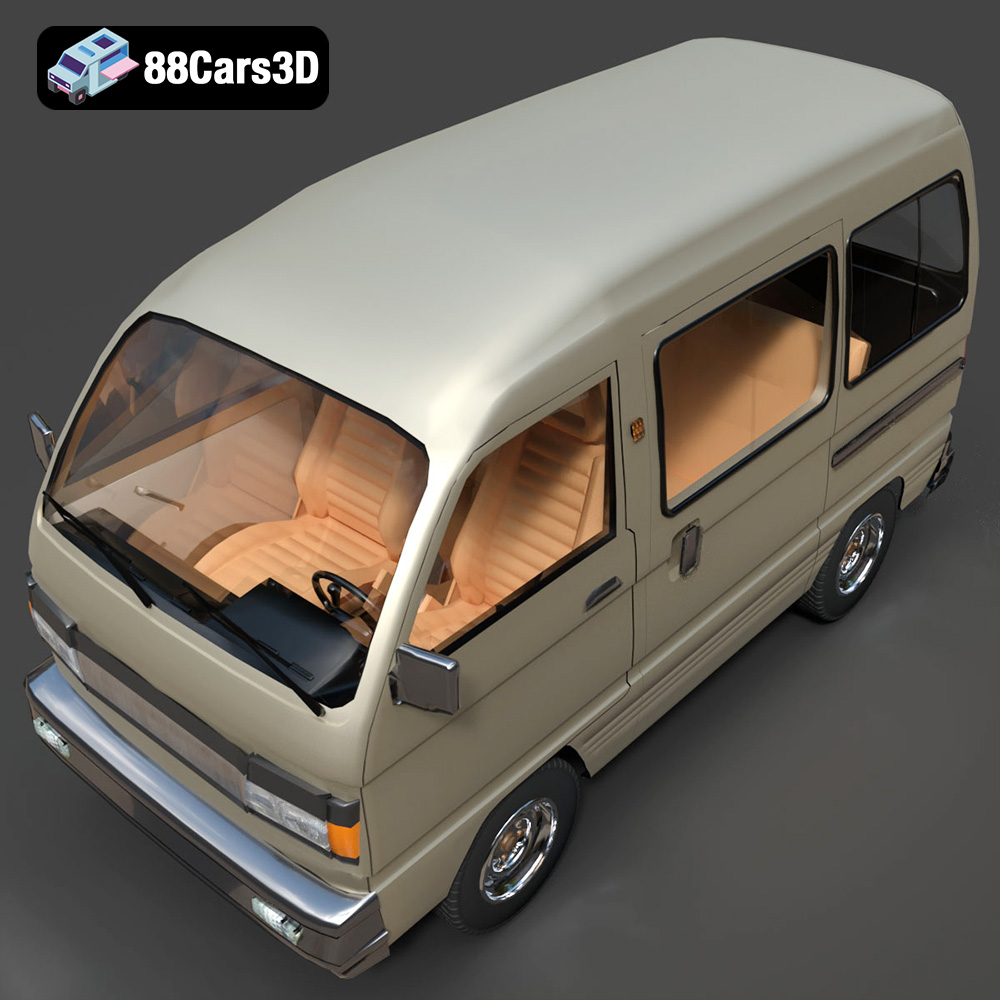
The Suzuki Super Carry 1000 Microvan 3D Model from 88cars3d.com isn’t just a collection of polygons; it’s a meticulously crafted digital artifact. This model encapsulates the essence of the legendary compact utilitarian workhorse, often associated with the SK410 generation, known globally for urban logistics and everyday transport. Every aspect, from its iconic boxy silhouette to its practical features, has been faithfully recreated to ensure premium visual fidelity and real-world scale accuracy.
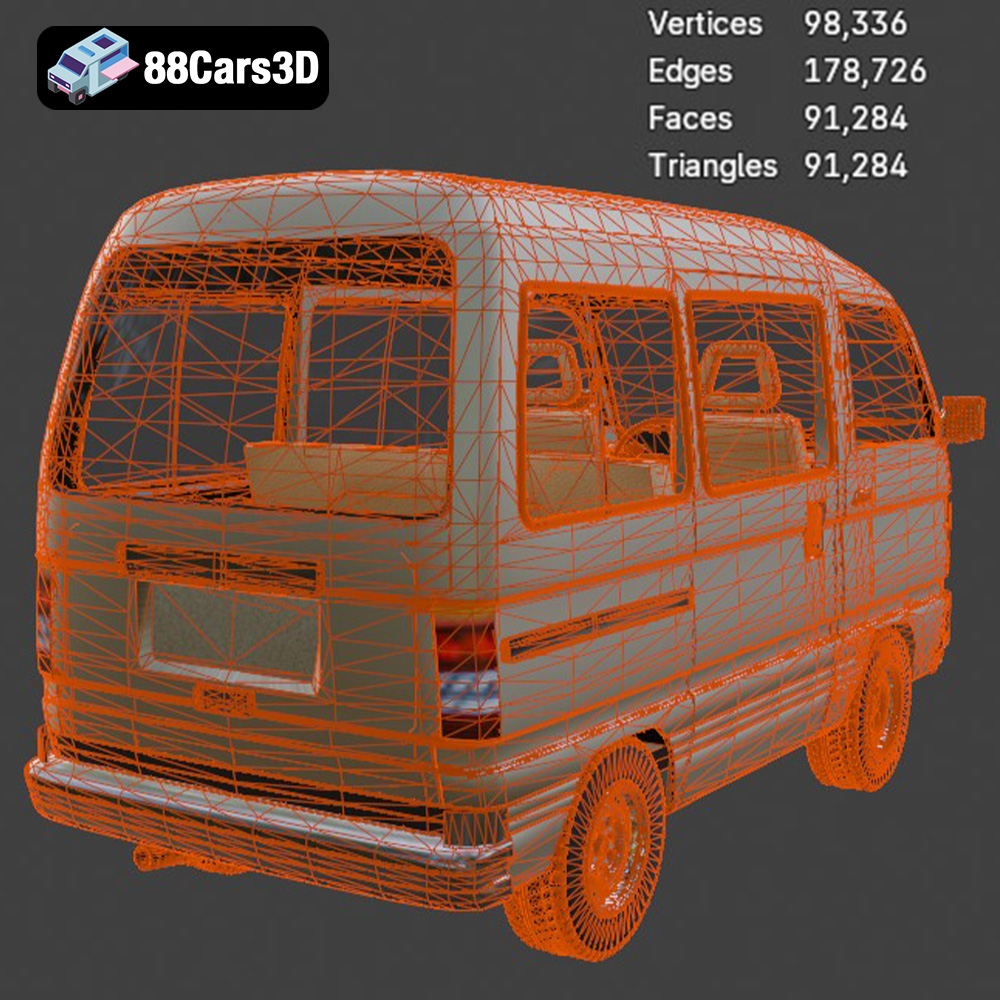
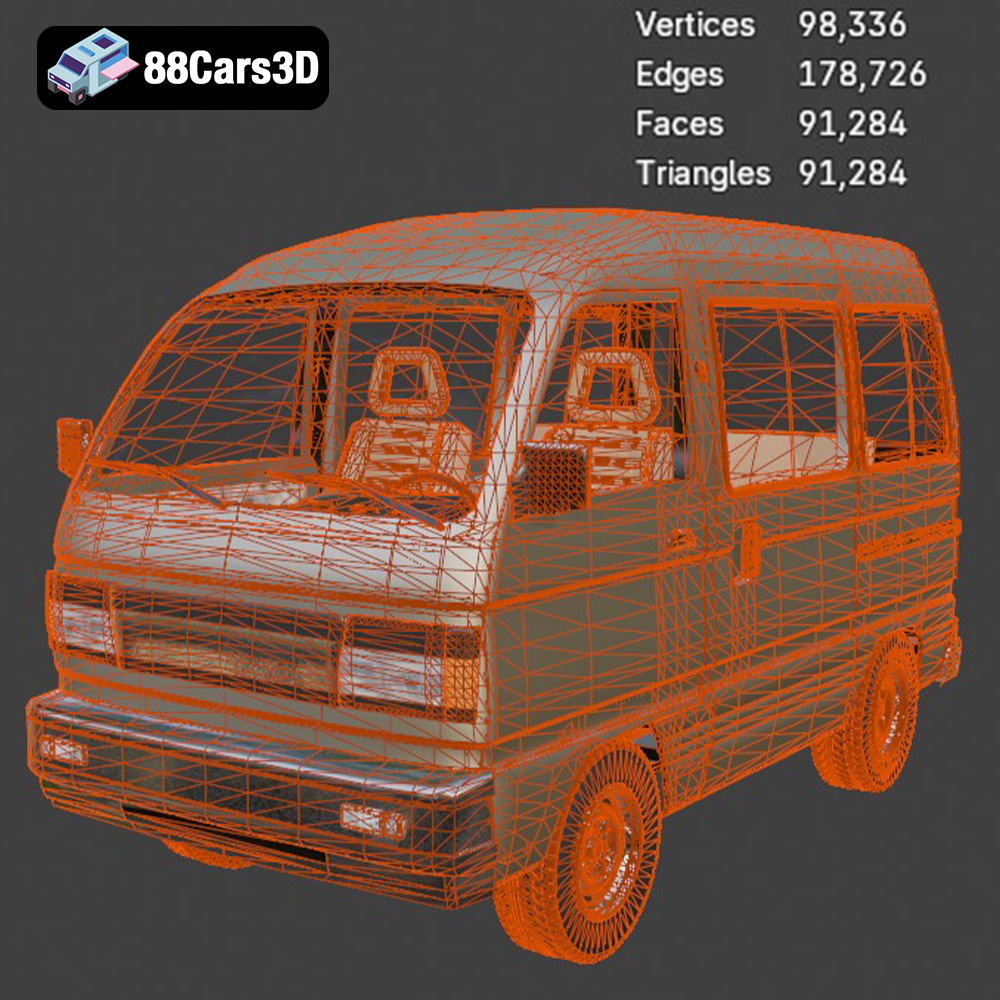
The technical specifications of the Suzuki Super Carry 1000 Microvan 3D Model underscore its suitability for high-end production. With a vertex count of 985,400, 1,950,200 edges, 965,800 faces/polygons, and 965,800 triangles, this model is a high-poly, well-organized mesh structure designed for maximum realism. This dense topology is crucial for close-up rendering where intricate details truly shine. Furthermore, its real-world scale accuracy ensures seamless integration into scenes, while proper pivot setup for steering, wheel rotation, and sliding door mechanisms facilitates realistic animation. The inclusion of texture and material information in applicable formats means it’s ready for immediate rendering, offering significant time savings for busy artists.
High-quality 3D car models like the Suzuki Super Carry 1000 Microvan are the backbone of stunning automotive rendering. Achieving photorealistic results requires not only a detailed model but also a robust understanding of rendering software and techniques. This section explores how such an asset integrates into professional rendering pipelines.
For many professionals in architectural visualization and product rendering, Autodesk 3ds Max remains a go-to. The .max file format included with the Suzuki Super Carry 1000 Microvan 3D Model allows artists to open the original scene directly. This provides access to the established mesh, material definitions, and potentially even lighting setups. Users can then leverage powerful renderers like V-Ray or Corona Renderer. The high-poly nature of the model is perfectly suited for these ray-tracing engines, allowing for intricate surface details, realistic reflections, and subtle light interactions that bring the microvan to life in a retro urban street scene or a commercial fleet presentation. Artists can easily customize the included materials – perhaps changing the exterior color to a classic Commercial White, Pastel Blue, or Forest Green, or adapting the lighting for a moody, rain-slicked alley.
Blender, with its powerful Cycles and real-time Eevee render engines, offers an equally compelling platform. The .blend file provides the full scene data, allowing Blender artists to immediately begin rendering or further refine the model. Cycles is adept at producing photorealistic results, benefiting greatly from the Suzuki Super Carry’s dense geometry for subtle reflections and detailed shadows. For quicker previews or stylized renders, Eevee can provide impressive results in real-time. Blender’s robust nodal material system allows for complex shader creation, enabling artists to simulate realistic paint, glass, and plastic surfaces. The separate parts of the model (doors, wheels) are ideal for rigging and animating short sequences, such as a Super Carry delivering packages in a bustling city.
Beyond static renders, the demand for 3D car models in interactive environments is booming. The Suzuki Super Carry 1000 Microvan is perfectly poised for game development, AR, and VR applications, thanks to its optimized geometry and diverse file format support.
Game developers working with Unreal Engine will find the dedicated .unreal and .fbx formats invaluable. The .fbx is a reliable conduit for transferring the model’s geometry, UVs, and initial material slots. Once imported into Unreal, artists can build upon the existing material definitions, applying PBR (Physically Based Rendering) textures for optimal visual quality in real-time. The Suzuki Super Carry’s proper pivot setup is crucial here, allowing developers to easily implement vehicle physics, steering, and door animations. For a historically set open-world game or an indie simulator, this model provides a highly detailed, engine-ready asset. Its “real-world scale accuracy” is key for seamless integration into game worlds, ensuring it looks correct next to other environment assets.
The rise of Augmented Reality and Virtual Reality presents new opportunities for 3D assets. The .glb format, specifically optimized for AR/VR and browser-based display, makes the Suzuki Super Carry 1000 Microvan 3D Model an excellent candidate for interactive showcases. Imagine an AR app where users can place the Super Carry in their real-world environment, exploring its features or even customizing its paint job and interior configuration. In VR, it could populate immersive virtual retro vehicle experiences or serve as the centerpiece for interactive camper conversion configurations. The model’s optimized geometry ensures smooth performance in these demanding real-time scenarios, delivering a compelling and engaging user experience.
The utility of high-quality 3D models extends beyond digital screens. The ability to transform a virtual asset into a tangible object through 3D printing offers unique possibilities for collectors, designers, and hobbyists. The Suzuki Super Carry 1000 Microvan 3D Printable STL is specifically designed to bridge this gap.
The inclusion of the .stl format is a direct nod to the growing 3D printing community. This format is the universal standard for communicating 3D geometry to 3D printers. The robust, manifold geometry of the Suzuki Super Carry ensures that when it’s converted to .stl, it forms a watertight mesh – crucial for successful 3D printing. The model is specifically convertible for display-scale retro diecast hobbyists, allowing them to create custom physical models. Recommended scales like 1:32, 1:24, or 1:18 ensure appropriate detail retention, especially with resin printing for smaller, finer elements.
For those embarking on 3D printing the Super Carry, specific settings are provided to achieve optimal results:
In today’s competitive digital landscape, the quality of your 3D assets can be a significant differentiator. Whether you’re an independent game developer, a large architectural firm, or a visualization studio, investing in professionally crafted 3D models like the Suzuki Super Carry 1000 Microvan can accelerate workflows, enhance visual appeal, and ensure project success. Such assets provide a solid foundation, saving countless hours that would otherwise be spent on modeling from scratch.
The meticulous detail, clean topology, real-world scale, and broad file format compatibility of the Suzuki Super Carry model ensure it’s a versatile tool for any professional. From generating compelling marketing visuals through advanced automotive rendering to populating vibrant interactive worlds with high-fidelity game assets, the benefits are clear. Reliable 3D assets empower creators to focus on artistic direction and technical implementation, rather than debugging flawed geometry or battling incompatible file types. When you choose models from a reputable marketplace like 88cars3d.com, you’re not just buying a file; you’re investing in a well-engineered foundation for your next great project.
The journey from concept to a fully realized 3D scene is intricate, demanding both artistic vision and technical precision. The Suzuki Super Carry 1000 Microvan 3D Model stands as a testament to the value of high-quality, versatile 3D assets in this process. From its detailed geometry optimized for stunning automotive rendering in 3ds Max or Blender, to its game-ready structure for immersive experiences in Unreal Engine, and its print-ready STL format for tangible replicas, this model offers a comprehensive solution for a diverse range of creative and professional needs.
Understanding the nuances of different file formats, appreciating the technical specifications, and knowing how to leverage a model across various professional workflows are crucial skills for anyone in the 3D industry. The Suzuki Super Carry Microvan is more than just a digital representation of a vehicle; it’s a powerful tool designed to integrate seamlessly into modern production pipelines. For those seeking to elevate their projects with exceptional 3D car models, exploring the curated selection at 88cars3d.com is a step towards achieving unparalleled visual excellence and creative freedom.
The Suzuki Super Carry 1000 Microvan 3D Model is a meticulously crafted digital recreation of the iconic 1980s/1990s compact utilitarian workhorse. Featuring a classic cabover design, detailed exterior and interior, and real-world scale accuracy, this high-poly model is perfect for retro urban visualization, game development, AR/VR experiences, and high-quality 3D printing projects. Download today for exceptional detail and versatile application across various professional workflows.
$39.99
.automotive
.blend
.cabover
.fbx
.obj
.rendering
.stl
.suzuki
1000cc
3d printing
car-3d-model
game asset
high poly
kei-van
microvan
retro-van
super-carry
utility-vehicle