⚡ FLASH SALE: Get 60% OFF All Premium 3D & STL Models! ⚡

In the expansive world of 3D modeling, where photorealism and artistic expression converge, certain vehicles hold a unique charm. They are not the sleek supercars or the rugged off-roaders often celebrated, but rather the unassuming workhorses that define daily life in countless corners of the globe. These vehicles, with their distinctive character and utilitarian appeal, offer a rich tapestry for digital artists, game developers, and visualization specialists to explore. One such legendary vehicle is the Suzuki Super Carry 1000 Microvan, an emblem of compact efficiency and robust simplicity that dominated urban landscapes throughout the 1980s and 1990s.
Today, this iconic microvan is available as a meticulously crafted Suzuki Super Carry 1000 Microvan 3D Model, offering unparalleled detail and versatility for a myriad of projects. Whether you’re aiming to populate a retro urban street scene, develop an indie game with a unique flavor, visualize commercial fleets, or even create highly detailed 3D prints, this asset provides an authentic foundation. Its inclusion in our curated collection of high-quality 3D car models at 88cars3d.com underscores our commitment to providing assets that not only look exceptional but also serve as powerful tools for creative and professional endeavors. This deep dive will explore the technical nuances, creative applications, and workflow advantages of incorporating such a specialized asset into your digital pipeline.
The flexibility of a 3D model often hinges on the file formats it supports. For a comprehensive asset like the Suzuki Super Carry 1000 Microvan 3D Model, offering a wide array of formats ensures compatibility across diverse software and applications. Understanding what each format brings to the table is crucial for optimizing your workflow, whether you’re focusing on automotive rendering, game development, or 3D printing.
The .blend file format is native to Blender, the powerful open-source 3D creation suite. When you download a .blend file, you’re getting a fully editable Blender scene, complete with all its associated data: mesh geometry, materials, textures, lighting setups, animation data, cameras, and even physics simulations. This format is ideal for users who work primarily in Blender, offering the highest level of flexibility for modification, scene integration, and continued development. Artists can easily adjust topology, remap UVs, tweak materials, or animate elements like the sliding doors and steering components of the Suzuki Super Carry. It’s the starting point for deep customization.
.fbx (Filmbox) is a proprietary file format owned by Autodesk, but it has become an industry standard for 3D data exchange, particularly crucial for game development. It’s an excellent choice for transferring 3D models, animation, and scene data between different software applications like 3ds Max, Maya, Blender, and game engines like Unreal Engine and Unity. For a model like the Super Carry, an .fbx file would retain skeletal animation (if present), blend shapes, PBR materials, and camera data, making it ideal for real-time pipelines where consistent data transfer is paramount.
The .obj (Wavefront OBJ) format is one of the most widely supported and simplest 3D file formats. It primarily stores geometry (vertices, normals, texture coordinates, and faces) and can reference external material files (.mtl) for basic color and texture information. While it doesn’t support animation or rigging, its universality makes it excellent for static meshes and cross-software compatibility. If you need to import the Suzuki Super Carry 1000 into almost any 3D application for basic rendering or modeling, .obj is a reliable choice.
.glb (GL Transmission Format Binary) is the binary version of the glTF format, specifically designed for efficient transmission and loading of 3D scenes and models by engines and applications. It’s rapidly becoming the standard for 3D assets in web-based applications, augmented reality (AR), and virtual reality (VR) environments due to its compact size and native support for PBR materials. For showcasing the Suzuki Super Carry in an interactive web viewer or an AR experience, .glb offers optimal performance and visual fidelity.
.stl (Stereolithography) is the de facto standard file format for 3D printing. It represents a 3D model as a series of connected triangles, defining only the surface geometry of an object without color, texture, or other CAD attributes. When preparing the Suzuki Super Carry for physical production on a 3D printer, the .stl format ensures manifold geometry and watertight meshes, essential for successful printing. It’s the critical link from digital concept to tangible collectible.
The .ply (Polygon File Format) is often used to store 3D data from 3D scanners, with support for properties like color, transparency, and normals per vertex or face. It can handle unstructured triangular meshes or point clouds, making it suitable for scientific applications, CAD, or situations where highly accurate raw mesh data is preferred. For detailed analysis or high-precision industrial visualization of the Suzuki Super Carry’s geometry, .ply can be a robust option.
The .unreal format, or more accurately, assets imported and packaged within an Unreal Engine project, signifies an asset that is optimized and ready for deployment within the Unreal Engine ecosystem. While not a standalone file type like .fbx, it represents the complete integration of a model, including materials, collision meshes, LODs, and proper pivot points, directly into an Unreal project. Having an “Unreal” version implies the asset has undergone the necessary steps for seamless real-time performance, a significant advantage for game developers using the Suzuki Super Carry as a game asset.
The .max file format is native to Autodesk 3ds Max, one of the most powerful 3D modeling, animation, and rendering software packages. Similar to .blend, a .max file contains the complete scene, including all geometry, textures, lighting, cameras, animation data, and advanced rendering settings. This format provides 3ds Max users with full access to the original project, enabling intricate adjustments, scene composition, and high-fidelity rendering of the Suzuki Super Carry 1000 Microvan 3D Model.
The availability of these diverse formats for the Suzuki Super Carry 1000 Microvan 3D Model underscores its adaptability, allowing professionals to integrate it into virtually any pipeline with maximum efficiency and creative control.
Beyond the raw technical specifications, there’s a compelling aesthetic and narrative power in representing classic utilitarian vehicles in 3D. The Suzuki Super Carry 1000 Microvan, with its distinctive cabover design and compact footprint, is a prime example of a vehicle that evokes a strong sense of nostalgia and character. It’s more than just a means of transport; it’s a cultural touchstone.
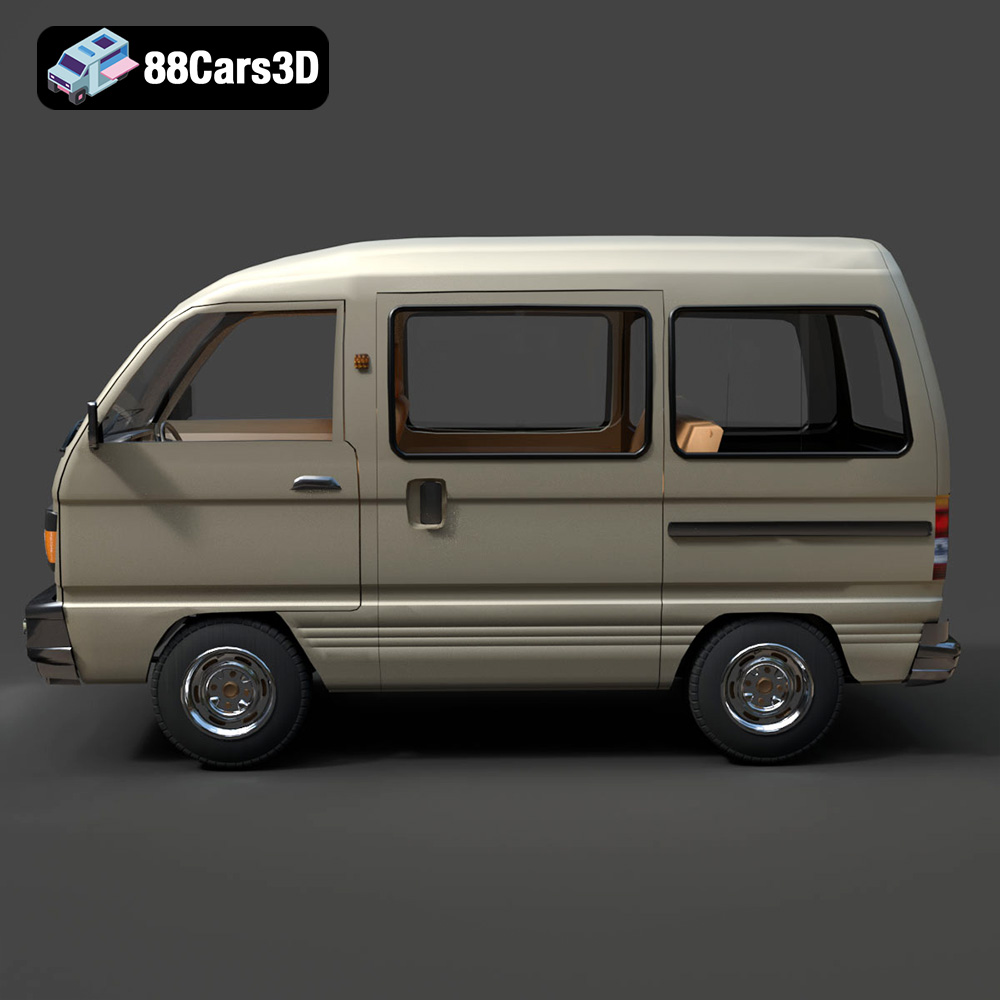
The 1980s and 1990s styling of the Super Carry—its boxy silhouette, flat front fascia, and simple yet robust design—taps into a powerful retro aesthetic. This makes the Suzuki Super Carry 1000 Microvan 3D Model an invaluable asset for projects aiming to capture a specific historical period or evoke a nostalgic mood. For filmmakers, animators, or even marketing agencies creating content for “throwback” campaigns, such a model provides instant recognition and a distinctive visual signature. It’s a testament to how even everyday objects from the past can become powerful storytelling elements.
Unlike luxury cars that demand center stage, the Super Carry’s utilitarian nature makes it incredibly versatile for populating diverse scenes. It can serve as a background element in a bustling urban environment, a crucial vehicle in a developing-market architectural visualization, or even the protagonist in a quirky indie game about delivery or exploration. Its presence instantly communicates a sense of practicality, hard work, and everyday life. The model’s separate components—wheels, steering, and doors—further enhance its narrative potential, allowing for dynamic animations that bring the microvan to life in any digital story.
The quality of a 3D model is often defined by its technical foundation. The Suzuki Super Carry 1000 Microvan 3D Model stands out due to its high level of detail and adherence to professional standards, making it suitable for the most demanding applications, from high-fidelity automotive rendering to robust game assets.
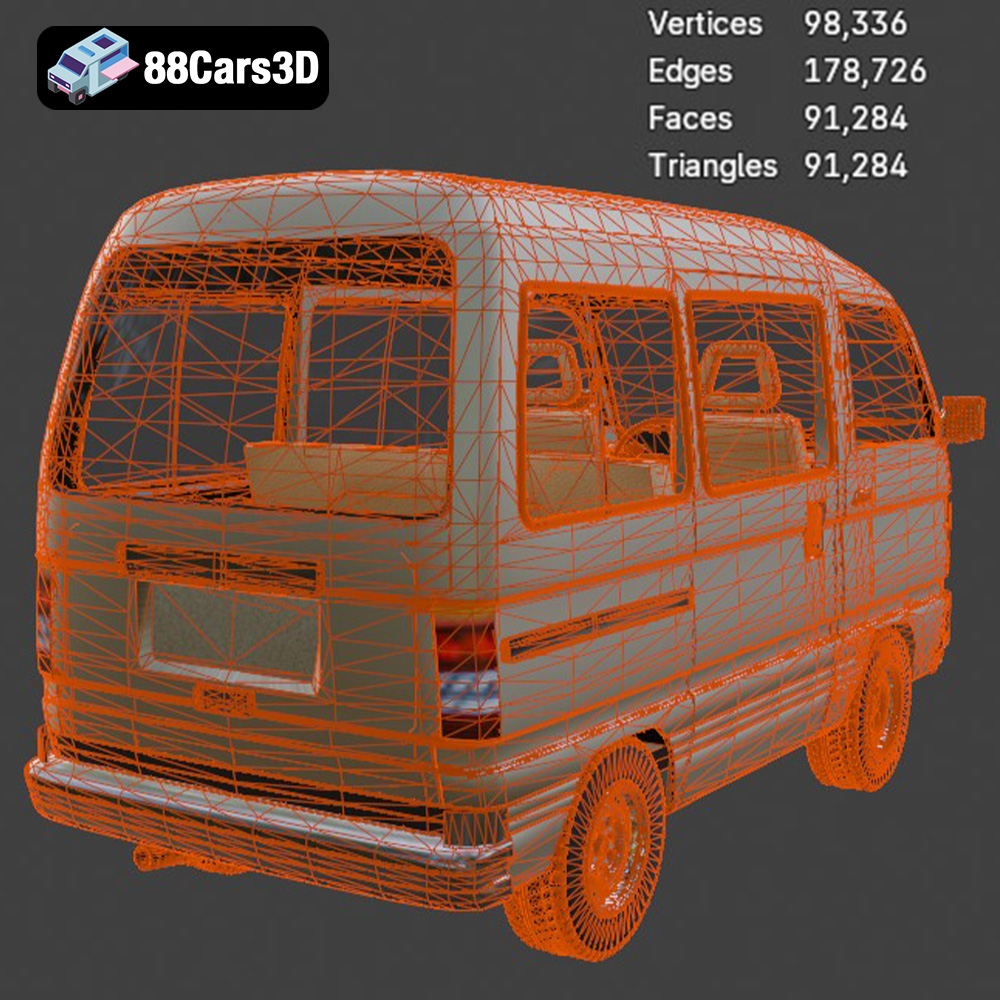
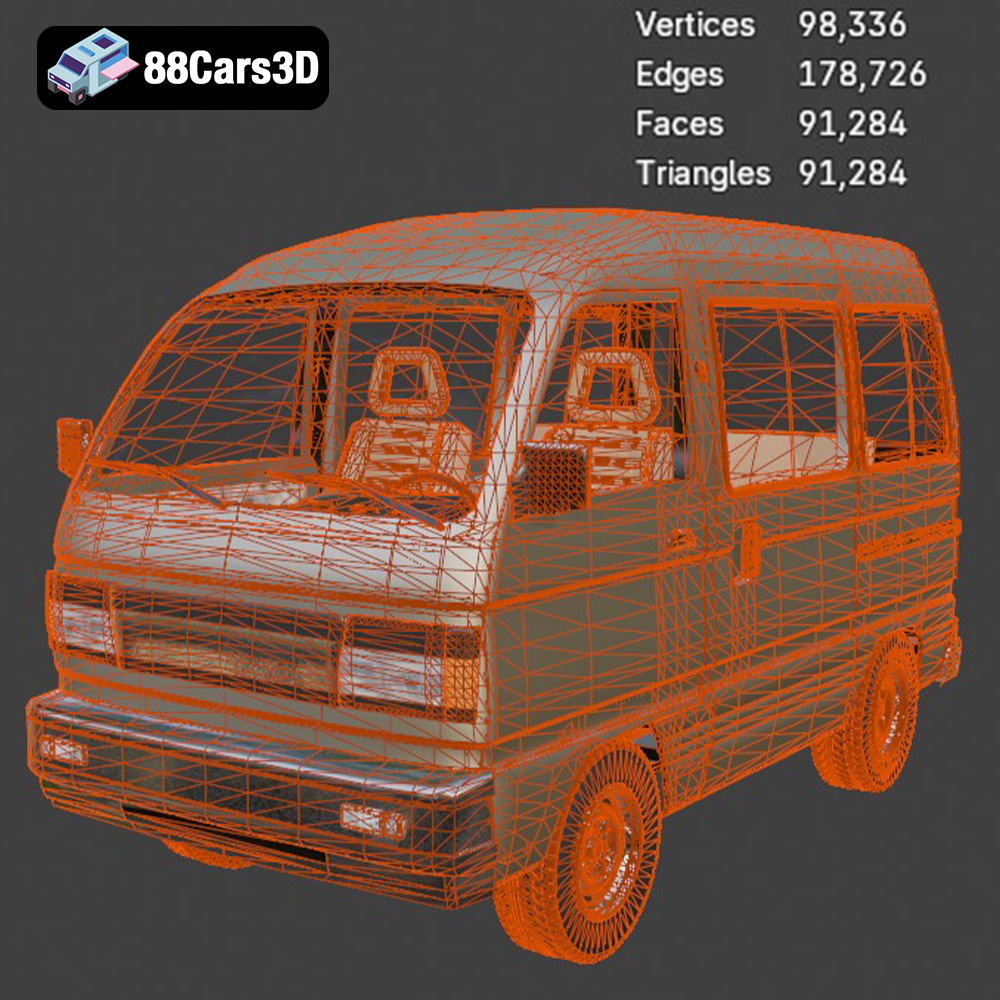
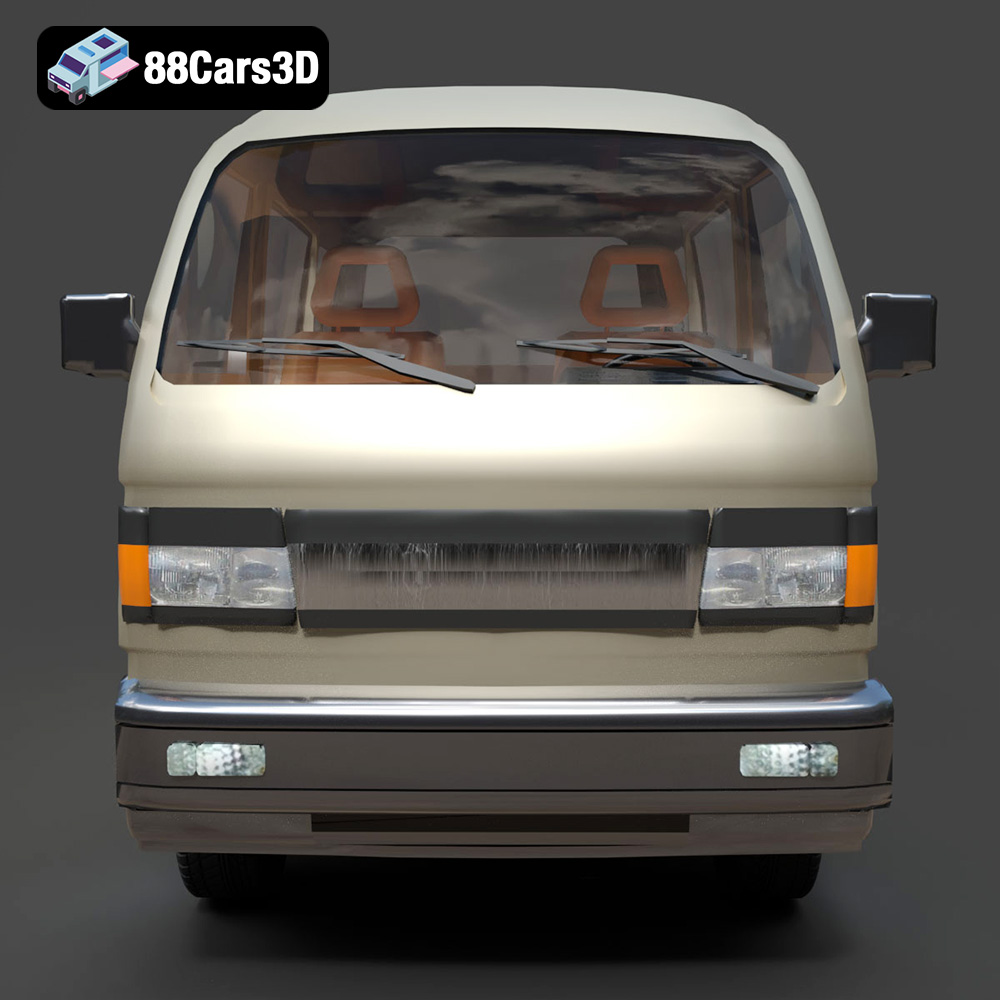
With a robust polygon count (Vertices: 985,400, Edges: 1,950,200, Faces/Polygons: 965,800, Triangles: 965,800), this model is designed for maximum realism. Such a dense mesh allows for incredibly smooth curves and sharp details, essential for close-up renders where every panel gap, rivet, and surface imperfection is scrutinized. This high-poly structure ensures that the iconic boxy silhouette, the detailed rectangular headlight housings, and even the subtle contours of the 12-inch steel wheels are accurately represented, providing a rich visual experience without compromising on fidelity.
The commitment to high-poly modeling means artists don’t have to worry about low-resolution artifacts or faceted surfaces, even in extreme close-ups. This makes it an ideal choice for cinematic renders, product visualizations, and any scenario where visual perfection is paramount.
Accuracy in 3D modeling extends beyond just visual detail; it encompasses real-world scale and anatomical correctness. The Suzuki Super Carry 1000 Microvan 3D Model is built to real-world scale, ensuring it fits seamlessly into any scene alongside other assets without requiring manual adjustments. This precision is critical for architectural visualizations, simulations, and any project where the relative size and proportion of objects are important.
Furthermore, the model boasts proper pivot setups for crucial elements like steering, wheel rotation, and the distinctive sliding door mechanisms. This means animators can immediately begin creating realistic movements without having to painstakingly reconfigure pivot points, saving valuable production time and ensuring accurate vehicle dynamics.
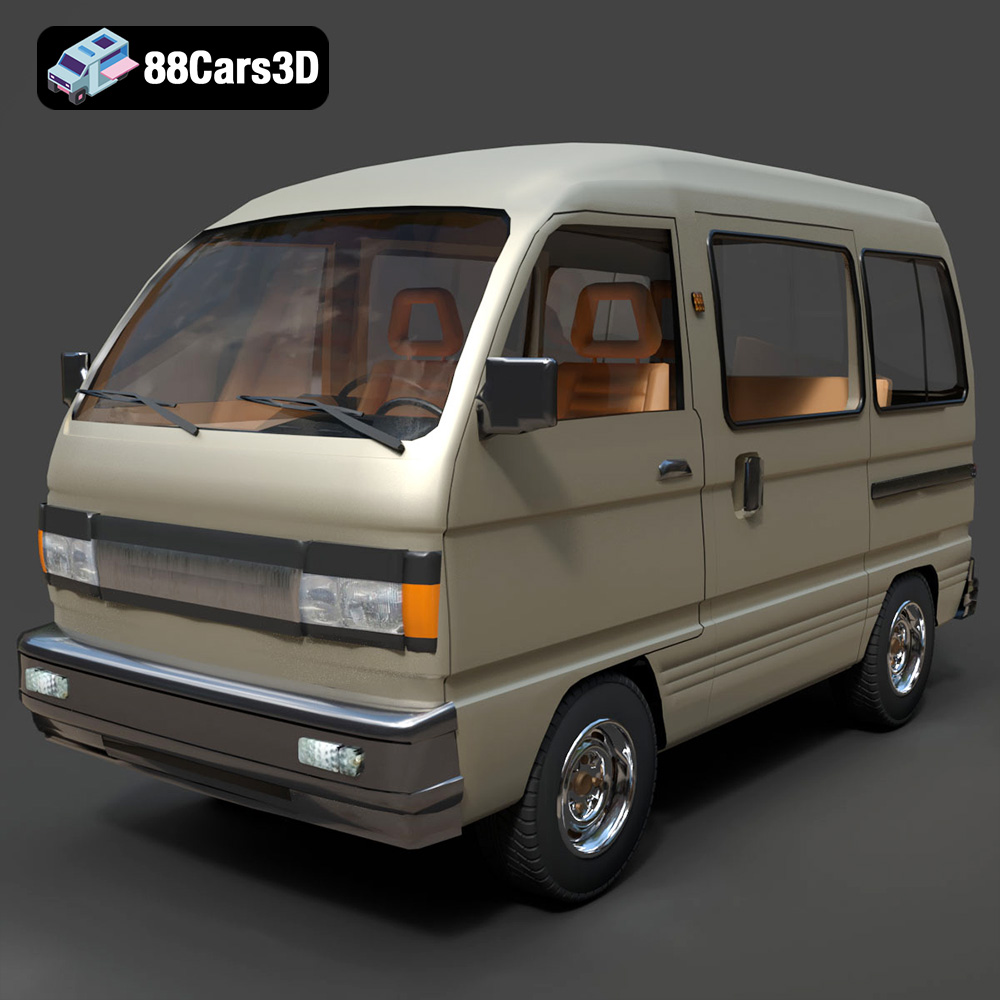
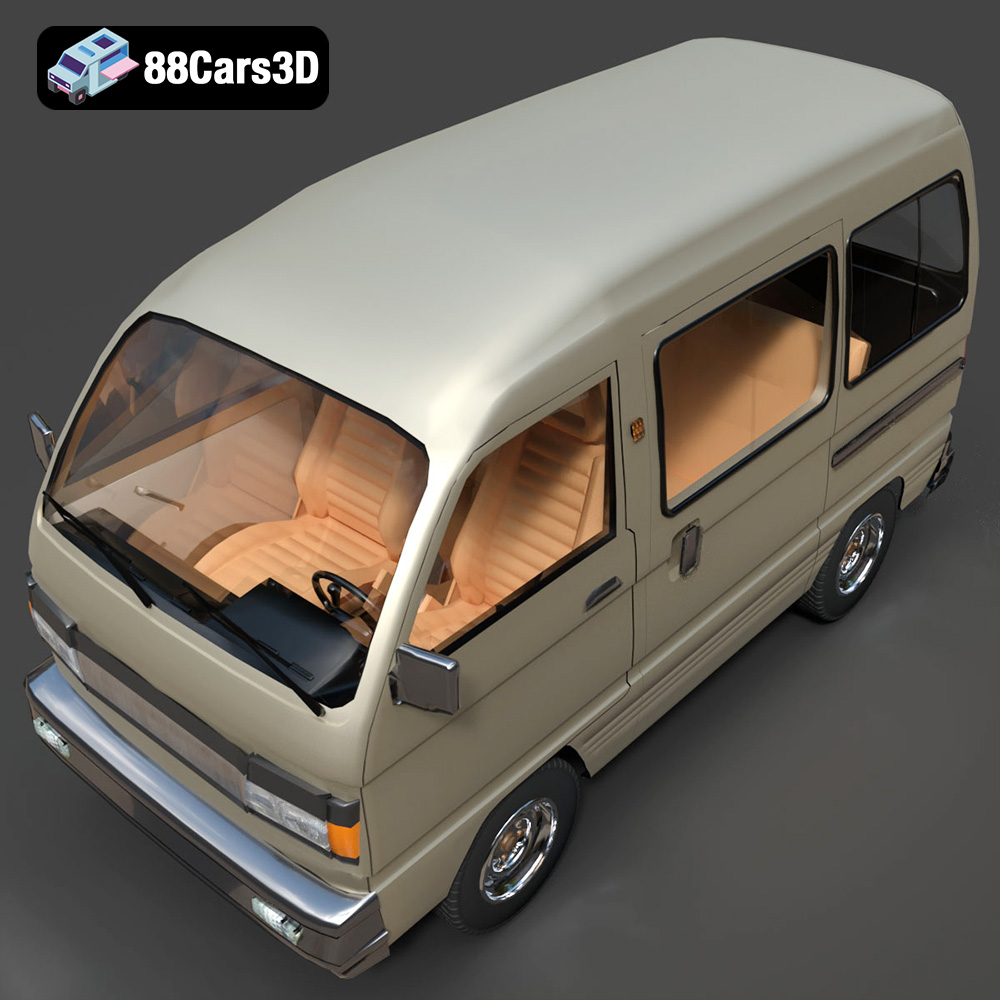
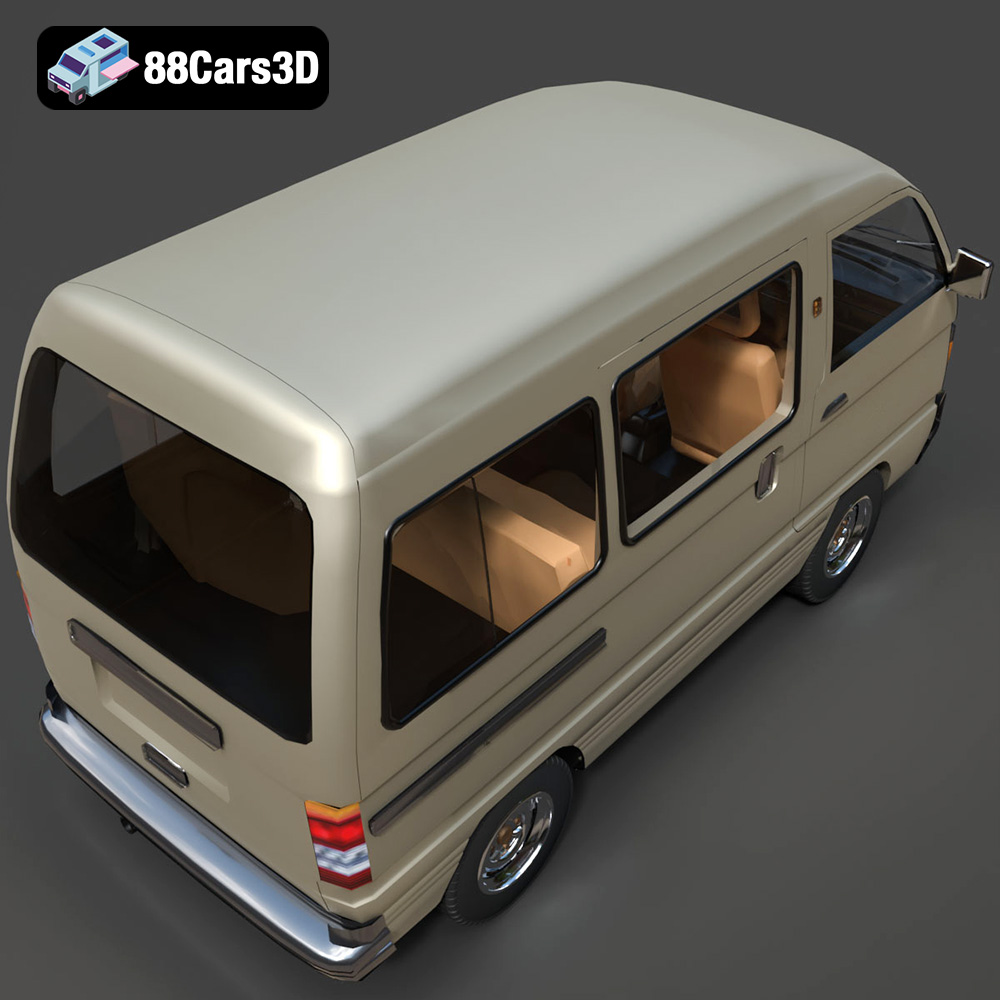
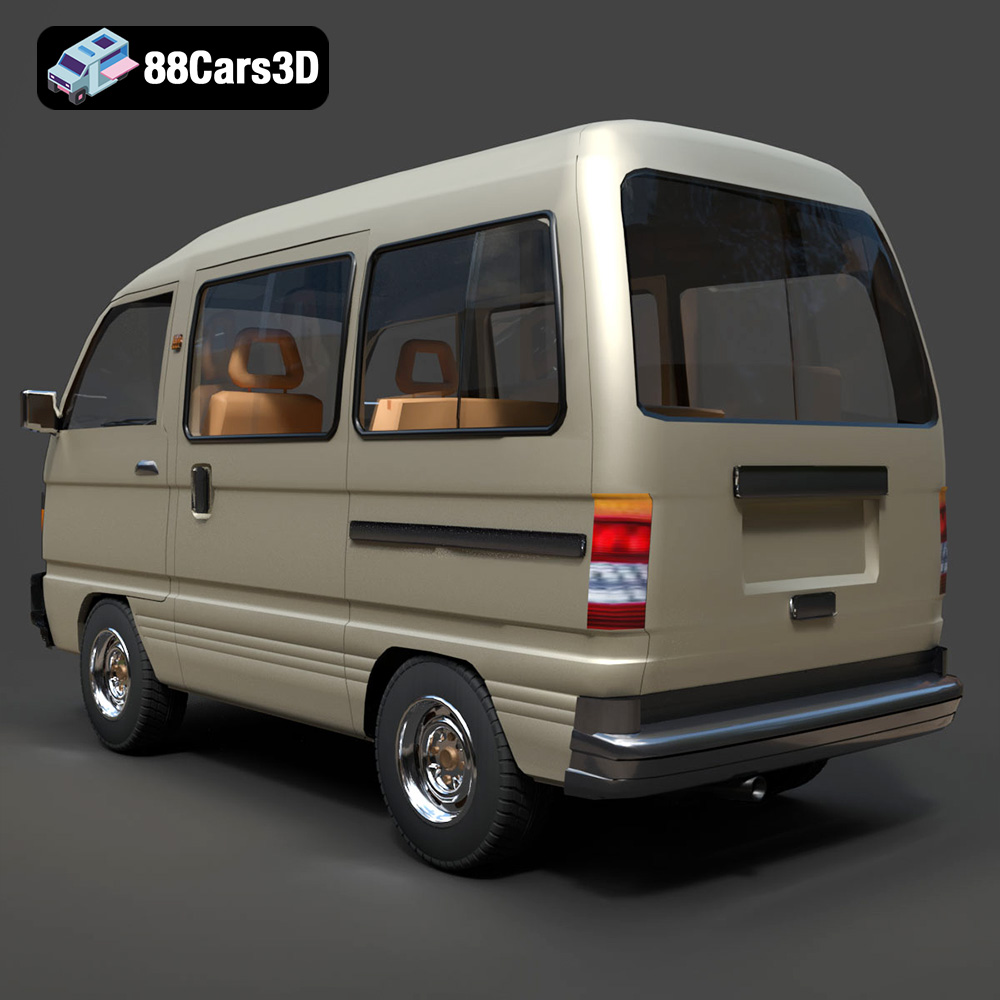
The model captures both the exterior and interior features with remarkable authenticity. Externally, details such as the period-correct taillights, functional side mirrors, and door handles are all present. Internally, the utilitarian front cabin, complete with seats mounted authentically over the front axle, a retro minimalist analog dashboard, and a simple two-spoke steering wheel, creates a convincing driver’s environment. Even subtle details like basic cloth or vinyl upholstery representation with realistic seam lines contribute to its immersive quality. This comprehensive detailing makes the model suitable for both exterior shots and interior close-ups, offering maximum flexibility for diverse visualization needs.
The true value of a high-quality 3D asset lies in its seamless integration into various professional pipelines. The Suzuki Super Carry 1000 Microvan 3D Model is engineered to be a versatile tool for designers, artists, and developers across different disciplines.
For those specializing in automotive rendering, this microvan is a dream asset. Its high-poly count and clean topology lend themselves perfectly to being rendered with advanced ray-tracing engines like V-Ray, Corona, or Arnold in software like 3ds Max or Blender. Artists can apply sophisticated PBR (Physically Based Rendering) materials to mimic real-world paint finishes, glass reflections, and tire textures, creating hyper-realistic images.
Imagine this classic microvan parked in a rain-slicked neon alley, its headlights reflecting off the wet pavement, or basking in the golden hour sun on a quiet suburban street. Its detailed features allow for compelling close-up shots, showcasing every detail from the authentic 12-inch steel wheels to the period-correct grille. It’s ideal for retro urban street scenes, commercial fleet presentations, and even as a focal point in architectural visualizations, adding character and a sense of realism to any environment.
While a high-poly model, the Suzuki Super Carry can be optimized for game engines like Unreal Engine and Unity. Its clean mesh provides an excellent foundation for generating Level of Detail (LOD) models, crucial for performance in open-world games. Developers can easily create lower-poly versions for distant views while retaining the full detail for close-up interactions. The pre-set pivot points for animation (wheels, steering, doors) significantly streamline the rigging process, making it ready to be driven or animated in game environments.
As a game asset, the Super Carry can fit into various genres: a delivery vehicle in a city simulator, a collectible in a retro racing game, or a customizable base for a quirky camper conversion project within a sandbox title. The “Unreal” format option ensures that the model is already structured for optimal performance and integration within Unreal Engine, reducing setup time for developers.
The compact nature and distinct design of the Super Carry make it an excellent candidate for AR/VR applications. Using formats like .glb, the model can be integrated into immersive virtual retro vehicle experiences or used in interactive configurators for custom camper conversions. Imagine being able to walk around and virtually explore the interior of this classic microvan, or customize its paint scheme and interior layout in a virtual showroom. For logistics simulations and urban planning visualizations, the real-world scale and authentic design of the Super Carry provide valuable context and a touch of realism to simulated environments.
Beyond the digital realm, the Suzuki Super Carry 1000 Microvan 3D Model offers exciting possibilities for physical creation through 3D printing. This capability transforms a digital asset into a tangible collectible or a functional prototype, appealing to hobbyists, model makers, and designers alike.
The inclusion of the .stl file format is paramount for 3D printing. This format strips away textures and materials, focusing purely on the geometric surface, which is then translated into a series of layers by a 3D printer. The Suzuki Super Carry’s high detail in its original mesh translates into a faithful physical representation when printed. This allows retro diecast hobbyists or miniature enthusiasts to create their own custom scale models of this iconic vehicle.
The recommended printing scales (1:32, 1:24, 1:18) ensure that the printed model can be integrated into existing collections or displays. Specific print settings are provided: a layer height of 0.08–0.16 mm for FDM printers (with a note that resin printing is recommended for finer details at smaller scales), a wall thickness of 1.2–2.0 mm for structural integrity, and an infill of 15–25% to balance strength and material usage. Critical details like supports being required for side mirrors, bumpers, and wheel arches, along with specific print orientations (body angled, wheels separately), are invaluable for achieving successful prints with minimal post-processing.
Once printed, the physical Super Carry model opens up a new avenue for artistic expression. Post-processing recommendations such as sanding, priming, and painting allow creators to bring the model to life with custom finishes. Imagine painting it in classic commercial white, a vibrant retro pastel blue, or even a nostalgic post-office red. This hands-on customization extends to integrating the model into dioramas, creating unique display pieces, or even using it as a prototype for design projects.
The ability to customize exterior color, modify interior configurations (from empty cargo to multi-seat passenger layouts), and adjust wheel designs (standard steelies vs. retro aftermarket alloys) further blurs the line between the digital and physical. This tactile engagement with a meticulously crafted 3D asset provides a deeply rewarding experience for creators and collectors alike.
The Suzuki Super Carry 1000 Microvan 3D Model is more than just a digital representation of a vehicle; it’s a meticulously engineered asset designed to empower creativity across a multitude of industries. From its high-poly detail ideal for stunning automotive rendering, through its animation-ready structure perfect for developing engaging game assets, to its adaptability for tangible 3D prints, this model exemplifies versatility and quality. Its comprehensive file format support, including .blend, .fbx, .obj, .glb, .stl, .ply, .unreal, and .max, ensures seamless integration into virtually any professional pipeline.
Whether you are an architect populating a scene with authentic urban vehicles, a game developer crafting a unique interactive experience, or a hobbyist seeking to 3D print a nostalgic miniature, the Suzuki Super Carry 1000 Microvan 3D Model offers an exceptional foundation. It stands as a testament to the enduring appeal of utilitarian design and the power of precise 3D craftsmanship. Find this and many other high-quality 3D car models to elevate your projects by visiting 88cars3d.com today.
The Suzuki Super Carry 1000 Microvan 3D Model is a high-detail digital recreation of the legendary compact utilitarian workhorse from the 1980s and 1990s. Known for its incredible space efficiency and rugged simplicity, the Super Carry (often associated with the SK410 generation) combines a classic cabover design with highly practical proportions, making it a global icon of urban logistics and everyday transport. This 3D model accurately represents the iconic boxy silhouette, flat front fascia, classic headlight housings, dual sliding side doors, rear liftgate, and tiny but functional 12-inch steel wheels. Built with dense, clean topology for premium visual fidelity and real-world scale accuracy, it is ideal for close-up rendering, retro urban environment visualization, animation, indie game development, and AR/VR classic vehicle showcases. Perfect for retro street scenes, developing-market architectural visualizations, commercial fleet renders, and quirky camper conversion projects.
$39.99
.automotive
.blend
.cabover
.fbx
.obj
.rendering
.stl
.suzuki
1000cc
3d printing
car-3d-model
game asset
high poly
kei-van
microvan
retro-van
super-carry
utility-vehicle