⚡ FLASH SALE: Get 60% OFF All Premium 3D & STL Models! ⚡

In the rapidly evolving world of real-time rendering and interactive experiences, mere static visuals no longer cut it. Whether you’re building a cutting-edge automotive configurator, an immersive virtual production set, or a hyper-realistic driving simulator, the ability to bring your 3D models to life with dynamic, responsive animation is paramount. For Unreal Engine developers and 3D artists, the answer often lies deep within the powerful system known as the Animation Blueprint.
Animation Blueprints are the beating heart of character and vehicle animation in Unreal Engine, offering an incredibly versatile visual scripting environment to control complex skeletal mesh behaviors. They allow you to define everything from a car door opening and closing, to a vehicle’s suspension reacting realistically to terrain, or even a virtual driver interacting with the steering wheel. Mastering this system unlocks a new dimension of realism and interactivity for your automotive visualization projects, transforming static models into engaging digital assets.
This comprehensive guide will delve into the essentials of Unreal Engine’s Animation Blueprints, specifically tailored for automotive applications. We’ll explore how to set up your vehicle models for animation, craft intricate behaviors using State Machines and Control Rigs, integrate with vehicle physics, and optimize performance for real-time scenarios. By the end, you’ll have a robust understanding of how to leverage Animation Blueprints to create truly dynamic and interactive automotive experiences that captivate your audience.
At its heart, an Unreal Engine Animation Blueprint is a specialized Blueprint class designed to control the animation of a Skeletal Mesh. Unlike traditional Blueprints that manage gameplay logic, Animation Blueprints focus exclusively on the pose and movement of bones within a skeletal hierarchy. This separation of concerns allows for highly optimized and flexible animation workflows, crucial for demanding real-time applications like automotive visualization.
The power of an Animation Blueprint stems from its three primary graphs: the Event Graph, the Anim Graph, and the Control Rig Graph. The Event Graph handles animation-related logic, similar to a standard Blueprint’s Event Graph, where you define how external inputs or game state changes influence animation variables. The Anim Graph is where the magic happens, visually blending and layering animations to produce the final pose. Finally, the Control Rig Graph, an increasingly vital component, provides a powerful node-based rigging system directly within Unreal Engine, allowing artists to create procedural animation and manipulate bones with unprecedented precision, often replacing complex physics simulations for specific components.
For automotive projects, this means you can, for example, feed vehicle speed from your game physics into the Event Graph, calculate wheel rotation based on that speed, and then apply those rotations to the wheel bones in the Anim Graph. You could use a State Machine to manage door animations (closed, opening, open, closing), ensuring smooth transitions between states. The ability to visually construct these complex animation behaviors without writing a single line of C++ code makes Animation Blueprints incredibly accessible and efficient for 3D artists and technical designers alike. Furthermore, with the growing adoption of USD (Universal Scene Description), which inherently supports skeletal animation, integrating your high-fidelity models from platforms like 88cars3d.com into an Animation Blueprint workflow becomes seamless, preserving animation data across pipelines.
Understanding the distinction between Static Meshes and Skeletal Meshes is fundamental when working with animation. A Static Mesh is a single, unmoving mesh, ideal for environmental props, buildings, or the main body shell of a car if it doesn’t deform. A Skeletal Mesh, however, is comprised of a mesh (or multiple meshes) combined with a hierarchical set of bones (a skeleton). Each vertex in the mesh is “weighted” to one or more bones, meaning it moves with the bones it’s attached to. This allows for complex deformations and articulated movements.
For automotive visualization, while the primary car body might often be imported as a single, high-fidelity mesh (potentially leveraging Nanite for detail), components requiring animation – such as wheels, doors, hoods, trunks, steering wheels, suspension elements, wipers, or even character drivers – *must* be part of a skeletal mesh. These components are rigged with their own bones, allowing for independent movement and interaction. A car model sourced from marketplaces like 88cars3d.com, optimized for Unreal Engine, will typically provide these components correctly separated and ready for skeletal animation, either as part of a complete skeletal mesh or as individual skeletal mesh assets.
The Event Graph of an Animation Blueprint functions similarly to a standard Blueprint’s Event Graph. Here, you define logic that executes frame-by-frame or in response to specific events. Common tasks include retrieving game state variables (like vehicle speed, steering angle, or door open/close requests), performing calculations, and setting variables that the Anim Graph will then use. For instance, you might use an ‘Event Blueprint Update Animation’ to get the current velocity of your vehicle’s Movement Component and store it in an Anim Blueprint variable called ‘CurrentSpeed’.
The Anim Graph is where the visual magic happens. It’s a network of nodes that take animation data (such as raw animation sequences, Blend Spaces, or procedural nodes) and blend them together to create the final pose of the skeletal mesh. This is often where State Machines reside. A State Machine defines different “states” of animation (e.g., ‘Doors_Closed’, ‘Doors_Opening’, ‘Doors_Open’, ‘Doors_Closing’) and the rules (transitions) for moving between these states. Each state contains specific animations or logic that defines the pose during that state. This highly organized approach is perfect for managing complex, interdependent animations like those found in interactive automotive configurators or virtual vehicle demos.
Bringing a complex 3D car model into Unreal Engine for animation requires careful preparation. Unlike simply importing a static mesh, skeletal meshes demand a specific hierarchy and setup to ensure smooth, performant animation. When sourcing high-quality 3D car models, such as those available on 88cars3d.com, you’ll often find them pre-rigged or structured in a way that facilitates this process, saving significant time. However, understanding the underlying principles is crucial for any customization or troubleshooting.
The primary concern is the bone structure of your skeletal mesh. Each component of the car you wish to animate independently (e.g., each wheel, door, hood, trunk, steering wheel, wiper) must have its own bone, or a hierarchy of bones, within the skeletal rig. The mesh geometry associated with that component must then be weighted to its corresponding bone. For instance, a car door mesh would be weighted 100% to a ‘Door_FL_Bone’, allowing it to rotate around its pivot when that bone rotates. The precision and cleanliness of this rigging process directly impact the quality and flexibility of your animations.
Once imported, Unreal Engine provides tools within the Skeletal Mesh Editor to inspect and modify your rig. You can verify bone orientations, pivot points, and ensure that your imported animations (if any) are playing correctly. For automotive applications, pay close attention to the pivot points of rotational components like doors and wheels. An incorrectly placed pivot will result in unnatural rotation. For advanced interactions or procedural animations, the new Control Rig system can be integrated, offering a powerful way to manipulate bones directly within Unreal Engine, ideal for simulating realistic suspension behavior or complex steering mechanics without relying on pre-baked animations.
The most common file format for importing skeletal meshes into Unreal Engine is FBX. When importing your car model, ensure that the “Skeletal Mesh” option is enabled in the FBX Import Options window. Crucially, your source 3D application (e.g., Maya, 3ds Max, Blender) should have the car components rigged with a clean bone hierarchy. For example, a car chassis might be the root bone, with child bones for each wheel, door, and other movable parts. When purchasing automotive assets from marketplaces such as 88cars3d.com, ensure they specify “rigged” or “skeletal mesh” if you intend to animate components. If you’re using USD for your asset pipeline, Unreal Engine’s native USD importer can also bring in skeletal meshes and their associated animations, streamlining the process even further and maintaining data integrity across various tools. This is particularly advantageous in virtual production environments where complex assets are shared across multiple departments.
Key considerations during FBX/USD import:
A Physics Asset is a crucial component that accompanies a Skeletal Mesh, defining its physical properties, collisions, and how it interacts with the Unreal Engine physics system. While not directly an “animation blueprint” per se, it is foundational for realistic animation, especially for vehicles. When you enable “Create Physics Asset” during FBX import, Unreal Engine attempts to generate a simplified collision representation of your skeletal mesh using primitive shapes (capsules, spheres, boxes) for each bone. You can then refine this in the Physics Asset Editor.
For automotive applications, a well-configured Physics Asset is essential for:
In the Physics Asset Editor, you can manually adjust collision shapes, add or remove constraints (e.g., hinge constraints for doors, spherical constraints for ball joints in suspension), and fine-tune their properties. A precise Physics Asset, even with a relatively simple skeletal mesh for a vehicle, is paramount for both accurate collisions and driving the animation logic in your Animation Blueprint.
The Anim Graph is where the creative process of blending and posing animations truly takes shape. It’s a visual programming canvas dedicated to generating the final pose for your skeletal mesh. For automotive projects, the Anim Graph becomes a powerful tool to bring car components to life, enabling dynamic reactions to user input, physics simulations, or cinematic sequences. Understanding how to leverage nodes like State Machines, Blend Spaces, and Direct Bone Manipulation is key to creating compelling interactive vehicle experiences.
One of the most common approaches in the Anim Graph is using State Machines to manage complex, multi-stage animations. Imagine an interactive car configurator where the user can open and close car doors. A State Machine can define states like “Doors_Closed,” “Doors_Opening,” “Doors_Open,” and “Doors_Closing.” Each state would contain a specific animation sequence (e.g., a “Door_Open” animation) or a Blend Space for more nuanced movement. Transitions between these states are controlled by Boolean variables, allowing for smooth, rule-based animation playback. This robust system ensures that animations play out correctly, preventing jarring jumps or unwanted behavior. Further, the ability to layer multiple animations allows for intricate designs, such as a driver’s hand moving the steering wheel while the car is also turning.
Beyond explicit animation sequences, the Anim Graph excels at procedural and reactive animation. You can directly manipulate bone transforms (location, rotation, scale) based on calculated values. For instance, the rotation of a car’s wheels can be driven directly by the vehicle’s speed and steering angle, rather than playing a pre-baked animation. Suspension compression can be calculated from ground traces and applied directly to suspension bones. The integration of Control Rigs further enhances this capability, providing a node-based rigging system within Unreal Engine that allows artists to build complex, reusable rigs for procedural animation. This is invaluable for automotive projects where accurate, physically plausible movement of components like steering linkages or hydraulic systems is desired without relying solely on physics simulations.
As mentioned, State Machines are ideal for managing animations that have distinct, sequential phases. For an automotive model, consider animating the doors, hood, or trunk. Each of these can have states such as:
Transitions between these states are governed by rules defined in the Anim Graph, often simple Boolean variables triggered by player input or game events. For example, a ‘bDoorOpenRequested’ variable set to ‘true’ would trigger the transition from ‘Closed’ to ‘Opening’. You can specify blend durations for these transitions to ensure smooth interpolation between animation states. This approach guarantees a consistent and predictable user experience, particularly important in interactive demonstrations and configurators.
Sometimes, pre-baked animation sequences aren’t enough, or you need more dynamic, real-time control. This is where direct bone manipulation comes into play. Within the Anim Graph, nodes like ‘Transform (Modify) Bone’ allow you to directly set the rotation, location, or scale of a specific bone based on an input value. This is incredibly powerful for:
For more sophisticated procedural rigging, Unreal Engine’s Control Rig system is a game-changer. Control Rigs allow you to create a node-based rig directly within Unreal Engine, separate from your original skeletal mesh. You can define custom controls (e.g., IK handles for suspension, sliders for door movement) and write logic that manipulates the underlying bones of your skeletal mesh. This enables artists and technical animators to build highly detailed, reusable, and interactive rigging systems for complex automotive components, leading to more realistic and physically plausible animations that can be easily controlled in Sequencer or through Blueprints. For a deeper dive into Control Rig, Epic Games provides excellent learning resources on their official documentation portal: dev.epicgames.com/community/unreal-engine/learning.
While the Anim Graph is responsible for blending and posing animations, it’s the Event Graph of the Animation Blueprint that acts as the control center, fetching data and executing logic that drives those animations. This graph is crucial for connecting your animation system to the broader game logic, player input, or vehicle physics. Without a robust Event Graph, your sophisticated Anim Graph would remain static and unresponsive.
The Event Graph typically runs on every frame, allowing you to sample current game state variables. For automotive applications, this might involve querying the vehicle’s current speed, steering input, acceleration, or even specific switch states within an interactive cabin. These raw data points are then processed and stored as variables within the Animation Blueprint, which the Anim Graph can then access. For instance, the ‘Event Blueprint Update Animation’ node provides a consistent entry point for per-frame logic. You might cast to your owning vehicle Blueprint, retrieve its current velocity, and calculate the appropriate wheel rotation speed based on tire radius. This calculated value then updates a float variable within the Animation Blueprint, ready to be fed into a ‘Transform (Modify) Bone’ node in the Anim Graph to rotate the wheels.
Beyond continuous updates, the Event Graph can also respond to specific events. Anim Notifies are a powerful feature that allows you to embed events directly into animation sequences. Imagine an animation of a car door closing; at the precise moment the door latches, an Anim Notify can be triggered. In the Event Graph, you can then respond to this notify (e.g., ‘Event Notify_DoorLatch’) to play a specific sound effect, spawn a particle effect (like a small puff of dust), or update a game state variable indicating the door is now securely closed. This level of synchronization between visuals, sound, and gameplay logic significantly enhances the immersion and realism of your automotive experiences, particularly in virtual production scenarios where precise timing is critical.
The Animation Blueprint doesn’t exist in a vacuum; it needs to communicate with the rest of your Unreal Engine project. This is typically done by accessing variables exposed within the Animation Blueprint from external sources like your main Vehicle Blueprint, a Level Blueprint, or even C++ code. Within the Event Graph, you can “Cast To” your specific Pawn or Character class (in the case of a vehicle, your custom vehicle Blueprint) and then retrieve relevant properties. For example, if your Vehicle Blueprint has a variable ‘CurrentGear’ or ‘EngineRPM’, you would retrieve these values in the Animation Blueprint’s Event Graph and use them to drive animations for a gear shifter or a tachometer needle.
Conversely, you might want to trigger specific animation logic from your vehicle Blueprint. You can create custom events or functions within your Animation Blueprint that are callable from external Blueprints. For instance, an ‘OpenDriverDoor’ event could be triggered by player input in your vehicle Blueprint, and then the Animation Blueprint’s Event Graph would process this event to initiate the door opening State Machine sequence.
One of the most compelling applications of Animation Blueprints in automotive visualization is their integration with vehicle physics. Whether you’re using Unreal Engine’s built-in Chaos Vehicles system or a custom solution, the physics engine provides a wealth of data that can directly inform your animations, leading to incredibly realistic results. Here are some examples:
This tight integration ensures that your vehicle’s animations are not just eye candy but are truly reactive and physically consistent with its movement and interaction within the virtual environment. It provides a level of fidelity essential for high-end automotive configurators and driving simulations, where authenticity is paramount.
While Animation Blueprints offer incredible flexibility, unoptimized animation can quickly become a significant performance bottleneck, especially with high-fidelity automotive models and complex environments. Real-time rendering demands careful resource management, and animation is no exception. Optimizing your Animation Blueprints and skeletal meshes is crucial for maintaining smooth frame rates and delivering a high-quality user experience in interactive demos, AR/VR applications, and virtual production setups.
The primary performance considerations for skeletal meshes and Animation Blueprints revolve around bone count, animation complexity, and update frequency. Each bone in your skeletal mesh, and every node in your Anim Graph, contributes to the processing cost. For instance, a vehicle with hundreds of tiny, individually animated components will naturally be more expensive to render and animate than one with a simpler rig. Balancing visual fidelity with performance is a constant challenge, but Unreal Engine provides a suite of tools and best practices to help you achieve this balance.
Effective LOD (Level of Detail) management is perhaps the most impactful optimization technique for animated meshes. As a vehicle moves further from the camera, its visual importance diminishes, allowing you to use progressively simpler meshes and animation logic. Furthermore, understanding the update frequency and culling mechanisms within Unreal Engine can significantly reduce unnecessary calculations. By strategically simplifying your animation logic and reducing the number of bones processed at a distance, you can free up valuable CPU and GPU resources, ensuring your interactive automotive experiences run smoothly across a range of hardware configurations, from high-end virtual production walls to mobile AR/VR devices.
Every bone in your skeletal mesh, every calculation in your Anim Graph, and every animation sequence contributes to your project’s CPU and GPU budget. For a single high-poly car model, this might not be an issue, but when dealing with multiple vehicles, complex environments, or character drivers, these costs quickly accumulate. Key areas to monitor include:
Unreal Engine’s profiling tools (e.g., ‘stat anim’ and ‘stat gpu’) are invaluable for identifying performance bottlenecks. Pay attention to the “AnimTime” and “SkinnedMeshDrawCalls” metrics to gauge your animation’s impact.
Level of Detail (LODs) is an indispensable optimization for skeletal meshes. Just as with static meshes, you can create multiple versions of your skeletal mesh, each with fewer polygons, bones, and even simpler animation logic. As the mesh moves further from the camera, Unreal Engine automatically switches to a lower LOD. For skeletal meshes, this isn’t just about polygon count; it’s also about reducing the number of bones that need to be processed.
Implementing LODs for Skeletal Meshes:
Culling Techniques:
By effectively combining LODs with intelligent culling, you can drastically reduce the computational load of your animated automotive models, ensuring optimal performance for even the most demanding real-time applications.
The true power of Animation Blueprints for automotive visualization shines brightest in advanced applications such as interactive configurators, cinematic virtual production, and immersive AR/VR experiences. In these scenarios, static models simply won’t suffice; dynamic interactivity and realistic movement are paramount for engaging the audience and conveying design intent. Animation Blueprints provide the foundational tools to achieve this level of sophistication.
For automotive configurators, Animation Blueprints are not just about opening doors. They enable a holistic, interactive experience where users can dynamically change components, explore interiors, and see immediate, realistic feedback. Imagine a user selecting a new wheel type, and the configurator smoothly animates the wheels changing. Or perhaps they choose a different interior trim, and the seats and dashboard animate into position. This level of dynamic interaction, driven by carefully crafted Animation Blueprints, elevates a simple visualizer into a powerful sales and design tool. Coupled with Lumen for real-time global illumination and Nanite for high-fidelity geometry, these configurators offer unparalleled visual quality and interactivity.
In the realm of virtual production and LED wall workflows, Animation Blueprints are instrumental in breathing life into digital sets and virtual characters, including virtual vehicles. A virtual car on an LED volume needs to react realistically to camera movement, environment lighting, and director’s cues. Animation Blueprints can drive procedural movements (like suspension working over virtual terrain) or integrate with Sequencer to play pre-choreographed cinematic animations for vehicle doors, trunks, or even character drivers. This integration allows for seamless blending of live-action elements with highly dynamic digital assets, pushing the boundaries of real-time filmmaking. The precision offered by Control Rigs within Animation Blueprints can be particularly useful here for on-the-fly adjustments to vehicle poses and components.
Interactive automotive configurators are a prime example of Animation Blueprints in action. Beyond simply switching static meshes, ABs enable truly dynamic changes. Here’s how they fit in:
The control logic for these interactions typically resides in a master Blueprint (e.g., a Car_Configurator Blueprint) which then calls events or sets variables in the vehicle’s Animation Blueprint to trigger the desired animations. This modular approach keeps the logic clean and maintainable, offering a robust framework for complex configurators.
Unreal Engine’s Sequencer is a powerful non-linear cinematic editor, and Animation Blueprints play a vital role in bringing its subjects to life. While Sequencer can directly play animation sequences, leveraging an Animation Blueprint provides greater flexibility, especially for dynamic or reactive animations.
You can use Sequencer to:
This integration is essential for creating high-fidelity marketing materials, virtual production shots, and cinematic trailers for automotive products, allowing for precise control over every animated detail. For comprehensive guides on Sequencer workflows, consult the Unreal Engine learning resources: dev.epicgames.com/community/unreal-engine/learning.
Developing interactive automotive experiences for AR/VR platforms presents unique optimization challenges, where performance budgets are often tighter than for traditional desktop or console applications. Animation Blueprints must be optimized rigorously to ensure a smooth, comfortable experience. All the previous optimization tips – conservative bone counts, aggressive LODs, and intelligent update rate optimizations – become even more critical.
Additionally, for AR/VR:
By keeping AR/VR performance in mind from the outset, you can design Animation Blueprints that deliver stunning visuals and interactivity without compromising the user’s immersive experience.
Unreal Engine’s Animation Blueprints are an indispensable tool for anyone looking to create dynamic, interactive, and visually stunning automotive experiences. From simple door animations in a configurator to complex procedural suspension behavior in a driving simulator, the power of visual scripting within the Event and Anim Graphs provides unparalleled flexibility and control over your skeletal meshes.
We’ve journeyed through the core concepts of Animation Blueprints, examined how to prepare and import your high-quality 3D car models (like those found on 88cars3d.com) with appropriate skeletal rigs, and delved into crafting intricate animation logic using State Machines, direct bone manipulation, and the advanced capabilities of Control Rigs. We also highlighted the critical importance of integrating with vehicle physics for realistic movement and explored essential optimization strategies to ensure your projects run smoothly across various platforms, including demanding AR/VR and virtual production environments.
Mastering Animation Blueprints allows you to transcend static visualization, transforming your automotive assets into compelling, reactive elements that truly engage your audience. As real-time technology continues to evolve, the ability to breathe life into your creations with intelligent animation will remain a key differentiator in the competitive landscape of automotive design, marketing, and entertainment. Start experimenting with these techniques today, and unlock the full potential of your Unreal Engine automotive projects.

Texture: Yes | Material: Yes | 3D Printable: Yes. Download the Italian Thoroughbreds Bundle featuring 5 iconic 3D models: Lamborghini Huracán Performante, Ferrari 458 Italia, Lamborghini Urus, Diablo SV, and Maserati GT. Optimized for 4K rendering and 3D printing (STL included). Save 50% with this ultimate Italian vehicle collection.
Price: $199.99

Download the Elite Future Mobility Bundle featuring 4 highly optimized 3D models: Tesla Model S, Avatr 11, Li L9, and Zoox Robotaxi. Perfect for ArchViz, Smart City renders, and game dev. Optimized for Unreal Engine and Blender. Includes .fbx, .obj, and .max formats.
Price: $99

🚗 5 Iconic German Cars (BMW M4 G82, M5 CS, X3, 1 Series & Mercedes E-Class). ✅ Optimized for ArchViz: Ready for Corona & V-Ray. 💰 Save €71 with this limited-time collection! 🚀 Instant Download after purchase.
Price: $119

Download the Extreme Off-Road & Survival 3D Models Bundle! Includes the Brabus 800 Adventure, Dodge Ram Bigfoot, Spec Truck, and a Caravan. Save over €210 on this premium 4-in-1 off-grid vehicle pack for ArchViz and game development.
Price: $149.99

Download the Heavy Duty & Commercial Logistics 3D Models Bundle! Includes the Ford Sterling, Caterpillar CT680, Mercedes Citaro Bus, and Vito Van. Save over €130 on this massive, game-ready 4-in-1 industrial vehicle pack.
Price: $109.99

Download the Ultimate Custom Motorcycles 3D Models Bundle. Includes a Custom Chopper, Ducati 916 Café Fighter, Harley XR1200X, and BMW K100. Perfect premium props for luxury ArchViz garages. Save over €250 today!
Price: $159.99

Download the ultimate JDM Street Racing 3D Models Bundle! Includes the Nissan GT-R, Toyota Supra, Mazda RX-7, Lancer Evo IX, and Honda NSX. Save big on this highly optimized, game-ready 5-in-1 Japanese legend car pack.
Price: $129.99

Download the ultimate American Muscle & Cinematic Classics 3D Models Bundle! Includes the Dodge Charger ’68, Mustang Eleanor GT500, Camaro Z28 ’79, and a custom ’69 Mustang. Save over €240 on this game-ready, premium 4-in-1 pack.
Price: $149.99

Download the Everyday City Traffic 3D Models Bundle. Includes the VW Golf, Kia Picanto, Hyundai Tucson, Toyota Yaris, and a DHL Ford Transit Van. Save big on this 5-in-1 pack, perfectly optimized for realistic ArchViz streets and game traffic.
Price: $99.99
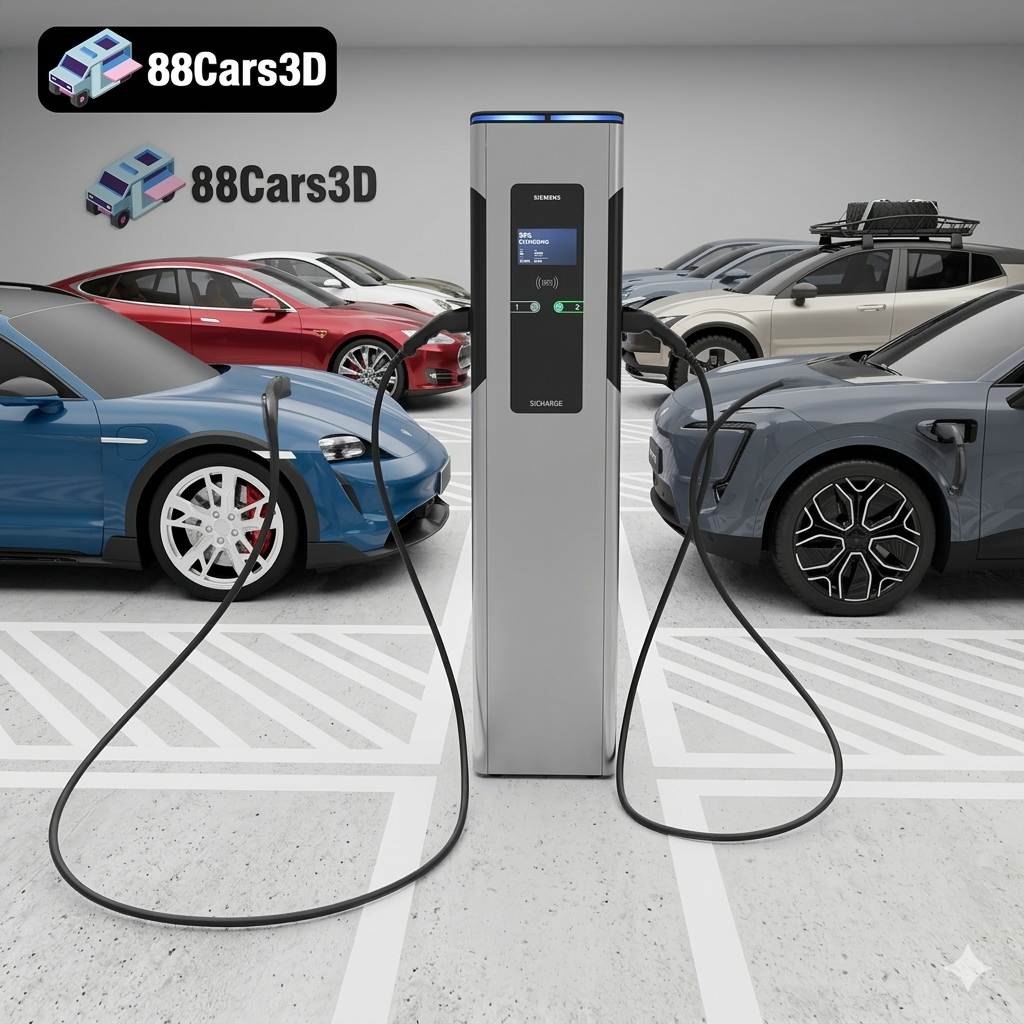
Download the Future of Mobility EV 3D Models Bundle. Includes the Volvo EX30, Tesla Model S, AVATR 11, Porsche Taycan, and a Siemens EV Charger. Save big on this highly optimized 5-in-1 pack for ArchViz and game development!
Price: $89.99

