⚡ FLASH SALE: Get 60% OFF All Premium 3D & STL Models! ⚡

The pursuit of visual perfection in automotive rendering has long been a driving force for innovation in real-time graphics. From marketing showcases to immersive game environments, the ability to portray vehicles with photorealistic fidelity is paramount. For years, the traditional Physically Based Rendering (PBR) material system in Unreal Engine has served us well, pushing the boundaries of what’s possible in real-time. Yet, as demands for accuracy and complexity grew, particularly for intricate surfaces like multi-layered car paint, advanced glass, and finely detailed interiors, the limitations of older paradigms began to surface.
Enter Substrate, Unreal Engine 5’s revolutionary new material system. Substrate isn’t merely an upgrade; it’s a paradigm shift, fundamentally changing how materials are authored and rendered. Designed to overcome the energy conservation and layering challenges inherent in previous systems, Substrate empowers artists to create materials with an unprecedented level of physical accuracy and visual complexity. For professionals utilizing high-quality 3D car models from platforms like 88cars3d.com, mastering Substrate unlocks a new dimension of realism, allowing your vehicles to truly shine in automotive visualization, cinematic sequences, and interactive experiences.
In this comprehensive guide, we’ll dive deep into Unreal Engine’s Substrate Material System. We’ll explore its underlying principles, walk through the setup process, demonstrate how to craft hyper-realistic automotive shaders, discuss integration with your existing assets, and cover vital optimization strategies. Prepare to elevate your real-time rendering capabilities and redefine what’s possible with your Unreal Engine projects.
For decades, computer graphics has strived to replicate the intricate ways light interacts with surfaces. The advent of Physically Based Rendering (PBR) was a monumental leap, establishing a standardized, physically plausible approach to material authoring. PBR materials, based on real-world physics, allowed artists to create assets that looked consistent under varying lighting conditions, a massive improvement over older, more artistic (and often subjective) material workflows. However, even PBR, as implemented in traditional game engines, had its inherent limitations, especially when pushing the boundaries of extreme realism for complex surfaces.
Traditional PBR models in Unreal Engine typically rely on a simplified opaque or translucent shading model. While highly effective for a vast array of materials, they operate on a single, aggregated surface description. This means that for materials with multiple, distinct layers—like a car’s clear coat over a metallic base, or dust settling on a glass surface—artists often resorted to clever tricks and workarounds. These methods included blending multiple material functions, using complex texture masks, or even rendering multiple passes, which could be cumbersome, prone to visual artifacts, and often violated principles of energy conservation.
Consider a high-end automotive paint. It’s not just a single layer; it’s a metallic base coat, often with flakes, topped by multiple layers of translucent clear coat. Simulating the subtle subsurface scattering of paint, the distinct reflections from the clear coat, and the interaction of light *between* these layers was challenging. It often led to materials that looked good but lacked the true physical depth and light interaction observed in the real world. Energy conservation, a cornerstone of PBR, could be difficult to maintain across these faked layers, sometimes resulting in materials that appeared too bright or too dark in certain lighting conditions. This was a significant bottleneck for achieving truly indistinguishable automotive visualization.
Substrate directly addresses these limitations by introducing a fundamentally new approach: a modular, layered material description built on a robust, physically accurate foundation. Instead of attempting to fake complex layered surfaces, Substrate allows you to explicitly define and stack layers, each with its own physically based properties. This means you can have a metallic base, a clear coat, a layer of dirt, and even micro-scratches, all interacting correctly with light in a single, coherent material graph.
The core concept behind Substrate is its ability to represent a material as a stack of different “Substrate BSDFs” (Bidirectional Scattering Distribution Functions), each describing how light interacts with a particular surface type. These BSDFs can then be blended or layered on top of each other, with Substrate automatically handling energy conservation and the complex interplay of light throughout the stack. This gives artists unprecedented control and accuracy, making it possible to create materials that are not just visually compelling, but also physically correct. Whether it’s the subtle iridescence of a pearl paint, the deep refractive properties of automotive glass, or the fibrous texture of carbon fiber under a clear coat, Substrate provides the tools to achieve true next-generation realism, making your 3D car models from marketplaces like 88cars3d.com truly shine.
Before you can begin crafting your hyper-realistic materials, you need to enable the Substrate Material System within your Unreal Engine 5 project. As of its introduction, Substrate is still considered an experimental feature, meaning its implementation and specific nodes may evolve as the engine develops. However, the core principles and benefits remain consistent. Understanding the setup process is crucial for any artist looking to leverage this powerful new system for automotive visualization and beyond.
The first step to unlocking Substrate’s capabilities is to activate it within your project settings. This process is straightforward but requires an editor restart to take full effect:
Once the editor has restarted, Substrate will be active, and you’ll notice new material nodes and options within the Material Editor. It’s important to remember that because Substrate is experimental, it might introduce new performance considerations or require specific hardware. Always monitor your project’s performance, especially when migrating complex scenes to Substrate-based materials. For the most up-to-date information and best practices, always consult the official Unreal Engine documentation.
With Substrate enabled, opening the Material Editor reveals a significant change. Instead of the traditional “Main Material” node with inputs like Base Color, Metallic, Roughness, etc., you’ll now primarily interact with the Substrate output node. This node is where you’ll connect your layered material descriptions. The workflow fundamentally shifts from defining an aggregated surface to building up a stack of distinct material layers.
Key concepts and nodes you’ll encounter:
A basic Substrate material for a car might start with a “Standard Metallic Roughness” BSDF for the base paint. This would connect to the “Bottom” input of a “Substrate Over” layer node. The “Top” input of that same layer node would then connect to a “Clear Coat” BSDF. Finally, the output of the “Substrate Over” node would connect to the “Substrate” root node. This hierarchical approach allows for incredible flexibility and physical accuracy, laying the groundwork for truly captivating real-time rendering of your premium 3D car models.
The true power of Substrate shines when creating complex, real-world materials that were previously difficult or impossible to achieve with single-layer PBR shaders. Automotive surfaces are among the most challenging and rewarding to replicate, with their intricate interplay of reflections, refractions, and microscopic details. With Substrate, materials like multi-layered car paint, advanced glass, and detailed carbon fiber move from approximations to physically accurate representations, vital for high-end automotive visualization.
Automotive paint is a prime example of a multi-layered material. It typically consists of a primer, a colored base coat (often metallic or pearlized), and several layers of a clear protective top coat. Substrate allows us to model this directly:
Substrate Standard BSDF or Substrate Metallic BSDF node. This represents the colored layer underneath the clear coat. Connect your base color textures, metallic maps, and roughness maps to this node. For metallic paints, ensure your metallic value is high (close to 1) and your roughness is appropriate for the underlying pigment layer.Substrate Clear Coat BSDF node. This is a dedicated layer for simulating the translucent, reflective top coat. Key parameters here include:
Connect the output of your base coat BSDF to the ‘Bottom’ input of a Substrate Layer Over node, and the output of your clear coat BSDF to the ‘Top’ input of the same Substrate Layer Over node.
Substrate Metallic BSDF for the flakes, potentially with a distinct metallic color (e.g., silver).Substrate Layer Blend node, controlling its opacity and appearance with the mask. Ensure the flakes are subtly integrated before the main clear coat layer.This layered approach ensures physically accurate light absorption and reflection through each layer, resulting in astonishingly realistic car paint that reacts authentically to Lumen global illumination and real-time reflections.
Substrate’s versatility extends far beyond paint:
Substrate Transmissive BSDF or Substrate Thin Film BSDF for the core glass.Substrate Layer Over node to add a subtle thin film interference layer for those rainbow-like reflections often seen on automotive windows (e.g., using a Fresnel effect combined with a spectrum of colors).Substrate Standard BSDF for the carbon weave. Use highly detailed normal maps and roughness maps to capture the anisotropic (direction-dependent) reflections of the fibers.Substrate Clear Coat BSDF over this layer, much like car paint, but perhaps with a slightly higher IOR for a deeper wet look.Substrate Standard BSDF with a detailed normal map and roughness map is a good start.Substrate Subsurface Scattering BSDF layer for that soft, light-absorbing quality of real leather, particularly in thinner areas or edges.Substrate Layer Over with a low opacity and distinct roughness, driven by an ambient occlusion or procedural mask.Substrate Cloth BSDF if available, or blend a standard BSDF with a light scattering effect to simulate fuzz and microfibers.By leveraging these layered approaches, artists can achieve unprecedented fidelity, making game assets and visualization content indistinguishable from reality, especially when paired with high-quality models from 88cars3d.com.
Integrating your existing high-quality 3D car models from marketplaces like 88cars3d.com into a Substrate-enabled Unreal Engine project is a crucial step. While these models often come with excellent PBR texture sets and clean topology, adapting them to the new material system and ensuring optimal performance requires a thoughtful approach. Substrate, despite its complexity, is designed for efficient rendering of intricate materials, but understanding its performance implications is key for smooth real-time rendering.
Models sourced from 88cars3d.com are known for their clean topology, well-defined UV mapping, and high-resolution PBR textures (Base Color, Normal, Roughness, Metallic, Ambient Occlusion). This makes them ideal candidates for Substrate, as you already have the foundational data. Here’s a general workflow for adapting them:
Substrate BSDF (e.g., Standard Metallic Roughness BSDF) for your car’s body.Substrate Layer Over node. For tires, you might have a rubber base, an embossed normal map, and perhaps a subtle dirt layer.The clean UV mapping and high-resolution textures provided by 88cars3d.com models are an enormous advantage here, as they provide the precise data needed to drive the detailed inputs of Substrate’s layered BSDFs, ensuring pixel-perfect results.
While Substrate offers unparalleled visual fidelity, it’s essential to understand its performance characteristics. A poorly optimized Substrate material can be more demanding than a traditional PBR shader. However, for *complex* materials that previously required many hacks and multiple draw calls, Substrate can actually be *more* efficient due to its unified rendering approach.
By thoughtfully applying these optimization strategies, you can harness Substrate’s power to render stunning automotive visualization projects and realistic game assets without sacrificing performance, making your high-fidelity car models shine in any real-time environment.
The benefits of Substrate extend beyond static beauty shots. Its ability to produce physically accurate, layered materials has a profound impact on interactive applications and high-fidelity virtual production workflows. For companies leveraging Unreal Engine for dynamic presentations or cinematic content, Substrate elevates the realism, enhancing user engagement and bridging the gap between virtual and physical environments.
Automotive configurators are a prime example of interactive experiences where Substrate makes a significant difference. Users expect to see every detail of a potential vehicle, from the subtle metallic flakes in the paint to the nuanced texture of the leather interior. Traditional PBR materials often struggled to deliver this level of micro-detail with full physical accuracy, especially when dynamically changing materials.
With Substrate, the possibilities for configurators are dramatically expanded:
This allows for the creation of truly compelling real-time demonstrations that rival offline renders in quality, providing a powerful tool for marketing and sales in the automotive industry.
Virtual Production (VP) workflows, particularly those utilizing large LED volumes for in-camera visual effects, demand the absolute highest level of real-time rendering fidelity. The goal is to achieve seamless integration between physical foreground elements (like an actor or a real car shell) and virtual backgrounds rendered on the LED walls. Any discrepancy in lighting, reflections, or material properties can break the illusion. Substrate is a pivotal technology for achieving this photorealism:
Substrate’s robust framework provides the visual bedrock for pushing the boundaries of real-time realism, making it an indispensable tool for both interactive experiences and the demanding world of virtual production.
The introduction of Unreal Engine 5’s Substrate Material System marks a pivotal moment in the quest for real-time photorealism. For Unreal Engine developers, 3D artists, and automotive visualization professionals, it represents a powerful new toolset to overcome the traditional limitations of PBR and achieve an unprecedented level of physical accuracy in their projects. From the intricate depth of multi-layered car paint to the nuanced refractions of glass and the anisotropic reflections of carbon fiber, Substrate empowers you to bring your 3D car models to life with astonishing fidelity.
By understanding its core principles, mastering the layered material graph, and applying thoughtful optimization strategies, you can transform your existing assets from platforms like 88cars3d.com into hyper-realistic masterpieces. Substrate’s capabilities extend beyond mere aesthetics; they drive more immersive interactive experiences, elevate the quality of game assets, and provide the visual foundation necessary for cutting-edge virtual production workflows utilizing Nanite, Lumen, and Blueprint.
The journey into Substrate may involve a learning curve, but the rewards are profound. We encourage you to enable Substrate in your projects, experiment with its layered approach, and push the boundaries of what you thought was possible in real-time rendering. The future of automotive realism is here, and with Substrate, you have the power to shape it.

Texture: Yes | Material: Yes | 3D Printable: Yes. Download the Italian Thoroughbreds Bundle featuring 5 iconic 3D models: Lamborghini Huracán Performante, Ferrari 458 Italia, Lamborghini Urus, Diablo SV, and Maserati GT. Optimized for 4K rendering and 3D printing (STL included). Save 50% with this ultimate Italian vehicle collection.
Price: $199.99

Download the Elite Future Mobility Bundle featuring 4 highly optimized 3D models: Tesla Model S, Avatr 11, Li L9, and Zoox Robotaxi. Perfect for ArchViz, Smart City renders, and game dev. Optimized for Unreal Engine and Blender. Includes .fbx, .obj, and .max formats.
Price: $99

🚗 5 Iconic German Cars (BMW M4 G82, M5 CS, X3, 1 Series & Mercedes E-Class). ✅ Optimized for ArchViz: Ready for Corona & V-Ray. 💰 Save €71 with this limited-time collection! 🚀 Instant Download after purchase.
Price: $119

Download the Extreme Off-Road & Survival 3D Models Bundle! Includes the Brabus 800 Adventure, Dodge Ram Bigfoot, Spec Truck, and a Caravan. Save over €210 on this premium 4-in-1 off-grid vehicle pack for ArchViz and game development.
Price: $149.99

Download the Heavy Duty & Commercial Logistics 3D Models Bundle! Includes the Ford Sterling, Caterpillar CT680, Mercedes Citaro Bus, and Vito Van. Save over €130 on this massive, game-ready 4-in-1 industrial vehicle pack.
Price: $109.99

Download the Ultimate Custom Motorcycles 3D Models Bundle. Includes a Custom Chopper, Ducati 916 Café Fighter, Harley XR1200X, and BMW K100. Perfect premium props for luxury ArchViz garages. Save over €250 today!
Price: $159.99

Download the ultimate JDM Street Racing 3D Models Bundle! Includes the Nissan GT-R, Toyota Supra, Mazda RX-7, Lancer Evo IX, and Honda NSX. Save big on this highly optimized, game-ready 5-in-1 Japanese legend car pack.
Price: $129.99

Download the ultimate American Muscle & Cinematic Classics 3D Models Bundle! Includes the Dodge Charger ’68, Mustang Eleanor GT500, Camaro Z28 ’79, and a custom ’69 Mustang. Save over €240 on this game-ready, premium 4-in-1 pack.
Price: $149.99

Download the Everyday City Traffic 3D Models Bundle. Includes the VW Golf, Kia Picanto, Hyundai Tucson, Toyota Yaris, and a DHL Ford Transit Van. Save big on this 5-in-1 pack, perfectly optimized for realistic ArchViz streets and game traffic.
Price: $99.99
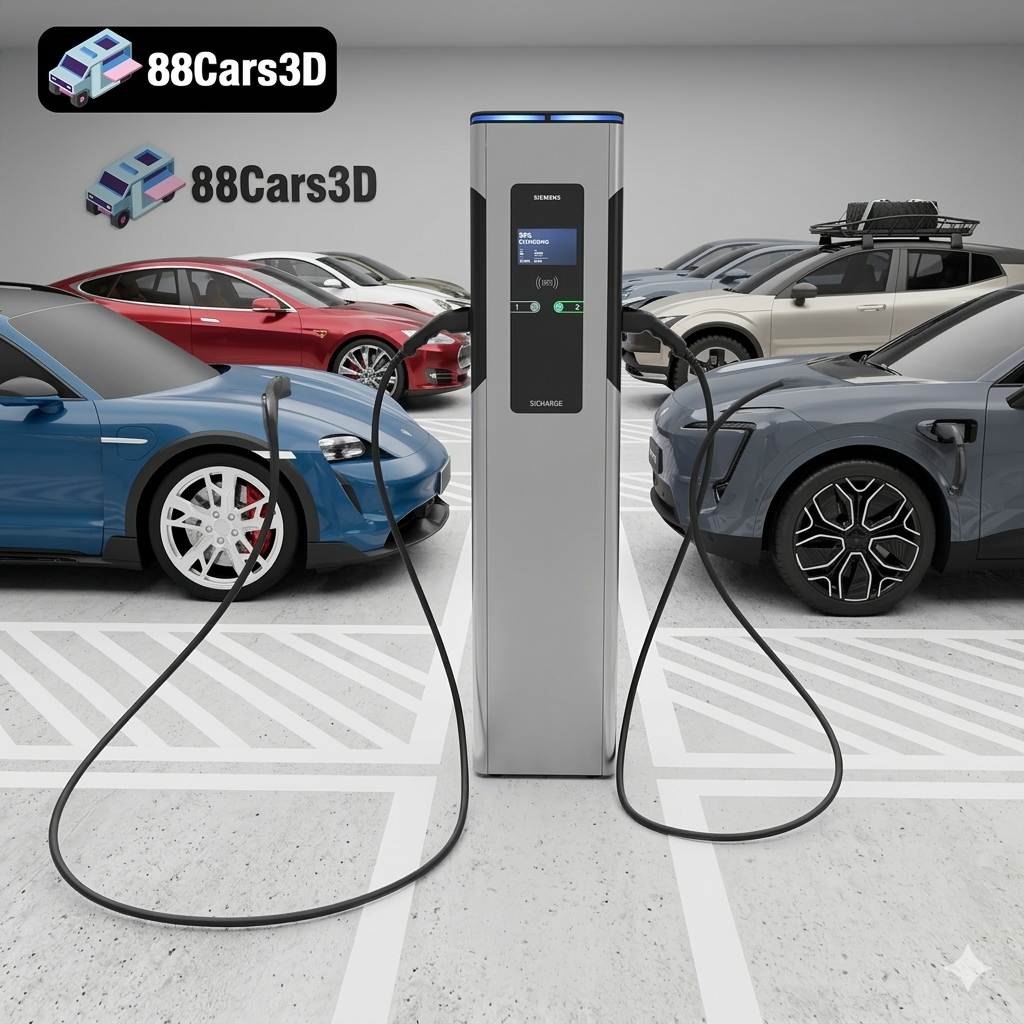
Download the Future of Mobility EV 3D Models Bundle. Includes the Volvo EX30, Tesla Model S, AVATR 11, Porsche Taycan, and a Siemens EV Charger. Save big on this highly optimized 5-in-1 pack for ArchViz and game development!
Price: $89.99

