⚡ FLASH SALE: Get 60% OFF All Premium 3D & STL Models! ⚡

The automotive industry is in constant motion, evolving beyond traditional showrooms and static visualizations. Augmented Reality (AR) is at the forefront of this transformation, offering immersive, interactive experiences that redefine how we perceive, customize, and even maintain vehicles. From virtual car configurators placed in your driveway to interactive maintenance guides projected onto an engine, AR powered by a robust engine like Unreal Engine is unlocking unprecedented possibilities.
Unreal Engine stands as an unrivaled platform for creating high-fidelity AR applications, especially when realism and visual quality are paramount. Its advanced rendering capabilities, powerful Blueprint visual scripting, and extensive toolset make it the ideal choice for developers aiming to bring stunning 3D automotive models into the real world. This comprehensive guide will walk you through the essential steps, technical considerations, and best practices for developing cutting-edge automotive AR experiences using Unreal Engine. We’ll delve into everything from project setup and model optimization to crafting interactive elements and deploying your applications, empowering you to leverage the full potential of real-time rendering in AR. Prepare to transform your digital car models into tangible, interactive realities that captivate and inform.
Embarking on an AR project in Unreal Engine requires careful initial setup to ensure a smooth development process and optimal performance. The foundation you lay here will impact everything from model fidelity to deployment success.
When you launch Unreal Engine and create a new project, selecting the right template is crucial. For AR, the **Blank** or **Games** template is often a good starting point, as it provides a clean slate without unnecessary overhead. However, you’ll need to enable specific plugins to access AR functionalities. Navigate to **Edit > Plugins** and search for the following:
* **ARCore** (for Android AR devices): Provides functionality for Google’s AR platform.
* **ARKit** (for iOS AR devices): Enables Apple’s AR platform features.
* **OpenXR** (for cross-platform AR, often used with mixed reality headsets): A royalty-free API standard for accessing AR/VR devices.
* **Augmented Reality Trace**: Essential for hit-testing and interacting with detected surfaces.
* **Google ARCore Services** (if targeting Android): Necessary for Android packaging.
* **Apple ARKit** (if targeting iOS): Necessary for iOS packaging.
After enabling these, restart the editor. Next, configure your project settings under **Edit > Project Settings**. For mobile AR, you’ll need to adjust settings under the **Platforms** section:
* **Android**: Ensure **Android SDK and NDK** are correctly configured. Enable **Support arm64** and select appropriate **Minimum SDK Version** and **Target SDK Version**. Consider using the **Vulkan** RHI for better performance on compatible devices.
* **iOS**: Ensure you have an Apple Developer Account and valid signing certificates. Set the **Minimum OS Version** to a suitable level (e.g., iOS 13.0 or higher for advanced AR features).
The quality and optimization of your 3D car models are paramount for a successful AR application. High-fidelity models are visually appealing but must be engineered for real-time performance on mobile devices. When sourcing automotive assets from marketplaces, platforms like **88cars3d.com** offer high-quality, pre-optimized 3D car models that are ideal for Unreal Engine projects.
Look for models featuring:
* **Clean Topology**: Models with well-structured quad-based geometry are easier to optimize and deform. Avoid overly dense or triangulated meshes where possible.
* **Realistic PBR Materials**: Physically Based Rendering (PBR) materials are critical for achieving photorealism under varying lighting conditions. Ensure the models come with accurate textures for Base Color, Normal, Roughness, Metallic, and Ambient Occlusion.
* **Proper UV Mapping**: Overlapping or poorly unwrapped UVs can lead to texture distortion and issues with lightmap baking. Well-organized UVs are essential for high-quality texture application.
* **Optimized Poly Count**: While Nanite can handle very high polygon counts for static meshes, mobile AR typically requires models optimized within a performance budget. For a detailed car, aim for a polygon count that balances visual fidelity with target device capabilities – often in the range of 150,000 to 500,000 triangles for a full vehicle, though this can vary.
* **Multiple File Formats**: FBX is the most common and versatile format for importing into Unreal Engine. USD and USDZ are also gaining traction, particularly for AR applications, due to their ability to encapsulate PBR materials and animations effectively. USDZ is especially relevant for iOS AR Quick Look experiences.
A well-chosen and optimized 3D car model from a reputable source like 88cars3d.com can significantly reduce development time and ensure a stunning final product.
Once your Unreal Engine project is configured and you’ve acquired high-quality 3D car models, the next critical step is to import and optimize them for the unique demands of real-time AR on mobile devices. This process balances visual fidelity with strict performance budgets.
The journey begins with importing your 3D car model, typically in FBX format, into Unreal Engine. During the import process, pay close attention to the settings:
* **Static Mesh Options**: Ensure “Combine Meshes” is appropriately handled. For highly detailed cars, you might import individual components (body, wheels, interior) separately to allow for granular material assignments and easier interactivity, then combine them using Blueprints or an empty Actor in Unreal.
* **Transform**: Verify that the “Import Uniform Scale” is set correctly to match Unreal’s scale (1 unit = 1cm). Check the “Import Rotation” to prevent orientation issues.
* **Materials**: Choose “Create New Materials” and “Import Textures” to automatically generate basic PBR materials. You’ll refine these later.
* **LODs**: If your FBX file contains pre-exported Levels of Detail, ensure “Import LODs” is checked.
After import, address initial optimization. High-fidelity automotive models often come with very dense geometry, which can overwhelm mobile AR devices.
* **Polygon Count Reduction**: For non-Nanite-enabled meshes (which is often the case for mobile AR, as Nanite currently has limitations on mobile and dynamic objects), consider decimation. In Unreal Engine’s Static Mesh Editor, you can use the **LOD Group** settings or manually reduce the poly count for specific LODs. Aim for a sensible poly budget, typically between 100k-300k triangles for the base LOD (LOD0) of a full car for mobile AR, depending on complexity and target device.
* **Texture Compression**: Texture memory is a major bottleneck. Unreal Engine automatically compresses textures upon import, but you can fine-tune settings in the Texture Editor. For Base Color, use `DXT1` or `DXT5`. For Normal maps, use `NormalMap` compression. Reduce texture resolutions where possible without significant visual impact – 2K or 1K textures are often sufficient for mobile AR, especially for less prominent parts.
* **Draw Call Optimization**: Fewer distinct meshes and materials lead to fewer draw calls. Combine meshes where possible, and use material instances to share a base material, reducing shader complexity.
For further reference on optimizing static meshes in Unreal Engine, consult the official documentation on mesh optimization techniques at https://dev.epicgames.com/community/unreal-engine/learning.
Unreal Engine 5 introduced **Nanite**, a virtualized geometry system that dramatically changes how high-polygon assets are handled. While Nanite allows for cinematic-quality 3D car models with millions of polygons to be rendered in real-time, its application in mobile AR has specific considerations:
* **Nanite for AR**: Currently, Nanite is primarily supported on high-end desktop platforms and consoles. While it can be enabled for some mobile projects, its performance on typical AR-capable smartphones may not be optimal, and it does not support dynamic meshes, skeletal meshes, or transparent materials directly. Therefore, for most practical mobile AR automotive applications, you’ll still rely on traditional optimization techniques. However, for future-proofing or AR applications targeting powerful mixed reality headsets, Nanite will become increasingly relevant for static car components.
* **Levels of Detail (LODs)**: LODs remain absolutely critical for performance in mobile AR. They allow the engine to automatically swap in lower-polygon versions of your car model as it moves further from the camera or as performance budgets are strained.
* **Automatic LOD Generation**: Unreal Engine can automatically generate LODs for your static meshes. In the Static Mesh Editor, under the **LOD Settings** panel, you can specify the number of LODs and their respective screen sizes.
* **Manual LOD Creation**: For precise control, you can create and import your own pre-optimized LOD meshes from your 3D modeling software. This gives you greater control over mesh quality and poly count reduction for each level.
* **LOD Bias**: You can adjust the LOD Bias in materials or specific meshes to force lower LODs at closer distances, sacrificing some visual fidelity for significant performance gains, especially useful for very distant objects or background elements.
Effective LOD management ensures that your high-fidelity 3D car models always render efficiently, maintaining high frame rates even on less powerful AR devices, which is paramount for a smooth user experience.
Achieving photorealism in AR means not only having high-quality 3D car models but also applying PBR materials that accurately react to light and implementing lighting solutions that blend seamlessly with the real world.
Physically Based Rendering (PBR) is the cornerstone of modern real-time graphics, and mastering it is essential for automotive visualization. Unreal Engine’s Material Editor provides a powerful node-based interface to create stunning car paint, glass, and interior finishes.
* **Core PBR Parameters**: Every PBR material relies on a set of core parameters:
* **Base Color**: The intrinsic color of the surface. For car paint, this could be a solid color or a subtle metallic flake texture.
* **Normal Map**: Adds fine surface detail without increasing polygon count, crucial for subtle body panel curvature or interior textures.
* **Roughness**: Controls how rough or smooth a surface is, impacting how light scatters (0 = perfectly smooth/mirror-like, 1 = perfectly rough/diffuse).
* **Metallic**: Determines if a surface is metallic or dielectric (non-metallic). Car paint often has a slight metallic component, while chrome is fully metallic.
* **Specular**: Defines the intensity of the specular highlight. For most PBR materials in Unreal, this is set to a default value and only adjusted for specific non-metal materials.
* **Ambient Occlusion (AO)**: Simulates subtle shadow effects in crevices and corners, adding depth and realism.
* **Automotive-Specific Materials**:
* **Car Paint**: Achieving realistic car paint often involves layering materials. A base metallic material can be topped with a clear coat using the **Clear Coat** and **Clear Coat Roughness** inputs in the material. This mimics the multi-layered paint finish of real vehicles, giving those distinctive reflections and sheens. You can also incorporate subtle flake textures for metallic paints.
* **Glass**: For realistic car windows, use a translucent material. Adjust the **Opacity**, **Refraction**, and **Roughness** to simulate various glass types. The **Thin Translucency** shading model can provide good performance and realistic thin glass effects.
* **Chrome/Metallic**: For highly reflective surfaces like chrome trim or wheel rims, use a low Roughness value (close to 0) and a high Metallic value (close to 1).
* **Material Instances**: Leverage Material Instances to create variations (e.g., different car colors, interior trims) from a single master material. This is crucial for automotive configurators and significantly reduces memory overhead and simplifies iteration. Define parameters like Base Color, Roughness, or even texture inputs in your master material, then create instances to quickly change these values.
* **Texture Resolutions**: While you might use 4K or 8K textures for cinematic renders, mobile AR typically requires more conservative resolutions. 2K (2048×2048) is often a good balance for detailed areas like the car body, with 1K (1024×1024) or 512×512 for less prominent parts, wheels, or interior elements to conserve memory.
Lighting in AR is a complex challenge because your virtual objects must blend seamlessly with real-world illumination. Unreal Engine provides tools to achieve this, but performance is a constant consideration.
* **AR Lighting Challenges**: Unlike traditional game environments, AR lighting needs to adapt to an unknown, dynamic real-world environment. Mobile AR platforms like ARKit and ARCore provide estimated real-world lighting parameters (e.g., average intensity, color temperature, and sometimes even a spherical light probe).
* **Utilizing AR Light Estimation**: In Unreal Engine, you can use the AR Session’s light estimation data to drive the lighting of your virtual car. This typically involves:
* Using a **Directional Light** component to simulate the primary light source (e.g., the sun). Its intensity and color can be driven by the estimated real-world light.
* Using a **Sky Light** component with a capture source set to **Captured Scene** (when supported by the AR platform) or driven by a spherical harmonic texture generated from the AR light probe. This provides ambient and reflected light.
* **Performance-Conscious Shadows**: Realistic shadows are crucial for grounding your AR car in the real world. Without them, the car appears to float.
* **Directional Light Shadows**: Ensure your Directional Light casts shadows. For mobile AR, Cascade Shadow Maps are generally preferred over Ray Traced Shadows due to performance. Adjust the **Num Dynamic Shadow Cascades** and **Dynamic Shadow Distance** in the Directional Light settings and Project Settings (**Engine > Rendering > Shadows**) to balance quality and performance. Fewer cascades and shorter distances will improve performance.
* **Contact Shadows**: For fine details and small contact areas, enable **Contact Shadows** on the Directional Light to prevent “peter panning” (the object floating above the ground).
* **Shadow Planes/Mats**: A common technique for realistic grounding is to use a transparent material on a simple plane that only receives shadows. This “shadow catcher” plane mimics the ground and allows the car’s shadow to blend naturally with the real environment.
* **Lumen and Mobile AR**: Unreal Engine 5’s **Lumen** Global Illumination system offers incredible dynamic lighting and reflections. However, similar to Nanite, Lumen is extremely performance-intensive and not currently suitable for most mobile AR applications. For mobile AR, focus on optimizing your Directional and Sky Lights, employing baked lighting techniques for static elements (if your AR experience allows for a mostly static environment), and using shadow planes.
Striking the right balance between visual fidelity and real-time performance in AR lighting is an iterative process. Continual testing on target devices is essential to ensure a smooth and visually convincing experience.
Beyond static visualization, the true power of AR lies in its interactivity. Unreal Engine’s Blueprint visual scripting system empowers developers to create dynamic, engaging experiences without writing a single line of C++ code, making it perfect for automotive configurators and immersive demos.
Blueprint is an intuitive, node-based interface that allows you to define complex game logic, manage object states, and respond to user input. For automotive AR, Blueprint becomes the engine of your interactive configurator, enabling users to customize vehicles in real-time.
* **Vehicle Customization Logic**:
* **Material Swapping**: The most common customization is changing paint colors or material finishes. You can achieve this by:
1. Creating a **Master Material** with a “Base Color” or other parameters exposed as **Material Parameters**.
2. Creating multiple **Material Instances** from this master, each with different values (e.g., red, blue, green car paint).
3. In Blueprint, when a user selects an option (e.g., taps a “Red” button), use a **Set Material** node on the car body mesh to swap to the corresponding red Material Instance. For more granular control, use **Set Scalar Parameter Value** or **Set Vector Parameter Value** on a **Dynamic Material Instance** to change parameters directly (like a color picker).
* **Mesh Swapping**: To change components like wheels or body kits, you can swap out Static Mesh Components. When a user selects a new wheel, use a **Set Static Mesh** node on the wheel component to replace it with a different mesh. Ensure the new mesh has the same pivot point and scale for seamless replacement.
* **Interior Options**: Similarly, different interior trims or seat upholstery can be changed using material or mesh swapping techniques.
* **User Input and Gestures**: AR applications heavily rely on touch and gesture input.
* **Touch Input**: Use the **Event Touch Input** (or similar events) in your Player Controller or an Actor Blueprint to detect screen touches.
* **Hit Testing**: For placing objects or interacting with specific parts of the car model, use **Line Trace By Channel** (or `ARTrace` for AR-specific hit tests) from the touch location into the world. This determines if the user has tapped on a detected AR plane or a component of your virtual car.
* **Gestures**: Implement basic gestures like one-finger drag for rotation, two-finger pinch for scaling, and two-finger drag for translation. This can be done by tracking touch locations over time and calculating delta movements. For example, to rotate the car, store the initial touch location and the current touch location, then calculate the rotation based on the horizontal displacement.
* **Event Dispatchers**: For complex configurations, Event Dispatchers are invaluable. For instance, when a “paint color changed” event occurs, an Event Dispatcher can broadcast this to all relevant components (e.g., the car body material, the mini-map thumbnail, etc.), ensuring all parts of the application react correctly.
The user interface (UI) and user experience (UX) in AR are crucial for making your application intuitive and enjoyable. Unreal Engine’s **Widget Blueprint** system allows you to create sophisticated UI elements that interact seamlessly with your 3D world.
* **Widget Blueprints for Menus and Overlays**:
* Create **User Widget** Blueprints to design your configurator menus, buttons, and information displays. Use standard UI elements like Buttons, Sliders, Text Blocks, and Images.
* For AR, keep the UI minimal and contextual. Overly cluttered interfaces can detract from the immersion.
* Display UI elements as **Screen Space** (overlaying the camera view) or **World Space** (attached to objects in the 3D scene). For a car configurator, screen-space UI is common for primary menus, while world-space UI might be used for interactive labels on car components.
* **Best Practices for AR UI**:
* **Contextual Information**: Show relevant information only when needed. For example, when a user taps on a wheel, a small pop-up menu might appear with wheel options.
* **Clear Call-to-Actions**: Buttons and interactive elements should be clearly labeled and easy to tap.
* **Non-Obtrusive Design**: Avoid large, opaque UI elements that block the view of the virtual car or the real world. Consider semi-transparent backgrounds.
* **Responsive Layouts**: Design UI that scales well across different device screen sizes and orientations. Use anchors, alignment, and size boxes effectively.
* **AR-Specific Interactions**:
* **Placement**: Guide the user through placing the virtual car in the real world. This typically involves detecting a horizontal plane (e.g., a floor or driveway) and allowing the user to tap to place the car. Provide visual cues, like a temporary grid or footprint, during placement.
* **Scaling and Rotation**: Allow users to scale the car (e.g., from a tabletop model to full size) and rotate it to view from all angles using natural touch gestures. Implement smooth interpolation for these transformations.
* **Information Overlays**: Use UI elements to display technical specifications, price, or feature highlights directly tied to parts of the car model. These can be toggled on/off or appear on interaction.
By thoughtfully designing both the Blueprint logic and the user interface, you can create AR automotive applications that are not only visually stunning but also incredibly intuitive and engaging for the end-user.
To push the boundaries of automotive AR and ensure your applications run smoothly on a wide range of devices, it’s essential to dive into advanced AR features and implement robust performance optimization strategies.
At the heart of any AR experience in Unreal Engine is the AR Session, which manages the device’s camera, motion tracking, and environment understanding. Understanding and leveraging its capabilities are crucial for a stable and immersive experience.
* **AR Session Lifecycle**: The AR Session is controlled by the `ARSessionConfig` asset and the `Start AR Session` and `Pause AR Session` Blueprint nodes.
* **Initialization**: When your application starts, you typically start the AR session, providing it with a configuration (e.g., whether to track planes, images, or faces).
* **Tracking States**: The AR session constantly provides tracking state information (e.g., `Tracking`, `Not Tracking`, `Limited`). It’s good practice to provide user feedback when tracking is limited or lost (e.g., “Move device to improve tracking”).
* **World Mapping**: The AR session builds a map of the real world. For automotive visualization, **Plane Detection** (horizontal and vertical) is key for placing your virtual car on a floor or wall.
* **Hit Testing**: The `Line Trace from Screen Point` node, when used with `AR Trace` results, is fundamental for letting users interact with the detected real-world surfaces, allowing them to precisely place their car model.
* **AR Anchors for Stable Object Placement**: Once your virtual car is placed, it needs to remain firmly “anchored” to that real-world location, even if the user moves their device significantly. AR Anchors are designed for this:
* **Creating Anchors**: After a successful hit test on a detected plane, you can create an `ARPin` (or `ARAnchor`) at that world location.
* **Benefits**: The AR system constantly refines the position of an anchor as it gathers more data about the environment, ensuring your virtual car stays stable relative to the real world, minimizing “drift” or “jitter.”
* **Persistent Experiences**: Anchors can also be used for persistent AR experiences, where the virtual object remains in its real-world spot even if the app is closed and reopened (though this requires saving and loading anchor data, which is an advanced topic).
Even with optimized models and materials, AR applications on mobile devices are incredibly performance-sensitive. Rigorous profiling and careful deployment are essential for a smooth, high-frame-rate experience.
* **Profiling Tools in Unreal Engine**:
* **Stat Commands**: Use commands like `stat fps`, `stat unit`, `stat rhi`, `stat gpu`, `stat scenerendering`, `stat game` in the console (`~`) to get real-time performance metrics directly in the editor or on a device.
* **GPU Visualizer**: Access through `stat gpu` or **Window > Developer Tools > GPU Visualizer**. This tool provides a detailed breakdown of GPU workload, helping you identify rendering bottlenecks (e.g., too many draw calls, expensive post-process effects, complex shaders).
* **Session Frontend**: This powerful tool (**Window > Developer Tools > Session Frontend**) allows you to connect to a running application on a mobile device and access various profilers (CPU, GPU, Memory, Network) to get in-depth performance data, memory usage, and even live debug logs. This is invaluable for pinpointing exactly where your AR application is struggling on target hardware.
* **Target Device Considerations**:
* **Hardware Variation**: Mobile AR devices vary wildly in CPU, GPU, and RAM. Always test on a range of devices representing your target audience.
* **Thermal Throttling**: Mobile devices can quickly heat up under heavy load, leading to thermal throttling and reduced performance. Optimize your app to run efficiently for extended periods.
* **Optimization Strategies**:
* **Draw Call Reduction**: Combine meshes, use material instances, and minimize the number of unique materials. Each draw call has CPU overhead.
* **Texture Streaming**: Unreal Engine’s texture streaming system helps manage texture memory. Ensure **Texture Streaming** is enabled in Project Settings. Adjust **Pool Size** and individual texture streaming settings as needed.
* **Culling Volumes and Distance Culling**: Use **Occlusion Culling** (automatically handled by Unreal for opaque objects) and **Distance Culling** for meshes to prevent rendering objects that are not visible or too far away.
* **Post-Processing**: Be extremely conservative with post-processing effects (e.g., Bloom, Vignette, Screen Space Reflections) on mobile AR, as they are often very expensive.
* **Shader Complexity**: Use the **Shader Complexity** viewmode (Alt+8) to identify overly complex materials. Simplify shaders where possible.
* **Asset Management**: Keep asset sizes in check. When sourcing high-quality automotive assets from platforms like **88cars3d.com**, ensure you perform the necessary optimization steps detailed earlier.
* **Deployment for Android and iOS**:
* **Packaging Settings**: In Project Settings, under **Packaging**, ensure you’ve selected the correct platforms (Android/iOS) and disabled unnecessary features (e.g., desktop shaders, content for other platforms).
* **Data Asset Management**: Use **Asset Management** in Project Settings to define which assets get cooked into your final package, ensuring you only include what’s necessary.
* **APK/IPA Generation**: For Android, use **File > Package Project > Android > Android (ETC2)**. For iOS, use **File > Package Project > iOS** from a Mac with Xcode installed. Regular testing on physical devices is non-negotiable for AR development.
By mastering profiling and applying these optimization techniques, you can ensure your automotive AR applications deliver a smooth, high-quality experience across a broad spectrum of mobile devices.
The convergence of high-fidelity 3D car models and advanced AR technology in Unreal Engine is not just a technical feat; it’s a powerful business tool driving innovation across the automotive sector. The applications extend far beyond mere novelty, impacting sales, marketing, training, and even design workflows.
AR is revolutionizing how consumers interact with vehicles before purchase, creating engaging experiences that bridge the gap between digital and physical.
* **Virtual Showrooms and Car Configurators**: Imagine customers exploring a new car model in full scale, right in their driveway or living room. Unreal Engine-powered AR applications allow users to:
* **Place and Scale**: Virtually place a highly detailed 3D car model, such as those found on 88cars3d.com, at actual size in any real-world environment. This provides an unprecedented sense of scale and presence.
* **Customize in Real-Time**: Change paint colors, wheel designs, interior upholstery, and even view different accessory packages with a few taps on their smartphone or tablet. The ability to see these customizations in a real-world context significantly aids buying decisions.
* **Explore Features**: Interactive hotspots can highlight specific features, opening virtual doors to reveal the interior, activating headlights, or showing animations of how features like adaptive cruise control work.
* **Pre-Purchase Visualization**: AR can provide critical visual context that photos and videos cannot. For example, a prospective buyer can see how a specific car model looks parked next to their current vehicle, assessing its size and aesthetic fit. This significantly reduces buyer’s remorse and enhances confidence in a purchase.
* **Marketing Campaigns**: Engaging AR experiences can become viral marketing tools. A new car launch could feature an AR app allowing users to “test drive” a virtual model, projecting it onto their table or floor, and sharing images or videos of their personalized virtual car. This fosters deeper engagement and brand connection.
The utility of automotive AR extends beyond sales, offering practical solutions for various stages of a vehicle’s lifecycle.
* **Interactive Training for Technicians**: AR can overlay diagnostic information, assembly instructions, or repair guides directly onto a physical engine or component. Technicians can follow animated steps, identify parts, and access real-time data, significantly reducing training time and errors. Unreal Engine’s ability to render complex geometries and integrate data streams makes it perfect for such applications.
* **Augmented User Manuals**: Imagine pointing your phone at a dashboard warning light and instantly seeing an AR overlay explaining its meaning and recommended actions, or pointing it at the engine bay for a virtual tour of components.
* **Design Review and Collaboration**: Automotive designers and engineers can use AR to review full-scale virtual prototypes in a physical space. Multiple stakeholders can simultaneously view and interact with a virtual car, inspecting design elements, assessing ergonomics, and making collaborative decisions without the need for expensive physical mock-ups.
* **Virtual Production and LED Wall Workflows**: While not strictly AR on mobile, the techniques used in AR—integrating virtual objects into real environments—are foundational for virtual production. High-quality 3D car models, meticulously crafted in Unreal Engine, are integral to creating real-time scenes for LED walls, allowing filmmakers to achieve stunning in-camera effects with virtual vehicles that react to real-world lighting and camera movements.
The future of automotive AR, powered by the incredible capabilities of Unreal Engine and high-quality assets from sources like **88cars3d.com**, is bright. As AR hardware evolves and computational power increases, we can expect even more sophisticated and ubiquitous applications, seamlessly blending the digital and physical worlds to enhance every aspect of the automotive experience.
The journey of building augmented reality applications for automotive visualization with Unreal Engine is a fascinating blend of technical artistry and rigorous optimization. We’ve explored the essential steps, from meticulously setting up your project and selecting high-quality 3D car models to the nuanced process of optimizing those assets for real-time AR performance on mobile devices. We delved into crafting realistic PBR materials, integrating dynamic lighting with the real world, and bringing vehicles to life through interactive Blueprint scripting and intuitive UI design. Finally, we touched upon advanced AR features like session management and anchors, alongside critical performance profiling and deployment strategies, before envisioning the transformative impact of AR on automotive sales, training, and design.
Unreal Engine’s robust feature set, coupled with the availability of expertly crafted 3D car models from platforms like 88cars3d.com, empowers developers to create truly immersive and visually stunning AR experiences. The key to success lies in a balanced approach: embracing cutting-edge rendering techniques while diligently optimizing every asset and system to meet the stringent demands of mobile AR hardware. The ability to place a full-scale, interactable virtual vehicle into a real-world environment is no longer a futuristic dream, but a present-day reality, redefining how we engage with automobiles.
Now is the time to leverage these powerful tools. Start experimenting with Unreal Engine’s AR capabilities, explore the vast library of optimized 3D car models available, and begin prototyping your own automotive AR innovations. For in-depth technical guidance on any Unreal Engine feature mentioned, remember to consult the official documentation at https://dev.epicgames.com/community/unreal-engine/learning. The road ahead for automotive AR is wide open, and with Unreal Engine, you have the vehicle to drive its future.
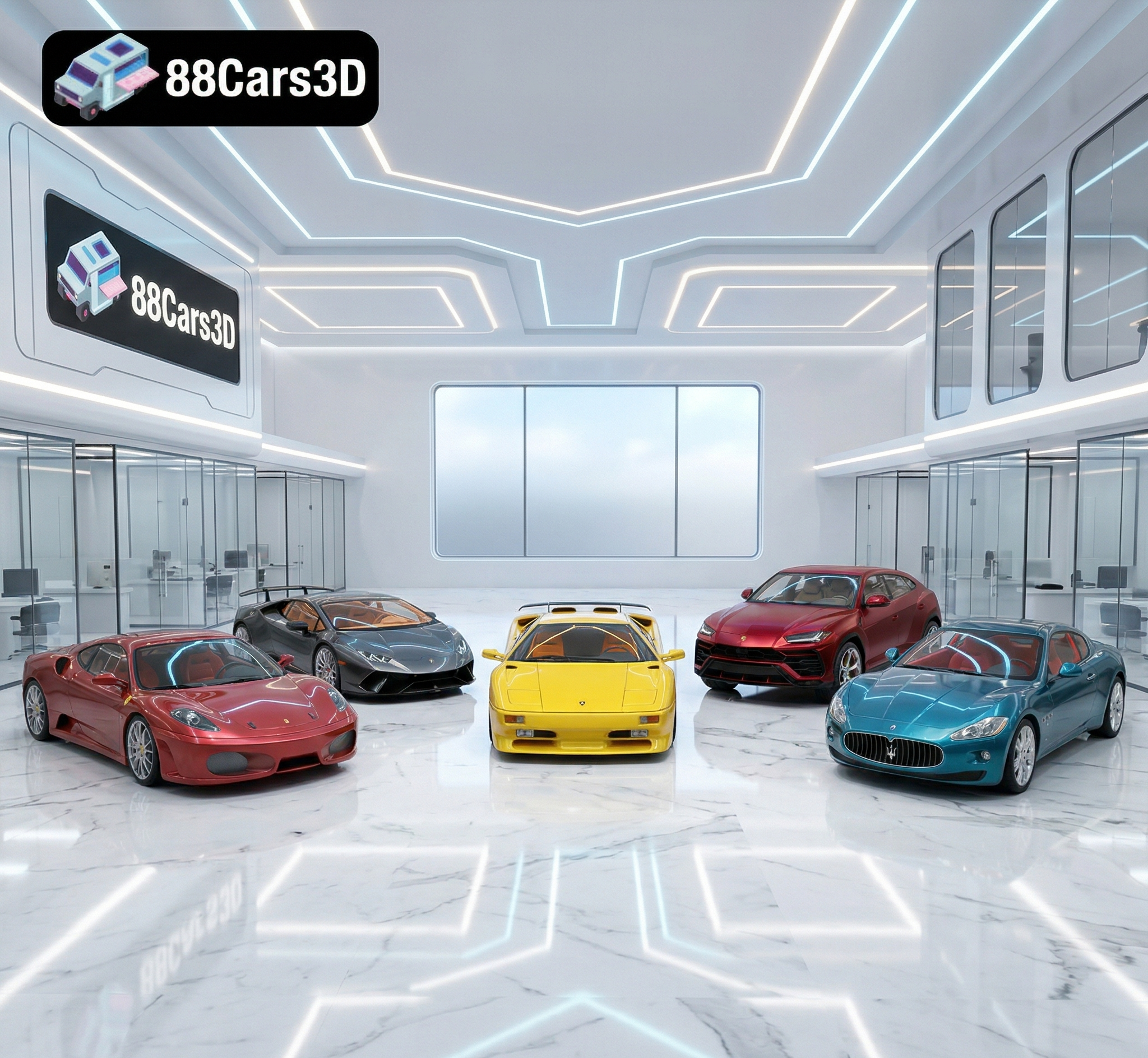
Texture: Yes | Material: Yes | 3D Printable: Yes. Download the Italian Thoroughbreds Bundle featuring 5 iconic 3D models: Lamborghini Huracán Performante, Ferrari 458 Italia, Lamborghini Urus, Diablo SV, and Maserati GT. Optimized for 4K rendering and 3D printing (STL included). Save 50% with this ultimate Italian vehicle collection.
Price: $199.99

Download the Elite Future Mobility Bundle featuring 4 highly optimized 3D models: Tesla Model S, Avatr 11, Li L9, and Zoox Robotaxi. Perfect for ArchViz, Smart City renders, and game dev. Optimized for Unreal Engine and Blender. Includes .fbx, .obj, and .max formats.
Price: $99

🚗 5 Iconic German Cars (BMW M4 G82, M5 CS, X3, 1 Series & Mercedes E-Class). ✅ Optimized for ArchViz: Ready for Corona & V-Ray. 💰 Save €71 with this limited-time collection! 🚀 Instant Download after purchase.
Price: $119
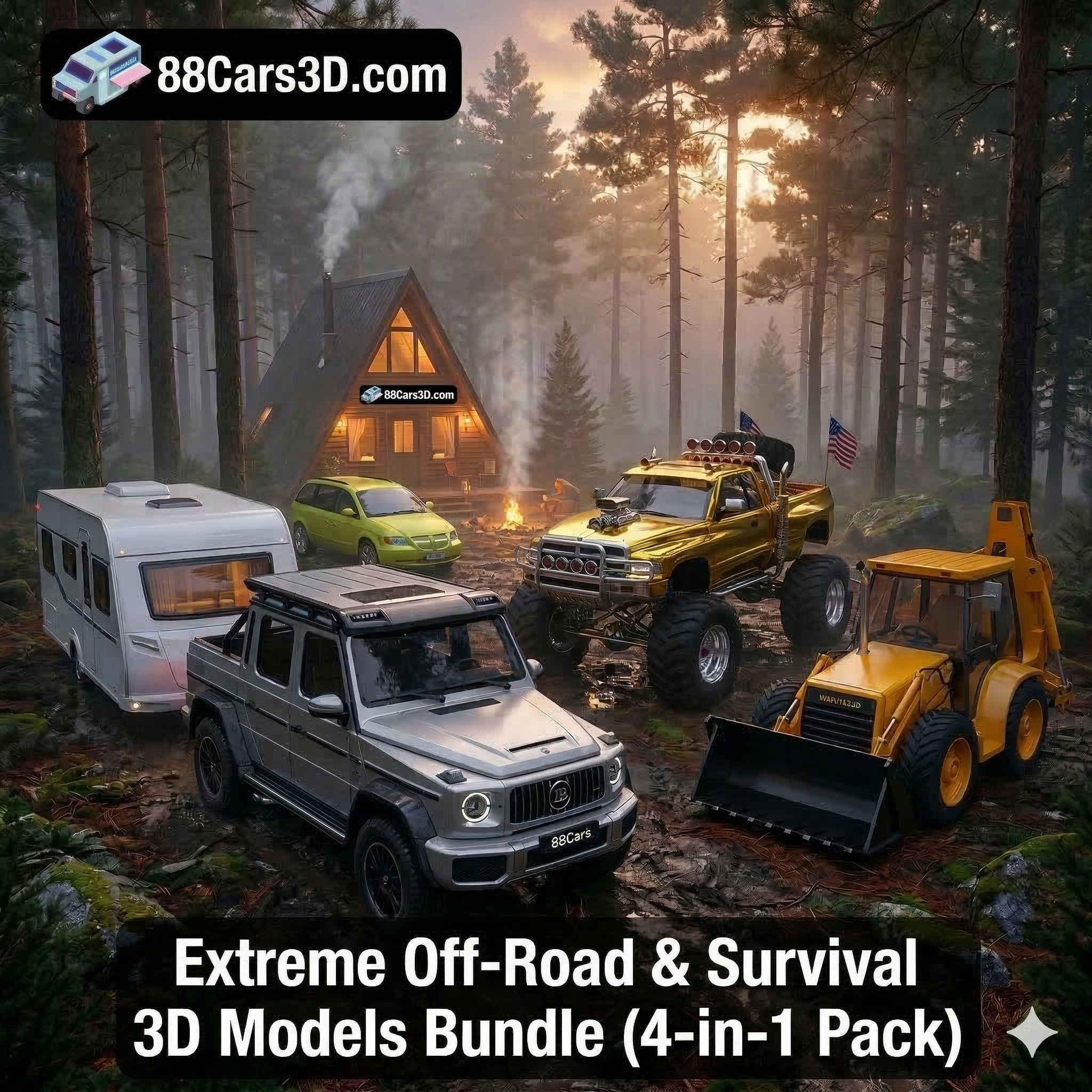
Download the Extreme Off-Road & Survival 3D Models Bundle! Includes the Brabus 800 Adventure, Dodge Ram Bigfoot, Spec Truck, and a Caravan. Save over €210 on this premium 4-in-1 off-grid vehicle pack for ArchViz and game development.
Price: $149.99
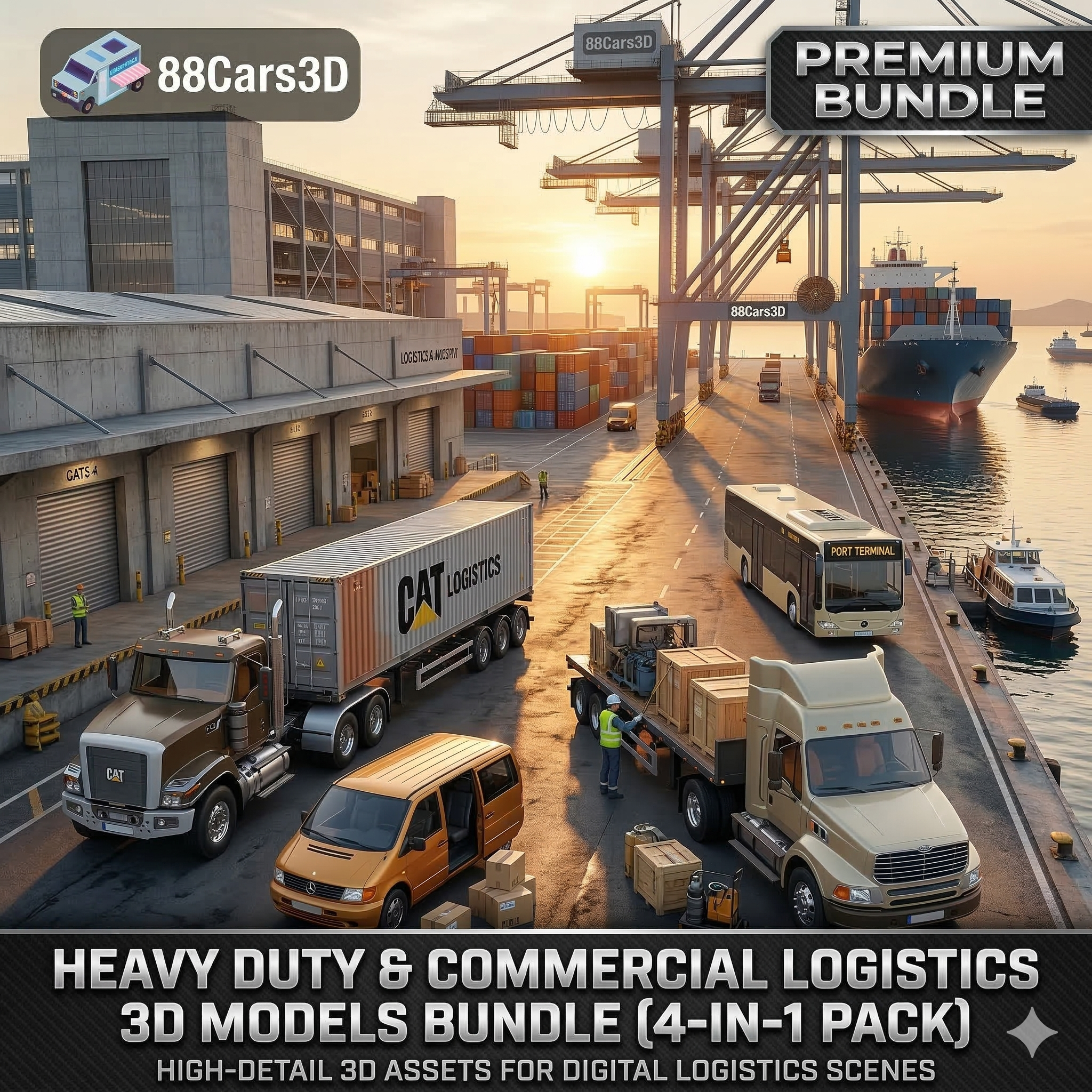
Download the Heavy Duty & Commercial Logistics 3D Models Bundle! Includes the Ford Sterling, Caterpillar CT680, Mercedes Citaro Bus, and Vito Van. Save over €130 on this massive, game-ready 4-in-1 industrial vehicle pack.
Price: $109.99

Download the Ultimate Custom Motorcycles 3D Models Bundle. Includes a Custom Chopper, Ducati 916 Café Fighter, Harley XR1200X, and BMW K100. Perfect premium props for luxury ArchViz garages. Save over €250 today!
Price: $159.99

Download the ultimate JDM Street Racing 3D Models Bundle! Includes the Nissan GT-R, Toyota Supra, Mazda RX-7, Lancer Evo IX, and Honda NSX. Save big on this highly optimized, game-ready 5-in-1 Japanese legend car pack.
Price: $129.99

Download the ultimate American Muscle & Cinematic Classics 3D Models Bundle! Includes the Dodge Charger ’68, Mustang Eleanor GT500, Camaro Z28 ’79, and a custom ’69 Mustang. Save over €240 on this game-ready, premium 4-in-1 pack.
Price: $149.99
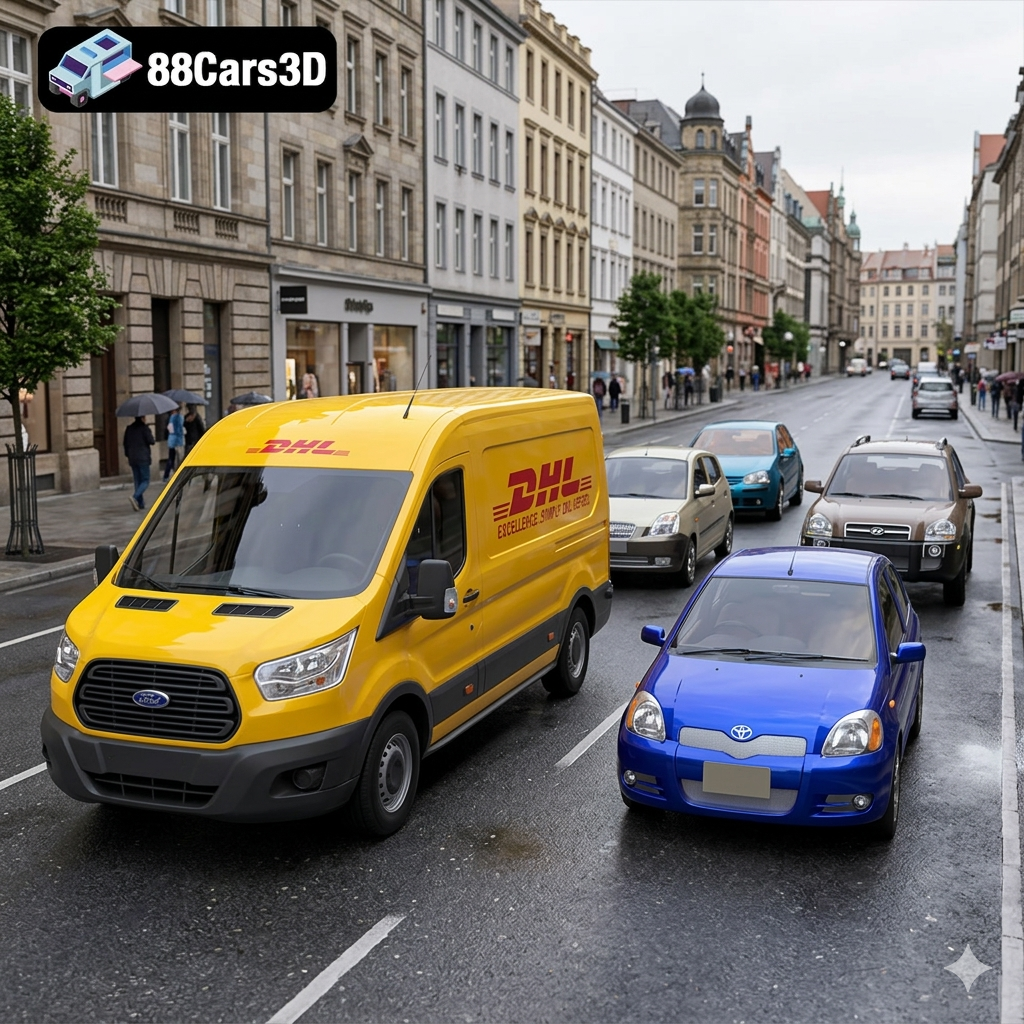
Download the Everyday City Traffic 3D Models Bundle. Includes the VW Golf, Kia Picanto, Hyundai Tucson, Toyota Yaris, and a DHL Ford Transit Van. Save big on this 5-in-1 pack, perfectly optimized for realistic ArchViz streets and game traffic.
Price: $99.99
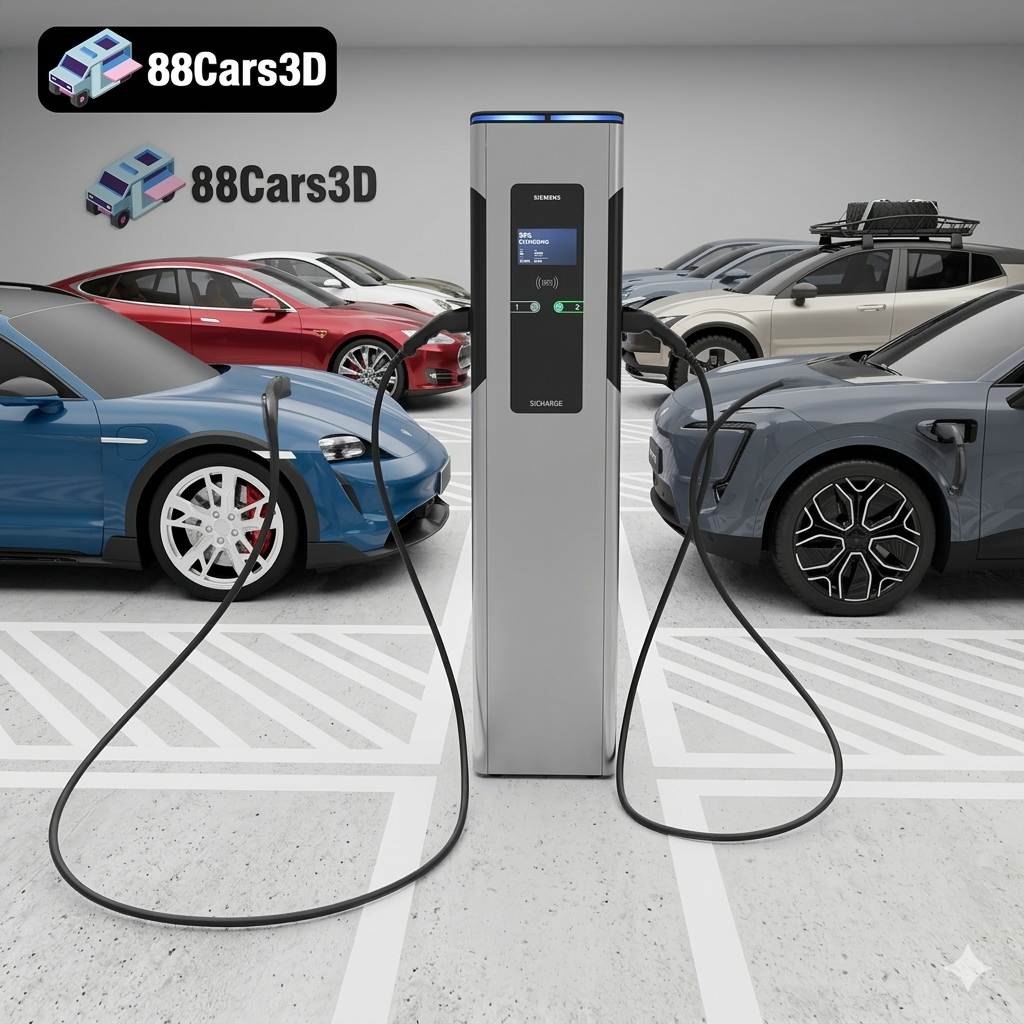
Download the Future of Mobility EV 3D Models Bundle. Includes the Volvo EX30, Tesla Model S, AVATR 11, Porsche Taycan, and a Siemens EV Charger. Save big on this highly optimized 5-in-1 pack for ArchViz and game development!
Price: $89.99

