⚡ FLASH SALE: Get 60% OFF All Premium 3D & STL Models! ⚡

In the dynamic worlds of automotive design, cinematic rendering, and interactive game development, the foundation of every breathtaking visual and immersive experience lies in the quality of its 3D assets. Among these, 3D car models stand as perhaps the most complex and scrutinized, demanding unparalleled detail, accuracy, and technical optimization. From the gleaming showroom floor of a virtual advertisement to the high-octane asphalt of a racing simulator, the fidelity of a car model dictates the very essence of realism and engagement.
This comprehensive guide delves into the intricate ecosystem of high-quality 3D car models, exploring their critical role across various industries, the technical specifications that define excellence, and the workflows that transform raw data into stunning visual narratives. We will examine the essential file formats, discuss advanced rendering techniques, and uncover the optimization strategies crucial for real-time applications. Whether you are an architectural visualizer, a game developer, or a automotive designer, understanding these nuances is key to elevating your projects to the next level. Services like 88cars3d.com specialize in providing these meticulously crafted assets, empowering creators with the tools to realize their most ambitious visions.
The pursuit of realism is relentless in 3D production. For vehicles, this means capturing every curve, every reflection, and every interior stitch with unwavering accuracy. Generic or low-quality models simply won’t suffice when the goal is to captivate an audience or provide a truly immersive experience.
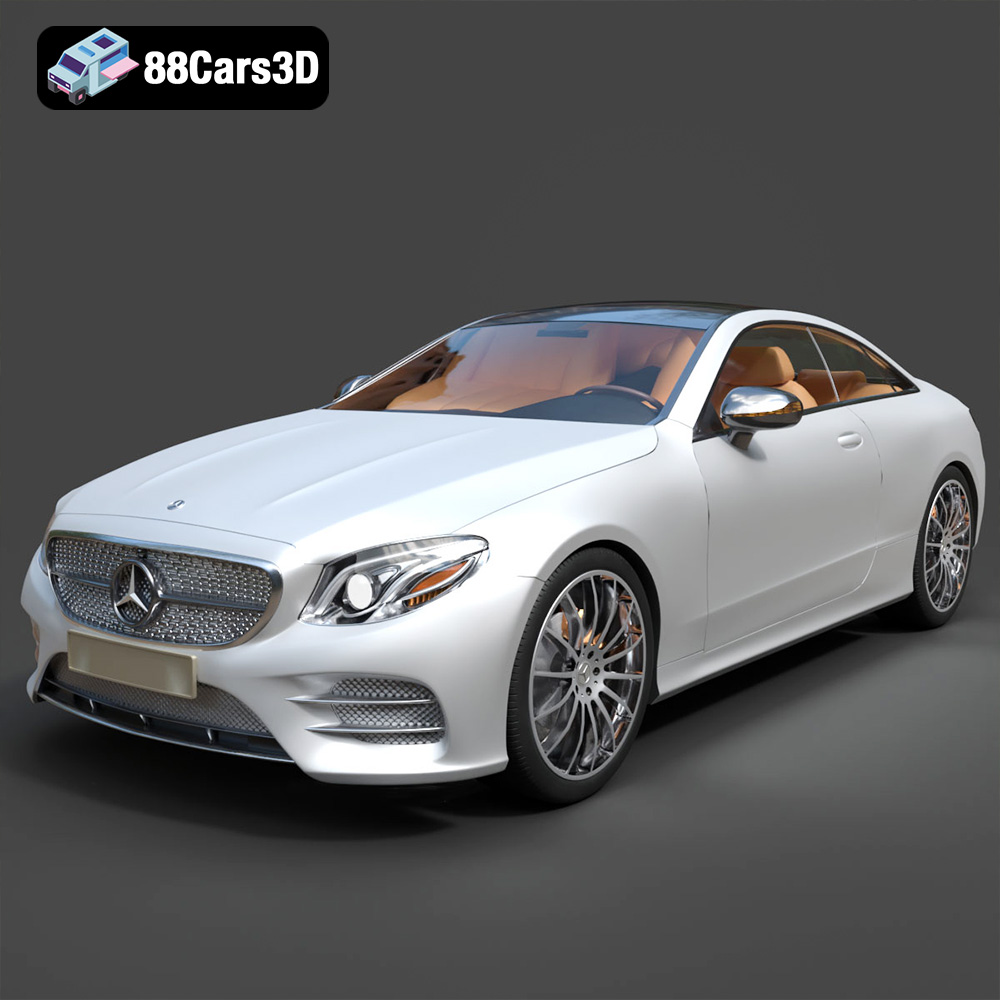
For advertising, product visualization, and cinematic sequences, hyper-realistic automotive rendering is non-negotiable. High-poly models with exquisite topological flow are essential for achieving smooth, artifact-free surfaces that react realistically to light. Precision in CAD-like accuracy ensures that even the smallest details, from headlight assemblies to tire treads, are perfectly represented. This level of detail allows renderers like V-Ray, Corona Renderer, and Redshift to produce photorealistic images that are virtually indistinguishable from real-world photography, crucial for impressing clients and conveying design intent.
In the realm of video games, 3D car models face a dual challenge: looking fantastic while performing optimally at high frame rates. Game developers require models that are not only visually appealing but also rigorously optimized for real-time engines like Unreal Engine and Unity. This involves careful polycount management, efficient UV mapping, and robust LOD (Level of Detail) systems to ensure a seamless experience across various hardware specifications. The subtle balance between visual quality and computational efficiency is what makes a game truly immersive, allowing players to feel connected to the vehicles they control.
The utility of high-quality 3D car models extends far beyond traditional rendering and gaming. They are invaluable tools in engineering simulations, virtual reality (VR) training scenarios, augmented reality (AR) product showcases, and even 3D printing for physical prototypes. Each application demands specific technical considerations, but the core requirement remains consistent: a meticulously crafted base model that can be adapted and optimized for diverse pipelines. This versatility underscores the enduring value of investing in premium 3D assets.
Navigating the landscape of 3D modeling involves a critical understanding of various file formats. Each format serves specific purposes, excelling in different scenarios, and catering to distinct software ecosystems. Choosing the right format is paramount for seamless workflow, data integrity, and optimal performance, whether you are preparing for automotive rendering, game development, or AR/VR applications. The professional 3D car models available on platforms like 88cars3d.com often come in multiple formats to accommodate diverse project needs.
The .blend format is the native file type for Blender, the powerful open-source 3D creation suite. A .blend file typically encapsulates an entire Blender scene, including all 3D geometry (meshes), materials, textures, lighting setups, cameras, animations, rigging, and even scene properties. This makes it an ideal choice for Blender users who need to retain full editability and access to all scene elements. When you acquire a .blend file, you’re not just getting a model; you’re often getting a fully set-up environment, complete with PBR materials and organized collections, ready for immediate use or further customization within Blender. Its primary strength lies in its comprehensive nature, making it perfect for iterative design and detailed project work.
.fbx (Filmbox) is a proprietary file format developed by Autodesk, and it has become the de facto standard for interoperability across various 3D software applications, especially in the game development and visual effects industries. FBX excels at storing not just geometry but also animation data, rigging, materials (though material definitions can sometimes be simplified during export/import), and scene hierarchies. It is highly favored for its robust support for mesh data, UVs, normals, and tangents, making it an excellent choice for exporting 3D car models to game engines like Unreal Engine and Unity, or for transferring assets between 3ds Max, Maya, and Blender. Its efficiency and widespread adoption make it ideal for real-time pipelines where precise asset transfer is crucial.
The .obj (Wavefront OBJ) format is one of the oldest and most widely supported 3D file formats. It is a simple, text-based format that primarily stores geometry data – vertices, faces, UV coordinates, and normals. While it doesn’t store animation or complex scene data, it’s universally compatible, meaning almost every 3D software can import and export OBJ files. This makes it an excellent choice for fundamental cross-software model transfers where only the mesh data is required. Often, OBJ files are accompanied by an .mtl (material template library) file, which defines basic material properties like color and texture maps. For simple 3D car models or as a fallback for maximum compatibility, OBJ remains a reliable option.
.glb (GL Transmission Format Binary) is the binary version of glTF, a royalty-free specification for the efficient transmission and loading of 3D scenes and models by applications. GLB packs all asset data – models, textures, animations, and PBR materials – into a single binary file. This makes it incredibly efficient for web-based 3D viewers, augmented reality (AR) applications, and virtual reality (VR) experiences, where quick loading times and compact file sizes are crucial. Its native support for PBR (Physically Based Rendering) materials ensures that models appear consistent and realistic across different viewers. For interactive 3D product showcases of 3D car models on websites or AR apps, GLB is the go-to format.
.stl (STereoLithography) is a ubiquitous file format for 3D printing. Unlike other formats that store color, texture, or scene information, STL files represent only the surface geometry of a 3D object as a collection of unconnected triangular facets. Each triangle is defined by the coordinates of its vertices and its normal vector, indicating which side is “out.” This simplicity makes it ideal for additive manufacturing processes, as 3D printers directly interpret this tessellated surface data to construct physical objects layer by layer. While not suitable for rendering or animation, it is essential for bringing a 3D car model from the digital realm into a tangible prototype.
The .ply (Polygon File Format, or Stanford Triangle Format) is another format for storing 3D data, particularly useful for scanned data from 3D scanners. It can store a wide range of data, including color, transparency, surface normals, and various properties per vertex or face, beyond just geometry. This makes it a powerful format for scientific and engineering visualization, CAD, and applications requiring high precision and additional data associated with the mesh elements. While less common for general 3D car model distribution, it’s invaluable in specific technical analysis or reconstruction pipelines.
While not a standalone general 3D model format in the same vein as FBX or OBJ, .unreal refers to assets that are natively imported and optimized within the Unreal Engine ecosystem. When you import an FBX, OBJ, or other compatible format into Unreal, the engine converts it into its own internal, highly optimized format for real-time rendering. This internal format benefits from Unreal’s advanced material system, LOD generation, collision mesh creation, and instancing capabilities. Assets referred to as “.unreal” are essentially engine-ready, optimized 3D car models that have undergone the full Unreal Engine import and optimization pipeline, ready for immediate use in game levels, cinematics, and interactive experiences.
Similar to .blend for Blender, the .max format is the native project file type for Autodesk 3ds Max. A .max file contains all data related to a 3ds Max scene, including geometry, materials, textures, lights, cameras, animation keyframes, modifiers, render settings, and plug-in specific data. This format provides the most comprehensive data when working directly within 3ds Max, allowing for full editability and access to all original scene components. It’s the preferred format for users who intend to further develop, animate, or render a 3D car model within 3ds Max, leveraging its powerful modeling and rendering capabilities.
Achieving photorealistic automotive rendering requires more than just a great model; it demands a sophisticated workflow encompassing materials, lighting, and post-processing. Every element contributes to the illusion of reality.
Physically Based Rendering (PBR) is the cornerstone of modern realism. It involves creating materials that accurately simulate how light interacts with surfaces in the real world. For a 3D car model, this means meticulously crafted textures for paint (base color, metallic, roughness, clear coat normals), glass, rubber, chrome, and interior fabrics. Software like Substance Painter and Substance Designer are invaluable for generating these PBR texture sets, allowing artists to paint directly onto the model and achieve complex material effects like metallic flake, scratches, and dust accumulation. These textures, when combined with sophisticated shaders in render engines, bring the car to life.
Lighting is arguably the most critical component in rendering. For automotive subjects, High Dynamic Range Images (HDRIs) of real-world environments are frequently used to provide natural and convincing lighting and reflections. Studio lighting setups, often mimicking professional photography studios, utilize a combination of area lights, spot lights, and dome lights to highlight the car’s contours and materials. The interplay of light, shadow, and reflection on the vehicle’s highly reflective surfaces is what truly sells the realism. Precise placement of lights, often informed by real-world photographic techniques, ensures the car’s design is showcased optimally.
Even after a high-quality render is complete, post-processing is essential to refine the image and achieve a polished, cinematic look. This stage, typically done in software like Adobe Photoshop or Foundry Nuke, involves color grading, exposure adjustments, adding depth of field, motion blur, lens flares, and subtle atmospheric effects. Compositing multiple render passes (e.g., diffuse, specular, reflection, Z-depth) allows for granular control over the final image, enhancing details and correcting imperfections. This final polish elevates a good render to an exceptional one, ready for marketing campaigns or high-end presentations.
While rendering prioritizes visual fidelity, game development balances visual quality with real-time performance. This necessitates a distinct approach to model optimization and integration for 3D car models.
For game assets, polycount is a critical consideration. A high-fidelity 3D car model suitable for rendering might have millions of polygons, which is far too dense for real-time engines. Game-ready models require careful polycount reduction, often aiming for tens or hundreds of thousands of polygons, depending on the platform and game type. Furthermore, Level of Detail (LOD) systems are indispensable. This involves creating multiple versions of the same car model, each with progressively fewer polygons. The game engine dynamically switches between these LODs based on the car’s distance from the player camera, ensuring high detail up close and optimized performance at a distance without noticeable pop-in.
Efficient UV mapping is crucial for applying textures to game assets. Each polygon of the 3D car model needs unique, non-overlapping UV coordinates to prevent texture distortion and maximize texture resolution usage. For games, texture atlasing (combining multiple smaller textures into one large texture map) is often employed to reduce draw calls and improve rendering performance. This means the car’s body, interior, wheels, and other components might all share a single or a few large texture sheets, meticulously laid out in the UV space. PBR texture sets (Albedo, Normal, Roughness, Metallic, Ambient Occlusion maps) are standard for realistic material representation in modern game engines.
Beyond visual representation, game 3D car models require functional elements for interaction. Collision meshes, simplified proxy geometries, define the car’s physical boundaries for collision detection with the environment and other vehicles. These are often much lower poly than the visual mesh. Furthermore, robust physics integration is essential for realistic driving mechanics. This involves defining the car’s center of mass, wheel colliders, suspension parameters, engine torque curves, and aerodynamic properties within the game engine. The combination of visual fidelity, optimized performance, and believable physics creates an engaging and immersive driving experience for players.
The utility of high-quality 3D car models is expanding rapidly, finding new frontiers beyond traditional rendering and gaming. These emerging applications leverage the precision and detail of digital assets in innovative ways.
AR and VR are transforming how we interact with products and environments. 3D car models are central to these experiences, allowing users to “virtually test drive” a new vehicle from their living room, configure colors and options in an immersive showroom, or even place a life-sized car model in their driveway using AR on a smartphone. These applications demand highly optimized models with excellent PBR materials to ensure real-time performance and visual realism within the constrained environments of headsets and mobile devices. The .glb format, discussed earlier, is particularly well-suited for these applications due to its efficiency.
In industrial design and engineering, the concept of a “digital twin” is gaining traction. This involves creating an ultra-accurate virtual replica of a physical product, such as a car, that can be used for simulation, analysis, and iterative design without building expensive physical prototypes. High-precision 3D car models, often derived directly from CAD data, form the core of these digital twins. They enable designers to identify flaws, test new features, and optimize performance in a virtual environment, significantly accelerating the design cycle and reducing costs before a single physical component is manufactured.
While often used for visual purposes, 3D car models can also bridge the gap to physical production. Optimized models, typically converted to .stl or similar mesh formats, are used for rapid prototyping of vehicle components, scale models, or even custom parts. This allows designers and engineers to quickly produce tangible representations of their digital designs, facilitating tactile review and fitment checks before committing to expensive tooling for mass production. The ability to quickly iterate from a digital model to a physical object is a powerful advantage in the fast-paced automotive industry.
Developing high-quality 3D car models from scratch is an incredibly time-consuming and resource-intensive process, often requiring specialized expertise in modeling, texturing, and optimization. This is where dedicated platforms like 88cars3d.com provide immense value, offering a curated collection of professional-grade assets that can dramatically accelerate production pipelines.
A key differentiator for a premium marketplace is its commitment to quality. 88cars3d.com ensures that its 3D car models adhere to stringent technical standards. This includes clean, quad-based topology for smooth subdivisions and animation, accurate real-world scale, non-overlapping UV maps for optimal texturing, and meticulously calibrated PBR materials that render correctly across various engines. Each model undergoes rigorous inspection to guarantee it meets the demands of professional automotive rendering and game development, saving artists and studios countless hours of cleanup and optimization.
Whether you need a classic muscle car for a retro racing game, a sleek electric concept for an architectural visualization, or a modern SUV for an AR configurator, a specialized marketplace offers a diverse range. 88cars3d.com boasts an extensive library covering various makes, models, eras, and vehicle types. This breadth of choice ensures that creators can find the exact vehicle they need, often with multiple levels of detail and pre-configured materials for different renderers or game engines, ready to drop directly into their projects.
The ability to acquire ready-to-use, high-quality 3D car models directly translates into significant time and cost savings. Instead of dedicating valuable resources to modeling and texturing from scratch, teams can focus on creative aspects like scene composition, animation, and interaction design. This efficiency is particularly vital for studios working under tight deadlines or for individual artists looking to elevate their portfolio without the overhead of creating every asset themselves. By providing meticulously crafted and technically sound assets, 88cars3d.com empowers creators to achieve stunning results faster and more efficiently.
The realm of 3D car models is a complex and fascinating intersection of artistry and technical precision. From the initial polygonal mesh to the final rendered pixel or real-time frame, every stage demands careful consideration to achieve the desired level of realism and performance. Whether the goal is to produce stunning automotive rendering for a marketing campaign, create immersive experiences for game development, or explore innovative applications in AR/VR and digital prototyping, the quality of the underlying 3D asset is paramount.
Understanding the nuances of file formats, mastering PBR material workflows, and implementing robust optimization strategies are all essential skills in today’s digital landscape. As technology continues to advance, the demand for highly detailed and technically sound 3D car models will only grow. Platforms like 88cars3d.com serve as invaluable resources, providing access to expertly crafted assets that empower artists and developers to push the boundaries of visual fidelity and interactive experiences, ensuring their projects stand out in an increasingly competitive environment.

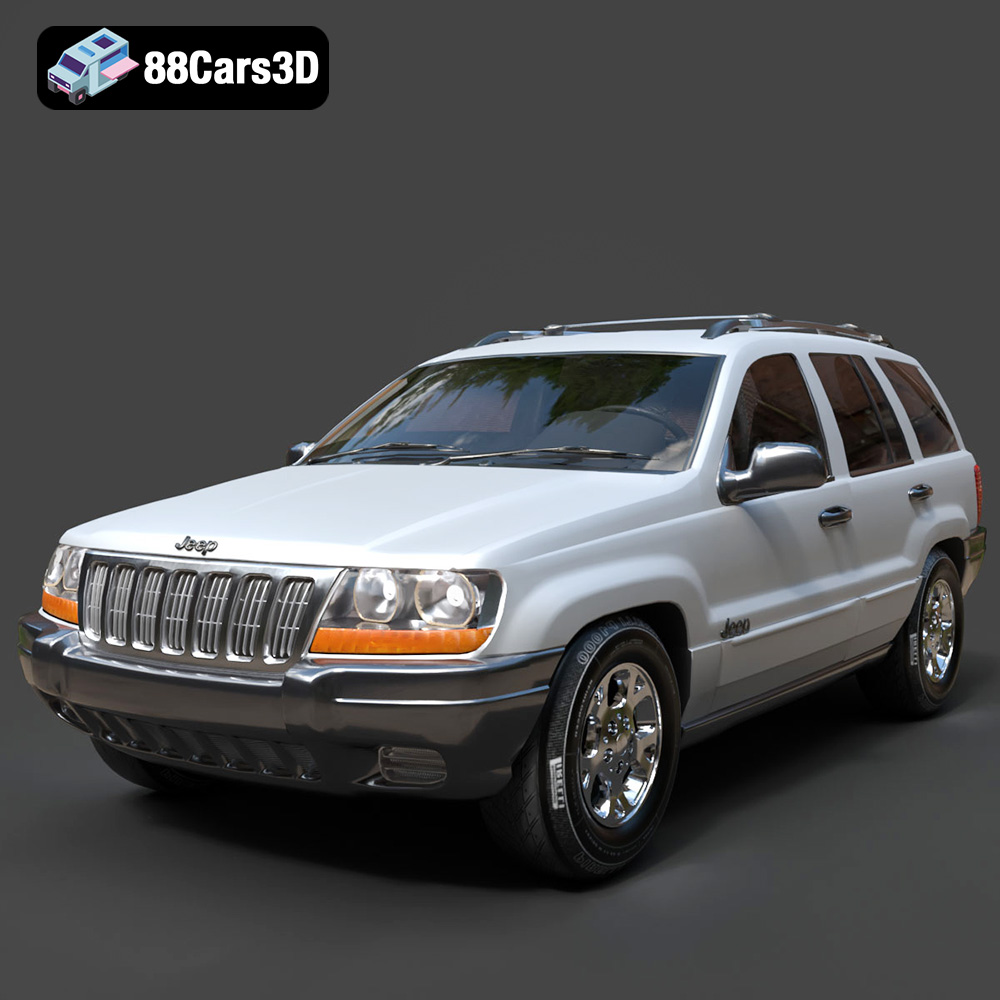
Price: $129.99
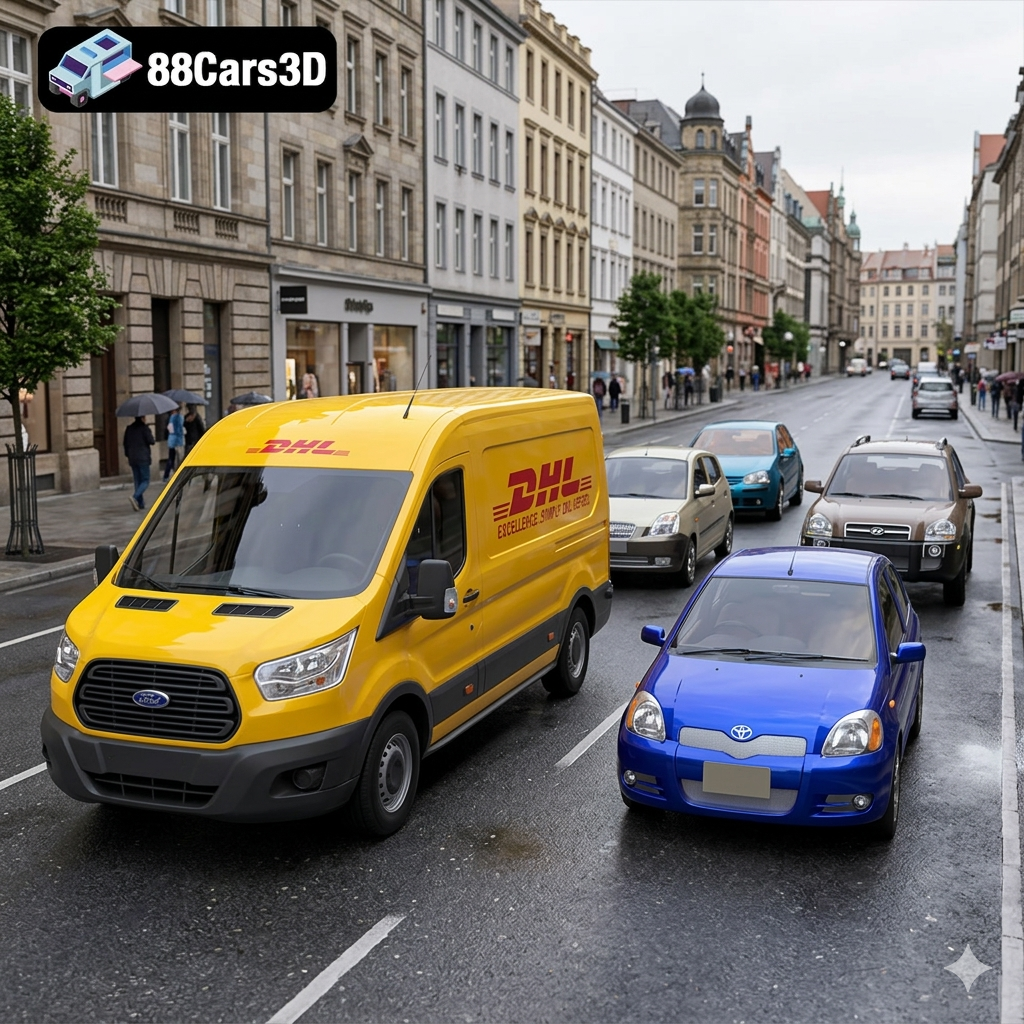
Price: $99.99
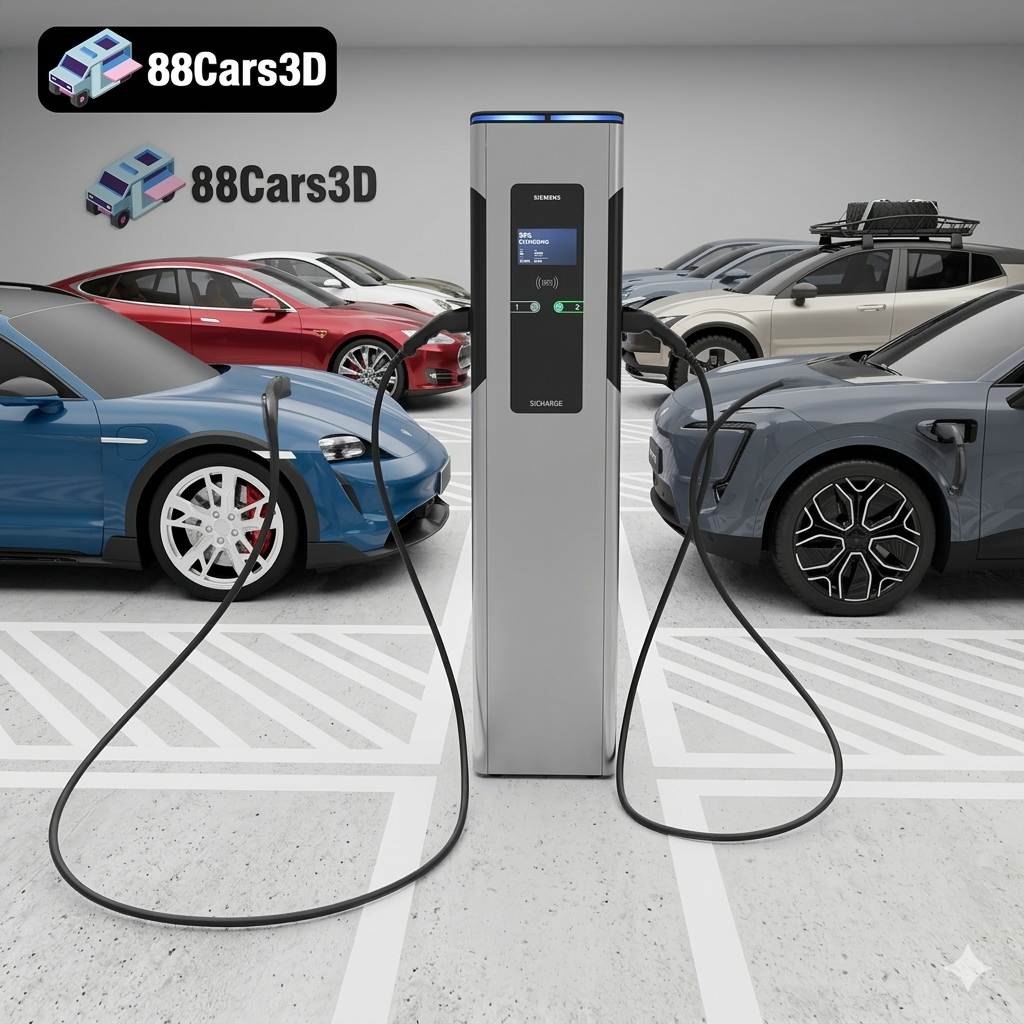
Price: $89.99