⚡ FLASH SALE: Get 60% OFF All Premium 3D & STL Models! ⚡

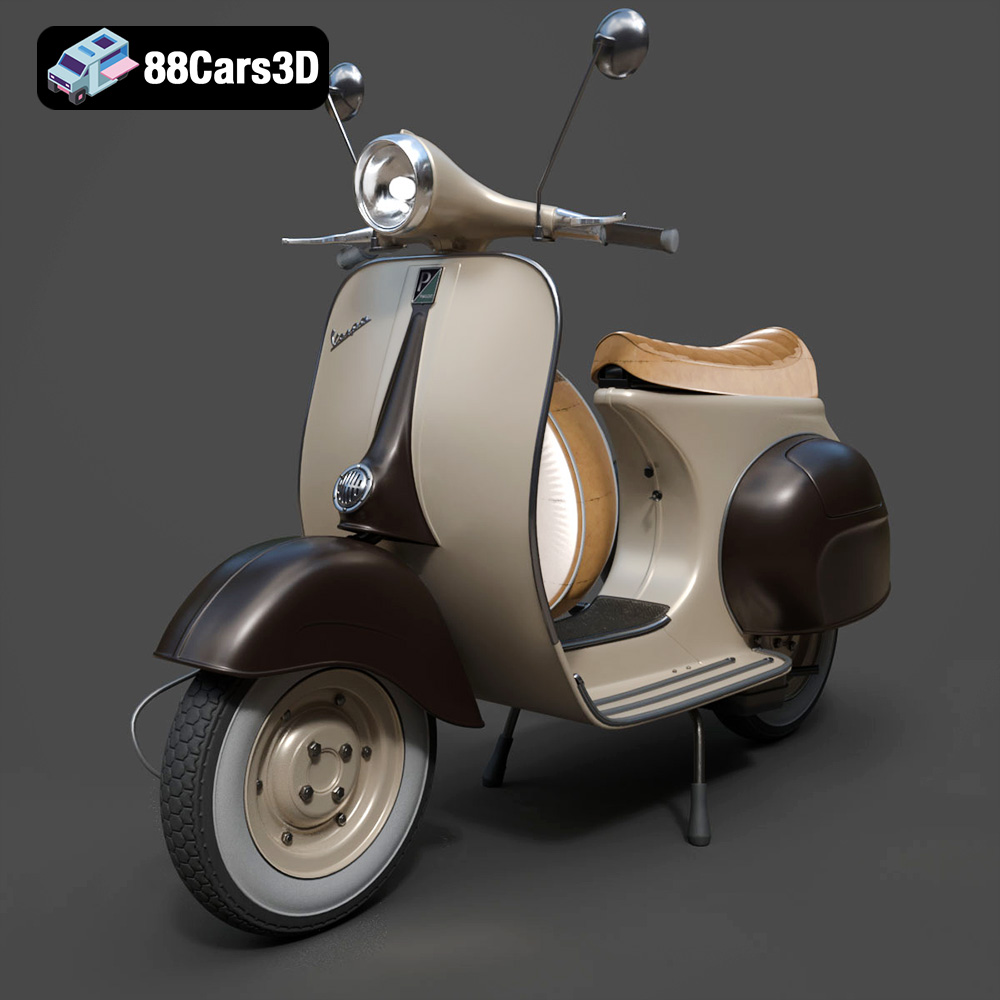
In the vibrant world of 3D modeling, where realism and historical accuracy often define a project’s success, the demand for meticulously crafted digital assets is ever-growing. From cinematic spectacles to immersive game environments and precise architectural visualizations, a high-quality 3D model can be the cornerstone of a compelling visual narrative. Today, we delve into an exquisite example of digital craftsmanship: the Vespa VNB 125 3D Model. This isn’t just a static representation; it’s a versatile, detailed recreation of an automotive icon, primed for a multitude of professional applications. Its elegant curves and classic Italian charm transcend time, making it a perfect asset for anyone looking to infuse their digital worlds with a touch of mid-century European flair.
Classic vehicles hold a unique place in our collective imagination, embodying design philosophies and technological innovations from bygone eras. For 3D artists and developers, these icons present a rich opportunity to explore history, culture, and aesthetics within digital spaces. The process of translating a physical masterpiece like the Vespa VNB 125 into a virtual one requires both artistic sensibility and technical precision.
Vintage vehicles like the Vespa VNB 125 are more than just modes of transport; they are cultural artifacts. Including them in 3D projects, whether for a historical reconstruction, a period-accurate game, or a nostalgic advertising campaign, adds immediate depth and authenticity. The distinct design language of a 1960s Vespa speaks volumes about its era, instantly grounding a scene in a specific time and place. A well-executed 3D model ensures that these subtle nuances – the gentle curvature of the leg shield, the specific design of the headlamp, the proportions of the frame – are preserved and presented with fidelity.
The journey from a physical object to a digital 3D model is a meticulous one. It involves extensive research, photographic reference gathering, and a keen eye for detail. For the Vespa VNB 125 3D Model, this translates into accurate body proportions, period-correct wheel dimensions, and the subtle intricacies of its exposed handlebar assembly and engine housing. Once digitized, this asset bridges the gap between the tangible past and the interactive digital future, ready to be manipulated, animated, and rendered in countless new contexts. Platforms like 88cars3d.com specialize in offering such high-fidelity 3D car models and vehicle assets, ensuring that artists have access to the best tools for their creative endeavors.
The flexibility and usability of a 3D model are often defined by the file formats it supports. Different formats are optimized for different stages of the 3D pipeline, from initial modeling and texturing to real-time rendering and 3D printing. The Vespa VNB 125 3D Model, like many professional-grade 3D car models, comes equipped with a comprehensive suite of file formats, ensuring maximum compatibility and utility across various software and platforms. Understanding these formats is crucial for any professional working with digital assets.
The .blend format is the native file type for Blender, the popular open-source 3D creation suite. A .blend file typically encapsulates an entire scene, including mesh data, materials, textures, lighting, cameras, animations, and even physics simulations. For artists working within Blender, this format offers the most flexibility, allowing full editability of the model’s topology, UVs, and shaders. When you acquire a .blend file of the Vespa VNB 125, you gain access to the raw project, enabling you to dissect its construction, modify its components, or re-render it with Blender’s powerful Cycles or Eevee render engines.
.fbx (Filmbox) is a proprietary file format developed by Autodesk, designed for interoperability between 3D applications. It’s an industry-standard for transferring 3D data, including geometry, materials, textures, animations, and camera data. For game development, especially with engines like Unreal Engine and Unity, .fbx is often the preferred choice due to its robust support for animation curves and hierarchical scene structures. The Vespa VNB 125 in .fbx format ensures that the separate wheels and steering assembly are properly set up for animation, allowing for seamless import into real-time pipelines.
The .obj (Wavefront Object) format is one of the oldest and most universally supported 3D file formats. It primarily stores geometric data – vertices, normals, UV coordinates, and faces – and can reference external .mtl (material) files for basic material properties. While it doesn’t support animation or complex scene data, its widespread compatibility makes it an excellent choice for transferring raw mesh data between almost any 3D software. If you need a clean, universal mesh of the Vespa VNB 125 to start fresh with materials and animation in a specific, less common software, .obj is your go-to.
.glb (GL Transmission Format Binary) is a relatively newer format designed for the efficient transmission and loading of 3D scenes and models in web and immersive contexts (AR/VR). It’s a binary container that bundles geometry, materials, textures, and animations into a single, self-contained file, making it ideal for quick loading and display in browsers or mobile AR applications. The Vespa VNB 125 as a .glb asset is perfectly optimized for interactive online showcases or mobile augmented reality experiences, allowing users to view the classic scooter in their own environment with minimal latency.
The .stl (Stereolithography) format is the de facto standard for 3D printing. It represents 3D surfaces as a collection of unconnected triangles, defining only the surface geometry of an object without color, texture, or other attributes. For transforming the digital Vespa VNB 125 into a tangible collectible model, the .stl format is essential. The product description highlights its suitability for 3D printing, providing specific print settings for scale, layer height, infill, and supports, ensuring a successful physical output.
.ply (Polygon File Format) is a format designed to store 3D data from 3D scanners, supporting more complex information than .obj, such as color per vertex, normal information, and transparent faces. It’s often used in scientific, engineering, and CAD applications where precise mesh data is critical. While less common for general artistic workflows, its inclusion for the Vespa VNB 125 model ensures maximum fidelity and data integrity for specialized analytical or manufacturing prep tasks.
While not a standalone file format in the same vein as .fbx or .obj, the inclusion of an .unreal file type typically implies an asset specifically prepared or optimized for direct import and use within Unreal Engine. This could mean a pre-configured asset with materials, LODs (Levels of Detail), and collision meshes already set up for real-time environments. For game developers or visualization artists using Unreal Engine, an .unreal asset of the Vespa VNB 125 drastically reduces setup time, allowing for immediate integration into an urban scene or interactive experience.
The .max format is the native file type for Autodesk 3ds Max, a powerful 3D modeling, animation, and rendering software widely used in architectural visualization, game development, and film production. A .max file contains all scene information, including geometry, modifiers, materials, lights, cameras, and animation data. For professionals relying on 3ds Max, this format provides full editability and the ability to leverage Max’s extensive toolset for detailed rendering and animation of the Vespa VNB 125.
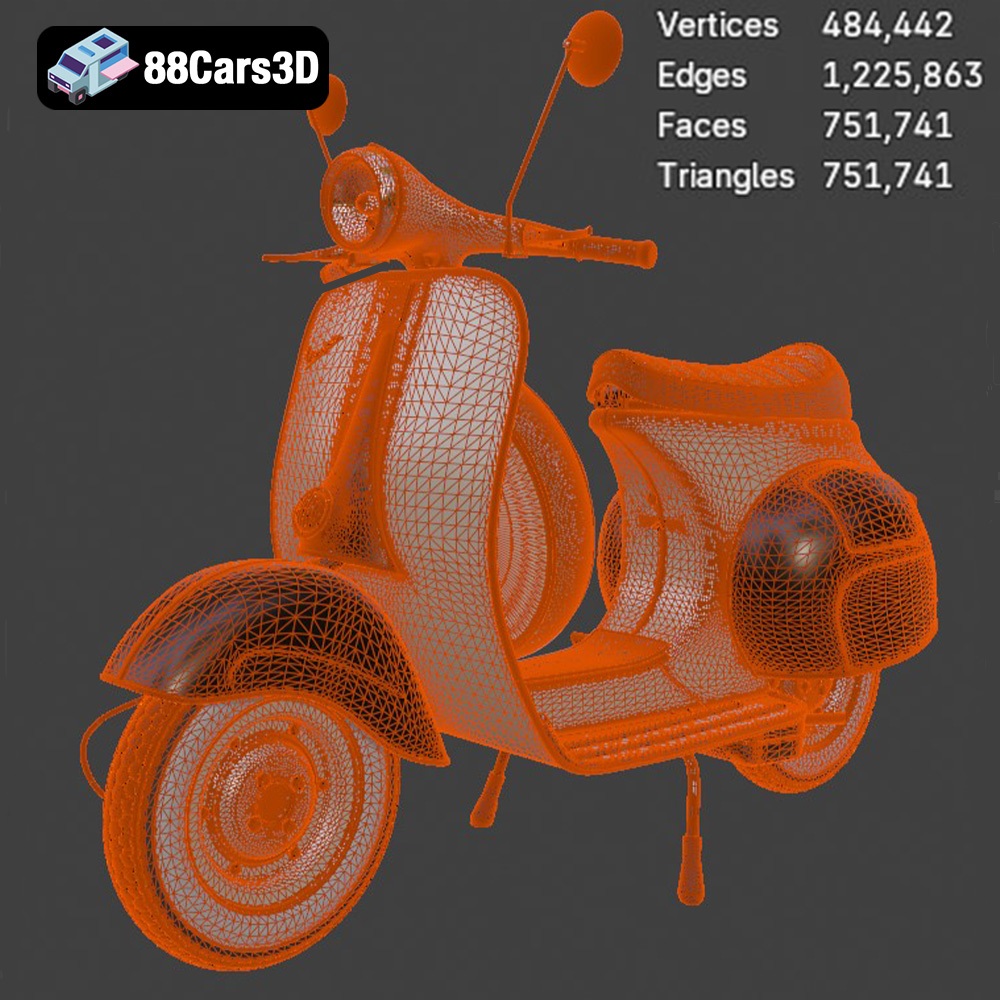
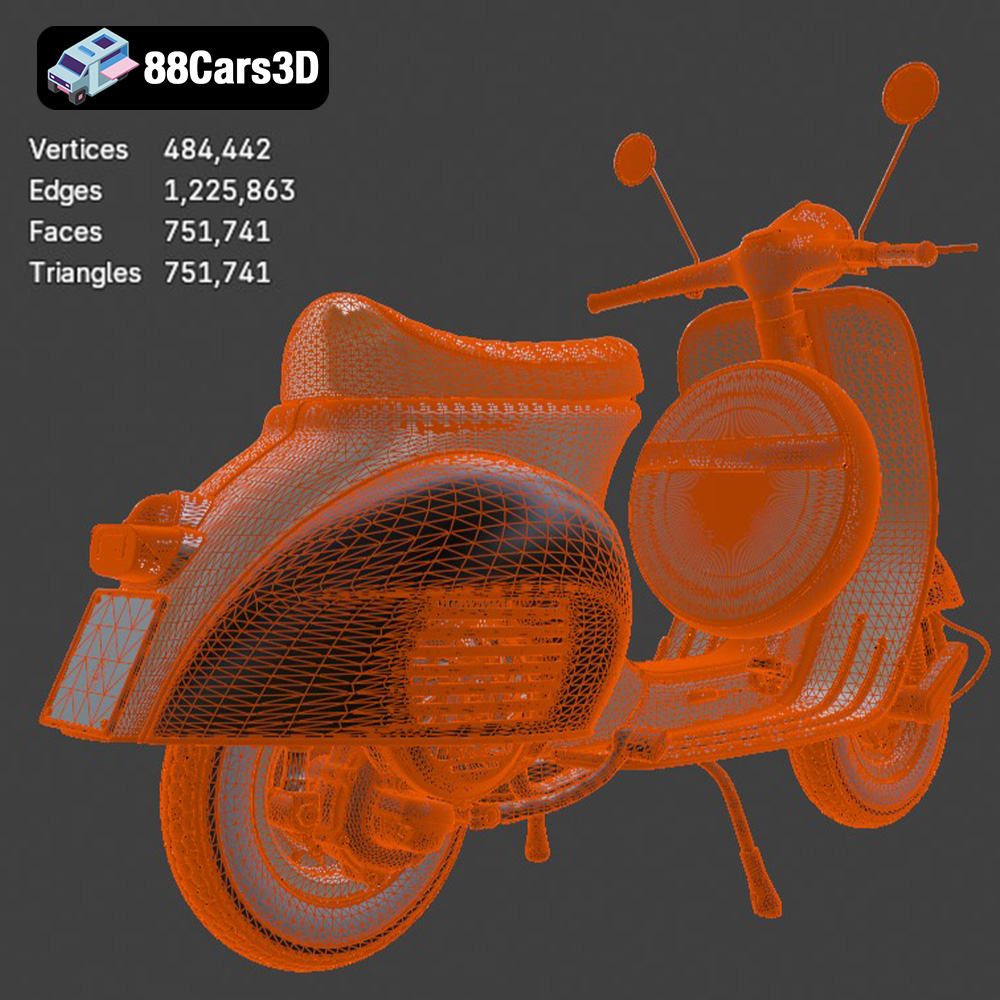
Automotive rendering demands meticulous attention to detail, from reflections on polished surfaces to the subtle interplay of light and shadow. The Vespa VNB 125 3D Model provides an exceptional foundation for creating stunning photorealistic visuals, thanks to its clean topology, real-world scale, and accurate historical recreation.
In 3ds Max, rendering the Vespa VNB 125 to cinematic standards involves advanced lighting setups and physically based materials. Artists can leverage powerful renderers like V-Ray or Corona to simulate realistic light bounces, reflections, and refractions. For instance, setting up an HDRI (High Dynamic Range Image) environment can quickly establish a convincing outdoor scene, allowing the scooter’s chrome trim and painted surfaces to reflect its surroundings realistically. Customizing materials for the seat (leather or vinyl), tires (rubber), and body (glossy paint) further enhances realism. The model’s optimized geometry ensures that even close-up shots reveal smooth curves and precise detailing without artifacts, making it perfect for high-resolution stills or animations.
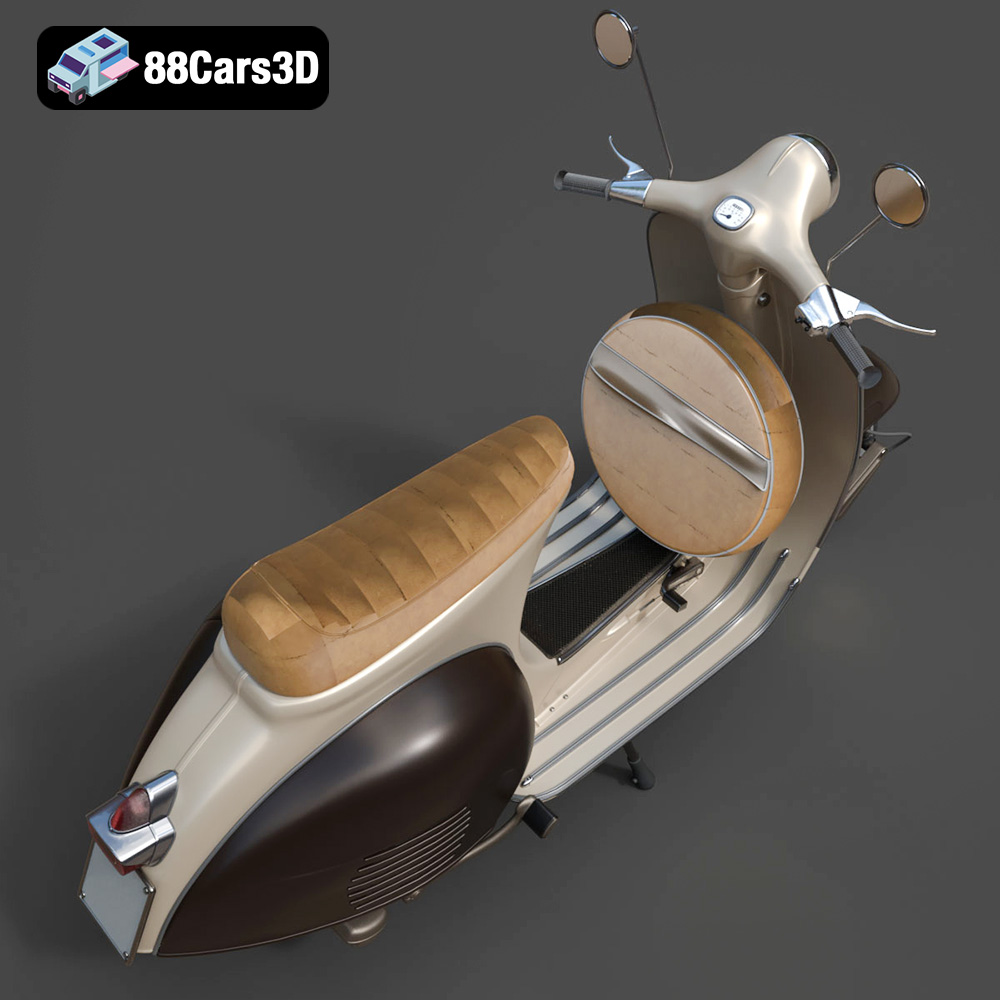
Blender offers two robust render engines: Eevee for real-time rendering and Cycles for path-traced photorealism. For quick visualizations, Eevee can provide stunning results with proper lighting and PBR (Physically Based Rendering) materials, ideal for rapid iterations of the Vespa VNB 125 in different settings. For ultimate realism, Cycles, with its advanced global illumination, produces breathtaking renders, capturing the subtle metallic sheen of the body paint or the nuanced texture of the footboard’s ribbed pattern. Artists can easily swap body colors, add vintage decals, or configure single-seat or dual-seat versions, all within the intuitive Blender interface, ensuring the model’s versatility for any creative brief.
Imagine a global advertising agency tasked with creating a campaign for a new line of retro-inspired fashion accessories. They need a hero vehicle that epitomizes classic European style. The Vespa VNB 125 3D Model from 88cars3d.com becomes their primary asset. Utilizing its .max or .blend format, their visualization team places the scooter on a digital Italian cobblestone street, bathed in the golden light of a Mediterranean sunset. They animate a subtle camera pan, highlighting the Vespa’s iconic silhouette, with a model casually leaning against it. The ability to customize paint colors and add period-correct accessories directly within the 3D software allows them to perfectly match the brand’s aesthetic, producing high-impact visuals for print, web, and video advertising.
For game developers and AR/VR creators, the challenge lies in balancing visual fidelity with performance optimization. The Vespa VNB 125 3D Model is designed with this balance in mind, making it an excellent candidate for interactive environments where frame rates and real-time responsiveness are paramount.
When integrating the Vespa VNB 125 into game engines like Unreal Engine or Unity, the .fbx and .unreal formats are invaluable. These formats often come with optimized mesh data, efficient UV layouts, and sometimes even pre-configured materials and collision geometry. Developers can implement LODs (Levels of Detail) to ensure the scooter model reduces its polygon count when viewed from a distance, saving valuable GPU resources. The proper pivot setup for steering and wheel rotation, as noted in the product’s technical advantages, is critical for realistic in-game physics and animation, allowing players to drive or interact with the scooter seamlessly. This attention to detail ensures that the model doesn’t just look good but performs flawlessly within a real-time environment.
The immersive nature of AR/VR demands models that are both lightweight and visually rich. The .glb format of the Vespa VNB 125 is perfectly suited for this, allowing for quick loading in mobile AR applications or VR experiences. Imagine a virtual museum where users can walk around a 1960s Vespa, examining its features from any angle, or an interactive educational experience showcasing the evolution of scooter design. The model’s clean and well-organized mesh structure facilitates the creation of interactive elements, such as clickable hotspots that reveal information about specific parts of the scooter, enhancing the user’s understanding and engagement with the historical vehicle.
Consider an open-world game set in a fictional European city during the mid-20th century. Populating the streets with authentic vehicles like the Vespa VNB 125 adds immense atmosphere and believability. Game designers can use it as a static prop, part of a dynamic traffic system, or even as a player-drivable vehicle. For interactive exhibits, perhaps at a classic car show or a technology museum, a large-scale AR projection of the Vespa VNB 125 could allow visitors to “see” the scooter in their space, change its colors with a gesture, or even take virtual photos with it. The versatility of this 3D model makes it a cornerstone for such diverse real-time applications.
Beyond the digital realm, the Vespa VNB 125 3D Model offers the exciting prospect of physical manifestation through 3D printing. Transforming a digital asset into a tangible object requires careful preparation and an understanding of additive manufacturing principles. This model, being available in .stl format, is specifically designed to facilitate this transition.
The .stl file is the bridge between the virtual model and the 3D printer. For the Vespa VNB 125, the digital mesh is optimized to be manifold (watertight), ensuring that the printer can correctly interpret its geometry. Before printing, the model might be scaled down to popular collectible sizes like 1:18, 1:12, or 1:10. While the digital model is robust, it’s often beneficial to run the .stl through slicing software to check for any potential printability issues, such as thin walls or complex overhangs, which might require additional supports.
The product description provides excellent guidance for 3D printing the Vespa VNB 125. For FDM (Fused Deposition Modeling) printers, a layer height of 0.08–0.16 mm is recommended to capture the smooth curves effectively, while a wall thickness of 1.2–2.0 mm ensures structural integrity. Infill settings of 15–25% strike a good balance between material usage and strength. Critical areas like the handlebar assembly, exhaust, and center stand will require supports. For optimal results and finer details, especially on smaller scales, resin (SLA/DLP) printing is often preferred, allowing for even smoother surfaces and sharper edges without visible layer lines.
Once printed, the physical Vespa VNB 125 model enters the post-processing phase. This is where the magic truly happens, transforming a raw print into a display-worthy collectible. Supports need to be carefully removed, and the model typically requires sanding to smooth out any layer lines or imperfections. Applying a primer prepares the surface for painting. The recommendation for gloss pastel paint finishes and chrome detailing suggests a pathway to achieve a truly authentic vintage look, replicating the original scooter’s aesthetic. Hobbyists and model makers will appreciate the precise geometry that allows for such intricate finishing, turning each printed model into a unique work of art.
A high-quality 3D asset is not just a finished product; it’s a foundation for boundless creativity. The Vespa VNB 125 3D Model is designed with customization in mind, empowering artists and designers to adapt it to their specific project needs, adding unique touches that make each application stand out.
One of the most immediate customization options is altering the model’s appearance through material changes. As the description notes, changing the body color with classic pastel finishes is straightforward. Imagine a vibrant aqua Vespa for a beach scene, or a sophisticated cream color for an upscale urban setting. Beyond color, artists can experiment with different finishes—matte, glossy, or even a weathered look for a post-apocalyptic context. Adding vintage decals, racing stripes, or country license plates can further personalize the scooter, telling a unique story about its digital owner or history. The clean UV mapping and organized mesh structure facilitate easy texture painting and decal projection in any major 3D software.
The true power of a versatile 3D asset lies in its ability to integrate seamlessly into diverse environments. The Vespa VNB 125 is perfect for retro city streets, quaint European alleyways, bustling café scenes, or serene beach promenades. Artists can craft detailed backdrops, adding elements like period-appropriate buildings, street furniture, and character models to create a holistic narrative. Adjusting lighting conditions, from the harsh noon sun to the warm glow of a sunset, dramatically alters the mood and perception of the scene, showcasing the Vespa in its best light. The model’s real-world scale ensures it fits naturally within architectural visualizations or game levels, maintaining visual consistency.
For some professionals, the Vespa VNB 125 3D Model might serve as a starting point for further innovation. Game modders could use it as a base for creating entirely new vehicle types or custom skins. AR/VR developers might build interactive experiences around its mechanical details, allowing users to “disassemble” and “reassemble” components. Even product designers could use it as a reference for retro-inspired concepts. The comprehensive file formats provided by 88cars3d.com ensure that the model is accessible and malleable for advanced users, transforming it from a simple asset into a catalyst for new digital creations. This adaptability is what truly distinguishes premium 3D car models in today’s demanding market.
The digital realm thrives on detail, authenticity, and versatility. The Vespa VNB 125 3D Model exemplifies these qualities, offering a meticulously crafted digital recreation of an automotive icon that is ready for a vast array of professional applications. From high-fidelity rendering and animation in software like 3ds Max and Blender, to seamless integration into real-time environments for game development and AR/VR, and even the exciting prospect of physical manifestation through 3D printing, this model is a powerhouse asset. Its comprehensive suite of file formats ensures compatibility across virtually any workflow, while its attention to technical detail guarantees optimal performance and stunning visual results.
Whether you are an automotive rendering specialist crafting a vintage advertisement, a game developer populating a historical open world, or an enthusiast bringing a piece of digital art into the physical world, the Vespa VNB 125 offers unmatched quality and flexibility. For those seeking premium 3D car models that combine historical accuracy with technical excellence, 88cars3d.com is a trusted source for assets that truly elevate your projects.
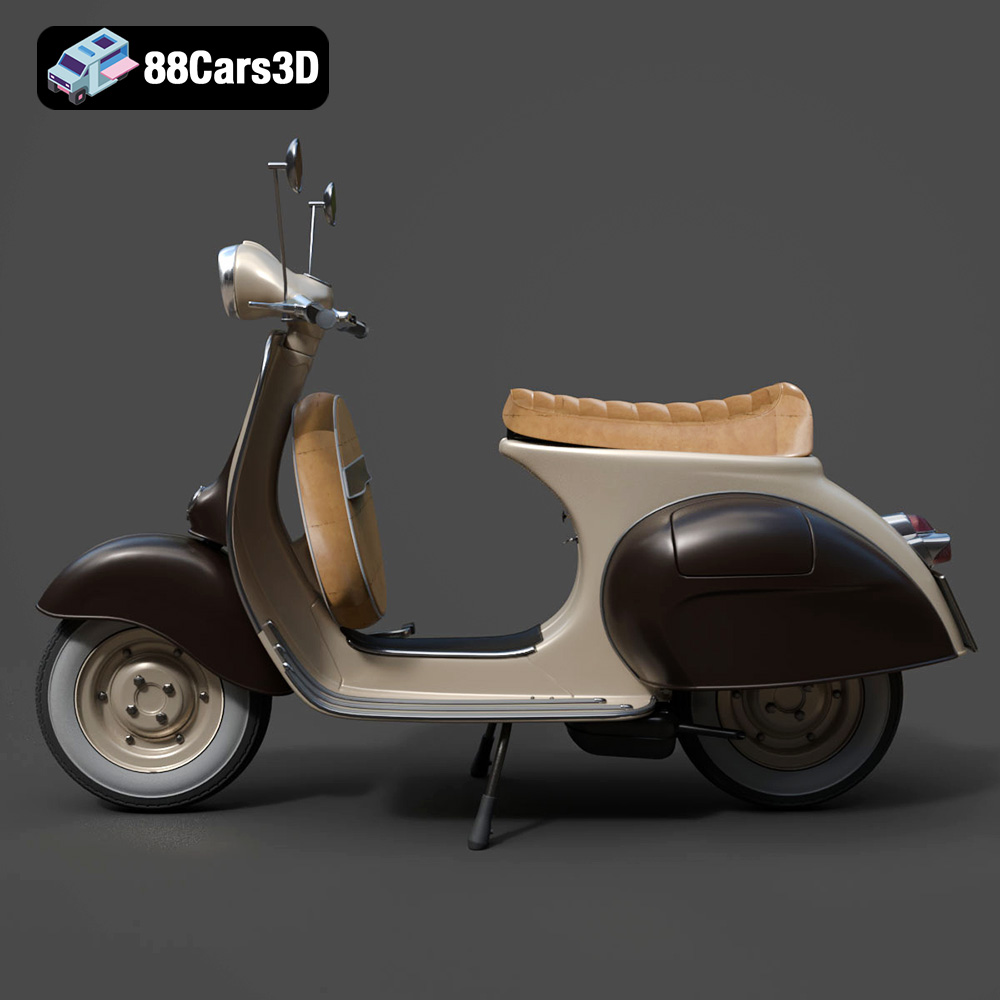
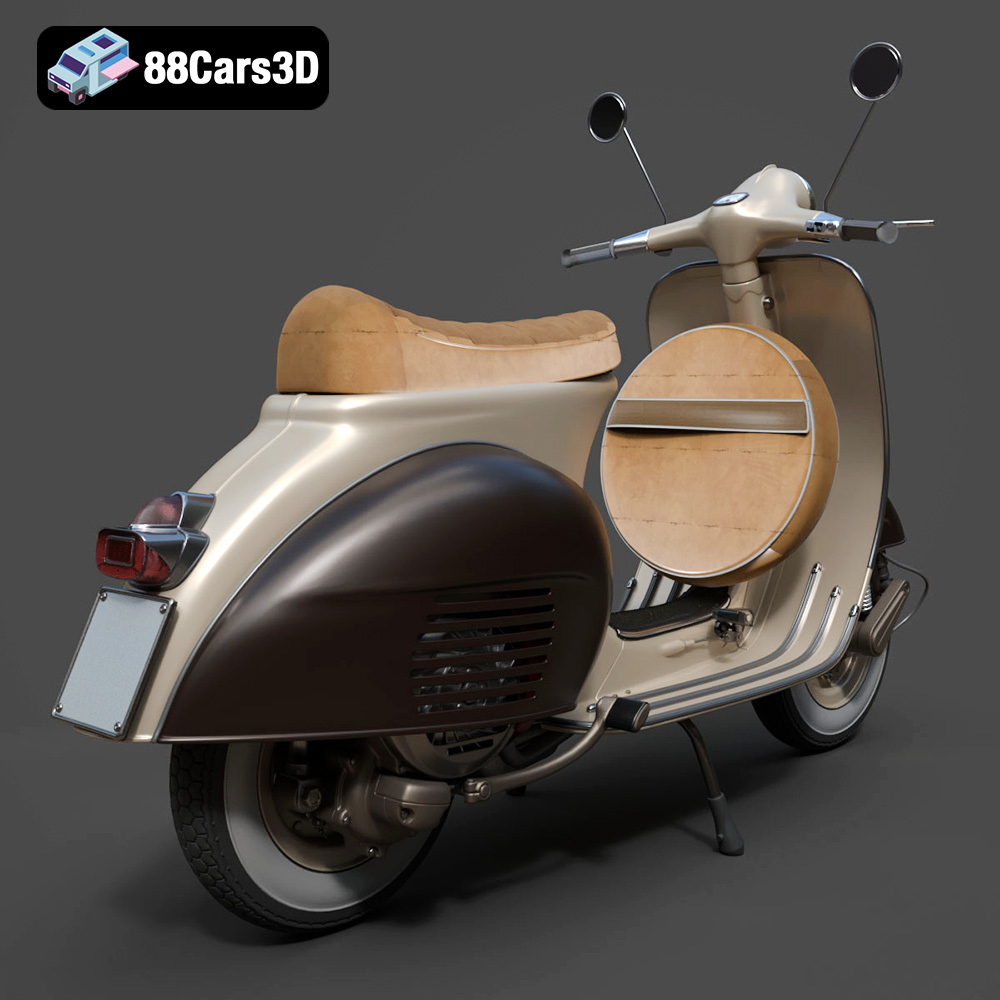
The Vespa VNB 125 3D Model is a high-detail digital recreation of the iconic Italian scooter produced during the early 1960s. Known for its elegant curves, monocoque steel body, and lightweight urban practicality, the VNB 125 represents the golden era of classic European scooter design. This 3D model accurately captures the rounded front leg shield, signature circular headlamp, streamlined side panels, single-seat or dual-seat configuration, exposed handlebar assembly, and period-correct wheel styling. Designed with clean topology and real-world scale accuracy, it is ideal for rendering, animation, game development, AR/VR environments, and historical vehicle visualization. Perfect for retro city streets, European alleyways, beach promenades, café scenes, and cinematic vintage productions.
$19.88