⚡ FLASH SALE: Get 60% OFF All Premium 3D & STL Models! ⚡

In the vibrant tapestry of automotive history, few vehicles command as much affection and recognition as the Vespa. More than just a scooter, it’s a cultural icon, a symbol of freedom, style, and the quintessential Italian dolce vita. Among its revered lineage, the Vespa VNB 125, produced in the early 1960s, holds a special place, epitomizing the era’s elegant curves, monocoque steel body, and practical urban charm. For designers, animators, game developers, and collectors alike, recreating such a classic in the digital realm presents both a challenge and an opportunity to celebrate its legacy.
Today, the quest for authentic, high-quality 3D car models and vehicle assets is more crucial than ever. From cinematic renders to immersive virtual reality experiences, precision and detail are paramount. This is where specialized marketplaces like 88cars3d.com excel, offering meticulously crafted digital recreations. Among their premium offerings is the Vespa VNB 125 3D Model, a testament to detailed digital preservation, designed to meet the rigorous demands of professional 3D pipelines across various industries. Let’s delve into what makes this particular model a standout asset and how it integrates into diverse creative workflows.
The versatility of any high-quality 3D asset lies not just in its intricate details but also in its compatibility across different software and platforms. The Vespa VNB 125 3D Model is supplied in an extensive array of file formats, each serving distinct purposes and optimizing for specific applications. Understanding these formats is crucial for any 3D professional to ensure a smooth workflow and maximize asset utility.
The .blend format is Blender’s native file type, offering a comprehensive package of the entire scene. This includes not only the mesh data for the Vespa VNB 125 but also its materials, textures, lighting, cameras, animations (if present), and even physics simulations. For artists deeply integrated into the Blender ecosystem, this format provides full editability, allowing for non-destructive modifications, leveraging Blender’s powerful modifiers, and accessing its extensive add-on library. It’s ideal for artists who want to delve deep into the model’s construction, make significant alterations, or integrate it seamlessly into a larger Blender-based project without conversion losses.
Autodesk’s .fbx format is arguably the most widely adopted interchange format in the 3D industry, particularly popular for its robust support for mesh data, materials, textures, and crucially, animation. When working with complex animated scenes or transferring assets between different DCC (Digital Content Creation) software like Maya, 3ds Max, Blender, and game engines like Unreal Engine and Unity, .fbx is often the go-to choice. It’s optimized for real-time pipelines and handles hierarchical data exceptionally well, making it perfect for the Vespa model’s separate wheels and steering assembly, allowing for easy animation of movement and turning. Its primary advantage is its ability to maintain scene integrity across various platforms.
The .obj (Wavefront Object) format is a universally recognized, geometry-centric file type. It primarily stores vertex positions, UV coordinates, normals, and polygon information. While it lacks built-in support for animation and often requires companion .mtl (material) files for basic material definitions, its simplicity and widespread compatibility make it an excellent fallback or starting point for cross-software transfers. For the Vespa VNB 125, an .obj file ensures that the core mesh data is accessible to virtually any 3D software, making it a robust option when primary formats encounter compatibility issues or when only the pure geometric structure is needed.
.glb (GLB format, a binary form of glTF) is an increasingly popular format, especially optimized for modern web-based 3D applications, augmented reality (AR), and virtual reality (VR) experiences. Its key strength lies in its “self-contained” nature, bundling all mesh, material, and texture data into a single, compact file. This makes it incredibly efficient for streaming, faster loading times, and easier deployment across various devices and platforms. For showcasing the Vespa VNB 125 in a web viewer, an AR app on a smartphone, or an immersive VR exhibit, the .glb format provides an excellent balance of visual quality and performance.
The .stl (Stereolithography) format is the undisputed standard for 3D printing. Unlike other formats that describe surfaces with polygons, .stl represents a 3D object as a collection of unconnected triangular facets. For successful 3D printing, the mesh must be “manifold,” meaning it has no holes, overlaps, or non-manifold edges. The Vespa VNB 125 3D Model, being convertible to .stl, directly addresses the growing demand for physical collectibles and prototypes. This format ensures that the digital design can be translated into a tangible object, perfect for hobbyists and professionals looking to create scale models of the classic scooter.
The .ply (Polygon File Format) is another mesh format primarily used for storing 3D scanner data and CAD (Computer-Aided Design) models. It’s known for its ability to store various properties like color, transparency, and normal vectors for each vertex or face. While not as universally used as .obj or .fbx for general animation and rendering, .ply is valuable in specific pipelines requiring high precision, such as reverse engineering, scientific visualization, or detailed analysis of 3D data. For the Vespa model, it offers an alternative for precise geometric representation, especially useful in workflows that might interface with engineering or product design software.
The inclusion of the .unreal format signifies an asset specifically prepared and optimized for Epic Games’ Unreal Engine. This often means the asset has been properly scaled, has appropriate collision meshes, optimized materials using Unreal’s PBR (Physically Based Rendering) system, and potentially LODs (Levels of Detail) pre-configured. For game developers or real-time visualization specialists using Unreal Engine, this format streamlines the import process significantly, saving valuable development time and ensuring the Vespa VNB 125 performs optimally within the engine’s demanding real-time environment.
Autodesk’s .max format is the native file type for 3ds Max, one of the leading software packages for 3D modeling, animation, and rendering. Similar to Blender’s .blend, a .max file contains the entire scene data, including all geometry, materials, lighting, animation, and scene setup specific to 3ds Max. For professionals whose primary DCC tool is 3ds Max, this format provides the highest degree of flexibility and control, allowing full access to modifiers, complex material setups, and powerful rendering engines like V-Ray or Corona Renderer. It’s ideal for high-fidelity automotive rendering and animation projects where the Vespa VNB 125 will be a central element.
The availability of these diverse formats ensures that the Vespa VNB 125 3D Model from 88cars3d.com is not just a high-quality asset but a highly adaptable one, ready for integration into virtually any professional 3D pipeline.
Recreating an iconic vehicle like the Vespa VNB 125 in 3D is a meticulous process that goes far beyond simply modeling shapes. It’s about digital preservation, capturing the essence, history, and engineering nuances that made the original so beloved. This 3D model stands as an exemplar of this craft, delivering a faithful digital twin that honors its heritage.
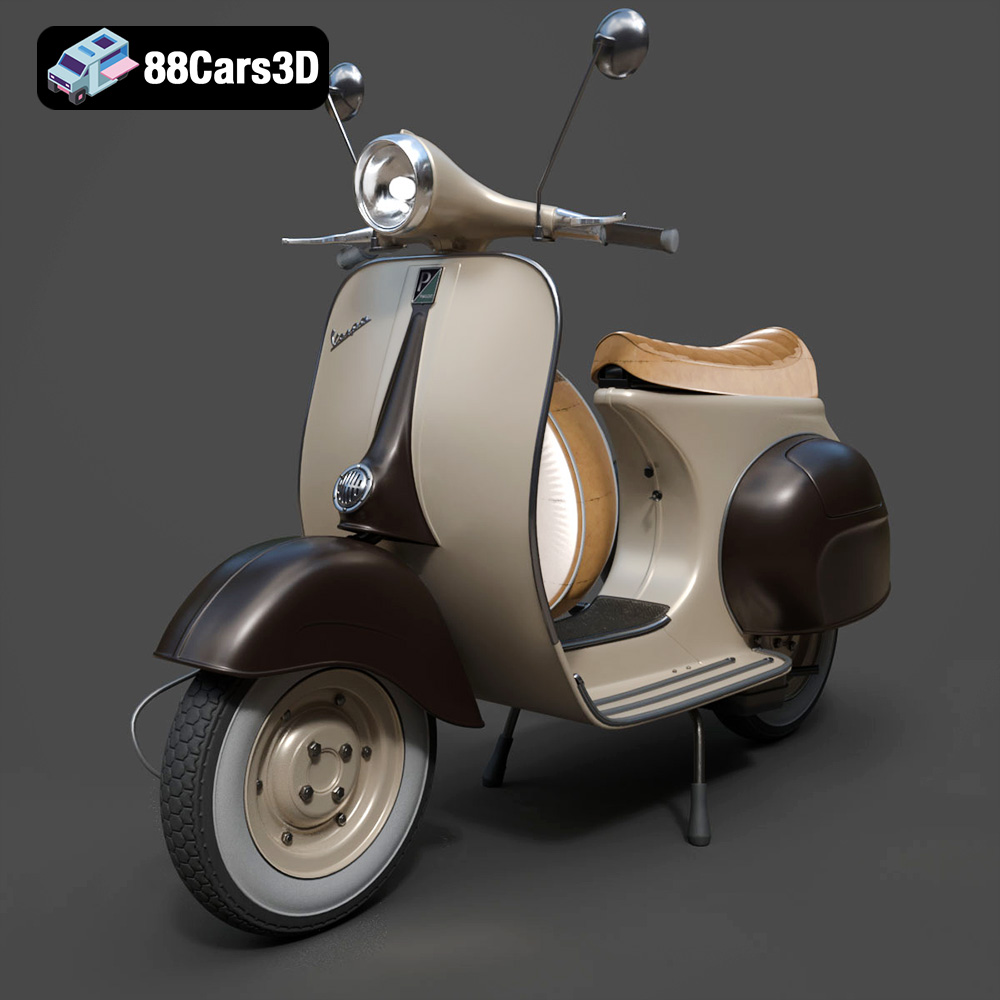
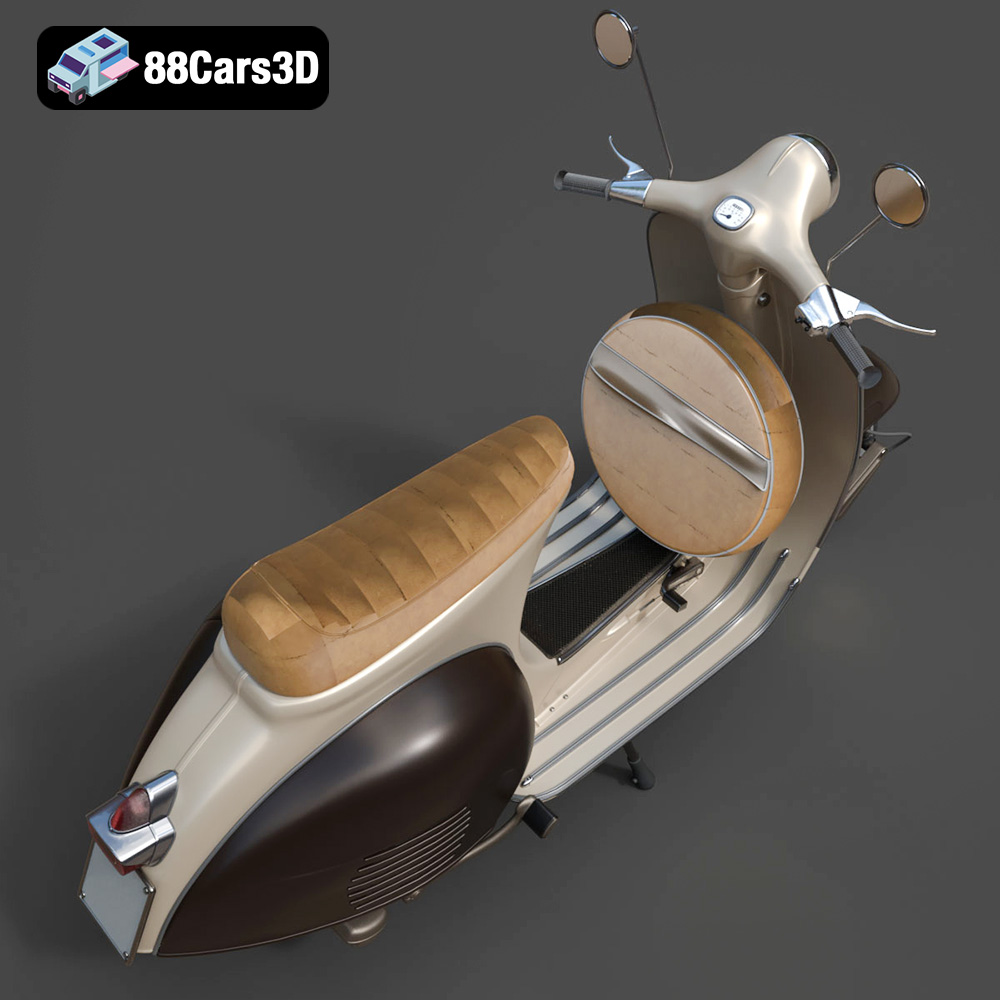
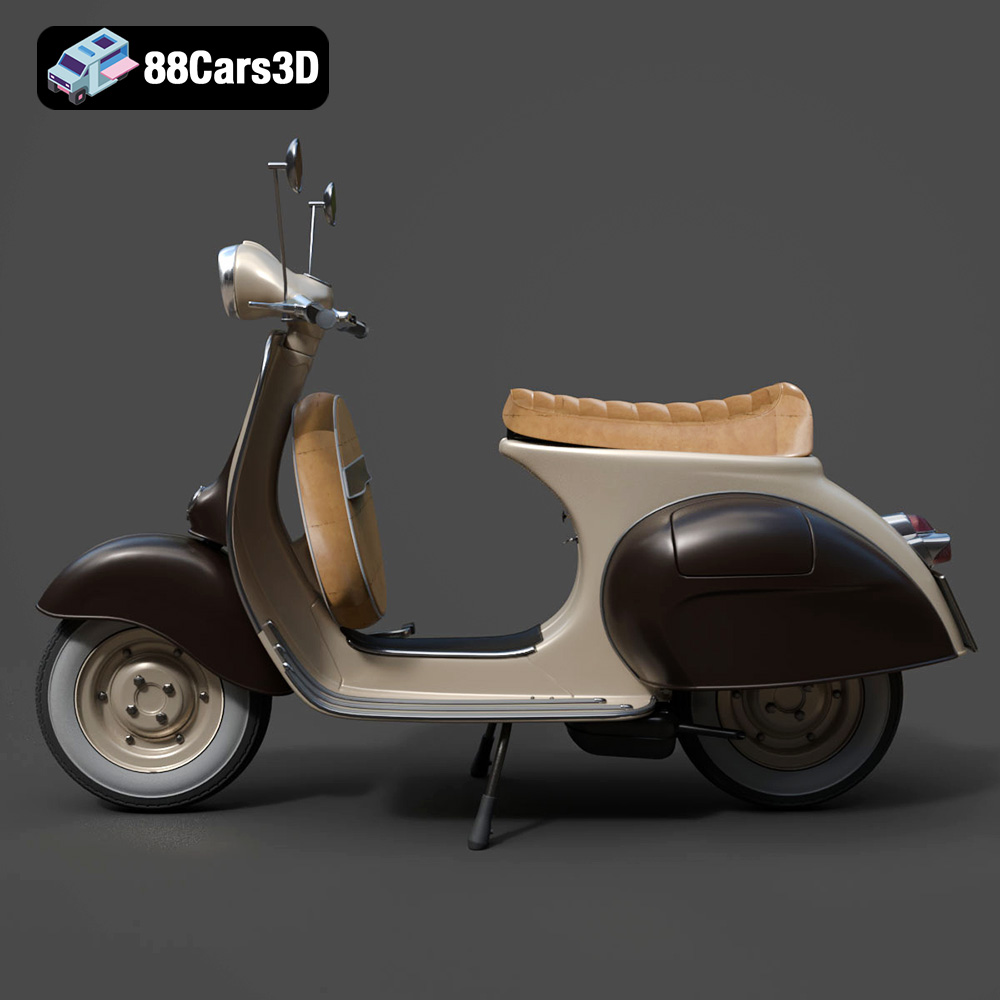
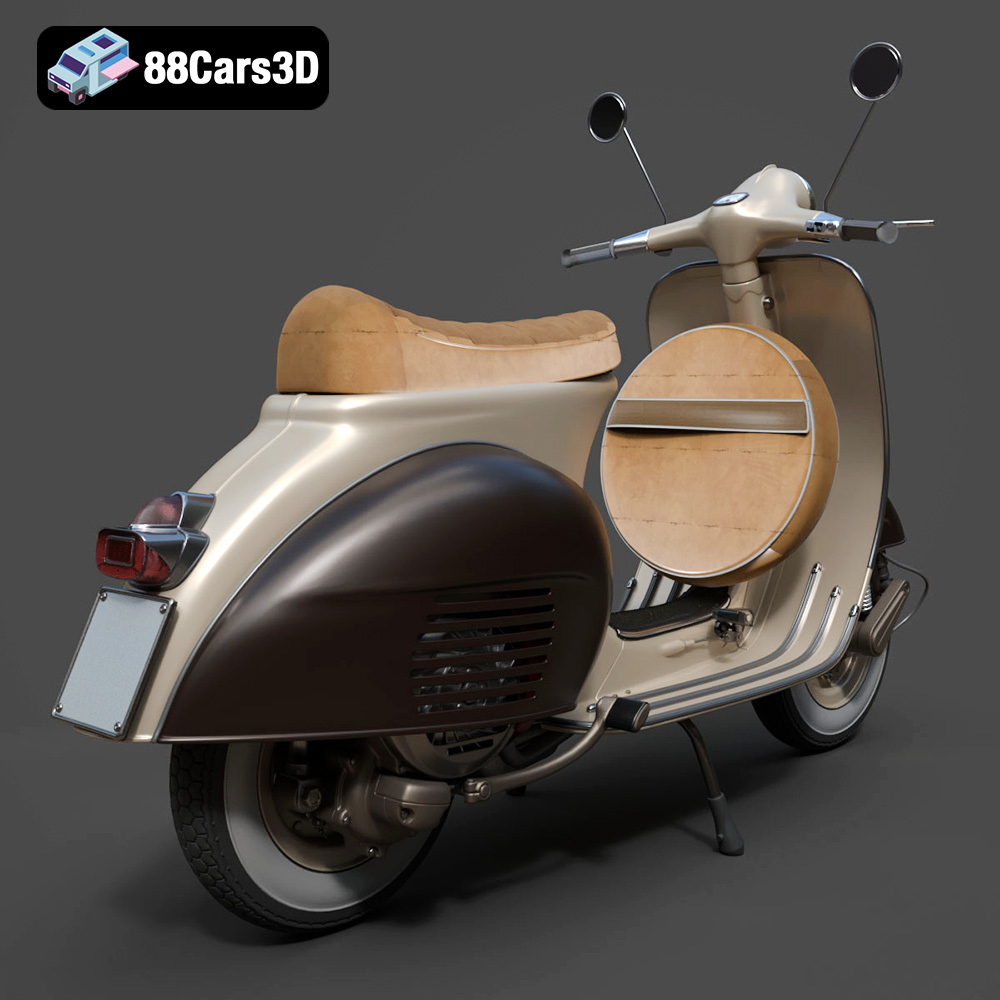
The allure of the Vespa VNB 125 lies in its distinctive, timeless design. The 3D model accurately translates these signature features into the digital realm. The classic rounded leg shield, a defining characteristic of early Vespas, is rendered with smooth, flowing curves. The signature circular headlamp, often a focal point, is precisely replicated with its chrome trim detailing, reflecting the period’s aesthetic. Even subtle elements like the curved steel side panels with their air vent details and the rear-mounted engine housing structure are faithfully included. The model doesn’t just look like a Vespa; it embodies the specific visual language of the VNB 125, making it instantly recognizable and historically accurate. The period-correct wheel and tire dimensions further reinforce this authenticity, providing a solid foundation for realistic renders and simulations.
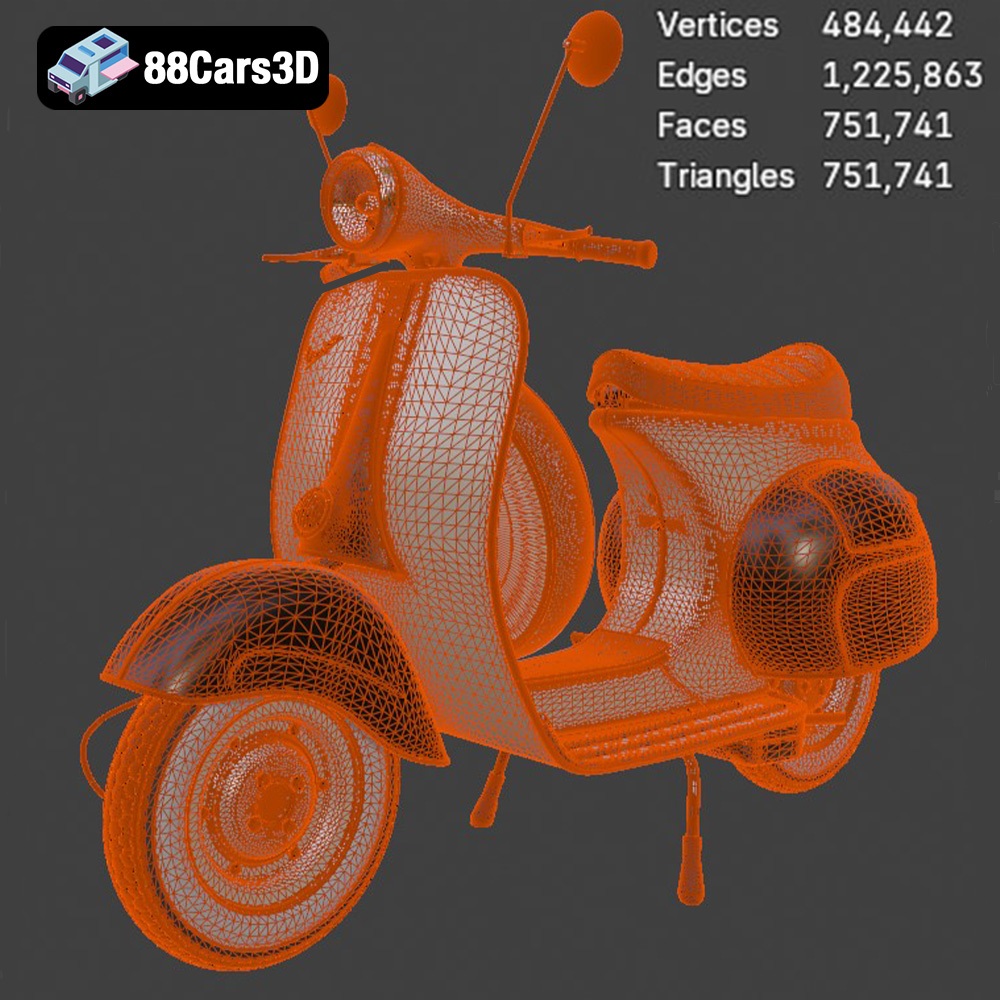
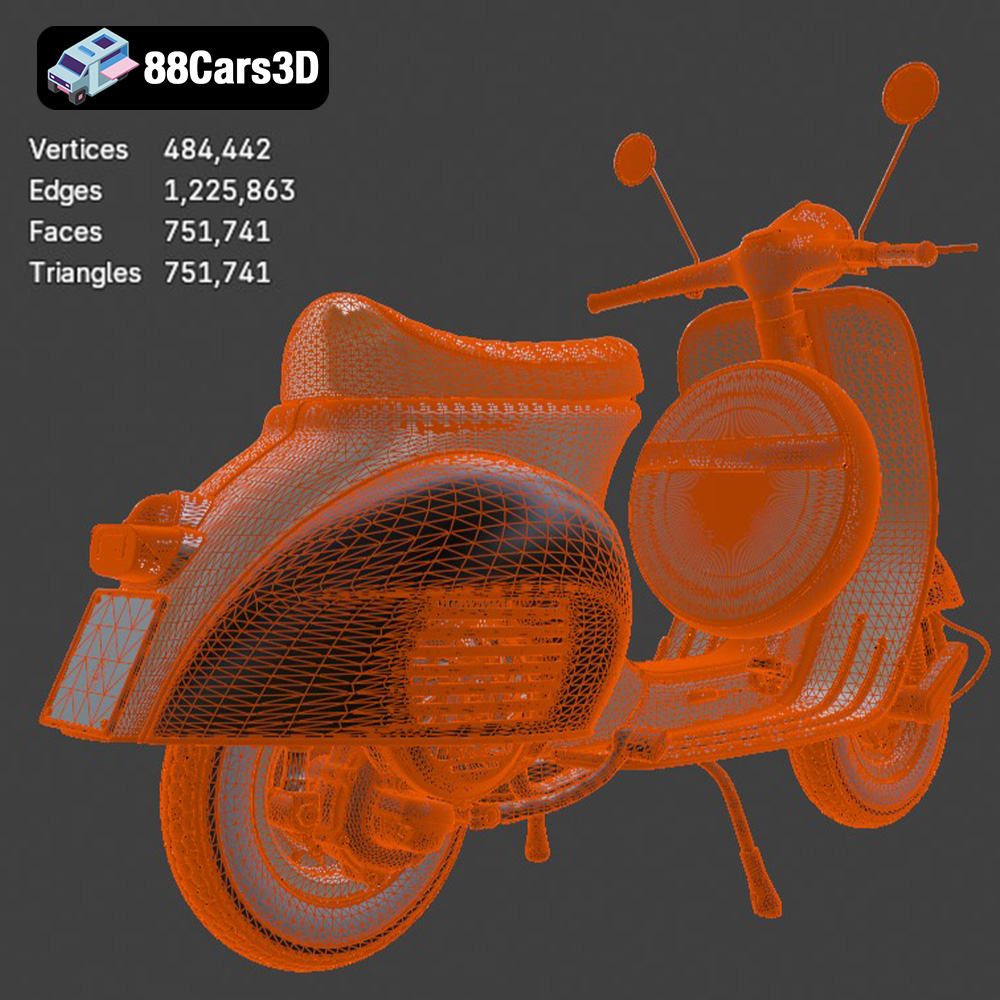
Beyond visual accuracy, the technical integrity of the Vespa VNB 125 3D Model is paramount. It boasts a clean and well-organized mesh structure, which is crucial for both rendering performance and ease of modification. Real-world scale accuracy ensures that the scooter will fit proportionally into any scene, whether it’s a bustling virtual street or a meticulously scaled architectural visualization. A key technical advantage is the proper pivot setup for steering and wheel rotation. This attention to functional detail is invaluable for animators, allowing for straightforward rigging and dynamic movement. The optimized polygon flow ensures a balance between high detail for close-up renders and efficient performance for real-time applications, making it a versatile game asset as well as a rendering powerhouse.
The versatility of the Vespa VNB 125 3D Model makes it an invaluable asset across a spectrum of professional 3D workflows. Its robust design and multiple file formats ensure seamless integration into diverse projects.
For artists focused on automotive rendering and visualization, this model is a dream. Imagine a scene in 3ds Max, illuminated by a V-Ray or Corona Renderer setup, featuring the Vespa VNB 125 parked elegantly outside a Parisian café or cruising along a sun-drenched Italian coastline. The model’s clean topology and real-world scale make it perfect for creating stunning, photorealistic imagery for vintage advertising campaigns, lifestyle branding, or retro automotive promotions. The detailed exhaust system, suspension components, and even the ribbed pattern on the footboard come alive under proper lighting, allowing artists to highlight the model’s craftsmanship. With options for customizing body color, adding vintage decals, or configuring different seat versions, the creative possibilities for visual storytelling are immense.
The demands of game development are unique, requiring assets that are both visually appealing and optimized for performance. The Vespa VNB 125 3D Model is explicitly designed with this in mind, making it an excellent game asset. Its optimized geometry ensures it can be integrated efficiently into real-time engines like Unreal Engine or Unity. The separate wheels and steering assembly with proper pivots simplify the implementation of vehicle physics and animations, allowing players to drive or interact with the scooter authentically. It’s perfectly suited for open-world urban games set in the 1960s, European street simulations, or even as an iconic backdrop element, enriching game environments with a touch of retro charm. The .unreal format further streamlines this process, providing an engine-ready asset with minimal setup required.
Augmented Reality (AR) and Virtual Reality (VR) are transforming how we interact with digital content, offering immersive experiences that blur the line between the physical and virtual worlds. The Vespa VNB 125 3D Model is an ideal candidate for such applications. Its clean mesh and optimized polygon flow allow for smooth real-time rendering within AR/VR environments, without taxing computational resources. Imagine an interactive historical vehicle showcase where users can walk around, examine, and even “sit on” the classic Vespa in a VR museum, or an AR app that lets you place a scale model of the scooter on your desk. The .glb format, in particular, is perfectly suited for these types of experiences, offering a compact and efficient asset for quick deployment and high-fidelity interaction.
One of the most exciting aspects of modern 3D modeling is the ability to bridge the gap between the digital and physical realms through 3D printing. The Vespa VNB 125 3D Model offers this tangible extension, allowing enthusiasts and collectors to bring this iconic scooter into their physical space.
The inclusion of the .stl format signals that this model is truly 3D printable, transforming a high-detail digital recreation into a tangible collectible. This opens up a world of possibilities for scale model enthusiasts, diorama builders, or anyone wishing to own a miniature version of this piece of Italian design history. Imagine a beautifully painted 1:18 scale Vespa VNB 125 gracing a desk or being part of a larger vintage vehicle display. This capability adds immense value, transforming a purely digital asset into a physical artifact.
To achieve the best results when 3D printing the Vespa VNB 125, understanding the recommended print settings is crucial. For FDM (Fused Deposition Modeling) printers, a layer height of 0.08–0.16 mm will provide a good balance of detail and print time, while a wall thickness of 1.2–2.0 mm ensures structural integrity. An infill of 15–25% is generally sufficient. Supports are essential for overhangs, particularly around the handlebar area, the delicate exhaust system, and the center stand, to prevent sagging and ensure clean geometry. Printing the main body upright will help achieve smoother curves, while wheels should ideally be printed separately for optimal detail and easier post-processing. Post-processing, including sanding, priming, and applying a gloss pastel paint finish with chrome detailing, will elevate the printed model to a truly museum-quality piece.
For even finer details and smoother finishes, especially at smaller scales (e.g., 1:24 or 1:32 as often recommended for intricate models), resin (SLA/DLP) printing would be highly recommended. While the product description details FDM-oriented settings, the inherent quality of the digital model means it’s well-prepared for the higher resolution capabilities of resin printers, allowing for incredibly crisp details on components like the speedometer housing and throttle levers.
The true power of a versatile 3D model lies in its ability to be customized and adapted to suit specific creative visions. The Vespa VNB 125 3D Model provides a solid foundation for endless personalization, making it an invaluable tool for designers and artists.
The model offers extensive customization options to tailor it to any project. Users can easily change the body color, experimenting with classic pastel finishes that evoke the 1960s or even bold, modern interpretations. Adding vintage decals or country-specific license plates can further enhance realism and contextualize the scooter within a particular narrative or geographical setting. The ability to configure either a single-seat or dual-seat version directly impacts the visual storytelling, allowing for scenes depicting a lone rider’s journey or a romantic excursion. These small but significant details can profoundly impact the emotional resonance and historical accuracy of any visual project.
Beyond cosmetic changes, the model’s robust structure supports the addition of various accessories. Imagine outfitting the Vespa with a rear luggage rack, a spare wheel mounted on the side, or even a period-appropriate windscreen. These additions can significantly expand the design narrative, transforming the basic scooter into a personalized vehicle with its own story. Furthermore, adjusting the lighting within a scene can dramatically alter the mood, whether it’s the harsh midday sun of a city street or the warm, golden glow of a sunset promenade. This flexibility empowers artists to create unique visual compositions that highlight the timeless elegance of the Vespa VNB 125, making it a dynamic asset for any creative endeavor.
The Vespa VNB 125 3D Model is more than just a collection of polygons; it’s a meticulously crafted digital artifact that encapsulates the spirit of a bygone era. From its accurate body proportions and iconic design elements to its clean topology and real-world scale, every detail has been considered to deliver an exceptional asset. Its compatibility across a wide range of file formats—including .blend, .fbx, .obj, .glb, .stl, .ply, .unreal, and .max—ensures it’s ready for any professional pipeline, whether for high-fidelity automotive rendering, dynamic game development, immersive AR/VR experiences, or even the tactile satisfaction of 3D printing a collectible. For anyone seeking to infuse their projects with a touch of classic Italian elegance and unmatched digital quality, this Vespa VNB 125 3D Model from 88cars3d.com stands as an essential resource. It’s a testament to the power of 3D car models in preserving history and inspiring future creativity.
The Vespa VNB 125 3D Model is a high-detail digital recreation of the iconic Italian scooter produced during the early 1960s. Known for its elegant curves, monocoque steel body, and lightweight urban practicality, the VNB 125 represents the golden era of classic European scooter design. This 3D model accurately captures the rounded front leg shield, signature circular headlamp, streamlined side panels, single-seat or dual-seat configuration, exposed handlebar assembly, and period-correct wheel styling. Designed with clean topology and real-world scale accuracy, it is ideal for rendering, animation, game development, AR/VR environments, and historical vehicle visualization.
$19.88