⚡ FLASH SALE: Get 60% OFF All Premium 3D & STL Models! ⚡

In the dynamic world of 3D visualization, game development, and immersive experiences, the quality of digital assets is paramount. Whether crafting a sprawling urban landscape, developing a next-generation interactive game, or designing intricate architectural visualizations, the details define realism and engagement. Professionals across these industries constantly seek meticulously crafted 3D models that not only look authentic but also perform flawlessly across diverse platforms and applications.
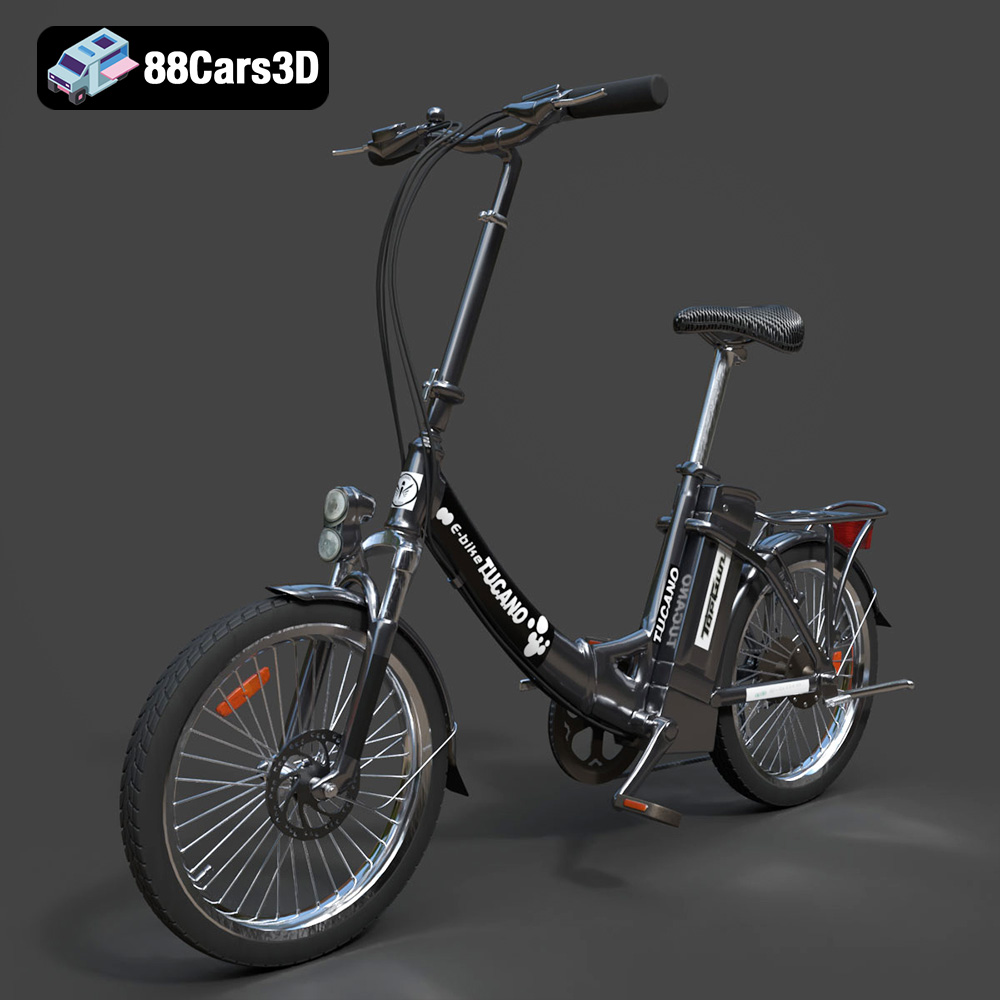
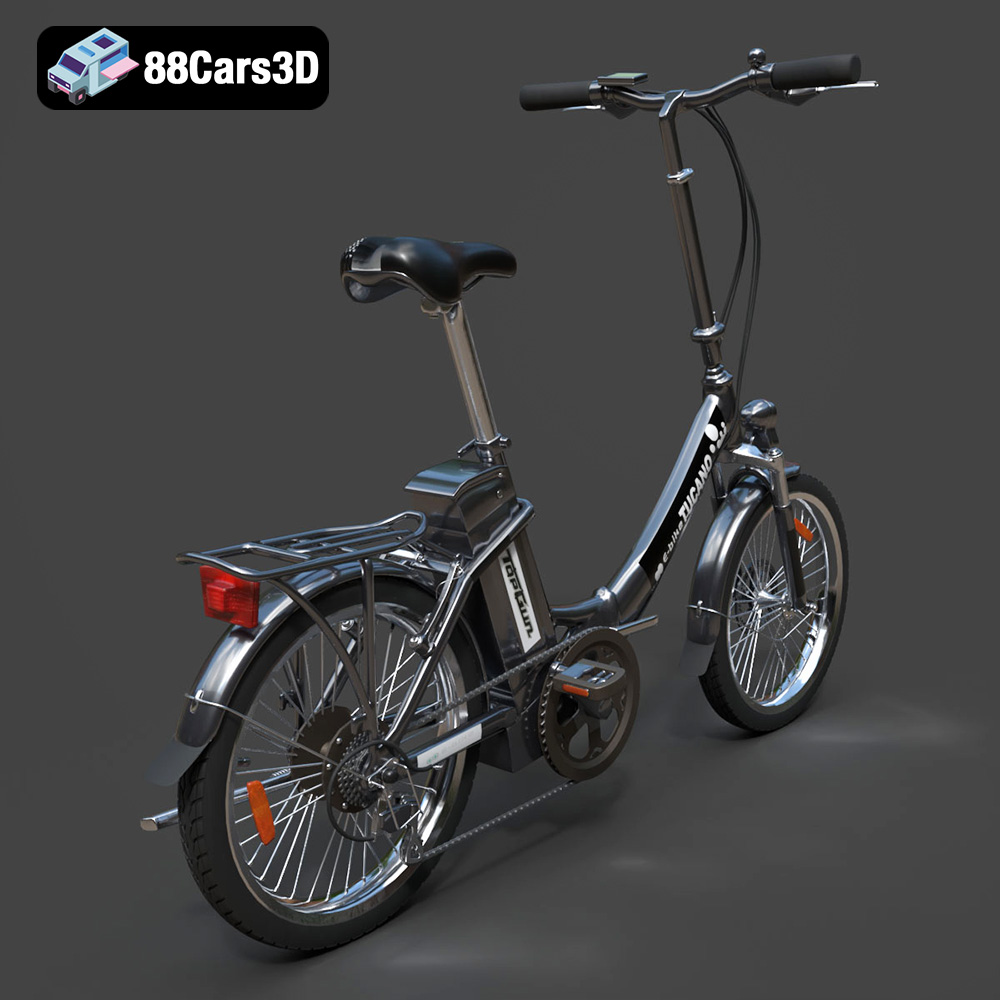
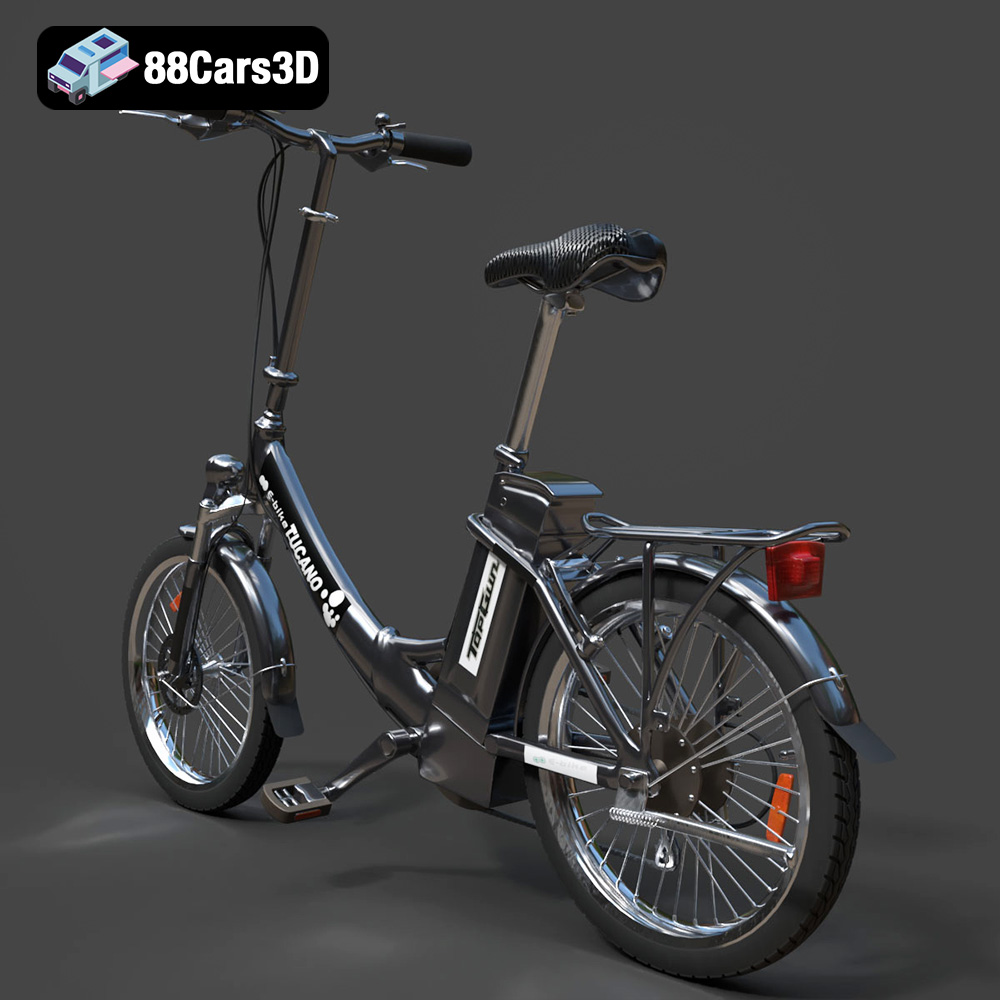
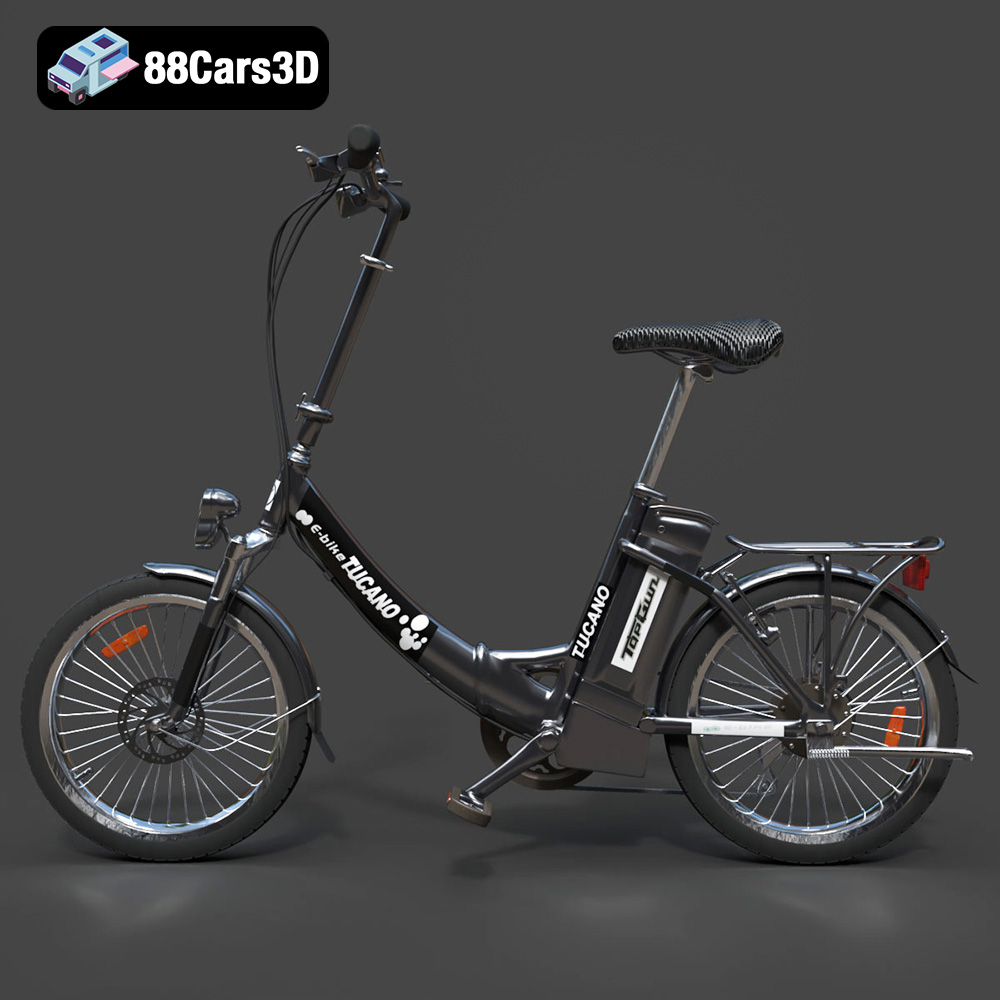
The demand for versatile and technically sound assets has led to marketplaces like 88cars3d.com, which serves as a crucial resource for designers and developers. Here, artists can find an extensive collection of high-fidelity models, from intricate 3D car models to essential environmental props. Among these invaluable assets is the Bici Tucano 3D Model, a digital recreation of a classic urban utility bicycle. This model embodies the precision and adaptability required in contemporary 3D projects, offering a clean, realistic foundation for a multitude of creative endeavors, from bustling city scenes to detailed automotive rendering projects.
This article will delve into the technical intricacies of utilizing such high-quality 3D assets, exploring essential file formats, professional workflows in leading software, and diverse applications like architectural visualization, game development, AR/VR, and 3D printing. We will specifically highlight how the Bici Tucano 3D Model stands as a prime example of an asset engineered for professional use, capable of enhancing any digital scene it populates.
The choice of a 3D model file format is far from trivial; it dictates compatibility, feature preservation, and overall workflow efficiency. A deep understanding of these formats is crucial for any professional working with 3D assets, especially when sourcing from platforms like 88cars3d.com, which provides a comprehensive array of options. The Bici Tucano 3D Model, for instance, is offered in eight distinct formats, each catering to specific industry needs and software ecosystems.
The .blend format is the native file type for Blender, the powerful open-source 3D creation suite. When you acquire a .blend file, you’re getting a fully editable Blender scene, complete with materials, textures, lighting, cameras, and even animation data if present. This format is ideal for artists who primarily work within Blender, allowing for immediate modification, rigging, and rendering without any loss of data during import/export. Its comprehensive nature makes it perfect for iteration and deep customization, allowing users to leverage Blender’s extensive toolset directly on the model’s source.
.fbx (Filmbox) is a proprietary file format developed by Autodesk, serving as a robust interchange format across various 3D applications, particularly strong in animation, rigging, and skinning data. It is the industry standard for transferring 3D assets between software like Maya, 3ds Max, and game engines like Unreal Engine and Unity. For the Bici Tucano 3D Model, an .fbx export would typically include the mesh geometry, UVs, materials (though often simplified or requiring re-linking in the target software), and crucially, any animation data for wheels or pedals. Its binary nature ensures efficient storage and loading, making it a cornerstone for real-time pipelines.
.obj (Wavefront OBJ) is one of the oldest and most widely supported 3D file formats. It’s a universal format known for its excellent cross-software compatibility, often serving as a fallback when other formats fail. An .obj file primarily contains geometry data (vertices, normals, texture coordinates, and faces) and can reference external .mtl (material) files for basic material properties. While it lacks support for advanced features like animation, rigging, or scene hierarchy, its simplicity and widespread adoption make it incredibly reliable for static mesh transfer. The Bici Tucano 3D Model in .obj format is perfect for integrating into virtually any 3D application for basic rendering or as a base for further modeling.
.glb (GLB format, an evolution of glTF) is a relatively newer format gaining rapid traction, especially for augmented reality (AR), virtual reality (VR), and web-based applications. It’s a compact, self-contained format that embeds textures and other assets directly within the single file, making it incredibly efficient for streaming and rapid loading. GLB is designed for real-time rendering and is a cornerstone of technologies like Google’s 3D Viewer and various AR platforms. For the Bici Tucano 3D Model, the .glb format ensures it’s instantly ready for interactive web presentations or mobile AR experiences with minimal optimization hassle.
.stl (STereoLithography) is the de facto standard for 3D printing. It represents a 3D model as a series of connected triangles, describing only the surface geometry without color, texture, or other advanced attributes. This format is purely about watertight, manifold geometry, ensuring that a physical object can be reliably produced. The Bici Tucano 3D Model, being convertible to .stl, allows for the creation of miniature physical bicycles, perfect for prototyping, collectibles, or architectural models. Careful consideration of mesh resolution and potential supports is key when preparing an .stl for printing.
.ply (Polygon File Format) is another format for storing 3D data, particularly useful for scanned data, CAD applications, and scientific analysis. Like .obj, it stores geometry but can also include additional properties for vertices and faces, such as color, transparency, and even normal vectors. It’s known for its precision in representing complex mesh data, making it suitable for technical or engineering-focused applications where maintaining exact geometric integrity is crucial. For the Bici Tucano 3D Model, a .ply export would be beneficial for precise measurements, simulations, or reverse engineering tasks.
The .unreal format, or more accurately, assets directly prepared for or exported from Unreal Engine, signifies an asset that has been optimized and packaged for use within Epic Games’ powerful real-time engine. This typically involves efficient mesh structures, properly set up materials using Unreal’s PBR workflow, collision meshes, LODs (Levels of Detail), and sometimes even blueprint components for interactivity. An “.unreal” file represents a ready-to-use game asset, designed for immediate integration into an Unreal project without significant re-configuration, ensuring optimal performance and visual fidelity within real-time environments.
Finally, the .max format is the native scene file for Autodesk 3ds Max, a leading software for 3D modeling, animation, and rendering. A .max file encapsulates the entire 3ds Max scene, including all geometry, modifiers, materials (V-Ray, Corona, etc.), lights, cameras, animation timelines, and plugins. This format provides the ultimate flexibility for users of 3ds Max, allowing for deep customization, complex scene setup, high-end architectural visualization, and intricate animation sequences. The Bici Tucano 3D Model in .max format offers a complete foundation for professional rendering and animation projects, allowing artists to leverage 3ds Max’s robust toolset.
The Bici Tucano 3D Model stands as a testament to thoughtful design and technical execution. Inspired by practical European city bikes, it’s not merely a visual representation but a meticulously engineered digital asset designed to meet the rigorous demands of professional 3D production pipelines. Its focus on clean geometry, realistic proportions, and segmented components makes it an exceptionally versatile tool for a wide array of projects.
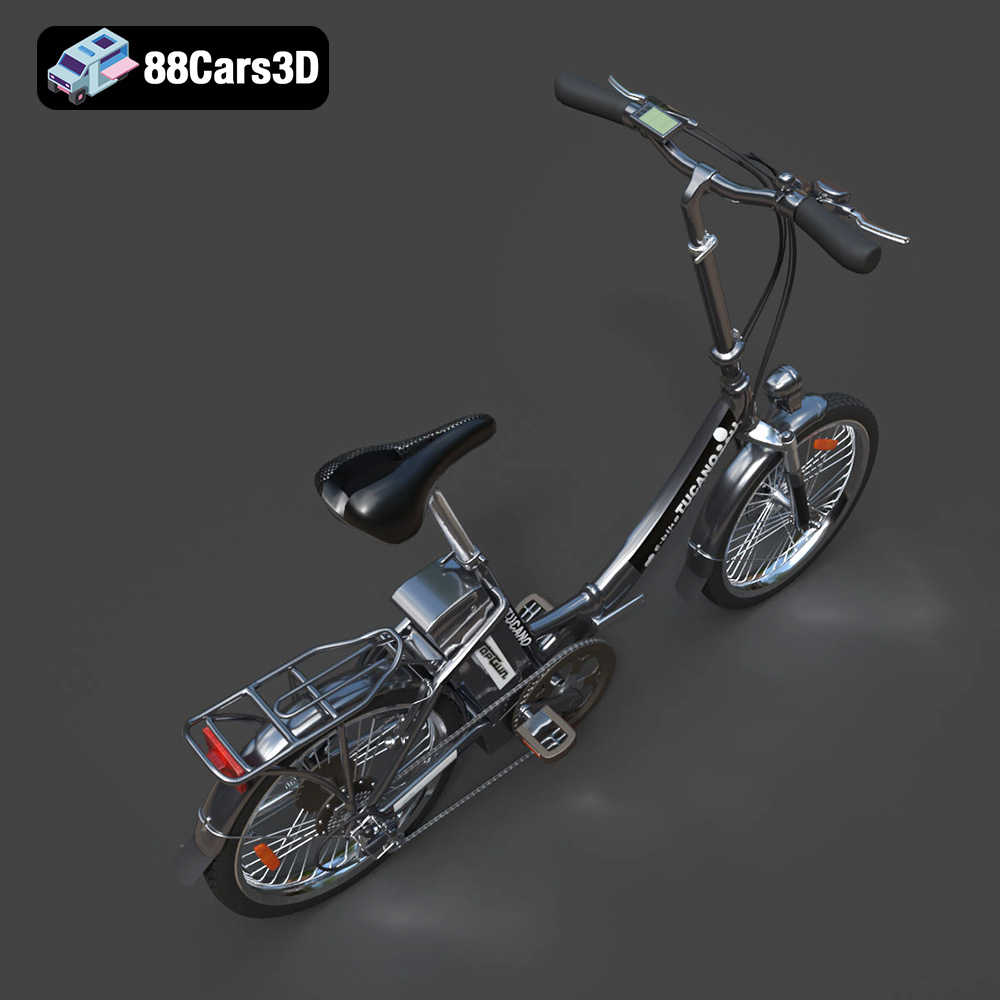
At the core of the Bici Tucano’s appeal is its commitment to realistic city bicycle frame geometry and accurate proportions. This is critical for achieving photorealistic renders and believable in-game environments. The detailed front fork, rear triangle structure, and accurately scaled components like pedals, crankset, and chain system contribute to an authentic visual experience. Even the spoke wheels and rubber tires are modeled with a keen eye for real-world physics and aesthetics, ensuring that the bicycle integrates seamlessly into any scene without appearing out of place. This level of detail extends to functional elements such as handlebars and braking systems, enhancing the model’s credibility.
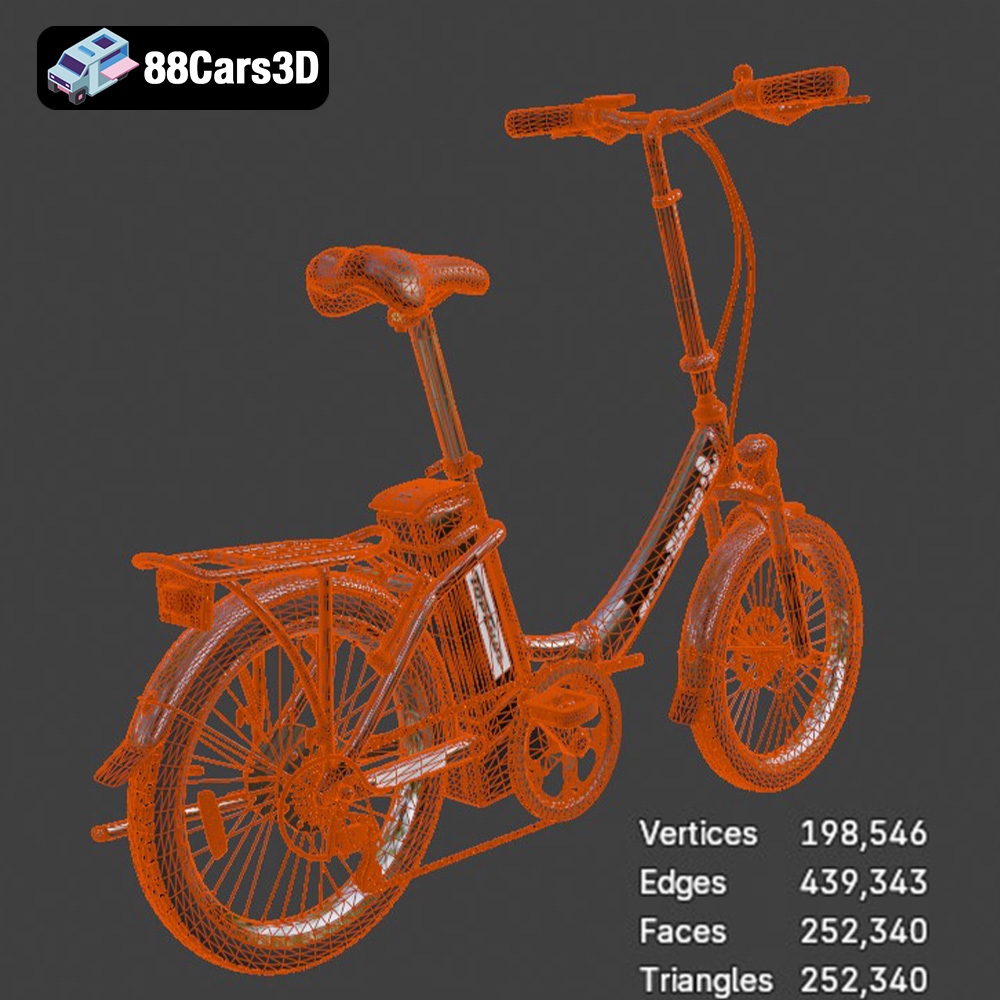
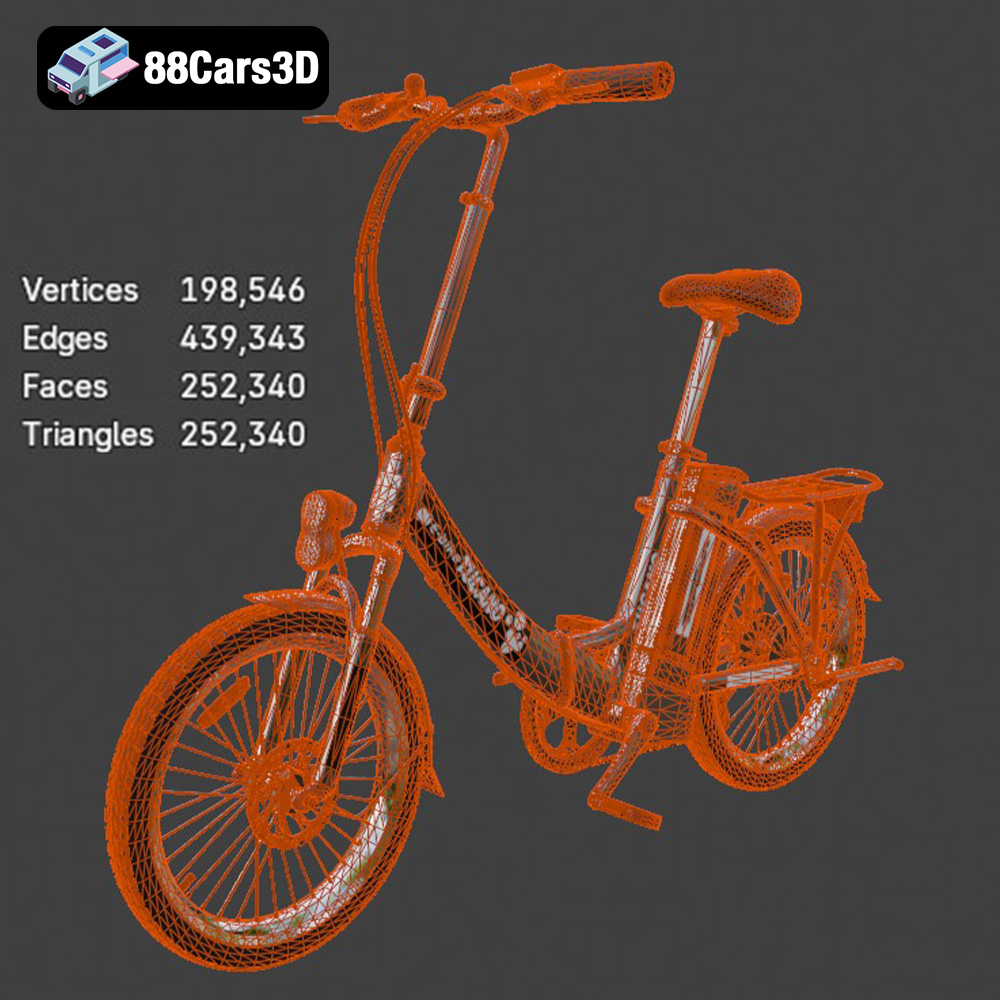
Achieving a balance between high visual fidelity and efficient performance is a perennial challenge in 3D production. The Bici Tucano tackles this with lightweight geometry and optimized structures suitable for both high-quality offline renders and demanding real-time game engines. Clean topology and an organized mesh hierarchy are fundamental to this optimization. This means the mesh is structured logically, making it easy to UV unwrap, texture, and deform if needed for animation. Such meticulous construction minimizes polygon count without sacrificing crucial visual detail, ensuring smooth performance in interactive applications like AR/VR or complex game worlds. This asset is a prime example of how 3D car models and other vehicles should be optimized for both visual impact and technical efficiency.
Beyond static representation, the Bici Tucano 3D Model is built for dynamic interaction. Its components are separated and feature proper pivot points, allowing for effortless animation. This includes independent rotation of wheels and pedals, making it ideal for creating believable cycling sequences, vehicle simulations, or interactive elements in games. Whether animating a character riding the bike through an urban street or showcasing its mechanical function in a product visualization, the model’s inherent structure supports these creative aspirations without requiring extensive re-rigging or adjustment, significantly streamlining production time.
The true value of a versatile 3D asset like the Bici Tucano 3D Model lies in its seamless integration into diverse professional workflows. Its availability across multiple file formats (as offered on 88cars3d.com) ensures compatibility with leading industry software, empowering artists and developers to leverage it effectively in their projects, from sophisticated architectural renderings to immersive game environments.
For architectural visualization (ArchViz) artists, adding realistic contextual elements can dramatically enhance a scene’s believability and narrative. The Bici Tucano is perfect for populating exterior architectural renders. In a 3ds Max workflow, an artist would import the .max file, which brings in the model with all its pre-configured elements. Using rendering engines like V-Ray or Corona, the bike’s materials can be easily adjusted to match specific lighting scenarios or design palettes. Imagine a sleek modern apartment building render; placing the Bici Tucano subtly leaning against a wall or parked outside a cafe adds a touch of urban lifestyle and realism, transforming a sterile environment into a vibrant, lived-in space. Its accurate real-world scale ensures it fits perfectly into the scene without needing manual adjustments.
In game development, performance and visual quality are critical. The Bici Tucano 3D Model, with its lightweight geometry and organized mesh hierarchy, is an excellent candidate for game assets. Importing the .fbx or .unreal version into Unreal Engine, developers can quickly set up materials using Unreal’s Physically Based Rendering (PBR) system, add collision meshes, and even create simple blueprints for interactive elements. For example, in an open-world city game, multiple instances of the Bici Tucano could be scattered throughout the environment as static props, or it could serve as a ridable vehicle for player characters or NPCs. The separated components and proper pivot points are invaluable for setting up animation states, allowing characters to mount, dismount, and pedal realistically, contributing to an immersive gameplay experience. This model perfectly complements other 3D car models and vehicles commonly found in game environments.
Blender users benefit from the native .blend file, providing full access to the model’s source. This allows for unparalleled customization. Artists can easily modify the frame, add accessories like baskets or delivery boxes, change tire styles, or even redesign parts of the bike to fit a unique artistic vision. Blender’s robust toolset for modeling, sculpting, and texturing means the Bici Tucano can be adapted for a wide range of stylized or hyper-realistic projects. Furthermore, its clean topology is ideal for rigging with Blender’s armature system, facilitating complex character animations involving the bicycle. A freelance artist might use it to create a bespoke animation for a client’s advertisement, showcasing an urban delivery service, or simply as a hero asset in a personal portfolio piece.
The utility of a well-crafted 3D model extends far beyond traditional screen-based rendering. Assets like the Bici Tucano 3D Model bridge the gap between digital and physical realms, and create engaging interactive experiences, demonstrating the full spectrum of modern 3D applications.
The ability to convert the Bici Tucano into an .stl format opens up the exciting world of 3D printing. This means designers can translate their digital vision into tangible objects, such as miniature bicycle models for architectural dioramas, collectible displays, or even functional prototypes for design reviews. The product description’s specific recommendations for 3D print settings – including recommended scales (1:10, 1:12, 1:18), layer height, wall thickness, infill, and support requirements – are crucial for successful physical production. For instance, recommending resin printing for fine details like spokes highlights the technical consideration needed to achieve high-quality results for intricate parts of an automotive rendering subject, even if it’s a bicycle. Post-processing steps like sanding, priming, and painting are essential to elevate the printed model from a raw print to a polished collectible, mirroring the meticulous effort often put into finishing high-quality 3D car models.
Augmented Reality (AR) and Virtual Reality (VR) are transforming how we interact with digital content. The Bici Tucano’s availability in .glb format makes it perfectly suited for these immersive platforms. Imagine an urban planning meeting where a proposed bike lane can be visualized, not just on a screen, but as an interactive AR overlay in the real environment, with realistic bicycles like the Tucano populating it. Or consider a VR experience allowing users to explore a virtual city, picking up and interacting with bicycles. The compact nature of .glb files ensures quick loading times and smooth performance, critical for maintaining immersion in AR/VR applications. This asset could be a key component in interactive transportation demos or urban mobility experiences, offering a tangible connection for users.
Beyond entertainment and visualization, high-quality 3D models play a significant role in simulation and training. The Bici Tucano 3D Model, with its accurate proportions and mechanical detailing, can be integrated into mobility simulations or traffic system visualizations. For instance, urban planners could simulate the flow of bicycle traffic through new infrastructure designs, analyzing efficiency and safety. In a training scenario, a virtual environment could be created for learning bicycle maintenance or safe urban riding practices. The clean geometry and optimized structure are vital here, ensuring the simulations run efficiently and provide reliable data, a common requirement when developing simulations involving 3D car models and other complex vehicles.
Investing in high-quality 3D assets is about more than just immediate project needs; it’s about acquiring versatile tools that can adapt to future requirements and evolving creative visions. The Bici Tucano 3D Model exemplifies an asset built for customization and long-term utility, offering a strong foundation for diverse artistic explorations.
The ability to customize a 3D model is invaluable, allowing artists to make a base asset uniquely their own. The Bici Tucano offers numerous options for personalization. Imagine a project requiring a specific aesthetic: changing frame colors and finishes can instantly alter the bike’s character, from a gritty street machine to a polished, high-end commuter. Adding optional accessories like a front basket, a rear cargo rack, or a delivery box can transform its function and narrative, making it suitable for delivery scenarios, lifestyle visualizations, or even a post-apocalyptic scene. Modifying tire thickness or urban/off-road style tires allows the bike to adapt to different terrains and contexts. Furthermore, integrating decals or branding elements is straightforward, enabling the model to serve as a branded asset in advertisements or product placements. This flexibility ensures that the model remains relevant across a wide range of creative briefs.
A key technical advantage of the Bici Tucano is its clean topology and organized mesh hierarchy. This isn’t just about performance; it’s about maintainability and future-proofing. Clean topology makes the model easy to select, modify, and deform. If a project requires significant alterations – perhaps converting the bike into a stylized cartoon version, adding intricate mechanical parts, or preparing it for extreme close-up automotive rendering – the well-structured mesh provides a stable foundation. Artists can iterate rapidly, confidently knowing that their modifications will behave predictably without introducing unforeseen artifacts or complex cleanup tasks. This attention to underlying structure transforms the model from a static prop into a dynamic creative tool, ready for whatever demands a project might place on it years down the line. Models from 88cars3d.com are built with this longevity in mind.
The journey through the world of high-quality 3D assets reveals the intricate balance between artistic vision and technical precision. From understanding the nuances of various file formats like .blend, .fbx, .obj, .glb, .stl, .ply, .unreal, and .max, to integrating assets into complex workflows across 3ds Max, Blender, and Unreal Engine, the demands on digital content are continuously growing. The Bici Tucano 3D Model stands out as a prime example of an asset engineered to meet these challenges, offering realistic geometry, optimized performance, and unparalleled versatility for animation, rendering, game development, AR/VR, and even 3D printing.
Whether you’re an architect seeking to breathe life into a new development, a game developer crafting an immersive urban landscape, or a visualization specialist bringing a product to life through detailed automotive rendering, the quality of your 3D models can make all the difference. The Bici Tucano provides a robust foundation for countless creative projects, promising to elevate digital environments with its authentic character and technical excellence. Explore this and many other meticulously crafted 3D car models and assets at 88cars3d.com, and empower your next digital masterpiece.
The Bici Tucano 3D Model is a detailed digital recreation of a classic urban utility bicycle, inspired by practical European city bikes commonly used for commuting and cargo transport. Designed with clean geometry and realistic proportions, this model captures the simplicity, durability, and functional character of traditional city bicycles. The model features a sturdy frame structure, comfortable upright riding position, and practical components suitable for urban environments. It is ideal for rendering, animation, architectural visualization, game development, AR/VR projects, and simulation scenes requiring a realistic bicycle asset. Perfect for city streets, park environments, lifestyle visualizations, delivery scenarios, and interactive mobility simulations. 3D Print Setting: • Recommended scale: 1:24 / 1:32 / 1:43 • Layer height: 0.04–0.12 mm (Resin printing recommended for the smaller scale details like the Thor’s Hammer headlights) • Wall thickness: 1.2–2.0 mm • Infill: 15–25% • Supports: Required for side mirrors, wheel arches, and the subtle rear roof spoiler • Print orientation: Body printed angled for a smooth surface finish; wheels printed separately • Post-processing: Sanding, primer, and modern Volvo factory colors (like Sage Green, Glacier Silver, or Crystal White) paired with a gloss black roof.3D Printing, STL, 3D Printable, Miniature Car, Scale Model, FDM Ready, Resin Print, SLA, Digital Manufacture, Car Prototype, Automotive Collectible, 3D Print Model, Physical Asset, Tabletop Display, Manifold Geometry.
$14.9
.arvr
.bicycle
.blend
.citybike
.cycling
.fbx
.gameasset
.glb
.max
.obj
.ply
.rendering
.simulation
.stl
.transportasset
.unreal
.urbanbike
.vehicle3dmodel
mobility