⚡ FLASH SALE: Get 60% OFF All Premium 3D & STL Models! ⚡

In the demanding world of 3D visualization, from cinematic productions to immersive game environments and breathtaking architectural renders, the quality of your assets dictates the impact of your final output. Automotive 3D models stand as a cornerstone of realism, offering unparalleled detail to ground your scenes in believability. Whether you’re a seasoned professional or an aspiring artist, understanding the nuances of high-quality 3D car models and how to leverage them across various platforms is crucial.
Today, we’re diving deep into the technical intricacies and creative possibilities offered by a premium asset like the BMW 1 Series 5-Door (2016) 3D Model. This meticulously crafted digital recreation, available at 88cars3d.com, exemplifies the standard of excellence required for professional applications, providing a versatile foundation for everything from photorealistic renders to advanced 3D printing projects.
The journey of any 3D asset begins with its file format. Choosing the correct format is paramount for seamless integration, optimal performance, and preserving data integrity across different software and pipelines. The BMW 1 Series 5-Door (2016) 3D Model, like many professional 3D car models, offers a comprehensive suite of formats, each serving a specific purpose in the production workflow.
The .blend format is native to Blender, a powerful open-source 3D creation suite. When you download a .blend file, you’re getting a complete Blender scene, often including cameras, lights, and fully configured materials using Blender’s node-based shading system. This format is ideal for artists who primarily work in Blender, offering maximum editability. You can dissect the model, modify its topology, adjust materials, or even re-rig it for custom animations without any loss of data that might occur during format conversions. It ensures all scene data, including modifiers, custom properties, and animation curves, are perfectly preserved for the Blender user.
FBX (Filmbox) is an Autodesk-developed proprietary file format that has become an industry standard for interoperability between various 3D applications, especially in game development. It’s incredibly versatile, capable of storing not just mesh data (geometry, UVs, normals) but also materials (though often simplified), textures, lights, cameras, and crucial animation data like skeletal rigs, skinning, and blend shapes. The .fbx version of the BMW 1 Series is perfect for importing into game engines like Unreal Engine or Unity, where its rich data payload ensures that animation setups and basic material assignments translate effectively, making it a go-to for complex game assets and real-time visualization.
The Wavefront .obj format is one of the oldest and most widely supported 3D file formats. It’s renowned for its simplicity and universal compatibility across virtually all 3D software. An .obj file primarily stores geometric data – vertices, normals, UV coordinates, and faces. Materials and textures are typically referenced by a separate .mtl (material template library) file. While .obj is excellent for transferring static mesh data reliably, it does not support animation, rigging, or complex material definitions. For the BMW 1 Series, the .obj format is an excellent choice for general import into any 3D application where you plan to apply your own materials and lighting, making it a truly cross-software solution for raw mesh data.
GLB (GL Transmission Format Binary) is a modern, royalty-free format designed for efficient transmission and loading of 3D scenes and models, particularly in web, augmented reality (AR), and virtual reality (VR) applications. What makes .glb stand out is its self-contained nature: it bundles all assets (geometry, materials, textures, animations) into a single binary file. This optimization reduces file size and parsing time, making it ideal for real-time interactive experiences where quick loading and smooth performance are critical. For a detailed BMW 1 Series 3D Model, the .glb format would facilitate its deployment into web configurators, AR apps for showcasing, or light VR experiences.
STL (Stereolithography) is the de facto standard file format for 3D printing. Unlike other formats that store various types of 3D data, .stl represents a 3D model as a series of connected triangles, forming the surface geometry without any color, texture, or material information. The key requirement for a functional .stl is “manifold” geometry, meaning the mesh must be watertight with no gaps or inversions. The BMW 1 Series 3D Model, provided in .stl format, is specifically prepared for physical fabrication, allowing users to print detailed scale models or custom components. This format ensures compatibility with almost all slicer software used in 3D printing.
PLY (Polygon File Format) is another format for storing 3D data, often used for scanned data, CAD, or point clouds. It can store various properties beyond just geometry, such as color, transparency, normals, texture coordinates, and confidence values for each vertex or face. While not as universally adopted as .obj or .fbx for general asset exchange, .ply is particularly useful in scientific, engineering, and historical preservation contexts where precise geometric and attribute data from real-world scans are critical. For the BMW 1 Series, its inclusion suggests the underlying mesh can support advanced data analysis or alternative modeling approaches.
The .unreal format refers to assets specifically configured and often pre-imported into an Unreal Engine project. This isn’t a standalone file format in the traditional sense but rather an asset package optimized for direct use within Unreal Engine. It implies that the model has likely undergone specific preparation steps – such as proper scaling, pivot point setup, potential material optimization, and even LOD (Level of Detail) creation – to integrate seamlessly into an Unreal project. Using an .unreal file for the BMW 1 Series drastically streamlines the workflow for Unreal Engine developers, saving time on setup and ensuring engine-native compatibility.
Similar to .blend for Blender, .max is the native file format for Autodesk 3ds Max, a leading software in architectural visualization and animation. A .max file contains the complete 3ds Max scene, including geometry, materials (often V-Ray, Corona, or Arnold shaders), lights, cameras, animation keyframes, and modifiers. For users of 3ds Max, the .max version of the BMW 1 Series 3D Model offers the highest level of detail and editability, maintaining all the complex shading networks and scene configurations designed by the artist, making it perfect for high-end rendering and detailed animations.
Achieving photorealistic automotive rendering is a skill that blends technical proficiency with artistic vision. A high-quality 3D car model, such as the BMW 1 Series 5-Door (2016), provides the essential foundation. Its “clean, quad-heavy topology” (1.17 million triangles) is critical for flawless subdivision and smooth surfaces, ensuring impeccable reflections and contours under any lighting condition.
For many professionals, 3ds Max paired with V-Ray or Corona Renderer is the go-to setup for automotive rendering. The .max file for the BMW 1 Series 5-Door (2016) streamlines this process. Upon opening, you’ll typically find pre-configured materials, often utilizing realistic shaders for car paint, glass, rubber, and metallic accents. The workflow involves:
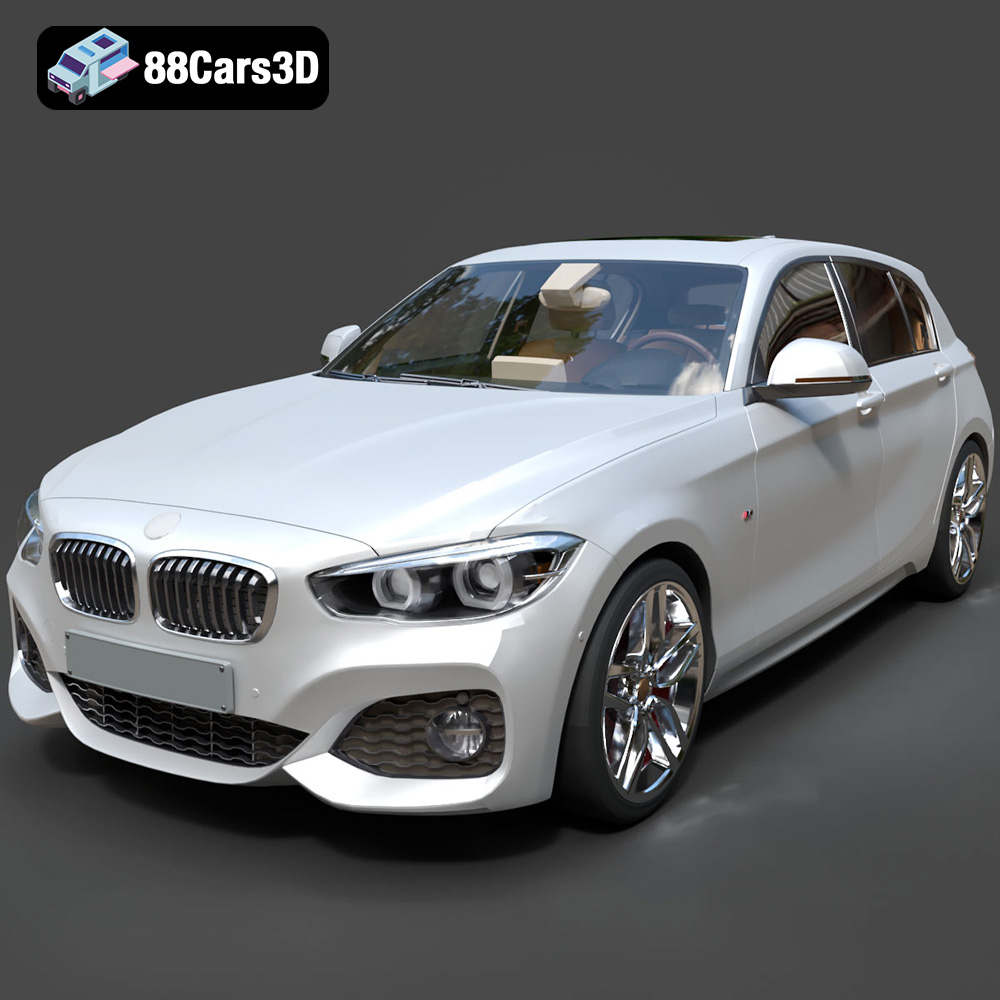
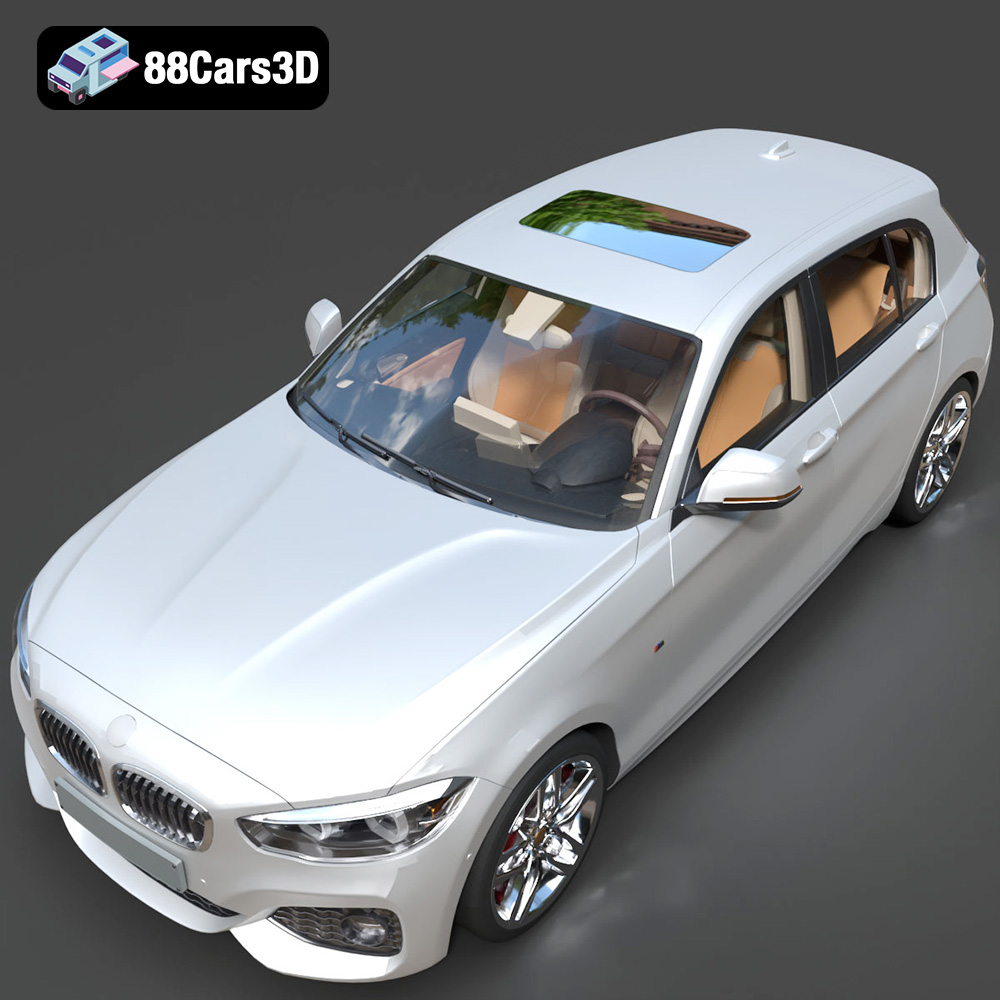
The detailed exterior (panel gaps, LED housings) and interior (iDrive display, accurate seating) of the BMW 1 Series model shine through in these high-fidelity renders, capturing every subtle design cue.
Beyond the car itself, the environment plays a crucial role in grounding the render in reality. Consider these elements:
The meticulous detail of the BMW 1 Series 5-Door (2016) 3D Model means less time spent modeling and more time focusing on these artistic enhancements, leading to truly professional automotive rendering results.
Game development demands a delicate balance between visual fidelity and performance. While the BMW 1 Series 5-Door (2016) 3D Model is highly detailed, its clean topology and versatile format options make it adaptable for both cutting-edge and optimized game environments. Leveraging such game assets requires strategic planning.
Unreal Engine, particularly with the advent of Nanite in UE5, has revolutionized how high-polygon assets are handled in real-time. The BMW 1 Series, with its “1.17 million triangles,” is perfectly positioned to be a hero asset in an Unreal Engine 5 project:
While Nanite is a game-changer, not all platforms or projects can leverage it, especially for mobile, VR, or older game engine versions. For these scenarios, traditional optimization techniques are vital for the BMW 1 Series model:
The flexibility of the BMW 1 Series 5-Door (2016) 3D Model, with its multiple file formats, makes it adaptable to these diverse requirements, from next-gen experiences to more optimized, widespread deployment.
In ArchViz and cinematic production, a compelling scene often hinges on the quality of its secondary elements. A high-fidelity 3D car model can transform a static architectural render or a barren film set into a vibrant, believable environment. The BMW 1 Series 5-Door (2016) is a prime example of an asset that excels in these areas, adding a touch of premium European realism.
Architectural visualization relies heavily on context. An empty driveway or a desolate street fails to convey the intended lifestyle or atmosphere. This is where a meticulously crafted vehicle like the BMW 1 Series 5-Door (2016) becomes indispensable:
In film, advertising, and commercial pitches, the authenticity of every detail matters. The BMW 1 Series 5-Door (2016) 3D Model offers significant advantages:
Ultimately, the BMW 1 Series 5-Door (2016) 3D Model acts as a powerful tool for visual storytellers, enriching scenes with a layer of realism and sophistication that only a top-tier automotive asset can provide.
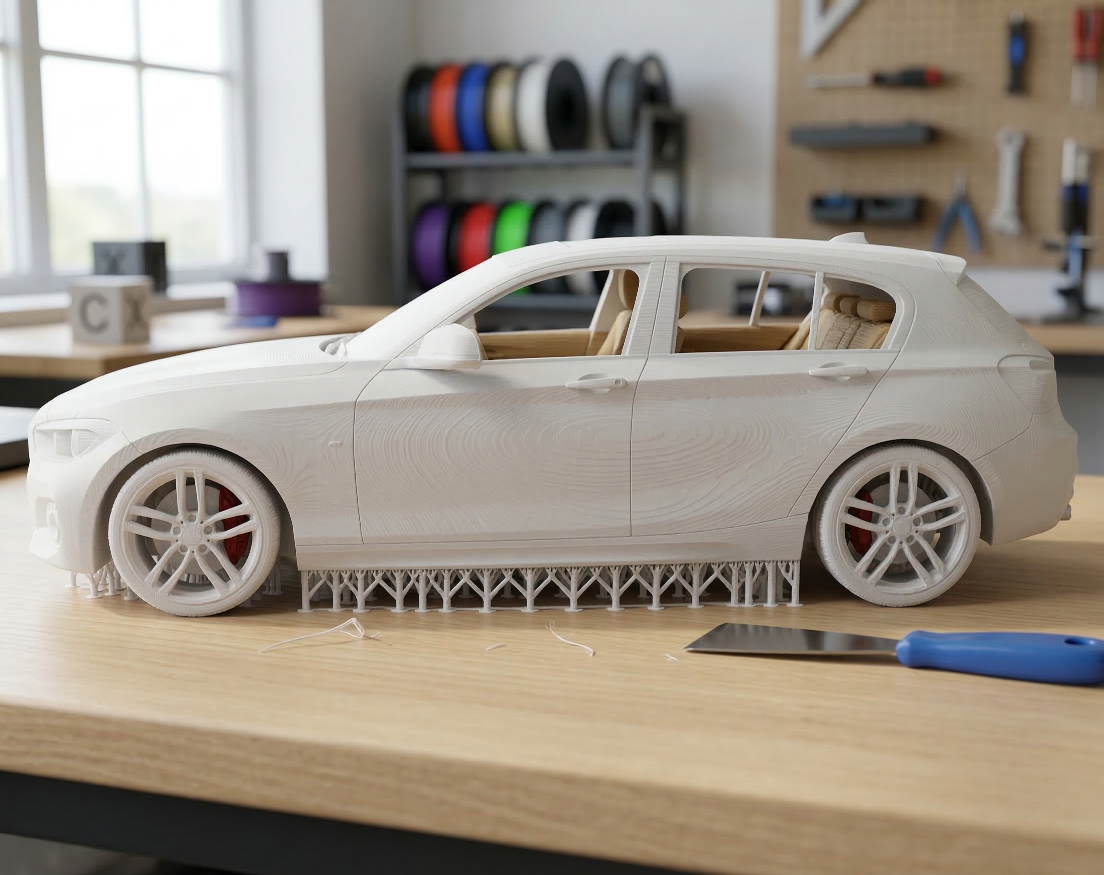
The digital realm often extends into the physical, and 3D printing offers an exciting avenue for bringing virtual 3D car models to life. The BMW 1 Series 5-Door (2016) 3D Model, specifically its .stl format, is designed to bridge this gap, allowing enthusiasts and professionals to create tangible scale models or prototypes.
3D printing requires specific considerations to ensure a successful physical output. The provided .stl format of the BMW 1 Series is specifically triangulated and prepared for this purpose:
Once printed, the raw 3D print is just the beginning. Post-processing can transform it into a show-quality display piece:
The ability to transition from a digital asset to a tangible object underscores the incredible versatility and value of professionally prepared 3D car models like the one offered by 88cars3d.com.
In a saturated market of 3D assets, what truly distinguishes a professional-grade model from the rest is its underlying technical precision and inherent versatility. The BMW 1 Series 5-Door (2016) 3D Model exemplifies these qualities, making it a valuable investment for any serious 3D artist or studio.
The foundation of any high-quality 3D model is its topology. The BMW 1 Series boasts “clean, quad-heavy topology” which translates directly into:
These specifications are not merely numbers; they represent the rigorous standards and expert craftsmanship that define a top-tier asset, ensuring it performs optimally across all intended applications.
Beyond its technical merits, the versatility of the BMW 1 Series 5-Door (2016) 3D Model lies in its adaptability and broad compatibility:
Ultimately, a product like the BMW 1 Series 5-Door (2016) 3D Model from 88cars3d.com is more than just a collection of polygons; it’s a meticulously engineered digital tool designed to enhance productivity, elevate visual quality, and unlock creative possibilities for professionals across the 3D industry.
The journey through the world of high-fidelity 3D assets reveals that true quality is multifaceted, encompassing not just visual appeal but also robust technical foundation and versatile application. The BMW 1 Series 5-Door (2016) 3D Model stands as a testament to these principles, offering a meticulously crafted asset suitable for the most demanding professional workflows.
From achieving breathtaking automotive rendering in 3ds Max with V-Ray or Corona, to integrating as a hero asset in Unreal Engine 5 leveraging Nanite, or even producing tangible scale models through 3D printing, this model proves its worth across the entire spectrum of 3D production. Its clean topology, real-world accuracy, and comprehensive file format support ensure that artists and developers can focus on creativity, confident that their foundational asset is technically sound.
For those seeking to elevate their projects with premium 3D car models that deliver both exceptional visual fidelity and unmatched versatility, the BMW 1 Series 5-Door (2016) 3D Model from 88cars3d.com is an indispensable resource. It’s an investment in quality that pays dividends in stunning visuals and streamlined workflows, truly embodying the standard for professional 3D assets.
Product Title:
BMW 1 Series 5-Door (2016) 3D Model
Detailed Product Description:
The BMW 1 Series 5-Door (2016) 3D Model is a highly accurate digital recreation of the beloved premium compact hatchback. Representing the widely praised F20 LCI (Life Cycle Impulse / facelift) generation, this model captures the unique sporty proportions, elongated hood, and rear-wheel-drive stance that made this specific 1 Series a standout in its class.
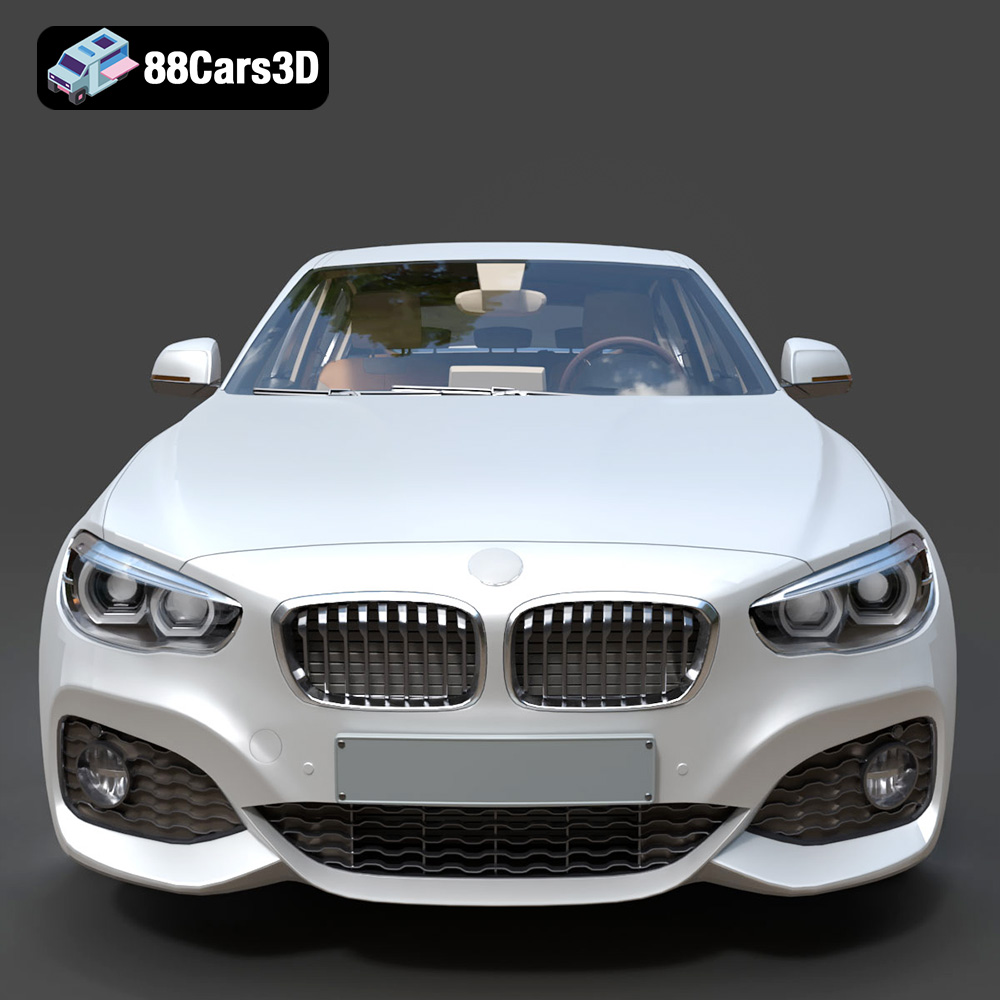
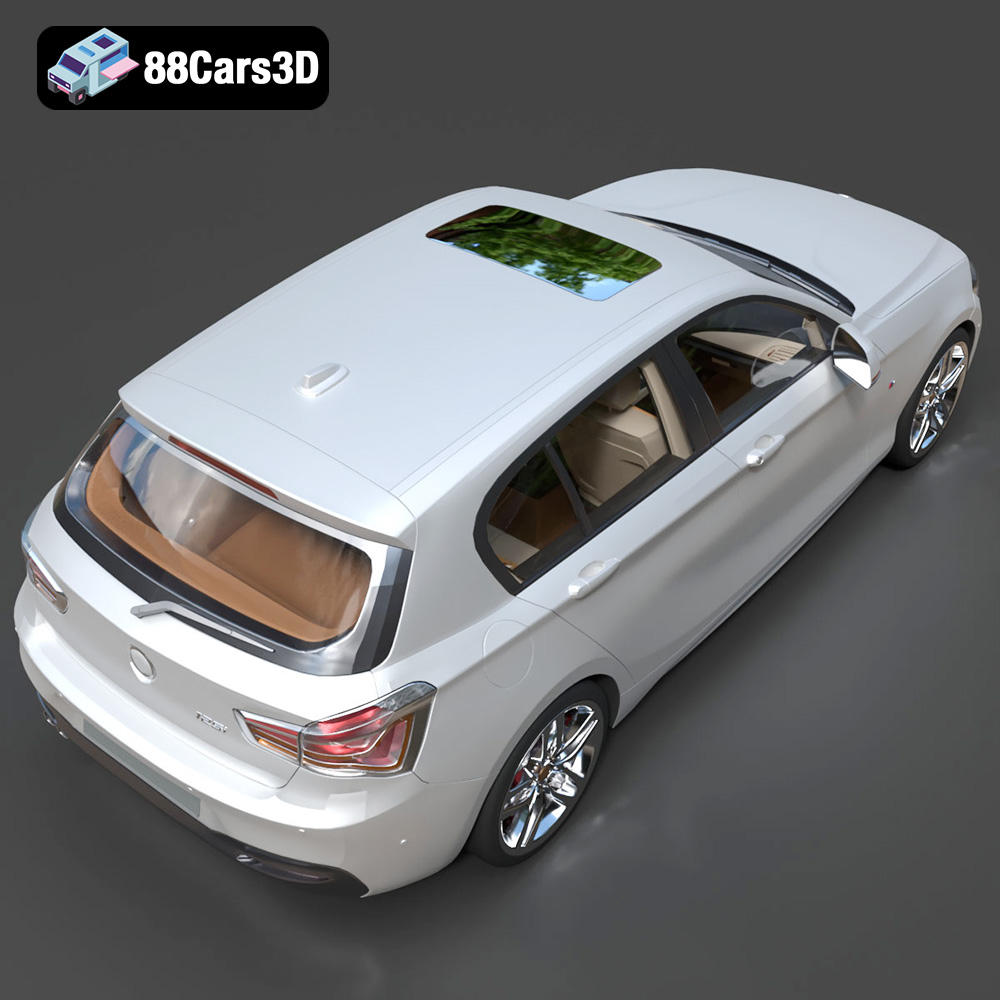
This 3D model accurately reflects the modernized 2016 aesthetic, including the sleeker LED headlight clusters, the wider signature BMW kidney grilles, the distinct L-shaped LED taillights that extend into the tailgate, and the refined bumper designs. Built with incredibly clean, quad-heavy topology (approx. 1.17 million triangles), it delivers exceptional visual fidelity for photorealistic close-up rendering, high-end architectural visualization, and automotive animations.
Perfect for populating modern European street scenes, upscale urban architectural renders, commercial automotive pitches, and cinematic background traffic.
Exterior Features:
• Accurate 2016 (F20 LCI) 5-door hatchback proportions and body geometry
• Distinctive modernized BMW kidney grilles and lower air intakes
• Highly detailed LED headlight housings and signature L-shaped taillights
• Precise panel gaps, door handles, and aerodynamic character lines
• Detailed factory alloy wheels wrapped in realistic rubber tires
• Separate wheels, steering components, and doors for rigging and animation
Interior Features:
• Authentic premium driver-focused cabin layout
• Detailed dashboard featuring the iDrive infotainment display
• Sporty multi-function steering wheel and center console geometry
• Realistic seating with accurate stitching and contour mapping
• Optimized geometry suitable for high-resolution interior close-up renders
Technical Specifications & Advantages:
• Vertices: 849,804
• Edges: 1,985,377
• Faces / Polygons: 1,178,498
• Triangles: 1,178,498
• Clean Topology: As seen in the wireframe, the model boasts a highly organized, smooth-flowing mesh structure that subdivides perfectly for extreme close-ups.
• Real-world scale accuracy based on BMW factory dimensions
• Proper pivot setup for steering and wheel rotation
• Compatible with major 3D software platforms and rendering engines (V-Ray, Corona, Arnold)
Applications:
• Rendering & Visualization: The absolute perfect vehicle for high-end architectural visualization (ArchViz), adding a touch of premium European realism to driveways and city streets.
• Cinematic Production: Excellent as a hero or high-detail background vehicle in commercial and film projects.
• Game Development / AR / VR: Note: At 1.17M triangles, it is highly detailed. It can be used as a hero asset in Unreal Engine 5 (Nanite), but will require LODs or decimation for standard mobile or optimized VR use.
• 3D Printing: Great base for custom 1:24 or 1:43 scale RC bodies or display models.
3D Print Setting:
• Recommended scale: 1:24 / 1:32 / 1:43
• Layer height: 0.04–0.12 mm (Resin printing recommended for the intricate grille and wheel spokes)
• Wall thickness: 1.2–2.0 mm
• Infill: 15–25%
• Supports: Required for side mirrors, wheel arches, and exhaust tips
• Print orientation: Body printed angled for a smooth surface finish; wheels printed separately
• Post-processing: Sanding, primer, classic BMW paint finishes (Alpine White, Black Sapphire, or Estoril Blue), and gloss clear coat
Customization Options:
• Change exterior paint colors to match factory BMW specifications
• Apply M-Sport or Shadowline textures (e.g., blacking out the chrome kidney grilles and window trim)
• Modify the wheel setup (swap standard alloys for aggressive M-Performance wheels)
• Adapt lighting for realistic daylight HDRIs or moody, rain-slicked night scenes
Included File Formats:
.blend, .fbx, .obj, .glb, .stl, .ply, .unreal, .max
Title Tag:
BMW 1 Series 5-Door 2016 High-Poly 3D Model
Meta Description:
Texture: Yes | Material: Yes
Download the highly detailed BMW 1 Series 5-Door (2016) 3D Model (1.17M Triangles). Features the clean F20 LCI facelift styling, iconic kidney grilles, and a detailed interior. Perfect for architectural visualization, rendering, and Unreal Engine. Includes .blend, .fbx, .obj, .glb, .stl, and .max formats.
Tags:
bmw, 1-series, f20, 2016-bmw, hatchback, premium-compact, high-poly, car-3d-model, archviz, automotive, rendering, 3d-printing, blend, fbx, obj, stl3D Print Setting: • Recommended scale: 1:24 / 1:32 / 1:43 • Layer height: 0.04–0.12 mm (Resin printing recommended for the smaller scale details like the Thor’s Hammer headlights) • Wall thickness: 1.2–2.0 mm • Infill: 15–25% • Supports: Required for side mirrors, wheel arches, and the subtle rear roof spoiler • Print orientation: Body printed angled for a smooth surface finish; wheels printed separately • Post-processing: Sanding, primer, and modern Volvo factory colors (like Sage Green, Glacier Silver, or Crystal White) paired with a gloss black roof.3D Printing, STL, 3D Printable, Miniature Car, Scale Model, FDM Ready, Resin Print, SLA, Digital Manufacture, Car Prototype, Automotive Collectible, 3D Print Model, Physical Asset, Tabletop Display, Manifold Geometry.
$45
.archviz
.automotive
.blend
.bmw
.fbx
.hatchback
.obj
.rendering
.stl
1-series
2016-bmw
3d printing
car-3d-model
f20
high poly
premium-compact