⚡ FLASH SALE: Get 60% OFF All Premium 3D & STL Models! ⚡

In the dynamic realm of 3D visualization, automotive design, and interactive experiences, the demand for exceptionally detailed and versatile 3D car models is constant. Whether you’re a seasoned game developer crafting the next-generation racing simulator, an architect integrating vehicles into a photorealistic rendering, or a marketing agency creating stunning promotional content, the quality of your digital assets directly impacts the final output. This is where precision-engineered 3D models become indispensable tools, bridging the gap between imagination and a compelling visual reality.
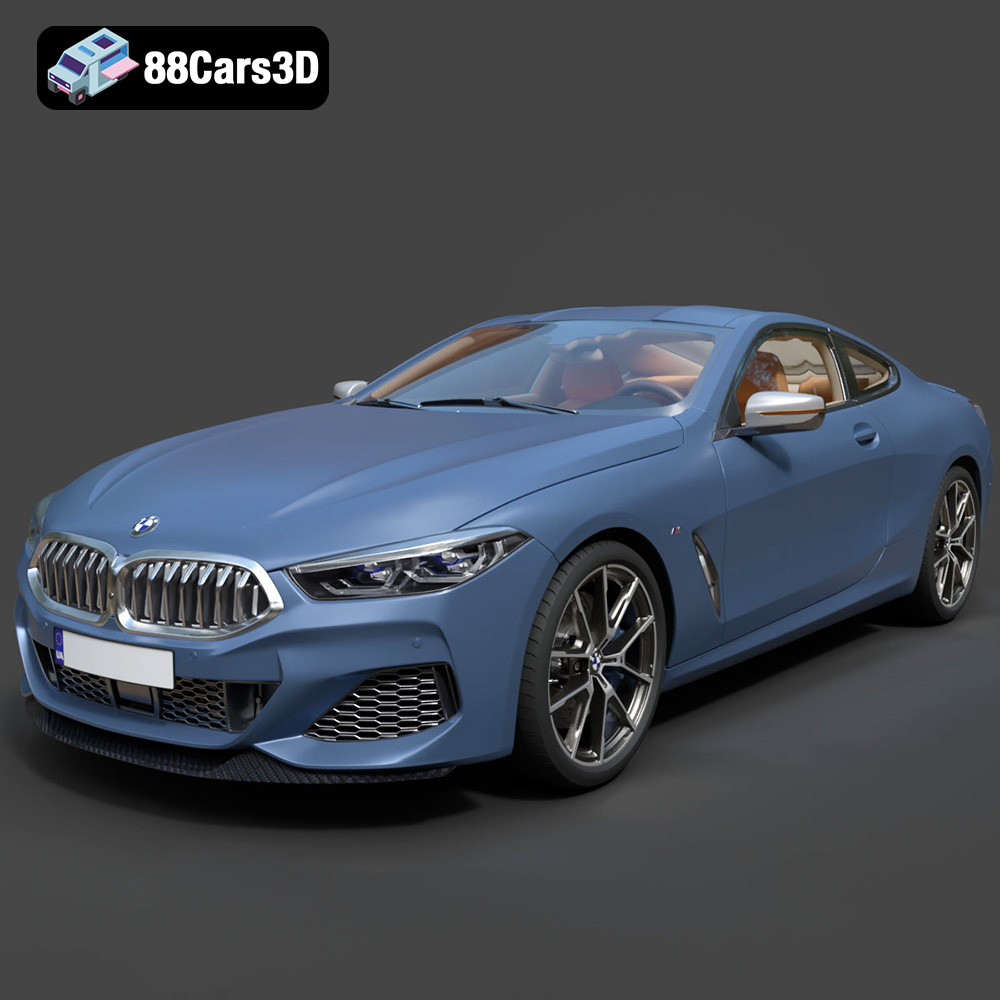
Today, we’re diving deep into the technical prowess and creative potential offered by one such remarkable asset: the BMW 8-Series Mk2 G15 Coupe M850i 2019 3D Model. This high-detail digital recreation captures the essence of BMW’s luxury grand tourer, a vehicle that masterfully blends aggressive performance styling with executive-level refinement. From its powerful V8 configuration to its sculpted aerodynamic bodywork and advanced digital interior technology, every aspect of the G15 generation M850i has been meticulously translated into a 3D asset ready for the most demanding professional applications. This model, available at 88cars3d.com, is not just a digital representation; it’s a foundation for innovation across various creative pipelines.
Creating a high-quality 3D car model is far more than simply extruding shapes. It’s an intricate dance between artistic interpretation and technical precision, requiring a deep understanding of automotive design principles, manufacturing processes, and the nuances of digital geometry. The BMW 8-Series Mk2 G15 Coupe M850i 2019 presents a particular challenge and opportunity for 3D artists, given its sophisticated lines and intricate details.
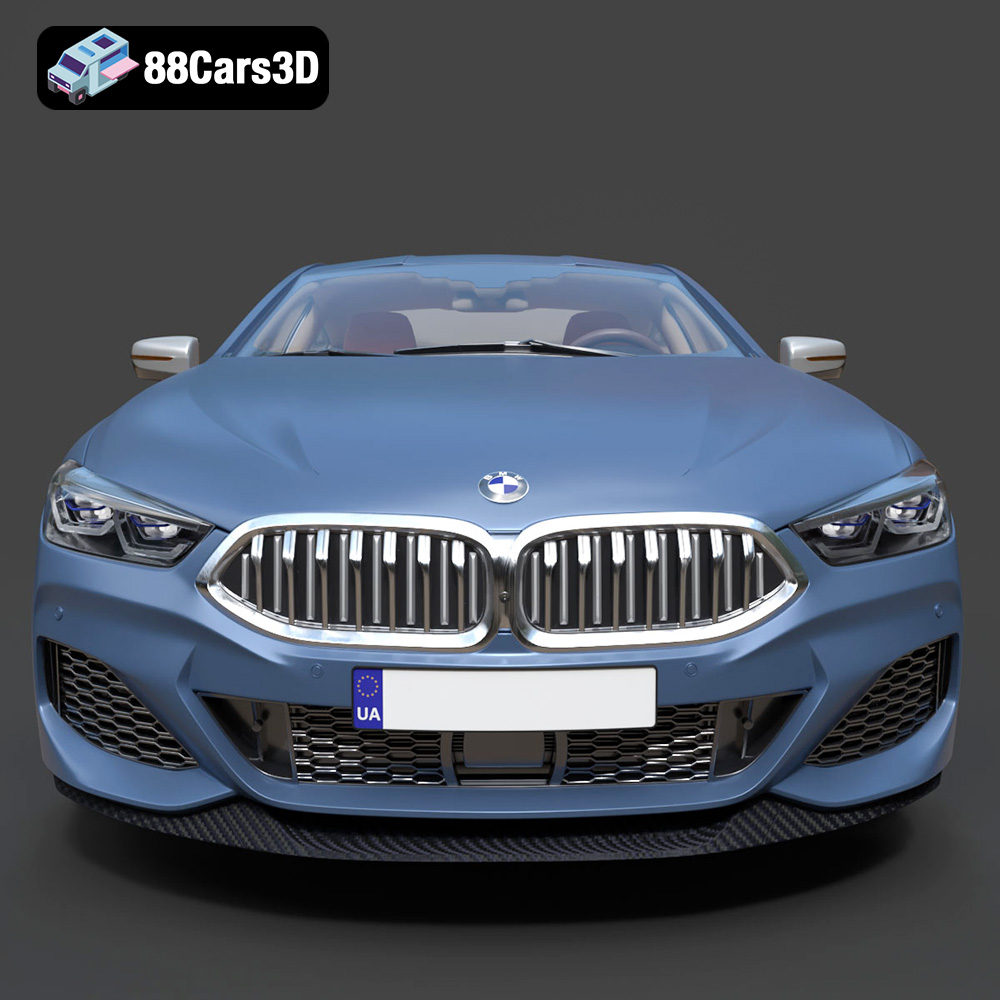
The journey of a luxury vehicle like the M850i from concept to digital model often begins with CAD (Computer-Aided Design) data, which provides engineers with exact specifications and surfaces. For 3D artists, this forms the blueprint for reconstructing the vehicle with impeccable accuracy. The BMW 8-Series Mk2 G15 Coupe M850i 2019 3D Model exemplifies this fidelity. It accurately represents the wide kidney grille – a hallmark of modern BMW design – the sharp LED headlight signature, the aerodynamic front bumper, and the muscular side profile. Every curve, panel gap, and ventilation detail is considered, ensuring that the final mesh reflects the designer’s original intent.
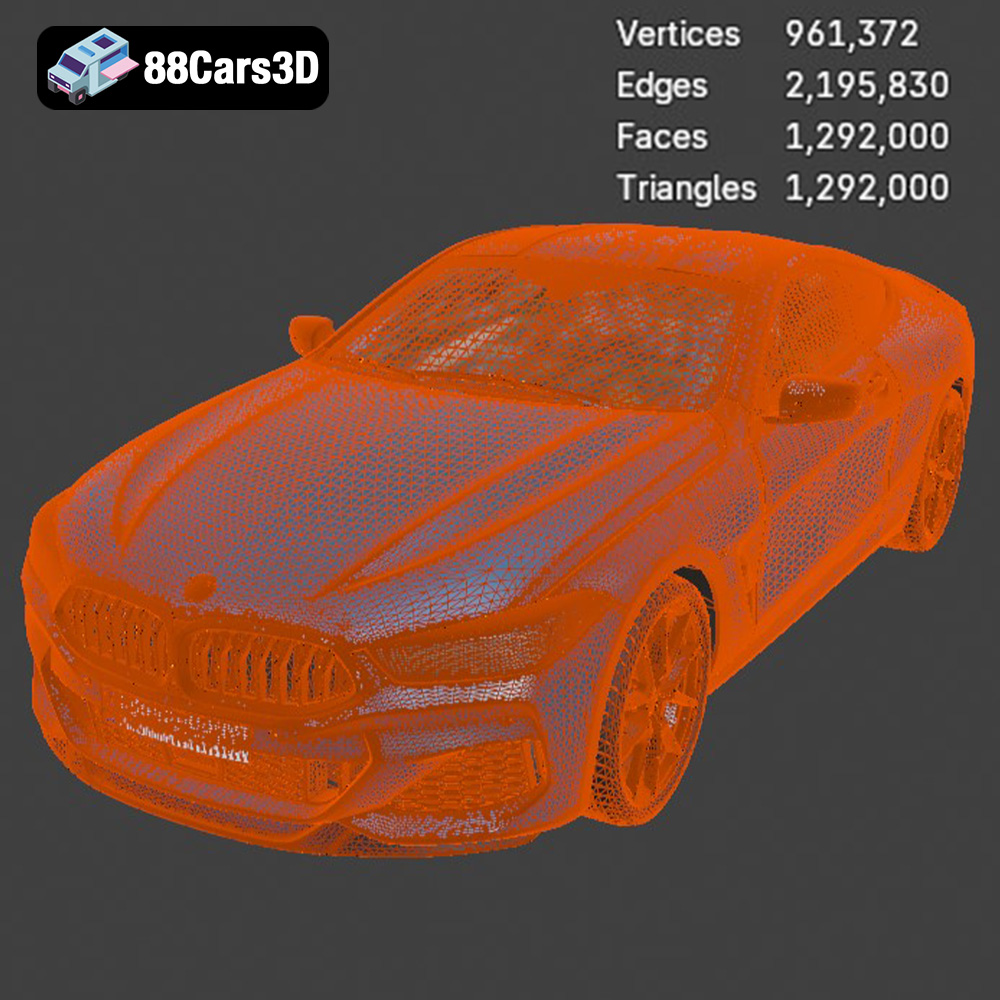
This attention to accurate G15 M850i 2019 body proportions, combined with clean and well-organized mesh structures, is crucial. It ensures that the model not only looks correct from every angle but also behaves predictably under various lighting conditions and in different rendering engines. A truly professional 3D car model like this one boasts optimized polygon flow, allowing for smooth subdivision in high-resolution renders while remaining efficient enough for real-time applications where poly count is a critical performance factor.
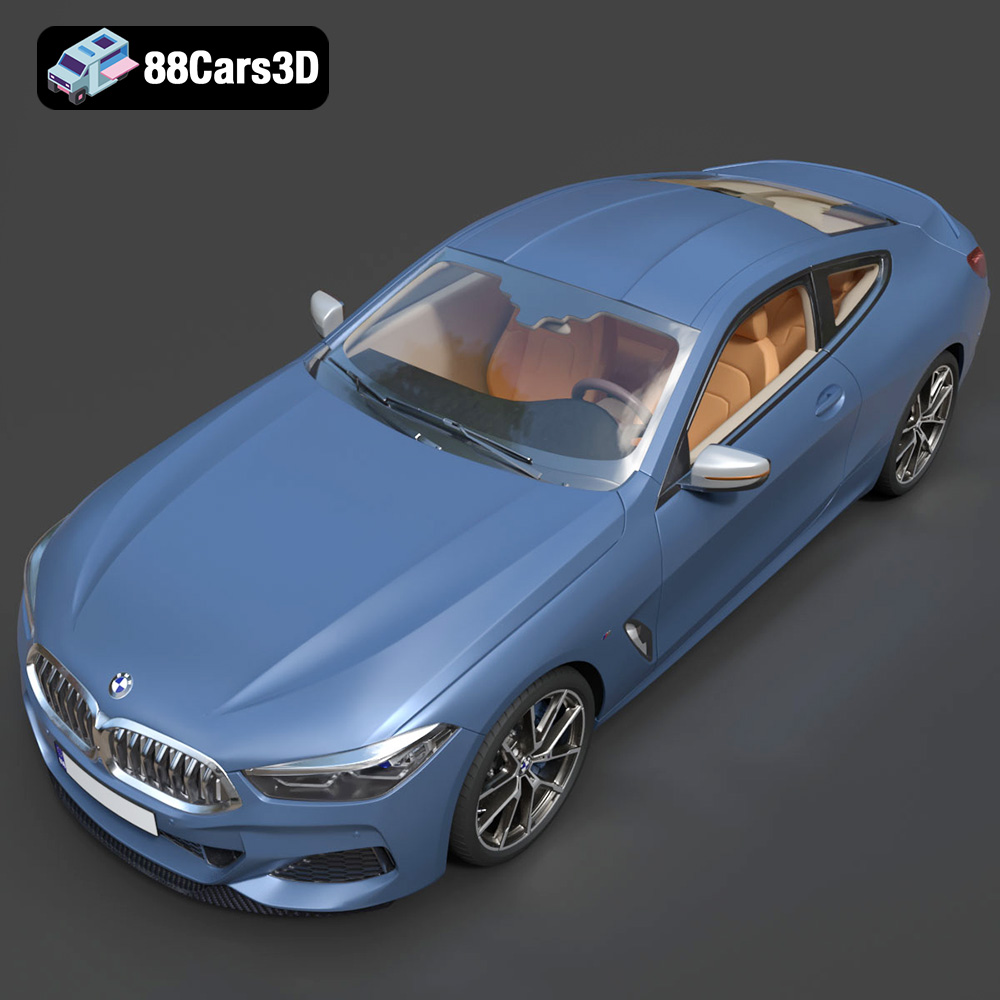
Beyond the exterior, the interior of a luxury vehicle demands equal scrutiny. The digital instrument cluster, the sport steering wheel with its multifunction controls, premium leather seat geometry with stitching detail, and the center console with its infotainment system – all these elements contribute to the M850i’s executive-level refinement. A high-quality 3D model like the one we’re discussing will meticulously replicate these features, providing artists with a complete, immersive environment. Transparent glass materials and mirror detailing further enhance realism, making it suitable for even the closest camera shots in a cinematic automotive project.
Real-world scale accuracy is another non-negotiable aspect. This ensures that the model integrates seamlessly into scenes without requiring tedious scaling adjustments, maintaining correct proportions relative to other elements in a virtual environment. For animators, the separate wheels and steering components, coupled with proper pivot setup for steering and wheel rotation, mean that the vehicle is animation-ready right out of the box, streamlining production workflows.
The versatility of a 3D car model, particularly one as detailed as the BMW 8-Series Mk2 G15 Coupe M850i 2019 3D Model, is significantly enhanced by its availability in multiple file formats. Each format serves specific purposes, catering to different software, engines, and end-use applications. Understanding these formats is crucial for any professional working with 3D assets.
When you acquire a premium 3D asset from a marketplace like 88cars3d.com, you often receive a package containing several formats. This ensures maximum compatibility and flexibility, allowing artists and developers to integrate the model into their preferred ecosystem without complex conversions that can sometimes compromise data integrity or material fidelity. For instance, the BMW M850i model comes with a comprehensive suite of formats, each optimized for different stages of the 3D pipeline.
The availability of such a diverse range of formats for the BMW M850i 3D Model underscores its professional-grade quality and adaptability, making it a truly valuable asset for any studio or individual.
The true value of a meticulously crafted 3D model lies in its seamless integration into various professional pipelines. The BMW 8-Series Mk2 G15 Coupe M850i 2019 3D Model is designed with this versatility in mind, empowering creators across different industries.
For studios specializing in luxury automotive marketing, high-end advertising visuals, and showroom presentations, photorealistic rendering is paramount. The M850i model, especially with its .max and .blend formats, provides an exceptional foundation.
The journey from high-poly rendering to optimized real-time experience requires different considerations, and the BMW M850i model is built to excel in both. Its .fbx and specific “.unreal” formats are tailored for real-time environments.
Underneath the stunning visual surface of the BMW 8-Series Mk2 G15 Coupe M850i 2019 3D Model lies a foundation of meticulous technical execution. This attention to detail is what separates a generic 3D asset from a professional-grade tool ready for prime-time projects.
A “clean and well-organized mesh structure” is the backbone of any good 3D model. For the M850i, this means a predominantly quad-based topology, ensuring smooth deformations and subdivisions. Poor topology can lead to artifacts, pinching, or unnatural shading, especially on a vehicle with such complex curves and reflective surfaces. The optimized polygon flow is crucial for both high-fidelity renders where subdivision surfaces are used, and for real-time applications where a lower, but still aesthetically pleasing, poly count is needed.
Equally important are the UVs (unwrap coordinates) and PBR (Physically Based Rendering) materials. Proper UV mapping ensures that textures are applied without stretching or distortion, allowing for realistic paint, carbon fiber, leather, and metal details. PBR materials, using maps like Albedo (base color), Normal (for surface detail), Roughness (for micro-surface variations affecting reflections), Metallic (for metallic properties), and Ambient Occlusion (for subtle contact shadows), accurately simulate how light interacts with different surfaces. The M850i model’s premium interior, for instance, benefits from PBR leather seat geometry with stitching detail, giving it an authentic look and feel under any lighting condition.
The product description highlights “separate wheels and steering components for animation” and “proper pivot setup for steering and wheel rotation.” These are critical technical advantages for anyone looking to animate the vehicle. Correct pivot points mean that a wheel rotates around its true axis, and the steering wheel turns realistically, without complex rigging workarounds. This significantly reduces setup time for animators, allowing them to focus on vehicle dynamics and camera work rather than fixing underlying asset issues.
Furthermore, “optimized geometry for real-time engines and high-quality renders” speaks to the scalability of the asset. This implies that the model has likely been structured with varying levels of detail (LODs) in mind, or at least provides a clean base mesh that can be easily optimized for lower poly counts without losing its essential form. This is crucial for applications ranging from high-end cinematic sequences to mobile AR experiences, where computational resources vary drastically. The ability to customize exterior colors, trim accents, and lighting configurations further showcases its adaptability, allowing creators to stamp their unique vision onto the base model.
While digital visualization is a powerful medium, the desire to hold a physical representation of such an iconic car remains strong. The inclusion of an .stl format for the BMW 8-Series Mk2 G15 Coupe M850i 2019 3D Model caters directly to this, enabling enthusiasts and professionals to bring this digital masterpiece into the tangible world through 3D printing.
3D printing allows for the creation of collectible scale luxury coupe models and display miniatures, transforming a virtual asset into a physical artifact. The detailed nature of the M850i model, with its accurate body proportions, detailed large kidney grille, realistic LED headlight and taillight designs, and high-detail performance alloy wheels, translates beautifully to a physical print. However, successful 3D printing requires specific considerations that go beyond digital rendering.
The model’s robust, manifold geometry (a characteristic of well-prepared .stl files) is essential for successful 3D printing. It ensures that the mesh is watertight, without any gaps or intersecting faces, which are common issues that can cause print failures. The recommendation for various scales (1:32 / 1:24 / 1:18 / 1:14) provides flexibility, allowing users to choose between a smaller, more delicate model and a larger, more impactful display piece. The suggested layer height (0.10–0.16 mm for FDM, or even finer like 0.04-0.12mm for resin printing at smaller scales, especially for intricate details like headlights) indicates a focus on capturing fine details, minimizing visible layer lines, and achieving a smooth surface quality that does justice to the M850i’s premium finish.
Achieving a high-quality physical model requires careful adherence to recommended 3D print settings. Wall thickness (1.5–2.5 mm) and infill (15–25%) are specified to ensure structural integrity without excessive material usage. Supports are explicitly recommended for complex overhangs like mirrors, splitter edges, and diffuser fins, which are common challenges in printing detailed automotive models. Print orientation, such as printing the body angled for smooth surface quality and printing wheels separately, is a crucial tip for optimizing print success and surface finish.
Finally, post-processing is where the model truly comes to life. Steps like sanding, priming, and applying a gloss automotive paint finish are vital for achieving a showroom-quality look. Optional chrome detailing can further enhance realism, making the miniature look indistinguishable from a factory-fresh M850i. This holistic approach, from digital asset to physical model, exemplifies the versatility and comprehensive utility of the BMW 8-Series Mk2 G15 Coupe M850i 2019 3D Model available at 88cars3d.com.
In the fast-evolving landscape of 3D content creation, a truly valuable asset is one that not only looks great but also offers significant room for customization and long-term utility. The BMW 8-Series Mk2 G15 Coupe M850i 2019 3D Model is engineered with this foresight, providing artists and developers with a powerful foundation for endless creative possibilities.
The ability to customize a 3D model is crucial for tailored projects. This BMW M850i model provides extensive customization options, allowing you to:
These options provide more than just aesthetic changes; they offer creative freedom to adapt the model to diverse project demands, from showcasing different trim levels in an interactive configurator to creating unique vehicles for a virtual world.
Investing in a high-quality 3D car model like the BMW M850i is an investment in future-proof content. Its clean topology, real-world scale accuracy, and broad compatibility with major 3D software platforms and engines ensure that it remains a relevant and usable asset for years to come. As rendering technologies advance, or as new AR/VR platforms emerge, a well-constructed base model can be easily updated or optimized to leverage new features without needing to be rebuilt from scratch.
The technical advantages, such as optimized polygon flow and proper pivot setups, mean less time spent on technical corrections and more time dedicated to creative endeavors. This efficiency translates directly into cost savings and faster project turnaround times, making premium assets from platforms like 88cars3d.com a wise choice for any professional seeking both quality and long-term value in their 3D car models and game assets.
The realm of 3D modeling continues to push the boundaries of visual realism and interactive experiences. At the heart of this innovation are meticulously crafted assets like the BMW 8-Series Mk2 G15 Coupe M850i 2019 3D Model. We’ve explored how this exceptional digital recreation captures the luxury and performance DNA of the real vehicle, offering unparalleled detail from its aggressive exterior styling to its premium interior cockpit.
We’ve delved into the critical role of diverse file formats—from .blend and .max for native software excellence, to .fbx and .unreal for seamless game development and real-time engines, and even .stl for tangible 3D prints. This versatility ensures that whether your project involves high-fidelity automotive rendering, dynamic game environments, immersive AR/VR showrooms, or collectible miniatures, this model is ready to integrate effortlessly into your workflow. Its technical advantages, including clean topology, real-world scale, animation-ready components, and optimized geometry, underscore its professional-grade quality and adaptability.
Ultimately, a premium 3D car model like the BMW M850i is more than just a collection of polygons and textures; it’s a powerful creative catalyst. It saves invaluable production time, opens doors to sophisticated visualization and interaction, and empowers artists and developers to realize their most ambitious projects. For those seeking top-tier 3D car models and game assets, the BMW 8-Series Mk2 G15 Coupe M850i 2019 3D Model, available at 88cars3d.com, stands as a testament to precision, detail, and unparalleled utility in the digital automotive space.
The BMW 8-Series Mk2 G15 Coupe M850i 2019 3D Model is a high-detail digital recreation of the luxury grand tourer that blends aggressive performance styling with executive-level refinement. The G15 generation M850i features a powerful V8 configuration, sculpted aerodynamic bodywork, and advanced digital interior technology. This 3D model accurately represents the wide kidney grille, sharp LED headlight signature, aerodynamic front bumper, muscular side profile, quad exhaust system, performance alloy wheels, and premium cockpit layout. Built with clean topology and real-world scale accuracy, it is ideal for rendering, animation, automotive visualization, game development, and AR/VR showroom applications. Perfect for luxury showroom scenes, urban night renders, cinematic automotive projects, promotional campaigns, and high-performance driving simulations.
$59.99
.8series
.arvr
.automotive
.blend
.bmw
.car3dmodel
.fbx
.g15
.gameasset
.glb
.luxurycoupe
.m850i
.max
.obj
.ply
.rendering
.simulation
.sportsCar
.stl
.unreal