⚡ FLASH SALE: Get 60% OFF All Premium 3D & STL Models! ⚡

In the fast-evolving landscape of digital content creation, the demand for high-fidelity 3D models is insatiable. From photorealistic automotive rendering to immersive game assets and innovative AR/VR experiences, the quality of a 3D model underpins the success of any visual project. Achieving this level of detail and technical precision requires not only artistic skill but also a deep understanding of engineering principles and software specificities. It’s about more than just replicating a form; it’s about capturing the essence, the engineering, and the spirit of a machine.
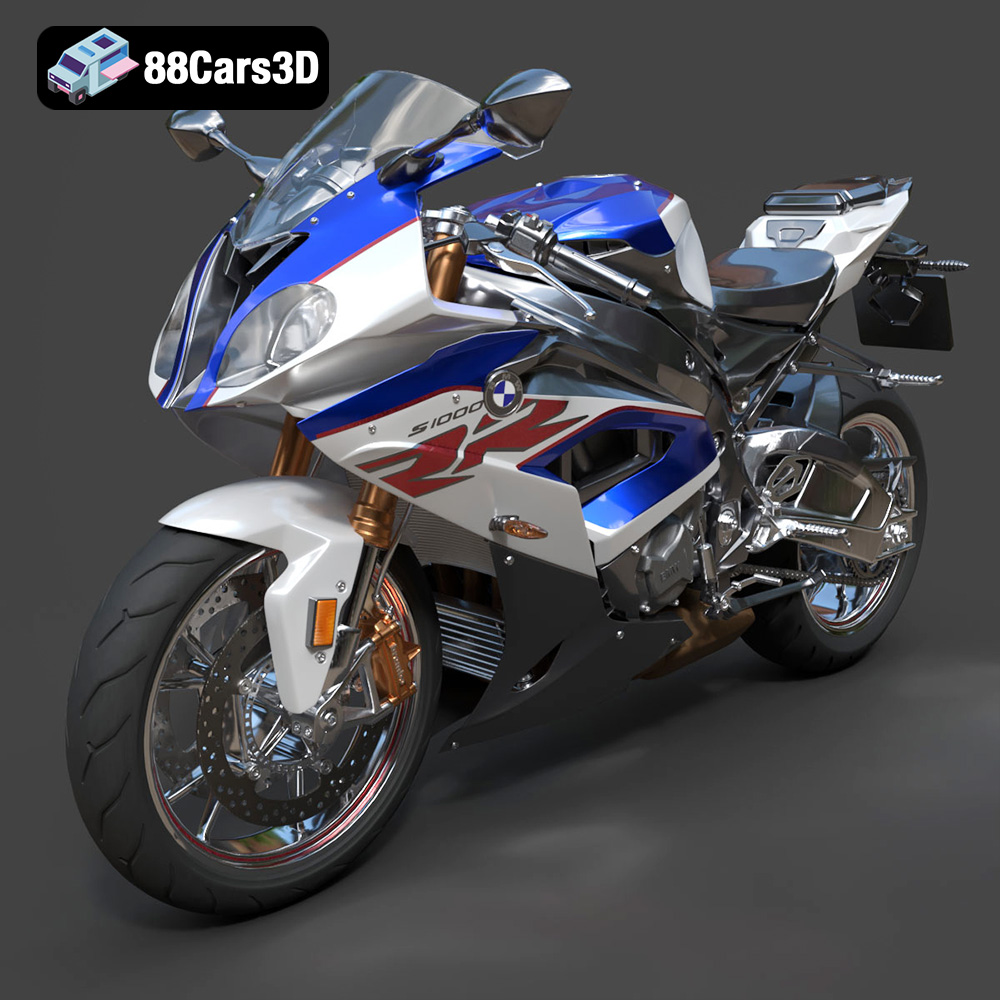
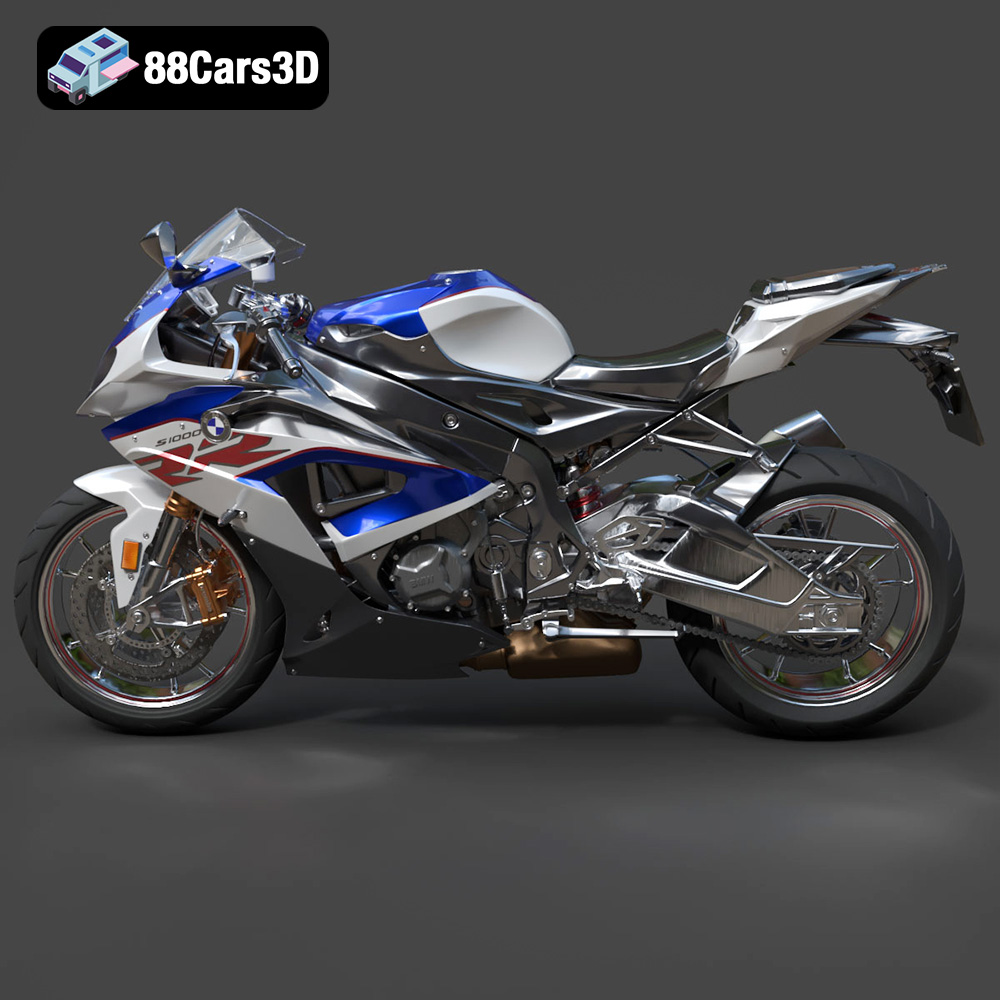
Consider the BMW S 1000 RR 2018, an icon of German superbike engineering. Its aggressive aerodynamics, powerful inline-four engine, and advanced electronic systems demand nothing less than an equally precise digital representation. A high-quality 3D model of such a vehicle, like the BMW S 1000 RR 2018 3D Model available at 88cars3d.com, serves as a cornerstone for professionals across various industries. It provides a foundation that saves countless hours of modeling work, allowing artists and developers to focus on scene creation, animation, and interaction. This digital asset is not merely a static object; it is a versatile tool designed to integrate seamlessly into diverse creative pipelines, offering meticulous detail suitable for everything from cinematic productions to functional 3D prints.
The ubiquity of 3D content has fundamentally changed how products are visualized, games are developed, and stories are told. For the automotive sector, 3D models are indispensable. They enable manufacturers to prototype designs digitally, create compelling marketing materials before physical production, and even train technicians. In entertainment, these models populate virtual worlds, bringing vehicles to life with stunning realism. This expansive utility means that a well-crafted 3D model isn’t just an expense; it’s a strategic investment, driving efficiency and elevating the final output.
The difference between an amateur model and a professional-grade asset often lies in the meticulous attention to detail. This includes accurate proportions, clean topology, proper pivot points for animation, and realistic material definitions. When it comes to something as intricate as a superbike, every curve, vent, and component needs to be faithfully recreated. For the BMW S 1000 RR 2018 3D Model, this means capturing the asymmetrical headlight styling, the sculpted fuel tank, the exposed frame elements, and the high-performance braking system, ensuring that it stands up to close-up renders and dynamic animations alike.
Navigating the world of 3D content creation requires a solid grasp of the various file formats available. Each format serves specific purposes, offering unique advantages for different workflows, software compatibility, and end-use applications. Choosing the correct format is crucial for maintaining model integrity, optimizing performance, and ensuring a smooth transition between different stages of a project. The BMW S 1000 RR 2018 3D Model, for instance, comes in a comprehensive suite of formats, catering to virtually every professional need.
The .blend format is the native file type for Blender, the powerful open-source 3D creation suite. A .blend file offers a complete package, containing not only the mesh geometry but also materials, textures, lighting setups, animation data, camera information, and even scene layouts. For artists primarily working within Blender, this format provides the highest degree of editability and flexibility. You can open it, inspect every component, modify topology, adjust materials, or re-rig for custom animations without any loss of data that might occur during format conversions. It’s the ideal choice for deep customization and leveraging Blender’s robust toolset for rendering or game asset preparation.
As Autodesk’s proprietary format, .fbx has become an industry-standard for 3D model exchange, especially in game development and animation pipelines. Its strength lies in its ability to store not just geometry, but also animation, rigging, blend shapes, lights, and cameras in a single file. This makes it incredibly versatile for transferring assets between different software packages like Maya, 3ds Max, Unity, and Unreal Engine. When you need to move a 3D car model or motorcycle asset from a modeling program to a real-time engine, .fbx is often the most reliable choice, preserving essential data like pivot points and hierarchical structures necessary for animation and interaction.
The .obj (or Wavefront OBJ) format is one of the oldest and most universally supported 3D file formats. It primarily stores geometry (vertices, normals, texture coordinates, and faces) and can link to external material definition files (.mtl) for basic material properties. While it doesn’t support animation or rigging, its simplicity and widespread compatibility make it an excellent choice for straightforward mesh transfer between virtually any 3D software. If you need a clean mesh that you can then re-materialize or re-rig in your preferred environment, .obj is a reliable foundation.
.glb (GL Transmission Format Binary) is the binary version of glTF, a royalty-free specification for the efficient transmission and loading of 3D scenes and models by engines and applications. Designed for maximum efficiency, .glb files embed all assets (geometry, textures, animations) into a single, compact file, making them perfect for AR/VR applications, web-based 3D viewers, and other real-time experiences where quick loading and small file sizes are paramount. For showcasing a 3D car model directly in a browser or deploying it to a mobile AR app, .glb offers unparalleled performance.
The .stl (Stereolithography) format is the de facto standard for 3D printing. It represents a 3D model as a series of connected triangles (a tessellation of the surface) and defines only the surface geometry of a 3D object without any color, texture, or material information. While it may seem simple, this format is precisely what 3D printers need to understand the shape they are meant to create layer by layer. For turning the BMW S 1000 RR 2018 3D Model into a physical collectible, .stl is the indispensable format, ensuring manifold geometry suitable for additive manufacturing.
.ply (Polygon File Format or Stanford Triangle Format) is another format for storing 3D data, particularly useful for scanned data and models with complex mesh properties. It can store various types of information, including color, transparency, normals, texture coordinates, and even reliability information for each vertex and face. While less common for everyday artistic exchange than .fbx or .obj, .ply is excellent for scientific visualization, CAD applications, and situations where precise mesh data and associated attributes are critical.
The .unreal format, typically implying an asset specifically optimized and configured for the Unreal Engine, represents a powerful advantage for game developers. While not a standalone file extension in the same way .fbx is (Unreal often imports .fbx and converts it internally), receiving an “Unreal-ready” asset means it has likely undergone proper scaling, material setup (often with basic PBR shaders), and collision mesh generation suitable for direct import into an Unreal project. This significantly accelerates development time for assets like high-quality 3D car models or motorcycles, minimizing the need for manual setup within the engine.
Similar to .blend for Blender, the .max format is the native file type for Autodesk 3ds Max. It encapsulates an entire 3ds Max scene, including geometry, materials, textures, lighting, cameras, animation, and scene organization. For artists working in a 3ds Max pipeline, the .max file provides complete creative control, allowing for full editing, complex rigging, advanced rendering setups with V-Ray or Corona, and seamless integration with other Autodesk products. It’s perfect for detailed architectural visualization and cinematic automotive rendering projects.
The BMW S 1000 RR 2018 3D Model stands as a testament to meticulous digital craftsmanship, bringing the iconic superbike to life in stunning detail. This is not just a general motorcycle model; it’s a specific, year-accurate recreation, ensuring authenticity for projects that demand historical or model-specific accuracy. From its aggressive stance to the intricate engineering visible on its frame, every aspect of the real-world machine has been considered and replicated.
The model accurately captures the distinctive 2018 BMW S 1000 RR body proportions, including its aggressive aerodynamic fairing design and the immediately recognizable asymmetrical headlight configuration that defined this generation. Details like the clear racing windscreen, the sculpted fuel tank with sport ergonomics, and the aerodynamic seat and tail section geometry are all faithfully reproduced. This level of accuracy is critical for high-end rendering and visualization, where even minor discrepancies can break immersion or detract from the photorealism of a scene.
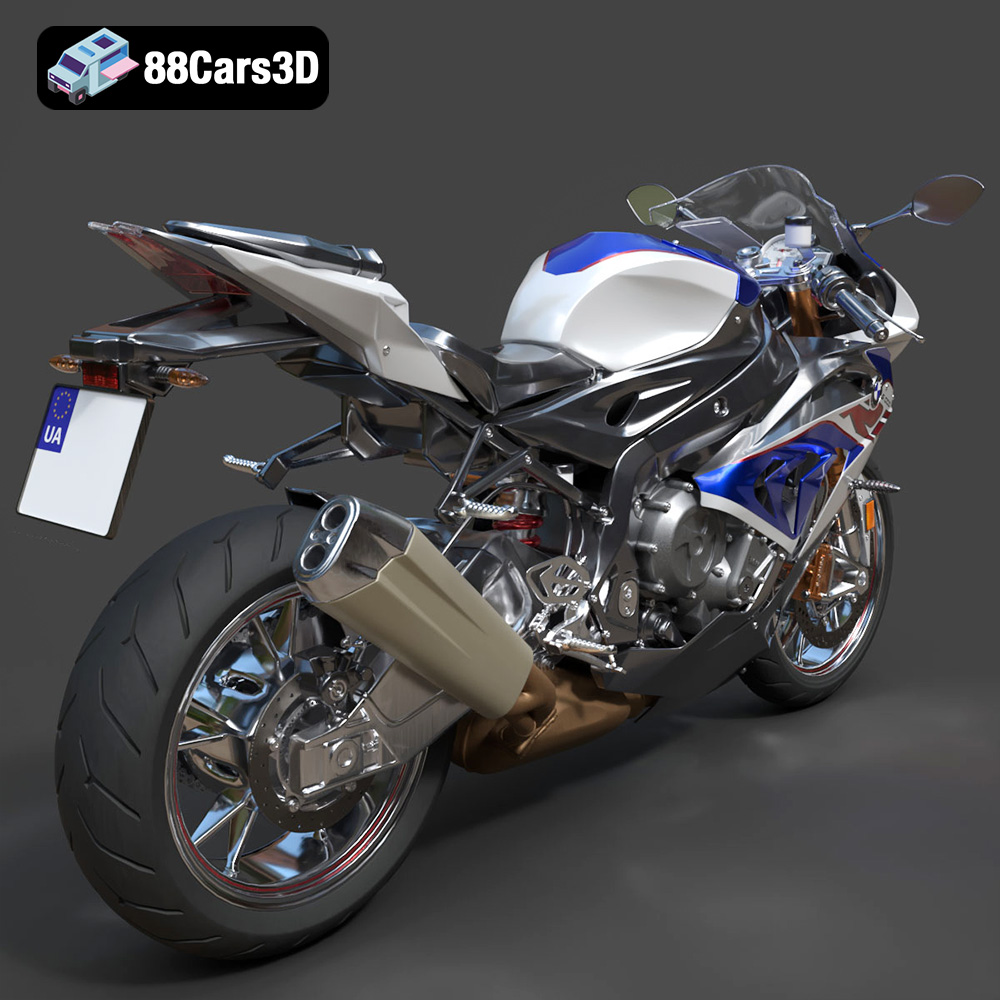
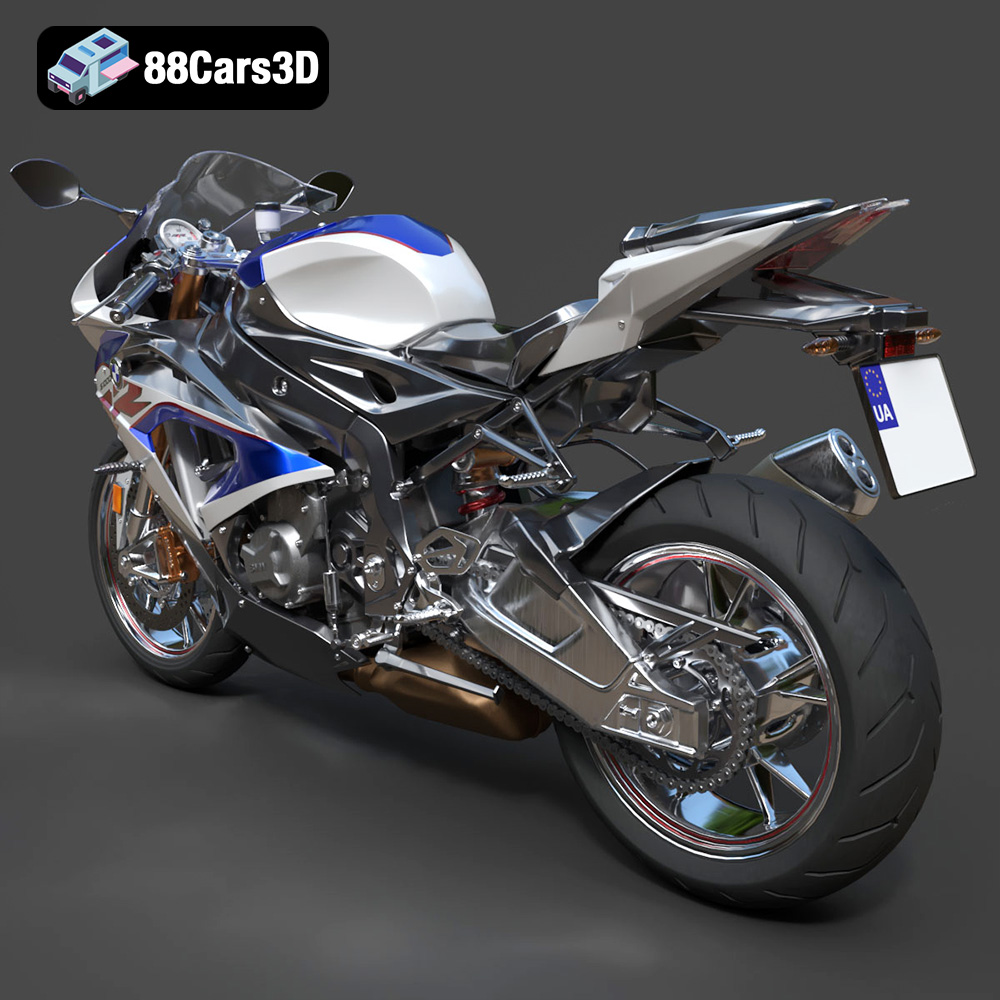
Beyond the surface, the model delves into the motorcycle’s underlying structure. It features a detailed inline-four engine and frame structure, which are often overlooked in less detailed models but are essential for close-up shots or even cutaway views. The high-performance brake disc and caliper modeling, along with the rear mono-shock suspension and swingarm assembly, are not just aesthetic additions but are structured for potential animation and realistic mechanical articulation, emphasizing the ‘performance’ aspect of this superbike.
The interior, or rather, the rider’s cockpit area, often defines the interactive experience in games or the focal point in detailed renders. The BMW S 1000 RR 2018 3D Model delivers here too, featuring a detailed instrument cluster, sport clip-on handlebar assembly, and precise brake and clutch lever detailing. The rear-set foot peg positioning, crucial for a sportbike’s ergonomics, is also accurately represented. This attention to internal detail ensures that the model is suitable for first-person perspectives in virtual reality or game simulations, providing a believable and immersive environment for the rider.
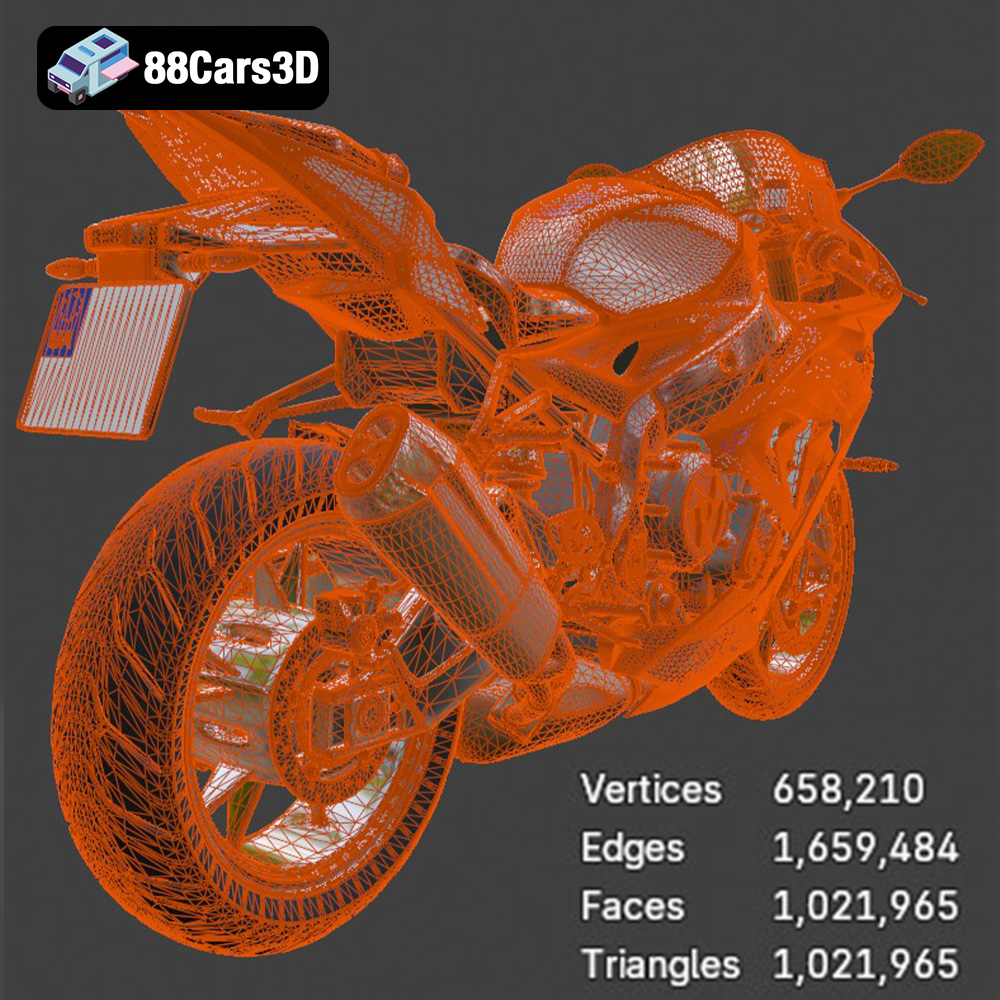
Underpinning the visual fidelity are crucial technical advantages: a clean and well-organized mesh structure, real-world scale accuracy, and proper pivot setups for steering and wheel rotation. The optimized polygon flow ensures a balance between performance and realism, making it versatile for various applications, from high-polygon cinematic renders to optimized game assets. These technical foundations make the model compatible with major 3D software platforms and game engines, ensuring that users can immediately integrate it into their existing pipelines without extensive cleanup or re-engineering.
High-quality 3D car models and motorcycle assets like the BMW S 1000 RR 2018 3D Model are designed to accelerate and enhance professional creative workflows. Whether you are an architectural visualizer needing a dynamic vehicle to populate a scene, a game developer crafting an immersive racing experience, or a marketing agency producing stunning product renders, this asset provides a robust starting point.
For artists focused on photorealistic rendering, the .max and .blend formats provide immediate access to a fully editable scene within their preferred software. In 3ds Max, artists can leverage advanced rendering engines like V-Ray or Corona to achieve breathtaking realism. The clean mesh and real-world scale of the BMW S 1000 RR 2018 3D Model allow for seamless application of PBR (Physically Based Rendering) materials, intricate lighting setups, and depth-of-field effects to create motorsport marketing visuals or high-end promotional campaigns. The separate wheels and steering components are pre-rigged with proper pivots, simplifying the process of setting up complex animations for dynamic shots.
Similarly, Blender users can exploit its powerful Cycles or Eevee renderers. The .blend file includes all necessary elements, enabling artists to quickly adjust materials, add environmental lighting, and compose cinematic scenes. Imagine this superbike racing through a meticulously crafted digital racetrack, the sun glinting off its fairings, or proudly displayed in a virtual showroom. The optimized mesh ensures that even with high-resolution texture maps, performance remains manageable during the rendering process, crucial for tight deadlines.
Game developers constantly seek assets that are not only visually impressive but also optimized for real-time performance. The BMW S 1000 RR 2018 3D Model’s availability in .fbx and “Unreal-ready” formats directly addresses this need. When importing into Unreal Engine or Unity, the optimized polygon flow ensures that the model maintains fidelity without excessively taxing the engine’s resources. The proper pivot setup for animated components like wheels and steering means developers can quickly integrate the model into a vehicle physics system, enabling realistic handling and dynamic gameplay. This model is perfect for racing games, motorcycle simulators, or as a hero vehicle in open-world environments, contributing to an authentic and engaging player experience.
The clean topology also facilitates the creation of Level of Detail (LOD) models, allowing the game engine to swap out lower-polygon versions of the bike when it’s further from the camera, further optimizing performance. This professional approach to asset creation is what distinguishes high-quality 3D car models and motorcycles from less prepared alternatives, saving valuable development time and resources.
The emerging fields of Augmented Reality (AR) and Virtual Reality (VR) demand highly optimized 3D assets for fluid, interactive experiences. The .glb format, specifically designed for web and real-time platforms, makes the BMW S 1000 RR 2018 3D Model an excellent candidate for these applications. Developers can utilize this model to create immersive racetrack simulations, allowing users to virtually sit on the superbike, inspect its details from any angle, or even experience a virtual test ride. For interactive superbike showcases or performance visualization in AR, the model’s detailed but efficient mesh ensures a smooth experience across various devices, pushing the boundaries of interactive digital content.
Beyond digital screens, 3D printing offers a tangible dimension to 3D models, allowing for physical manifestations of digital designs. The BMW S 1000 RR 2018 3D Model is not just for rendering; it is also designed to be 3D printable, making it an excellent candidate for creating collectible sportbike miniatures and display models. This bridge between the virtual and physical realms opens up new avenues for artists, hobbyists, and professionals alike.
The inclusion of the .stl format is crucial for 3D printing. As discussed, .stl defines the surface geometry, allowing slicing software to prepare the model for additive manufacturing. For the BMW S 1000 RR 2018 3D Model, this means the digital geometry is “manifold,” or watertight, a fundamental requirement for successful 3D prints. The model is prepared to be converted into .stl format for physical output, ensuring that all surfaces are properly closed and oriented, avoiding errors during the slicing process.
Achieving a high-quality 3D print requires careful consideration of print settings, especially for detailed models like the BMW S 1000 RR 2018. For scales like 1:18, 1:12, 1:10, or 1:8, a layer height of 0.08–0.16 mm is recommended to capture the intricate details of the fairings, engine, and cockpit. A wall thickness of 1.2–2.0 mm ensures structural integrity for the printed model, while an infill of 15–25% provides a good balance between strength and material usage. Due to the complex geometry of a superbike, supports will be required, particularly for overhangs in the fairings, exhaust, rear swingarm, and handlebar area, to prevent drooping and ensure accurate shape retention during printing.
Print orientation also plays a significant role in surface finish and detail preservation. Printing the main frame angled can help maintain maximum detail, while wheels are best printed separately to achieve cleaner, circular forms. After printing, post-processing steps such as sanding, priming, and applying a gloss sport paint finish (perhaps with optional racing decals) can elevate the miniature to a showroom-quality collectible, making it a proud display piece for any motorcycle enthusiast or collector of fine 3D car models.
One of the significant advantages of investing in a high-quality 3D model like the BMW S 1000 RR 2018 from 88cars3d.com is the inherent flexibility for customization. A well-constructed asset isn’t a rigid, one-time-use object; it’s a foundation upon which endless creative variations can be built, ensuring its relevance across multiple projects and future design trends.
The BMW S 1000 RR 2018 3D Model is designed with customization in mind. Artists can effortlessly change the body color and apply different racing liveries, transforming the bike’s aesthetic to suit various brand requirements or thematic concepts. Adjusting wheel and brake caliper colors allows for further personalization, matching brand palettes or creating unique, custom builds. Adding track number decals can quickly convert a stock model into a race-ready machine for a specific event or team. The ability to modify the exhaust finish, opting for a sleek titanium look or a high-tech carbon fiber appearance, adds another layer of realism and bespoke styling. For rendering professionals, configuring lighting for different scenarios—be it a sun-drenched racetrack or a dramatically lit showroom—can significantly alter the mood and impact of the final image, all facilitated by the model’s robust structure.
In the rapidly evolving world of 3D, investing in versatile 3D car models and motorcycle assets is a smart strategy. The availability of the BMW S 1000 RR 2018 3D Model in multiple industry-standard formats (.blend, .fbx, .obj, .glb, .stl, .ply, .unreal, .max) ensures its compatibility with current and future software versions and pipelines. This breadth of formats protects your investment, allowing you to use the model across different projects, software upgrades, and emerging technologies without being locked into a single ecosystem. As new rendering techniques or interactive experiences emerge, a well-structured, multi-format 3D model remains a valuable, adaptable resource.
For professionals seeking top-tier 3D car models and motorcycle assets, the source matters. 88cars3d.com positions itself as a premier online marketplace dedicated to providing high-quality digital vehicles that meet the rigorous demands of rendering, game development, AR/VR, and 3D printing. The BMW S 1000 RR 2018 3D Model exemplifies the standard of excellence you can expect.
The core philosophy at 88cars3d.com revolves around delivering models that are not just visually appealing but also technically sound. This means clean topology, real-world scale accuracy, optimized polygon counts, and proper pivot setups crucial for animation and interactive experiences. Every model is crafted with an understanding of professional workflows, minimizing the need for extensive post-purchase cleanup or re-engineering. This dedication to quality ensures that when you acquire an asset like the BMW S 1000 RR 2018 3D Model, you’re getting a reliable and efficient foundation for your creative projects.
Whether your project calls for classic cars, modern supercars, or high-performance motorcycles, 88cars3d.com offers a diverse collection of 3D models. This extensive catalog allows artists and developers to find precisely what they need, saving invaluable time that would otherwise be spent on modeling from scratch. The focus on automotive excellence ensures that all models adhere to a consistent standard of detail and technical preparation, making it a go-to resource for anyone in the automotive visualization or interactive media space.
The provision of multiple file formats (as seen with the BMW S 1000 RR 2018 3D Model’s .blend, .fbx, .obj, .glb, .stl, .ply, .unreal, and .max options) underscores a commitment to seamless integration into any professional pipeline. This flexibility ensures that users can easily import assets into their preferred software, whether it’s 3ds Max, Blender, Unreal Engine, or a 3D printing slicer. Choosing a marketplace like 88cars3d.com means investing in efficiency, quality, and creative potential.
In the highly competitive world of digital content creation, the difference between good and great often lies in the quality of your foundational assets. High-fidelity 3D car models and motorcycle assets are more than just digital objects; they are vital tools that empower artists, developers, and designers to bring their visions to life with unparalleled realism and efficiency. The BMW S 1000 RR 2018 3D Model serves as a prime example of such an asset, meticulously crafted to meet the stringent demands of modern production pipelines.
From its precise anatomical recreation of the iconic superbike to its inclusion of diverse, industry-standard file formats – from .blend for deep customization in Blender, to .fbx for seamless game engine integration, and .stl for tangible 3D prints – this model offers unmatched versatility. It’s built for professionals seeking clean topology, real-world scale, and optimized performance, whether for dazzling automotive rendering, immersive game development, cutting-edge AR/VR experiences, or physical prototyping through 3D printing. The detail in its aggressive fairing, asymmetrical headlights, exposed engine, and rider cockpit areas ensures it holds up under the closest scrutiny.
By providing such comprehensive and technically superior 3D models, platforms like 88cars3d.com enable creative professionals to bypass the time-consuming process of modeling from scratch, allowing them to focus their energy on lighting, animation, scene composition, and storytelling. Investing in a high-quality, production-ready asset like the BMW S 1000 RR 2018 3D Model is an investment in efficiency, quality, and the boundless potential of your digital projects. Elevate your next project by starting with the best.
The BMW S 1000 RR 2018 3D Model is a high-detail digital recreation of BMW Motorrad’s iconic superbike, engineered for high performance on both road and track. Known for its aggressive aerodynamic styling, inline-four engine power, and advanced electronic systems, the 2018 S 1000 RR represents precision German sportbike engineering. This 3D model accurately captures the sharp fairing design, asymmetrical headlight styling (pre-2019 generation), aerodynamic windscreen, sculpted fuel tank, exposed frame elements, high-performance braking system, rear swingarm assembly, and race-inspired exhaust configuration. Built with clean topology and real-world scale accuracy, it is ideal for rendering, animation, simulation, game development, and AR/VR motorcycle experiences. Convertible to .stl format for collectible sportbike miniatures and display models, with recommended 3D print settings.
$29.99
.2018superbike
.arvr
.blend
.bmw
.fbx
.gameasset
.glb
.max
.motorcycle3dmodel
.obj
.performancebike
.ply
.racingbike
.rendering
.s1000rr
.simulation
.sportbike
.stl
.twowheeler
.unreal