⚡ FLASH SALE: Get 60% OFF All Premium 3D & STL Models! ⚡

In the realm of hypercars, few names evoke as much awe and admiration as Bugatti. Their vehicles are not merely modes of transport; they are rolling sculptures, engineering marvels, and symbols of ultimate luxury and performance. Among these titans stands the Bugatti Centodieci, a breathtaking homage to the legendary EB110, blending audacious modern performance with iconic 1990s design heritage. For 3D artists, game developers, automotive designers, and visualization specialists, the challenge often lies in accurately recreating such a magnificent machine in the digital space. This is where high-quality 3D car models become invaluable assets, transforming complex visions into tangible digital realities.
Imagine showcasing this ultra-exclusive hypercar in a cinematic render, integrating it into a cutting-edge racing game, or even bringing a miniature version to life through 3D printing. The possibilities are endless when you start with a meticulously crafted foundation. Today, we delve into the world of premium 3D assets, specifically exploring the incredible potential of the Bugatti Centodieci 2020 3D Model, available at 88cars3d.com. This asset is more than just a model; it’s a gateway to professional-grade projects, designed to meet the rigorous demands of various industries.
The Bugatti Centodieci is a statement of unparalleled engineering and design prowess. Its limited production run and astronomical price tag make it a rare sight in the physical world, but in the digital domain, its presence can be limitless. A high-fidelity 3D model allows artists to explore every curve, vent, and lighting detail with precision, making it an essential tool for any project demanding automotive realism.
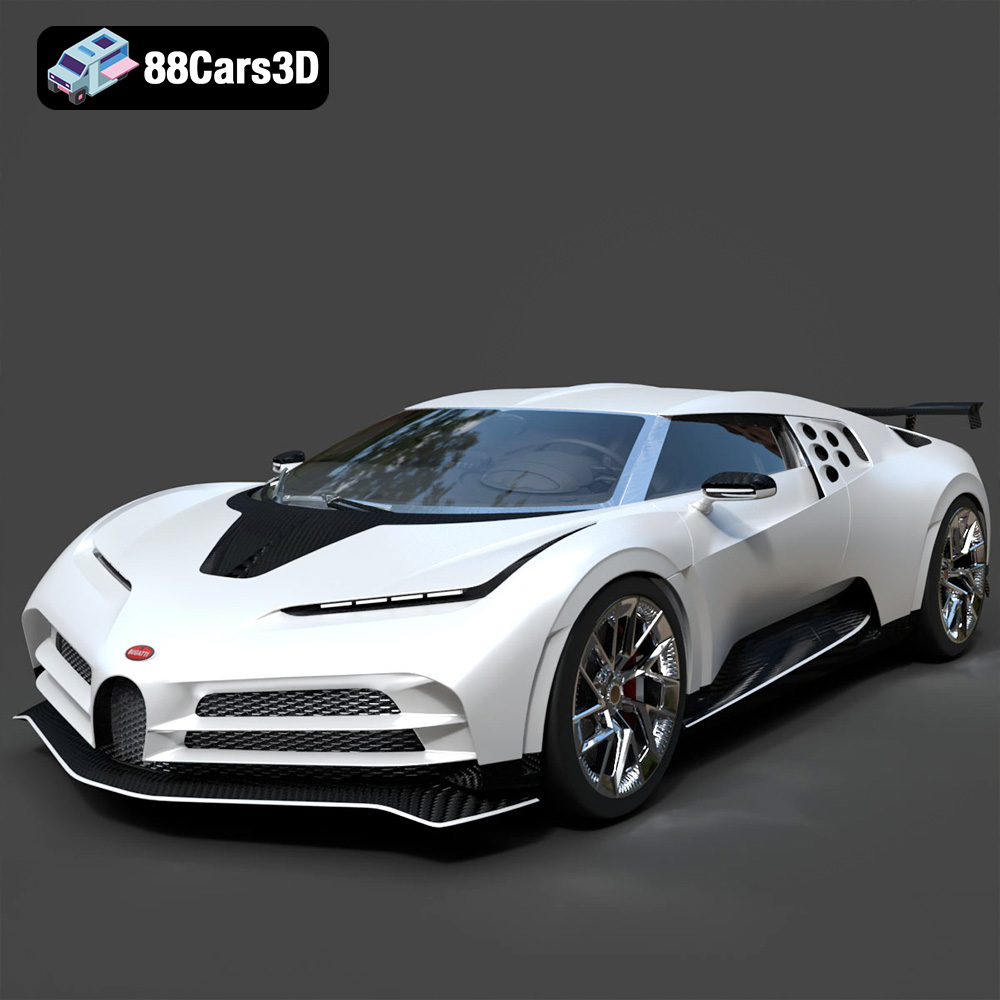
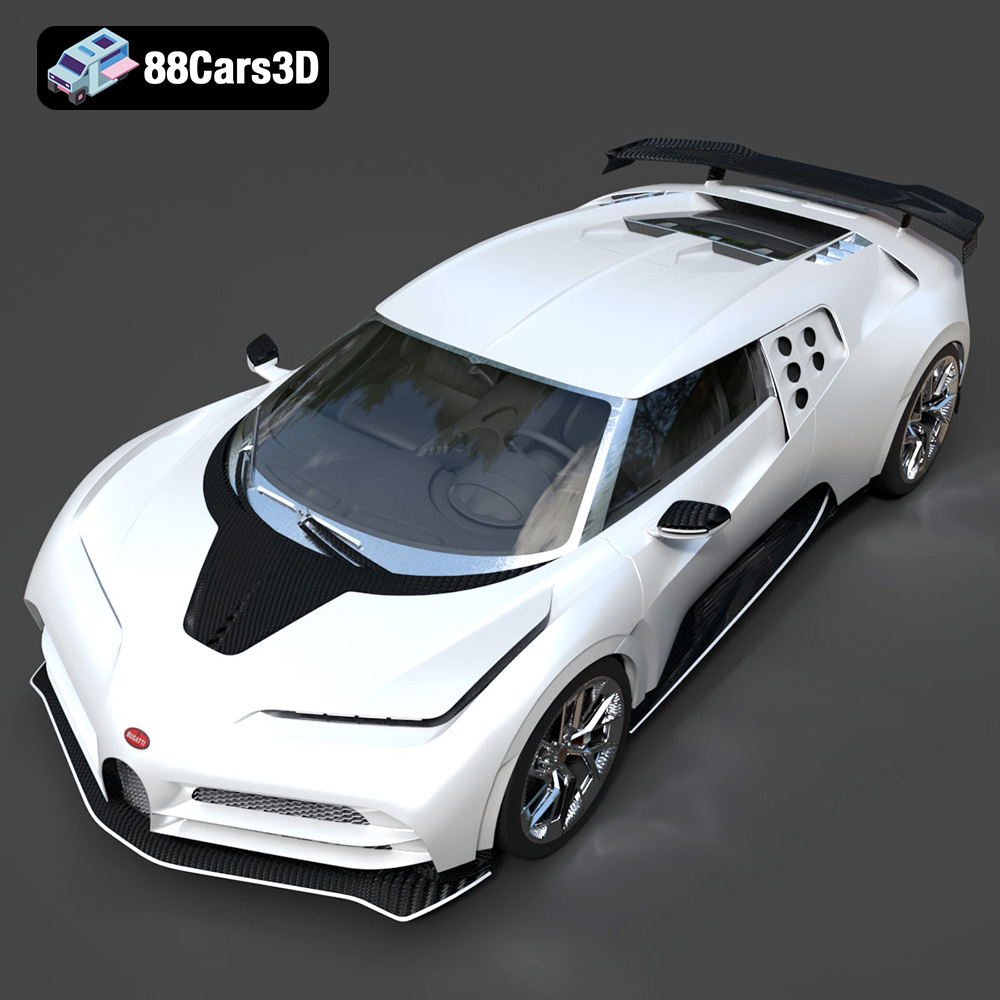
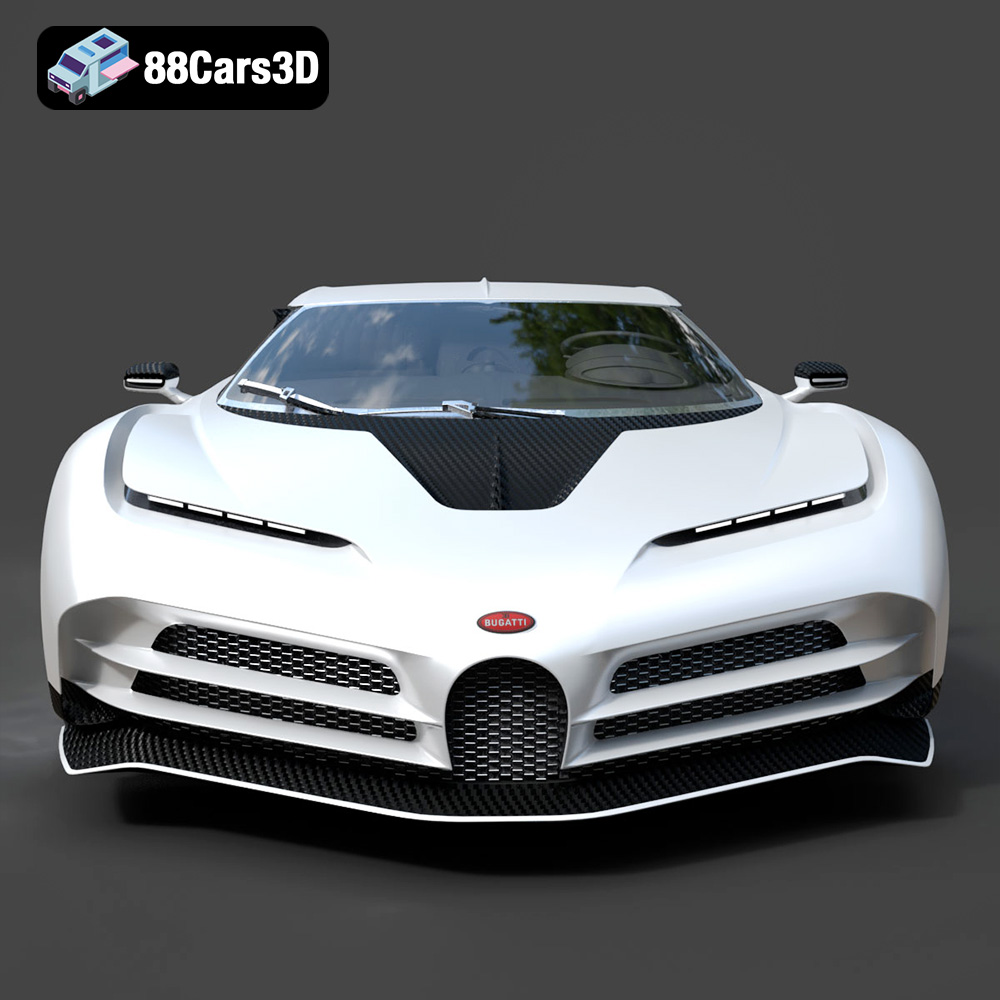
The Bugatti Centodieci 2020 3D Model is a testament to accurate digital recreation. Every aspect of its aggressive aerodynamic bodywork is meticulously represented. From the sharp front fascia with its ultra-slim LED headlights that pierce through the darkness, to the large, functional side air intakes that feed the immense W16 engine, the model captures the very essence of the Centodieci.
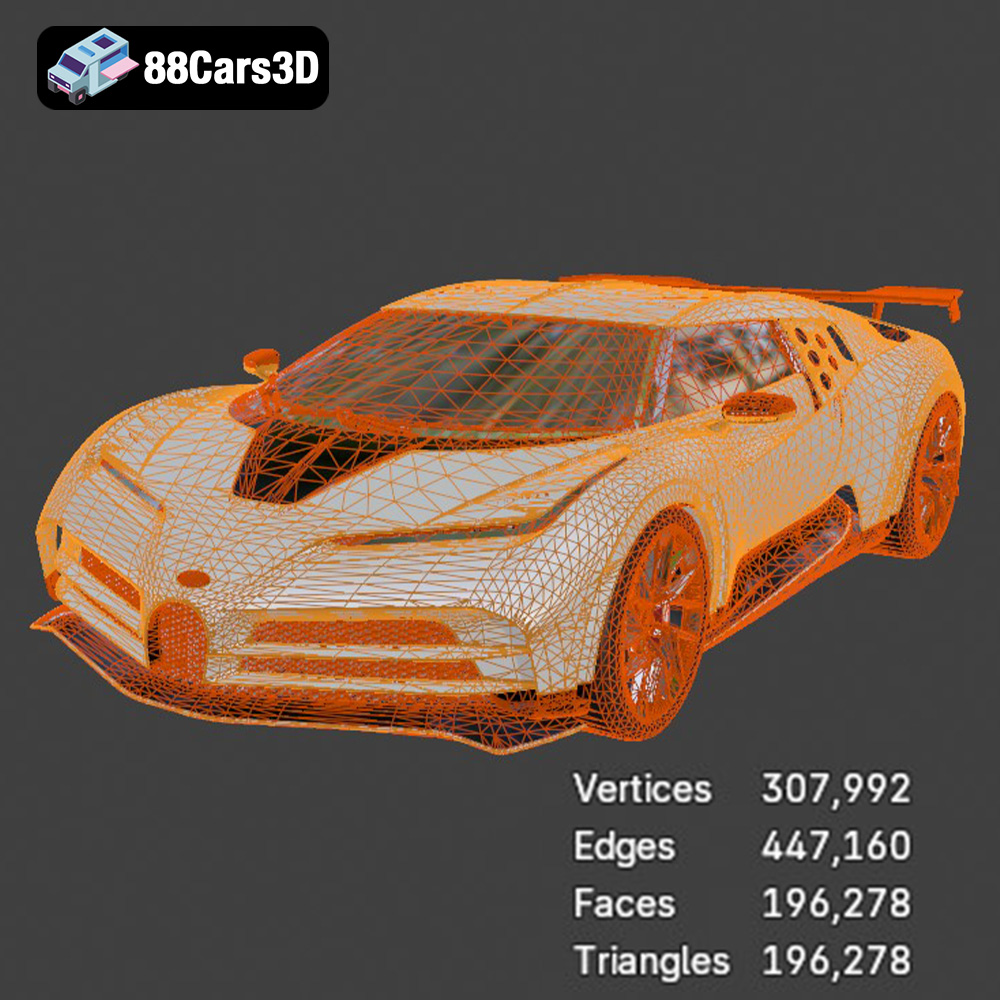
Beyond aesthetic accuracy, a professional 3D model must be technically robust. This Bugatti Centodieci model shines with its clean and well-organized mesh structure, ensuring optimal performance and flexibility across various 3D applications. It adheres to real-world scale accuracy, a critical factor for automotive visualization and realistic environmental integration.
Key technical advantages include a proper pivot setup for steering and wheel rotation, which is crucial for animation and interactive experiences. The optimized polygon flow strikes a balance between performance and realism, making it suitable for both cinematic close-ups and high-resolution renders without overwhelming system resources. This compatibility extends to major 3D software platforms and game engines, offering a truly versatile asset for any professional workflow.
Navigating the world of 3D car models means understanding the various file formats, each designed for specific purposes and workflows. The Bugatti Centodieci 2020 3D Model from 88cars3d.com offers an extensive range of formats, ensuring maximum compatibility and utility for diverse projects. Choosing the right format is paramount for efficiency and achieving desired results, whether you’re aiming for high-fidelity rendering, real-time game integration, or even physical fabrication.
The `.blend` file format is the native format for Blender, a powerful and increasingly popular open-source 3D creation suite. When you receive a `.blend` file, it’s typically a fully editable Blender scene, complete with materials, textures, lighting setups, cameras, and even animations. This format is ideal for artists who primarily work in Blender, offering the most control and flexibility for modifications, rigging, and rendering within the Blender ecosystem (using Cycles or Eevee renderers). It ensures that all scene data, including modifiers and node-based materials, is preserved, allowing for deep customization without loss of information.
Developed by Autodesk, the `.fbx` (Filmbox) format is a widely adopted proprietary file format for 3D content exchange, especially prevalent in the game development and visual effects industries. Its strength lies in its ability to store a comprehensive range of 3D data, including geometry, materials, textures, animations, and skeletal data, in a highly optimized manner. This makes `.fbx` ideal for importing assets into game engines like Unreal Engine and Unity, or other 3D applications for animation and rendering pipelines. It ensures that complex scenes with multiple elements and animation data transfer smoothly between different software packages, making it a cornerstone for collaborative projects and real-time environments.
The `.obj` (Wavefront OBJ) format is one of the oldest and most universal 3D file formats. It’s a simple, text-based format primarily used to store 3D geometry (vertices, normals, texture coordinates, and faces). While it doesn’t typically store animation or rigging data, it’s highly compatible across virtually all 3D software. This makes it an excellent choice for cross-software compatibility when you need to transfer static mesh data. Coupled with an accompanying `.mtl` (Material Template Library) file for basic material properties, `.obj` remains a reliable workhorse for architectural visualization, product design, and general 3D model exchange where geometry integrity is key.
The `.glb` (GLB File Format) is the binary representation of the glTF (GL Transmission Format) standard, often referred to as the “JPEG for 3D.” It’s specifically designed for efficient transmission and loading of 3D scenes and models in web applications, augmented reality (AR), and virtual reality (VR) environments. A single `.glb` file packages all necessary data—geometry, materials, textures, animations—into one self-contained unit, making it incredibly easy to share and integrate. This optimization for real-time applications and its web-native nature make it perfect for interactive 3D viewers, online showrooms, and immersive experiences, delivering high visual quality with minimal file size.
The `.stl` (Stereolithography) format is the de facto standard for 3D printing. It represents a 3D model as a series of connected triangles (a tessellated surface) without any color, texture, or material information. This triangular mesh describes only the surface geometry of the object, which is precisely what a 3D printer needs to understand how to build the physical model layer by layer. While not ideal for visual rendering due to its lack of surface detail, `.stl` is indispensable for prototyping, manufacturing, and bringing digital 3D car models like the Centodieci into the tangible world as scale models or collectibles.
The `.ply` (Polygon File Format) is another popular format for storing 3D data, often used for scanned 3D objects, CAD models, and scientific applications. It can store not only geometry but also color, transparency, and other properties associated with vertices and faces. While less common than `.fbx` or `.obj` for general creative work, its ability to store precision mesh data makes it valuable for engineering analysis, reverse engineering, and applications where detailed surface information beyond basic geometry is critical, often bridging the gap between artistic models and technical specifications.
The `.unreal` format denotes an asset that is specifically prepared and optimized for direct import into Unreal Engine projects. This can sometimes refer to a proprietary asset package or a specifically configured `.fbx` that is perfectly set up for Unreal’s material system, collision, and LOD (Level of Detail) requirements. Using an `.unreal` ready asset typically means reduced setup time within the engine, as materials are pre-configured, and the model adheres to Unreal’s best practices for real-time performance. It signifies an asset that is truly “plug-and-play” for rapid development within the Unreal ecosystem.
Similar to `.blend`, the `.max` file format is the native project file for Autodesk 3ds Max, a leading 3D modeling, animation, and rendering software. A `.max` file contains the complete scene data, including geometry, textures, materials, lighting, cameras, animation keyframes, and plugins used within the scene. For users of 3ds Max, this format offers the highest level of editability and control, allowing for complex scene management, advanced rendering with engines like V-Ray or Corona, and intricate animation setups. It’s the go-to format for professionals working within the Autodesk ecosystem who require full access to the original project parameters.
The true power of a high-quality 3D model lies in its seamless integration into diverse professional workflows. The Bugatti Centodieci 3D model from 88cars3d.com is designed with this versatility in mind, ensuring it can elevate projects across various industries.
For photorealistic visualizations, the Centodieci model provides an exceptional foundation. In 3ds Max, artists can leverage its clean topology and optimized geometry with powerful rendering engines like V-Ray or Corona Renderer. Imagine crafting exquisite showroom renders where the car’s sleek lines reflect ambient light, highlighting the intricate details of its paintwork and carbon fiber elements. Utilizing physically based rendering (PBR) materials, reflective surfaces, and accurate lighting setups can bring the Centodieci to life, indistinguishable from a real photograph.
Blender users, too, will find the .blend file format fully editable, allowing them to harness Cycles or Eevee for stunning results. Experiment with studio lighting, dramatic backdrops, or even complex weather conditions to create captivating automotive imagery. The model’s real-world scale and proper pivot setup make it easy to position, animate, and articulate components like wheels and steering, adding dynamic flair to your renders and animations for luxury lifestyle visuals and cinematic productions.
In the fast-paced world of game development, efficiency and quality are paramount. The Bugatti Centodieci 3D model, with its .fbx and .unreal formats, is perfectly poised to become a star asset in racing games or open-world supercar collections. Game artists can import the model directly into Unreal Engine, where its optimized polygon flow and well-structured mesh ensure smooth performance without compromising visual fidelity. Implementing LODs (Level of Detail) is straightforward, ensuring the car renders efficiently at varying distances.
Beyond games, the model is ideal for real-time visualization projects such as interactive product configurators or virtual showrooms. Imagine a potential buyer exploring every angle of the Centodieci in real-time, changing colors, and inspecting the interior detail with a gamepad or VR headset. The model’s technical advantages, including proper pivot points, facilitate easy setup of physics-based car controllers and interactive elements, making it a robust solution for high-performance vehicle packs and simulation environments.
Augmented Reality (AR) and Virtual Reality (VR) are transforming how we interact with digital content. The .glb format of the Centodieci model is specifically optimized for these immersive platforms. Developers can quickly integrate the model into AR applications, allowing users to place a virtual Centodieci in their driveway, or into VR environments for fully interactive, immersive showrooms. The lightweight yet detailed nature of the .glb format ensures smooth performance on mobile AR devices and VR headsets, making it perfect for creating engaging luxury automotive experiences. Whether for virtual test drives, educational tools, or unique marketing campaigns, this model opens doors to next-generation visualization.
The digital world offers endless creative freedom, but there’s a unique satisfaction in holding a physical manifestation of your work. The Bugatti Centodieci 2020 3D Model is not just for screens; it’s also designed to be 3D printable, allowing you to create stunning collectible hypercar miniatures and display models.
The inclusion of the .stl format is crucial for 3D printing. This format represents the model’s geometry as a series of triangles, which is exactly what a 3D printer understands. The model’s clean topology ensures that the conversion to .stl is robust, minimizing errors and ensuring a manifold (watertight) mesh that is essential for successful prints. Artists can scale the model to various sizes, from desktop collectibles at 1:32 or 1:24 to larger, more detailed pieces at 1:18 or even 1:12, making it a versatile asset for scale model enthusiasts and collectors.
Achieving a high-quality 3D print of a complex automotive design like the Centodieci requires careful attention to print settings and post-processing. The product description provides excellent guidance:
A static model, no matter how detailed, only tells half the story. The true value of a professional 3D car model lies in its customizability, allowing artists to adapt it to an endless array of creative scenarios. The Bugatti Centodieci model offers extensive options for personalization, ensuring it fits perfectly into your unique vision.
The model provides a robust foundation for aesthetic modification. You can effortlessly change the body color to any hue imaginable—from the classic Bugatti white or blue to exposed carbon fiber finishes, or even custom, exotic shades that match your project’s brand identity. Adjusting brake caliper colors and modifying wheel finishes (polished, black, or carbon look) allows for subtle yet impactful customizations that replicate the real-world personalization options of a hypercar.
These adjustments are crucial for creating varied scenes, showcasing different trim levels, or simply adding a unique touch to your visualizations. Whether you’re aiming for a sleek, monochromatic look or a vibrant, contrasting scheme, the model’s clean material setup makes these changes intuitive and efficient across supported 3D software.
Beyond the car itself, the model’s versatility extends to its integration within dynamic scenes. You can easily configure lighting to suit a luxurious showroom display, a dramatic night hypercar scene, or a bright, outdoor environment. The model’s optimized geometry and realistic proportions interact naturally with global illumination and environmental reflections, enhancing the realism of any setting.
Imagine the Centodieci under dynamic studio lights, showcasing its curves and reflections, or parked against a breathtaking hyper-realistic backdrop, capturing the essence of speed and luxury. The ability to add custom license plates further personalizes the vehicle, rooting it firmly within your narrative or branding. This level of customization ensures that the Bugatti Centodieci 3D model is not just an asset, but a dynamic canvas for your creative endeavors.
In today’s fast-paced digital landscape, time is a precious commodity. Creating a high-fidelity 3D car model from scratch, especially one as intricate as the Bugatti Centodieci, requires hundreds, if not thousands, of hours of expert modeling, texturing, and optimization. This is where investing in premium assets from reputable marketplaces like 88cars3d.com offers significant advantages.
By acquiring a pre-made, professionally crafted 3D model, artists and studios can bypass the arduous initial stages of production. This means more time can be dedicated to creative direction, scene composition, animation, and fine-tuning renders, rather than being bogged down in the foundational modeling work. The Bugatti Centodieci 2020 3D Model provides a head start, offering a production-ready asset that adheres to industry standards for topology, scale, and performance. This efficiency translates directly into cost savings and accelerated project timelines, a critical factor for competitive creative agencies and game studios.
Access to such a high-caliber asset unlocks new creative avenues. Whether you’re a freelancer looking to elevate your portfolio with stunning automotive renders, a game developer needing realistic vehicles for your next title, or an architectural visualization firm incorporating luxury elements into your scenes, this model empowers you. It provides the toolset to undertake ambitious projects that might otherwise be out of reach due to time or resource constraints. The model’s versatility across rendering, game development, AR/VR, and even 3D printing ensures that it’s not a single-use item but a foundational element that can be repurposed across numerous client projects and personal explorations.
The Bugatti Centodieci is a marvel of automotive design and engineering, a hypercar that pushes the boundaries of performance and luxury. Replicating such an icon in the digital realm demands a 3D car model that is equally impressive in its detail and technical execution. The Bugatti Centodieci 2020 3D Model, available at 88cars3d.com, is precisely that asset.
From its stunning exterior and meticulously detailed interior to its robust technical advantages and broad file format support, this model is a versatile powerhouse for any 3D professional. Whether your goal is to produce breathtaking automotive rendering, develop immersive game assets, create interactive AR/VR experiences, or bring a tangible miniature to life through 3D printing, this model provides the quality and flexibility you need. It represents not just a digital car, but an investment in efficiency, quality, and boundless creative potential, helping you bring your most ambitious automotive visions to vivid reality.
The Bugatti Centodieci 2020 3D Model is a high-detail digital recreation of the ultra-exclusive hypercar inspired by the legendary EB110. Limited to only a handful of units worldwide, the Centodieci combines modern Bugatti engineering with 1990s design heritage, delivering extreme performance and rare collector prestige. This 3D model accurately represents the aggressive aerodynamic bodywork, sharp front fascia with ultra-slim LED headlights, large side air intakes, sculpted rear with stacked exhaust outlets, fixed rear wing, and distinctive multi-spoke wheel design. Built with clean topology and real-world scale accuracy, it is ideal for rendering, animation, hypercar visualization, game development, and AR/VR luxury automotive projects.
$39.99
.2020hypercar
.arvr
.automotive
.blend
.bugatti
.car3dmodel
.centodieci
.exoticcar
.fbx
.gameasset
.glb
.luxurycar
.max
.obj
.ply
.rendering
.simulation
.stl
.supercar
.unreal