⚡ FLASH SALE: Get 60% OFF All Premium 3D & STL Models! ⚡

In the dynamic world of 3D visualization, the demand for exceptionally detailed and versatile automotive models is ever-increasing. Whether you’re an architect needing to populate a street scene, a game developer crafting an immersive open world, a product designer prototyping a new vehicle, or an artist creating cinematic sequences, the quality of your 3D car models can make or break a project. These digital assets are the cornerstone for everything from high-fidelity marketing visuals to interactive virtual experiences, requiring a blend of artistic precision and technical expertise.
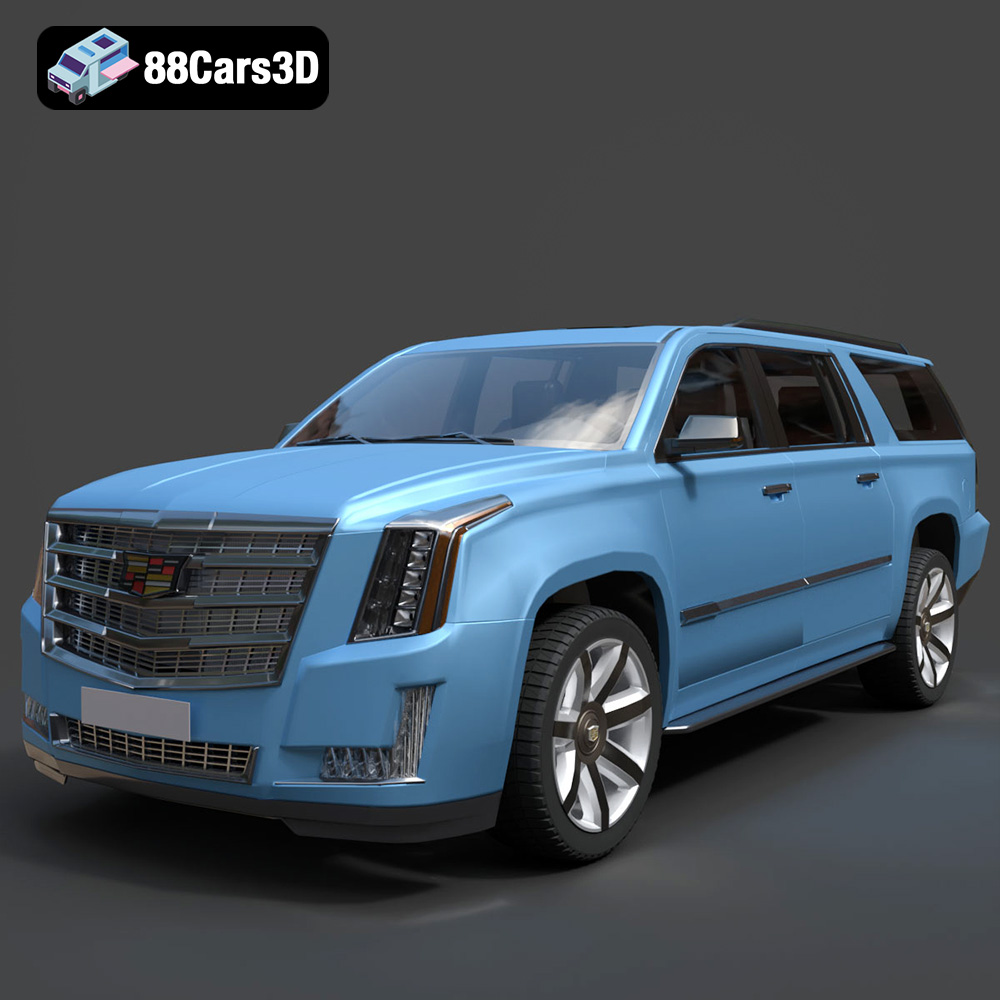
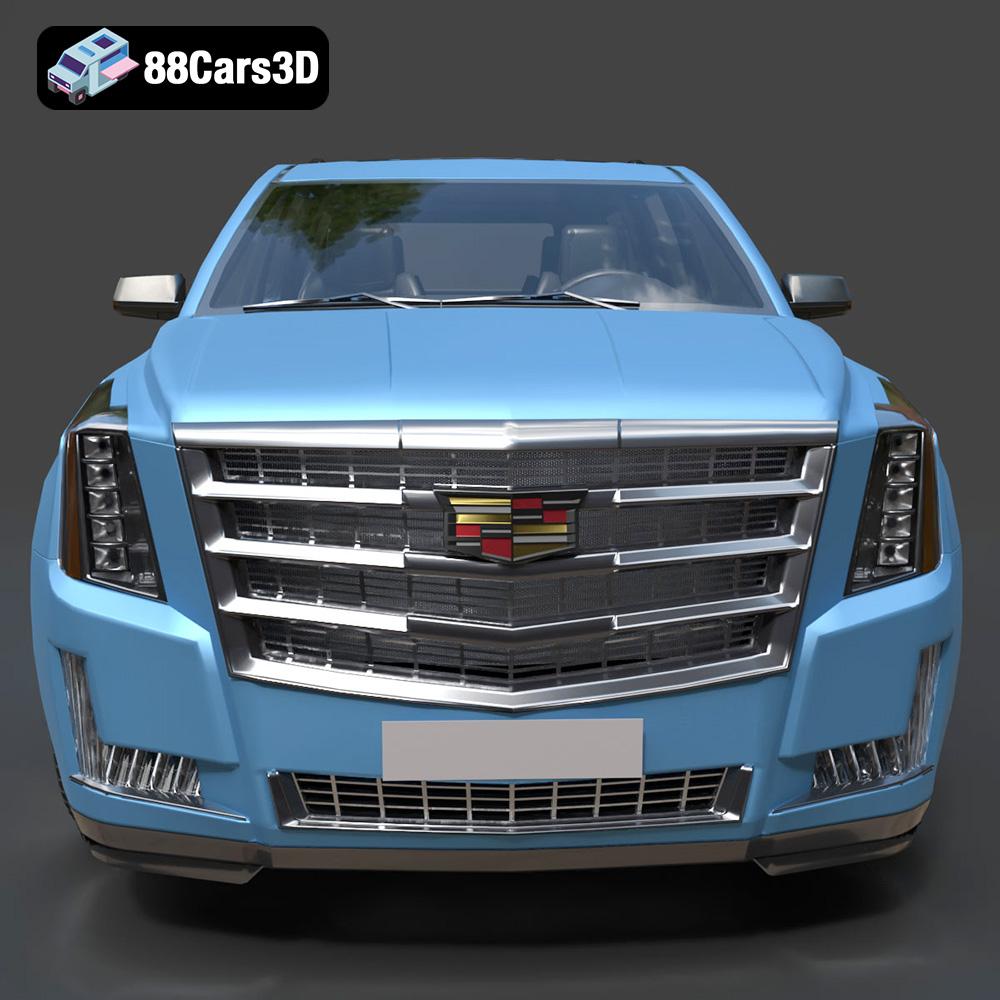
Today, we delve into the intricate processes and applications of professional 3D car models, using a prime example of excellence in the field: the Cadillac Escalade ESV 3D Model. This premium digital recreation of Cadillac’s iconic extended-length luxury SUV exemplifies the standards required for modern 3D production pipelines. Its meticulous design, ranging from the commanding grille to the three-row seating, showcases how a single, well-crafted asset can serve a multitude of professional needs, providing a robust foundation for various creative and technical endeavors.
One of the most critical aspects of working with 3D models, especially complex automotive assets like the Cadillac Escalade ESV, is understanding the various file formats available. Each format serves a specific purpose, offering different levels of compatibility, data retention, and optimization for particular workflows. Choosing the correct format is paramount for seamless integration into your preferred software and desired output.
The .blend format is the native file type for Blender, an incredibly popular open-source 3D creation suite. When you acquire a .blend file for a 3D car model, you’re getting a fully editable Blender scene. This typically includes the complete mesh, materials, textures, lighting setups, camera configurations, and even animation data if present. Artists who work primarily in Blender will find this format invaluable, as it allows for immediate, non-destructive editing and direct access to all scene elements. It’s excellent for customization, material tweaks, and rendering within Blender’s Cycles or Eevee engines, offering unparalleled flexibility for experienced Blender users.
The .fbx (Filmbox) format, owned by Autodesk, has become a de facto standard for exchanging 3D data between different software applications. Its strength lies in its ability to encapsulate a wide range of 3D data, including geometry, materials, textures, animations, rigging, and even lighting. This makes it ideal for pipelines involving Unreal Engine, Unity, 3ds Max, Maya, Cinema 4D, and more. For real-time applications like game development or AR/VR, .fbx is particularly favored due to its robust support for animation and skeletal data. When working with the Cadillac Escalade ESV 3D Model, the .fbx version ensures that its separate doors, hood, tailgate, and wheels maintain their pivot points for animation, crucial for interactive experiences or cinematic sequences.
The .obj (Wavefront OBJ) format is one of the oldest and most universally supported 3D file formats. It’s a simple, text-based format primarily used to store 3D geometry (vertices, normals, texture coordinates) and references to external material (MTL) files. While it doesn’t support animation or complex scene data like .fbx, its widespread compatibility makes it a safe bet for cross-software transfers when you primarily need the mesh data. If your workflow involves sculpting, retopology, or simply importing geometry into a new application without complex hierarchies, .obj is a reliable choice for the Escalade ESV model.
The .glb (GL Transmission Format Binary) is a modern, efficient, and increasingly popular format, especially for web-based 3D, Augmented Reality (AR), and Virtual Reality (VR) applications. It’s the binary version of glTF, designed for compact file size and fast loading times, making it perfect for displaying 3D models in browsers or on mobile devices. A single .glb file can contain geometry, materials, textures, animations, and skeletal data, making it a self-contained package. For interactive showrooms or immersive virtual configurators featuring the Cadillac Escalade ESV, the .glb format provides an optimized experience without compromising visual quality.
The .stl (Stereolithography) format is the standard file type for 3D printing. It represents a 3D model as a series of connected triangles (a triangulated surface), defining only the surface geometry of an object without color, texture, or other CAD attributes. For physical manufacture of the Cadillac Escalade ESV as a collectible scale model, the .stl file is essential. It needs to be “manifold” – watertight and without gaps or intersecting geometry – to ensure a successful print. The product’s description explicitly mentions its suitability for conversion to .stl, highlighting its robust geometry for physical output.
The .ply (Polygon File Format or Stanford Triangle Format) is similar to .obj and .stl in that it describes a 3D object, but it can also store additional properties like color, transparency, and often more complex data such as point clouds from 3D scanners. While less common for general-purpose 3D modeling exchange than .fbx or .obj, it is particularly useful in CAD, scientific visualization, and applications where precise mesh information and additional per-vertex or per-face data are required. For detailed analysis or specialized prototyping of the Escalade ESV, a .ply file can offer additional data integrity.
The .unreal format refers to assets specifically configured and optimized for direct import and use within Unreal Engine. This isn’t a single file extension in the traditional sense, but rather a collection of assets (like static meshes, materials, textures, blueprints) prepared to Unreal Engine’s specifications. This often means meshes are properly scaled, have optimized UV layouts, collision meshes, and materials set up using Unreal’s physically-based rendering (PBR) pipeline. An “engine-ready asset” for the Cadillac Escalade ESV saves considerable time for game developers and real-time visualization artists, allowing for immediate integration into an Unreal project without extensive setup.
The .max format is the native scene file for Autodesk 3ds Max, a powerful 3D modeling, animation, and rendering software. Similar to .blend for Blender, a .max file provides the complete 3ds Max project, including all geometry, modifiers, materials, textures, lighting, cameras, and animation curves. For professionals deeply embedded in the Autodesk ecosystem, having the Cadillac Escalade ESV available as a .max file offers the highest degree of flexibility for advanced animation, complex scene integration, and high-end rendering using renderers like V-Ray or Corona. It allows for full control over every aspect of the model within its native environment.
The inclusion of all these diverse formats with the Cadillac Escalade ESV 3D Model ensures that it is truly versatile, accommodating a broad spectrum of professional workflows and applications across different industries.
Creating a high-quality 3D car model like the Cadillac Escalade ESV is a testament to skilled digital craftsmanship. It involves a meticulous process that balances artistic interpretation with technical precision, ensuring that the digital representation is both visually stunning and functionally robust for various applications.
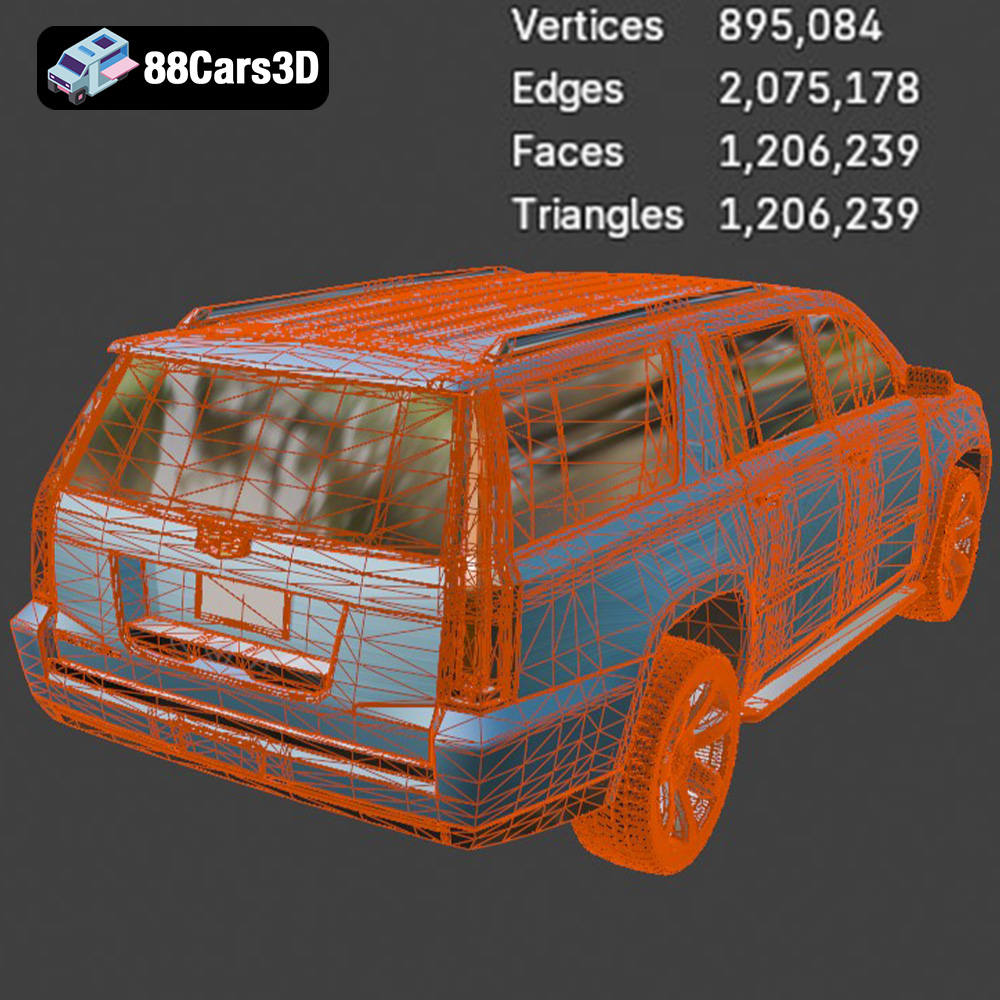
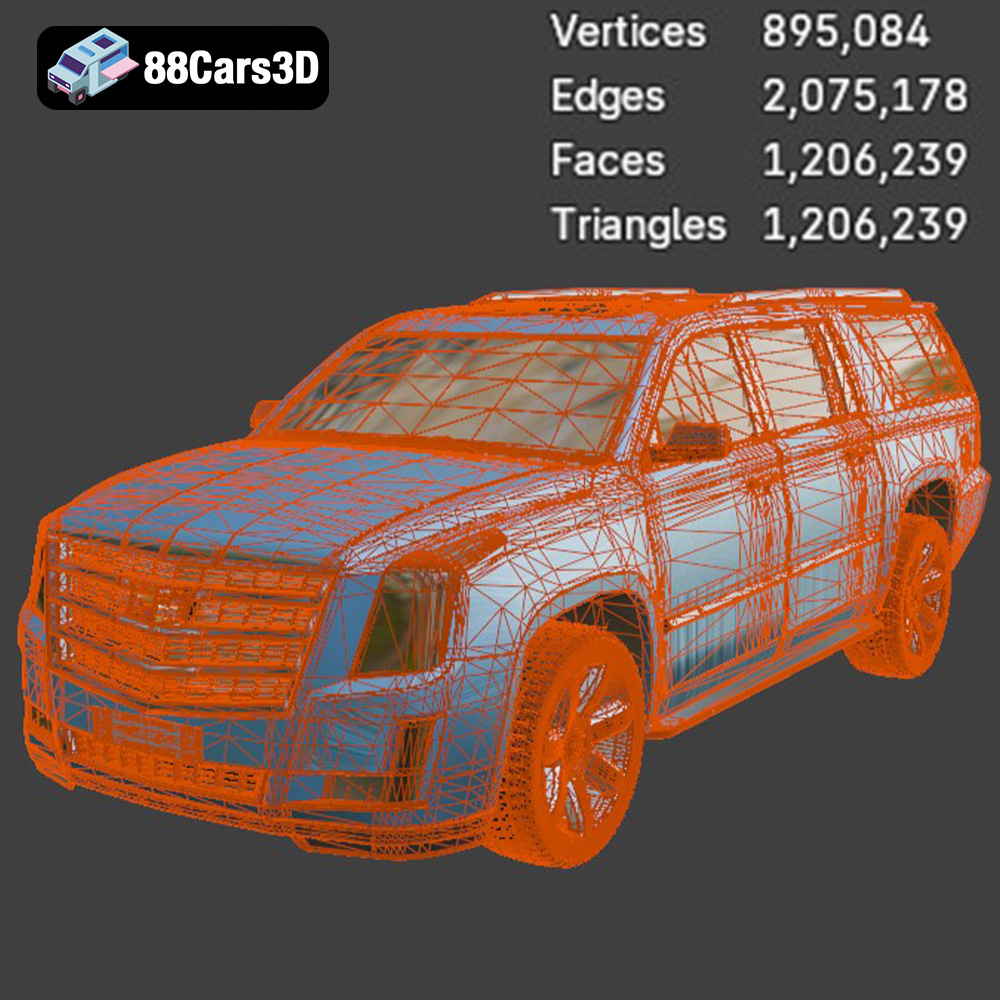
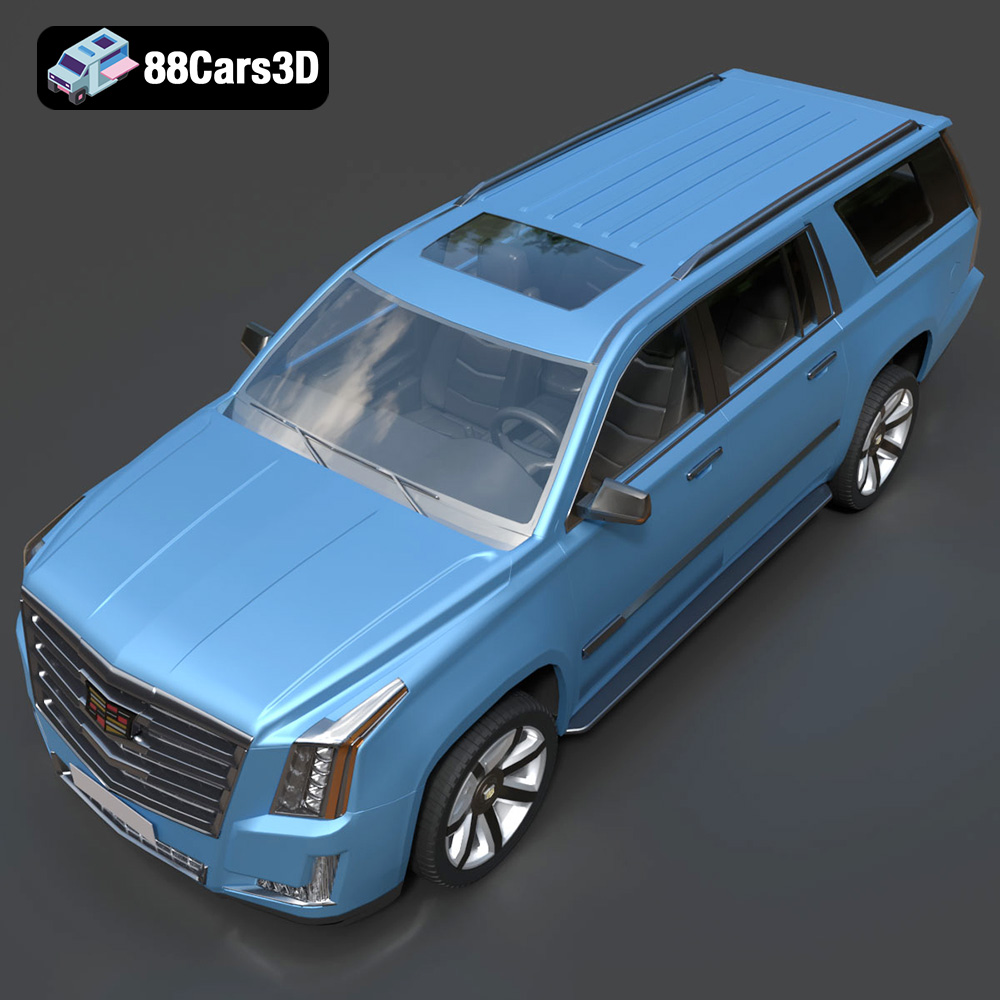
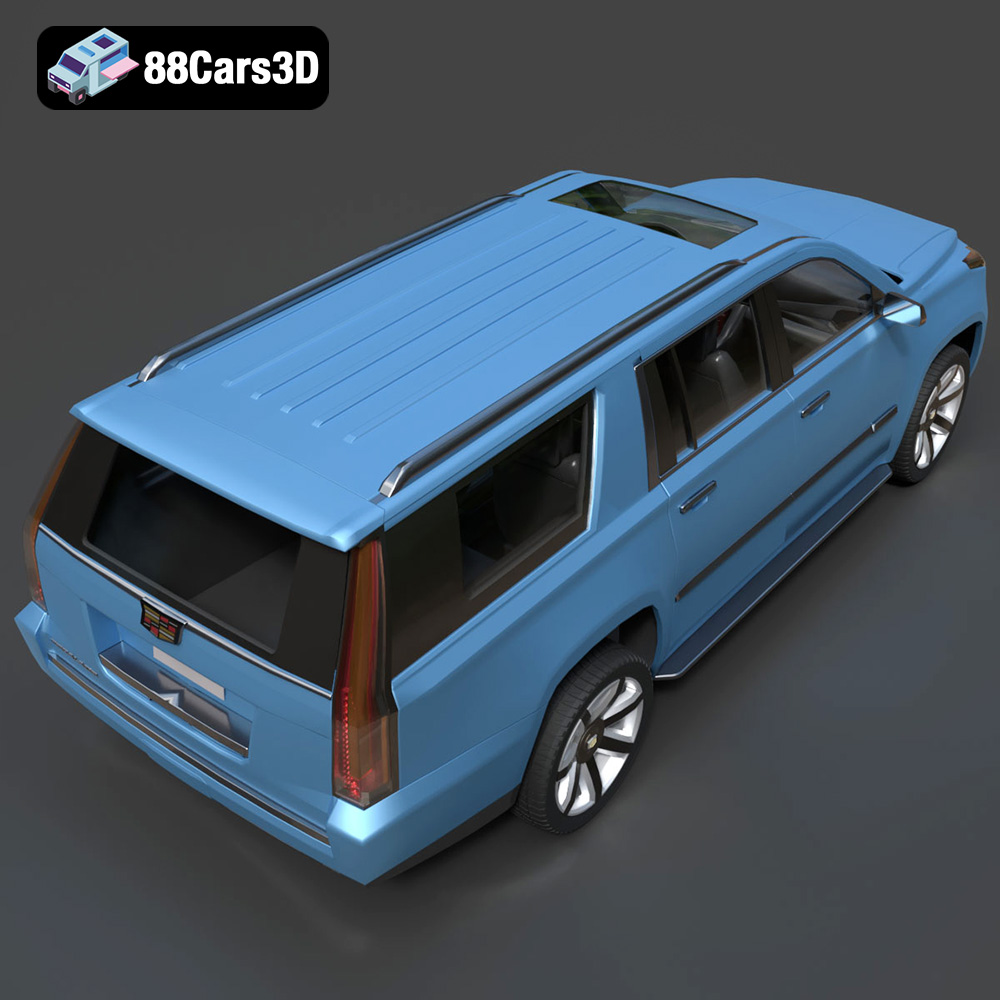
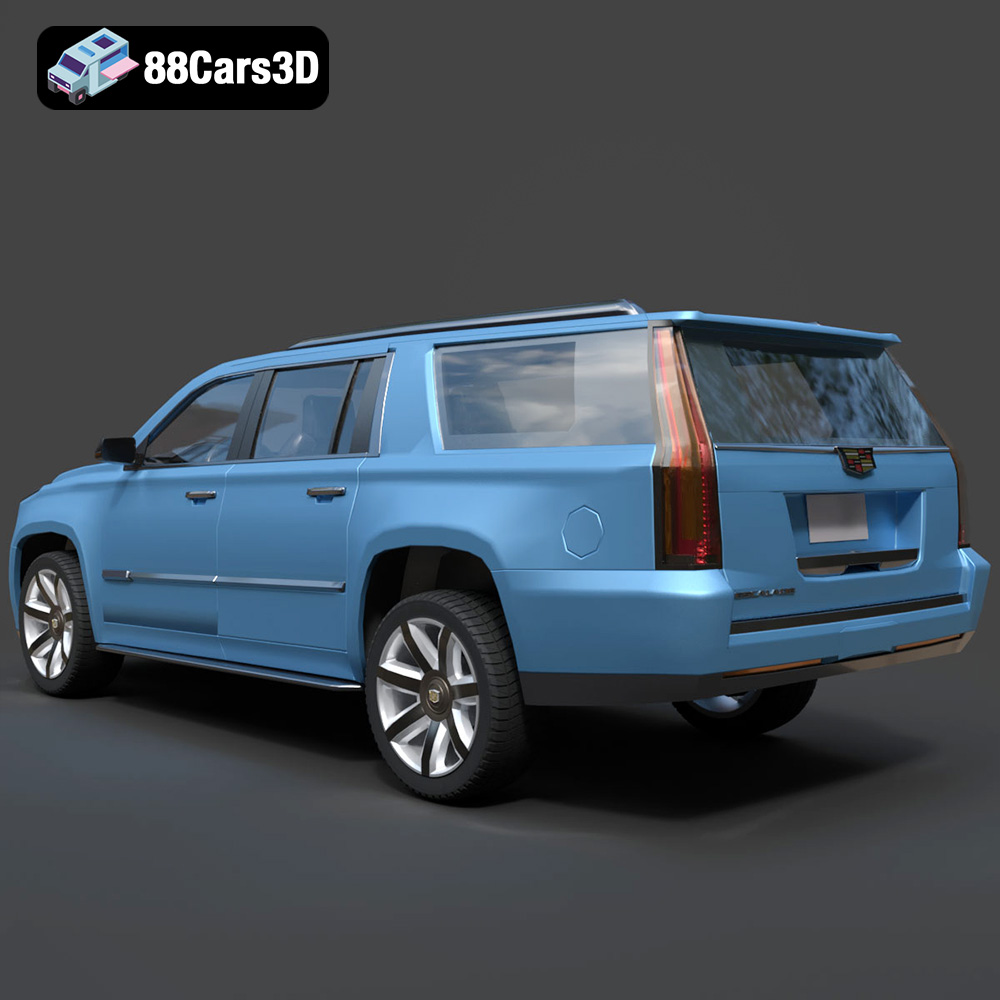
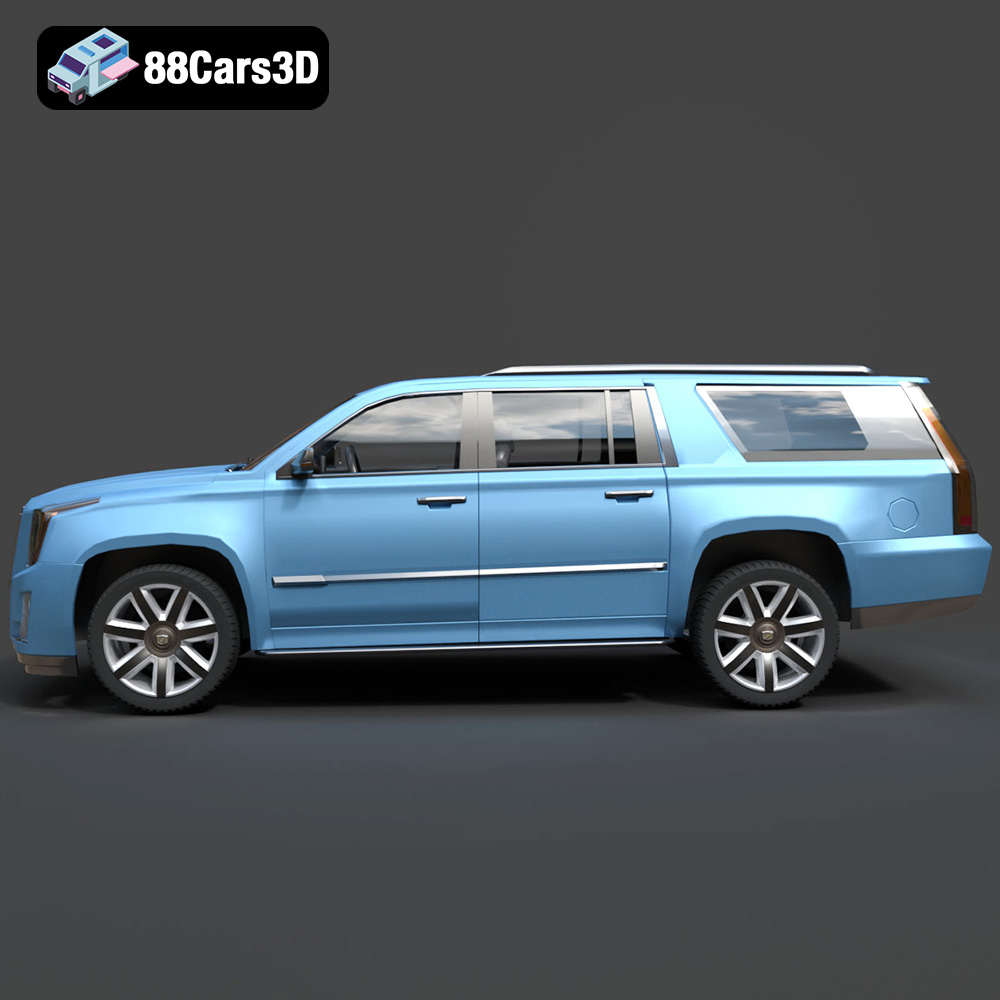
The exterior of any luxury vehicle, especially an SUV with the bold presence of the Escalade ESV, demands exacting detail. Every curve, panel gap, and accent must be faithfully reproduced. This begins with accurate extended-wheelbase proportions, captured through careful modeling that adheres to real-world dimensions. The signature large chrome grille, vertical LED lighting, and sculpted body panels are not just visually complex but also crucial identifying features. Professionals creating 3D car models invest significant time in ensuring clean and organized topology – the underlying mesh structure – which is vital for smooth deformations, proper subdivision, and efficient rendering. This attention to detail extends to modeled premium alloy wheels and performance tires, which are often separate components for greater realism and animation capabilities.
While the exterior captures immediate attention, the interior of a luxury vehicle offers a different level of challenge. The Cadillac Escalade ESV’s detailed luxury dashboard layout, large infotainment display, and three-row seating configuration require careful planning and execution. This involves intricate modeling of individual components, from seat stitching patterns to instrument cluster details. The interior mesh is often optimized differently than the exterior, balancing visual fidelity for close-up renders with efficiency for real-time environments. Transparent materials for windows and lighting components, along with proper pivot placement for interactive elements like doors, hood, tailgate, and steering, further enhance the model’s utility for both static renders and dynamic animations.
Once a high-quality 3D car model is meticulously crafted, the next step is to bring it to life through professional rendering and animation. This is where the technical advantages of models like the Cadillac Escalade ESV truly shine, allowing artists to create stunning visuals for a variety of purposes.
For luxury automotive marketing, architectural visualization, or promotional materials, photorealistic rendering is paramount. Using sophisticated renderers in software like 3ds Max or Blender, artists can simulate real-world lighting conditions, material properties, and atmospheric effects to create images indistinguishable from photographs. The clean topology and real-world scaling of the Cadillac Escalade ESV 3D Model are critical here, ensuring that reflections behave correctly, shadows fall naturally, and materials like chrome and paint accurately reflect light. This model is ideal for creating compelling studio renders, showcasing the vehicle’s elegance in urban scenes, or integrating it seamlessly into architectural visualizations, making it an invaluable asset for agencies and designers.
Beyond static images, the ability to animate a 3D car model adds immense value. The Cadillac Escalade ESV model is designed with proper pivot placement for key components like doors, wheels, and steering. This seemingly small detail is crucial for animators, allowing them to easily rig and animate the vehicle for cinematic productions, dynamic walk-arounds, or interactive presentations. Imagine the Escalade ESV cruising through a city street, its wheels turning realistically, doors opening to reveal the luxurious interior, or the steering wheel responding to an unseen driver. Such animations elevate storytelling and provide a much more engaging experience for viewers, making this model a powerful tool for visual effects artists and content creators.
The advent of powerful real-time engines like Unreal Engine and Unity has revolutionized how 3D assets are used, extending their application from pre-rendered media to interactive experiences. High-quality 3D car models, especially those designed with optimization in mind, are essential for these demanding environments.
For game developers, integrating a vehicle like the Cadillac Escalade ESV requires a delicate balance between visual fidelity and performance. The model’s “balanced polygon count” is a technical advantage, meaning it’s detailed enough to look excellent but optimized to run smoothly within a game engine. This makes it suitable for open-world games where many vehicles might be on screen simultaneously, for traffic systems, or for dedicated VIP transport simulations. Game-ready assets often require optimized UV layouts, efficient material setups (PBR workflows), and sometimes even multiple Levels of Detail (LODs) to ensure smooth performance across different distances and hardware configurations. The .fbx and .unreal formats provided are specifically tailored to meet these rigorous demands, saving developers countless hours of optimization.
Augmented Reality (AR) and Virtual Reality (VR) platforms are increasingly used for immersive experiences, from virtual showrooms to interactive product configurators. A highly detailed, real-world scaled 3D car model is fundamental here. The Cadillac Escalade ESV, with its clean geometry and accurate proportions, is perfect for creating virtual showrooms where potential buyers can explore the vehicle in 3D, change colors, open doors, and even sit inside. The .glb format, optimized for AR/VR and browser-based display, is particularly valuable for these applications due to its compact size and efficient rendering. This allows for seamless integration into web-based configurators or dedicated VR applications, offering an unparalleled level of interaction and engagement.
While 3D models are primarily digital assets, their utility extends into the physical realm through 3D printing. The Cadillac Escalade ESV 3D Model offers the unique advantage of being convertible to .stl format, making it ready for tangible production as a collectible scale luxury SUV model.
The journey from a digital 3D model to a physical object requires specific preparation. For 3D printing, the model needs to be represented as a watertight, manifold mesh, which means it must be a completely enclosed volume without any holes or intersecting surfaces. The inclusion of an .stl file, or the ability to convert to it, indicates that the underlying geometry of the Cadillac Escalade ESV is robust enough for physical output. This clean geometry is critical to prevent printing errors and ensures that the final physical model accurately reflects the digital design. Designers can confidently scale the model to various sizes, such as 1:24, 1:32, or 1:18, catering to different collectible or prototyping needs.
3D printing is just the first step in creating a high-quality physical model. The product description provides detailed recommendations for 3D print settings, including layer height (0.12–0.20 mm), wall thickness (2–3 mm), and infill (15–30%), tailored for optimal results. Crucially, it advises on print orientation (body printed upside-down for smoother roof finish) and the need for supports for delicate areas like mirrors, roof rails, and underbody details. Wheels are recommended to be printed separately for improved detailing, showcasing a professional understanding of physical model fabrication. After printing, post-processing is key: sanding, applying primer, choosing an appropriate paint finish (like gloss black or metallic), and a final clear coat will transform a raw 3D print into a showroom-quality collectible, perfectly mirroring the luxury of the real Escalade ESV.
The true power of a high-quality 3D model lies not only in its inherent detail but also in the flexibility it offers for customization and workflow integration. A premium asset like the Cadillac Escalade ESV 3D Model from 88cars3d.com significantly enhances production pipelines.
Starting with a meticulously crafted 3D car model can dramatically streamline production timelines. Instead of building a vehicle from scratch, which can take hundreds of hours for a professional artist, teams can immediately jump into application-specific tasks. The included file formats (from .blend and .max for native editing to .fbx and .unreal for engine integration) ensure that the model is ready for almost any professional workflow. This saves valuable time and resources, allowing artists and developers to focus on scene composition, animation, coding, or unique project demands rather than foundational modeling. For studios working on tight deadlines, the availability of such a polished asset is a significant competitive advantage.
The Cadillac Escalade ESV 3D Model offers extensive customization options, allowing it to be adapted to virtually any scenario. Artists can easily change the paint color, exploring options from classic black and white to metallic silver or pearl finishes. Modifying wheel designs and trim packages can alter the vehicle’s aesthetic to match specific brand guidelines or scene requirements. For luxury urban scenes, adding VIP accessories or custom branding elements can personalize the vehicle, while adjusting lighting setups can transform the mood from a bright showroom display to a dynamic city night scene. This level of flexibility ensures that the Escalade ESV can be a chameleon in your digital library, ready to fit into any narrative or visual brief without compromising quality.
The realm of 3D modeling for automotive design is a fascinating intersection of art and engineering, where every detail matters. From the initial mesh construction to the final render or physical print, the quality of a 3D car model dictates the impact and versatility of your project. The Cadillac Escalade ESV 3D Model stands as a testament to this pursuit of excellence, offering a robust, highly detailed, and universally compatible asset for professionals across various industries.
Whether you are creating stunning automotive renders, developing immersive game environments, designing interactive AR/VR experiences, or fabricating detailed 3D printed collectibles, this model provides the foundational quality and technical flexibility required for success. Its comprehensive file format support, meticulous attention to both exterior and interior details, and thoughtful optimization for diverse applications make it an indispensable tool. Investing in such premium 3D car models from trusted sources like 88cars3d.com ensures that your projects achieve the highest standards of visual fidelity and technical performance. Explore the possibilities and elevate your digital creations with assets designed for professional excellence.
The Cadillac Escalade ESV 3D Model is a premium digital recreation of the extended-length luxury SUV produced by Cadillac. Known for its bold presence, elongated body design, and high-end refinement, the Escalade ESV combines executive comfort with full-size SUV capability. This 3D model accurately captures the Escalade ESV’s commanding grille, vertical LED lighting signature, extended wheelbase proportions, and sculpted luxury styling. Designed with clean geometry and real-world scale accuracy, it is ideal for rendering, animation, game development, AR/VR projects, and automotive simulations. Includes .blend, .fbx, .obj, .glb, .stl, .ply, .unreal, and .max formats for comprehensive compatibility.
$39.90
.arvr
.blend
.cadillac
.car3dmodel
.escalade
.esvesv
.fbx
.fullsizesuv
.gameasset
.glb
.luxurysuv
.max
.obj
.ply
.rendering
.simulation
.stl
.unreal
.vehicleasset
automotive3d