⚡ FLASH SALE: Get 60% OFF All Premium 3D & STL Models! ⚡

Few vehicles command attention quite like the Chevrolet Chevelle SS 1969. A true icon of American muscle car engineering, its aggressive lines, raw power, and distinctive presence have cemented its place in automotive history. For designers, animators, game developers, and visualization specialists, capturing the essence of such a legend is paramount. The challenge lies in translating that visceral appeal into a high-fidelity digital asset that performs flawlessly across a multitude of platforms and applications.
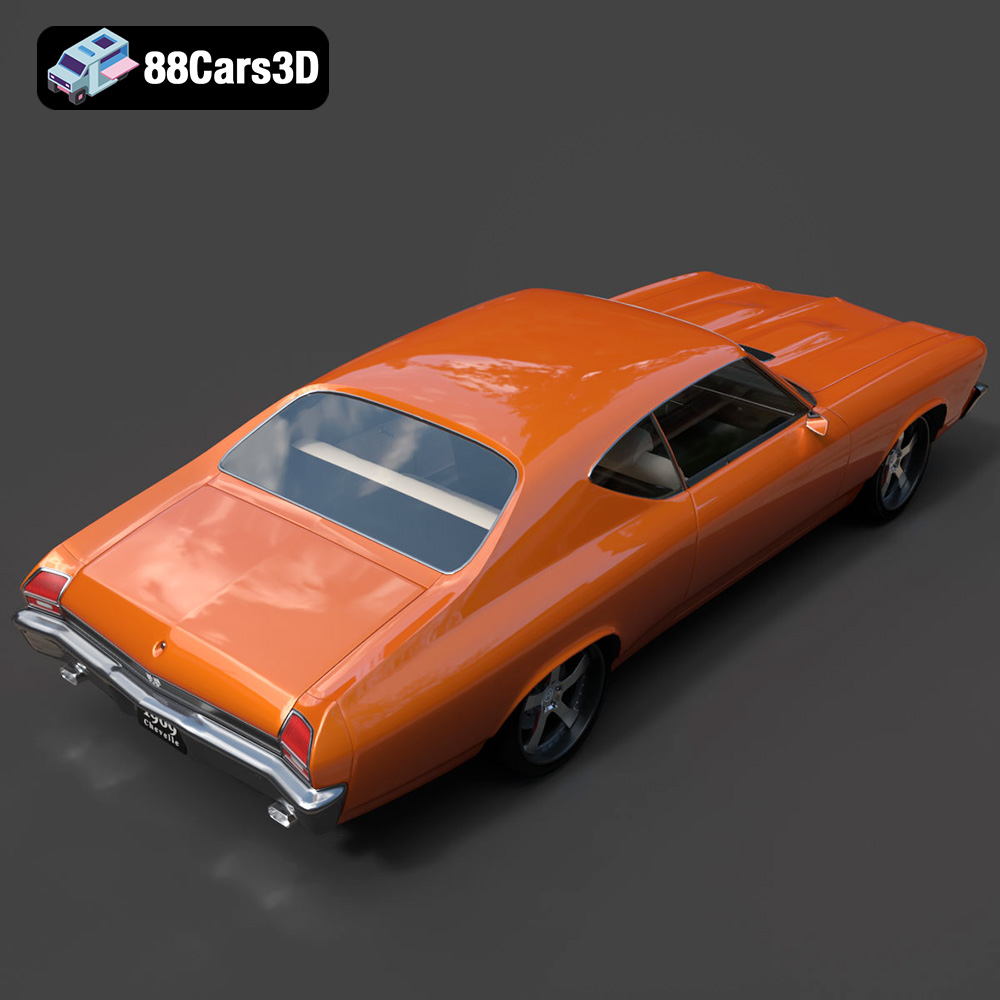
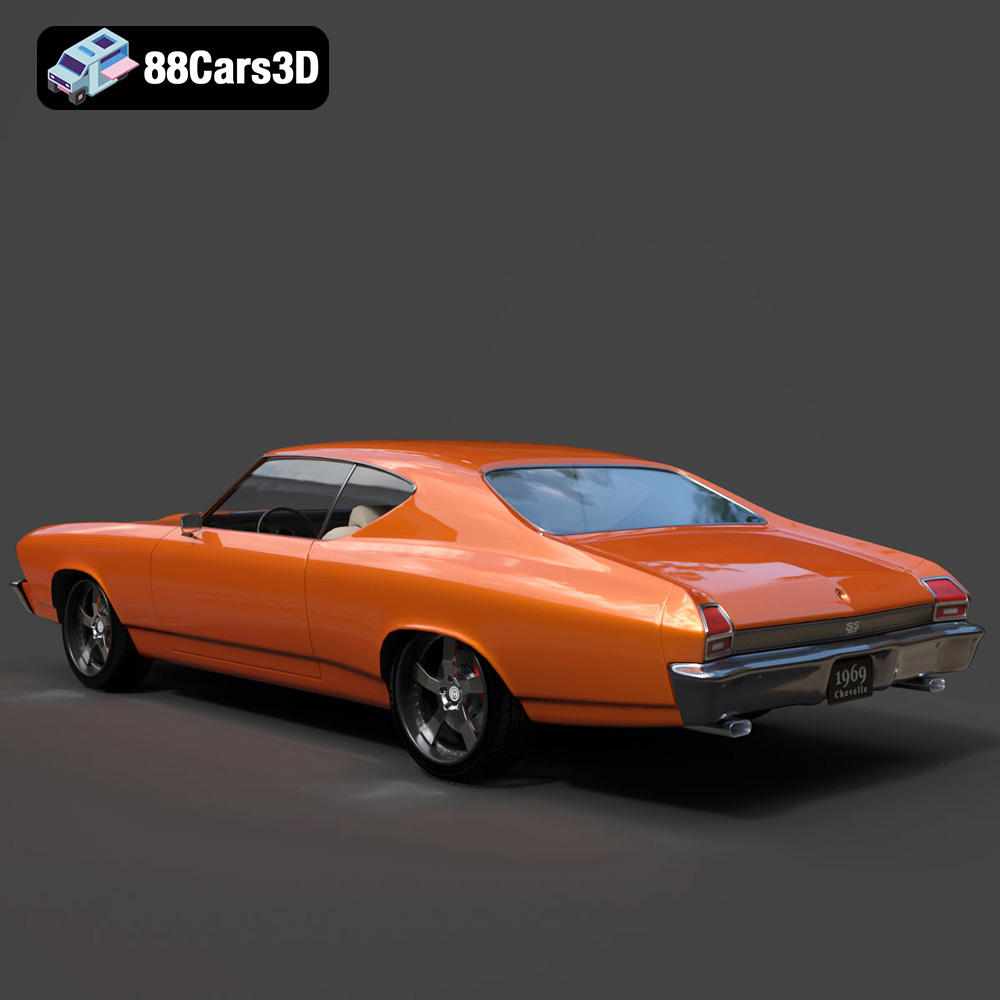
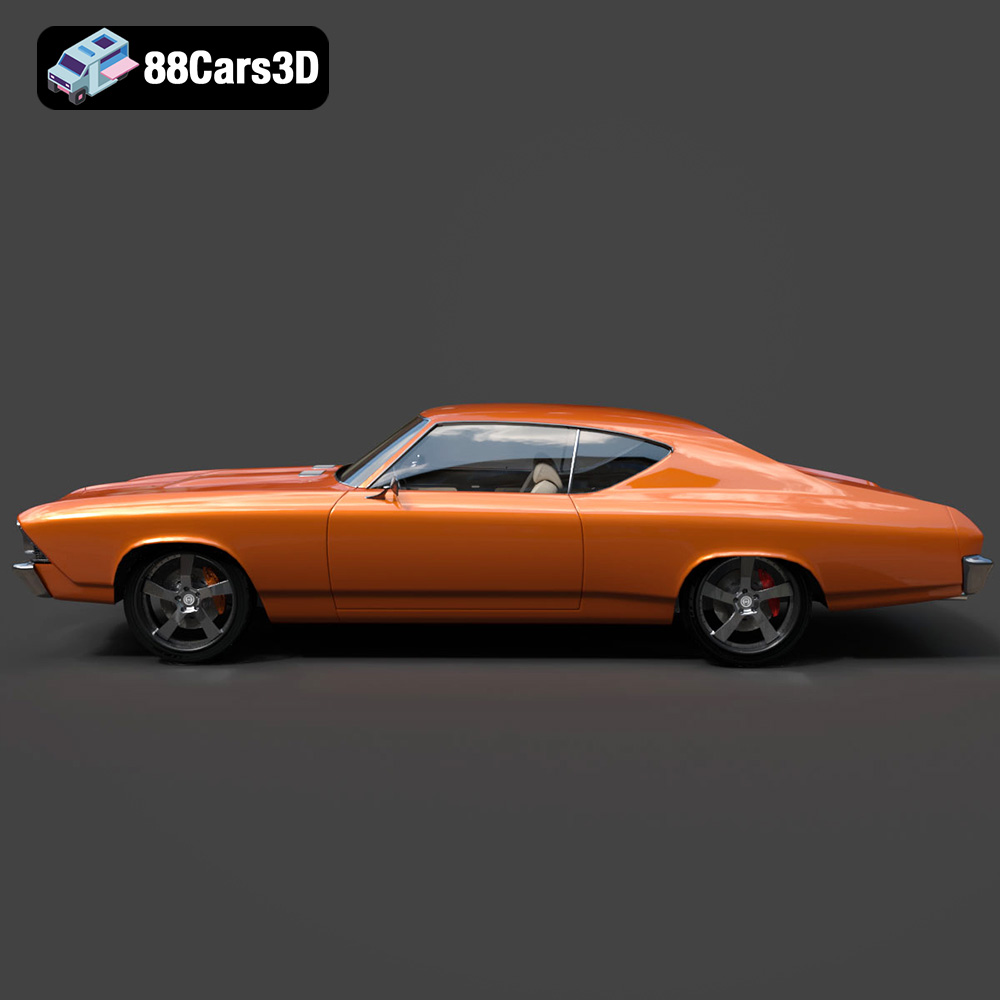
Imagine recreating the roaring engine, the gleam of chrome, and the unmistakable silhouette of a classic muscle car with meticulous accuracy. This is precisely what a premium 3D car model offers. The Chevrolet Chevelle SS 1969 3D Model from 88cars3d.com stands as a prime example, providing a comprehensive and technically sound digital representation of this legendary vehicle. It’s not just a model; it’s a meticulously crafted asset designed to be the cornerstone of diverse creative projects, from stunning automotive renders to immersive virtual experiences.
The transition of such a celebrated vehicle into the digital realm opens up endless possibilities. Whether it’s for a high-stakes drag racing simulation, an interactive classic car showroom in virtual reality, or a nostalgic advertisement, the demand for authentic and technically optimized 3D car models is constant. This article delves into the intricate world of digital automotive assets, exploring the technical considerations, workflow integrations, and creative potential unlocked by expertly crafted models like the Chevrolet Chevelle SS 1969. We’ll examine how these assets empower professionals to create stunning visuals and engaging experiences, ensuring that the legacy of American muscle continues to thrive in the digital age.
When working with 3D car models or any complex digital asset, selecting the correct file format is a critical decision that impacts compatibility, workflow efficiency, and the final output quality. Each format is designed with specific strengths, catering to different stages of the production pipeline, from initial modeling and animation to real-time rendering and physical fabrication. The Chevrolet Chevelle SS 1969 3D Model comes equipped with an extensive range of formats, ensuring maximum versatility for any project.
The .blend format is the native file type for Blender, a powerful open-source 3D creation suite. A .blend file typically encapsulates the entire scene, including the model’s geometry, materials, textures, lighting, camera setup, and even animation data. For users working primarily in Blender, this format offers full editability, allowing for seamless modifications to the Chevrolet Chevelle SS 1969 model’s topology, UVs, and material assignments. It’s ideal for artists who want to delve deep into the model’s construction, customize it extensively, or integrate it into a larger Blender-based project.
The .stl (Stereolithography) format is the industry standard for 3D printing. It represents a 3D model as a collection of unconnected triangular facets, defining the surface geometry without color, texture, or other attributes. For transforming the Chevrolet Chevelle SS 1969 into a physical collectible or prototype, the .stl file is essential. The model’s topology is clean and manifold, ensuring it’s ready for slicing software and robust 3D printing output, adhering to the specified 3D print settings.
The .max format is the native file type for Autodesk 3ds Max, a leading software for 3D modeling, animation, rendering, and visualization. Similar to .blend, a .max file contains all scene information, including complex material setups (like V-Ray or Corona materials), sophisticated rigging, animation sequences, and intricate lighting environments. For studios and artists primarily using 3ds Max, this format provides the most flexibility for leveraging the full capabilities of the software, enabling high-end cinematic renders and complex automotive animations of the Chevelle SS 1969.
Achieving photorealistic quality in automotive rendering and seamless performance in real-time environments hinges on the technical prowess of the 3D car models themselves. It goes beyond mere visual appeal; it requires meticulous attention to geometry, materials, and internal structure. The Chevrolet Chevelle SS 1969 3D Model exemplifies this technical excellence, built to meet the rigorous demands of professional production.
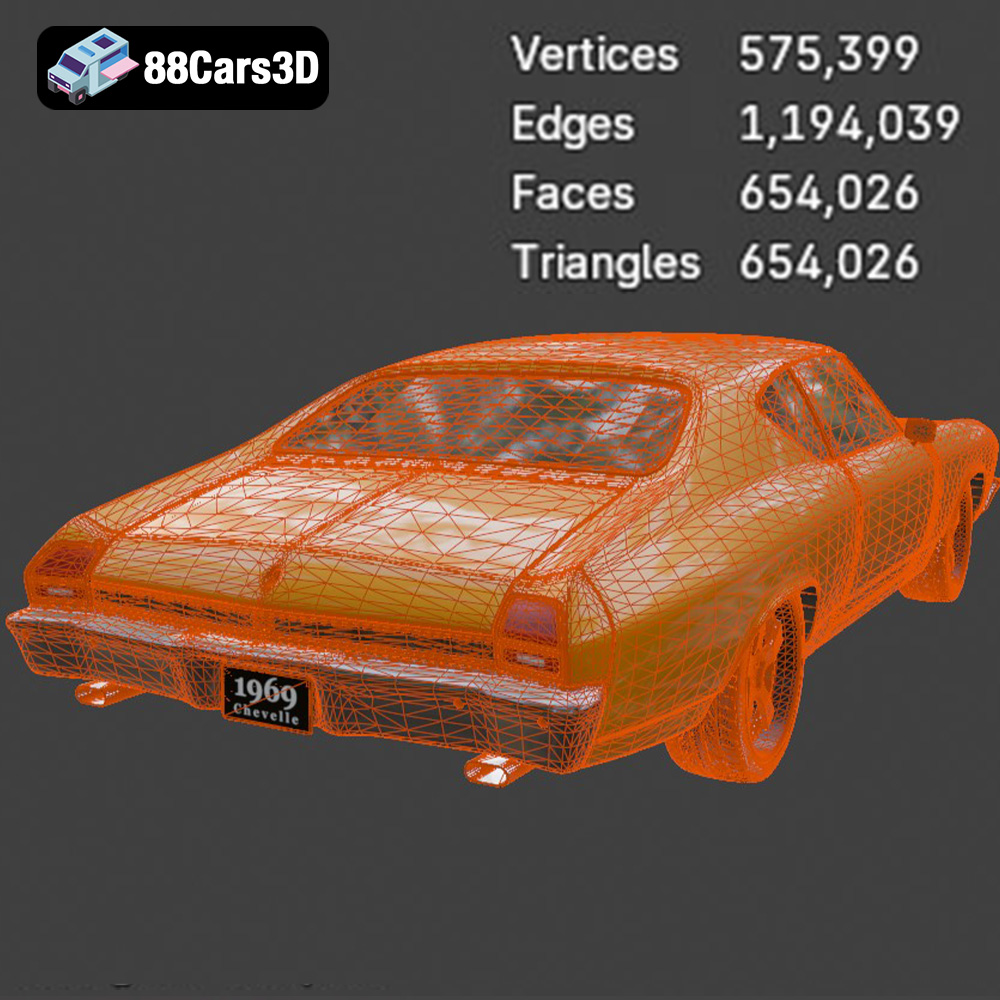
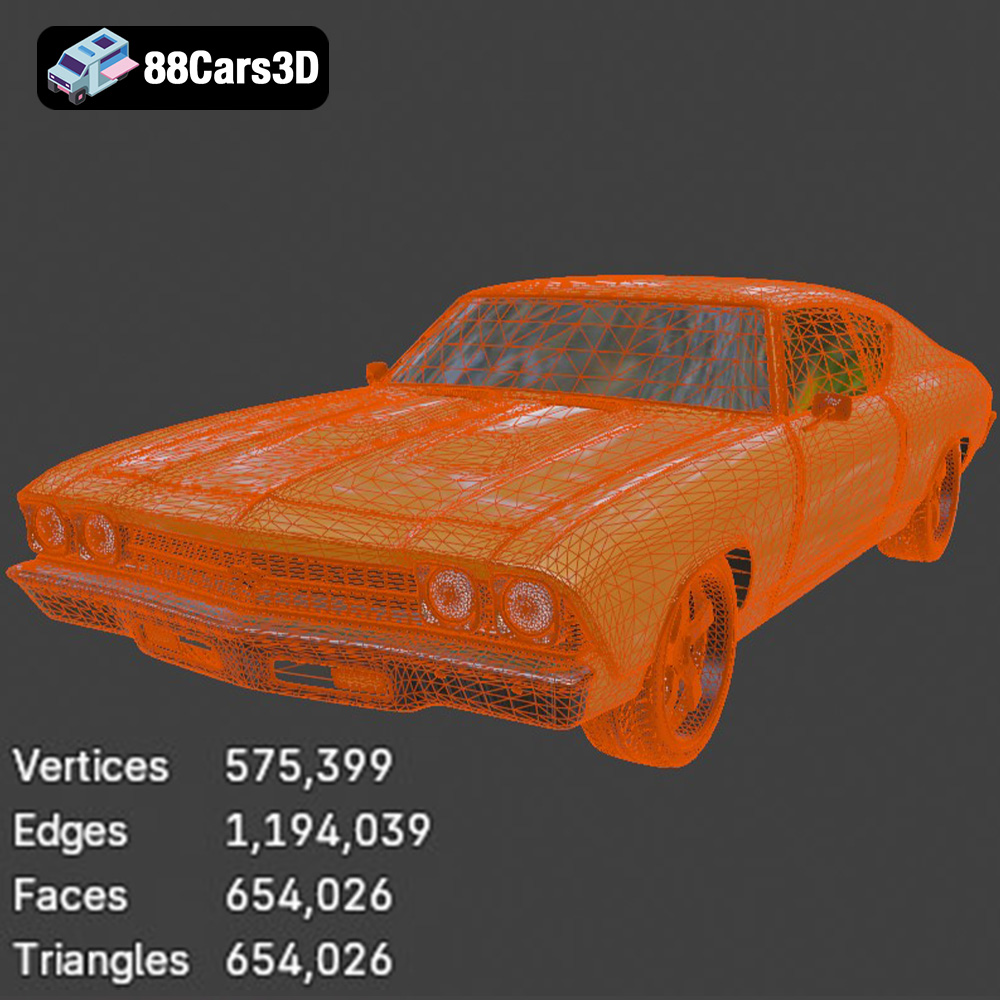
The foundation of any high-quality 3D model is its geometry and topology. For the Chevrolet Chevelle SS 1969, this translates to accurately representing every curve, panel gap, and body line. “Clean topology” means the mesh is constructed with quads (four-sided polygons) rather than triangles or n-gons (polygons with more than four sides) where possible, ensuring smooth subdivision, predictable deformation, and efficient UV mapping. The model boasts “optimized polygon flow,” which means the density of polygons is appropriately distributed—higher in areas requiring fine detail, lower in flatter surfaces—to strike a balance between visual fidelity and performance. This precision allows for smooth reflections and accurate shading, crucial for believable automotive rendering.
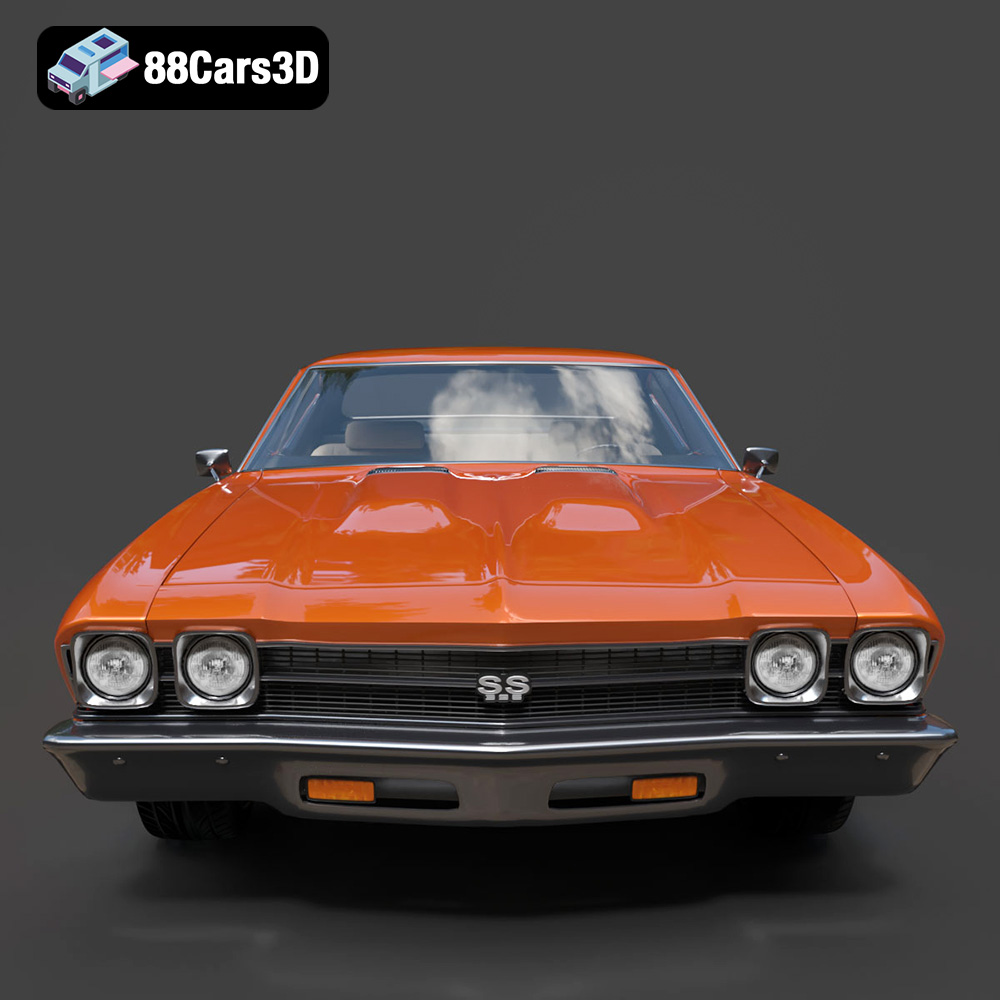
Materials and textures are the skin of the 3D model, dictating how light interacts with its surfaces. For the Chevelle SS 1969, this involves replicating the distinct sheens of polished chrome, the matte finish of the interior plastics, the subtle grain of the leather seats, and the reflective properties of glass. Physically Based Rendering (PBR) workflows are standard in professional contexts, using maps for albedo (color), roughness, metallic, normal, and ambient occlusion to accurately simulate real-world surface properties. The model’s materials are crafted to perform optimally, whether it’s in a V-Ray render for architectural visualization or an Unreal Engine scene for game development. The detailed dual headlight front grille, chrome bumpers, and SS badging all rely on expertly applied materials to achieve their iconic look.
A static model, however detailed, has limited utility in dynamic projects. The Chevrolet Chevelle SS 1969 3D Model is designed with animation in mind. Its “proper pivot setup for steering and wheel rotation” is a key technical advantage. This means that the wheels are separate objects with their pivot points correctly aligned at their rotational axes, allowing for easy animation of rolling and turning. Similarly, doors, hood, and trunk can be articulated for cinematic sequences or interactive experiences. This attention to functional rigging makes the model highly adaptable for animations in 3ds Max, Blender, or direct integration into game engines as a drivable vehicle game asset.
Integrating a premium 3D car model like the Chevrolet Chevelle SS 1969 into various professional workflows requires an understanding of software capabilities and pipeline best practices. This model’s multi-format availability ensures it fits seamlessly into diverse production environments, enhancing efficiency and final output quality.
For top-tier automotive rendering, 3ds Max remains a dominant force, especially when paired with renderers like V-Ray or Corona. The .max file format for the Chevrolet Chevelle SS 1969 provides a complete scene, often pre-configured with materials optimized for these render engines. Artists can load the model, adjust lighting, set up camera angles, and quickly produce photorealistic images for automotive marketing, classic car promotions, or high-end advertising visuals. The model’s “clean and well-organized mesh structure” and “real-world scale accuracy” are critical here, ensuring reflections behave correctly and proportions are true to life, preventing costly rework.
Unreal Engine is the go-to for interactive visualization, high-fidelity real-time experiences, and cinematic game development. The availability of an “.unreal” or optimized .fbx file for the Chevrolet Chevelle SS 1969 signifies its readiness for this powerful engine. This means the model likely includes:
With these features, the Chevelle SS 1969 can be dropped directly into a scene, ready for immediate use in driving simulators or interactive presentations.
Blender’s .blend format and the versatile .fbx format make the Chevrolet Chevelle SS 1969 an excellent game asset for Unity and a powerful tool for AR/VR development. Blender allows for rapid prototyping, custom animation, and integration with game-specific tools. Once prepared, exporting to Unity via .fbx is straightforward. For AR/VR, the .glb format is particularly valuable for its lightweight and optimized nature, making it ideal for creating immersive classic car showrooms or interactive automotive exhibitions without heavy computational overhead. The model’s “separate wheels and steering components for animation” are crucial for game and AR/VR projects where user interaction with the vehicle is expected.
The beauty of a meticulously crafted 3D car model extends beyond digital screens. With the advent of advanced 3D printing technologies, models like the Chevrolet Chevelle SS 1969 can be transformed into tangible, physical collectibles. This opens up entirely new avenues for enthusiasts, model makers, and designers.
The .stl file format is the universal language for 3D printers. The Chevrolet Chevelle SS 1969 3D Model, when provided in .stl format, is ready for immediate processing. Before printing, the model goes through a crucial step: slicing. Slicing software (like Cura, PrusaSlicer, or Chitubox) takes the .stl file and translates it into a series of thin layers, generating the G-code that directs the 3D printer. This process also allows for crucial adjustments like scale, layer height, infill density, and support structures, all of which are vital for a successful print. The model’s “manifold geometry” ensures that there are no gaps or errors in the mesh that could lead to printing failures, a common issue with lower-quality 3D models.
The product description provides specific 3D print settings, which are invaluable guidelines:
These settings underscore the model’s optimization for physical output, ensuring a high-quality collectible scale muscle car model.
3D printing is often just the beginning. The “post-processing” recommendations – sanding, primer, gloss muscle-car paint finish, optional chrome detailing – highlight the potential for transforming a raw print into a stunning display piece. This attention to detail allows enthusiasts to personalize their Chevelle SS miniature, mirroring the customization options available in the digital model, such as changing body color or adding racing stripes. The ability to print and finish this model makes it not just a digital asset, but a complete solution for creating unique automotive collectibles.
The versatility of the Chevrolet Chevelle SS 1969 3D Model extends across numerous professional fields, demonstrating its value as a core asset for compelling visual and interactive content. Its robust technical foundation makes it suitable for demanding projects that require both aesthetic appeal and functional accuracy.
In the highly competitive automotive industry, captivating visuals are crucial for marketing and advertising. High-detail 3D car models like the Chevelle SS 1969 are indispensable for creating stunning visual campaigns without the expense and logistical challenges of physical photoshoots. Imagine a nostalgic TV commercial for a modern car brand, featuring the Chevelle SS cruising down a retro boulevard, flawlessly rendered in 4K resolution using 3ds Max and V-Ray. This model’s “accurate 1969 Chevelle SS body proportions” and “chrome front and rear bumpers” allow for photorealistic product placements in advertisements, showcasing the allure of classic design alongside modern vehicles. It’s ideal for “classic car showcases, drag racing scenes, and retro urban environments,” providing authentic period-correct assets that resonate with enthusiasts.
Augmented Reality (AR) and Virtual Reality (VR) are transforming how we interact with products and historical artifacts. The Chevrolet Chevelle SS 1969 3D Model is perfectly suited for these immersive platforms.
Game developers constantly seek high-quality game assets to build believable and engaging virtual worlds. The Chevrolet Chevelle SS 1969 3D Model offers a fantastic resource for titles ranging from racing simulators to open-world adventures. Its “optimized polygon flow for performance and realism” is crucial for maintaining high frame rates in complex game environments.
The model’s readiness for Unreal Engine and Unity via .fbx or .unreal formats significantly accelerates development, allowing artists and developers to focus on gameplay and storytelling.
In the fast-paced world of 3D production, the quality and accessibility of assets can make or break a project. Relying on expertly crafted 3D car models like the Chevrolet Chevelle SS 1969 from 88cars3d.com offers distinct advantages that streamline workflows and elevate final results.
Creating a highly detailed, topologically clean, and accurately textured 3D car model from scratch is an incredibly time-consuming and skill-intensive process. It requires hundreds of hours of modeling, UV mapping, texturing, and optimization. By purchasing a professional-grade asset, artists and studios significantly reduce their production timelines and costs. The Chevrolet Chevelle SS 1969 3D Model from 88cars3d.com arrives “built with clean topology and real-world scale accuracy,” ensuring that the foundational work is already perfect. This minimizes the need for extensive cleanup or adjustments, allowing teams to immediately focus on integration, rendering, and creative customization rather than starting from zero. This quality assurance translates directly into higher standards for final projects, whether for automotive rendering, game development, or AR/VR experiences.
A premium 3D model isn’t just a static object; it’s a flexible foundation for creative expression. The Chevrolet Chevelle SS 1969 model offers extensive “customization options” that allow artists to tailor it to specific project requirements.
The inclusion of multiple file formats (.blend, .fbx, .obj, .glb, .stl, .ply, .unreal, .max) further underscores its adaptability, guaranteeing compatibility with virtually any professional 3D software or engine. This comprehensive package makes the Chevrolet Chevelle SS 1969 3D Model an invaluable investment for any creative professional seeking to integrate an iconic piece of automotive history into their digital projects.
The digital realm offers unparalleled opportunities to bring iconic vehicles like the Chevrolet Chevelle SS 1969 back to life. From high-definition automotive rendering and immersive AR/VR experiences to dynamic game assets and tangible 3D prints, the demand for meticulously crafted 3D car models continues to grow. The Chevrolet Chevelle SS 1969 3D Model stands as a testament to the power of digital craftsmanship, providing a technically robust and aesthetically accurate asset ready for the most demanding professional projects.
Its comprehensive file format support, clean topology, detailed features, and animation readiness ensure seamless integration into diverse workflows, be it in 3ds Max, Blender, Unreal Engine, or for physical 3D printing. By leveraging premium assets from marketplaces like 88cars3d.com, creators can save invaluable time, maintain exceptional quality, and focus their energies on innovation and storytelling. Embrace the power of expertly designed digital assets to accelerate your projects and bring your creative visions to life with the timeless allure of American muscle.
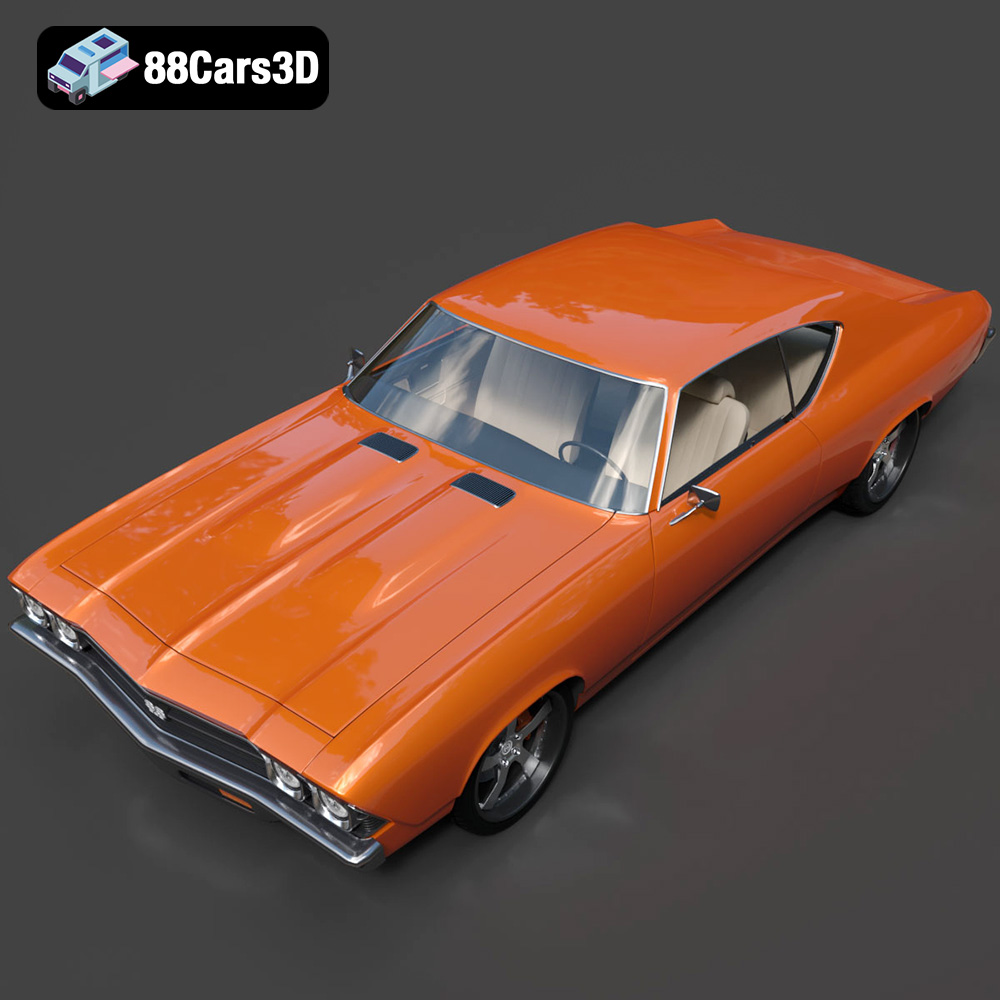
The Chevrolet Chevelle SS 1969 3D Model is a high-detail digital recreation of one of the most iconic American muscle cars of the late 1960s. Known for its aggressive styling, powerful V8 performance, and bold street presence, the 1969 Chevelle SS remains a symbol of classic muscle car heritage. This 3D model accurately represents the long hood and short deck proportions, signature dual headlight front fascia, SS badging, muscular body lines, chrome bumpers, detailed grille, performance wheels, and period-correct interior layout. Built with clean topology and real-world scale accuracy, it is ideal for rendering, animation, automotive visualization, game development, and AR/VR experiences.
$39.9
.1969chevelle
.arvr
.automotive
.blend
.car3dmodel
.chevelle
.chevelless
.chevrolet
.classiccar
.fbx
.gameasset
.glb
.max
.musclecar
.obj
.ply
.rendering
.simulation
.stl
.unreal
.vintagecar