⚡ FLASH SALE: Get 60% OFF All Premium 3D & STL Models! ⚡

In the vast landscape of 3D content creation, the allure of exotic supercars and futuristic vehicles often dominates. However, for artists, developers, and architects striving for true realism and regional authenticity, the everyday workhorses of the road are often the most crucial assets. These vehicles, humble in their real-world presence, become powerful storytelling tools in digital environments. They anchor scenes in a believable reality, evoke specific geographical contexts, and resonate with audiences who recognize them from their daily lives.
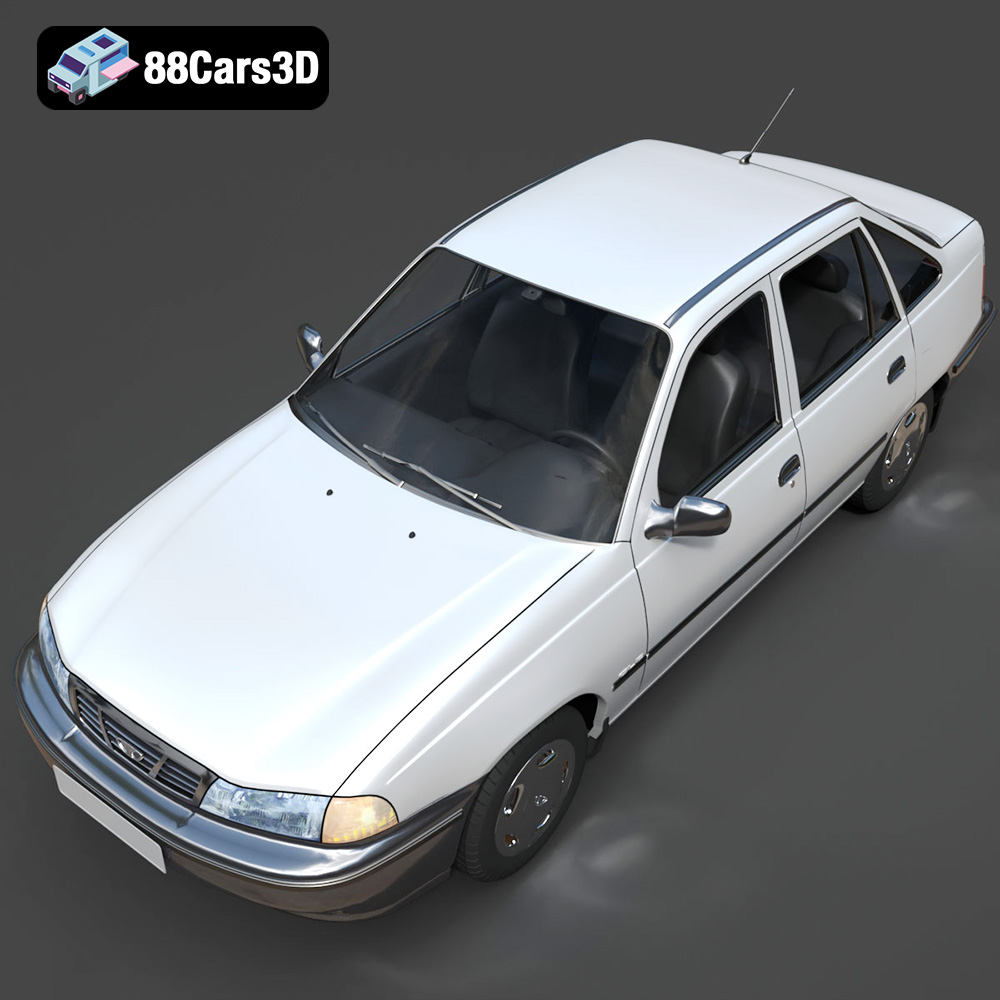
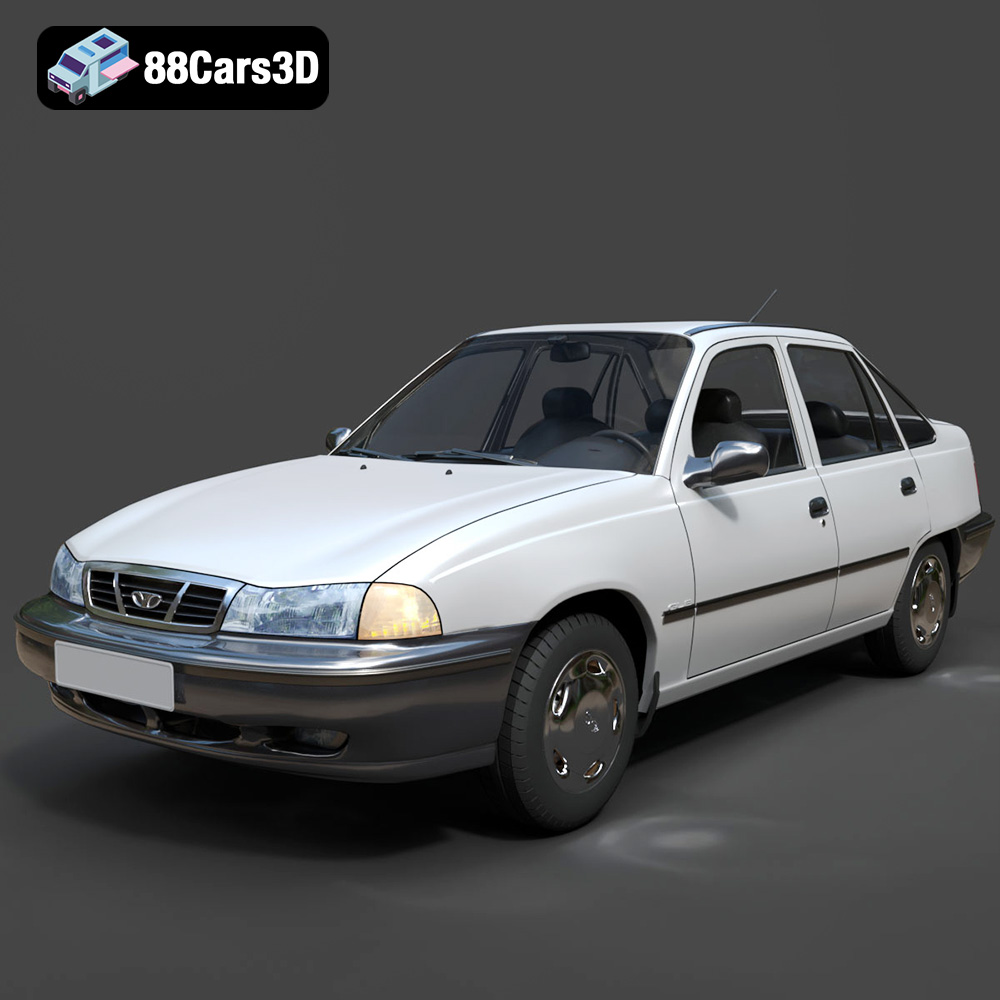
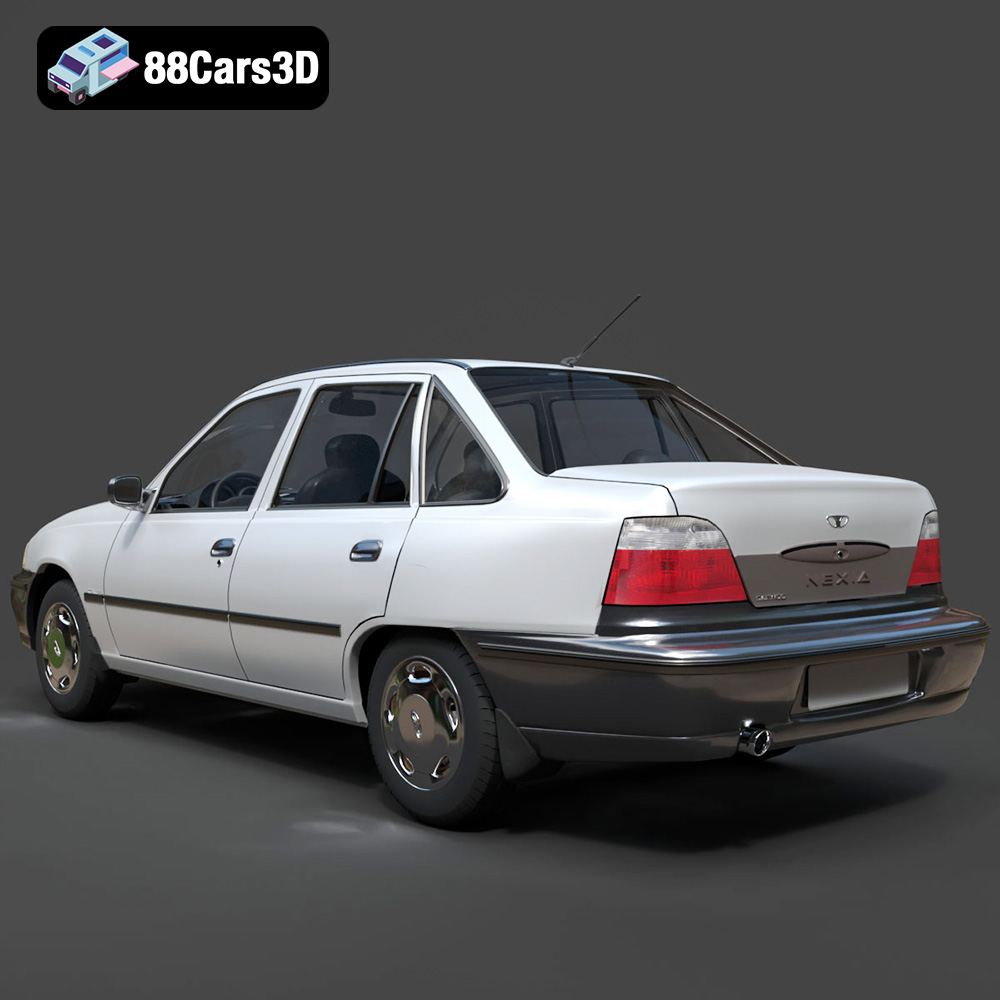
Today, we’re taking a deep dive into precisely such an asset: the Daewoo Nexia (N150) 3D Model. This isn’t just another car model; it’s a meticulously crafted digital recreation of a legendary budget-friendly sedan that has shaped the urban and suburban landscapes across Eastern Europe, Russia, and Central Asia for decades. Whether it’s serving as a reliable family car, a ubiquitous urban taxi, or a dependable daily commuter, the Nexia N150 is an absolute staple. Its presence in a digital scene instantly grounds it in a specific cultural and economic context, making it an invaluable addition for anyone creating realistic visualizations or interactive experiences for these regions. Understanding the technical nuances behind such a versatile 3D asset is key to unlocking its full potential in your professional projects.
Navigating the diverse world of 3D modeling often begins with understanding the myriad of file formats available. Each format serves a specific purpose, offering unique advantages for different stages of the production pipeline, from initial design and animation to real-time rendering and 3D printing. When sourcing high-quality 3D car models, such as the Daewoo Nexia (N150) from 88cars3d.com, it’s crucial to know which format best suits your project’s needs. The comprehensive package for the Daewoo Nexia N150 includes a wide array of formats, ensuring maximum compatibility and flexibility.
The .blend format is the native file type for Blender, the powerful open-source 3D creation suite. A .blend file typically encapsulates an entire Blender scene, including all 3D models, materials, textures, lighting setups, cameras, animations, physics simulations, and even scripts. For users deeply integrated into the Blender ecosystem, this format offers the most complete and editable version of the model. It allows for full control over every aspect of the asset, from mesh topology adjustments to material node network modifications, making it ideal for artists who want to customize the Daewoo Nexia N150 extensively or integrate it seamlessly into existing Blender scenes.
.fbx (Filmbox) is arguably the most prevalent and robust 3D exchange format in the industry. Developed by Autodesk, it’s designed to facilitate interoperability between various 3D software applications and, critically, game engines like Unreal Engine and Unity. FBX files can store not only geometry but also complex data such as skeletal animations, blend shapes, lights, cameras, and material properties. For integrating the Daewoo Nexia N150 into real-time pipelines, simulation environments, or for transferring it between different DCC (Digital Content Creation) tools, .fbx is the go-to choice due to its broad support and ability to preserve intricate scene data reliably.
The .obj (Wavefront OBJ) format is one of the oldest and most widely supported 3D file formats. It’s a simple, text-based format primarily used for storing 3D geometry – vertices, faces, normals, and UV coordinates. While .obj files can reference external material (.mtl) files for basic color and texture information, they do not support complex features like animation or rigging. Its universal compatibility makes it an excellent choice for straightforward mesh exchange across almost any 3D software. If you need a clean, basic mesh of the Daewoo Nexia N150 for architectural visualization or for importing into niche software, .obj remains a reliable option.
.glb (GL Transmission Format, binary) is rapidly gaining traction as the standard for 3D web content, augmented reality (AR), and virtual reality (VR) applications. It’s a binary version of glTF, which packages all necessary assets (model, textures, animations) into a single, self-contained file. This makes .glb extremely efficient for online streaming, fast loading in browsers, and deployment on mobile AR/VR platforms. For artists looking to showcase the Daewoo Nexia N150 in an interactive web viewer or integrate it into an AR experience, the .glb format provides an optimized and streamlined solution.
.stl (Stereolithography) is the undisputed king of 3D printing file formats. It represents a 3D model as a series of connected triangles (a tessellated mesh) that define its surface geometry. Crucially, .stl files do not contain color, texture, or material information – they focus solely on the shape, ensuring that the physical dimensions and structural integrity are preserved for manufacturing. The inclusion of an .stl file for the Daewoo Nexia N150 signifies its readiness for physical output, allowing hobbyists and professionals to create tangible scale models or prototypes, perfect for urban dioramas or automotive collectibles.
The .ply (Polygon File Format) is another format for storing 3D data, often used with 3D scanners. It can store a wider range of data than .obj, including color, transparency, normals, texture coordinates, and other properties per vertex or per face. While not as universally adopted as .obj or .fbx, .ply is valuable in scientific, engineering, and CAD applications where precise mesh data and additional attributes are critical. For detailed analysis or specialized prototyping of the Daewoo Nexia N150’s geometry, .ply can be a useful format.
While not a traditional file format in the same sense as .fbx or .obj, the inclusion of a .unreal file (or a package explicitly optimized for Unreal Engine) typically indicates an asset that has been prepared and configured for direct import and use within Unreal Engine. This might involve optimized FBX files with pre-configured materials, textures, collision meshes, and potentially even basic blueprints for functionality like door opening or wheel rotation. For game developers and real-time visualization artists, having a model like the Daewoo Nexia N150 prepped for Unreal Engine significantly reduces setup time and streamlines the integration process, allowing for immediate application in virtual environments.
Finally, the .max format is the native file type for Autodesk 3ds Max, a leading software for 3D modeling, animation, rendering, and visual effects. Similar to .blend, a .max file stores an entire scene, including all geometric data, materials, textures, lighting, cameras, and animation curves specific to 3ds Max. For professionals working within a 3ds Max pipeline, this format provides the most complete and editable version of the Daewoo Nexia N150, allowing for advanced rendering setups with V-Ray or Corona, complex animation rigging, and full leverage of 3ds Max’s extensive toolset.
The availability of these diverse formats ensures that the Daewoo Nexia N150 3D Model is not just a static asset, but a dynamic tool adaptable to virtually any professional 3D workflow you might encounter.
While the digital world often celebrates the exotic and the cutting-edge, the true magic of believable environments often lies in the mundane and the familiar. For countless projects, especially those set in specific geographical or cultural contexts, the presence of region-specific vehicles is not just an aesthetic choice, but a narrative imperative. The Daewoo Nexia N150 epitomizes this concept, serving as a powerful anchor for authenticity.
Imagine a meticulously rendered architectural visualization of a street scene in Kyiv, Almaty, or Tashkent. While the buildings might be perfectly modeled, the absence of characteristic vehicles would immediately break the immersion. The Daewoo Nexia N150, a staple across Eastern Europe, Russia, and Central Asia, fills this void with remarkable precision. Its widespread use as a family car, taxi, and daily commuter means its inclusion instantly communicates a sense of place and time. When digital artists and developers prioritize such regional details, they elevate their projects from generic to genuinely immersive, fostering a deeper connection with the intended audience. The model’s “goldilocks zone” polycount ensures it looks great up close for hero shots in ArchViz and performs efficiently as background traffic.
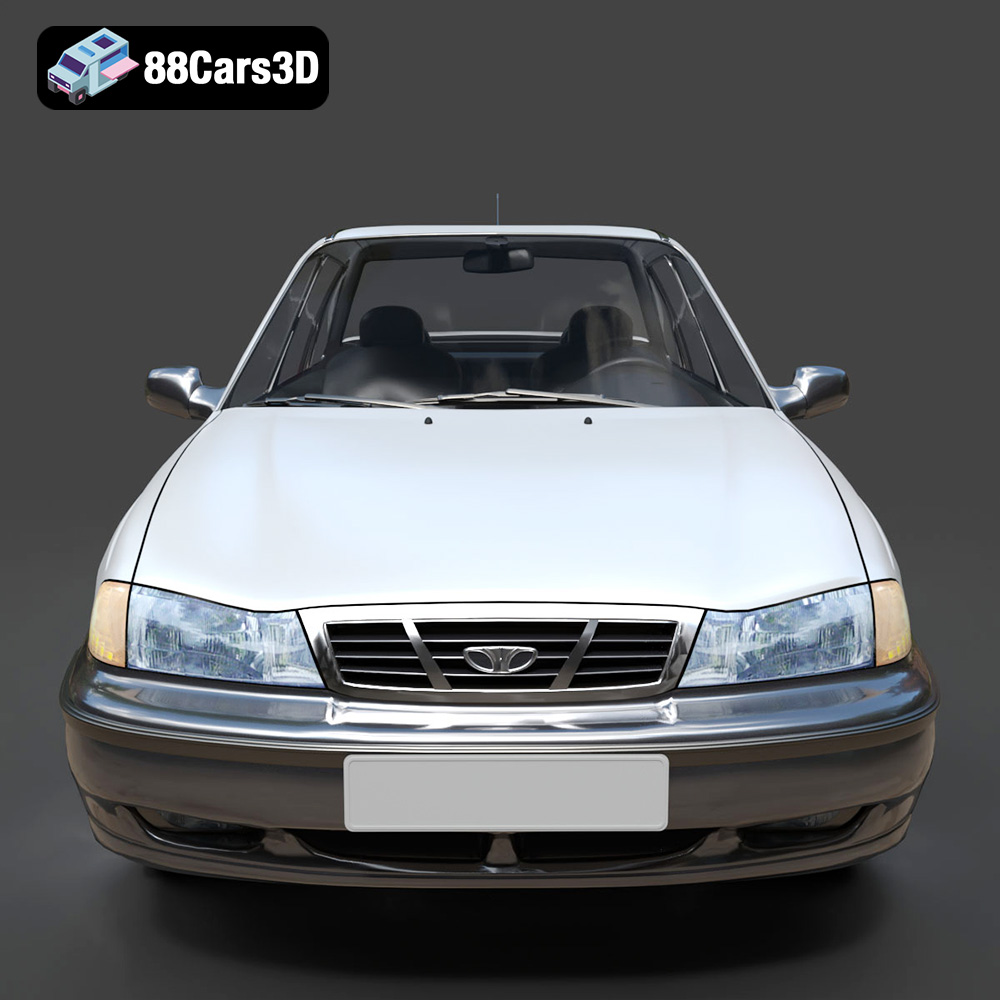
The journey from a physical car to a high-quality 3D model like the Daewoo Nexia N150 is a testament to skilled digital craftsmanship. It involves meticulous research, referencing countless photographs and blueprints, to accurately translate the vehicle’s unique proportions, curves, and features. The N150 facelift, with its updated projector-style headlight housings and smoothed-out bumper and grille, required careful attention to detail to differentiate it from earlier generations. Beyond the exterior, capturing the “authentic, practical driver-centric cabin layout” and “classic steering wheel” means understanding the vehicle’s interior essence. This deep understanding ensures that the digital asset is not merely a generic sedan, but recognizably the Daewoo Nexia N150, ready to breathe life into virtual scenes.
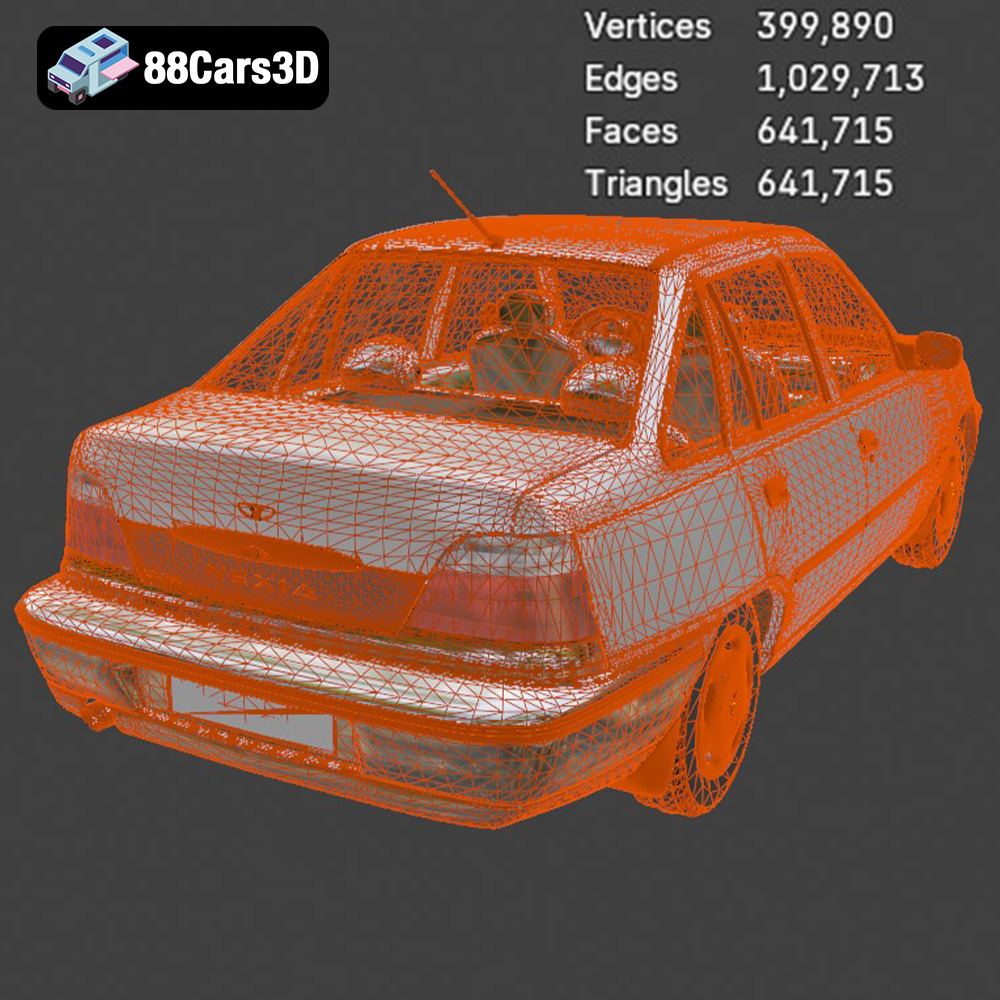
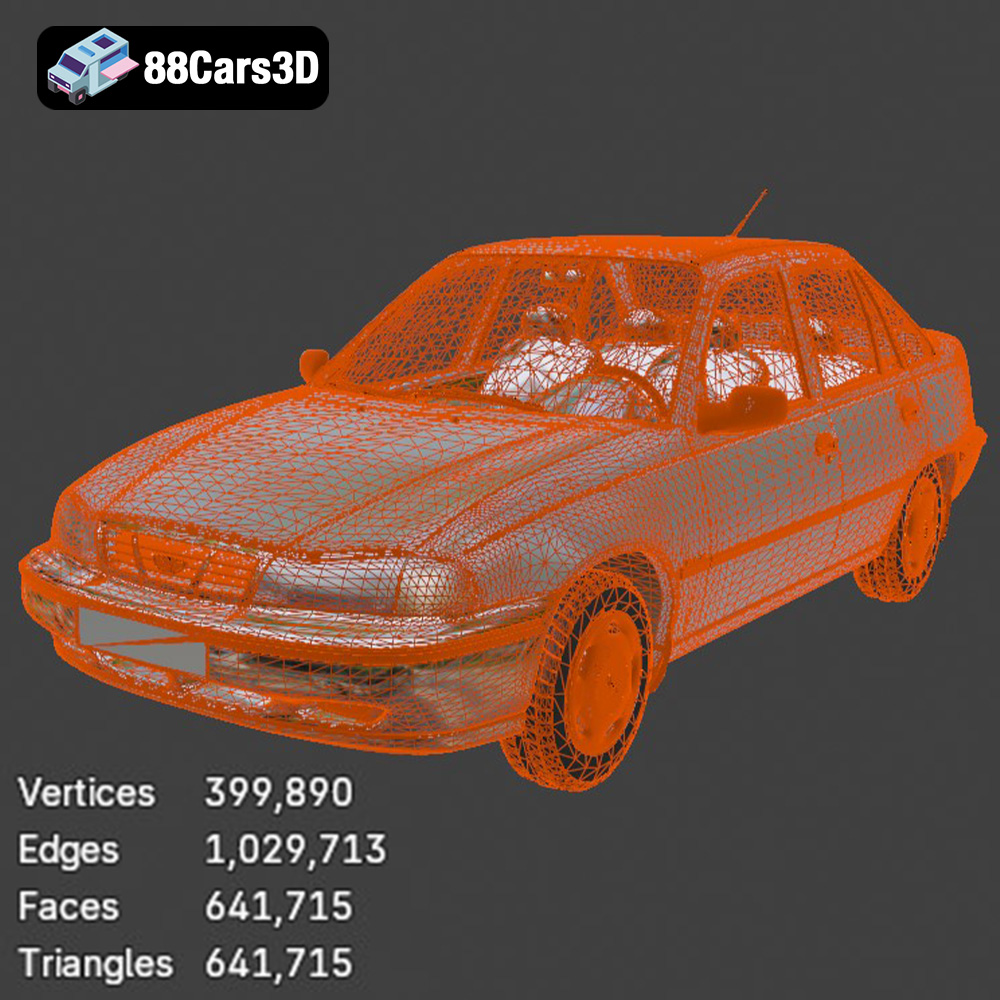
In 3D modeling, especially for applications spanning rendering and real-time game engines, finding the perfect balance between visual fidelity and performance is paramount. This balance is often dictated by the model’s polygon count. The Daewoo Nexia (N150) 3D Model exemplifies this ideal, positioning itself squarely in what we refer to as the “Goldilocks zone.”
With a reported 641,715 triangles (or faces) and 399,890 vertices, the Daewoo Nexia N150 model offers a sweet spot for professional use. Extremely high-poly models, often derived from CAD data, might boast millions of polygons, providing hyper-realistic detail but crippling performance in real-time applications. Conversely, overly low-poly models (e.g., under 100k triangles) might run smoothly but lack the detail required for close-up renders or modern gaming standards. The N150’s ~641k triangle count is detailed enough to hold up beautifully in high-quality architectural visualizations (ArchViz) as a foreground vehicle, showcasing realistic panel gaps, detailed lighting, and refined body geometry. Simultaneously, it’s remarkably optimized for use as a drivable hero car or a dense background traffic asset in modern game engines like Unreal Engine and Unity, without introducing severe lag. This “Goldilocks zone” ensures that the model provides excellent visual fidelity while remaining highly efficient, saving valuable development time and computational resources.
Beyond the raw polygon count, the quality of a 3D model is defined by its underlying structure. The Daewoo Nexia N150 boasts “perfectly balanced topology,” indicating clean mesh flow crucial for deformation, texturing, and overall stability. This includes meticulous attention to features like “realistic panel gaps, door handles, and functional side mirrors.” Proper UV mapping is another critical technical aspect; it dictates how textures are applied to the 3D surface. A well-laid-out UV map minimizes stretching and allows for efficient texture creation and material application, ensuring the cloth/vinyl textures on the interior seating or the paint on the exterior appear crisp and realistic. Furthermore, the model’s structure features “separate wheels, steering components, and doors for rigging and animation,” a crucial detail for game developers and animators who need to manipulate these elements independently for realistic motion and interaction.
The true value of a versatile 3D asset lies in its seamless integration into diverse professional pipelines. The Daewoo Nexia N150 3D Model from 88cars3d.com is engineered for flexibility, making it an indispensable tool across various industries, from architectural visualization to cutting-edge game development.
For automotive rendering and architectural visualization (ArchViz), realism is paramount. Artists using 3ds Max or Blender will find the Daewoo Nexia N150 an ideal asset. The process typically begins with importing the .max or .blend file, or an .fbx if working between software. Once imported, artists can leverage the model’s clean topology and accurate UVs to apply PBR (Physically Based Rendering) materials. This involves setting up realistic paint shaders, glass, rubber, and chrome, often using renderers like V-Ray, Corona, or Cycles. Lighting is crucial; setting up studio lighting for a product showcase or integrating the car into an exterior scene with HDRI (High Dynamic Range Image) environment maps will dictate the mood. For ArchViz projects set in Eastern Europe or Central Asia, the Nexia N150 becomes a focal point. Imagine a residential street scene: the model can be strategically placed to provide region-accurate traffic, parked outside an apartment building, or even animated to drive through the scene, adding an unparalleled layer of authenticity that generic models simply cannot provide. The “real-world scale accuracy” ensures it fits perfectly within any architectural design.
Game developers face the constant challenge of balancing visual quality with performance, especially for open-world environments. The Daewoo Nexia N150’s “Goldilocks zone” polycount makes it an excellent candidate for real-time applications in engines like Unreal Engine and Unity. When integrating into Unreal Engine, the included `.unreal` package (or optimized .fbx) streamlines the process. This typically involves importing the model, setting up material instances to allow for easy color changes or weathering, and potentially creating Level of Detail (LOD) meshes to optimize performance at varying distances. For a drivable hero car, the separate wheels and steering components are essential for rigging with vehicle physics systems. Collision meshes must also be generated for realistic interactions. As a background traffic asset for simulators or open-world games, its optimized geometry allows for dense populations without significant frame rate drops. Its ability to serve as a recognizable element in “urban taxi simulators” or for “populating realistic CIS or Eastern European street scenes” makes it a top-tier game asset.
The utility of a robust 3D model isn’t confined to digital displays. The Daewoo Nexia (N150) 3D Model extends its versatility into the tangible world through 3D printing, offering a unique avenue for creation, from scale models to automotive collectibles.
The inclusion of the .stl format is a clear indicator that this model is designed with physical output in mind. STL files represent the surface geometry of a 3D object using a collection of connected triangles. For successful 3D printing, the mesh must be “manifold,” meaning it has a watertight, closed surface with no gaps or inversions. The Daewoo Nexia N150 is prepared for this, allowing enthusiasts and professionals to bring the digital sedan into the physical realm. The recommended scales of 1:24, 1:32, or 1:43 are perfect for urban dioramas or display-scale classic diecast hobbyists. While FDM (Fused Deposition Modeling) printers can produce larger, robust models, the product description specifically recommends resin printing for smaller scale details and finer surface finishes, which is crucial for capturing the N150’s distinct headlamp housings, subtle panel lines, and crisp body geometry that might be lost with less precise FDM methods.
3D printing is just the first step in creating a compelling physical model. The provided print settings offer a roadmap: a layer height of 0.04–0.12 mm for high detail, a wall thickness of 1.2–2.0 mm for structural integrity, and 15–25% infill for a balance of strength and material usage. Critical for any complex automotive shape, “supports are required for side mirrors, wheel arches, and exhaust” to prevent overhangs from deforming during the print process. After printing, post-processing is where the model truly comes to life. This typically involves careful removal of supports, sanding to smooth any layer lines or imperfections, and applying a primer coat. From there, the creativity unfolds with painting. The suggestion of “classic factory colors (like Silver Metallic, Sahara Dust, or Classic White)” guides users toward an authentic representation, allowing for meticulous detailing to replicate the original vehicle’s finish. This entire process allows for the creation of unique, custom-made automotive collectibles or integrated components for physical architectural models.
A truly valuable 3D asset is one that sparks creativity and adapts to a multitude of storytelling possibilities. The Daewoo Nexia N150 3D Model is not a static object but a versatile canvas, ready to be transformed for diverse narratives and advanced digital experiences.
The customization options for the Daewoo Nexia N150 are designed to help artists imbue their scenes with unique character and narrative depth. Imagine transforming the standard sedan into a vibrant city taxi by “add[ing] classic yellow ‘Taxi’ roof signs and checker decals.” This simple modification instantly changes its role and context within an urban environment. Alternatively, applying “weathering materials (dust, mud, or snow)” can transport the car from a pristine showroom to a gritty, realistic winter environment or a post-apocalyptic landscape. Changing exterior paint colors allows for stylistic choices, from “striking, vibrant” modern hues to “weathered city-car palettes” reflecting years of use. Artists can “adapt lighting for sunny urban commutes or moody, rainy night-time city streets,” further enhancing the atmosphere. This flexibility means the Daewia Nexia N150 isn’t confined to a single role; it can be a brand-new car on a dealer lot, a taxi navigating a bustling metropolis, or a forgotten relic in an overgrown setting, all within the same foundational model.
Beyond traditional rendering and game development, the Daewoo Nexia N150 finds innovative applications in emerging technologies like Augmented Reality (AR) and Virtual Reality (VR). The inclusion of the .glb format is particularly advantageous here, as it’s optimized for efficient deployment in web-based AR/VR experiences and mobile applications. Imagine interactive digital city-planning VR experiences where users can explore virtual environments populated with region-accurate vehicles like the Nexia. This model could also be used in AR applications, allowing users to place a virtual Daewoo Nexia N150 into their real-world environment via a smartphone, visualizing it in their driveway or on their street. For developers building comprehensive digital cityscapes or interactive virtual tours, having such a culturally relevant vehicle is crucial for enhancing immersion and providing a realistic sense of scale and place. The Daewoo Nexia N150 truly helps bridge the gap between digital realism and interactive engagement.
In the demanding world of 3D content creation, the difference between a good project and a truly exceptional one often lies in the details. The Daewoo Nexia (N150) 3D Model stands as a prime example of a meticulously crafted asset that offers profound value through its technical excellence, cultural authenticity, and versatile applications. From its “Goldilocks zone” polycount that balances visual fidelity with real-time performance to its comprehensive array of file formats, every aspect of this model is designed to empower artists and developers.
Whether you’re striving for unparalleled realism in an architectural visualization set in Eastern Europe, seeking to populate a vibrant open-world game with region-accurate traffic, or venturing into the exciting realms of AR/VR, the Daewoo Nexia N150 provides a robust, ready-to-use solution. Its adaptability for 3D printing further extends its utility, bridging the digital and physical divide for hobbyists and professionals alike. Choosing the right 3D car models is a strategic decision that can significantly elevate your project’s impact and efficiency.
For those committed to creating truly immersive and believable digital worlds, assets like the Daewoo Nexia N150 are not just components; they are essential building blocks. Explore this and other high-quality 3D car models at 88cars3d.com to bring your vision to life with precision and authenticity.
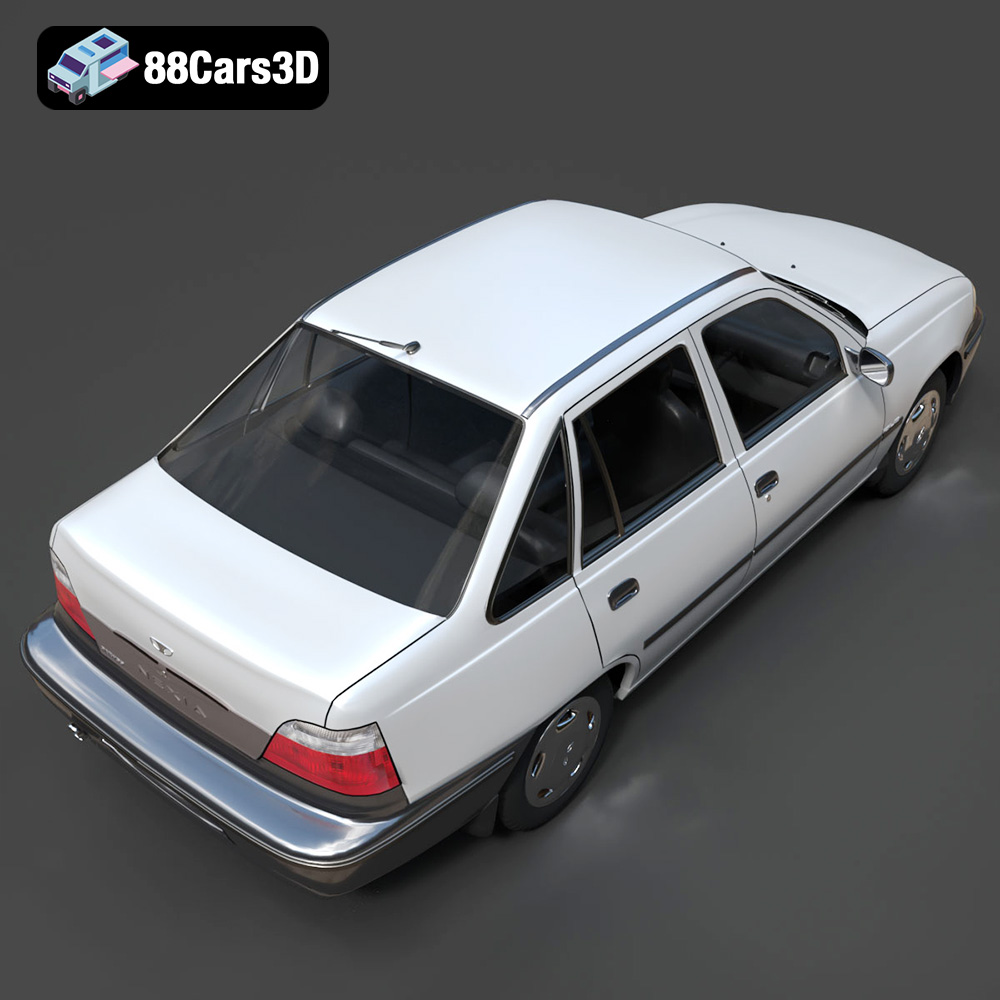
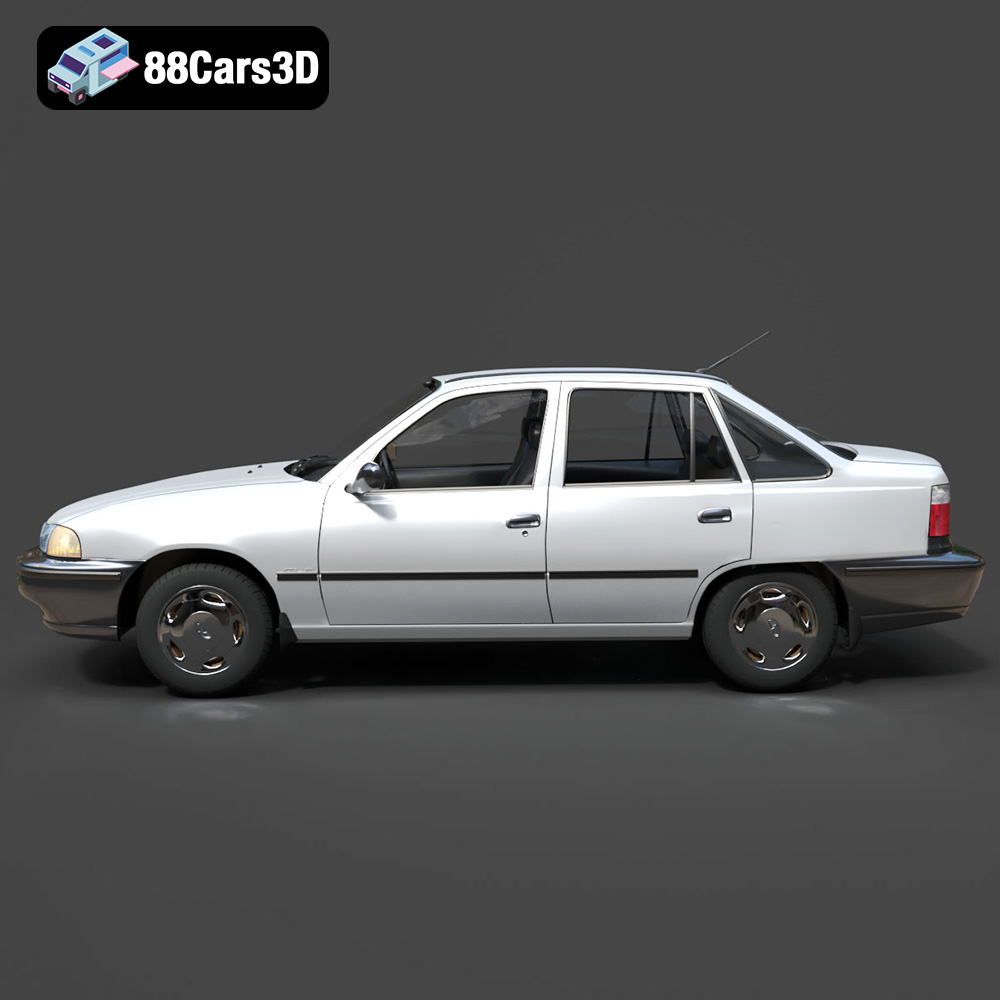
The Daewoo Nexia 3D Model is a highly accurate digital recreation of the legendary budget-friendly sedan. Specifically representing the N150 facelift generation (widely produced by UzDaewoo), this vehicle is an absolute staple of everyday life, serving as a reliable family car, urban taxi, and daily commuter across Eastern Europe, Russia, and Central Asia. This 3D model beautifully captures the modernized aesthetic of the N150 facelift, featuring the updated projector-style headlight housings, the smoothed-out front bumper and grille, and the classic, practical sedan proportions originally derived from the Opel Kadett E platform. Built with a perfectly balanced mid-to-high polygon topology (just over 641k triangles), it provides excellent visual fidelity for close-up automotive rendering while remaining highly optimized for background traffic in modern game engines. Perfect for populating realistic CIS or Eastern European street scenes, architectural visualizations, urban taxi simulators, and mobile game development.
$34.99