⚡ FLASH SALE: Get 60% OFF All Premium 3D & STL Models! ⚡

In the expansive world of 3D content creation, the demand for high-quality, performance-optimized assets is ceaseless. From immersive video games and cutting-edge AR/VR experiences to photorealistic architectural visualizations and product configurators, a meticulously crafted 3D model forms the bedrock of any successful digital project. Automotive assets, in particular, hold a special place, often serving as central elements that demand both aesthetic fidelity and technical efficiency.
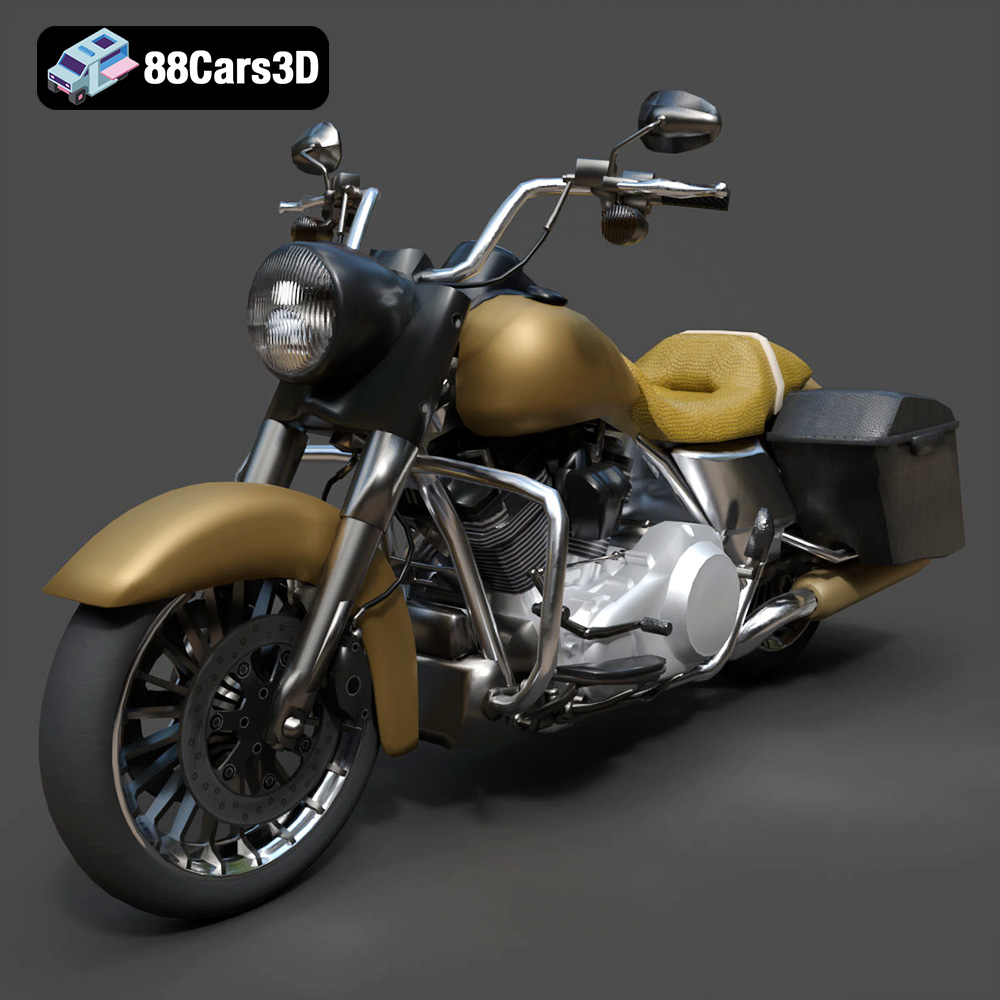
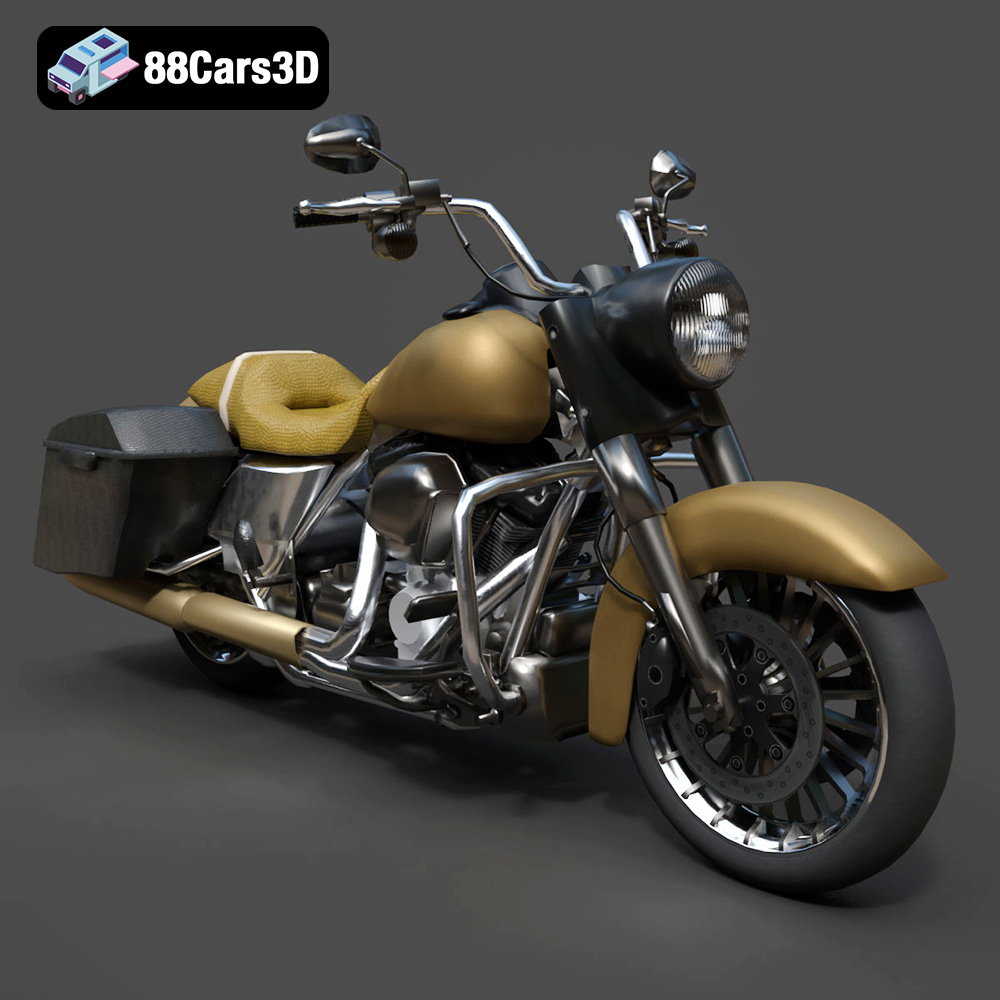
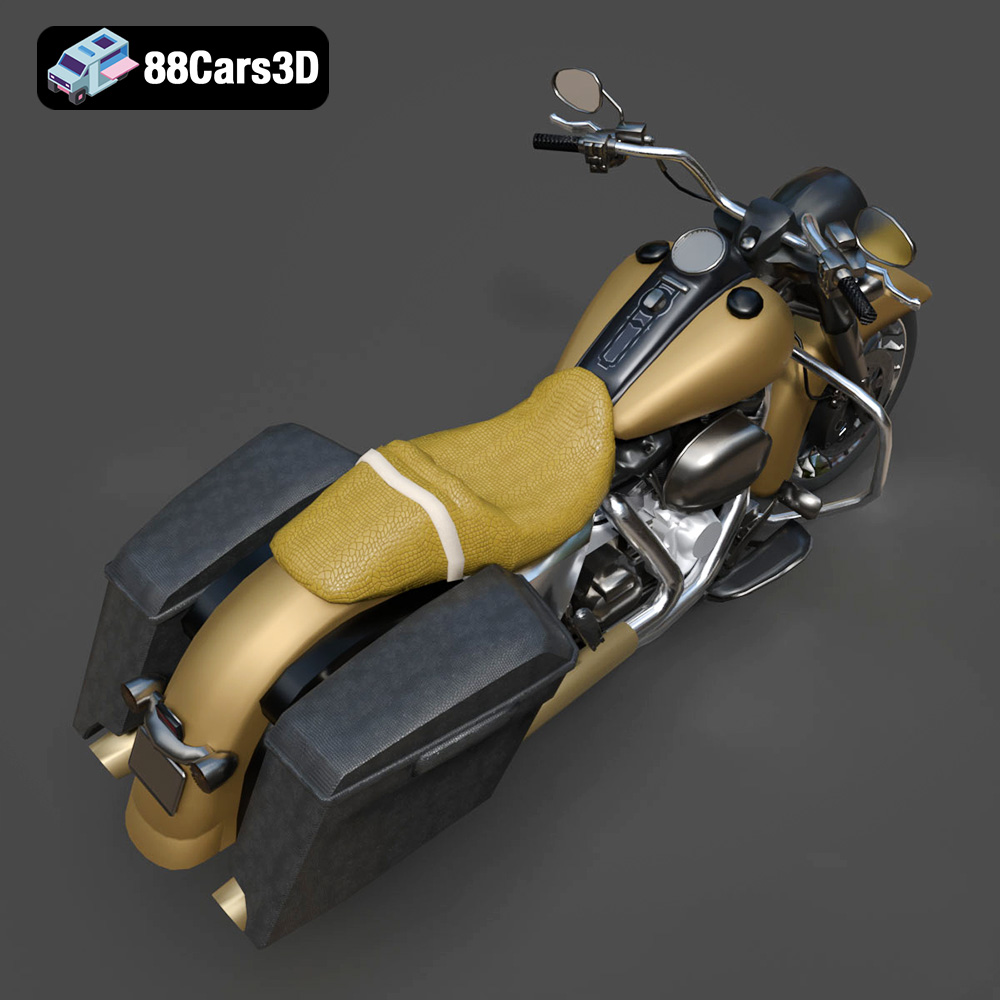
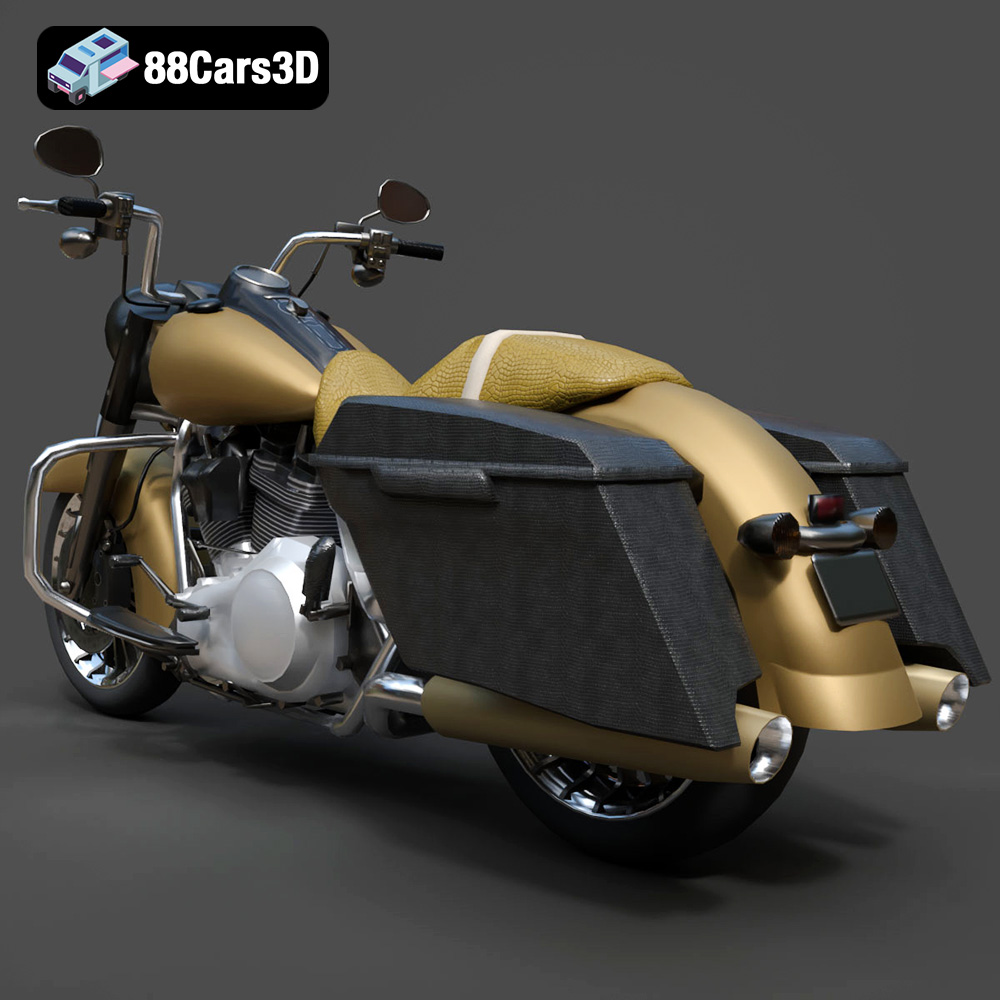
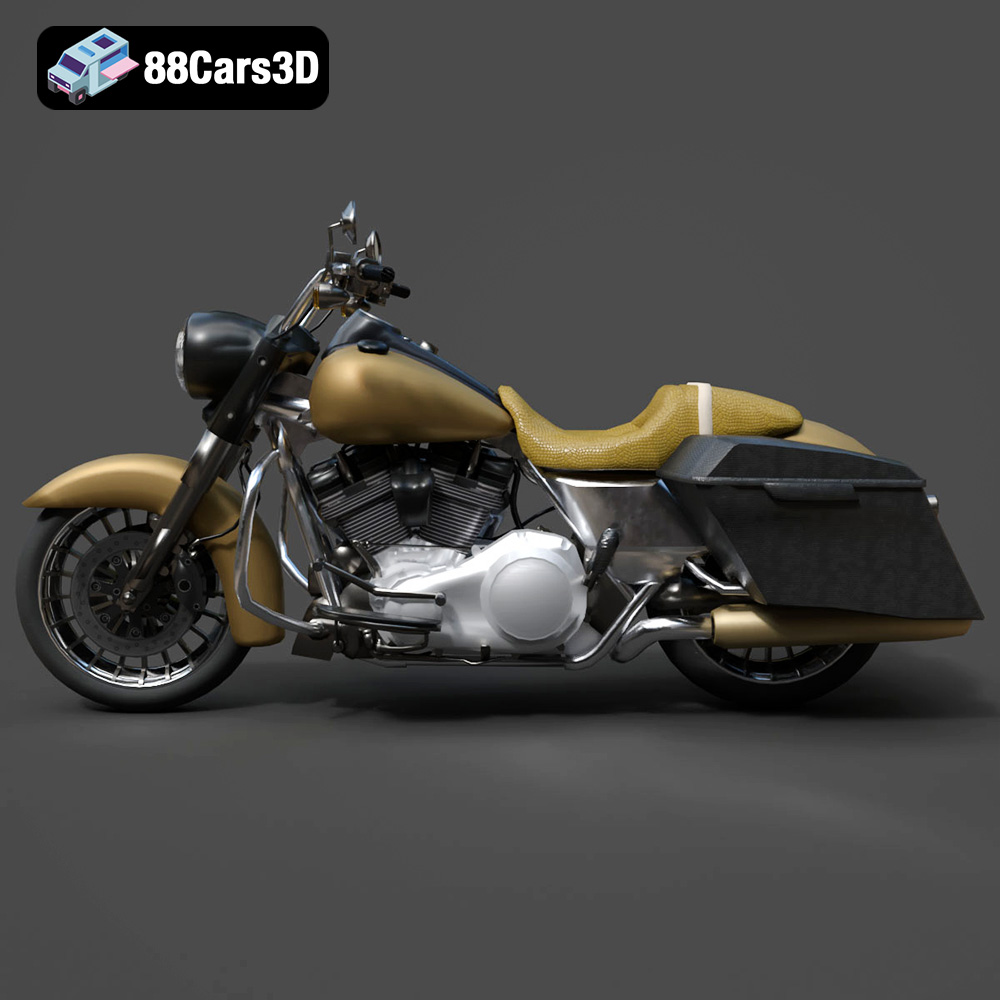
Few vehicles command the road with the same iconic presence as a Harley-Davidson. Among its revered lineup, the Road King stands as a testament to classic American touring. Stripped of heavy fairings, it embodies a nostalgic silhouette, defined by its prominent V-twin engine, large chrome headlight nacelle, and distinctive hard saddlebags. This machine isn’t just a motorcycle; it’s a symbol of freedom, heritage, and the open road. Capturing this essence in a digital format, especially for real-time applications, presents a unique challenge: how to maintain its unmistakable character while adhering to strict performance budgets.
Enter the Harley-Davidson Road King 3D Model, a standout offering on 88cars3d.com that masterfully blends this classic aesthetic with modern technical requirements. This digital recreation isn’t just a static representation; it’s an incredibly optimized, game-ready asset designed from the ground up for extreme efficiency. With a lean polygon count of just over 35,000 triangles, it delivers the iconic Harley-Davidson profile without taxing memory resources. This makes it an ideal choice for mobile game development, populating vast open-world environments, creating custom GTA-style modifications, or building lightweight AR/VR applications where performance is paramount. Let’s delve deeper into what makes this particular 3D car model such a valuable asset for professionals and enthusiasts alike.
The versatility of a 3D model often hinges on its available file formats. Each format caters to specific workflows, software, and application requirements, influencing everything from animation capabilities to real-time performance and even physical fabrication. The Harley-Davidson Road King 3D Model comes packaged with a comprehensive suite of formats, ensuring seamless integration into virtually any production pipeline. Understanding these formats is crucial for optimizing your workflow and achieving your project goals.
The .blend format is Blender’s native file type, offering a complete and fully editable Blender scene. When you download a .blend file, you’re not just getting the mesh; you’re getting the entire project with its specific material setups (often using Cycles or Eevee nodes), lighting, cameras, rigging, and animation data. This makes .blend ideal for users who work primarily in Blender, providing maximum flexibility for modifications, retargeting animations, or exploring the original artist’s scene construction. For the Harley-Davidson Road King model, the .blend file would allow immediate access to its optimized topology, pre-configured materials, and pivot setups for easy animation within Blender.
.fbx (Filmbox) is arguably the most widely adopted proprietary 3D asset exchange format, particularly dominant in game development and animation. Developed by Autodesk, it excels at storing not just mesh data but also critical information like materials (often PBR, though typically requiring re-setup in the target engine), textures, animation keyframes, bone structures, and camera data. The .fbx format is the go-to for importing 3D car models into real-time engines like Unreal Engine and Unity, offering robust support for skinned meshes and complex animation rigs. For a game-ready asset like the Road King, the .fbx version ensures all necessary components are present for seamless integration and dynamic behavior.
The .obj (Wavefront OBJ) format is a universal standard, prized for its simplicity and wide compatibility across almost all 3D software. It primarily stores geometry (vertices, normals, UVs, faces) and can reference external .mtl (material template library) files for basic material properties like color and texture maps. While .obj does not support animation, rigging, or complex material node setups, its straightforward nature makes it an excellent choice for basic mesh exchange, especially when moving between different modeling applications. It’s a reliable fallback when other formats present compatibility issues, ensuring the core geometry of the Harley-Davidson Road King is always accessible.
.glb (GL Transmission Format Binary) is a relatively newer format gaining significant traction, especially in web-based 3D, augmented reality (AR), and virtual reality (VR) applications. It’s designed to be an efficient, single-file container for 3D scenes, embedding geometry, materials (often PBR), textures, and animation data directly. This self-contained nature and optimization for efficient loading make .glb ideal for quick display in browsers, mobile AR apps, and platforms like Facebook 3D posts. The Harley-Davidson Road King 3D Model in .glb format would be perfect for interactive web showrooms or mobile AR experiences, allowing users to “place” the motorcycle in their real environment.
.stl (Stereolithography) is the industry standard format for 3D printing. It represents a 3D model’s surface geometry using a tessellated mesh of triangles, without any color, texture, or material information. The accuracy of the printed object depends heavily on the resolution of this triangular mesh. For 3D printable versions of the Harley-Davidson Road King, the .stl file translates the digital model into a format directly understood by slicing software, ready for physical production. Despite the Road King’s low-poly count for game-readiness, its .stl version is optimized for smaller-scale physical prints, requiring careful consideration of print settings as detailed in the product description.
.ply (Polygon File Format, also known as Stanford Triangle Format) is primarily used for storing 3D scanner data and is common in CAD and scientific visualization. It can store not just geometry but also properties like color, transparency, normals, and even confidence values per vertex or face. While less common for general 3D asset exchange compared to .fbx or .obj, its ability to handle complex data makes it valuable for specialized engineering or analysis workflows, or for integrating the Harley-Davidson Road King model into environments that require detailed surface property handling.
The .unreal format represents a native Unreal Engine asset. While not a standalone file type in the traditional sense like .fbx, it signifies that the asset has been specifically prepared and optimized for direct integration into Unreal Engine projects. This often means it comes with proper UV mapping, collision geometry, material instances, and even basic Blueprints pre-configured, minimizing setup time for developers. For a “game-ready” asset like the Road King, an .unreal file would typically be exported from the engine or indicate that the asset is provided in a way that is immediately usable within an Unreal project, perhaps as a pre-packaged UAsset file, ensuring maximum compatibility and ease of use for real-time environments.
The .max format is the native file type for Autodesk 3ds Max, one of the most powerful and widely used 3D modeling, animation, and rendering applications. Similar to .blend, a .max file contains the entire scene, including all geometry, textures, materials (such as those for V-Ray or Corona Renderer), lights, cameras, and animation data specific to 3ds Max. It offers the highest level of editability within the 3ds Max ecosystem, allowing users to leverage all of the software’s advanced modeling tools, modifiers, and rendering capabilities. For projects requiring high-fidelity automotive rendering or complex animations using the Harley-Davidson Road King, the .max file provides an invaluable starting point for artists working within this robust software environment.
Creating compelling 3D environments, especially for real-time applications, requires a delicate balance between visual fidelity and technical performance. The Harley-Davidson Road King 3D Model exemplifies this balance, engineered specifically to be “game-ready.” This designation isn’t just a label; it represents a thoughtful design philosophy centered on optimized resource usage.
The core challenge in real-time 3D is maintaining a smooth frame rate while rendering complex scenes. Every polygon, every texture, and every shader calculation contributes to the computational load. For a vehicle like the Road King, which might appear alongside dozens of other assets, careful optimization is critical. The designers at 88cars3d.com understood this, focusing on capturing the distinctive “classic, nostalgic silhouette” and “prominent V-twin engine” through efficient modeling techniques rather than sheer polygon count. This approach ensures that the model looks great from a typical game camera perspective (e.g., third-person or mobile POV) without bogging down the rendering pipeline. It’s about smart geometry, not excessive geometry.
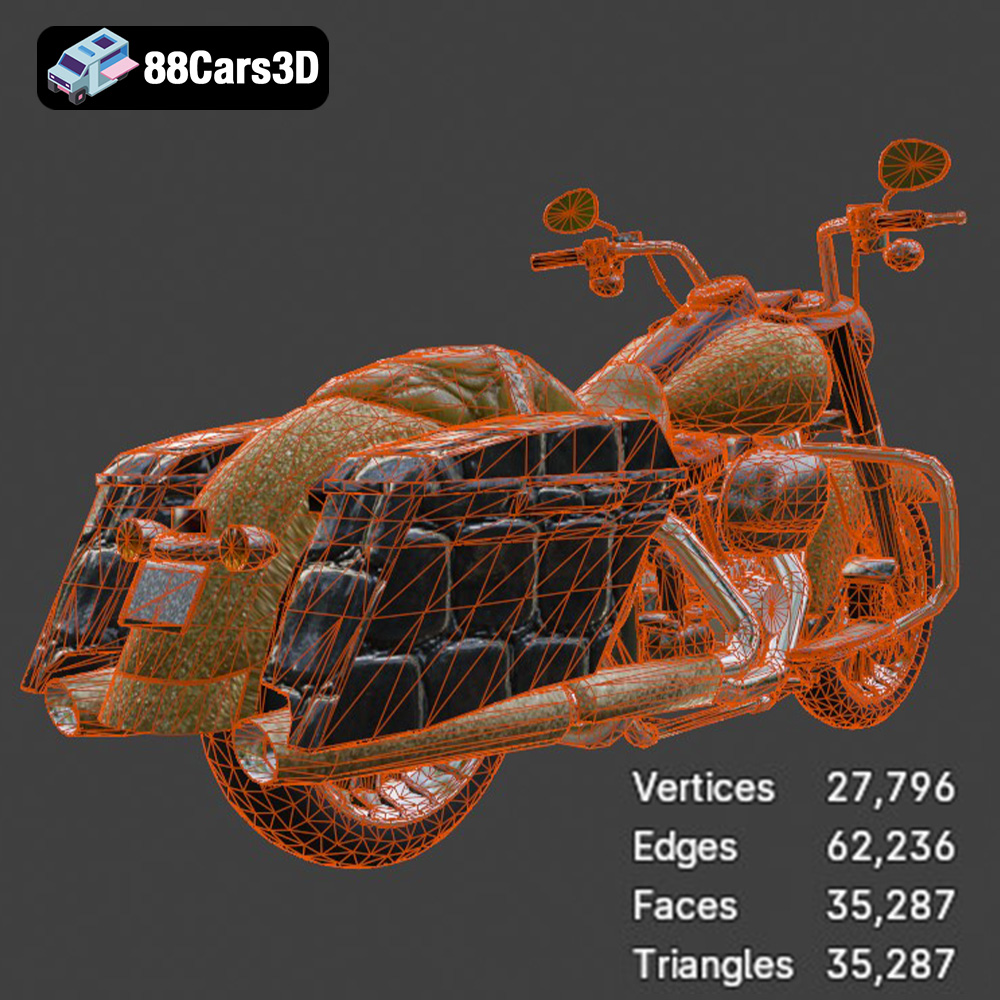
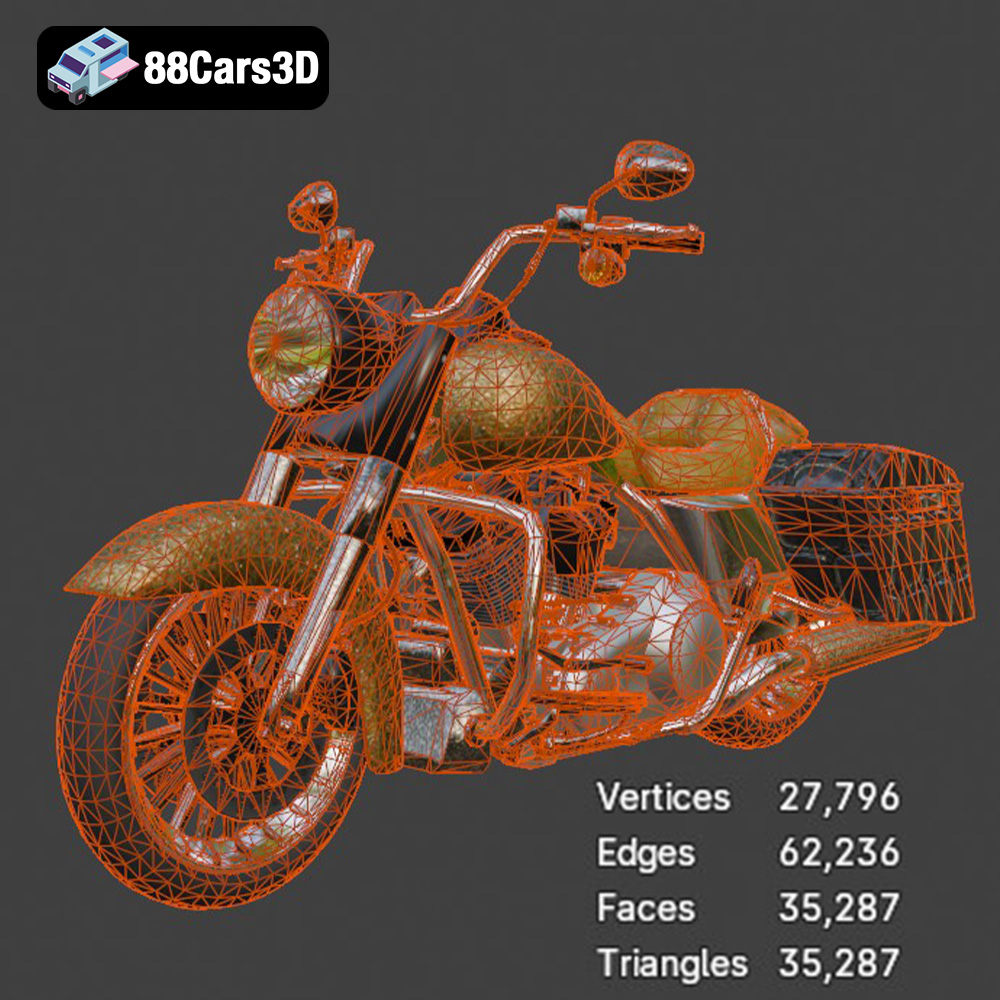
With just 27,796 vertices, 62,236 edges, and a remarkably lean 35,287 triangles (or faces), the Road King model is a masterclass in optimization. This low-polygon topology means fewer calculations for the GPU, translating directly into higher frame rates, especially crucial for mobile games or AR/VR applications. Key features like the “distinctive large chrome headlight nacelle,” “classic V-twin engine profile,” and “standard hard saddlebags” are modeled with just enough detail to be recognizable and appealing, without wasteful geometry. The “optimized wheel geometry” is a prime example, designed to appear visually appealing even at a lower poly count, a common technique in game asset development. Furthermore, the model comes with “separate wheels and steering components,” which is essential for proper animation and physics rigging within game engines. This modularity allows developers to easily implement realistic vehicle dynamics.
Beyond raw polygon counts, a truly game-ready asset requires meticulous preparation for animation and interaction. The Harley-Davidson Road King model boasts “real-world scale accuracy,” ensuring it fits seamlessly into environments designed with physically based measurements. Crucially, it features “proper pivot setup for steering, wheel rotation, and kickstand articulation.” Correct pivot points are fundamental for any animated object. Without them, wheels would rotate off-center, and steering would feel unnatural. This attention to detail significantly reduces the time and effort a developer needs to spend on initial setup, allowing for quicker integration into game physics systems and animation blueprints, particularly for compatibility with major 3D software platforms and real-time engines like Unreal, Unity, and Godot.
The true power of a versatile 3D asset lies in its ability to seamlessly integrate into various professional workflows. The Harley-Davidson Road King 3D Model, with its optimized geometry and diverse file formats, is designed precisely for this purpose, serving a wide array of creators from game developers to architectural visualization artists.
For game developers, the Road King’s “game-ready” designation and .fbx / .unreal format support are invaluable. In engines like Unreal Engine and Unity, importing the .fbx file is a straightforward process. Developers can then leverage the separate wheel and steering components to set up vehicle physics, ensuring realistic handling and animation. The low triangle count means the motorcycle can be replicated multiple times for traffic systems or crowded scenes without a significant performance hit. Furthermore, with its “highly optimized geometry specifically tailored for smooth real-time performance,” developers can focus on gameplay mechanics, AI, and environmental details, knowing the vehicle asset is already performant. Basic PBR (Physically Based Rendering) material setup is quick, allowing for the application of normal maps and texture sets to enhance visual detail without increasing mesh complexity, effectively making a low-poly model look much higher definition.
Artists working in traditional 3D software like 3ds Max or Blender will find the .max and .blend files offer complete scene access. This allows for deep customization, from modifying materials and lighting setups to creating complex cinematic animations. Even though it’s a low-poly model, its clean topology is an excellent foundation. For high-fidelity automotive rendering, artists can strategically apply subdivision modifiers (like Turbosmooth in 3ds Max or Subdivision Surface in Blender) to specific parts, bake high-resolution details from external sources as normal maps, or even introduce displacement maps for subtle surface imperfections, elevating the visual realism for close-up shots or marketing renders. The “proper pivot setup” mentioned earlier is equally beneficial here, making it easy to pose the motorcycle for static renders or animate it for promotional videos without tedious manual adjustments.
While the model is optimized for performance, its “standard hard saddlebags mapped for efficient texturing” indicates that UVs are well-prepared for applying detailed textures. A typical workflow would involve creating or sourcing PBR texture maps (Albedo/Base Color, Metallic, Roughness, Normal, Ambient Occlusion) to define the look of chrome, paint, leather, and rubber. The product description also highlights “baked normal maps to simulate high-poly details on a low-poly mesh” as a customization option. This technique is critical for game assets, where subtle surface variations like bolts, seams, or fine panel lines are “baked” from a high-resolution model onto the low-polygon Road King, giving the illusion of complexity without the performance cost. This allows for stunning visuals even on mobile platforms or in AR/VR applications.
The utility of a well-designed 3D model extends beyond digital screens. The Harley-Davidson Road King 3D Model also offers the exciting possibility of physical fabrication through 3D printing. This transforms a virtual asset into a tangible collectible or a display piece, bringing the iconic motorcycle into the real world.
The inclusion of an .stl file is crucial for 3D printing. The .stl format triangulates the model’s surface, preparing it for slicing software that generates the layer-by-layer instructions for a 3D printer. While the Road King model is optimized for low-polygon digital performance, it requires specific considerations when translating to a physical object. The product details provide a clear “3D Print Setting” guide, which is invaluable for achieving a successful print. Manifold geometry, where there are no gaps or intersecting faces, is essential for a clean .stl export, ensuring the model is watertight and ready for printing. The 88cars3d.com team has taken care of these underlying structural requirements.
The recommended print settings are tailored for success: “Recommended scale: 1:32 / 1:43 / 1:64” suggests printing the Road King as a miniature. “Layer height: 0.04–0.08 mm” combined with the strong recommendation for “Resin printing” indicates a focus on preserving the optimized details, as resin printers (SLA/DLP) offer much finer resolution than FDM (filament) printers. “Wall thickness: 1.2–2.0 mm” ensures structural integrity, while “Infill: 20–30%” provides internal support without excessive material usage. The guide also specifies “Supports: Required for handlebars, saddlebags, and dual exhausts,” which are delicate overhangs common in motorcycle models. “Print orientation: Frame printed angled for structural integrity; wheels printed separately” is a professional tip for minimizing print lines and maximizing part strength, allowing for better post-processing. After printing, “Post-processing: Sanding, primer, Vivid Black or two-tone classic paint, and metallic silver/chrome detailing” will bring the miniature to life, mimicking the real Road King’s finishes.
It’s important to remember that a game-ready low-poly model, when 3D printed, will naturally show its faceted nature more prominently at larger scales. The recommended smaller scales (1:32, 1:43, 1:64) are a smart choice, as the scale itself helps to visually smooth out the facets, making the optimized geometry appear more continuous. For example, the “classic V-twin engine profile” and “sweeping dual exhaust system” will look excellent at these scales, especially with careful post-processing and paintwork. This capability transforms the Harley-Davidson Road King 3D Model from a purely digital asset into a versatile resource for both virtual and physical applications, offering unique value on platforms like 88cars3d.com.
The true measure of a high-quality 3D asset lies in its adaptability across various creative and professional domains. The Harley-Davidson Road King 3D Model is not just a digital sculpture; it’s a versatile tool poised to enhance a multitude of projects. Its game-ready optimization and detailed design unlock significant creative potential across diverse industries.
The primary application for this optimized Road King model is undeniably game development. With a mere 35k triangles, it’s an “absolute perfect asset for mobile game development,” where performance is constantly battling against visual richness. Imagine a high-octane mobile racing game featuring classic cruisers, or an open-world title needing a dense city filled with realistic “background traffic” – this model fits seamlessly. Its low polygon count allows for dozens, if not hundreds, of instances on screen simultaneously without crippling frame rates. Developers crafting “GTA-style mods” or building a custom vehicle lineup for an indie game will appreciate the model’s clean topology and ready-to-rig structure. The “optimised geometry specifically tailored for smooth real-time performance in third-person or mobile POV” ensures that players will experience fluid gameplay while still enjoying the iconic look of the Road King.
The demand for lightweight 3D content extends significantly into the realms of Augmented Reality (AR) and Virtual Reality (VR). The Road King model, particularly with its .glb format, is “perfect for lightweight interactive browser configurators and mobile augmented reality experiences.” Envision a virtual showroom where customers can explore the Harley-Davidson Road King in 3D directly from their web browser, customizing paint schemes or saddlebag textures in real-time. Or, consider an AR application where you can “place” a virtual Road King in your garage, scaled accurately, before making a purchase decision. Its low poly count and efficient design are exactly what these resource-constrained environments require to deliver smooth, engaging interactions without lag or compromise.
While optimized for real-time, the Harley-Davidson Road King 3D Model also finds a valuable place in traditional rendering and visualization projects. Its accurate “real-world scale accuracy” and distinct silhouette make it “excellent for mid-ground or background placement in large-scale urban or highway architectural renders.” In a bustling street scene or a sweeping highway vista, a recognizable vehicle like the Road King adds instant realism and character. For product visualization, even though it’s low-poly, the clean geometry serves as an exceptional base for applying high-resolution textures, normal maps, and advanced rendering techniques in 3ds Max or Blender to achieve photorealistic results for marketing materials or concept presentations. The “customization options” for paint schemes or material swaps also allow artists to tailor the model to specific project needs, making it a versatile addition to any professional library of 3D car models.
In the dynamic landscape of 3D content creation, the difference between a good project and a great one often lies in the quality and optimization of its core assets. The Harley-Davidson Road King 3D Model stands as a prime example of an asset that offers both visual integrity and technical efficiency, making it an indispensable tool for a wide range of applications.
Whether you’re an indie game developer striving for peak performance on mobile, an AR/VR creator building immersive interactive experiences, an animator crafting cinematic sequences, or a 3D printing enthusiast looking to bring iconic vehicles to life, this model delivers. Its meticulously crafted, low-polygon topology ensures smooth real-time performance, while its comprehensive file format support guarantees seamless integration into virtually any workflow. From its accurate exterior features to its detailed interior components, every aspect has been engineered to provide maximum impact with minimal resource consumption. This isn’t just a 3D car model; it’s a foundation for innovation, enabling creators to push boundaries without compromising on quality or performance.
For professionals seeking high-quality 3D models that meet rigorous technical standards, marketplaces like 88cars3d.com are essential resources. They provide access to expertly crafted assets, such as this Harley-Davidson Road King 3D Model, which are not only visually striking but also ready for immediate deployment in demanding projects. Investing in well-optimized game assets and automotive rendering models can drastically reduce development time, enhance user experience, and ultimately elevate the overall quality of your work. Explore the curated selection at 88cars3d.com to discover more premium 3D car models that can accelerate your creative vision and bring your digital worlds to life.
The Harley-Davidson Road King 3D Model is an incredibly optimized, game-ready digital recreation of the quintessential American touring cruiser. Stripping away the heavy fairings of other touring models, the Road King is famous for its classic, nostalgic silhouette, featuring a large chrome headlight nacelle, a prominent V-twin engine, and iconic hard saddlebags. This 3D model accurately captures the legendary highway cruiser aesthetic while being engineered with extreme efficiency in mind. Built with highly optimized, low-polygon topology (just over 35k triangles), it delivers the unmistakable Harley-Davidson profile without consuming heavy memory resources. It is the absolute perfect asset for mobile game development, open-world background traffic, GTA-style mods, and lightweight AR/VR applications.
$15.9
.blend
.cruiser
.fbx
.obj
.rendering
.stl
35k-polygons
car-3d-model
game-ready
harley-davidson
low-poly
mobile-game-asset
optimized
road-king
touring-motorcycle
VR/AR