⚡ FLASH SALE: Get 60% OFF All Premium 3D & STL Models! ⚡

In the dynamic worlds of automotive design, game development, and cinematic production, the quest for realism and efficiency is ceaseless. High-quality 3D car models are no longer a luxury but a fundamental necessity, serving as the cornerstone for everything from photorealistic renders to immersive real-time simulations. They bridge the gap between concept and tangible reality, allowing designers to iterate rapidly, developers to populate vast virtual environments, and marketers to showcase products with unparalleled detail.
The demand for versatile, technically robust 3D assets continues to grow, pushing artists and studios to seek out models that not only look good but are also meticulously constructed for various applications. This is where models like the Jeep Commander 3D Model shine, offering a blend of accuracy, optimized geometry, and multi-format compatibility that makes it an invaluable asset for professionals across industries. Whether you’re aiming for a stunning architectural visualization, an engaging open-world game, or a precise 3D print, the underlying quality of your 3D car model dictates the success of your project.
The world of 3D modeling is rich with various file formats, each designed with specific purposes and optimized for different stages of a project’s pipeline. Understanding these formats is crucial for any professional working with 3D car models, as it dictates compatibility, workflow efficiency, and the ultimate output quality. The Jeep Commander 3D Model, available through 88cars3d.com, exemplifies this versatility by offering a comprehensive suite of formats, ensuring it integrates seamlessly into almost any professional environment.
The .blend format is the native file type for Blender, an increasingly popular open-source 3D creation suite. A .blend file typically includes the full scene data: mesh geometry, materials (with all node setups), textures, lighting, cameras, animation data, and even physics simulations. For artists working primarily in Blender, this format provides the most flexibility, allowing full editability, customization of materials, and direct integration into a Blender-centric workflow without any loss of data or conversion artifacts. It’s ideal for in-depth scene setup, animation, and rendering directly within Blender, leveraging its powerful Cycles and Eevee render engines.
.fbx (Filmbox) is a proprietary file format developed by Autodesk and has become an unofficial industry standard for 3D data exchange, especially prominent in game development. It efficiently stores not only mesh data but also materials, textures, animations, and camera information. Its strength lies in its ability to transfer complex scene data between different 3D software applications (like 3ds Max, Maya, Blender) and, crucially, into real-time engines such as Unreal Engine and Unity. For the Jeep Commander 3D Model, .fbx is the go-to for game developers seeking to drop an engine-ready asset into their project with minimal fuss, maintaining crucial data like pivot points for animation.
The .obj (Wavefront OBJ) format is one of the oldest and most widely supported 3D file formats, making it a truly universal choice for cross-software compatibility. It primarily stores geometric data (vertices, normals, texture coordinates, and faces) and can reference external material (.mtl) and texture files. While it doesn’t support animation or rigging, its simplicity and widespread adoption make it excellent for transferring static mesh data between virtually any 3D application. It’s a reliable fallback when other formats fail or when you need a clean mesh for sculpting or retopology.
.glb (GL Transmission Format Binary) is the binary version of glTF, a royalty-free specification for the efficient transmission and loading of 3D scenes and models by applications. Often dubbed the “JPEG of 3D,” .glb packages models, textures, animations, and PBR (Physically Based Rendering) materials into a single, compact file. This optimization makes it exceptionally well-suited for augmented reality (AR), virtual reality (VR), and browser-based 3D viewers, where quick loading times and efficient rendering are paramount. For showcasing the Jeep Commander 3D Model in a virtual showroom or an interactive web experience, .glb is the ideal choice.
The .stl (Stereolithography) format is the undisputed standard for 3D printing. It represents a 3D model as a series of connected triangles (a triangulated surface mesh) without color, texture, or other CAD attributes. Its simplicity ensures compatibility with almost every 3D printer and slicing software. When preparing the Jeep Commander 3D Model for physical manufacturing, converting it to .stl ensures a clean, manifold mesh ready for slicing and printing, allowing enthusiasts to create detailed miniatures or prototypes.
.ply (Polygon File Format, or Stanford Triangle Format) is another format for storing 3D data, particularly useful for scanned data, point clouds, and precision meshes often used in CAD (Computer-Aided Design) or scientific analysis. While less common for general 3D asset exchange, it can store properties beyond just geometry, such as color, transparency, and even specific data for each vertex or face. For niche applications requiring highly accurate mesh data or when integrating with CAD software, .ply offers a robust solution.
The inclusion of an .unreal specific asset indicates a model optimized and prepared directly for integration into Unreal Engine. While .fbx is the import format, a native .unreal asset often means it has already undergone specific engine optimizations, material setups (using Unreal’s PBR workflow), collision meshes, and potentially LODs (Levels of Detail) to be truly engine-ready. This drastically speeds up workflow for Unreal developers, providing a ready-to-use asset like the Jeep Commander 3D Model that looks and performs optimally within the engine.
Finally, the .max format is the native file type for Autodesk 3ds Max, a powerful 3D modeling, animation, and rendering software widely used in architectural visualization, product design, and cinematic production. A .max file contains the complete 3ds Max scene, including all geometry, modifiers, materials (V-Ray, Corona, Arnold setups), textures, lighting, cameras, and animation keyframes. For professionals entrenched in the 3ds Max ecosystem, this format offers full creative control and the ability to leverage all of 3ds Max’s robust tools for customization, animation, and high-fidelity rendering.
Creating a high-quality 3D car model is an intricate process that demands both artistic vision and technical precision. It’s about more than just replicating shapes; it’s about understanding the vehicle’s essence, its engineering, and how it will be utilized in various digital environments. The Jeep Commander 3D Model available on 88cars3d.com stands as a testament to this meticulous craft, embodying the rugged spirit of the original SUV while offering unparalleled digital fidelity.
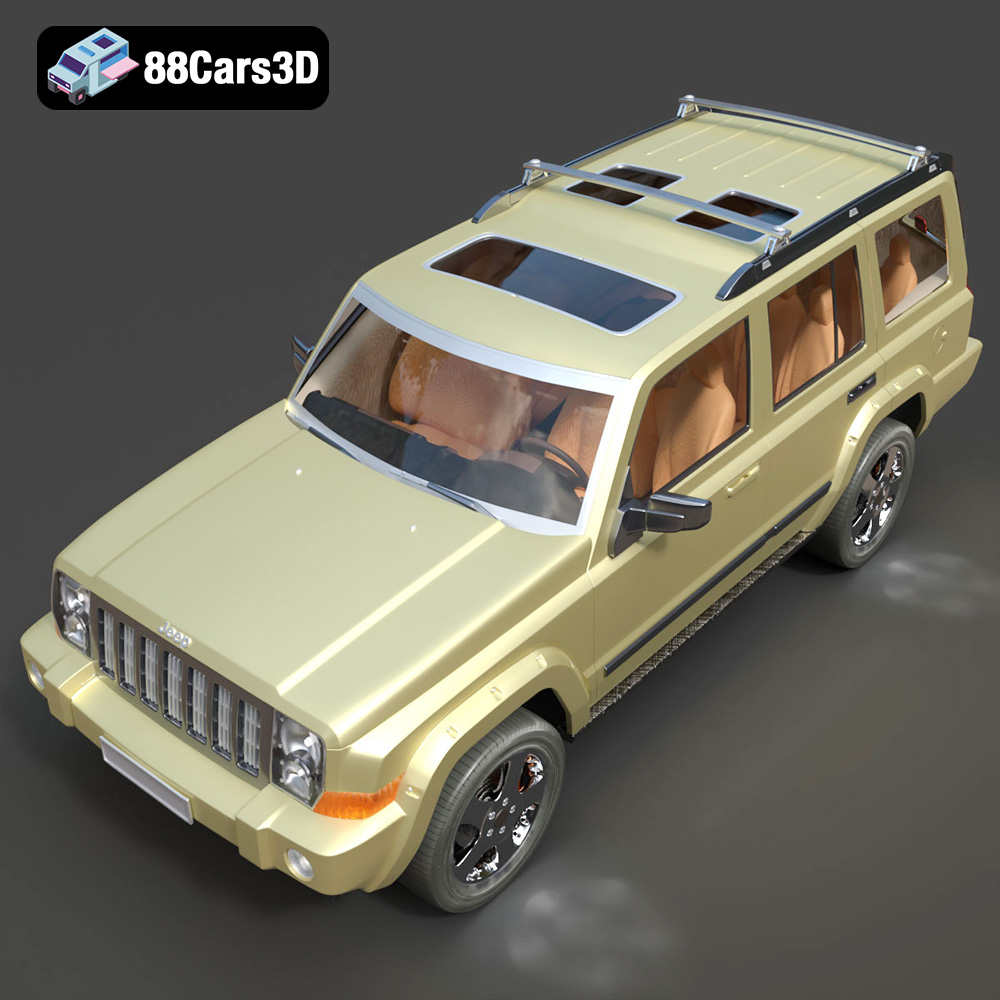
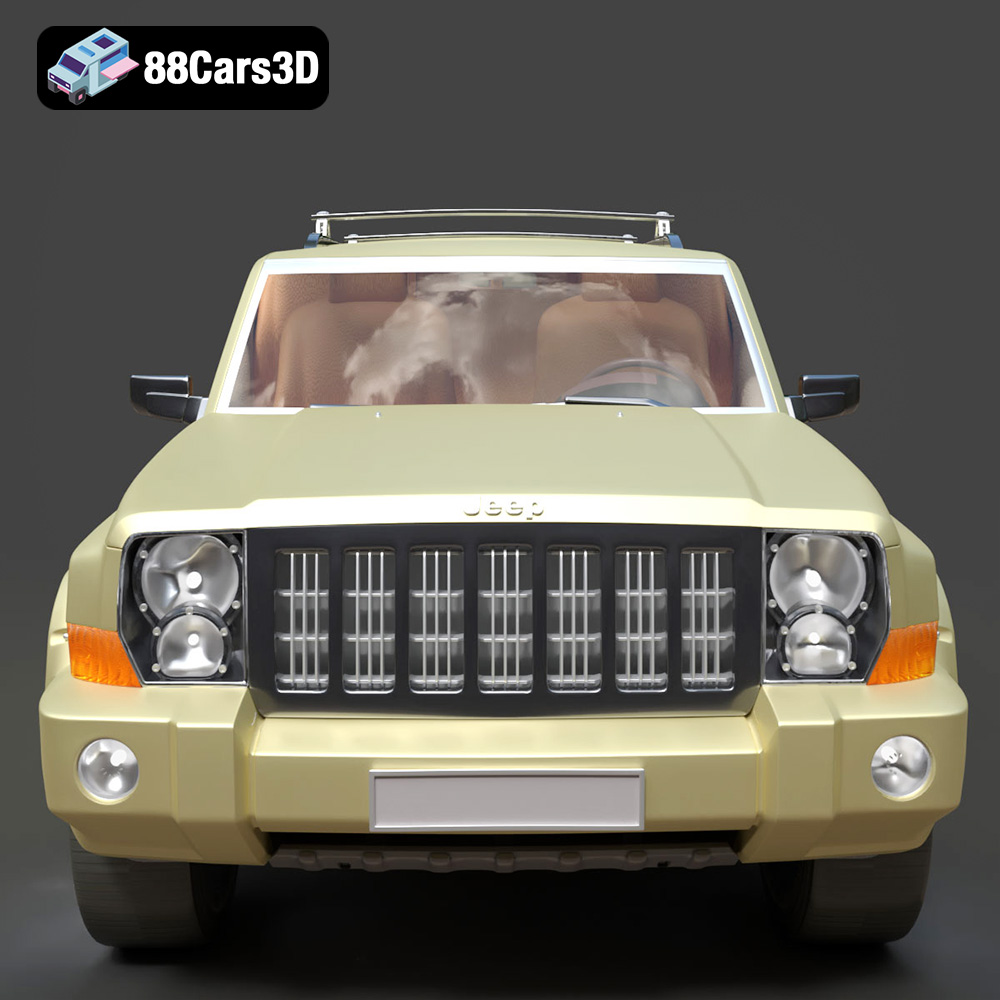
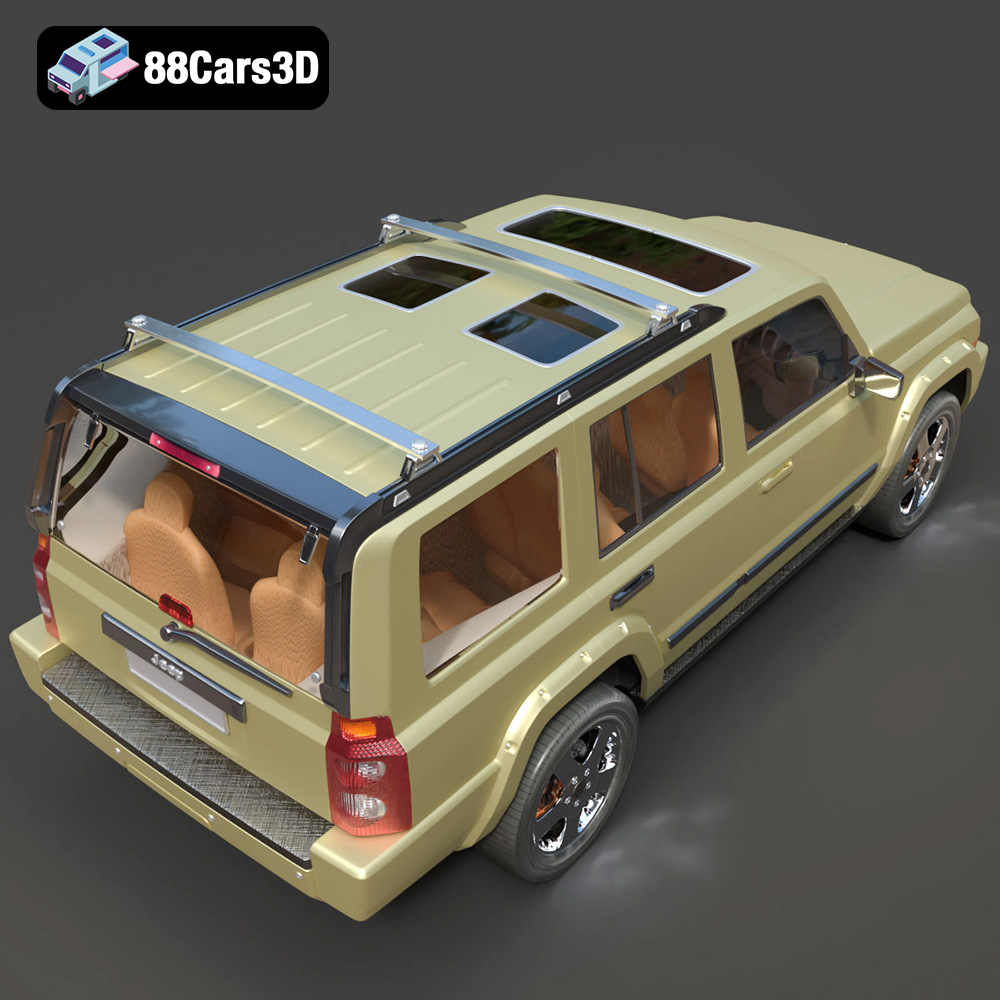
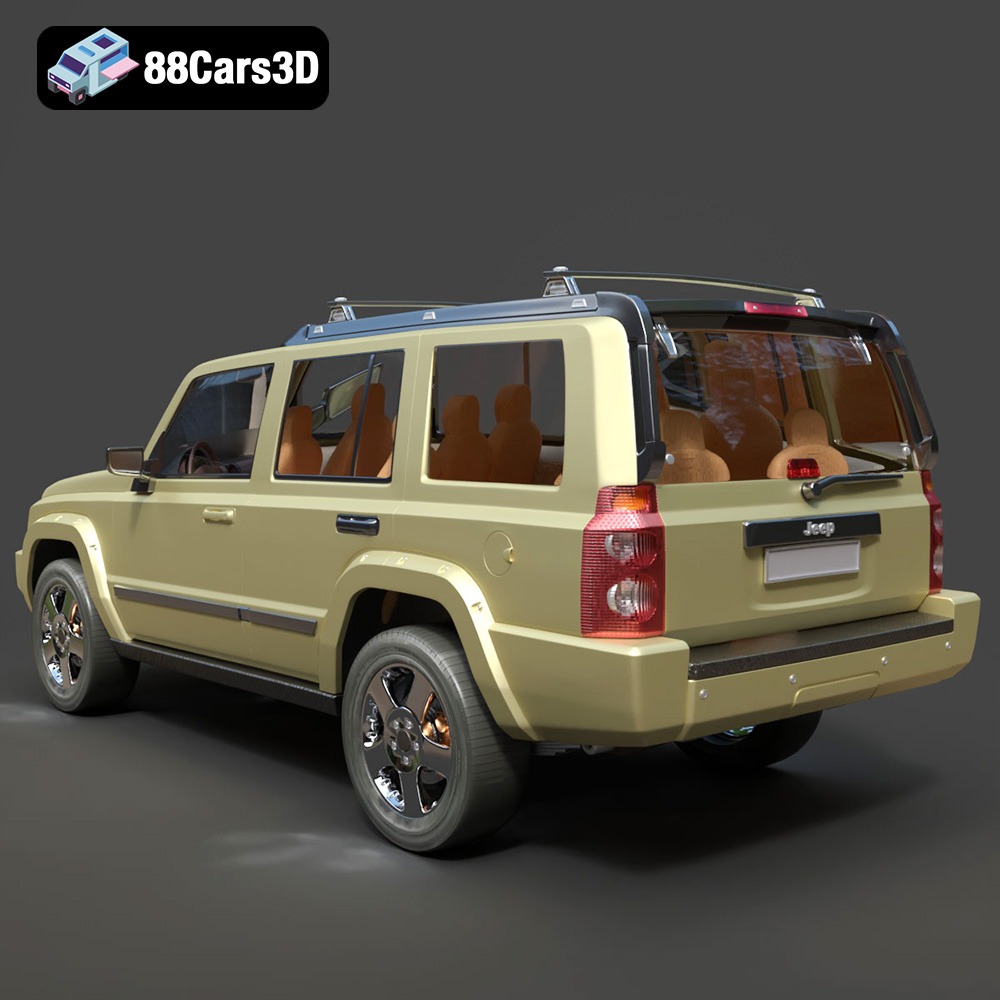
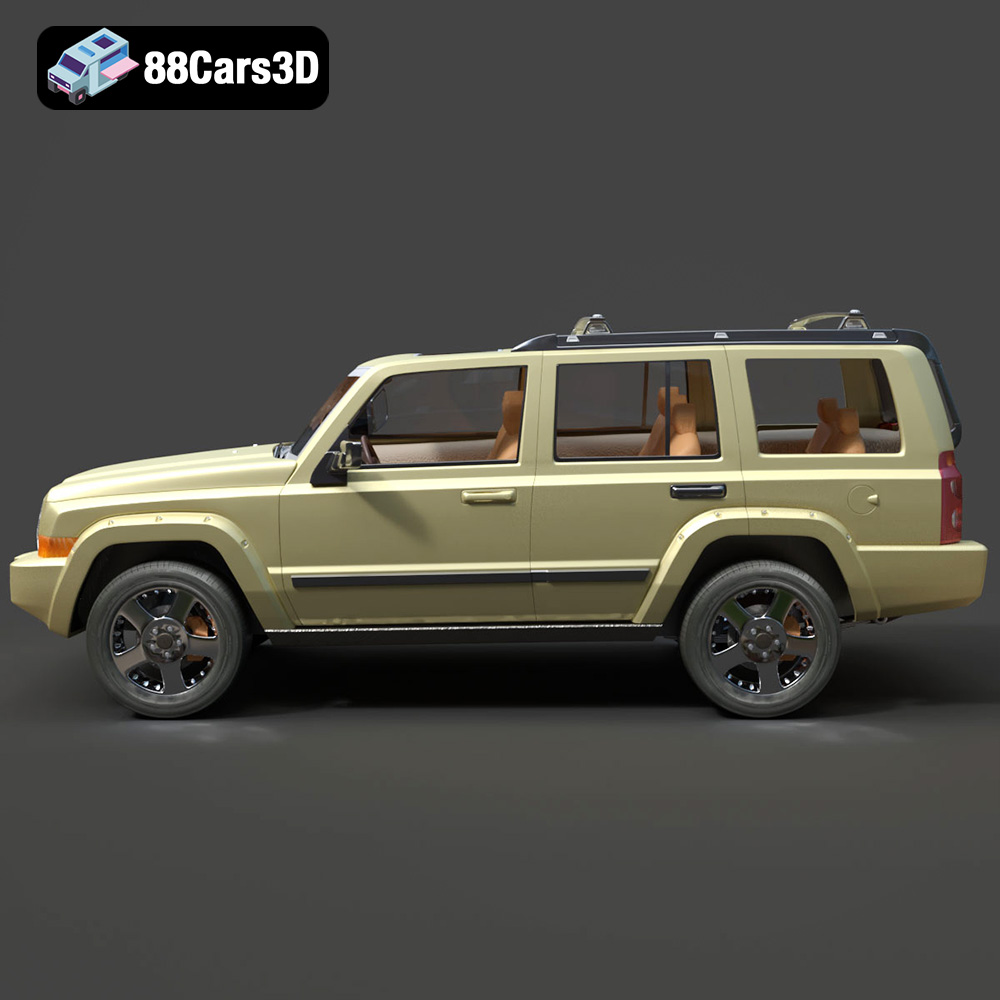
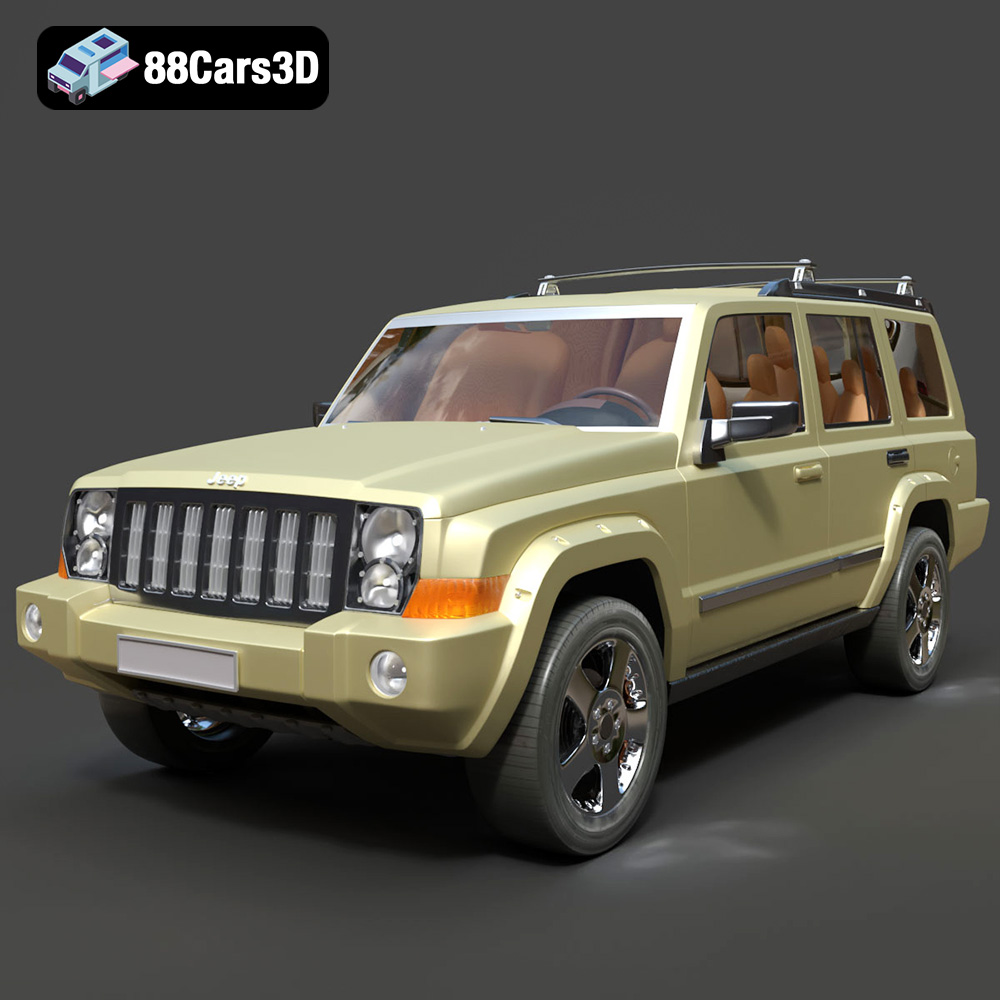
The exterior of any automotive 3D model is its most recognizable feature, and for the Jeep Commander, its boxy styling and robust character are paramount. This model meticulously recreates the Commander’s accurate body proportions, translating its real-world dimensions into a digital twin. Key elements like the signature seven-slot grille and rectangular headlight styling are precisely modeled, ensuring instant recognition. The detailed front and rear bumpers, integrated fog light areas, and realistic roof rails all contribute to an authentic representation.
Beyond the primary forms, attention extends to finer details: side mirrors, door handles, and window trims are all carefully crafted. A significant technical advantage here is the inclusion of modeled wheels, tires, suspension clearance, and underbody structure. This isn’t just aesthetic; it’s crucial for realistic simulations and animations, where physics and interaction with terrain are vital. Furthermore, the separate mesh components for doors, hood, tailgate, and wheels are a thoughtful addition, providing an organized hierarchy essential for animation workflows, allowing for opening and closing actions or wheel rotations without complex rigging issues.
While often less visible in external renders, a well-modeled interior elevates the realism of any automotive asset, especially for AR/VR applications, close-up shots, or game perspectives. The Jeep Commander 3D Model includes a modeled dashboard with a center console and infotainment area, steering wheel, and instrument cluster detailing. Crucially, it represents the three-row seating layout, capturing the Commander’s family-oriented practicality. Door panels and interior trim elements are also included, providing a comprehensive interior volume.
A key technical consideration for interior modeling, particularly for real-time applications, is optimized geometry. The model’s interior is designed to be suitable for game engines, meaning the polygon count is kept efficient without sacrificing critical detail. This balance ensures smooth performance in interactive experiences where every polygon counts, allowing for immersive virtual walkthroughs or driver’s seat perspectives without bogging down the system.
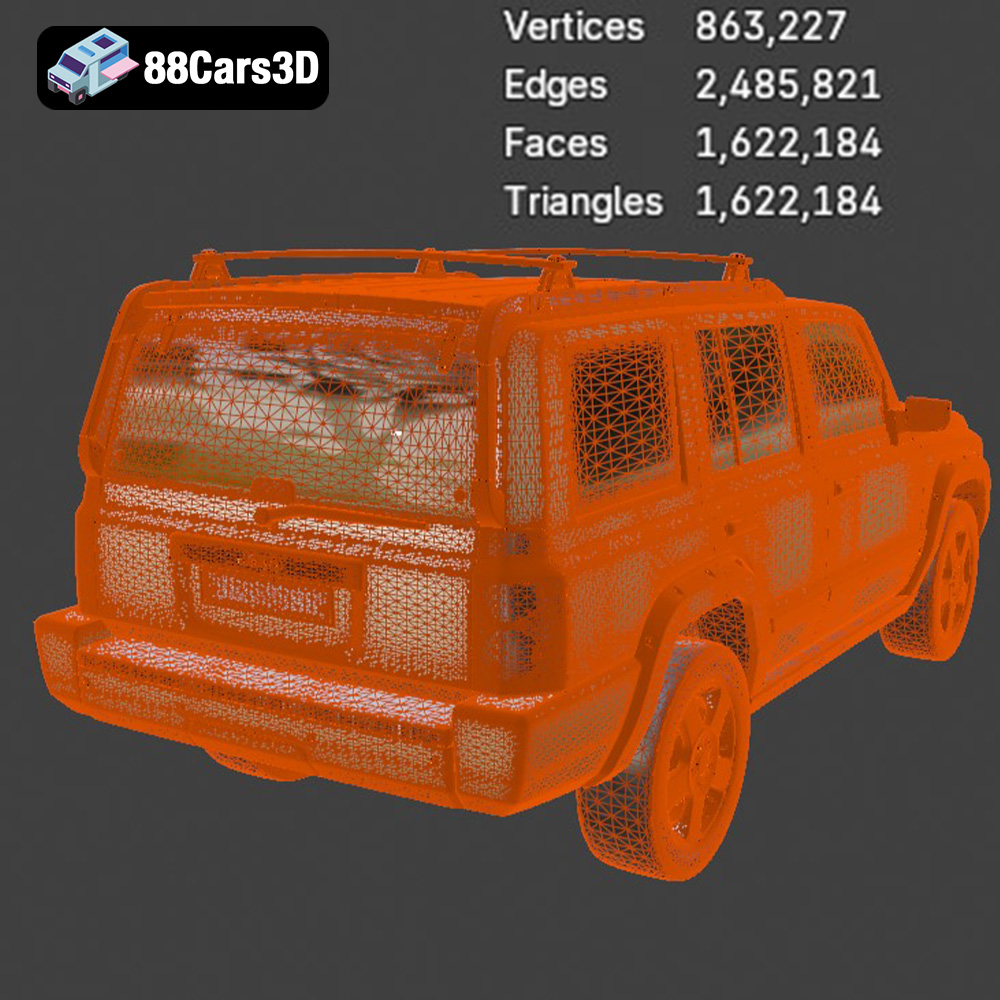
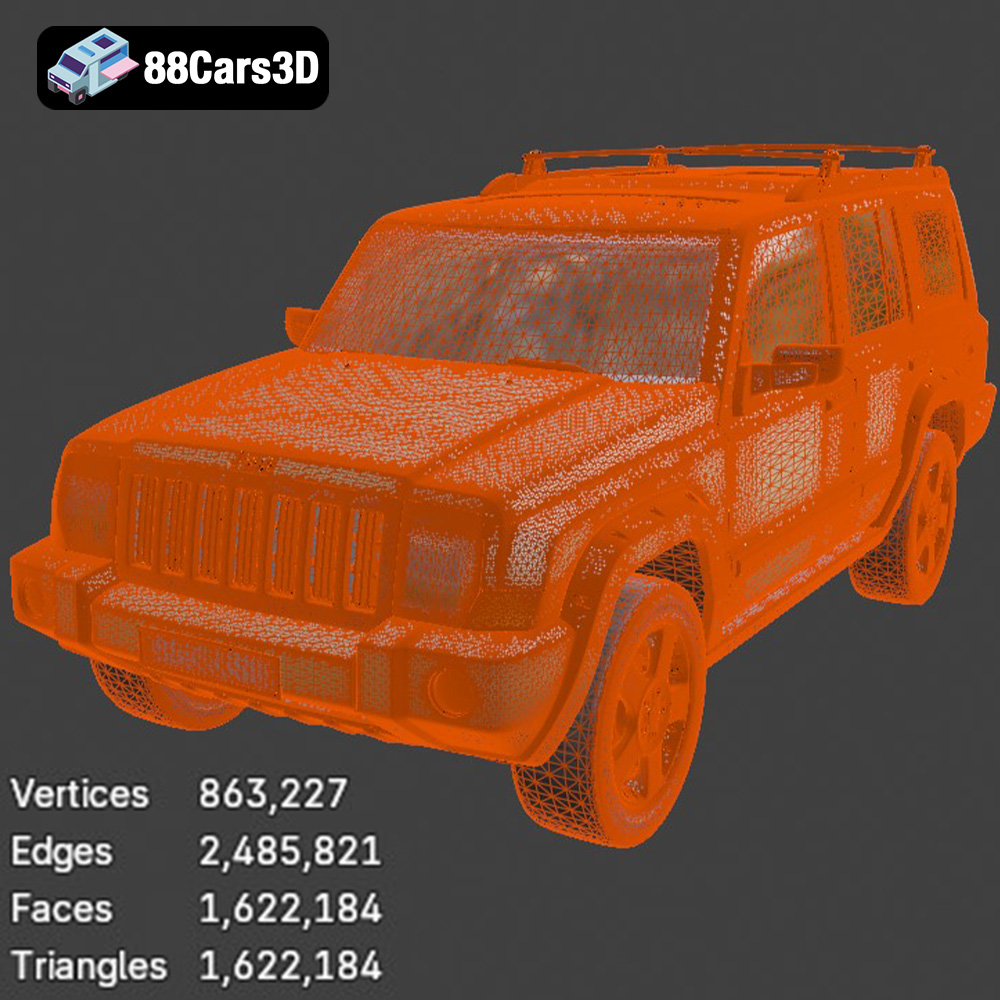
The true value of a professional 3D car model lies in its technical advantages. The Jeep Commander 3D Model boasts a clean mesh structure with proper edge flow, which is fundamental for smooth subdivision, deformation during animation, and flawless texture application. This clean topology prevents rendering artifacts and makes the model highly adaptable for further modifications or detailing.
Real-world scale accuracy is another non-negotiable feature, ensuring the model fits correctly into architectural scenes, vehicle fleets, or simulations without needing extensive adjustments. The organized hierarchy, with components like doors and wheels separated, facilitates animation and easier manipulation within any 3D software. Finally, an optimized polygon count caters to both high-quality rendering (where subdivision can add more detail) and demanding game engines, allowing the model to be effectively used across a spectrum of performance requirements from cinematic vistas to real-time gameplay.
The utility of a high-quality 3D car model like the Jeep Commander 3D Model extends across numerous professional pipelines. Its versatility, thanks to its clean topology and multiple file formats, makes it a strategic investment for various projects. Let’s explore how it fits into common industry workflows.
For automotive artists and visualization studios, the primary goal is often photorealism. The Jeep Commander 3D Model, with its accurate proportions and detailed features, serves as an excellent base for high-fidelity renders. In a workflow utilizing 3ds Max or Blender, artists can import the respective .max or .blend files, which typically come with pre-assigned materials. These materials can then be fine-tuned using powerful renderers like V-Ray, Corona Renderer (for 3ds Max), or Cycles and Eevee (for Blender). This involves adjusting reflections, refractions, and diffuse properties to mimic real-world paints, glass, and plastics. Lighting setups—from HDRIs for realistic environment reflections to studio-style three-point lighting—can be applied to highlight the Commander’s design. The clean mesh allows for smooth subdivision, enabling extreme close-ups without visible facets, making it ideal for marketing materials, automotive configurators, or architectural visualizations where the vehicle complements a building design.
Game developers constantly seek optimized yet visually appealing assets to populate their open worlds and driving simulators. The Jeep Commander 3D Model, particularly in its .fbx and .unreal formats, is tailored for this. When imported into Unreal Engine or Unity, the model’s optimized polygon count ensures efficient rendering, crucial for maintaining high frame rates. Developers can leverage the provided PBR (Physically Based Rendering) materials, adapting them to the engine’s specific shading model for consistent visual quality. Key steps include setting up collision meshes to allow for realistic vehicle interactions, implementing LODs (Levels of Detail) to swap in lower-polygon versions at a distance, and integrating physics assets for driving dynamics. The organized hierarchy, with separate mesh components for wheels and doors, simplifies the rigging process for vehicle animation, enabling functional doors, suspension, and steering.
Augmented Reality (AR) and Virtual Reality (VR) applications demand highly optimized models that can be rendered smoothly on mobile devices or VR headsets. The .glb format is particularly beneficial here, offering a compact, efficient package for the Jeep Commander 3D Model. For virtual showrooms, interactive vehicle configurators, or immersive training simulations, the model can be integrated into platforms like Unity, Unreal Engine, or web-based AR frameworks. Users can then explore the vehicle from all angles, change colors, or even “sit inside” the virtual cabin. The optimized geometry and PBR materials ensure a high level of detail without compromising real-time performance, providing a truly interactive and engaging experience that captivates potential customers or trainees.
The versatility of a well-constructed 3D model extends far beyond digital screens. For enthusiasts, collectors, or even automotive designers prototyping physical concepts, 3D printing offers an incredible avenue. The Jeep Commander 3D Model is specifically designed with 3D printing in mind, providing an .stl format that opens up a world of tangible creation.
Transforming the digital Jeep Commander 3D Model into a physical object begins with the .stl file. This format, universally recognized by 3D slicing software, converts the complex 3D geometry into instructions for a 3D printer. For scale SUV miniatures or collector builds, the recommended scales of 1:32, 1:24, 1:18, or 1:12 allow for varying levels of detail and physical presence. For smaller scales, resin printing (SLA/DLP) is often recommended due to its ability to capture finer details like the subtle curves and sharp edges. For larger scales, FDM (Fused Deposition Modeling) can also produce excellent results with proper calibration.
Critical print settings like layer height (0.12–0.20 mm for FDM, or 0.04-0.12mm for resin) directly impact the smoothness and fidelity of the final print. A wall thickness of 2–3 mm (or 1.2-2.0mm for resin) ensures structural integrity, while an infill of 15–30% (or 15-25% for resin) provides sufficient strength without excessive material usage. These parameters are crucial for avoiding warping, ensuring durability, and optimizing print time and material consumption.
While the Jeep Commander 3D Model is designed for printability, certain features will always require support structures during the printing process. These typically include overhangs like mirrors, roof rails, subtle rear roof spoiler, and intricate underbody details. Thoughtful print orientation is also key; printing the main body upside-down for FDM can result in a smoother roof finish, whereas an angled print for resin can minimize layer lines and improve overall surface quality. Printing wheels separately is a standard practice to achieve better detailing and allow for easier painting and assembly.
Post-processing is where the printed model truly comes to life. For FDM prints, sanding is often necessary to remove layer lines. For both FDM and resin prints, priming is essential to create a uniform surface for paint. Automotive-style paint, including metallic finishes and clear coats, can replicate the look of a real vehicle. This hands-on process allows creators to add their personal touch, transforming a digital asset into a unique physical collectible, further extending the value of the original Jeep Commander 3D Model from 88cars3d.com.
One of the significant advantages of starting with a meticulously crafted 3D car model like the Jeep Commander 3D Model is the immense creative freedom it offers. Far from being static representations, these assets serve as robust foundations for extensive customization, allowing artists and designers to tailor them to very specific project requirements.
The ability to change paint colors is a fundamental customization. Artists can experiment with a vast palette, from classic metallic silver, black, and white to more adventurous dark green or custom hues, often leveraging PBR material systems to achieve realistic metallic flakes, clear coat effects, and precise color grading. This is essential for marketing campaigns, showcasing different trim levels, or simply matching a vehicle to a particular scene’s aesthetic.
Beyond color, modifying wheel designs and tire styles significantly alters the vehicle’s personality. Whether it’s swapping stock wheels for aftermarket rims or changing tire treads for off-road ruggedness, the modular nature of the Jeep Commander 3D Model facilitates these changes. Artists can also add a plethora of accessories: roof cargo boxes for an overlanding look, off-road equipment like winches or light bars, or custom decals to personalize the vehicle for a specific brand or narrative. These additions enrich the visual storytelling and enhance the overall realism of the scene.
Customization isn’t limited to the vehicle itself. Adjusting lighting setups is crucial for setting the mood and context of a render. Artists can shift from bright, sunny day lighting to dramatic night scenes, or sterile studio lighting for product showcases. This flexibility ensures the Jeep Commander 3D Model can adapt seamlessly to any environment, from urban streets and off-road trails to cinematic productions. The clean topology and accurate material definition ensure that these lighting changes react realistically, producing stunning and believable results.
The landscape of digital content creation is constantly evolving, yet the demand for high-quality, versatile 3D assets remains a constant. The Jeep Commander 3D Model stands as a prime example of what a premium automotive 3D asset can offer: unparalleled detail, technical precision, and multi-format compatibility that empowers professionals across rendering, game development, AR/VR, and even 3D printing.
From its accurately proportioned exterior and detailed interior to its optimized mesh and organized hierarchy, every aspect of this model is engineered for seamless integration and maximum creative flexibility. Whether you are crafting a photorealistic advertisement in 3ds Max, building an immersive driving simulator in Unreal Engine, showcasing an interactive AR experience, or bringing a miniature replica to life through 3D printing, this model provides the robust foundation you need to achieve exceptional results.
Investing in such meticulously crafted 3D car models not only saves valuable production time but also elevates the quality and realism of your final output. For those seeking to push the boundaries of digital visualization and physical fabrication, the Jeep Commander 3D Model from 88cars3d.com offers a comprehensive solution, ready to drive your projects to new heights of excellence.
The Jeep Commander 3D Model is a precise digital recreation of the full-size SUV produced by Jeep. Known for its boxy styling, three-row seating configuration, and rugged 4×4 capability, the Commander blends classic Jeep DNA with family-oriented practicality. This 3D model captures the Commander’s distinctive squared body design, seven-slot grille, roof rails, elevated stance, and strong off-road character. Designed with clean topology and accurate proportions, it is ideal for rendering, animation, simulation, AR/VR applications, and game development.
$39.99
.4x4vehicle
.arvr
.blend
.car3dmodel
.commander
.familySUV
.fbx
.gameasset
.glb
.jeep
.max
.obj
.ply
.rendering
.simulation
.stl
.suv3dmodel
.unreal
.vehicleasset