⚡ FLASH SALE: Get 60% OFF All Premium 3D & STL Models! ⚡

The automotive industry is at the forefront of technological innovation, not just in vehicle design and performance, but also in how cars are presented, visualized, and experienced. In this era of digital transformation, creating stunningly realistic automotive experiences demands cutting-edge tools and workflows. Enter Unreal Engine – a powerhouse for real-time rendering that has revolutionized industries from gaming and film to architecture and product visualization.
For professionals in automotive design, marketing, game development, and architectural visualization, Unreal Engine offers an unparalleled suite of features to bring vehicles to life with breathtaking fidelity. From meticulously crafted 3D car models to dynamic, interactive environments, the engine empowers artists and developers to achieve photorealism that blurs the lines between virtual and reality. This comprehensive guide will take you on a deep dive into mastering Unreal Engine for automotive visualization, covering everything from project setup and advanced material creation to real-time lighting, interactive experiences, and crucial optimization strategies. By the end of this journey, you’ll have a robust understanding of how to leverage Unreal Engine to create immersive, high-quality automotive content that captivates your audience and drives innovation.
Embarking on any Unreal Engine project requires a solid foundation, and automotive visualization is no exception. Proper project setup ensures that you begin with the right configurations and adhere to best practices for optimal performance and visual quality. This initial stage is critical for maximizing Unreal Engine’s capabilities, especially when working with detailed 3D car models and intricate environments.
When starting a new project in Unreal Engine, you’re presented with several templates. For automotive visualization, while a Blank project offers maximum flexibility, the “Automotive Product Design” template can provide a beneficial starting point, pre-configured with industry-specific settings and examples. Regardless of your choice, certain project settings are paramount. Navigate to Edit > Project Settings and focus on the following categories:
Taking the time to configure these settings correctly from the outset will save countless hours of troubleshooting later and ensure your project is geared for maximum visual fidelity.
A fundamental understanding of Unreal Engine’s real-time rendering pipeline is essential for achieving photorealism. The engine primarily utilizes a physically based rendering (PBR) workflow, which is crucial for making materials react realistically to light. PBR requires specific texture inputs (Base Color/Albedo, Metallic, Specular, Roughness, Normal, Ambient Occlusion) that simulate how light interacts with different surface properties. Mastering these inputs is key to crafting believable automotive finishes. Additionally, Unreal Engine employs a deferred shading renderer, which efficiently handles complex lighting scenarios with many lights. However, for specific use cases like clear coat rendering on car paint, the engine also supports forward shading elements to achieve accurate refraction and transparency.
Performance considerations are always at the forefront in real-time. Aim for a target frame rate (e.g., 30 FPS for cinematics, 60+ FPS for interactive experiences) and understand that every feature, from high-resolution textures to complex Lumen settings, has a performance cost. Hardware resources like CPU, GPU, and RAM dictate what can be achieved, making optimization an ongoing process throughout development. By grasping these core principles, you’re better equipped to make informed decisions that balance visual quality and real-time performance.
The quality of your 3D car models is paramount to achieving photorealistic automotive visualization in Unreal Engine. Sourcing high-quality, optimized assets is the first critical step. Platforms like 88cars3d.com offer an excellent starting point, providing meticulously crafted models with clean topology, proper UV mapping, and PBR-ready materials, specifically designed for Unreal Engine workflows. Once you have your models, the challenge lies in effectively importing and optimizing them for real-time performance without sacrificing visual fidelity.
The primary file formats for importing 3D models into Unreal Engine are FBX and USD. FBX is a long-standing industry standard, offering robust support for meshes, materials, and animations. When importing FBX models, it’s essential to understand the various options in the Unreal Engine Import dialog:
For complex automotive scenes, especially those involving multiple variants or large datasets, Universal Scene Description (USD) is gaining significant traction. USD allows for non-destructive scene composition, variant management, and easier collaboration across different software packages. The Unreal Engine’s USD importer supports advanced features like scene graphs, material mapping, and even animation. For rapid iterations and scene preparation, the Datasmith and Data Prep plugins are invaluable. Datasmith streamlines the import of entire scenes from CAD software, while Data Prep provides powerful tools for automated mesh cleanup, merging, re-topology, and material assignment rules, significantly accelerating the process of getting complex CAD data ready for Unreal Engine. It can automate tasks like combining meshes by material, removing hidden geometry, and reducing polygon counts, which are crucial when dealing with high-resolution models from sources like 88cars3d.com.
One of Unreal Engine 5’s most groundbreaking features, Nanite Virtualized Geometry, is a true game-changer for automotive visualization. Traditional real-time rendering struggles with meshes containing millions or even billions of polygons, leading to performance bottlenecks. Nanite elegantly solves this by intelligently streaming and rendering only the detail that is visible, regardless of the original polygon count. This means you can import incredibly detailed 3D car models directly into Unreal Engine without extensive polygon reduction or LOD creation, maintaining maximum visual fidelity.
To enable Nanite on a Static Mesh, simply open the Static Mesh Editor, locate the “Nanite Settings” section, and check “Enable Nanite”. Once enabled, Unreal Engine automatically handles the virtualization process. The benefits for automotive models are immense:
While Nanite excels with opaque static meshes, it has some limitations with complex material features like world position offset or specific transparency modes. However, for the vast majority of a car’s body and interior, Nanite is the ideal solution, allowing you to leverage those high-quality 3D car models to their fullest potential. For further details on Nanite, refer to the official Unreal Engine documentation at dev.epicgames.com/community/unreal-engine/learning.
Achieving photorealistic automotive visualization is heavily reliant on the quality and authenticity of your materials. The way light interacts with surfaces—whether it’s the glossy sheen of car paint, the intricate weave of carbon fiber, or the subtle imperfections of leather—is what ultimately convinces the eye. Unreal Engine’s physically based rendering (PBR) system and robust Material Editor provide the tools to create these intricate surfaces with incredible realism.
The Unreal Engine Material Editor is a node-based interface where you define the visual properties of your surfaces. For automotive finishes, several key PBR parameters are critical:
Advanced Automotive Materials:
Experimentation and reference images are key to mastering these parameters and creating truly convincing automotive materials. Understanding how these material properties influence the way light interacts with surfaces is the cornerstone of photorealistic rendering.
While high-resolution textures (4K, 8K, or even higher) contribute significantly to visual fidelity, they also consume considerable memory and can impact performance. Efficient texture management is vital for maintaining real-time frame rates, especially in complex automotive scenes.
Channel Packing is a powerful optimization technique. Instead of using separate grayscale textures for Roughness, Metallic, and Ambient Occlusion (which would each take up an entire texture channel), you can pack them into the R, G, and B channels of a single texture. This is often referred to as an “ORM” (Occlusion, Roughness, Metallic) map. For example, the Red channel stores Ambient Occlusion, Green stores Roughness, and Blue stores Metallic. This reduces the number of texture lookups and memory bandwidth, leading to significant performance gains while maintaining visual quality. Implementing these material and texture best practices ensures that your 3D car models not only look stunning but also perform efficiently within your Unreal Engine project.
Lighting is the single most important factor in achieving photorealism. Without accurate, dynamic illumination, even the most detailed 3D car models and PBR materials will fall flat. Unreal Engine offers a sophisticated lighting pipeline, with Lumen and Hardware Ray Tracing leading the charge for next-generation visual fidelity, complemented by traditional methods for specific scenarios.
Lumen is Unreal Engine 5’s fully dynamic global illumination and reflections system, providing an incredibly realistic and artist-friendly lighting workflow. It replaces static pre-baked lighting solutions with real-time calculations, allowing for instant feedback and dynamic changes to the environment without re-baking. For automotive visualization, Lumen’s impact is transformative:
To enable Lumen, ensure it’s activated in your Project Settings (as discussed in Section 1). Then, in your scene, place a Post Process Volume, ensure “Infinite Extent (Unbound)” is checked, and navigate to the Global Illumination and Reflections sections to set their methods to “Lumen”. You can fine-tune Lumen’s quality and performance through various settings within the Post Process Volume, such as “Lumen Global Illumination Method”, “Lumen Reflection Quality”, and “Max Traced Distance”. For optimizing performance, consider adjusting the “Lumen Scene Lighting Quality” and “Final Gather Quality” down if necessary, though for automotive visualization, pushing these values higher often yields superior results. When developing with Lumen, keeping an eye on the Unreal Engine documentation is highly recommended for the latest best practices and troubleshooting tips, available at dev.epicgames.com/community/unreal-engine/learning.
While Lumen handles dynamic global illumination and reflections, it can be complemented by other lighting techniques to achieve ultimate realism:
By judiciously combining Lumen’s dynamic capabilities with the precision of Ray Tracing, the environmental realism of HDRIs, and the control of traditional lights, you can craft truly breathtaking and convincing lighting scenarios for your automotive visualizations.
Beyond static renders, Unreal Engine excels at creating interactive experiences and cinematic content, which are increasingly crucial for automotive visualization. Whether you’re building a virtual showroom, an immersive configurator, or a high-fidelity car commercial, Unreal Engine provides the tools to bring your 3D car models to life.
Interactive automotive configurators allow users to customize a vehicle in real-time, changing colors, rims, interiors, and even accessories. Unreal Engine’s Blueprint Visual Scripting system is the perfect tool for creating these experiences without writing a single line of code. Blueprint allows artists and designers to create complex gameplay and interactive logic using a node-based interface, making it incredibly accessible.
Here’s a basic workflow for creating an interactive car configurator using Blueprint:
Blueprint empowers you to create rich, engaging configurators that provide customers with a dynamic, personalized view of a vehicle, fostering a deeper connection with the product.
For high-quality car commercials, product reveal trailers, or short films, Unreal Engine’s Sequencer is an incredibly powerful, non-linear cinematic editing tool. Sequencer allows you to compose complex scenes, animate cameras, characters, and props, and precisely control timing, visual effects, and audio.
Key Sequencer workflows for automotive content:
The rise of Virtual Production has further solidified Unreal Engine’s role in automotive cinematics. Using large LED walls as dynamic backdrops, cars can be filmed on a physical stage while being virtually immersed in any environment created in Unreal Engine. This allows for real-time in-camera visual effects, eliminating greenscreen composites and providing immediate visual feedback to the director. The 3D car models, combined with sophisticated environments in Unreal Engine, become part of a living, breathing virtual set, pushing the boundaries of what’s possible in automotive advertising and film. Leveraging Sequencer in conjunction with virtual production techniques allows for unparalleled creative control and visual quality, delivering breathtaking cinematic experiences for new vehicle launches and brand storytelling.
While achieving visual fidelity is crucial, maintaining optimal real-time performance is equally important, especially for interactive experiences, AR/VR, and large-scale virtual production. Unreal Engine offers a comprehensive suite of tools and strategies to optimize your automotive scenes. Beyond performance, the engine’s versatility allows for a wide array of advanced automotive applications.
Optimizing your Unreal Engine project involves a balance between visual quality and performance targets for specific hardware platforms (PC, AR/VR headsets, mobile devices, or virtual production stages). Even with features like Nanite, careful consideration is still required:
stat fps, stat unit, stat gpu, stat rhi, and the Session Frontend to analyze CPU and GPU timings, draw calls, and memory usage. This data is invaluable for pinpointing areas that need optimization.AR/VR Optimization: For automotive AR/VR experiences, performance is paramount, typically requiring a stable 90 FPS or higher. This often means further reductions in texture resolution, poly counts for non-Nanite meshes, simpler materials, and aggressive culling. Lumen might be too heavy for some standalone VR headsets, requiring alternative baked lighting solutions or simplified dynamic lighting setups. Strict profiling and targeting specific hardware are non-negotiable for smooth AR/VR experiences.
The capabilities of Unreal Engine extend far beyond marketing renders, driving innovation across various facets of the automotive industry:
In all these advanced applications, the foundation remains the same: high-quality 3D car models. Sourcing these optimized assets from marketplaces such as 88cars3d.com ensures you start with the best possible data, ready for integration into complex Unreal Engine projects that push the boundaries of automotive visualization and interaction. The versatility of Unreal Engine makes it an indispensable tool for the future of automotive design, engineering, and customer engagement.
Unreal Engine has firmly established itself as the premier platform for achieving photorealistic automotive visualization and interactive experiences. From the initial project setup to the intricate details of material creation, dynamic lighting, and advanced interactivity, the engine provides an unparalleled toolkit for artists and developers alike. We’ve explored how to lay a robust foundation, efficiently import and optimize high-fidelity 3D car models using groundbreaking features like Nanite, and craft believable surfaces with PBR materials and careful texture management. Furthermore, we delved into bringing scenes to life with Lumen’s dynamic global illumination, hardware Ray Tracing, and the powerful storytelling capabilities of Blueprint and Sequencer.
The journey to mastering automotive visualization in Unreal Engine is continuous, blending technical understanding with artistic vision. By embracing best practices in performance optimization and leveraging Unreal Engine’s versatile features, you can create immersive configurators, stunning cinematics, and innovative AR/VR experiences that captivate audiences and drive industry progress. The demand for high-quality, real-time automotive content is only growing, making expertise in Unreal Engine an invaluable asset.
As you embark on your own automotive visualization projects, remember the importance of starting with excellent assets. For top-tier, production-ready 3D car models optimized for Unreal Engine, visit 88cars3d.com. Continue to explore and learn from the extensive resources available on the official Unreal Engine documentation at dev.epicgames.com/community/unreal-engine/learning. The power to create breathtaking automotive worlds is now at your fingertips – go forth and build something extraordinary!

Texture: Yes | Material: Yes | 3D Printable: Yes. Download the Italian Thoroughbreds Bundle featuring 5 iconic 3D models: Lamborghini Huracán Performante, Ferrari 458 Italia, Lamborghini Urus, Diablo SV, and Maserati GT. Optimized for 4K rendering and 3D printing (STL included). Save 50% with this ultimate Italian vehicle collection.
Price: $199.99

Download the Elite Future Mobility Bundle featuring 4 highly optimized 3D models: Tesla Model S, Avatr 11, Li L9, and Zoox Robotaxi. Perfect for ArchViz, Smart City renders, and game dev. Optimized for Unreal Engine and Blender. Includes .fbx, .obj, and .max formats.
Price: $99

🚗 5 Iconic German Cars (BMW M4 G82, M5 CS, X3, 1 Series & Mercedes E-Class). ✅ Optimized for ArchViz: Ready for Corona & V-Ray. 💰 Save €71 with this limited-time collection! 🚀 Instant Download after purchase.
Price: $119

Download the Extreme Off-Road & Survival 3D Models Bundle! Includes the Brabus 800 Adventure, Dodge Ram Bigfoot, Spec Truck, and a Caravan. Save over €210 on this premium 4-in-1 off-grid vehicle pack for ArchViz and game development.
Price: $149.99

Download the Heavy Duty & Commercial Logistics 3D Models Bundle! Includes the Ford Sterling, Caterpillar CT680, Mercedes Citaro Bus, and Vito Van. Save over €130 on this massive, game-ready 4-in-1 industrial vehicle pack.
Price: $109.99

Download the Ultimate Custom Motorcycles 3D Models Bundle. Includes a Custom Chopper, Ducati 916 Café Fighter, Harley XR1200X, and BMW K100. Perfect premium props for luxury ArchViz garages. Save over €250 today!
Price: $159.99

Download the ultimate JDM Street Racing 3D Models Bundle! Includes the Nissan GT-R, Toyota Supra, Mazda RX-7, Lancer Evo IX, and Honda NSX. Save big on this highly optimized, game-ready 5-in-1 Japanese legend car pack.
Price: $129.99

Download the ultimate American Muscle & Cinematic Classics 3D Models Bundle! Includes the Dodge Charger ’68, Mustang Eleanor GT500, Camaro Z28 ’79, and a custom ’69 Mustang. Save over €240 on this game-ready, premium 4-in-1 pack.
Price: $149.99
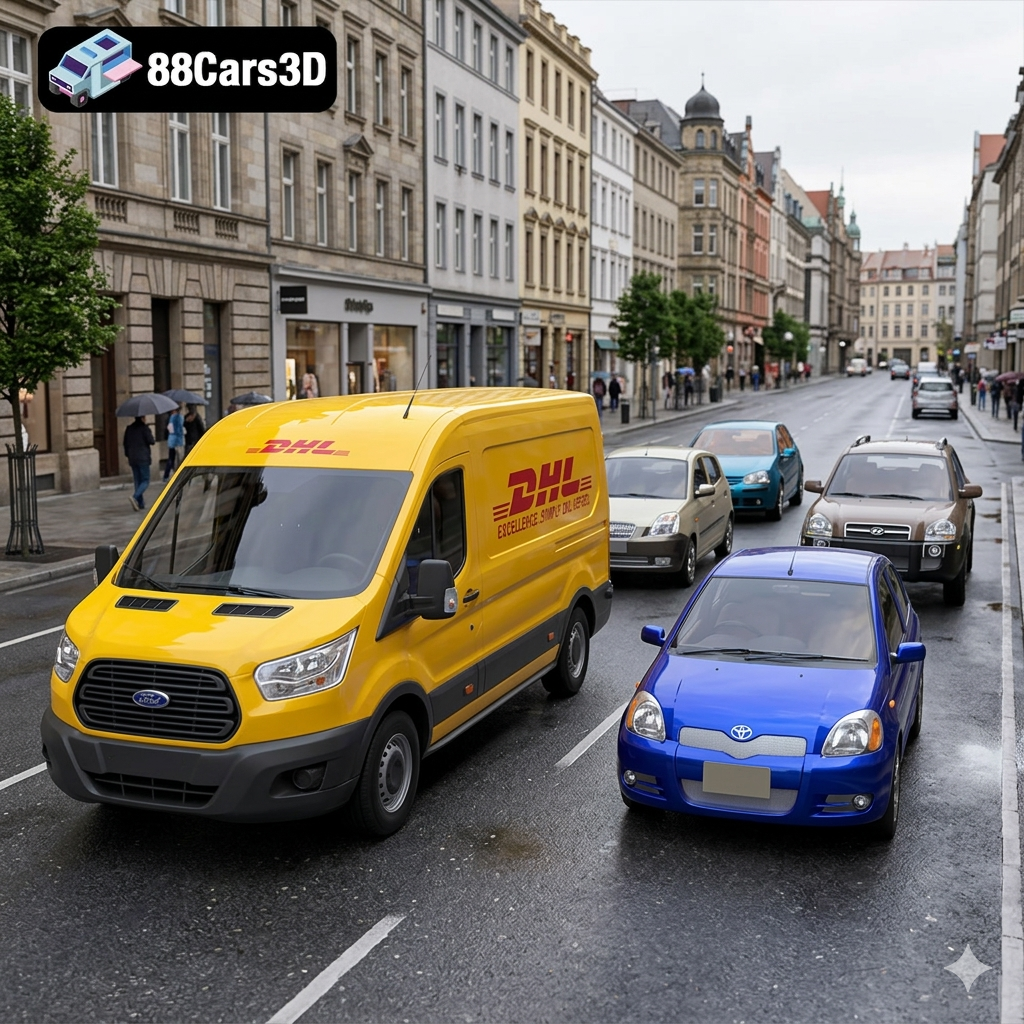
Download the Everyday City Traffic 3D Models Bundle. Includes the VW Golf, Kia Picanto, Hyundai Tucson, Toyota Yaris, and a DHL Ford Transit Van. Save big on this 5-in-1 pack, perfectly optimized for realistic ArchViz streets and game traffic.
Price: $99.99
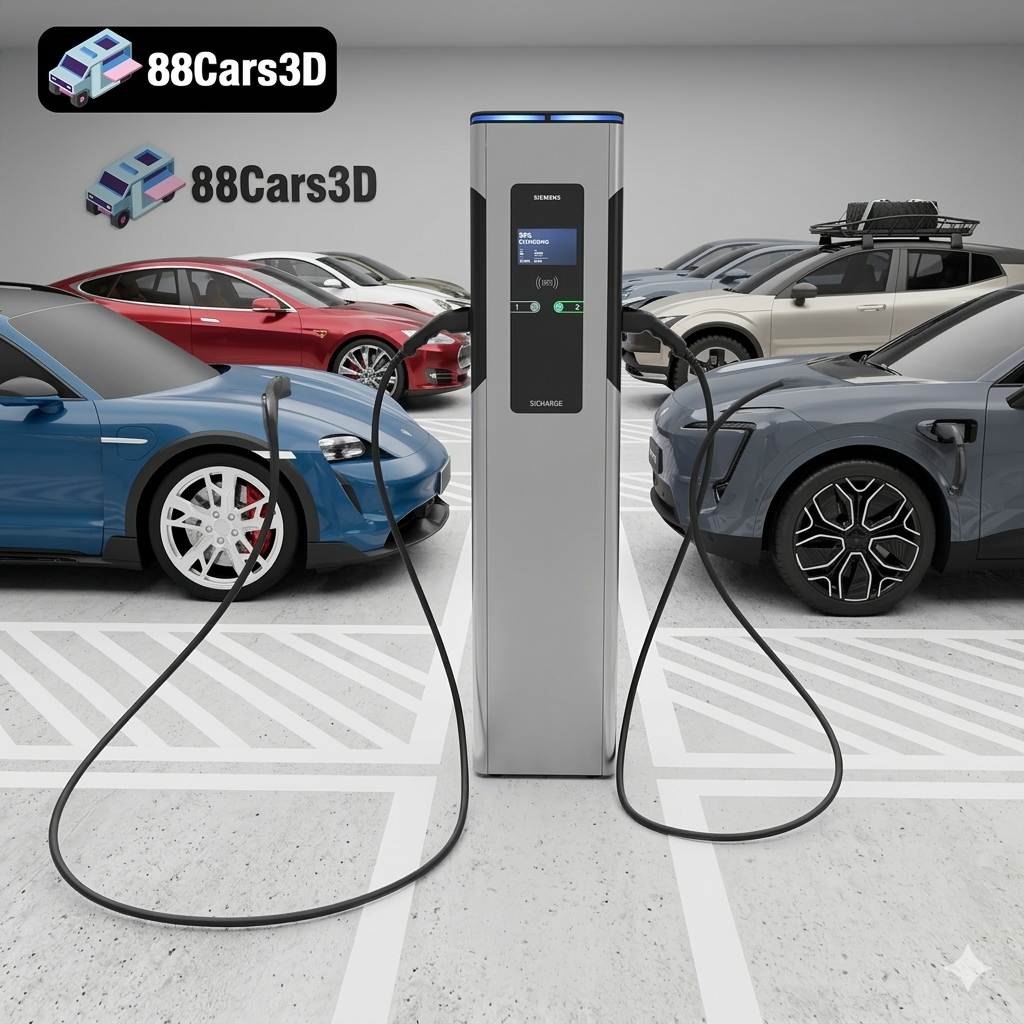
Download the Future of Mobility EV 3D Models Bundle. Includes the Volvo EX30, Tesla Model S, AVATR 11, Porsche Taycan, and a Siemens EV Charger. Save big on this highly optimized 5-in-1 pack for ArchViz and game development!
Price: $89.99

