PBR vs Non-PBR Materials: What Matters Most for Vehicle Visualization
In the high-stakes world of 3D rendering, whether for cutting-edge video games, stunning automotive configurators, or photorealistic architectural visualizations, the materials you choose for your 3D vehicle models can make or break the illusion of reality. Vehicles, with their complex interplay of reflective surfaces, intricate details, and varied material properties—from glossy paint to matte rubber, polished chrome to transparent glass—present a unique challenge for any 3D modeling texturing artist. The choice between PBR (Physically Based Rendering) and Non-PBR materials isn’t merely a technical preference; it dictates the visual fidelity, artistic pipeline, and even the performance of your final visualization.
This comprehensive guide dives deep into the heart of PBR vs Non-PBR materials, dissecting their core principles, practical applications, and limitations specifically for vehicle visualization. We’ll explore what matters most when selecting your material approach, helping you navigate the complexities to achieve stunning, efficient, and appropriate results for your next project, be it a game development endeavor or a high-end automotive rendering showcase.
Understanding Non-PBR Materials: The Legacy Approach
Before the widespread adoption of Physically Based Rendering, artists relied on a set of material paradigms often referred to as Non-PBR. These traditional shading models, while still relevant in specific contexts, represent an older school of thought in how light interacts with surfaces in a 3D environment.
What are Non-PBR Materials?
Non-PBR materials, at their core, utilize simplified, empirical shading models like Lambert and Blinn-Phong. Instead of mimicking real-world physics, these models offer artists direct, intuitive control over how light affects a surface’s diffuse (color), specular (highlight), and ambient properties. An artist would manually tweak parameters such as diffuse color, specular color, specular power (shininess), and emission to achieve a desired look.
- Lambert Shading: Primarily deals with diffuse light, resulting in a flat, matte appearance. Think of a simple clay model.
- Blinn-Phong Shading: Adds a specular highlight to the Lambert model, giving surfaces a sense of shininess. This was the workhorse for many years, allowing for basic metallic and plastic looks.
The key characteristic of Non-PBR is its lack of energy conservation. This means that light reflected from a surface isn’t necessarily balanced with the light absorbed, potentially leading to unrealistic results, especially when surfaces become very shiny or under diverse lighting conditions.
Key Characteristics and Components
A typical Non-PBR material relies on a more limited set of textures:
- Diffuse/Albedo Map: The primary color of the surface, often containing baked-in lighting information or shadows that won’t react dynamically.
- Specular Map: Dictates the color and intensity of specular highlights.
- Normal Map: Adds surface detail by faking bumps and dents without increasing polygon count, similar to PBR.
- Opacity Map: Controls transparency, also found in PBR.
Achieving a consistent look with Non-PBR materials across different lighting setups can be challenging. Artists often had to manually adjust material properties for each scene or lighting environment, making the process time-consuming and prone to inconsistencies.
Where Non-PBR Excels for Vehicles
Despite the advancements of PBR, Non-PBR materials still hold value in specific vehicle visualization contexts:
- Stylized Art: For vehicles in cartoons, cel-shaded games, or low-poly aesthetics, Non-PBR offers direct artistic control to achieve vibrant, non-photorealistic styles that aren’t bound by physical accuracy. Think of a brightly colored, simplified car in a mobile game.
- Performance-Critical Applications: While modern PBR implementations are highly optimized, extremely old hardware or ultra-low-end mobile games might still benefit from the raw simplicity and potentially lower computational overhead of basic Non-PBR shaders.
- Rapid Prototyping: For quick blockouts or conceptual models where realism isn’t the immediate goal, applying a simple Non-PBR material can be faster.
- Specific Artistic Effects: Some unique artistic effects that intentionally break physical rules can be easier to implement with Non-PBR’s direct parameter control.
Limitations of Non-PBR for Vehicle Visualization
For projects aiming for realism, Non-PBR quickly shows its weaknesses when applied to vehicles:
- Inconsistent Realism: A car paint material tuned for a sunny outdoor scene will look drastically different and often “wrong” in an indoor garage setting, requiring manual re-tuning.
- “Plastic-y” Look: Without precise, physically accurate light interactions, Non-PBR vehicles often suffer from a synthetic, plastic-like appearance, failing to convincingly convey the difference between metal, paint, rubber, or glass.
- Time-Consuming Iteration: Adjusting materials for every new lighting scenario becomes an artistic burden rather than an automatic process.
Embracing PBR Materials: The Standard for Modern Realism
Physically Based Rendering (PBR) represents a paradigm shift in realistic car rendering and 3D graphics in general. It’s the standard behind the stunning visuals in contemporary video games, feature films, and high-fidelity product visualizations.
What are PBR Materials?
PBR is an approach to physically based rendering that aims to simulate the way light behaves in the real world. Its core principles revolve around energy conservation, meaning that a surface cannot reflect more light than it receives, and the understanding that all surfaces are reflective to some degree. This results in materials that react consistently and predictably under any lighting condition, making them ideal for creating photorealistic vehicles.
There are two primary PBR workflows:
- Metallic-Roughness Workflow: The most common workflow. It uses a “Metallic” map to define if a surface is a metal or a dielectric (non-metal) and a “Roughness” map to describe the micro-surface detail affecting how sharply light reflects.
- Specular-Glossiness Workflow: Less common now but still supported by some engines. It uses a “Specular” map (defining the color and intensity of reflections) and a “Glossiness” map (the inverse of roughness) to achieve similar results.
Key PBR Maps and Their Role in Vehicle Surfaces
PBR materials utilize a more extensive set of textures, each controlling a specific physical property of the surface:
- Albedo/Base Color Map: Defines the base color of the surface, with no lighting information baked in. For a car, this would be the raw color of the paint, unaffected by shadows or highlights.
- Metallic Map: A grayscale map where white (1.0) indicates a metallic surface (like chrome or polished aluminum) and black (0.0) indicates a non-metallic surface (like paint, rubber, or plastic).
- Roughness Map: A grayscale map where white indicates a very rough, diffuse surface (like matte rubber) and black indicates a very smooth, reflective surface (like highly polished car paint or chrome). This is crucial for distinguishing between different finishes on a car.
- Normal Map: As with Non-PBR, this fakes surface detail at a microscopic level, essential for subtle imperfections in paint or the texture of tire treads.
- Ambient Occlusion (AO) Map: Simulates soft shadows where surfaces are close together (e.g., in crevices around doors or under body panels), enhancing depth without affecting direct lighting.
- Height/Displacement Map: Used for true geometric displacement, pushing vertices to create actual bumps and valleys, ideal for highly detailed tire treads or intricate grilles (though often performance-intensive).
- Emissive Map: Defines areas that emit light, perfect for car headlights, taillights, or illuminated dashboard elements.
Why PBR is Crucial for Realistic Vehicle Renders
PBR offers unparalleled advantages for vehicle visualization:
- Consistent Realism: A PBR-textured car will look believable and natural under any lighting condition—from a bright sunny day to a dimly lit tunnel or a dramatic studio render—without needing manual material adjustments.
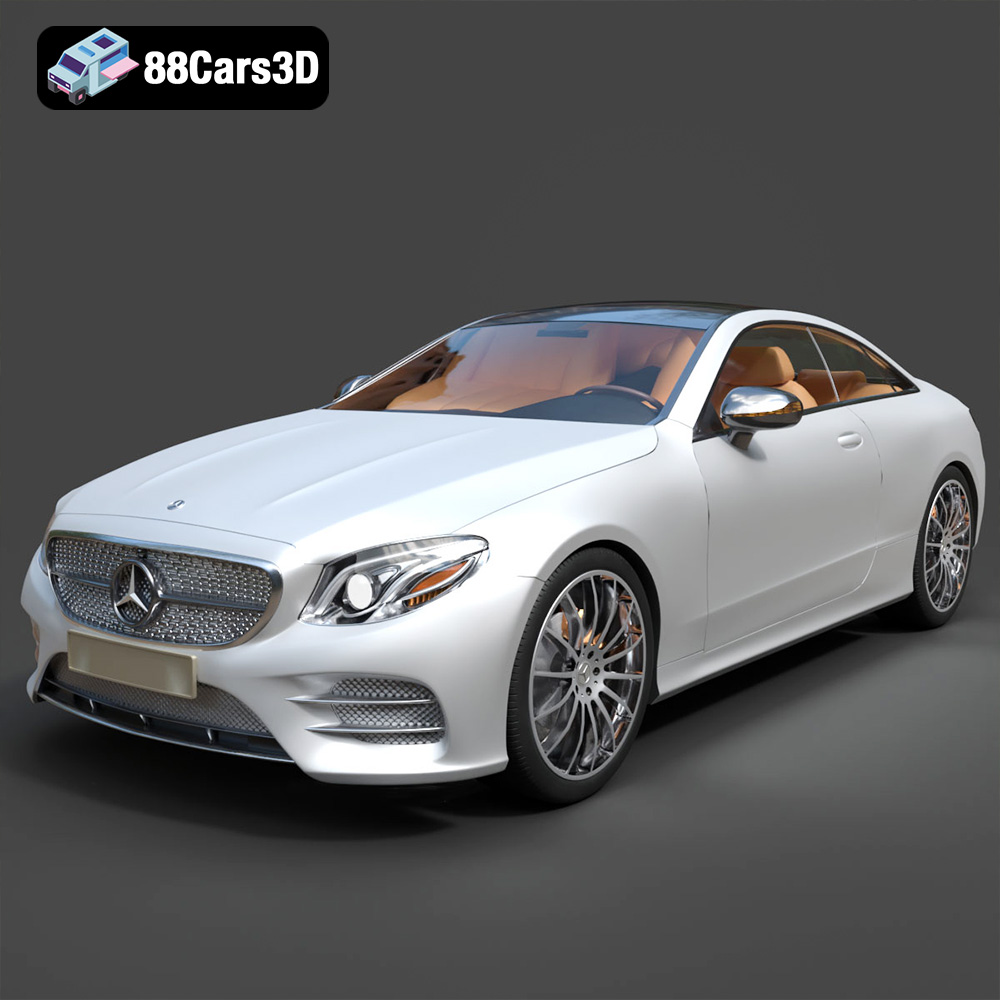
- Authentic Material Representation: PBR accurately simulates the distinct properties of car paint (subtle metallic flakes, clear coat reflections), chrome (sharp, mirror-like reflections), rubber (matte, rough surface), glass (transparency, refraction, reflections), and plastics.
- Reduced Artistic Guesswork: By adhering to physical rules, artists can focus on creating accurate textures, knowing the renderer will handle the light interaction correctly. This streamlines the 3D art pipeline.
- Industry Standard: PBR is the dominant standard across film, games (real-time rendering), and product visualization, ensuring compatibility and leveraging vast libraries of PBR assets.
Challenges and Considerations with PBR
While superior for realism, PBR does come with its own set of considerations:
- Steeper Learning Curve: Understanding the physical properties behind each PBR map (e.g., what makes a metallic surface metallic, or how roughness affects reflection) requires a shift in thinking for artists accustomed to Non-PBR.
- Requires High-Quality Textures: To fully leverage PBR, you need high-quality, accurately calibrated texture inputs, often derived from scanned real-world materials or carefully authored procedural textures.
- Potentially Higher Performance Cost: While modern engines are highly optimized for PBR, rendering more complex reflections, refractions, and numerous texture maps can still be more demanding than simpler Non-PBR setups, though often negligible for current hardware.
PBR vs Non-PBR: A Direct Comparison for Vehicle Visualization
To help you decide what matters most for your vehicle project, here’s a direct comparison:
| Feature |
PBR Materials |
Non-PBR Materials |
| Realism & Consistency |
High; physically accurate light interaction, consistent look across all lighting. Essential for photorealistic vehicles. |
Lower; artistic control, inconsistent look under varied lighting, often appears “plastic-y.” |
| Artistic Control |
Focus on creating realistic material properties; light interaction is handled physically. |
Direct, manual control over diffuse, specular, ambient; allows for non-physical effects. Ideal for stylized vehicles. |
| Setup Complexity |
More texture maps (Albedo, Metallic, Roughness, Normal, etc.), requires understanding physical properties. |
Fewer texture maps (Diffuse, Specular, Normal); intuitive, but requires per-scene tweaking for realism. |
| Performance |
Highly optimized in modern engines, but can be more demanding with complex materials/reflections. |
Generally lower computational cost for very simple shaders, but often negligible difference in modern pipelines. |
| Industry Standard |
The current industry standard for games, film, arch-viz, automotive, etc. |
Legacy standard; primarily used for stylized art or very specific niche applications. |
| Typical Vehicle Use Cases |
AAA games, cinematic renders, automotive configurators, marketing visuals, Arch-viz hero assets. |
Low-poly mobile games, stylized games, cartoons, concept art blockouts, very old hardware. |
Practical Examples: When to Choose Which for a Car Model
Let’s put theory into practice with specific vehicle scenarios:
- Scenario 1: AAA Racing Game / High-End Automotive Marketing Render
- Choice: PBR. For the ultimate in realism, PBR is non-negotiable. Car paint needs to react accurately to environmental reflections, chrome must be mirror-like, and tire rubber must absorb light realistically. The consistency of PBR across different tracks, weather conditions, or studio lighting setups is paramount.
- Scenario 2: Mobile Stylized Kart Racer
- Choice: Non-PBR (or simplified PBR). A vibrant, cartoonish aesthetic with exaggerated highlights and colors that don’t necessarily adhere to physics might be best achieved with Non-PBR for direct artistic control. Performance on mobile devices is also critical, and simpler materials can help. However, many modern mobile games still utilize simplified PBR for better environmental consistency, balancing realism with performance.
- Scenario 3: Architectural Visualization (Background Cars)
- Choice: PBR (optimized). Even if cars are in the background, their materials need to react realistically to the scene’s global illumination and reflections to seamlessly blend in. While you might use lower-resolution textures or simpler geometry, the underlying PBR principles ensure visual coherence.
- Scenario 4: Quick Concept Art Sketch / VR Blockout
- Choice: Non-PBR. For speed and iteration, quickly applying flat colors or basic Phong shaders allows artists to focus on form and composition without getting bogged down in texture maps. Physical accuracy is not a priority at this stage.
Decision Framework: What Matters Most for YOUR Vehicle Project?
Ultimately, the “what matters most” depends entirely on your project’s specific goals and constraints. Use this decision framework to guide your material choices for vehicle visualization:
Key Questions to Ask
- What is the target platform and performance budget?
- High-end PC/Console/Film: PBR is standard and expected.
- Mid-range Mobile/VR: Optimized PBR is often feasible and recommended for consistency.
- Low-end/WebGL: Non-PBR or extremely simplified PBR might be considered for raw performance, but often at a visual cost.
- What level of realism is required?
- Photorealism: Absolutely PBR. There’s no substitute for physically accurate light interaction for believable vehicle surfaces.
- Stylized/Cartoonish: Non-PBR offers greater artistic freedom to break physics, but simplified PBR can still provide consistent results for stylized looks.
- What is the desired artistic style?
- Gritty/Realistic: PBR.
- Clean/Minimalist/Abstract: PBR can still work for consistency, or Non-PBR for specific artistic effects.
- Vibrant/Exaggerated: Non-PBR might give you more direct control over extreme colors and highlights.
- What are the lighting conditions the vehicle will be seen in?
- Static, controlled lighting: Non-PBR can be tuned to look good in one specific environment.
- Dynamic, varied lighting (day/night cycles, different environments): PBR is essential for consistent, believable results without constant re-tuning.
- What is the project timeline and artist skill set?
- Tight timeline, artists new to PBR: Initial learning curve for PBR might seem daunting, but it saves time in the long run for realistic results.
- Experienced PBR artists, ample time: PBR is the natural choice.
Hybrid Approaches and Modern Workflows
It’s important to note that the distinction isn’t always black and white. Many modern projects employ hybrid approaches:
- Optimized PBR: Using PBR materials but with lower resolution textures, fewer texture maps (e.g., combining metallic and smoothness into one channel), or simpler shader calculations for performance-critical assets. This is common in real-time rendering.
- PBR for Core Assets, Non-PBR for Effects: A vehicle might use PBR for its body, glass, and tires, but a specific particle effect (like engine smoke) might use a simpler Non-PBR shader for artistic control or performance.
The industry is undeniably moving towards PBR. Even stylized games often leverage PBR’s consistency to ensure their assets look good under varying lighting, using artistic textures to achieve the desired look rather than breaking physical light rules.
Conclusion: Driving Towards the Right Material Choice
The debate between PBR and Non-PBR materials for vehicle visualization boils down to one fundamental question: what visual outcome and pipeline efficiency are you striving for? If your goal is to render 3D vehicle models that exude realism, reacting authentically to every nuance of light, then PBR is not just a preference—it’s a necessity. Its physically accurate approach delivers consistent, predictable, and stunning results that meet the high demands of modern automotive rendering and game development.
However, if artistic freedom, extreme stylization, or absolute bare-bones performance for very specific, low-fidelity applications are your primary drivers, then Non-PBR still has its place. Understanding the strengths and weaknesses of each material type 3D allows you to make an informed decision, optimizing both your artistic vision and your technical pipeline.
In the evolving landscape of 3D modeling texturing, the trend is clear: PBR has become the cornerstone for achieving believable visuals. Mastering its principles will empower you to create vehicle visualizations that stand out, convincing your audience with their undeniable realism and captivating detail.
Elevate Your Vehicle Renders Today
Ready to bring your 3D vehicles to life with unparalleled realism? Dive into the world of PBR materials and transform your visualizations. Explore tutorials, experiment with PBR workflow tools like Substance Painter or Quixel Mixer, and see firsthand the difference physically based rendering can make. The future of realistic car rendering is here, and it’s physically based. Start your PBR journey now and drive your projects to new heights!