⚡ FLASH SALE: Get 60% OFF All Premium 3D & STL Models! ⚡

In the realm of real-time rendering, achieving unparalleled realism is the ultimate goal. For automotive visualization and game development, merely showcasing a static vehicle, no matter how meticulously modeled, often falls short of capturing a truly immersive experience. This is where dynamic weather systems in Unreal Engine become a game-changer. Imagine a sleek supercar reflecting the glistening tarmac after a sudden downpour, or its contours subtly highlighted by a soft, falling snow. These dynamic environmental shifts not only elevate visual fidelity but also create compelling narratives and interactive scenarios.
For professionals leveraging high-quality 3D car models from platforms like 88cars3d.com, integrating sophisticated weather effects is the next frontier in bringing their projects to life. This comprehensive guide will take you through the technical intricacies of building and optimizing dynamic weather systems in Unreal Engine 5. We’ll delve into everything from setting up core environmental components to crafting realistic precipitation with Niagara, fine-tuning materials for wet surfaces, and orchestrating seamless transitions using Blueprint. By the end, you’ll possess the knowledge to transform your automotive scenes from static displays into vibrant, living environments that captivate your audience.
Building a robust dynamic weather system begins with establishing a solid environmental foundation within Unreal Engine. This involves configuring several core components that work in concert to simulate the vastness and variability of our natural world. Proper setup of these elements is crucial, as they form the canvas upon which all our weather effects will be painted, directly influencing lighting, atmosphere, and overall realism. The goal is to create a system that allows for seamless transitions between various weather states, from clear skies to heavy rain or a blizzard, without jarring visual pops or performance hitches.
Understanding the interplay between Unreal Engine’s advanced rendering features, such as Lumen for global illumination and reflections, and the atmospheric components is key. When we introduce dynamic elements like clouds and precipitation, their interaction with the existing lighting and atmosphere must be cohesive to maintain visual integrity. This foundational stage sets the stage for the technical complexities that follow, ensuring that our weather effects are grounded in a believable and performant environment. We’ll focus on setting up the essential actors that govern the sky, clouds, and primary light sources, which are the building blocks for any dynamic outdoor scene.
To begin, ensure your Unreal Engine project is set up with the necessary plugins and rendering features. For cutting-edge visuals, enable Lumen Global Illumination and Reflections, as well as Nanite Virtualized Geometry if your scene includes complex static meshes like those found in high-quality 3D car models from 88cars3d.com. The core environmental actors you’ll need are:
Ensure these actors are placed in your persistent level. Begin by fine-tuning their base parameters to achieve a desirable clear-sky, midday look. For instance, adjust the Sun Multiplier and Cloud Opacity in the Volumetric Clouds to get a natural appearance. Remember to set your Directional Light to ‘Atmosphere and Cloud’ for interaction with the Sky Atmosphere and Volumetric Clouds.
To bring dynamism to our weather system, we’ll employ Blueprint visual scripting to manage different weather states and their transitions. A central ‘Weather Manager’ Blueprint Actor is an ideal approach. This Blueprint will house variables for current weather type (e.g., Clear, Overcast, Rainy, Snowy), target weather type, and transition duration. It will also hold references to all our environmental actors.
Inside the Weather Manager Blueprint:
CurrentWeatherState (E_WeatherState)TargetWeatherState (E_WeatherState)TransitionProgress (Float, 0.0 to 1.0)TransitionDuration (Float)SetWeatherState(E_WeatherState NewState): This function will initiate a weather transition. It sets TargetWeatherState and starts a Timeline or a ‘Set Timer by Event’ to smoothly interpolate environmental parameters over TransitionDuration.UpdateWeatherParameters(float Alpha): Called every tick during a transition, this function will linearly interpolate values for cloud density, light intensity, fog density, etc., between the CurrentWeatherState and TargetWeatherState. For example, during a transition to ‘Rainy’, you might decrease Directional Light intensity, increase Volumetric Cloud density, and increase Exponential Height Fog density.By using a central manager, all weather-related adjustments are coordinated, ensuring a consistent and controlled environment. This modular approach also makes it easier to expand the system with new weather types or integrate it with other game logic, offering flexibility for complex automotive configurators or interactive game experiences.
Once your core environment is established, the next crucial step is to introduce precipitation. Unreal Engine’s Niagara particle system is an incredibly powerful and flexible tool for creating everything from subtle mist to torrential downpours and blizzards. Niagara allows for highly detailed simulations, sophisticated emitter behaviors, and efficient rendering, making it ideal for the demanding visual fidelity required in automotive visualization. The key to realism lies not just in the particles themselves, but how they interact with the environment, react to physics, and seamlessly blend with other atmospheric effects.
Crafting compelling rain and snow effects involves more than just spawning particles. We need to consider how light interacts with individual droplets or snowflakes, how they collide with surfaces, and the secondary effects they produce, such as splashes or accumulation. Performance is also a critical factor, especially when dealing with thousands of particles in real-time. Niagara’s modularity and robust optimization features, like GPU particles and LODs, become invaluable here. We’ll explore how to design these systems from the ground up, focusing on both visual quality and computational efficiency.
Creating convincing rain in Niagara requires multiple emitters working in concert. You’ll typically want at least three components:
Performance Tip: Use ‘Distance Culling’ on your Niagara emitters to prevent distant particles from rendering. Utilize ‘LODs’ (Level of Detail) within Niagara systems to reduce particle count, complexity, and texture resolution as they move away from the camera. This is crucial for maintaining frame rates, especially in open-world scenarios or during complex automotive real-time presentations where every millisecond counts. For more detailed guidance, refer to the official Unreal Engine documentation on Niagara Particle Systems.
Snow systems share similarities with rain but require different visual characteristics and environmental interactions:
For both rain and snow, consider adding an ‘Ambient Particle’ emitter that spawns a small number of particles (dust, fog, faint snow) constantly to create a sense of atmospheric presence even when primary precipitation isn’t active. This background noise adds depth and realism, making transitions smoother.
The realism of your dynamic weather system extends far beyond particle effects. How light interacts with wet or icy surfaces, and how the overall illumination of your scene changes with cloud cover, are critical elements. Unreal Engine’s advanced Material Editor and sophisticated lighting solutions, particularly Lumen, provide the tools to achieve these nuanced visual shifts. Adapting materials and lighting dynamically is essential for convincing transitions and immersing the viewer in the weather conditions, especially for showcasing the pristine quality of 3D car models from 88cars3d.com.
A car’s paint job, the sheen of its chrome, or the texture of its tires will look dramatically different under a bright sun versus a heavy downpour or a snowy overcast sky. Therefore, our material shaders must be designed to react to environmental changes, simulating moisture, reflections, and even frost accumulation. Similarly, the primary light sources and global illumination need to shift in intensity, color, and direction to accurately portray the mood and time of day dictated by the weather. This section will delve into the technical implementation of these material and lighting adjustments, ensuring your scenes react authentically to every weather shift.
Creating believable wet or icy surfaces involves dynamically adjusting PBR (Physically Based Rendering) material parameters. For this, we’ll generally use Material Functions that can be easily plugged into existing master materials, allowing for scalable implementation across multiple assets.
A wet surface typically means:
Example material node setup for roughness interpolation:
[Base_Roughness_Texture] ---> [Lerp Alpha (WetnessAmount)] <--- [Wet_Roughness_Value (e.g., 0.1)] ---> [Material Output: Roughness]
Ice and frost have unique visual properties:
These material changes are crucial for the realism of any 3D car model, providing depth and immersion that a static material cannot. When sourcing automotive assets from marketplaces such as 88cars3d.com, ensure they come with clean UVs and well-structured materials that allow for easy modification and integration of such dynamic effects.
Dynamic weather significantly impacts how light behaves in a scene. Lumen, Unreal Engine’s real-time global illumination and reflection system, is incredibly powerful here, automatically adapting to changes in the environment. However, you still need to drive the primary light sources:
All these parameters should be smoothly interpolated by your Weather Manager Blueprint over the transition duration. For instance, when transitioning to ‘HeavyRain’, the Blueprint would gradually decrease Directional Light intensity, increase Volumetric Cloud density, and increase Exponential Height Fog density, while the Sky Light automatically recaptures these changes, ensuring a cohesive and dynamic lighting environment.
The true magic of a dynamic weather system lies in its ability to transition seamlessly between states and respond to user input. Choppy transitions or sudden pops in lighting and effects can break immersion instantly. Blueprint visual scripting in Unreal Engine is the ideal tool for orchestrating these complex changes, allowing us to control multiple parameters across various engine systems simultaneously. This level of control is paramount for creating polished automotive configurators, interactive demos, or cinematic sequences where weather plays a key role.
A well-designed Blueprint system acts as the conductor of your weather symphony, ensuring that every element – from particle counts and material properties to light intensities and audio cues – moves in harmony. We’ll explore techniques for building robust state machines that manage these transitions and methods for allowing players or designers to interact with the weather in a meaningful way. The goal is to create a responsive and believable environment that enhances the user’s experience and showcases the true potential of your high-fidelity 3D car models.
A ‘State Machine’ approach within your Weather Manager Blueprint is highly effective for managing complex weather transitions. Instead of abruptly switching parameters, a state machine allows you to define states (e.g., ‘Clear’, ‘Light Rain’, ‘Heavy Rain’) and then specify how to transition between them over a period.
E_WeatherState) to represent your distinct weather conditions.CurrentWeatherState and TargetWeatherState variables.SetWeatherState(NewState) is called, it sets TargetWeatherState = NewState.TransitionDuration.Alpha value (0.0 to 1.0) representing the transition progress.Alpha to ‘Lerp’ (Linearly Interpolate) all relevant environmental parameters (light intensity, cloud density, fog density, material wetness, Niagara particle spawn rates, etc.) from their CurrentWeatherState values to their TargetWeatherState values.Alpha reaches 1.0), set CurrentWeatherState = TargetWeatherState, stop the timer, and broadcast an ‘OnWeatherChangeEnd’ event.This systematic approach ensures that all visual and atmospheric elements change smoothly and consistently, preventing any jarring shifts that would break immersion. For complex systems, you might even have a dedicated ‘Transition Blueprint’ that holds the specific interpolation curves and logic for each possible state change, making the Weather Manager cleaner.
Making weather dynamic isn’t just about automatic transitions; it’s also about empowering the user or designer with control. This is especially vital for interactive automotive configurators, allowing potential buyers to see a vehicle under various environmental conditions.
SetWeatherState() function on your Weather Manager Blueprint.SetWeatherState() function or directly animate the weather parameters within Sequencer. This allows for precise, timed weather changes that enhance storytelling or product reveals. You can create tracks for scalar parameters controlling cloud density, rain intensity, light color, etc., and keyframe them over time.By giving users or designers control over weather, you enhance the utility and appeal of your projects. Imagine a client reviewing a new car model and being able to instantly switch from a sunny beach setting to a bustling rainy city street to evaluate the design under different conditions – this is the power of interactive weather systems.
While visual fidelity is paramount, especially when showcasing high-resolution 3D car models, performance cannot be overlooked. Dynamic weather systems, with their multitude of particles, complex material shaders, and real-time lighting adjustments, can be computationally intensive. Optimizing these systems for real-time rendering across various platforms is crucial for delivering a smooth, immersive experience. A beautiful scene that runs at a low frame rate quickly loses its impact. Therefore, careful planning and implementation of optimization strategies are non-negotiable.
The challenge lies in balancing visual quality with efficiency. This means intelligently managing particle counts, leveraging Unreal Engine’s built-in optimization features, and understanding the rendering budgets for different target hardware. We need to be smart about what’s rendered, when it’s rendered, and how much detail is actually perceived by the viewer. This section will dive into the technical tactics for ensuring your dynamic weather system not only looks stunning but also runs efficiently, from utilizing LODs and culling to budgeting for diverse platforms like AR/VR or high-end PC configurations.
Efficient management of particle systems and environmental effects is key to performance:
Monitoring performance with Unreal Engine’s profiling tools (e.g., Stat GPU, Stat FX, Stat Unit) is essential during optimization. These tools will help you identify bottlenecks and guide your LOD and culling strategies.
Scalability is key when developing for a diverse range of hardware. A dynamic weather system that runs smoothly on a high-end PC might cripple performance on a mobile AR device or a standalone VR headset.
Implement console variables and scalability settings within your project that allow users or developers to adjust the quality of weather effects based on their hardware. Your Weather Manager Blueprint can expose these settings, allowing dynamic adjustment of particle spawn rates, material complexity parameters, and volumetric effect densities, ensuring your automotive visualizations are accessible and performant across a wide spectrum of devices.
The investment in creating a sophisticated dynamic weather system pays off significantly in its application across various production workflows. Beyond mere visual enhancement, dynamic weather can transform how audiences interact with 3D car models, elevate the quality of cinematic content, and add an unparalleled layer of immersion to virtual production environments. For professionals using high-fidelity assets from 88cars3d.com, these advanced applications unlock new avenues for showcasing their work and engaging clients or players.
From empowering interactive automotive configurators with real-time environmental changes to enriching virtual production stages with atmospheric realism, dynamic weather is a powerful tool. It allows for the exploration of vehicle designs under diverse conditions, adds dramatic flair to marketing materials, and creates believable worlds for games. This final section will explore how to leverage your weather system in these professional contexts, solidifying its value as a core component of your Unreal Engine projects.
Dynamic weather systems bring an incredible layer of utility and appeal to automotive visualization and configurators:
The ability to present premium 3D car models from 88cars3d.com within such a dynamic context adds significant value, transforming a static asset into a living, breathing part of an interactive experience.
For high-fidelity cinematic content and cutting-edge virtual production, dynamic weather systems are indispensable:
SetWeatherState() function on your Weather Manager Blueprint at specific points in time.By integrating dynamic weather into your cinematic and virtual production pipelines, you unlock the ability to create visually stunning and emotionally resonant experiences that push the boundaries of real-time rendering. The detailed control offered by Unreal Engine, coupled with meticulously crafted 3D assets, empowers creators to build truly unforgettable worlds.
Creating dynamic weather systems in Unreal Engine is a sophisticated endeavor, but one that profoundly elevates the realism and interactivity of any project, particularly for automotive visualization and game development. We’ve explored the essential building blocks, from configuring environmental actors like Sky Atmosphere and Volumetric Clouds to meticulously crafting precipitation effects with Niagara and adapting PBR materials for wet and icy surfaces. The power of Blueprint visual scripting to orchestrate seamless transitions and enable user interaction further enhances these systems, transforming static scenes into vibrant, living environments.
Crucially, we’ve emphasized the importance of performance optimization through techniques like Niagara LODs, distance culling, and GPU instancing, ensuring that these rich visual experiences are accessible across a range of platforms, from high-end PCs to AR/VR devices. Ultimately, integrating dynamic weather with high-quality 3D car models, such as those available on 88cars3d.com, opens up a world of advanced applications – from compelling interactive configurators that showcase every detail of a vehicle under varying conditions, to breathtaking cinematic sequences and immersive virtual production stages. By mastering these techniques, you’re not just adding a visual flourish; you’re creating truly captivating and memorable experiences that push the boundaries of real-time rendering.

Texture: Yes | Material: Yes | 3D Printable: Yes. Download the Italian Thoroughbreds Bundle featuring 5 iconic 3D models: Lamborghini Huracán Performante, Ferrari 458 Italia, Lamborghini Urus, Diablo SV, and Maserati GT. Optimized for 4K rendering and 3D printing (STL included). Save 50% with this ultimate Italian vehicle collection.
Price: $199.99

Download the Elite Future Mobility Bundle featuring 4 highly optimized 3D models: Tesla Model S, Avatr 11, Li L9, and Zoox Robotaxi. Perfect for ArchViz, Smart City renders, and game dev. Optimized for Unreal Engine and Blender. Includes .fbx, .obj, and .max formats.
Price: $99

🚗 5 Iconic German Cars (BMW M4 G82, M5 CS, X3, 1 Series & Mercedes E-Class). ✅ Optimized for ArchViz: Ready for Corona & V-Ray. 💰 Save €71 with this limited-time collection! 🚀 Instant Download after purchase.
Price: $119

Download the Extreme Off-Road & Survival 3D Models Bundle! Includes the Brabus 800 Adventure, Dodge Ram Bigfoot, Spec Truck, and a Caravan. Save over €210 on this premium 4-in-1 off-grid vehicle pack for ArchViz and game development.
Price: $149.99

Download the Heavy Duty & Commercial Logistics 3D Models Bundle! Includes the Ford Sterling, Caterpillar CT680, Mercedes Citaro Bus, and Vito Van. Save over €130 on this massive, game-ready 4-in-1 industrial vehicle pack.
Price: $109.99

Download the Ultimate Custom Motorcycles 3D Models Bundle. Includes a Custom Chopper, Ducati 916 Café Fighter, Harley XR1200X, and BMW K100. Perfect premium props for luxury ArchViz garages. Save over €250 today!
Price: $159.99

Download the ultimate JDM Street Racing 3D Models Bundle! Includes the Nissan GT-R, Toyota Supra, Mazda RX-7, Lancer Evo IX, and Honda NSX. Save big on this highly optimized, game-ready 5-in-1 Japanese legend car pack.
Price: $129.99

Download the ultimate American Muscle & Cinematic Classics 3D Models Bundle! Includes the Dodge Charger ’68, Mustang Eleanor GT500, Camaro Z28 ’79, and a custom ’69 Mustang. Save over €240 on this game-ready, premium 4-in-1 pack.
Price: $149.99
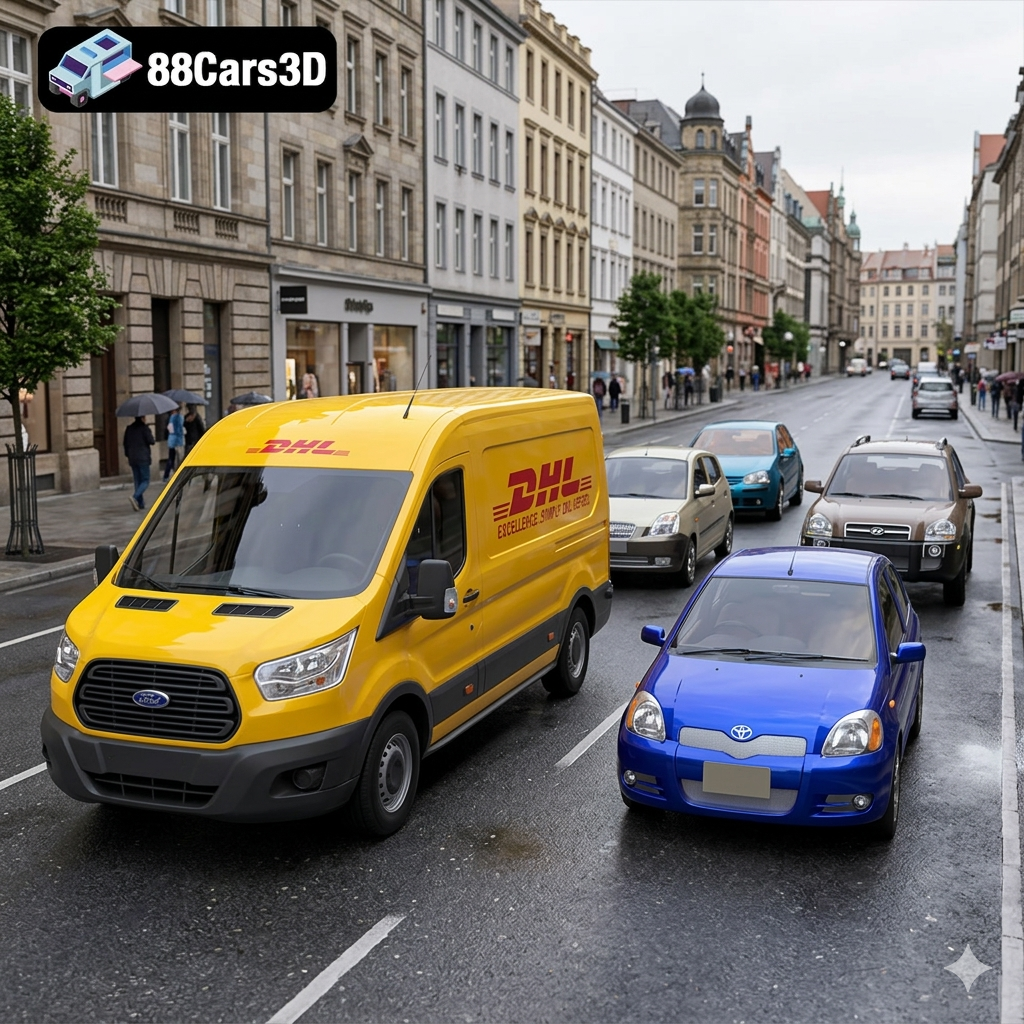
Download the Everyday City Traffic 3D Models Bundle. Includes the VW Golf, Kia Picanto, Hyundai Tucson, Toyota Yaris, and a DHL Ford Transit Van. Save big on this 5-in-1 pack, perfectly optimized for realistic ArchViz streets and game traffic.
Price: $99.99
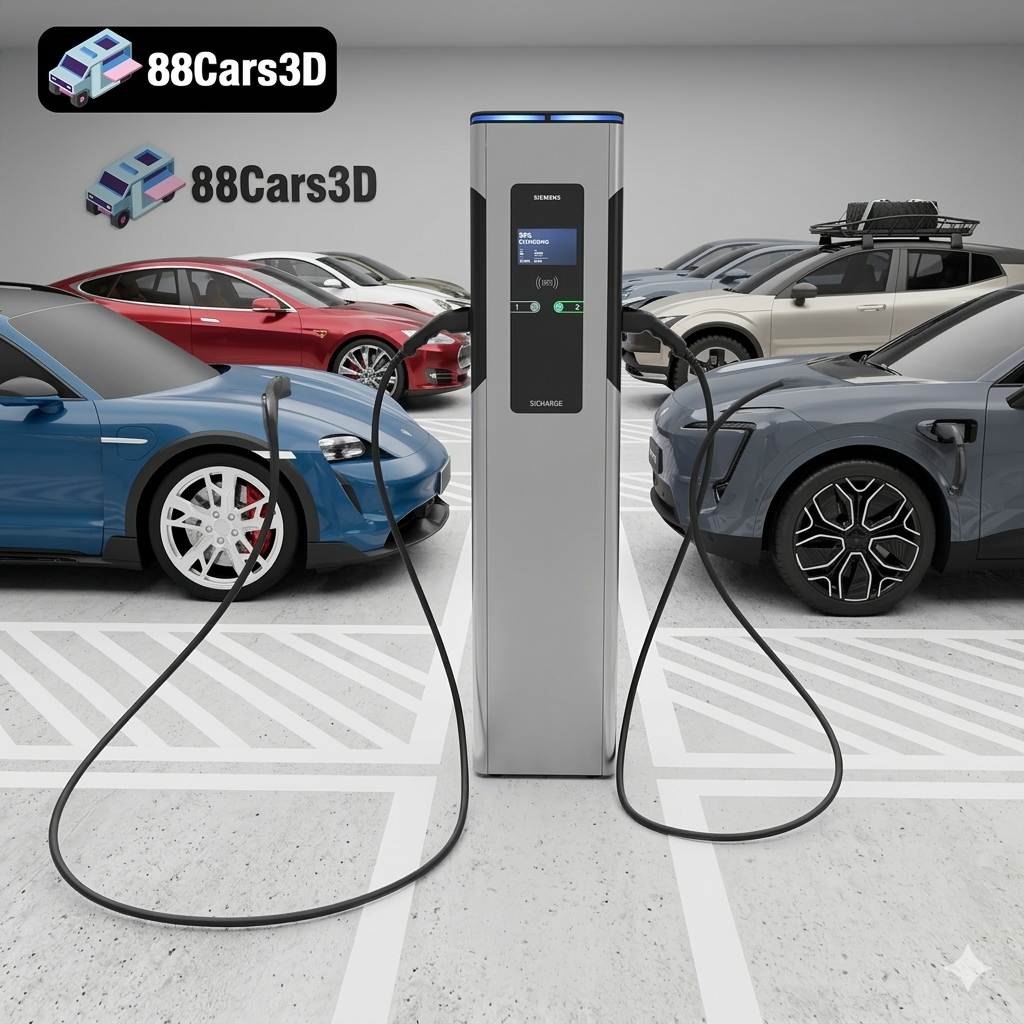
Download the Future of Mobility EV 3D Models Bundle. Includes the Volvo EX30, Tesla Model S, AVATR 11, Porsche Taycan, and a Siemens EV Charger. Save big on this highly optimized 5-in-1 pack for ArchViz and game development!
Price: $89.99

