⚡ FLASH SALE: Get 60% OFF All Premium 3D & STL Models! ⚡

The quest for realism and scale in real-time rendering has always pushed the boundaries of technology. For Unreal Engine developers, especially those crafting immersive automotive experiences, the challenge of creating vast, seamless open worlds while maintaining peak performance has been a constant balancing act. Enter Unreal Engine’s World Partition system – a revolutionary framework designed to conquer this very hurdle. Far from just a game development feature, World Partition is a game-changer for automotive visualization, virtual production, and interactive configurators, allowing artists and designers to build incredibly detailed, sprawling environments without the traditional memory and performance limitations.
Imagine showcasing a meticulously crafted 3D car model, sourced from platforms like 88cars3d.com, not just in a sterile studio environment, but within an expansive, hyper-realistic cityscape, a winding mountain pass, or a futuristic test track. World Partition makes this vision a tangible reality. It intelligently streams your world content, loading only the necessary parts into memory at any given time, thus enabling unprecedented scale and detail. This comprehensive guide will delve deep into the technical intricacies of World Partition, exploring its core mechanics, setup workflows, optimization strategies, and how it empowers professionals to create breathtaking automotive visualizations that truly immerse their audience. We’ll uncover how this system integrates with cutting-edge Unreal Engine features like Nanite and Lumen, and provide actionable insights for leveraging it in your next high-fidelity vehicle project.
At its heart, Unreal Engine’s World Partition is a data management system that fundamentally changes how large open worlds are structured and loaded. Prior to World Partition, developers relied on Level Streaming, a manual system requiring designers to painstakingly create and manage multiple sub-levels. While functional, this approach became cumbersome for truly massive worlds and hindered collaborative efforts. World Partition streamlines this process, transforming a single large persistent level into a grid-based system where content is automatically partitioned and streamed. This intelligent automation is crucial for projects demanding vast landscapes, such as open-world driving simulators or sprawling virtual production sets for automotive commercials.
The system works by dividing your entire world into a grid of cells. As a player or camera moves through the environment, World Partition dynamically loads and unloads these cells based on proximity and predefined streaming settings. This “active” area is seamlessly integrated, ensuring that only relevant assets are consuming memory and CPU cycles. This is particularly beneficial when dealing with high-fidelity assets like the detailed car models found on 88cars3d.com. Instead of having countless parked cars, buildings, and environmental props loaded across an entire metropolis, only those within the active streaming radius are present, significantly reducing overhead. Beyond simple streaming, World Partition introduces several interconnected features that elevate its capabilities:
Data Layers are a powerful organizational tool within World Partition, allowing you to group specific types of content. Think of them as custom visibility layers. For automotive visualization, Data Layers offer immense flexibility. You could have a “Day Lighting” Data Layer, a “Night Lighting” Data Layer, or separate layers for “Urban Props,” “Road Networks,” and “Interactive Elements.” This enables efficient toggling of content sets, perfect for creating dynamic automotive configurators where users can switch between different environments or visual moods. For example, a customer interacting with a virtual car showroom might toggle a “Rainy Weather” Data Layer to see how the vehicle looks in different conditions, without needing to reload an entire level. Furthermore, Data Layers facilitate collaborative development, allowing multiple artists to work on different aspects of a scene (e.g., environment artists on terrain, prop artists on street furniture) without interfering with each other’s work by isolating their changes to specific layers.
World Partition integrates seamlessly with Unreal Engine’s Hierarchical Level of Detail (HLOD) system, a critical component for managing visual fidelity across vast distances. HLODs automatically generate simplified representations of clusters of meshes, reducing draw calls and polygon counts for objects far from the camera. For large automotive scenes, this means distant city blocks or an entire forest can be rendered with minimal performance impact, while the area immediately surrounding the vehicle maintains full detail. This is essential for maintaining smooth frame rates in expansive environments. Similarly, Runtime Virtual Textures (RVT) can be utilized to efficiently sample material data across vast landscapes, reducing texture memory usage and improving rendering performance, especially for terrains over which high-detail car models will drive. Leveraging these systems together ensures that your extensive automotive world looks stunning from every angle without bogging down your system.
Embarking on a new Unreal Engine project for large-scale automotive visualization requires thoughtful planning, especially when integrating World Partition. Whether you’re starting a fresh project or converting an existing map, understanding the setup process is key to unlocking its full potential. The transition from traditional single-map levels to a World Partition-enabled environment is straightforward but requires adherence to specific steps to ensure optimal performance and seamless content management.
For new projects, creating a World Partition map is as simple as selecting “File > New Level…” and choosing the “World Partition” template. This automatically configures the necessary settings. For existing maps, the process involves converting the level, which Unreal Engine can do with a few clicks from the “Window > World Partition > Convert Level” option. This tool efficiently breaks down your existing level’s content into the World Partition grid. Once converted, your world becomes a dynamic canvas, ready for expansive development.
Upon conversion or creation, it’s crucial to review the World Partition settings found in the World Settings panel. Key parameters include the “Loading Range” and “HLOD Grid Size.” The Loading Range determines how far content streams in around the player/camera, directly impacting memory usage and streaming performance. For automotive projects, especially those with fast-moving vehicles, you might need a larger loading range to prevent pop-in, but this must be balanced with performance considerations. The HLOD Grid Size dictates how large the clusters of meshes are for HLOD generation, influencing how aggressively Unreal Engine optimizes distant geometry. A larger HLOD grid size will simplify more aggressively, which can be beneficial for very distant scenery in a driving simulator.
Furthermore, consider the physical size of your world. While World Partition supports truly massive dimensions, breaking your environment into manageable chunks with a sensible grid size (e.g., 256×256 meters or 512×512 meters per cell) is recommended. This impacts how assets are partitioned and streamed, and also how collaborative teams can work. Smaller cells allow for more granular streaming and potentially better performance, but can also lead to more frequent loading/unloading events. Experimentation based on your project’s specific needs and target hardware is often necessary to find the sweet spot. Detailed documentation on World Partition setup and management can be found on the official Unreal Engine learning portal: https://dev.epicgames.com/community/unreal-engine/learning.
A significant advantage of World Partition lies in its ability to facilitate large-scale collaborative development. With the traditional single-level approach, multiple artists working on the same map could lead to frequent merge conflicts and convoluted version control. World Partition mitigates this by allowing artists to work on isolated regions of the world. When an artist checks out a specific area of the world, only that section is locked for editing, enabling others to continue working on different parts. This workflow, combined with Data Layers, makes it far easier for multidisciplinary teams to build complex automotive environments. For instance, a foliage artist can work on a specific forest section, while a city planner works on an urban street layout, and a lighting artist fine-tunes the global illumination, all simultaneously within the same master world. Establishing clear naming conventions for assets, Data Layers, and streaming cells is paramount for maintaining order in these large, collaborative projects.
Achieving optimal performance in a vast World Partition environment, especially when displaying high-fidelity 3D car models and intricate environments, is a nuanced art. The power of World Partition lies in its ability to manage content efficiently, but it doesn’t automatically guarantee a smooth frame rate. Developers must actively employ various optimization techniques to ensure a seamless experience, particularly for real-time automotive rendering where visual fidelity and smooth interactivity are paramount.
One of the primary considerations is the **Streaming Budget**. This refers to the amount of memory and CPU cycles allocated to loading and unloading World Partition cells. If your streaming budget is too low, players will experience noticeable pop-in of assets; if it’s too high, you might overwhelm system resources. Fine-tuning the “Loading Range” and “Unloading Range” in the World Partition settings is crucial. For fast-moving vehicles, a wider loading range might be necessary to pre-load assets further ahead, preventing visual hitches. However, this must be balanced against the total asset count and complexity within that range. Monitoring performance metrics using Unreal Engine’s profiling tools (e.g., Stat Streaming, Stat Engine, Stat RHI) is essential to identify bottlenecks and adjust these parameters accordingly.
The integration of World Partition with Unreal Engine 5’s groundbreaking features, Nanite and Lumen, is transformative for automotive visualization. Nanite, the virtualized geometry system, allows artists to import incredibly high-polygon 3D car models and environment assets without traditional poly count restrictions. Instead of agonizing over polygon budget for every screw and bolt on a vehicle, artists can focus purely on visual detail. When combined with World Partition, Nanite ensures that even the most complex assets within the active streaming cells are rendered efficiently. A highly detailed car model acquired from 88cars3d.com, complete with intricate interior details and external surfaces, can be integrated into a sprawling World Partition map with confidence, knowing Nanite will handle its geometric complexity gracefully.
Lumen, Unreal Engine’s fully dynamic global illumination and reflections system, further elevates realism. In a World Partition setup, Lumen accurately propagates light bounces and reflections across your entire, vast environment, creating incredibly convincing lighting scenarios. Whether it’s the subtle reflections of a distant cityscape on a car’s metallic paint or the soft bounce light illuminating a vehicle in a forested area, Lumen provides stunning real-time lighting. While Lumen itself has performance considerations, its integration with World Partition means that these complex lighting calculations are primarily focused on the actively streamed areas, allowing for breathtaking visual fidelity even in expansive automotive scenes. For further optimization, consider using Lumen’s software ray tracing mode for less demanding scenarios or exploring various console commands to fine-tune its performance for your specific hardware targets.
Beyond Nanite, traditional Level of Detail (LOD) strategies remain vital for specific asset types and for maximizing performance in a World Partition world. Non-Nanite meshes, such as foliage, particle systems (Niagara for exhaust fumes or environmental effects), and certain interactive props, still benefit greatly from manual LODs. Generating 3-5 LOD levels for these assets, with significant polygon reduction at each step, ensures that objects further from the camera are rendered with fewer resources.
Another critical optimization involves **Draw Call Reduction**. Each unique object or batch of similar objects rendered contributes to draw calls, which can quickly bottleneck performance in large scenes. Strategies include:
By meticulously managing LODs, leveraging Nanite for appropriate assets, and reducing draw calls, you can maintain a high-fidelity visual experience for your automotive models within even the most sprawling World Partition environments.
World Partition not only enhances scale and performance but also facilitates advanced workflows crucial for modern automotive visualization. From creating interactive car configurators with dynamic environments to setting up virtual production stages for real-time cinematic shoots, World Partition provides the backbone for these sophisticated applications. The system’s ability to manage vast amounts of data efficiently opens up new possibilities for how we design, build, and present automotive content.
One significant area is **Blueprint visual scripting** for interactive experiences. Within a World Partition map, you can use Blueprints to create complex interactions that respond to the environment or the vehicle itself. Imagine a car driving through different areas of a map, and a Blueprint detects its location, automatically swapping out environment Data Layers (e.g., from urban to rural), triggering weather effects using Niagara, or adjusting the vehicle’s physics parameters to simulate different terrains. For an interactive configurator, Blueprints can control the visibility of different vehicle parts or accessories, dynamically loading new environmental contexts via Data Layers to showcase the car in diverse settings – all within the same World Partition map. This seamless integration allows for highly engaging and customizable user experiences without needing separate levels for each scenario.
Virtual Production (VP) with LED walls has revolutionized filmmaking, and automotive virtual production is no exception. World Partition environments are ideally suited for creating vast, seamless digital backgrounds that extend beyond the physical LED volume. By using the nDisplay system in Unreal Engine, a World Partition map can be projected across multiple LED panels, creating an immersive backdrop for physical vehicles. The system intelligently streams the relevant portions of the environment to each display, ensuring that a physical car positioned in front of an LED wall appears to be in a real, expansive location. Data Layers become incredibly powerful here, allowing VP teams to quickly swap out different environments, time-of-day settings, or weather conditions in real-time on set, providing unprecedented flexibility during automotive shoots. This iterative capability significantly reduces the time and cost associated with traditional location scouting and physical set construction.
Furthermore, **Sequencer**, Unreal Engine’s powerful cinematic animation tool, plays a vital role in crafting stunning automotive narratives within a World Partition world. You can animate vehicle movements, camera paths, environmental changes (like time-lapses or dynamic weather), and even character interactions across vast distances without worrying about the underlying world’s complexity. Sequencer works hand-in-hand with World Partition by focusing on the active streaming cells, ensuring that only the necessary content is loaded for rendering each frame of your cinematic. This allows creators to build epic car chases, serene scenic drives, or dynamic product reveals, all within a single, massive World Partition level, leveraging the detail of 3D car models from marketplaces like 88cars3d.com.
Collaborative development on large World Partition projects demands robust version control strategies. Traditional systems like Perforce or Git need to be configured carefully to handle the unique nature of World Partition’s data structure. Unreal Engine addresses this with specific features designed to improve multi-user workflows. The primary map file itself (`.umap`) stores references to streamed content, but the actual content data is split into numerous smaller `.umap` files corresponding to the grid cells and Data Layers. This granular approach significantly reduces the chances of merge conflicts when multiple team members work simultaneously.
Best practices for collaborative World Partition development include:
By adopting these practices, teams can efficiently build and manage incredibly detailed and expansive automotive worlds, leveraging the full collaborative potential of World Partition.
The capabilities of Unreal Engine’s World Partition system extend far beyond theoretical benefits, translating directly into tangible advantages for a multitude of real-world automotive applications. For professionals and studios working on cutting-edge visualization, simulation, and interactive experiences, World Partition is an indispensable tool for achieving unparalleled scale and realism.
One of the most prominent applications is the creation of **Automotive Driving Simulators**. Imagine a simulator that allows users to test drive a new vehicle across an entire continent, or through a hyper-realistic replica of a major city, without any loading screens. World Partition makes this feasible by dynamically streaming the vast environment as the vehicle moves. The seamless transition between different terrains – from urban highways to off-road tracks – provides an incredibly immersive and realistic driving experience. Furthermore, integrating advanced physics simulation and vehicle dynamics within these expansive worlds ensures that the driving experience is not only visually stunning but also physically accurate, allowing engineers and designers to truly evaluate vehicle performance in diverse conditions. The high-quality 3D car models available on platforms like 88cars3d.com are perfectly suited for these simulators, providing the visual fidelity necessary for professional-grade applications.
Interactive configurators are increasingly vital for automotive sales and marketing. World Partition allows these configurators to move beyond static backdrops. Instead, a customer can customize a car and then immediately see it rendered in a selection of vast, real-time environments – a sprawling urban landscape at sunset, a serene coastal road, or a rugged desert terrain. Data Layers play a critical role here, enabling the configurator to dynamically swap entire environmental settings or specific environmental props (e.g., different types of street furniture, varied foliage) without reloading the entire application. This provides a truly engaging and visually rich experience, allowing potential buyers to visualize their dream car in their ideal setting, making the purchasing decision more personal and immersive.
While World Partition primarily targets high-end platforms, its principles of efficient content streaming are incredibly valuable for AR/VR automotive applications, especially for large scenes. For mobile AR (e.g., showcasing a car in a large virtual parking lot) or standalone VR headsets (like Meta Quest), managing memory and draw calls is paramount. While the full fidelity of a vast desktop World Partition map might be too much, the system’s ability to selectively load content can be adapted. Developers can utilize World Partition’s underlying mechanisms to manually or semi-automatically segment their environments for AR/VR, focusing on very tight loading ranges and aggressive LODs. For example, in an AR experience where a virtual car is placed in a user’s real-world environment, a smaller, optimized World Partition ‘slice’ could represent a custom showroom floor or a small test track, providing a detailed background without overloading mobile device resources. This ensures a smooth, high-frame-rate experience crucial for preventing motion sickness in VR and maintaining responsiveness in AR.
Beyond direct automotive applications, World Partition facilitates the creation of massive, detailed urban environments for architectural visualization and smart city planning. When a new automotive design needs to be integrated into an existing or planned urban fabric, World Partition allows artists to construct entire cities with intricate details – from individual buildings and street-level props to vast road networks. This enables designers to visualize how a new vehicle fits into urban traffic flows, how its aesthetics interact with surrounding architecture, and even simulate pedestrian and vehicle movements on a city-wide scale. The scalability offered by World Partition ensures that these large-scale simulations and visualizations run smoothly, providing invaluable insights for urban developers and automotive manufacturers alike.
Unreal Engine’s World Partition system marks a pivotal evolution in real-time content creation, shattering previous limitations on environmental scale and detail. For the specialized domain of automotive visualization, it opens up a universe of possibilities, enabling artists and developers to craft breathtaking, expansive worlds that truly showcase the artistry and engineering of modern vehicles. From hyper-realistic driving simulators and dynamic interactive configurators to cutting-edge virtual production sets, World Partition provides the technical foundation for unprecedented realism and immersive experiences.
By intelligently streaming content, seamlessly integrating with Nanite and Lumen, and offering robust solutions for collaborative development, World Partition empowers professionals to move beyond the constraints of traditional level design. It’s a testament to Unreal Engine’s commitment to pushing the boundaries of what’s possible in real-time. Embracing World Partition means investing in a workflow that prioritizes both unparalleled visual fidelity and optimized performance, ensuring that your next automotive project is not just seen, but experienced. As you venture into building these vast, high-fidelity environments, remember that high-quality assets, like the meticulously crafted 3D car models available on 88cars3d.com, are your foundational building blocks. Master World Partition, and you’ll unlock the full potential of Unreal Engine to create automotive experiences that are truly boundless.
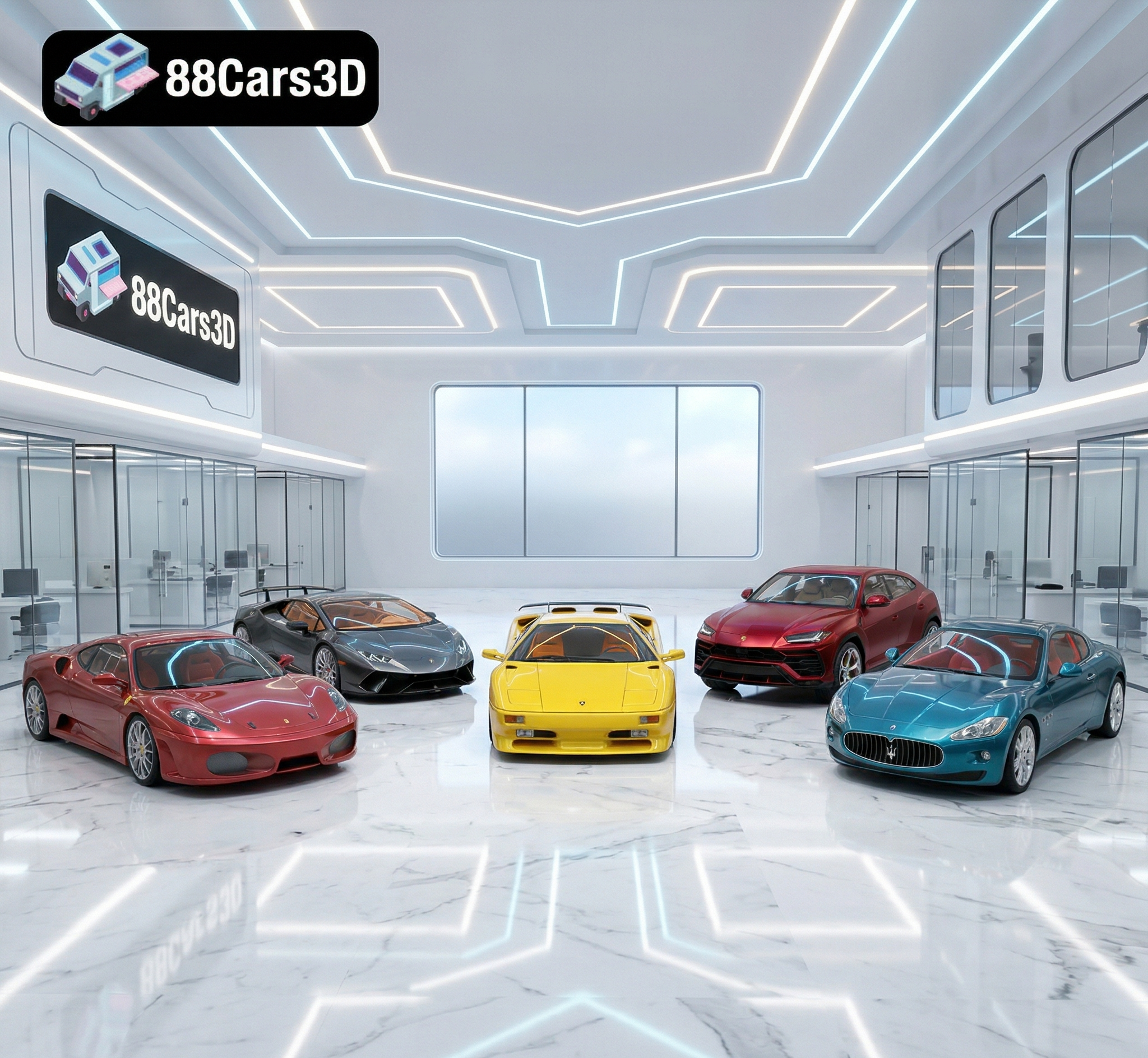
Texture: Yes | Material: Yes | 3D Printable: Yes. Download the Italian Thoroughbreds Bundle featuring 5 iconic 3D models: Lamborghini Huracán Performante, Ferrari 458 Italia, Lamborghini Urus, Diablo SV, and Maserati GT. Optimized for 4K rendering and 3D printing (STL included). Save 50% with this ultimate Italian vehicle collection.
Price: $199.99

Download the Elite Future Mobility Bundle featuring 4 highly optimized 3D models: Tesla Model S, Avatr 11, Li L9, and Zoox Robotaxi. Perfect for ArchViz, Smart City renders, and game dev. Optimized for Unreal Engine and Blender. Includes .fbx, .obj, and .max formats.
Price: $99

🚗 5 Iconic German Cars (BMW M4 G82, M5 CS, X3, 1 Series & Mercedes E-Class). ✅ Optimized for ArchViz: Ready for Corona & V-Ray. 💰 Save €71 with this limited-time collection! 🚀 Instant Download after purchase.
Price: $119
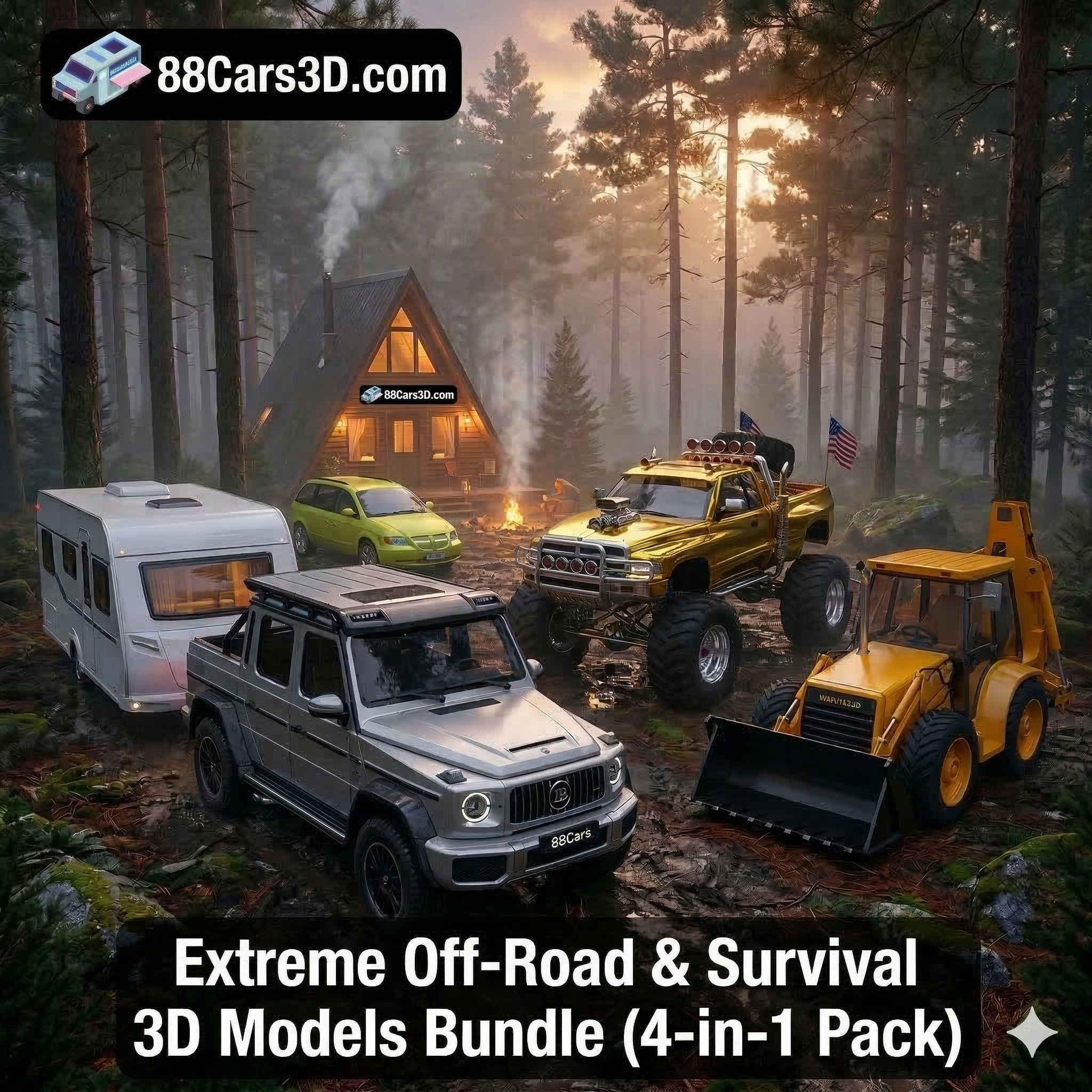
Download the Extreme Off-Road & Survival 3D Models Bundle! Includes the Brabus 800 Adventure, Dodge Ram Bigfoot, Spec Truck, and a Caravan. Save over €210 on this premium 4-in-1 off-grid vehicle pack for ArchViz and game development.
Price: $149.99
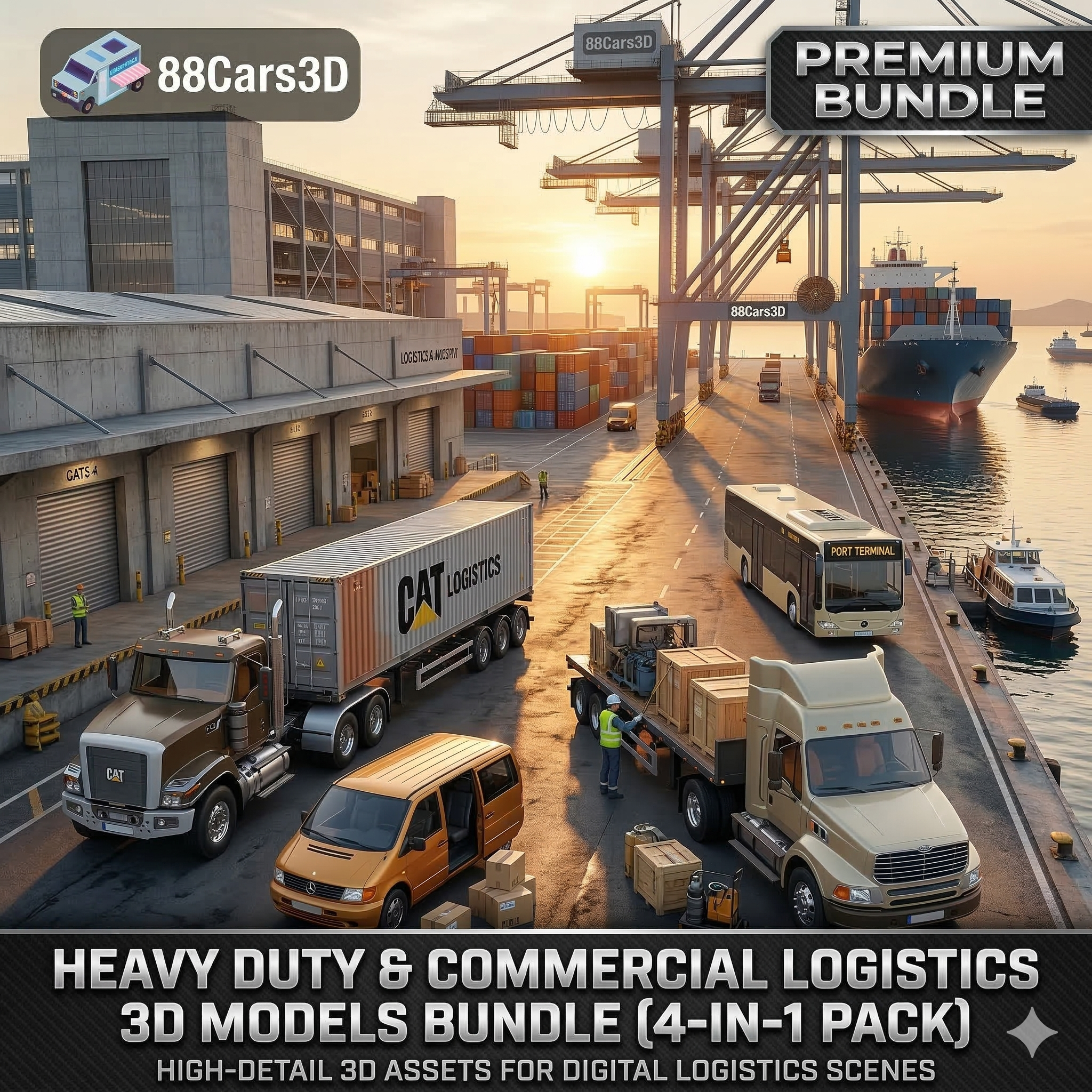
Download the Heavy Duty & Commercial Logistics 3D Models Bundle! Includes the Ford Sterling, Caterpillar CT680, Mercedes Citaro Bus, and Vito Van. Save over €130 on this massive, game-ready 4-in-1 industrial vehicle pack.
Price: $109.99

Download the Ultimate Custom Motorcycles 3D Models Bundle. Includes a Custom Chopper, Ducati 916 Café Fighter, Harley XR1200X, and BMW K100. Perfect premium props for luxury ArchViz garages. Save over €250 today!
Price: $159.99

Download the ultimate JDM Street Racing 3D Models Bundle! Includes the Nissan GT-R, Toyota Supra, Mazda RX-7, Lancer Evo IX, and Honda NSX. Save big on this highly optimized, game-ready 5-in-1 Japanese legend car pack.
Price: $129.99

Download the ultimate American Muscle & Cinematic Classics 3D Models Bundle! Includes the Dodge Charger ’68, Mustang Eleanor GT500, Camaro Z28 ’79, and a custom ’69 Mustang. Save over €240 on this game-ready, premium 4-in-1 pack.
Price: $149.99
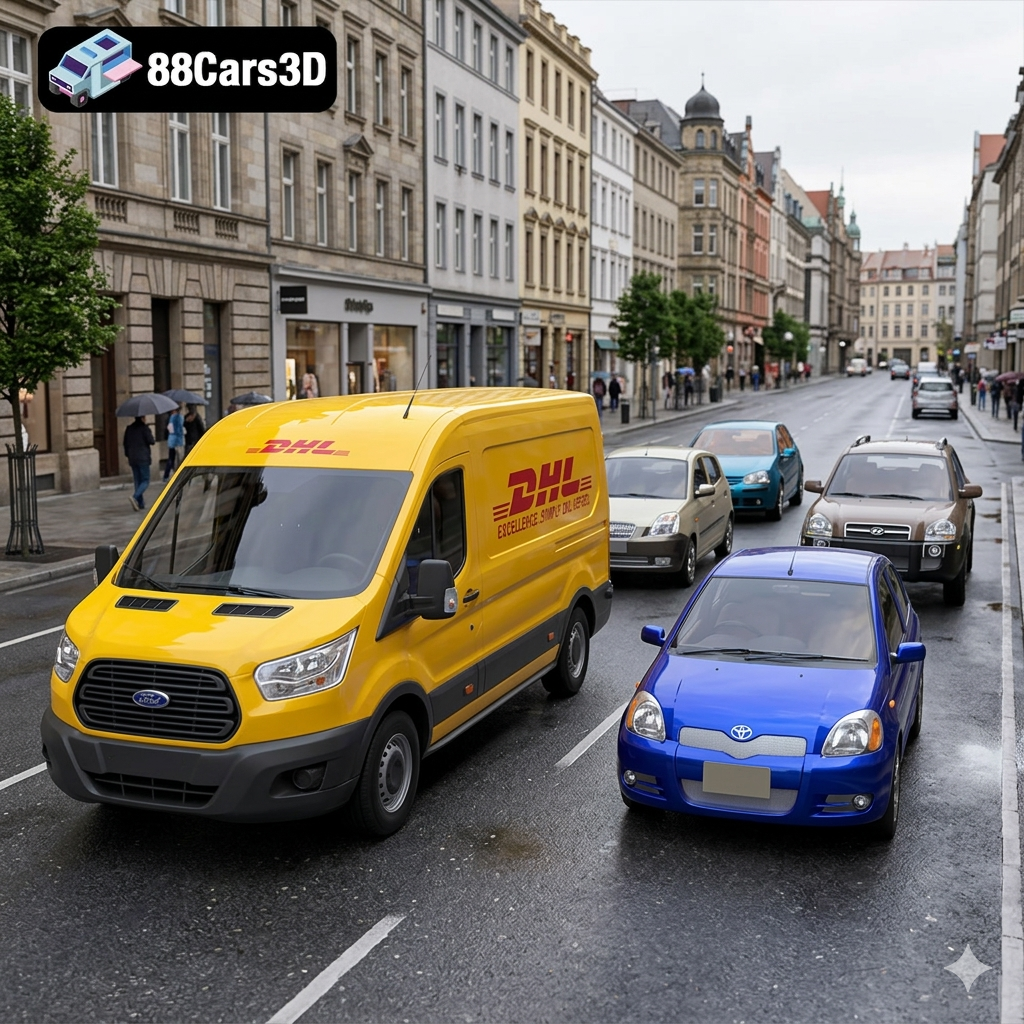
Download the Everyday City Traffic 3D Models Bundle. Includes the VW Golf, Kia Picanto, Hyundai Tucson, Toyota Yaris, and a DHL Ford Transit Van. Save big on this 5-in-1 pack, perfectly optimized for realistic ArchViz streets and game traffic.
Price: $99.99
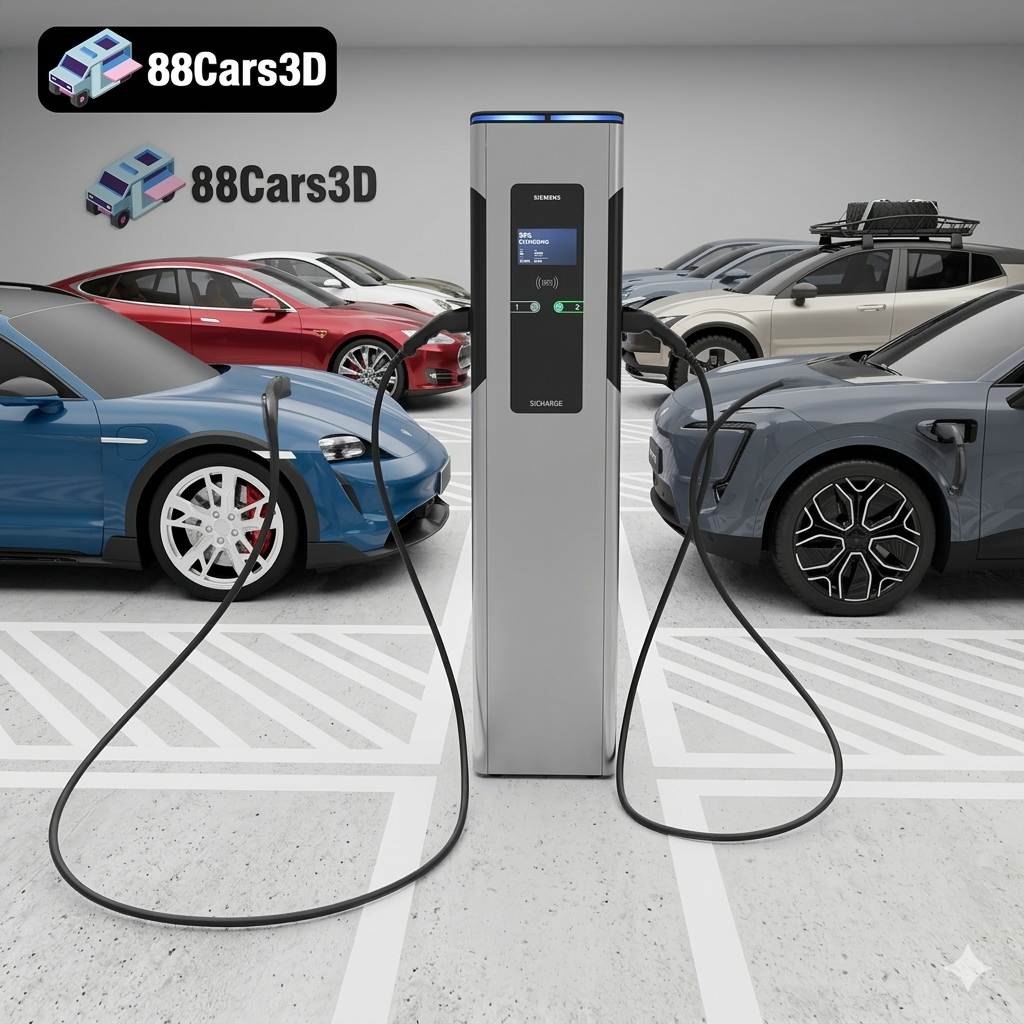
Download the Future of Mobility EV 3D Models Bundle. Includes the Volvo EX30, Tesla Model S, AVATR 11, Porsche Taycan, and a Siemens EV Charger. Save big on this highly optimized 5-in-1 pack for ArchViz and game development!
Price: $89.99

