⚡ FLASH SALE: Get 60% OFF All Premium 3D & STL Models! ⚡

The quest for photorealism in real-time rendering has always pushed the boundaries of technology. For industries like automotive visualization, where every reflection, metallic flake, and clear coat sheen matters, achieving truly believable materials is paramount. While traditional Physically Based Rendering (PBR) has served us well, its inherent limitations in representing complex, multi-layered surfaces have become increasingly apparent. Enter **Substrate**, Unreal Engine’s groundbreaking new material system, poised to revolutionize how we approach shading. This comprehensive guide will delve deep into Substrate, exploring its core principles, practical implementation, and how it empowers artists and developers to create breathtakingly realistic 3D car models for visualization, games, and virtual production.
Imagine car paint that flawlessly transitions from a deep base coat to vibrant metallic flakes, all encapsulated under a pristine, energy-conserving clear coat. Or imagine intricate leather interiors with subtle subsurface scattering, and glass surfaces exhibiting precise thin-film interference. Substrate makes these visions a reality, offering unprecedented artistic control and physical accuracy. For professionals sourcing high-quality **3D car models** from marketplaces like 88cars3d.com, understanding Substrate isn’t just an advantage—it’s a necessity for leveraging these assets to their fullest potential within Unreal Engine. By the end of this article, you’ll have a solid grasp of Substrate’s power, equipped with the knowledge to elevate your **automotive visualization** projects to a new echelon of **real-time rendering** fidelity.
For years, the industry standard for realistic material representation has been Physically Based Rendering (PBR). PBR models like Metallic-Roughness and Specular-Glossiness have simplified material authoring by providing intuitive parameters that correspond to real-world physical properties. However, traditional PBR in real-time engines often relies on a limited number of material layers and simplified shading models (opaque, masked, translucent) which struggle to accurately represent materials found in the real world, especially those with multiple interacting layers. Think about a car’s finish: it’s not just a single layer. It’s typically a base coat (diffuse color), metallic flakes (anisotropic reflections), and a clear coat (specular, often with thin-film interference). Representing this complexity accurately and efficiently within the confines of a single PBR shader has always been a challenge, often leading to visual compromises or extensive, performance-heavy workarounds.
This is where Substrate steps in. Developed by Epic Games, Substrate is a paradigm shift in how materials are defined and rendered in Unreal Engine (available from UE5.2 onwards). It moves beyond the fixed, monolithic shading model of traditional PBR, introducing a flexible, layered approach that prioritizes physical accuracy and energy conservation across all material types. Instead of approximating complex interactions, Substrate provides a framework to truly model them. This architectural change allows artists to construct materials from fundamental building blocks (called “Substrate Layers”) and blend them together, accurately simulating phenomena like multiple clear coats, iridescent films, volumetric fog, and even subsurface scattering, all within a single, coherent material graph. For **automotive visualization**, where precision in replicating real-world materials is critical, Substrate offers an unparalleled opportunity to achieve truly photorealistic results that were previously unattainable in real-time. It’s not just about looking good; it’s about behaving correctly under various lighting conditions, making the assets sourced from platforms like 88cars3d.com even more compelling.
Traditional PBR models, while excellent for many applications, often hit their ceiling when confronted with highly complex, multi-layered, or exotic materials. For instance, creating believable automotive paint often involved faking clear coats by adjusting roughness and specular values, or manually blending multiple shaders, which was both artistically restrictive and computationally inefficient. Materials like fabric with complex fiber structures, human skin with its multiple scattering events, or even simple glass with varying thickness and reflections proved difficult to render with true physical accuracy using older systems. The fixed nature of the shading model meant that unique optical phenomena often had to be baked into textures or handled with custom shaders, increasing development time and reducing flexibility. This also meant that materials might not react consistently to different lighting scenarios, breaking the illusion of realism.
Substrate addresses these limitations head-on by providing a modular system where materials are constructed from a stack of physically defined layers. Each layer can represent a distinct optical property, such as a diffuse base, a metallic reflection, a clear coat, or even subsurface scattering. These layers are then combined using a powerful blending system that ensures energy conservation—a crucial principle for physical accuracy. This means that as light interacts with one layer, its properties are correctly passed to the next, resulting in highly believable and consistent material responses. The result is not just a visually pleasing surface, but one that physically behaves like its real-world counterpart. This modularity also grants artists immense freedom, allowing them to experiment with combinations of layers that were previously impossible or extremely difficult to achieve, enabling unprecedented levels of realism and unique stylistic expressions for **game assets** and visualization projects.
At the heart of Substrate lies a departure from monolithic material definitions. Instead of a single “opaque” or “translucent” shading model, Substrate empowers artists to compose materials from fundamental building blocks. These building blocks are called **Substrate Layers**, and they represent specific optical behaviors such as diffuse, metallic, clear coat, thin film, or volumetric absorption. Each layer contributes its physical properties to the overall material, and critically, these contributions are handled in an energy-conserving manner. This means that light interaction with one layer correctly influences how it interacts with subsequent layers, leading to highly accurate and believable results. Imagine stacking various transparent and reflective films, each with its own properties; Substrate simulates this physical reality directly within the Material Editor.
The power of Substrate comes from its flexibility to define **Arbitrary BSDFs (Bidirectional Scattering Distribution Functions)**. Traditional PBR typically used a single, generalized BSDF for most surfaces. Substrate allows for the creation of far more complex and specific BSDFs by combining different Substrate Operators and Expressions. This is done visually within the **Substrate Graph**, an intuitive node-based interface that feels familiar to any Unreal Engine user. Here, you connect various base Substrate nodes (e.g., Substrate_Base, Substrate_ClearCoat, Substrate_Volumetric_Fog) and modify their parameters using standard material expressions. The system then automatically handles the complex mathematical interactions behind the scenes, ensuring that the combined material remains physically plausible. This layered approach is particularly beneficial for **automotive visualization**, as it allows for the precise recreation of nuanced surfaces like multi-layered car paint, intricate carbon fiber weaves, and realistic glass, significantly enhancing the visual fidelity of **3D car models**.
The most significant benefit of Substrate for automotive assets is its native support for layered material construction. A modern car’s finish, for example, is inherently layered: a primer, a colored base coat, often metallic flakes or pearlescent pigments, and then multiple layers of clear coat for protection and gloss. In traditional PBR, this would be faked with complex textures or multiple blended materials. With Substrate, you can literally stack these layers: a `Substrate_Base` for the diffuse color, a `Substrate_Metallic` or `Substrate_Anisotropic` for the metallic flakes, and one or more `Substrate_ClearCoat` layers on top. Each layer has its own set of parameters (color, roughness, normal, etc.) and can be masked or blended based on specific requirements, just like you would blend textures. This enables truly authentic representations of complex finishes, including multi-stage paints, pearlescent effects, and even subtle scuffs or dust that sit *on top* of a clear coat.
A fundamental principle of physically based rendering is energy conservation, which dictates that a surface cannot reflect or transmit more light than it receives. Substrate rigorously enforces this principle across all its layers and blends. When light interacts with the top layer of a Substrate material, some of it might be reflected, some absorbed, and some transmitted to the layer below. The amount of light transmitted to the next layer is precisely what’s left after the interaction with the current layer. This cascading effect ensures that the entire material stack behaves coherently and realistically under any lighting condition, from harsh sunlight to subtle indoor illumination. This meticulous adherence to physics eliminates common PBR artifacts like overly bright reflections or materials that appear to glow unnaturally, making the rendered **3D car models** respond to light in a way that is indistinguishable from reality, which is crucial for high-stakes **automotive visualization** and virtual production.
Migrating to Substrate in Unreal Engine is a straightforward process, but it requires understanding the foundational changes. First, Substrate is not enabled by default in new projects prior to UE5.4, so you’ll need to activate it. Once enabled, you can either convert existing traditional PBR materials or start building new Substrate materials from scratch. The Material Editor interface will feel familiar, but you’ll notice new Substrate-specific nodes and a more complex “Material Output” node that now accepts various Substrate “Base” types, which are the starting points for your layered creations. For assets from **88cars3d.com**, which are typically optimized for traditional PBR, the conversion process involves understanding how to translate their PBR textures (Base Color, Normal, Roughness, Metallic, AO) into Substrate’s layered system, often by feeding them into the appropriate parameters of a `Substrate_Base` node and then adding additional layers.
When creating a new Substrate material, you’ll start by selecting “Substrate Material” as the material domain. The Material Graph will then present you with the default Substrate output. Here, you’ll begin building your material stack. For example, a simple car paint might start with a `Substrate_Base` node, which handles the diffuse and initial specular properties. You would then connect your texture maps to its parameters. On top of this, you might add a `Substrate_ClearCoat` node, connecting its “Top” input to the “Output” of your `Substrate_Base` and defining its own roughness, normal, and potentially thin-film parameters. This stacking is handled by specific Substrate Operators like `Substrate_Add`, `Substrate_Lerp`, or `Substrate_Mix`, allowing you to intricately combine different layers and achieve complex material behaviors. Remember to consult the official Unreal Engine documentation at https://dev.epicgames.com/community/unreal-engine/learning for the most up-to-date and in-depth information on Substrate workflows and features.
To begin using Substrate, you must enable it within your Unreal Engine project. This is done through the Project Settings. Navigate to **Edit > Project Settings**, then under the **Engine** section, find **Rendering**. Scroll down to the **Materials** category. Here, you’ll find the option **Enable Substrate**. Check this box and restart the editor for the changes to take effect. It’s important to note that enabling Substrate will switch your project’s entire rendering pipeline to utilize this new system, impacting all materials. While traditional PBR materials will largely continue to function, they will be converted internally by Substrate to fit its model. For optimal results, you will want to rebuild your critical materials, especially for **3D car models**, to fully leverage Substrate’s capabilities.
Let’s walk through a conceptual example of building a multi-layered car paint material for a **3D car model** using Substrate.
1. **Base Coat:** Start with a `Substrate_Base` node. Connect your Base Color texture (e.g., a solid color or gradient) to its `Diffuse` input. Connect your roughness and normal maps to their respective inputs. This forms the underlying colored layer.
2. **Metallic Flakes:** To add metallic flakes, you might introduce a `Substrate_Metallic` or `Substrate_Anisotropic` layer. Connect its `Top` input to the `Output` of your `Substrate_Base`. For the metallic flakes, you’ll typically use a small-scale procedural texture or a noise pattern masked by a specific color, feeding it into the `Color` input of the metallic layer. Adjust its roughness and optionally its anisotropy for directional shine.
3. **Clear Coat:** The final, topmost layer is the clear coat. Add a `Substrate_ClearCoat` node. Connect its `Top` input to the `Output` of your metallic flake layer. For the clear coat, you’ll typically set a very low roughness value (close to 0 for a pristine finish) and potentially a `Normal` map for very subtle imperfections or orange peel effect. You can also experiment with the `Thin Film` parameters if you want to simulate iridescent effects often seen on certain clear coats or protective films. By stacking these layers and carefully blending them, you achieve a level of realism impossible with older systems.
Substrate truly shines when it comes to replicating the complex and nuanced surfaces found in automotive design. Beyond simple layered materials, it offers advanced capabilities to simulate highly specific optical phenomena that are critical for achieving **photorealistic car rendering**. These include precise control over clear coats, realistic metallic flake representation, intricate thin-film interference, and even subsurface scattering for materials like tire rubber or interior plastics. This granular control allows artists to move beyond generic PBR appearances and craft materials that are virtually indistinguishable from their real-world counterparts. The impact on **automotive visualization** and virtual production is profound, as it empowers designers and marketing professionals to showcase vehicles with an unprecedented level of fidelity.
For instance, recreating a high-gloss metallic paint finish demands more than just a `Metallic` input. It requires accurately simulating the base color, the reflective properties of tiny metallic particles embedded within a translucent medium, and the final protective clear coat, each with its own roughness and refractive index. Substrate provides the tools to build this complex shader graph efficiently. Furthermore, features like `Substrate_ThinFilm` are invaluable for replicating subtle iridescent effects seen on specific paints, chrome details, or even anti-glare coatings on glass. When coupled with other Unreal Engine features like **Lumen** for global illumination and **Nanite** for high-fidelity geometry, Substrate elevates the entire rendering pipeline, ensuring that every detail of your **3D car models** is rendered with stunning accuracy.
To push car paint realism, delve into specific Substrate Operators. For metallic flakes, combine `Substrate_Metallic` with a procedural noise texture (e.g., using `TextureCoordinate` and `Noise` nodes) to drive the `Color` and `Roughness` of the flakes, creating a dynamic, shimmering effect. You can also use `Substrate_Anisotropic` to simulate directional reflections of stretched flakes or brushed metal, which is crucial for parts like grilles or specialized wheel finishes. The clear coat itself can be refined using multiple `Substrate_ClearCoat` layers or by integrating a `Substrate_ThinFilm` layer for iridescent effects often seen in high-end paints. For example, a `Substrate_ClearCoat` can have a very low roughness value, while a thin film layer placed above it can have a color driven by the `Fresnel` node to simulate wavelength-dependent reflections, mimicking the effect of oil slicks or soap bubbles, but in a controlled, subtle manner for car paint.
Substrate significantly enhances the quality of translucent and anisotropic materials. For realistic glass, you can stack `Substrate_ClearCoat` (for reflections) on top of `Substrate_Transmittance` (for color absorption and refraction). By carefully setting the `Transmittance` color and adjusting the `IOR` (Index of Refraction) parameter, you can achieve highly accurate glass materials that respond correctly to light and show subtle color shifts based on thickness and viewing angle. For anisotropic effects, such as brushed metal, polished carbon fiber, or certain fabrics, the `Substrate_Anisotropic` node allows precise control over the direction and spread of reflections. By feeding a tangent map or a custom vector into its `Anisotropy Direction` input, you can simulate these directional light scatters with physical accuracy. This is particularly effective for interior details like dashboard trim, steering wheel materials, or even tire sidewalls, adding another layer of authenticity to your **automotive visualization**.
While Substrate offers unparalleled realism, it’s natural to consider its performance implications, especially for **real-time rendering** applications like games, **AR/VR**, and interactive **automotive configurators**. Substrate materials are inherently more complex than traditional PBR shaders due to their layered nature and more sophisticated lighting calculations. Each layer adds to the computational cost, both in terms of shader instruction count and memory usage. However, Substrate has been designed with performance in mind. Epic Games has implemented various optimizations, and artists have significant control over the complexity of their materials. Understanding these trade-offs and applying best practices is crucial for harnessing Substrate’s power without sacrificing performance.
One of the key aspects of optimizing Substrate materials is intelligent layer management. Not every surface needs five layers of complexity. For simpler materials, a single `Substrate_Base` might suffice. For more complex ones, artists should aim for the minimum number of layers required to achieve the desired visual fidelity. Profiling tools within Unreal Engine, such as the **Shader Complexity** viewmode and the **GPU Visualizer**, become indispensable for identifying performance bottlenecks within Substrate materials. Furthermore, Substrate integrates seamlessly with other performance-enhancing Unreal Engine features like **Nanite** for virtualized geometry and **Lumen** for global illumination. By leveraging these technologies together, artists can maintain high visual quality with complex Substrate materials even in highly detailed scenes containing **3D car models**.
To ensure your Substrate materials are performant, regular profiling is essential.
1. **Shader Complexity Viewmode:** In the Unreal Engine viewport, change the viewmode to “Shader Complexity.” This visualizes the cost of your shaders, with green indicating low cost and red/pink indicating high cost. Complex Substrate materials will naturally show higher complexity, but you can use this to identify areas where optimization is needed.
2. **GPU Visualizer:** Access the GPU Visualizer (`Ctrl + Shift + ,`) to get a detailed breakdown of GPU frame times. Look for material rendering passes and identify which Substrate materials are contributing most significantly to the frame cost. This helps pinpoint specific materials that may need simplification.
3. **Material Analyzer:** The Material Editor itself offers a “Material Analyzer” (Window > Material Analyzer) which provides statistics about your Substrate graph, including shader instruction counts and memory usage. This is invaluable for understanding the computational footprint of each layer and operator.
Tips for optimization:
* **Minimize Layers:** Use only the layers strictly necessary for the desired effect. Each layer adds instructions.
* **Share Layers:** Where possible, create reusable material functions for common Substrate layers (e.g., a standard clear coat) to reduce redundancy.
* **Simplify Textures:** Use appropriate texture resolutions and compression settings. Don’t use 4K textures for small, non-critical details.
* **Use Conditionals:** For dynamic effects, use `Substrate_Switch` or `Substrate_Lerp` with simple masks to toggle off expensive layers when not visible or needed.
Substrate’s capabilities are amplified when combined with other Unreal Engine 5 features. **Nanite** virtualized geometry allows for unprecedented polygon counts, meaning your **3D car models** can have incredible geometric detail (e.g., hundreds of thousands to millions of polygons per vehicle) without traditional LOD limitations. Substrate materials can then be applied to these highly detailed meshes, where the complex PBR properties will interact with the finely tessellated geometry, creating stunning micro-detail reflections and shadows. This eliminates the need for baking normal maps from high-poly models, as the high-poly geometry is rendered directly.
**Lumen**, Unreal Engine’s real-time global illumination and reflection system, further enhances Substrate’s realism. Lumen accurately propagates light throughout your scene, meaning that reflections, bounces, and ambient occlusion will correctly interact with your physically accurate Substrate materials. A chrome surface rendered with Substrate will exhibit physically correct reflections of the Lumen-lit environment, and a car’s interior with a complex leather Substrate material will accurately receive bounced light from the exterior. This synergy between Substrate, Nanite, and Lumen is what enables the next generation of **real-time rendering** for **automotive visualization**, providing a cohesive and physically accurate environment for showcasing **game assets** and detailed vehicles.
The fidelity offered by Substrate materials isn’t just for static renders; it’s designed for dynamic, interactive experiences. This makes it an ideal foundation for **automotive configurators**, where users can customize vehicle options in real-time, and for **virtual production** workflows using LED walls, where photorealistic materials need to react instantly to changes in lighting and camera perspective. By leveraging Unreal Engine’s **Blueprint** visual scripting system, artists and developers can expose material parameters, allowing for runtime changes to car paint colors, material finishes, and even the appearance of damage or wear, all powered by the sophisticated layering of Substrate.
In an interactive configurator, a user might select a new paint color. With Substrate, this isn’t just a simple color swap; it can involve dynamically changing the base color, adjusting the metallic flake density, and even modifying the clear coat properties to match specific real-world paint types. This level of dynamic realism is critical for engaging consumers and providing an immersive pre-purchase experience. For **virtual production**, especially for filming automotive commercials against LED walls, Substrate materials ensure that the **3D car models** displayed on the wall perfectly integrate with the physical foreground elements and respond to the real-world studio lighting. This coherence is essential for believable in-camera VFX and reduces post-production efforts.
To enable interactive control over Substrate materials, you’ll primarily use **Material Instances** and **Blueprints**.
1. **Create a Material Instance:** For your Substrate material, create a Material Instance. This allows you to expose parameters without recompiling the base material, ensuring efficient runtime changes.
2. **Expose Parameters:** In the Substrate Material Editor, select specific nodes (e.g., the `Color` input of your `Substrate_Base`, the `Roughness` of your `Substrate_ClearCoat`) and right-click to convert their inputs to **Parameters**. Give them descriptive names (e.g., “BaseColor,” “ClearCoatRoughness”).
3. **Blueprint Control:** In a Blueprint class (e.g., your vehicle Blueprint), get a reference to the Mesh Component. Use the “Create Dynamic Material Instance” node to create an instance of your Substrate material at runtime.
4. **Set Material Parameters:** Use nodes like “Set Vector Parameter Value” (for colors), “Set Scalar Parameter Value” (for roughness, metallic values), or “Set Texture Parameter Value” (for swapping entire textures) on your dynamic material instance. These Blueprint nodes can be triggered by UI elements, user input, or even game logic, allowing for rich interactive material customization for **3D car models**.
In **virtual production** environments, especially those utilizing large LED volumes, the real-time fidelity of Substrate materials is a game-changer. When a **3D car model** is rendered on an LED wall, its materials must accurately reflect the studio’s lighting and react to camera movement, just like a physical object would. Substrate’s physically accurate, energy-conserving layers ensure that the virtual vehicle’s paint, glass, and interior materials integrate seamlessly with real-world objects and actors on set.
Furthermore, **Sequencer**, Unreal Engine’s non-linear cinematic editor, can be used to animate Substrate material parameters over time. Imagine a scene where a car’s paint slowly changes color, or where a “reveal” effect strips away layers to show internal components, all driven by Substrate and animated in Sequencer. This level of control allows filmmakers and automotive advertisers to create dynamic, visually stunning narratives without the limitations of traditional rendering pipelines. The ability to render complex **automotive visualization** assets from **88cars3d.com** with such fidelity, interactively and in real-time, is transforming how virtual content is created and consumed.
Unreal Engine’s Substrate Material System represents a monumental leap forward in **real-time rendering** capabilities, particularly for the demanding world of **automotive visualization**. By moving beyond the limitations of traditional PBR, Substrate empowers artists and developers to construct materials with unprecedented physical accuracy and artistic freedom. Its layered approach, rigorous adherence to energy conservation, and seamless integration with other Unreal Engine features like **Nanite** and **Lumen** make it an indispensable tool for anyone striving for the pinnacle of visual fidelity.
From recreating the intricate metallic flakes and clear coats of premium car paint to simulating the subtle subsurface scattering of interior plastics and the precise reflections of glass, Substrate provides the granular control needed to bring **3D car models** to life. We’ve explored how to enable Substrate, build complex layered materials for vehicles, optimize their performance, and leverage them in interactive **automotive configurators** and cutting-edge **virtual production** workflows. The ability to dynamically control these high-fidelity materials via **Blueprint** scripting further expands their utility for engaging user experiences and cinematic content creation with **Sequencer**.
For professionals utilizing high-quality assets from marketplaces such as 88cars3d.com, mastering Substrate is not just about keeping up with technology; it’s about unlocking the full potential of these assets and delivering visuals that truly captivate. The future of **automotive visualization** is undeniably real-time, and Substrate is at the forefront of this revolution, offering the tools to create virtual vehicles that are indistinguishable from their real-world counterparts. Dive into Substrate today, experiment with its powerful layering system, and elevate your Unreal Engine projects to a new standard of realism. The journey to next-gen shading starts now, and the results will redefine what’s possible in real-time automotive content.
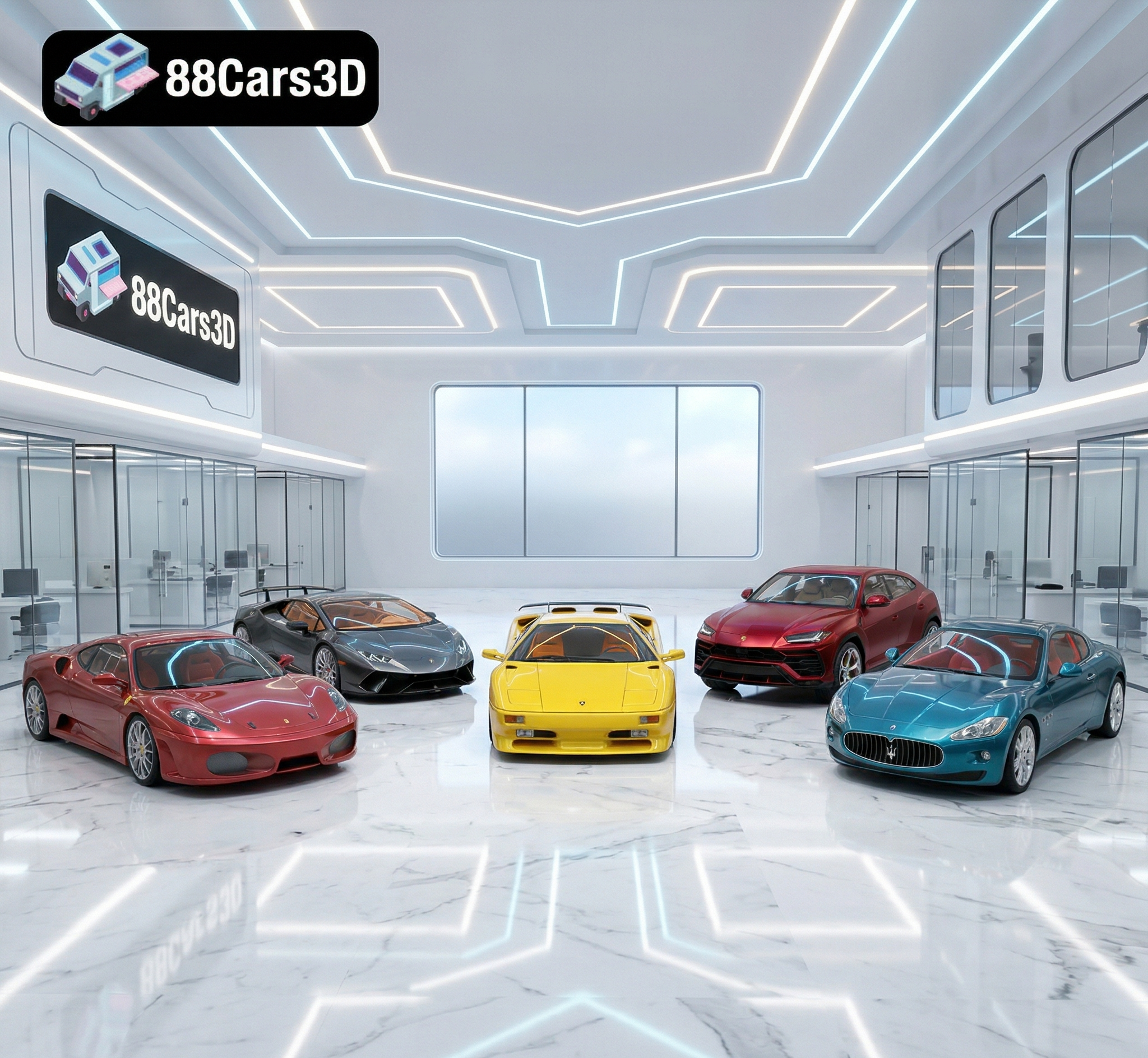
Texture: Yes | Material: Yes | 3D Printable: Yes. Download the Italian Thoroughbreds Bundle featuring 5 iconic 3D models: Lamborghini Huracán Performante, Ferrari 458 Italia, Lamborghini Urus, Diablo SV, and Maserati GT. Optimized for 4K rendering and 3D printing (STL included). Save 50% with this ultimate Italian vehicle collection.
Price: $199.99

Download the Elite Future Mobility Bundle featuring 4 highly optimized 3D models: Tesla Model S, Avatr 11, Li L9, and Zoox Robotaxi. Perfect for ArchViz, Smart City renders, and game dev. Optimized for Unreal Engine and Blender. Includes .fbx, .obj, and .max formats.
Price: $99

🚗 5 Iconic German Cars (BMW M4 G82, M5 CS, X3, 1 Series & Mercedes E-Class). ✅ Optimized for ArchViz: Ready for Corona & V-Ray. 💰 Save €71 with this limited-time collection! 🚀 Instant Download after purchase.
Price: $119
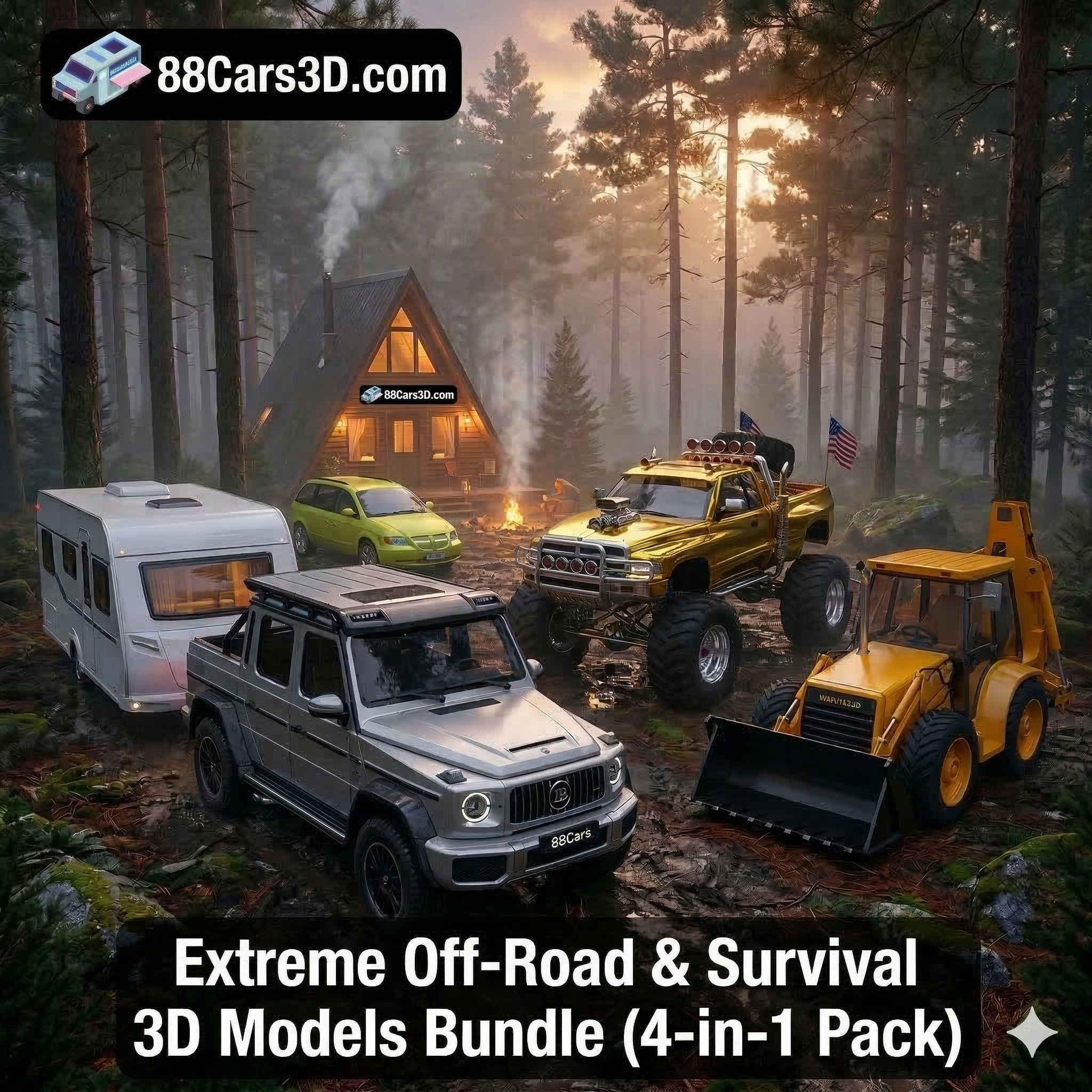
Download the Extreme Off-Road & Survival 3D Models Bundle! Includes the Brabus 800 Adventure, Dodge Ram Bigfoot, Spec Truck, and a Caravan. Save over €210 on this premium 4-in-1 off-grid vehicle pack for ArchViz and game development.
Price: $149.99
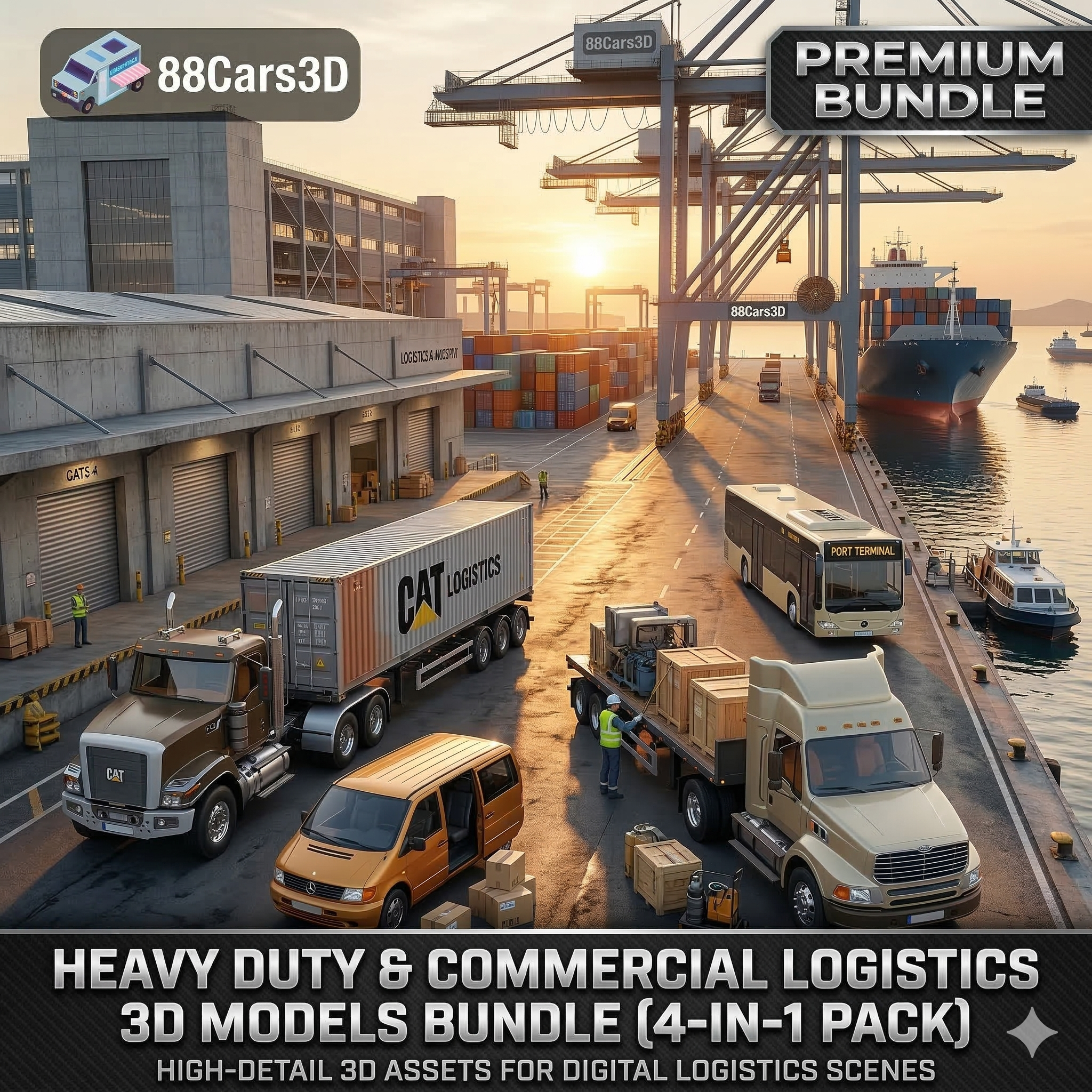
Download the Heavy Duty & Commercial Logistics 3D Models Bundle! Includes the Ford Sterling, Caterpillar CT680, Mercedes Citaro Bus, and Vito Van. Save over €130 on this massive, game-ready 4-in-1 industrial vehicle pack.
Price: $109.99

Download the Ultimate Custom Motorcycles 3D Models Bundle. Includes a Custom Chopper, Ducati 916 Café Fighter, Harley XR1200X, and BMW K100. Perfect premium props for luxury ArchViz garages. Save over €250 today!
Price: $159.99

Download the ultimate JDM Street Racing 3D Models Bundle! Includes the Nissan GT-R, Toyota Supra, Mazda RX-7, Lancer Evo IX, and Honda NSX. Save big on this highly optimized, game-ready 5-in-1 Japanese legend car pack.
Price: $129.99

Download the ultimate American Muscle & Cinematic Classics 3D Models Bundle! Includes the Dodge Charger ’68, Mustang Eleanor GT500, Camaro Z28 ’79, and a custom ’69 Mustang. Save over €240 on this game-ready, premium 4-in-1 pack.
Price: $149.99
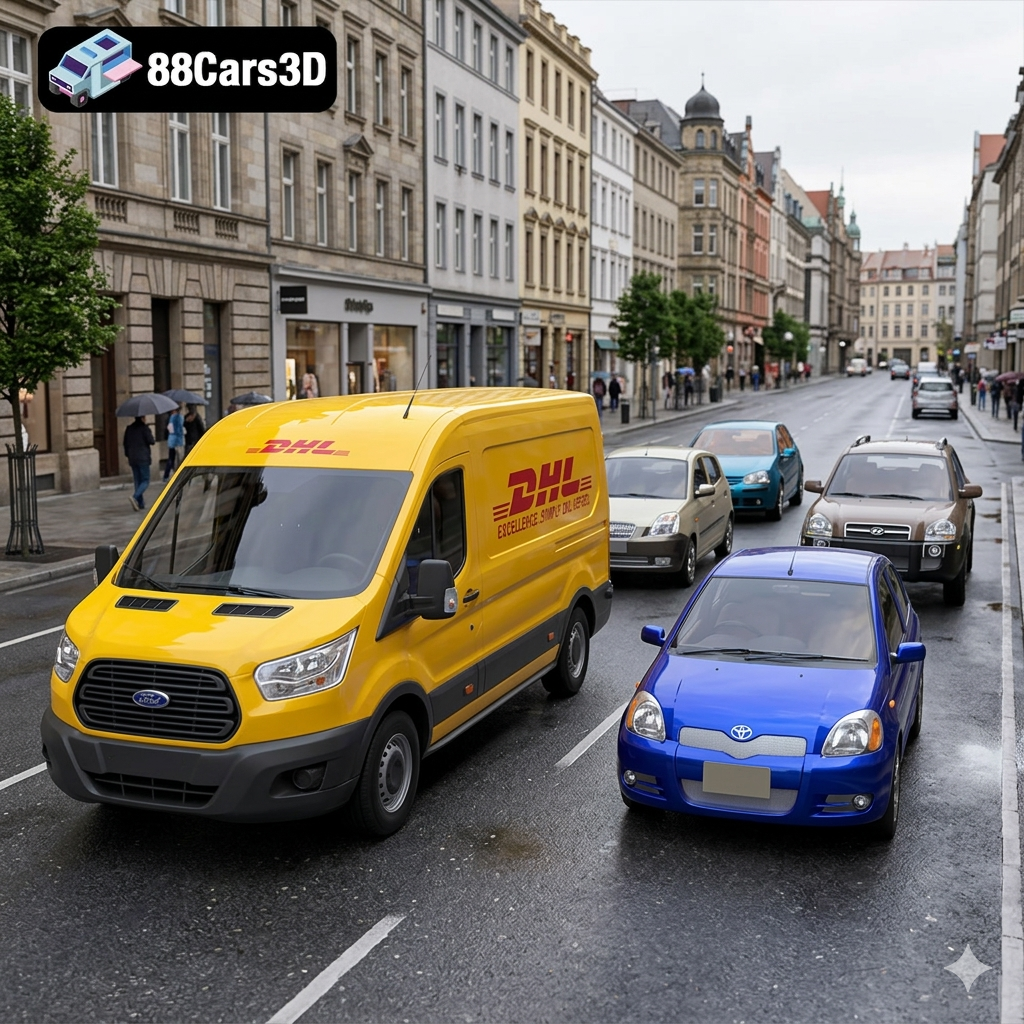
Download the Everyday City Traffic 3D Models Bundle. Includes the VW Golf, Kia Picanto, Hyundai Tucson, Toyota Yaris, and a DHL Ford Transit Van. Save big on this 5-in-1 pack, perfectly optimized for realistic ArchViz streets and game traffic.
Price: $99.99
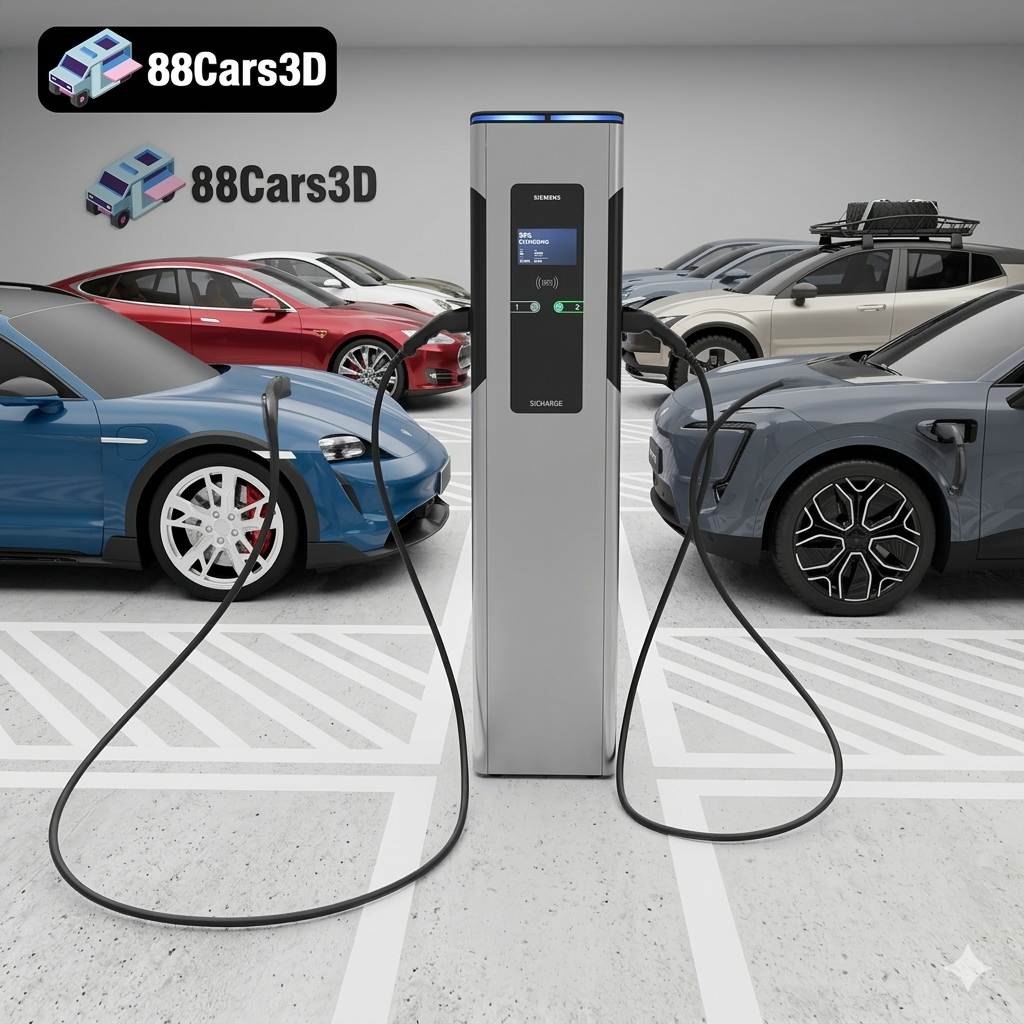
Download the Future of Mobility EV 3D Models Bundle. Includes the Volvo EX30, Tesla Model S, AVATR 11, Porsche Taycan, and a Siemens EV Charger. Save big on this highly optimized 5-in-1 pack for ArchViz and game development!
Price: $89.99

