⚡ FLASH SALE: Get 60% OFF All Premium 3D & STL Models! ⚡

In the fast-evolving landscape of digital content creation, the demand for realistic and versatile 3D assets has never been higher. From breathtaking automotive commercials to immersive virtual reality experiences and hyper-realistic video games, high-quality 3D car models form the backbone of compelling visual narratives. Professionals across industries recognize that a well-crafted digital vehicle is not just an object, but a crucial element that brings authenticity, dynamism, and polish to their projects. This pursuit of digital perfection is where specialized marketplaces like 88cars3d.com shine, offering meticulously engineered 3D assets that meet the rigorous demands of modern production pipelines. Among their impressive collection, one model stands out for its blend of iconic design and technical versatility: the BMW 1 Series Coupe 2009 3D Model. This particular asset exemplifies the pinnacle of digital craftsmanship, offering creators an accurate, feature-rich representation of a beloved compact sports coupe, ready for integration into virtually any digital endeavor.
The versatility of a 3D model often hinges on the range and quality of its available file formats. Each format serves specific purposes, catering to different software ecosystems, project requirements, and output destinations. Understanding these distinctions is crucial for any professional working with 3D assets, as selecting the correct format can significantly streamline workflows and ensure optimal performance. The BMW 1 Series Coupe 2009 3D Model, available on 88cars3d.com, is a prime example of an asset offered with a comprehensive suite of formats, empowering creators with maximum flexibility.
The .blend format is the native file type for Blender, the powerful open-source 3D creation suite. When you download a .blend file, you’re getting a fully editable Blender scene, complete with the model’s geometry, materials, textures, lighting, cameras, and even animation data if present. This format is ideal for artists who primarily work in Blender, allowing them to dive directly into customizing, animating, or rendering the model without any import/export conversions that could potentially lose data. It preserves modifiers, rigging, and all Blender-specific features, making it the most robust option for Blender-centric workflows.
.fbx (Filmbox) is arguably the most widely adopted proprietary file format for 3D data exchange across different software applications. Developed by Autodesk, it’s particularly strong in transferring models, animations, rigs, and materials between programs like 3ds Max, Maya, Cinema 4D, and critically, game engines like Unreal Engine and Unity. For the BMW 1 Series Coupe 2009 3D Model, the .fbx version is often the go-to for game development, virtual production, and real-time pipelines due to its robust support for skeletal animation, mesh data, and PBR (Physically Based Rendering) material setups. It’s a compressed format that balances file size with data integrity.
The .obj (Wavefront Object) format is a universal standard for storing 3D geometry. It’s a simple, text-based format that primarily defines the vertices, normals, UV coordinates, and faces of a mesh. While it doesn’t typically store animation or rigging data, it’s exceptionally reliable for cross-software compatibility, making it a safe choice when you need to ensure a model can be opened and worked on in almost any 3D application. For the BMW 1 Series, an .obj file provides a clean mesh that can be easily imported into any renderer or modeller, serving as a solid base for further artistic development, especially for static renders or initial sculpting phases.
.glb (GL Transmission Format Binary) is the binary version of the glTF format, designed for efficient transmission and loading of 3D scenes and models by applications. It’s an open standard specifically optimized for AR, VR, and browser-based display, making it incredibly popular for web applications, e-commerce product viewers, and interactive experiences. The .glb file bundles textures and other assets directly into a single file, reducing HTTP requests and improving load times. For showcasing the BMW 1 Series Coupe 2009 in a virtual showroom or an augmented reality app, the .glb format offers unparalleled performance and ease of integration.
The .stl (Stereolithography) format is the de facto standard for 3D printing. It represents a 3D model as a series of connected triangles (a triangulated surface), without color, texture, or other CAD attributes. Its simplicity makes it universally compatible with 3D printers and slicing software. The BMW 1 Series Coupe 2009 3D Printable STL ensures that creators can bring the digital model into the physical world, producing collectible scale models or rapid prototypes with ease, provided the mesh is manifold and watertight, which this version of the model is designed to be.
The .ply (Polygon File Format) is another format used for storing 3D data, particularly from 3D scanners or for CAD (Computer-Aided Design) and scientific applications. It can store not only vertices and faces but also properties like color, transparency, normals, texture coordinates, and even reliability information. While less common than .fbx or .obj for general asset exchange, .ply is valued for its ability to store detailed information and is often used in reverse engineering, precise measurement, and analytical contexts, offering a robust, detailed mesh of the BMW 1 Series for specific industrial or scientific visualizations.
The inclusion of an .unreal file format (often referring to a packaged asset or a specific Uasset file tailored for Unreal Engine) signifies an asset that has been pre-optimized and configured for direct use within the Unreal Engine ecosystem. This could mean pre-setup materials, collision meshes, LODs (Levels of Detail), and pivot points, significantly reducing the setup time for game developers and real-time visualization artists. For the BMW 1 Series Coupe 2009, having an Unreal-ready asset means a plug-and-play experience, allowing creators to drop the car into their virtual worlds with minimal fuss and maximum efficiency, leveraging the engine’s powerful rendering capabilities instantly.
Finally, the .max format is the native file type for Autodesk 3ds Max, a leading software for 3D modeling, animation, rendering, and visualization. Similar to .blend, a .max file preserves the entire scene setup, including complex modifiers, scene hierarchy, lights, cameras, and advanced material setups like V-Ray or Corona materials. For professionals deeply embedded in the 3ds Max workflow, this format provides the most comprehensive and editable version of the BMW 1 Series Coupe 2009, enabling full control over every aspect of the model for high-end cinematic renders, architectural visualizations, or detailed automotive animations.
By offering this extensive range of file formats, the BMW 1 Series Coupe 2009 3D Model from 88cars3d.com demonstrates its commitment to professional versatility, ensuring that whatever your project or preferred software, you have an optimally configured asset at your fingertips.
The foundation of any superior 3D asset lies in its meticulous construction and adherence to real-world specifications. The BMW 1 Series Coupe 2009 3D Model exemplifies this principle, offering a high-detail digital recreation that captures the essence of this compact premium sports coupe. Its design prioritizes accuracy, clean topology, and technical readiness for a multitude of applications, making it a standout among 3D car models.
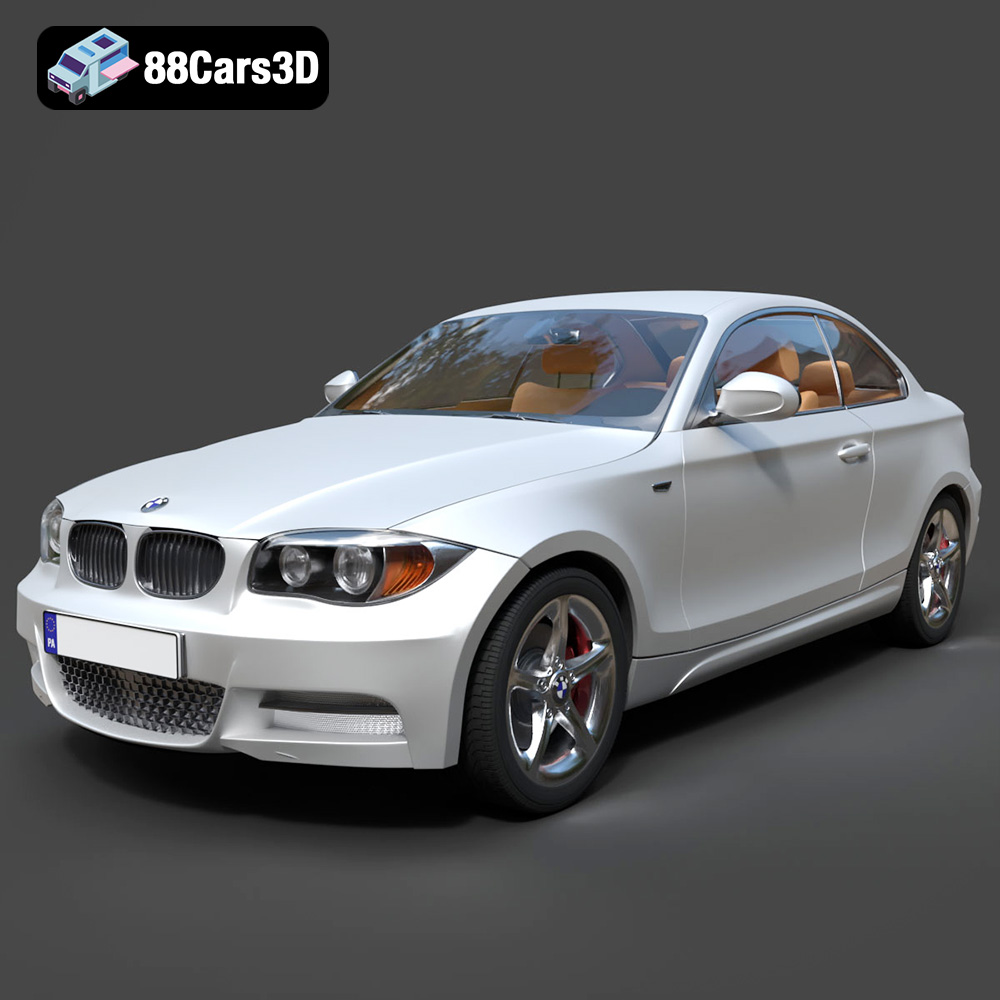
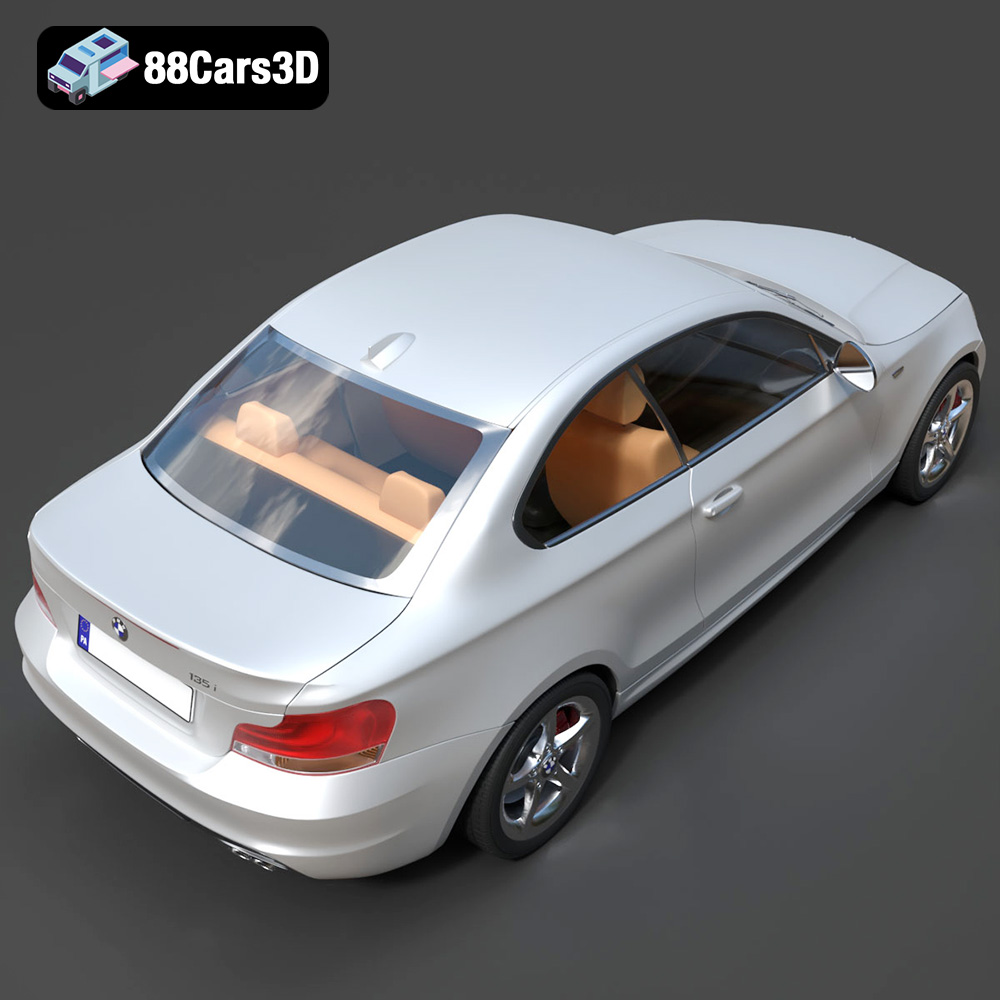
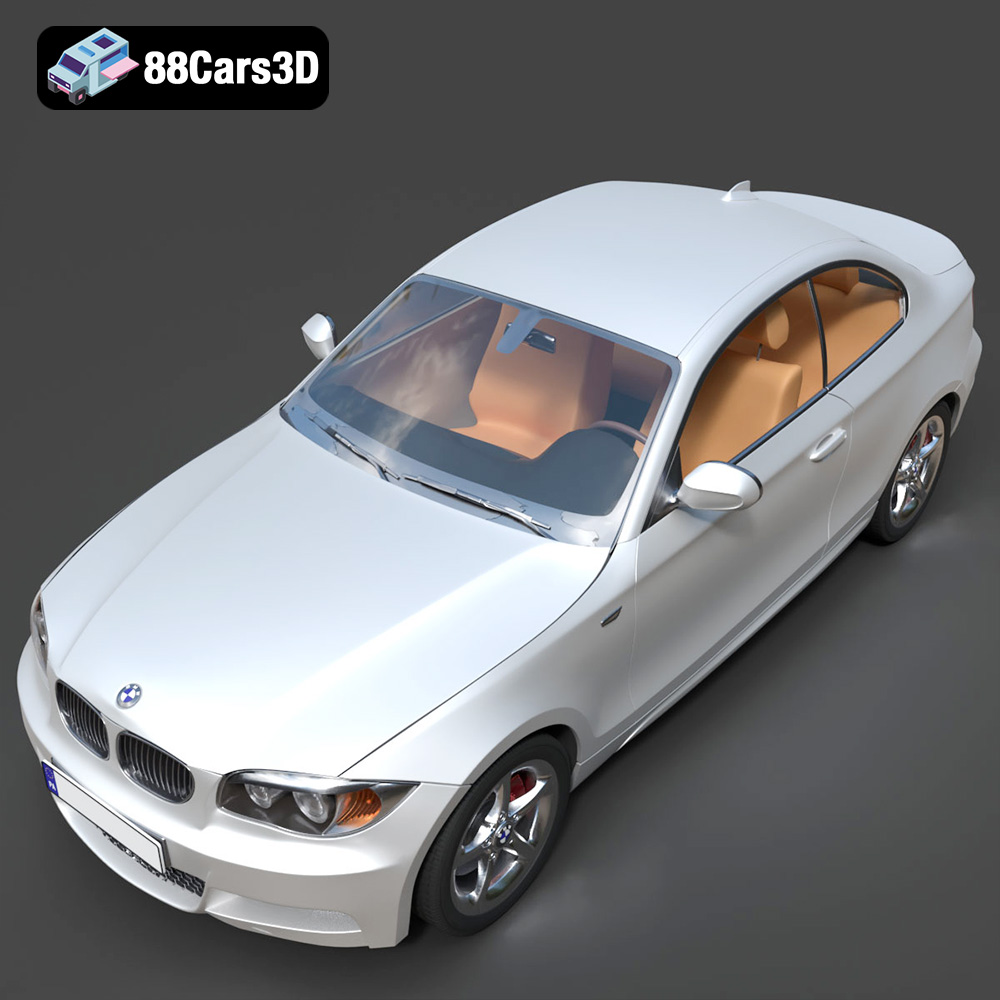
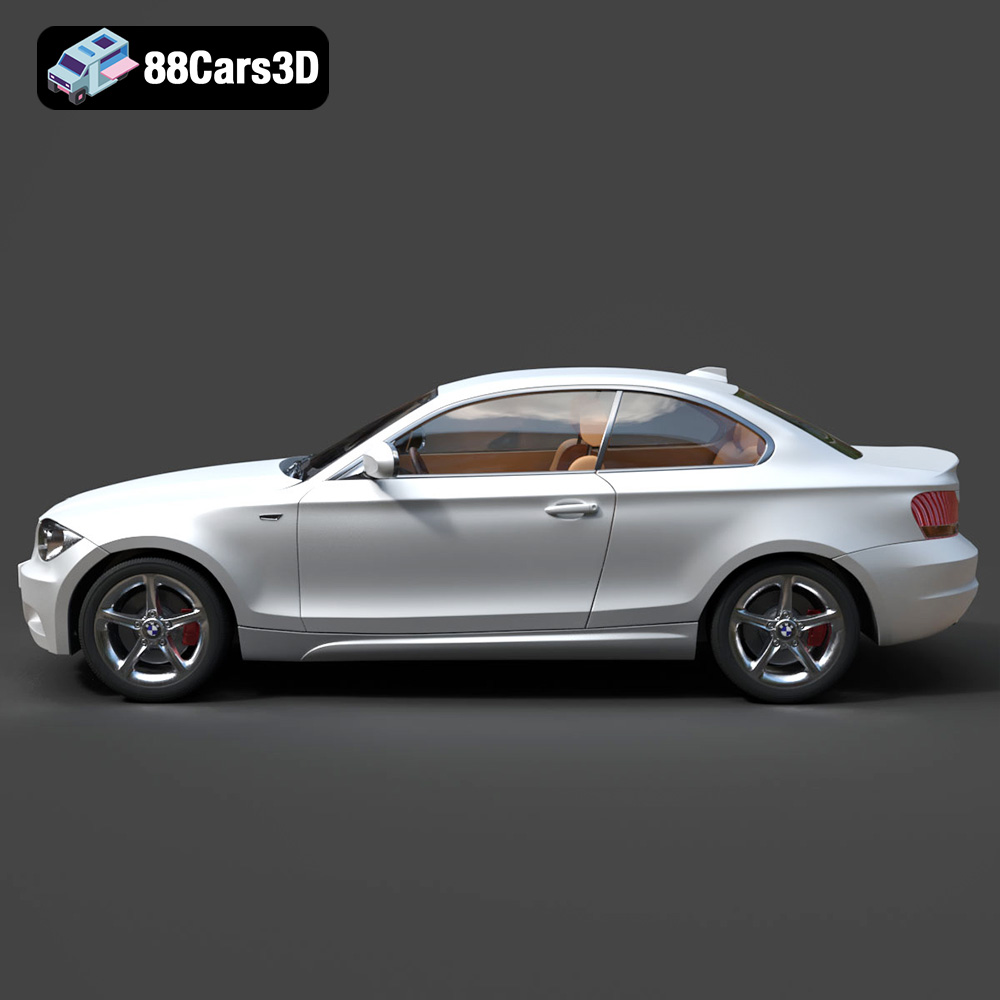
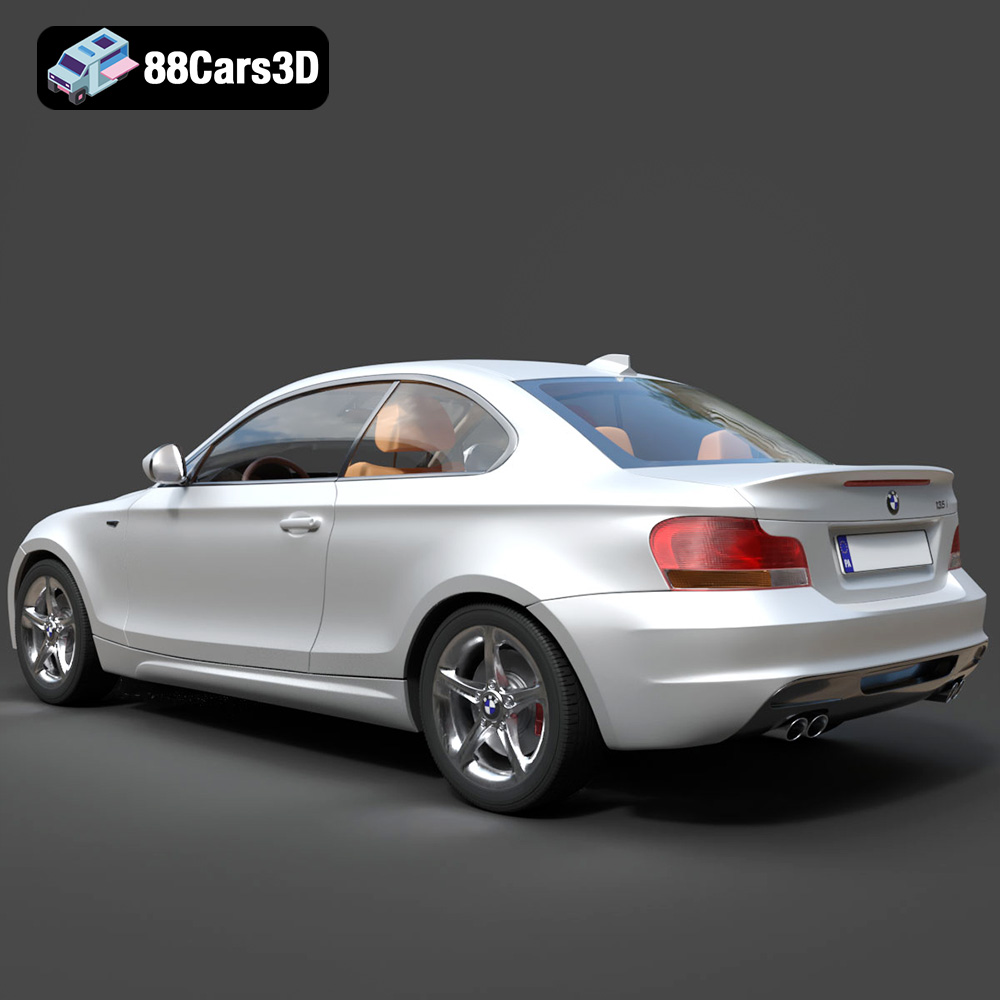
The exterior of the BMW 1 Series Coupe 2009 has been digitally sculpted with an unwavering commitment to authenticity. From the signature BMW kidney grille, accurately proportioned and detailed, to the distinctive dual headlight design that defines its front fascia, every element reflects the original vehicle. The sculpted hood lines, sporty coupe roofline, and rear trunk layout are precisely replicated, ensuring that the model looks correct from every angle. Crucially, the detailed alloy wheels with integrated brake components are not merely static elements; they are separate objects with proper pivot setups. This thoughtful engineering allows for realistic wheel rotation and steering articulation, making the model animation-ready right out of the box for car commercials, cinematic sequences, or driving simulations. Transparent glass materials and mirror geometry further enhance the realism, creating reflections and refractions that seamlessly integrate the vehicle into its digital environment.
While often unseen in external shots, a detailed interior significantly elevates the overall quality and potential applications of a 3D car model. The BMW 1 Series Coupe 2009 doesn’t disappoint, featuring a comprehensive interior that balances detail with optimization. The dashboard includes an analog instrument cluster, providing a classic BMW aesthetic. A multifunction steering wheel, center console with an infotainment layout, and front sport seat geometry are all represented, contributing to a believable cabin environment. Even the gear shifter and pedal detailing are included, offering enough fidelity for close-up shots or interactive experiences. This level of interior detail, coupled with optimized geometry, makes the model suitable for both high-quality renders where interiors are glimpsed and real-time engines where users might virtually sit inside the car.
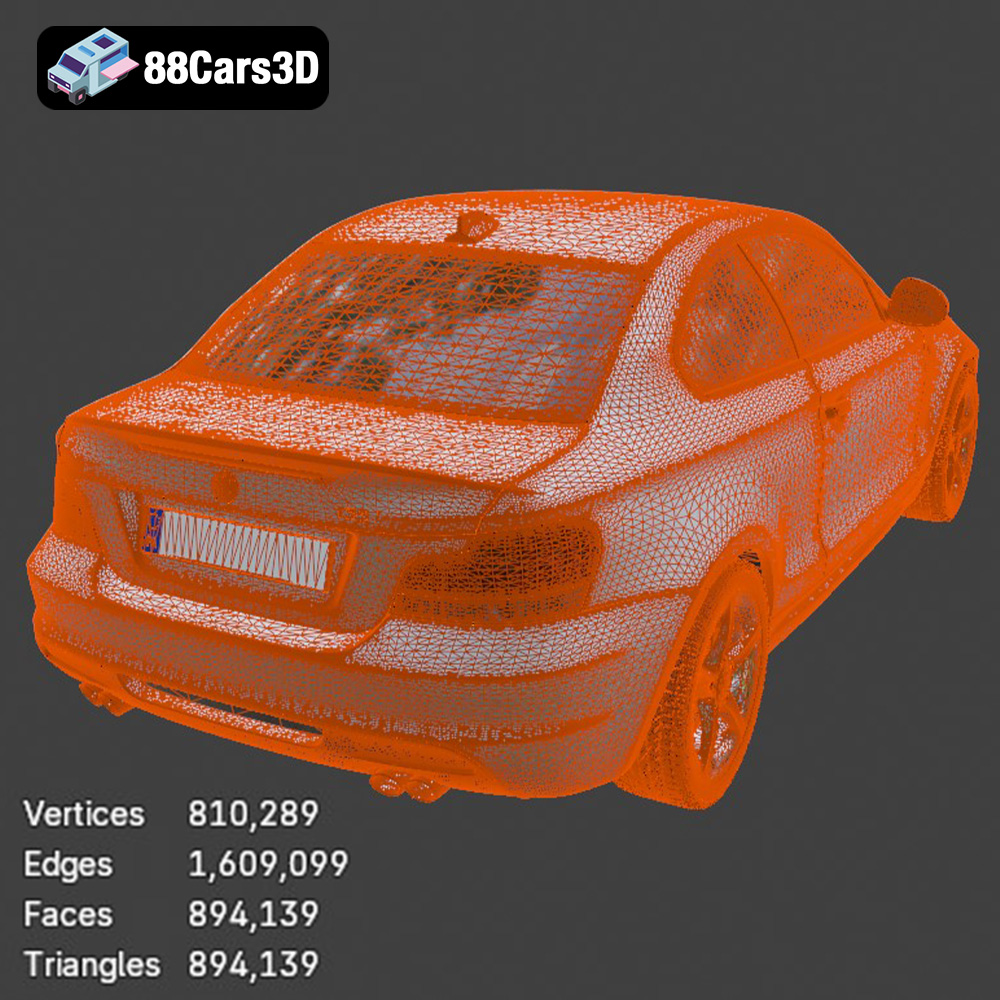
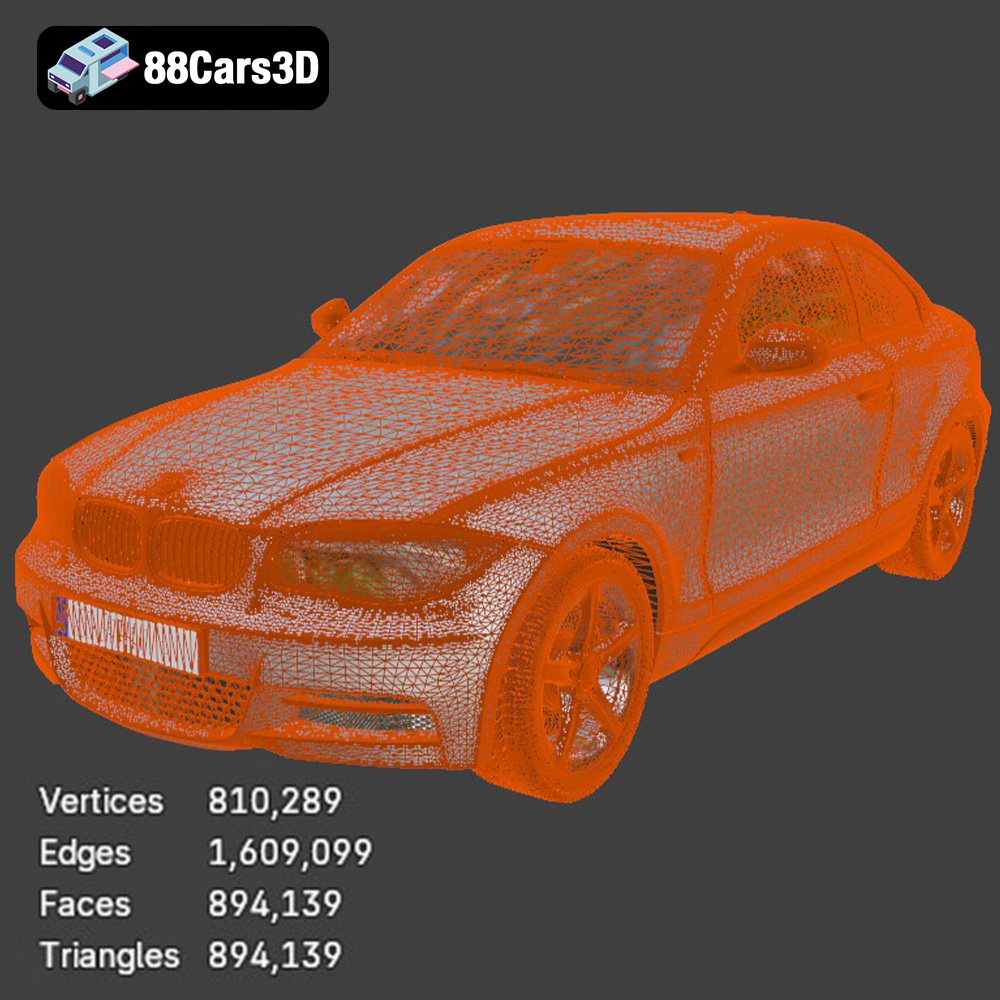
Underneath its stunning visual fidelity, the BMW 1 Series Coupe 2009 3D Model boasts a robust technical foundation. It features a clean and well-organized mesh structure, a critical factor for smooth deformations during animation and efficient rendering. The polygon count is carefully managed, typically falling within a range of 80,000 to 150,000 polygons, offering a balanced representation that is high-detail for professional rendering yet optimized for real-time applications like game engines. The model is built to real-world scale accuracy, ensuring it fits seamlessly into scenes without requiring manual adjustments. Furthermore, the mesh is professionally UV unwrapped, with logically organized UV islands. This ensures that textures can be applied cleanly and efficiently, minimizing distortion and facilitating the creation of PBR (Physically Based Rendering) materials that react realistically to light. This attention to technical advantages makes the model not just visually appealing but also a performance-friendly asset for various professional workflows.
The true value of a high-quality 3D car model like the BMW 1 Series Coupe 2009 from 88cars3d.com lies in its seamless integration into diverse professional workflows. Its clean topology, real-world scale, and multi-format availability ensure it can serve a wide array of creative and technical needs.
For automotive marketing agencies, design studios, and visualization artists, the BMW 1 Series Coupe 2009 3D Model is an invaluable asset. In environments like 3ds Max with renderers such as V-Ray or Corona, the .max file provides an exhaustive scene setup, often including material definitions that are ready for advanced lighting scenarios. Artists can rapidly generate stunning photorealistic images and animations for dealership visuals, promotional materials, or compelling car commercials. The model’s accurate proportions and detailed features mean that even close-up beauty shots will hold up under scrutiny, making it perfect for showcasing the vehicle in virtual studios or dynamic urban driving scenes. The ability to customize body colors, add sport package elements, or configure lighting for specific moods (city, track, showroom) provides endless creative possibilities for high-impact visual content.
The demands of game development and real-time simulations are unique, requiring assets that are both visually impressive and performant. The BMW 1 Series Coupe 2009, with its optimized polygon flow and dedicated .fbx and .unreal formats, is perfectly suited for these environments. Game developers can import the .fbx file into Unreal Engine or Unity, utilizing its pre-defined PBR materials and separate, animatable components for wheels and steering. This enables the creation of realistic driving mechanics for open-world games, racing simulations, or city environments. The .unreal package further simplifies integration, potentially including pre-configured blueprints, collision meshes, and LODs (Levels of Detail) to ensure smooth performance across different platforms and graphics settings. This makes the model an exceptional game asset, ready to be driven, crashed, or showcased within interactive experiences.
Augmented Reality (AR) and Virtual Reality (VR) represent the frontier of immersive experiences, and high-fidelity 3D car models are central to their success. The BMW 1 Series Coupe 2009 3D Model, particularly in its .glb format, is optimized for these emerging technologies. Virtual showrooms can be created where potential customers can walk around, inspect the car’s exterior and interior, and even interact with components. AR applications can overlay the virtual car onto real-world environments, allowing users to “park” the BMW in their driveway or view it from their living room. The efficiency of the .glb format ensures smooth performance on various devices, from VR headsets to mobile phones, providing a seamless and engaging interactive experience. Beyond showrooms, the model is also invaluable for simulation and training applications, offering a realistic vehicle for driver training scenarios or automotive design visualization.
The intersection of digital design and physical fabrication has opened up exciting new avenues for creators. The BMW 1 Series Coupe 2009 3D Model bridges this gap, offering a version explicitly prepared for 3D printing. This capability transforms a digital asset into a tangible collectible, a miniature marvel, or a functional prototype.
The inclusion of a manifold .stl file for the BMW 1 Series Coupe 2009 is a testament to its versatility. Preparing a model for 3D printing involves more than just exporting to .stl; it requires ensuring the mesh is watertight, has no inverted normals, and contains appropriate wall thickness to withstand the printing process. The recommended print settings provided (scales like 1:32, 1:24, 1:18, 1:12; layer heights, wall thickness, infill, and support strategies) are crucial guidelines that allow enthusiasts and professionals alike to achieve optimal results. For intricate details, careful consideration of print orientation—like printing the body angled for a smooth finish and wheels separately—is key to capturing the model’s fidelity. This attention to detail in the digital preparation phase translates directly into a higher quality physical output, making it an excellent resource for anyone interested in 3D printable car models.
The journey from a printed plastic object to a showroom-quality miniature involves a crucial post-processing stage. For the 3D printed BMW 1 Series Coupe, this includes sanding to smooth out layer lines, applying primer for an even surface, and then carefully painting with gloss automotive paint. This allows creators to replicate the original car’s finishes or experiment with custom colors and liveries. Optional steps like adding sport trim detailing can further enhance realism and personalization. Whether destined for a display shelf, a tabletop diorama, or even as a unique gift, the 3D printed BMW 1 Series Coupe 2009 offers a satisfying blend of digital craftsmanship and traditional model-making artistry. It demonstrates how high-quality 3D car models extend their utility far beyond purely digital realms, tapping into the growing market for physical automotive collectibles.
A truly professional 3D model offers more than just an accurate representation; it provides a flexible canvas for artistic expression and project-specific adaptation. The BMW 1 Series Coupe 2009 3D Model offers extensive customization options, enabling creators to tailor the vehicle to their exact vision and integrate it seamlessly into any digital scene.
The ability to customize a 3D car model is paramount for achieving unique results. With the BMW 1 Series Coupe 2009, users can easily change the body color and trim accents, allowing for a wide palette of aesthetic choices, from factory-standard finishes to bespoke artistic interpretations. Adding sport package elements or swapping performance wheels can dramatically alter the car’s character, transforming it from a standard coupe into a more aggressive, track-ready machine. Even subtle modifications like adjusting the ride height or stance can give the vehicle a distinct personality. For an extra touch of realism or localization, custom license plates can be added, grounding the model within a specific context or narrative. These customization options empower artists to create diverse visual content from a single, high-quality base model, maximizing its utility across various projects.
Integrating the BMW 1 Series Coupe 2009 into a scene goes beyond simply placing it in a digital space; it involves thoughtful consideration of lighting and environment. The model’s optimized geometry and PBR-ready materials ensure it responds realistically to different lighting conditions. Configuring lighting for specific scenes—be it the harsh glare of a city street, the dramatic shadows of a track event, or the pristine glow of a showroom—can elevate the entire visual composition. Utilizing environmental lighting, HDRI (High Dynamic Range Image) backgrounds, and volumetric effects can make the car feel truly present in its surroundings. This strategic approach to scene integration allows the BMW 1 Series Coupe 2009 to shine in any context, from a gritty cinematic sequence to a sleek marketing visual, proving its worth as a versatile and visually striking 3D car model.
The journey through the capabilities and applications of the BMW 1 Series Coupe 2009 3D Model underscores a fundamental truth in the digital content creation industry: quality assets are the cornerstone of professional success. From high-fidelity automotive rendering and dynamic game development to immersive AR/VR experiences and even tangible 3D printed collectibles, this model exemplifies versatility and technical excellence. Its meticulous detailing, clean topology, and comprehensive array of file formats – including .blend, .fbx, .obj, .glb, .stl, .ply, .unreal, and .max – ensure that creators across all disciplines can integrate it seamlessly into their workflows.
Whether you’re an automotive visualization artist aiming for photorealism, a game developer building an expansive open world, or an enthusiast looking to 3D print a scale replica, the BMW 1 Series Coupe 2009 3D Model provides the robust foundation you need. It’s more than just a digital file; it’s an investment in efficiency, quality, and creative potential. For those seeking premium 3D car models that stand up to the most demanding production environments, 88cars3d.com remains a trusted resource. Discover this exceptional model and countless others, and elevate your digital projects to new heights of realism and engagement.
The BMW 1 Series Coupe 2009 3D Model is a high-detail digital recreation of the compact premium sports coupe known for its balanced chassis, rear-wheel-drive dynamics, and distinctive BMW styling. The 2009 1 Series Coupe blends everyday practicality with sporty performance, making it a popular choice among driving enthusiasts. This 3D model accurately represents the signature kidney grille, dual headlight design, sculpted hood lines, compact coupe proportions, sporty side profile, rear trunk layout, and alloy wheel detailing. Built with clean topology and real-world scale accuracy, it is ideal for rendering, animation, automotive visualization, game development, and AR/VR experiences. Perfect for urban driving scenes, car commercials, open-world simulations, cinematic projects, and automotive showcases.
$39.99
.1series
.arvr
.automotive
.blend
.bmw
.bmw2009
.car3dmodel
.compactcoupe
.fbx
.gameasset
.glb
.max
.obj
.ply
.rendering
.simulation
.sportcoupe
.stl
.unreal