⚡ FLASH SALE: Get 60% OFF All Premium 3D & STL Models! ⚡

The allure of classic cars transcends generations, captivating enthusiasts with their distinctive designs, powerful engines, and a palpable sense of history. For designers, animators, game developers, and artists, bringing these automotive legends back to life in the digital realm presents both a creative challenge and a technical marvel. High-quality 3D car models are the cornerstone of this endeavor, enabling photorealistic renders, immersive game experiences, and even tangible 3D prints.
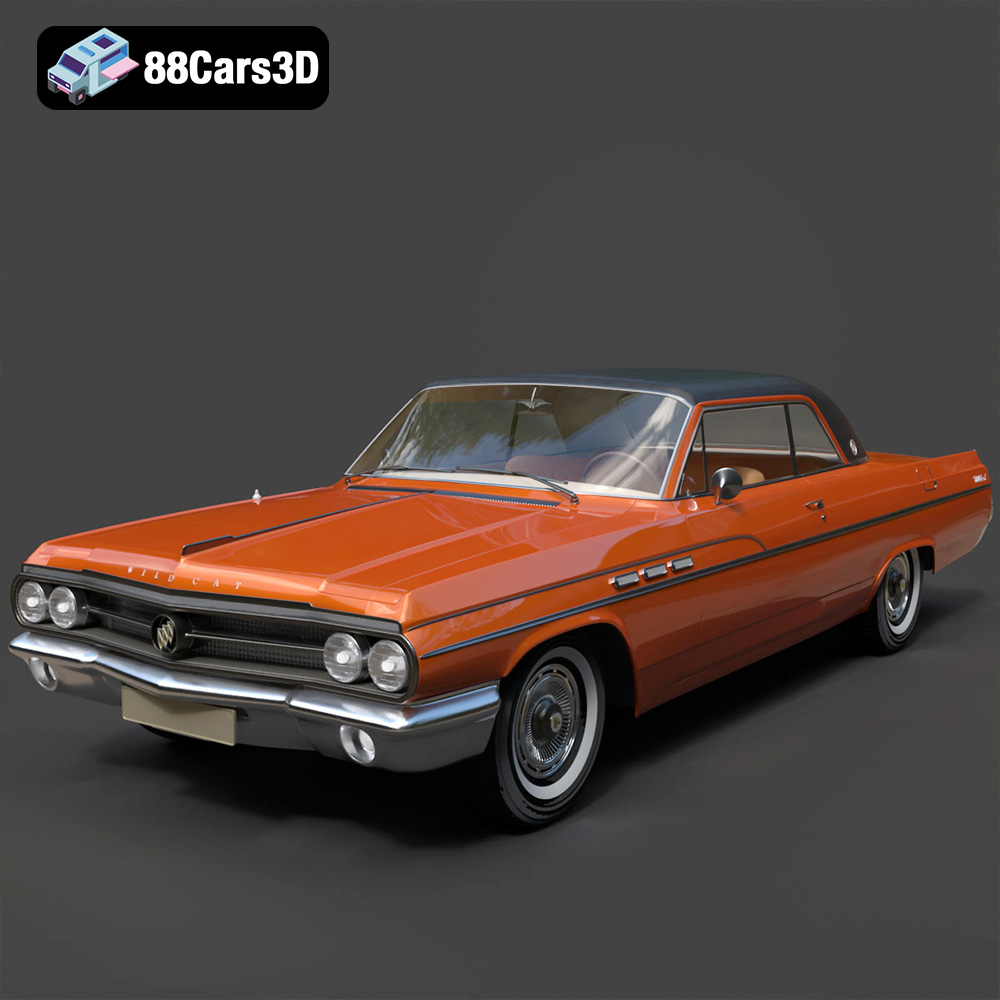
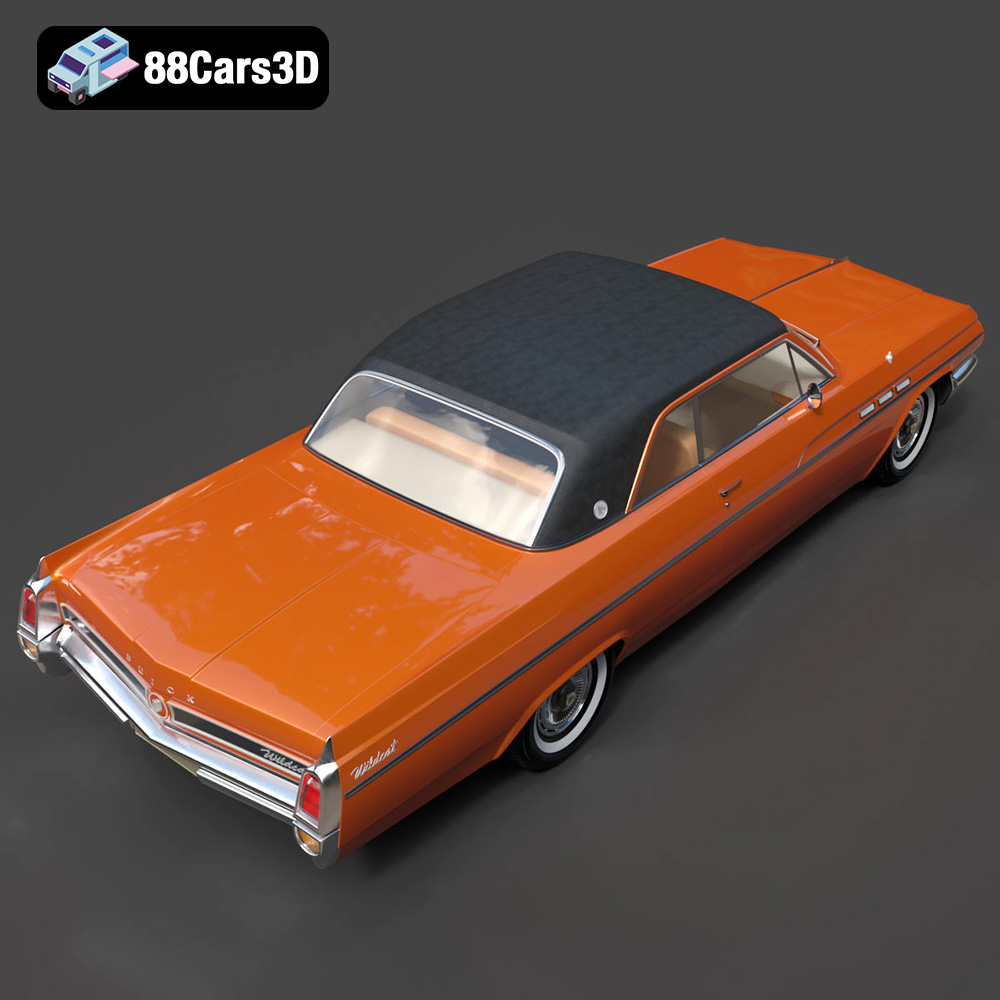
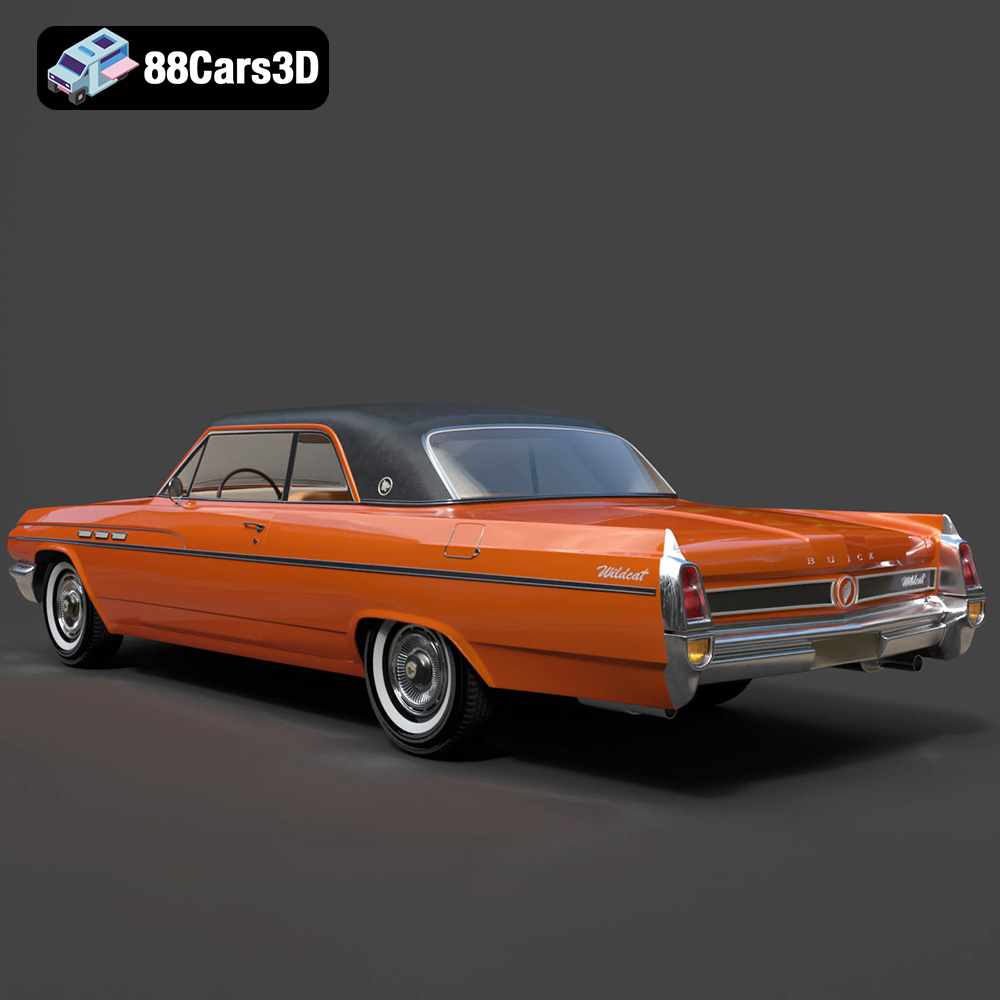
Today, we’re diving deep into the intricate world of automotive 3D modeling, exploring the workflows, technical considerations, and vast applications that make these digital assets indispensable. We’ll specifically highlight how a meticulously crafted asset, such as the Buick Wildcat Convertible 1963 3D Model, exemplifies the pinnacle of digital craftsmanship and serves as a versatile foundation for countless creative projects. This iconic vehicle, known for its bold styling and V8 heritage, offers an excellent case study for understanding the value of premium 3D assets in various professional pipelines.
One of the most crucial aspects of working with 3D car models is understanding the various file formats available. Each format is designed for specific purposes, offering different levels of functionality, compatibility, and optimization. When you acquire a model like the Buick Wildcat Convertible 1963 3D Model from a reputable source like 88cars3d.com, it often comes with a suite of formats to ensure maximum usability across diverse platforms and workflows. Here’s a detailed look at the common formats and their applications:
The .blend format is Blender’s native file type. It’s much more than just a mesh; it’s a complete Blender scene, encapsulating not only the 3D model geometry but also materials, textures, lighting setups, cameras, animations, and even custom scripts. This makes .blend files ideal for users who operate within the Blender ecosystem, offering full editability and preserving all scene data. For artists needing to tweak materials, adjust topology, or extend animations, the .blend file provides the most comprehensive starting point.
.fbx (Filmbox) is arguably the most widely adopted interchange format in the 3D industry, especially for animation and game development. Developed by Autodesk, it efficiently stores 3D models, textures, animations, and other scene data in a single file. Its strength lies in its ability to transfer data seamlessly between different 3D software packages (like 3ds Max, Maya, Blender, Cinema 4D) and game engines (Unreal Engine, Unity). For real-time pipelines, .fbx is generally the preferred format due to its robust support for mesh, skeletal animations, and UV mapping.
.obj (Wavefront OBJ) is a universal format known for its simplicity and wide compatibility. It primarily stores geometric data—vertices, normals, texture coordinates, and faces—and can reference external material files (.mtl) for basic shading information. While .obj doesn’t typically support animation or complex scene data, its widespread adoption makes it an excellent choice for basic mesh exchange when you need a clean, universal starting point across virtually any 3D software.
.glb (GLB, GL Transmission Format Binary) is a relatively newer format, rapidly gaining popularity for its efficiency and optimization for web-based 3D, Augmented Reality (AR), and Virtual Reality (VR) applications. It’s a binary container for the glTF format, packaging all assets—models, textures, animations—into a single, self-contained file. This makes .glb files incredibly easy to load and render in web browsers or AR/VR viewers, providing a quick and streamlined way to display interactive 3D content, perfect for showcasing the Buick Wildcat in an online showroom.
.stl (STereoLithography) is the de facto standard for 3D printing. This format represents 3D surfaces as a collection of unconnected triangular facets, making it perfectly suited for additive manufacturing. While it carries no color or texture information, its simplicity ensures compatibility with nearly every 3D printer and slicing software. When preparing a model like the Buick Wildcat for physical output, converting it to .stl is a critical step, enabling the creation of collectible scale models and display miniatures.
.ply (Polygon File Format) is another format for storing 3D data, particularly useful for scanned data, CAD applications, and scientific visualization. It can store a wider range of properties than .obj, including color, transparency, normals, texture coordinates, and even properties per vertex or face. While not as common for general 3D asset exchange as .fbx or .obj, it’s valued in applications requiring precise mesh data and extensive metadata.
The .unreal designation often refers to assets that have been specifically prepared and optimized for direct import into Unreal Engine projects, or are even native Unreal Engine asset files. This might mean the model has been properly scaled, material setups configured using Unreal’s physically-based rendering (PBR) system, and collision meshes generated. For game developers and real-time visualization specialists using Unreal Engine, an .unreal ready asset dramatically streamlines the integration process, saving valuable development time.
Similar to .blend, .max is the native file format for Autodesk 3ds Max, a powerful 3D modeling, animation, and rendering software widely used in architectural visualization, product design, and cinematic production. A .max file contains the complete 3ds Max scene, including geometry, materials, lighting, cameras, and animation data. It offers full editability within 3ds Max, allowing advanced users to dissect and customize every aspect of the 3D car model, making it a professional choice for complex projects.
The availability of these diverse formats for the Buick Wildcat Convertible 1963 3D Model underscores its versatility and quality, making it an invaluable asset for any digital project, from high-fidelity renders to interactive experiences.
Recreating a classic vehicle in 3D is an intricate blend of artistic vision and technical precision. It requires not just an understanding of 3D software, but also a deep appreciation for automotive history and design nuances. The Buick Wildcat Convertible 1963 3D Model stands as a testament to this meticulous craft, perfectly embodying the spirit of early 1960s American muscle and luxury.
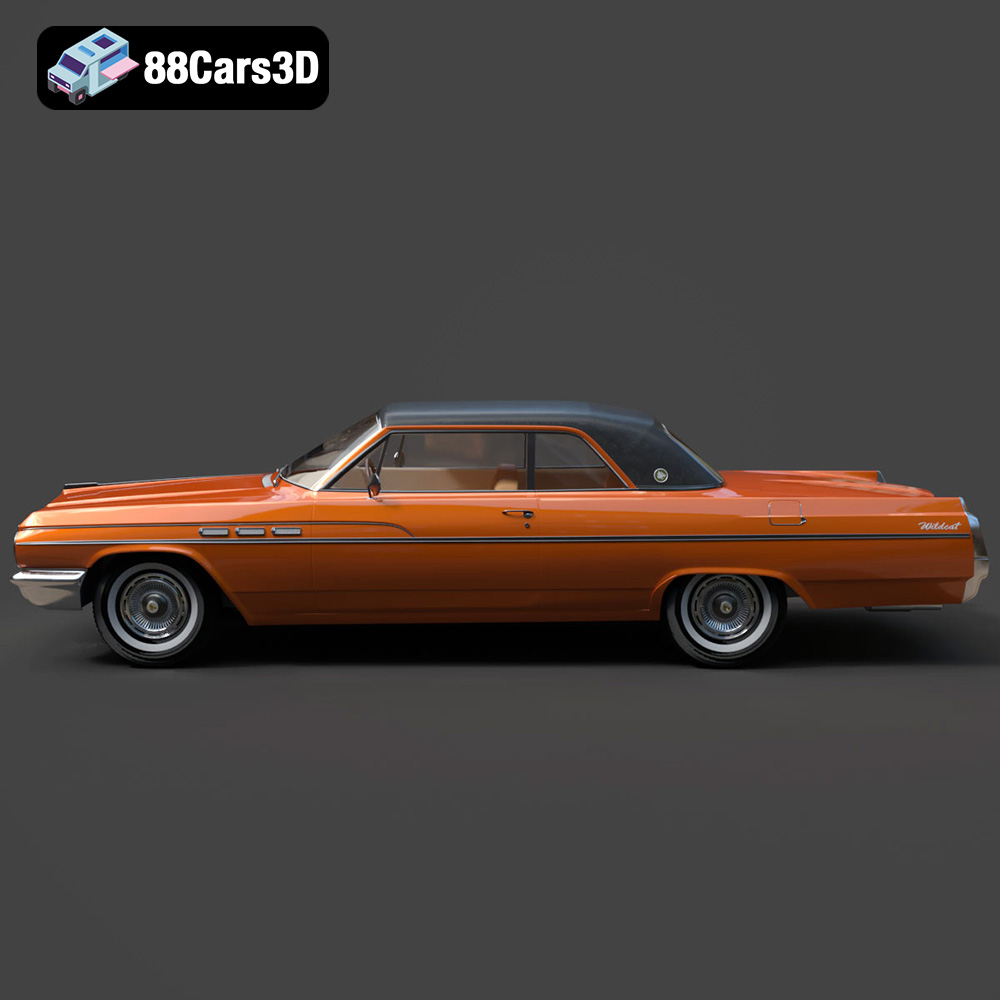
The first critical step in any automotive 3D model is achieving accurate proportions. The 1963 Wildcat is defined by its long hood, wide-body silhouette, and graceful lines that speak to its full-size performance heritage. A skilled 3D artist must painstakingly reference blueprints, photographs, and even physical measurements to ensure every curve, every angle, and every panel gap reflects the original design. This attention to real-world scale accuracy is paramount for believable renders and simulations.
The digital sculptor pays close attention to the distinct features of the Wildcat: the subtle rear deck detailing, the iconic dual headlight front fascia, and the sculpted side lines that give the car its powerful yet elegant stance. This foundation of accurate form ensures the model is not just a car, but *the* 1963 Buick Wildcat.
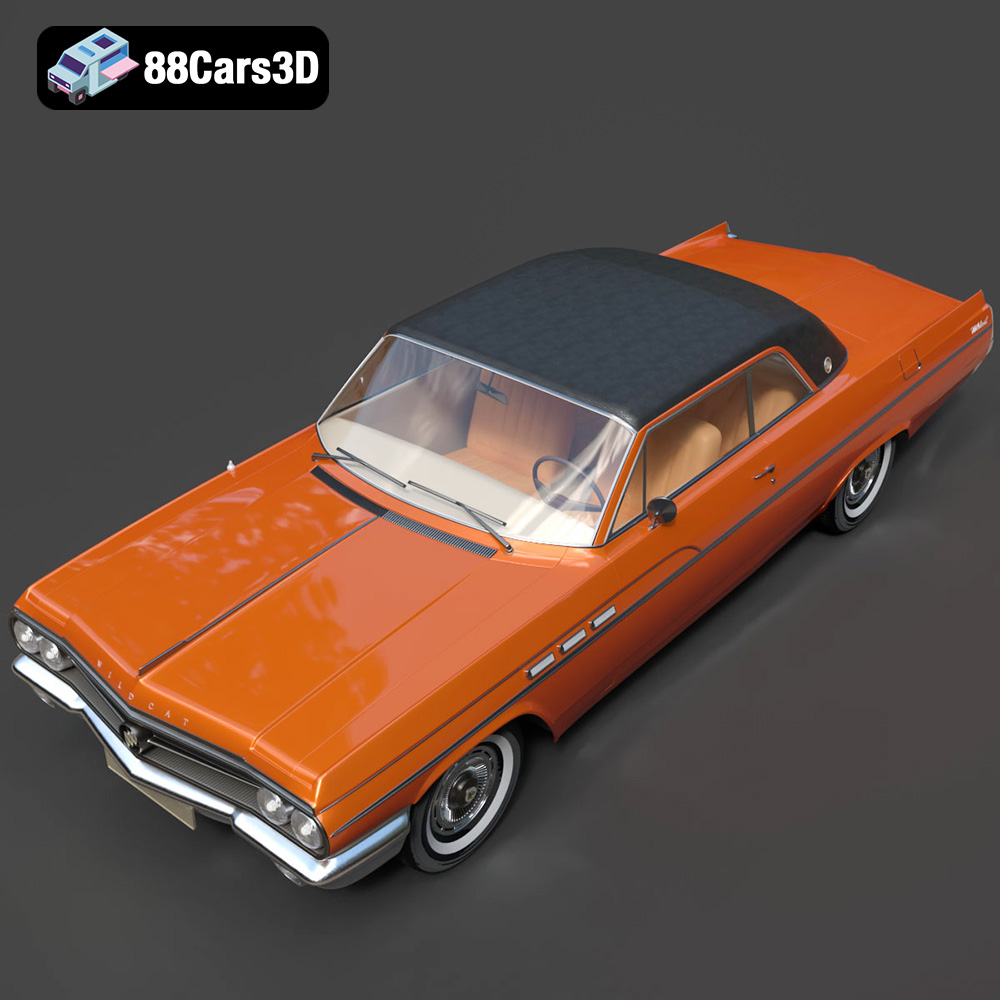
What truly makes classic American cars shine is their elaborate chrome work and intricate detailing. The Buick Wildcat 3D Model boasts accurate chrome grille and bumpers, meticulously recreated to catch light realistically. This isn’t just about applying a shiny material; it involves careful modeling of the trim, emblems, and light surrounds to ensure they possess the correct curvature, depth, and reflection properties. Even the classic chrome wheels and whitewall tire styling are given due attention, complete with accurate hubcaps and tire tread patterns.
The convertible soft-top configuration, ready for both “up” and “down” states, adds another layer of versatility and realism, allowing for diverse scene setups and animation possibilities. Each exterior feature, from the door handles to the exhaust tips, is crafted to a high degree of fidelity, contributing to the model’s overall authenticity.
While often less visible in exterior shots, a detailed interior significantly elevates the quality and versatility of a 3D car model. The Buick Wildcat Convertible 1963 3D Model’s interior features a vintage dashboard with analog gauge cluster, a classic steering wheel, and even options for front bench or bucket seat configurations. The center console and gear selector detailing, along with door panels adorned with chrome trim accents, complete the period-correct ambiance.
These interior elements are not merely placeholders; they are modeled with optimized geometry suitable for both close-up renders and integration into real-time environments. Such attention to internal details makes the model suitable for virtual showrooms, interactive AR/VR experiences, and even cinematic shots that peek inside the cabin.
A high-quality 3D car model like the Buick Wildcat Convertible 1963 isn’t just a pretty picture; it’s a powerful asset designed for seamless integration into a wide array of professional workflows across different industries.
For studios and individual artists utilizing industry-standard software like Autodesk 3ds Max or Blender, the Buick Wildcat model provides a robust starting point. With included .max and .blend formats, users gain full access to the scene structure, materials, and any initial rigging.
Game developers constantly seek high-fidelity yet optimized assets. The Buick Wildcat 3D Model, with its .fbx and .unreal formats, is engineered for smooth integration into leading game engines like Unreal Engine and Unity.
The true potential of a meticulously crafted 3D car model like the Buick Wildcat Convertible 1963 comes to life through advanced rendering and visualization techniques. This is where digital artistry meets technical prowess to create images and animations that are virtually indistinguishable from reality.
Achieving photorealism in automotive rendering involves a delicate balance of lighting, materials, and environment. The Buick Wildcat model serves as an excellent canvas for this. Artists can experiment with different lighting setups—studio lighting for product showcases, natural outdoor lighting for environmental scenes, or dramatic cinematic lighting for storytelling. Physically Based Rendering (PBR) materials are applied to accurately simulate the look of chrome, glass, painted metal, leather, and rubber, all of which are critical to the Wildcat’s authentic appearance.
Consider the product’s customization options: changing body color with classic 1960s finishes, adding whitewall or custom wheel variations, and adjusting lighting for a sunset cruise or retro city scene. These elements are not just aesthetic choices but technical opportunities to demonstrate the model’s adaptability and fidelity across various visual styles.
For cinematic productions or high-end commercial visualizations, the Buick Wildcat 3D Model offers an unparalleled level of detail. Its accurate 1963 proportions, meticulous exterior and interior features, and separated animated components mean it can star in virtual advertisements, historical documentaries, or even as a dynamic prop in a feature film. The ability to configure the soft-top up or down adds creative flexibility, allowing the car to adapt to different narrative requirements and evoke specific moods. From retro boulevard scenes to classic car showcases, this model provides the visual foundation for compelling narratives.
Beyond the digital screen, the Buick Wildcat Convertible 1963 3D Model can transcend into the physical world through 3D printing. This capability opens doors for collectors, hobbyists, and automotive enthusiasts to own a tangible representation of this classic icon, or for designers to create physical prototypes and scale models.
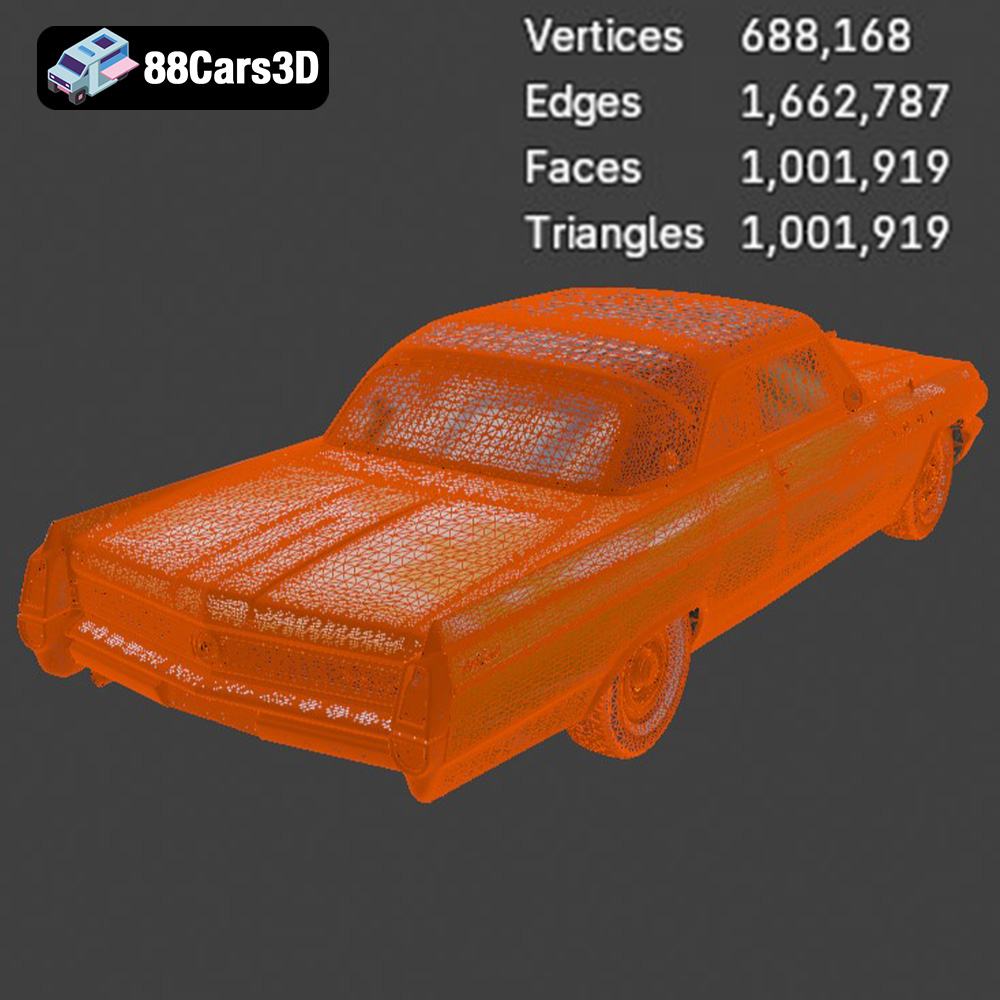
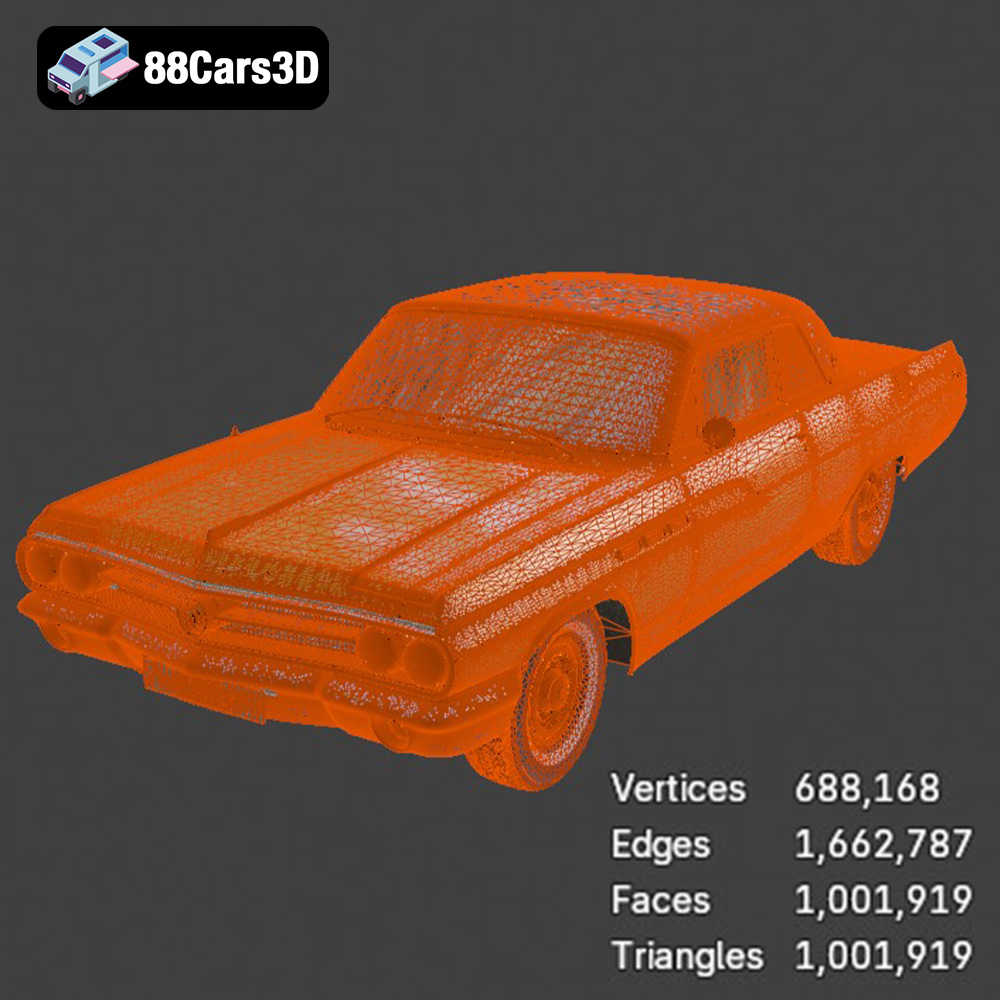
The inclusion of the .stl format is crucial for 3D printing readiness. The model’s clean mesh structure and manifold geometry are fundamental for successful printing, ensuring there are no gaps or errors that could lead to printing failures. The product details provide specific 3D print settings, which are vital guidelines for achieving optimal results:
The guidance on print orientation and supports is invaluable. Printing the body angled for a smooth surface finish minimizes layer lines and maximizes aesthetic quality. Supports are critical for overhangs like mirrors, bumper overhangs, and the windshield frame, preventing print failures and preserving fine details. Printing wheels separately allows for better detail resolution on these smaller, intricate parts.
After printing, post-processing is key to transforming a raw 3D print into a showroom-quality miniature. The recommendations for sanding, primer, gloss pastel or metallic paint finish, and chrome detailing are essential. These steps allow the maker to customize their physical Wildcat model, perhaps trying different classic 1960s colors or adding a personalized touch, replicating the digital customization options in the physical realm.
In the rapidly evolving fields of game development, Augmented Reality (AR), and Virtual Reality (VR), high-quality 3D car models are not just assets—they are immersive experiences. The Buick Wildcat Convertible 1963 3D Model is optimized to perform exceptionally in these demanding real-time environments.
For game developers building titles set in the 1960s, or those requiring classic vehicles, the Buick Wildcat is a game-changer. Its optimized polygon flow ensures that it can be rendered efficiently within game engines, contributing to smooth gameplay and high frame rates. The clean and well-organized mesh structure facilitates the creation of LODs (Levels of Detail), allowing the engine to automatically swap to simpler versions of the model when it’s further from the camera, further enhancing performance. Proper pivot setup for steering and wheel rotation means developers can easily integrate it into vehicle physics systems, creating a realistic driving feel.
Whether for an open-world driving game, a classic car racing title, or a casual vintage cruising simulation, this model provides the necessary foundation for visual fidelity and interactive functionality. The availability of .fbx and .unreal formats ensures a streamlined workflow for importing and setting up the asset within Unreal Engine and Unity.
AR and VR offer unique opportunities for showcasing classic vehicles. Imagine an interactive museum experience where users can virtually walk around, inside, and even “drive” the 1963 Buick Wildcat. The model’s real-world scale accuracy and detailed interior/exterior features make it perfect for such immersive applications. The .glb format, specifically optimized for AR/VR and browser-based display, allows for easy integration into web-based virtual showrooms or mobile AR apps. Users could change the body color, toggle the soft-top, or view the engine virtually, creating an unparalleled interactive experience.
From architectural visualizations that include period-correct vehicles to interactive training simulations for automotive restoration, the Buick Wildcat model provides a high-fidelity, performance-ready asset that elevates the realism and engagement of any AR/VR project.
The world of 3D modeling is an exciting confluence of art and engineering, especially when it comes to recreating automotive legends. The Buick Wildcat Convertible 1963 3D Model stands as a shining example of a high-quality, versatile asset that caters to a diverse range of professional needs. From its meticulous detailing and accurate proportions to its wide array of supported file formats and optimization for various platforms, it embodies the excellence sought by rendering artists, game developers, AR/VR creators, and even 3D printing enthusiasts.
Whether you’re aiming for photorealistic renders that transport viewers back to the 1960s, developing an immersive game experience, crafting a tangible scale model, or designing interactive virtual showrooms, this 3D car model provides the perfect foundation. It’s a testament to how exceptional digital assets can streamline workflows, inspire creativity, and bring visionary projects to life. For those seeking premium 3D car models to elevate their next project, browsing the curated selection at 88cars3d.com is an excellent starting point, where quality and versatility are paramount.
The Buick Wildcat Convertible 1963 3D Model is a high-detail digital recreation of the classic American full-size performance convertible known for its bold styling, powerful V8 engine heritage, and open-top cruising appeal. The 1963 Wildcat combined luxury comfort with muscle-era presence, making it a standout of early 1960s American automotive design. This 3D model accurately represents the long and wide body proportions, dual headlight front fascia, chrome grille and bumpers, sculpted side lines, convertible soft-top configuration, rear deck detailing, and period-correct wheel design. Built with clean topology and real-world scale accuracy, it is ideal for rendering, animation, automotive visualization, game development, and AR/VR experiences. Perfect for retro boulevard scenes, beach environments, classic car showcases, cinematic productions, and vintage driving simulations.
$29.9
.1960scar
.americanclassic
.arvr
.automotive
.blend
.buick
.car3dmodel
.classiccar
.convertible
.fbx
.gameasset
.glb
.max
.obj
.ply
.rendering
.simulation
.stl
.unreal
.vintagecar
.wildcat1963