⚡ FLASH SALE: Get 60% OFF All Premium 3D & STL Models! ⚡

The roar of a powerful V8, the unmistakable silhouette of a classic American icon, and the sheer audacity of muscle car styling – these are the sensations the 1969 Chevrolet Chevelle SS evokes. For automotive enthusiasts and digital creators alike, this vehicle represents a golden era of design and performance. In the realm of 3D modeling, bringing such a legend to life requires meticulous attention to detail, technical precision, and a deep understanding of how these digital assets will be used across various industries.
Whether you’re crafting an immersive game world, producing stunning photorealistic renders for an advertisement, developing an interactive AR/VR experience, or even preparing a collectible for 3D printing, the quality of your 3D car models is paramount. This article delves into the technical intricacies of acquiring and utilizing a high-fidelity asset like the Chevrolet Chevelle SS 1969 3D Model, exploring its journey from digital creation to diverse professional applications. We’ll uncover the essential file formats, dive into workflow specifics, and highlight how such a meticulously crafted model can elevate your projects to legendary status. For professionals seeking top-tier automotive assets, resources like 88cars3d.com provide an invaluable library of ready-to-use 3D models.
The foundation of any successful 3D project lies in selecting the correct file format. Each format offers unique advantages, optimized for specific applications, software compatibility, and workflow requirements. For a premium 3D car model like the Chevrolet Chevelle SS 1969, a comprehensive package of formats ensures maximum versatility across various creative pipelines. Let’s break down the most crucial formats included with this iconic model.
The .blend file is the native format for Blender, a powerful open-source 3D creation suite. When you receive a .blend file, you’re getting the complete scene as the artist intended. This means all modifiers, original geometry, material nodes, lighting setups, and even animation rigs (if present) are fully intact and editable. For users deeply integrated into the Blender ecosystem, this format offers unparalleled flexibility for further customization, scene integration, or optimization. It allows for advanced non-destructive workflows, enabling artists to tweak every aspect of the Chevrolet Chevelle SS 1969 3D Model without starting from scratch.
Autodesk’s .fbx format is arguably the most widely adopted interchange format in the 3D industry. It’s designed to carry a vast amount of data, including geometry, materials, textures, animations, and camera information, between different 3D software applications. This makes it ideal for pipelines involving multiple software packages, such as modeling in 3ds Max and then exporting for rendering in V-Ray, or for seamless integration into real-time engines like Unreal Engine and Unity. For a detailed 3D car model like the Chevelle, .fbx ensures that all crucial elements, from separated wheels for animation to PBR material setups, are transferred accurately, making it a cornerstone for game assets and real-time visualization.
The .obj (Wavefront OBJ) format is a venerable and highly compatible format primarily used for exchanging raw geometry data. While it can store basic material and UV information, it’s less comprehensive than .fbx regarding animations or complex node-based materials. However, its universal support means almost every 3D software can import and export .obj files, making it an excellent fallback or starting point for cross-software compatibility. It’s particularly useful when you need to transfer just the mesh of the Chevrolet Chevelle SS 1969 to a new application for a fresh material setup or re-topology.
The .glb (GL Transmission Format Binary) is quickly becoming the go-to format for 3D models on the web, in augmented reality (AR), and virtual reality (VR) applications. It’s a self-contained, binary format that bundles all necessary data—geometry, materials, textures, and animations—into a single file, ensuring efficient loading and rendering. This optimization makes it perfect for displaying the Chevelle SS 1969 directly in web browsers, social media, or lightweight AR/VR viewers, providing an immersive experience without requiring powerful desktop software.
When it comes to bringing digital models into the physical world, the .stl (Stereolithography) format is the undisputed champion. It represents a 3D model as a series of connected triangles, defining only the surface geometry. While it lacks color or material information, its simplicity and widespread support make it the universal language for 3D printers. The inclusion of an .stl option for the Chevrolet Chevelle SS 1969 3D Model means it is ready for physical manufacturing, allowing enthusiasts to print their own scale models or collectibles with minimal preparation.
The .ply (Polygon File Format) is another popular format for storing 3D data, particularly useful in scientific, CAD, and 3D scanning applications. It can store various properties beyond just geometry, such as color, transparency, and even normal vectors per vertex, offering more detail than .obj in some cases. While less common for general animation or rendering pipelines, its precision makes it valuable for specialized tasks or when integrating the Chevelle model into engineering or architectural visualization workflows.
The .unreal designation implies a model specifically optimized and prepared for direct import and use within Unreal Engine. This often means the asset has been properly scaled, has collision meshes generated, materials configured with Unreal’s PBR workflow, and potentially LODs (Levels of Detail) already set up. For game developers and real-time cinematic artists, an .unreal format for the Chevrolet Chevelle SS 1969 3D Model saves countless hours of setup, allowing for immediate integration into dynamic scenes.
Finally, the .max file is the native scene format for Autodesk 3ds Max, a leading software for modeling, animation, and rendering. Similar to the .blend file for Blender, a .max file provides full access to the original project, including all scene hierarchies, modifiers, materials, lighting, and animation data within 3ds Max. This is invaluable for professionals whose primary workflow revolves around 3ds Max, offering complete creative control and the ability to leverage its extensive toolset for high-end automotive rendering or complex animation sequences involving the Chevelle SS 1969.
The 1969 Chevrolet Chevelle SS is more than just a car; it’s a cultural icon, a symbol of American power and style. Its distinctive “coke bottle” styling, aggressive stance, and the promise of raw V8 muscle have cemented its place in automotive history. Translating this legacy into a high-quality 3D model requires a blend of artistic skill and technical accuracy.
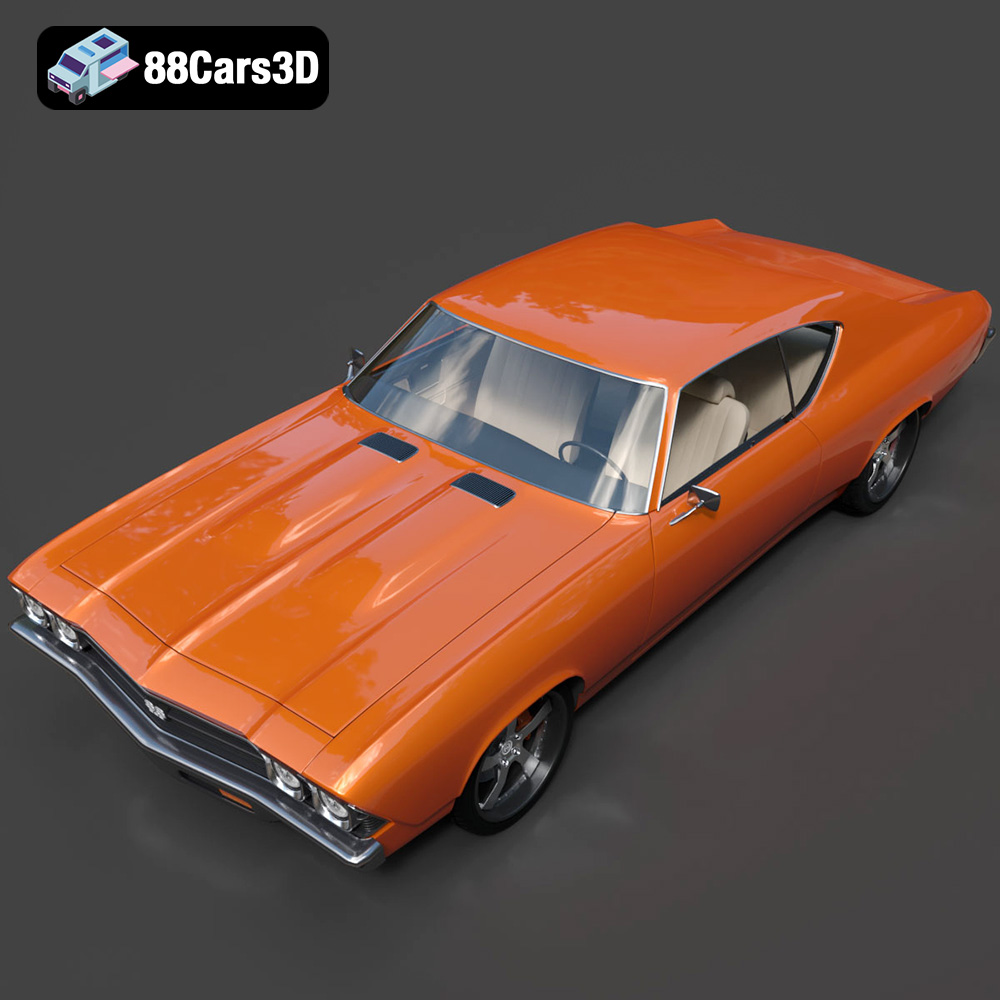
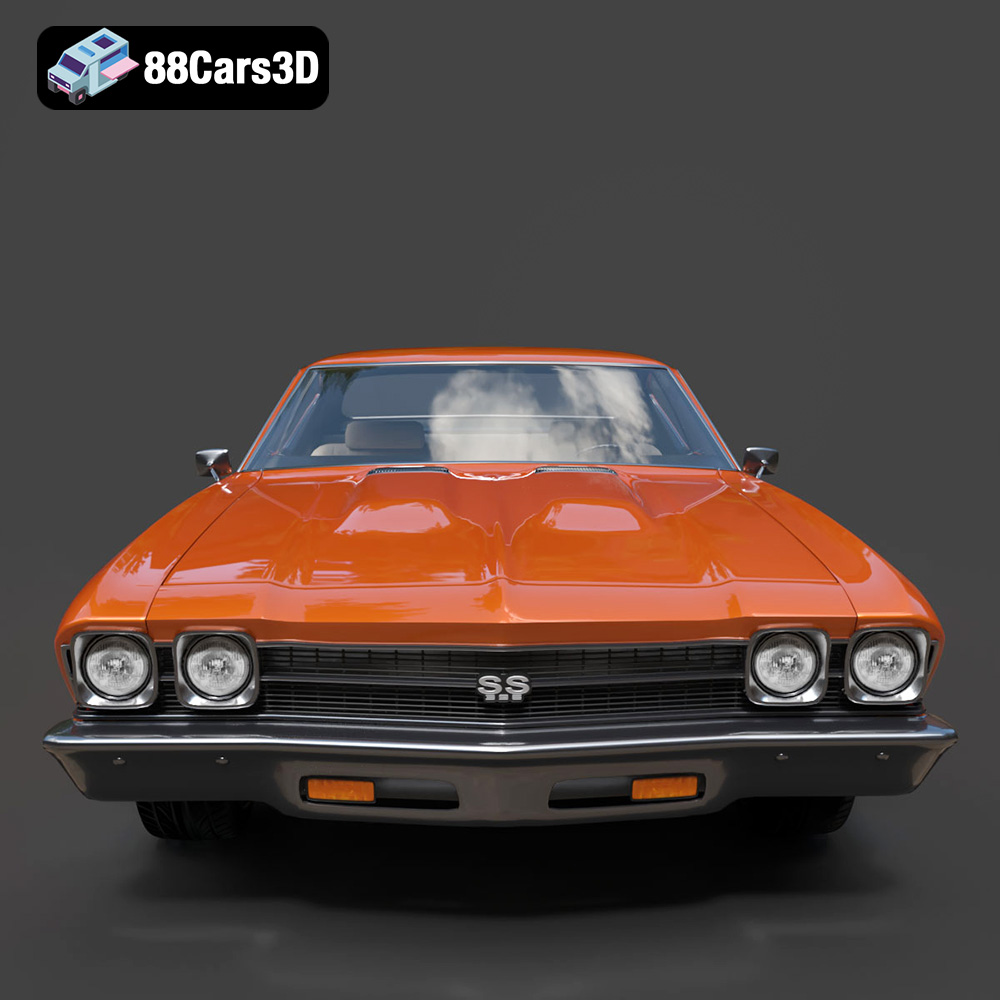
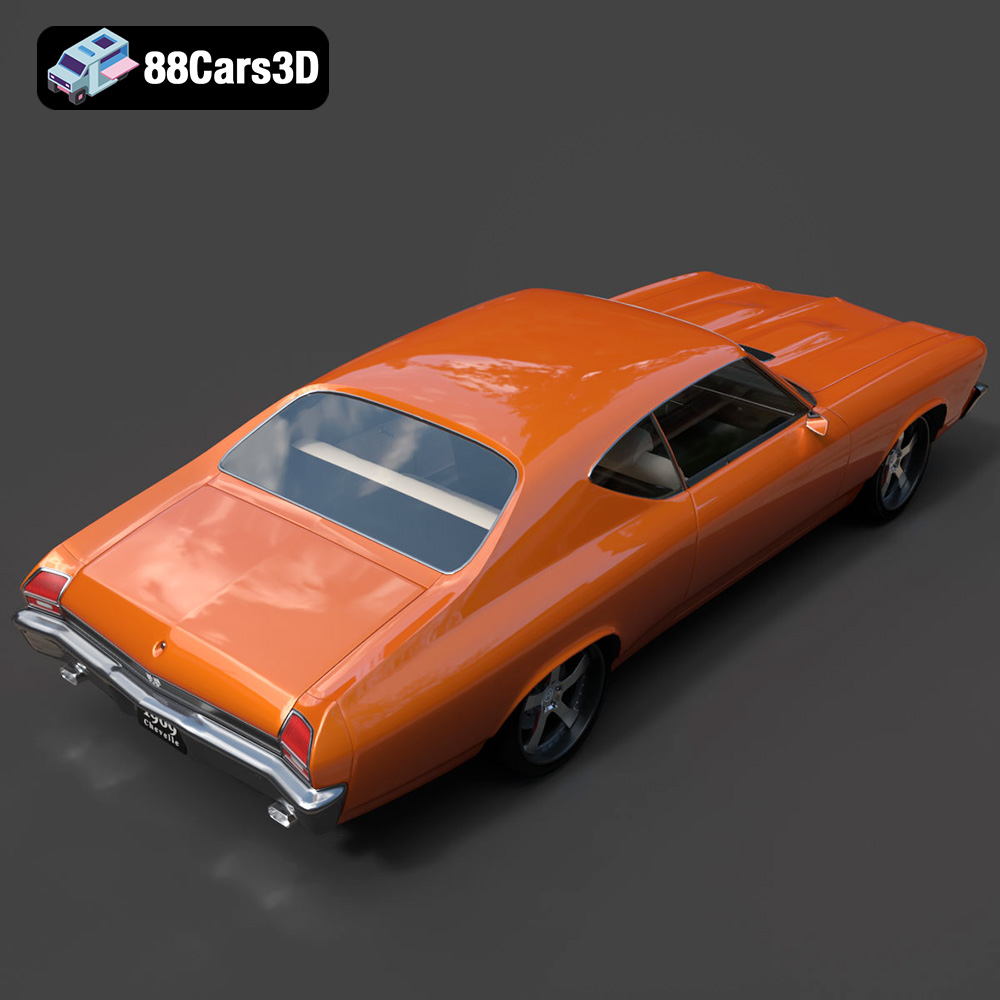
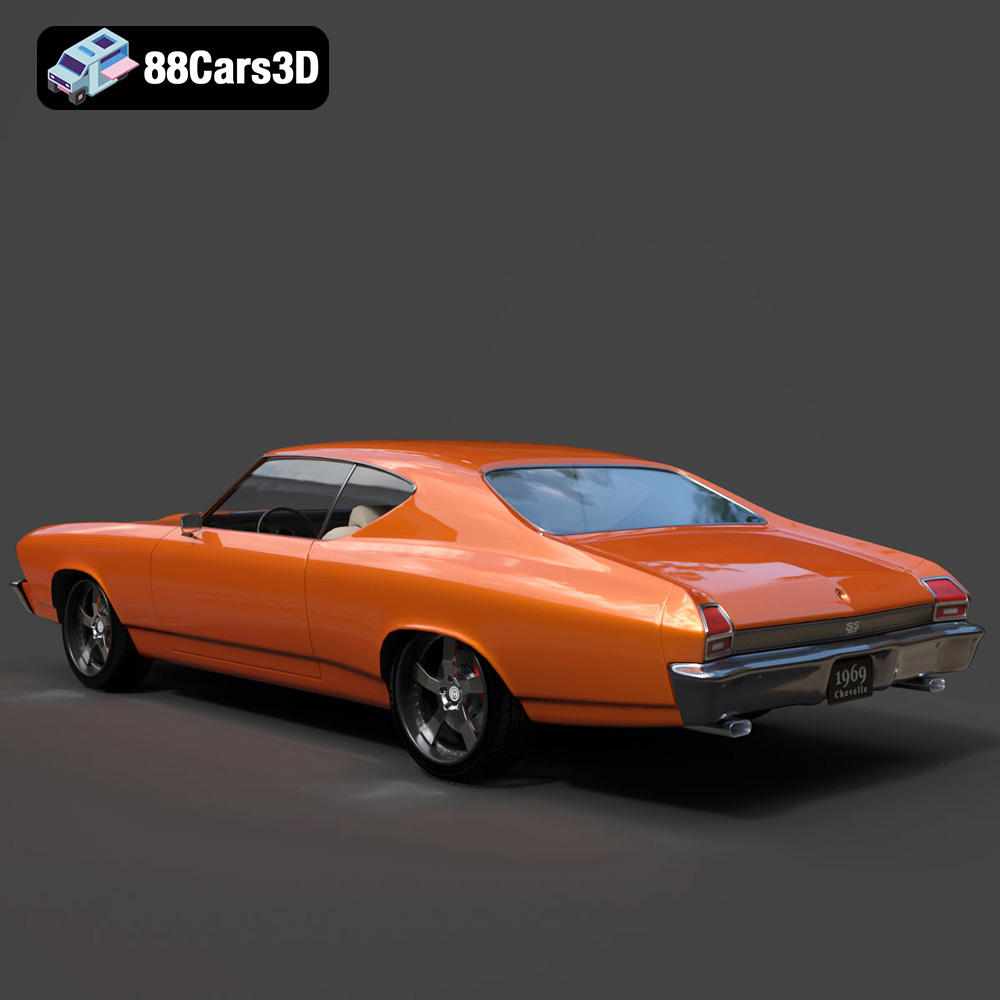
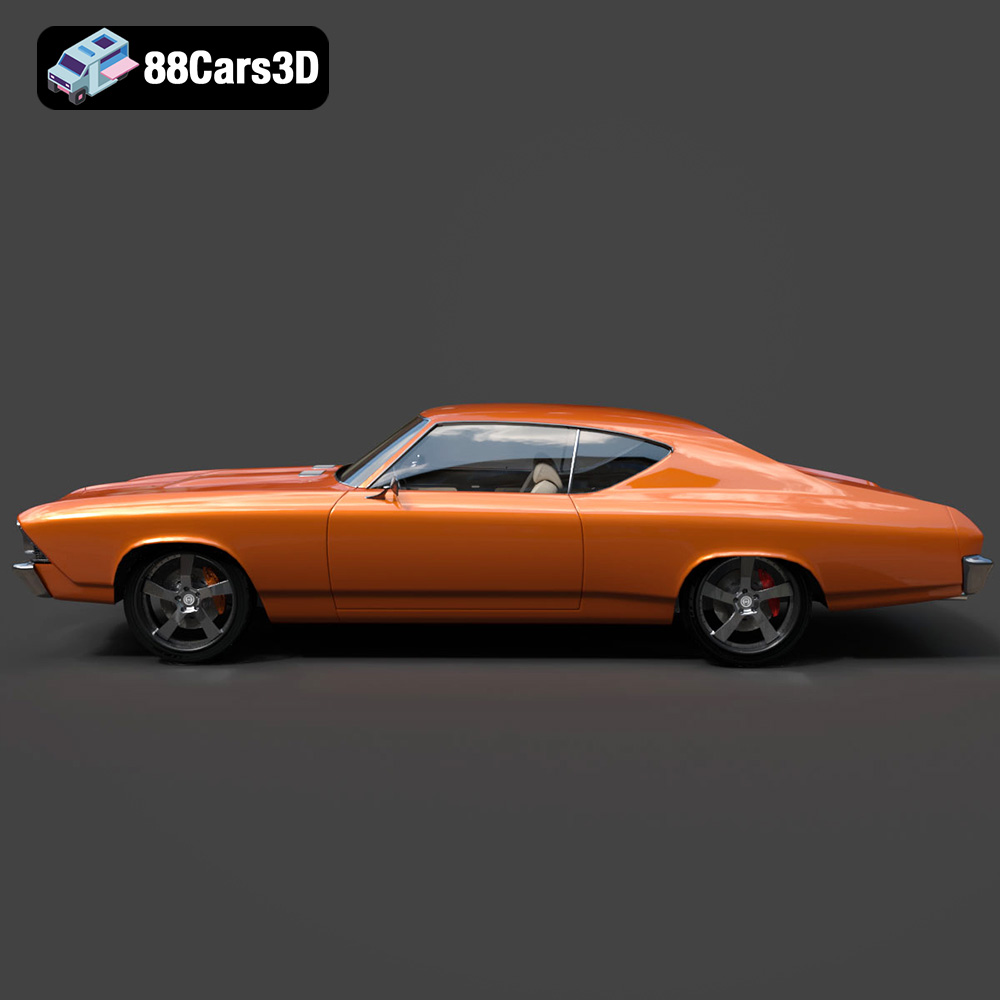
A truly exceptional 3D model of the Chevelle SS 1969 starts with painstaking research. Every curve, every chrome accent, and every badge must be faithfully recreated. This particular model excels in capturing the accurate 1969 Chevelle SS body proportions, the detailed dual headlight front grille, and the signature SS badging. The sculpted hood, with optional cowl induction styling, truly brings out the car’s formidable personality, making it instantly recognizable and visually arresting in any digital scene or render.
The commitment to authenticity extends beyond the main body. The model features chrome front and rear bumpers, classic muscle car wheels with tire tread detail, and transparent glass materials that reflect light realistically. Inside, the vintage dashboard with analog gauges, classic steering wheel design, bucket seat geometry with stitching detail, and the center console with gear shifter all contribute to a highly immersive experience. These details are critical for photorealistic rendering and for building believable virtual environments where the Chevelle SS takes center stage, whether in a game or a cinematic sequence.
Beyond visual fidelity, the true value of a professional 3D car model lies in its technical foundation. The Chevrolet Chevelle SS 1969 3D Model boasts a robust technical structure designed for seamless integration into various pipelines, from demanding real-time engines to high-resolution rendering farms.
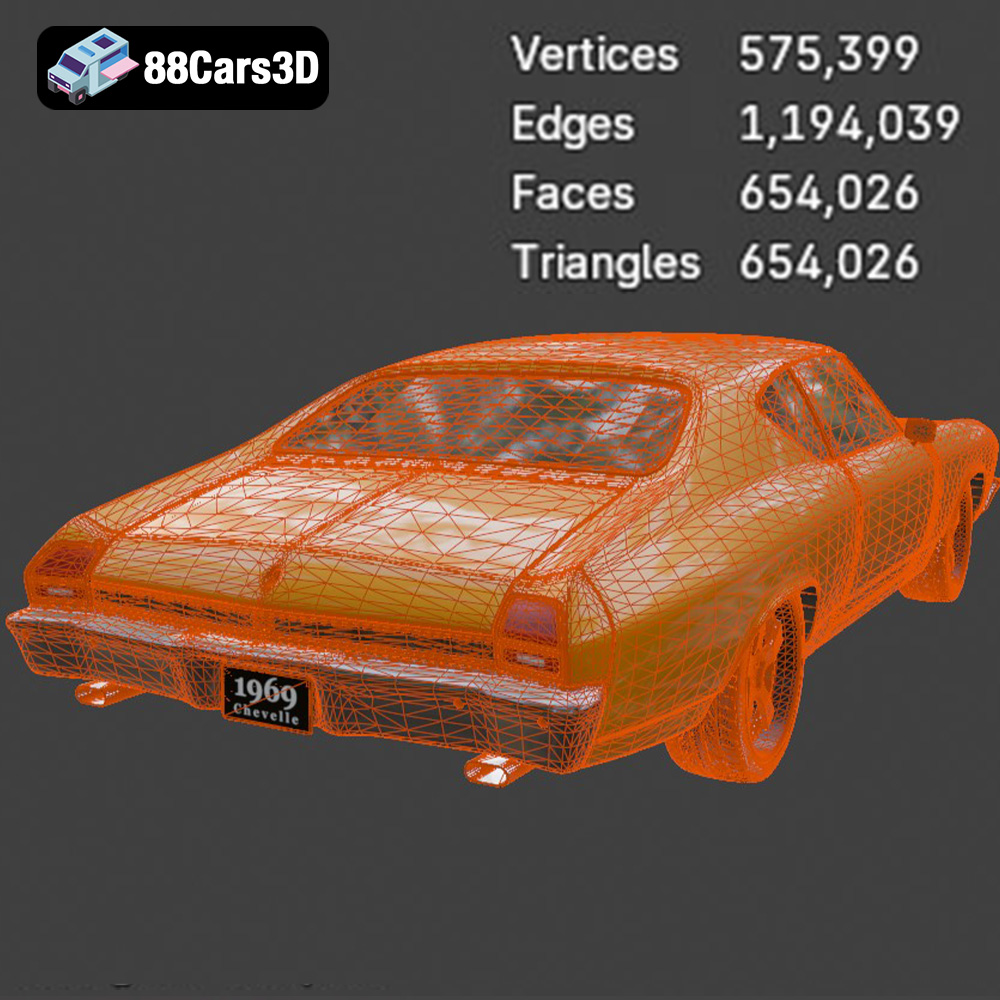
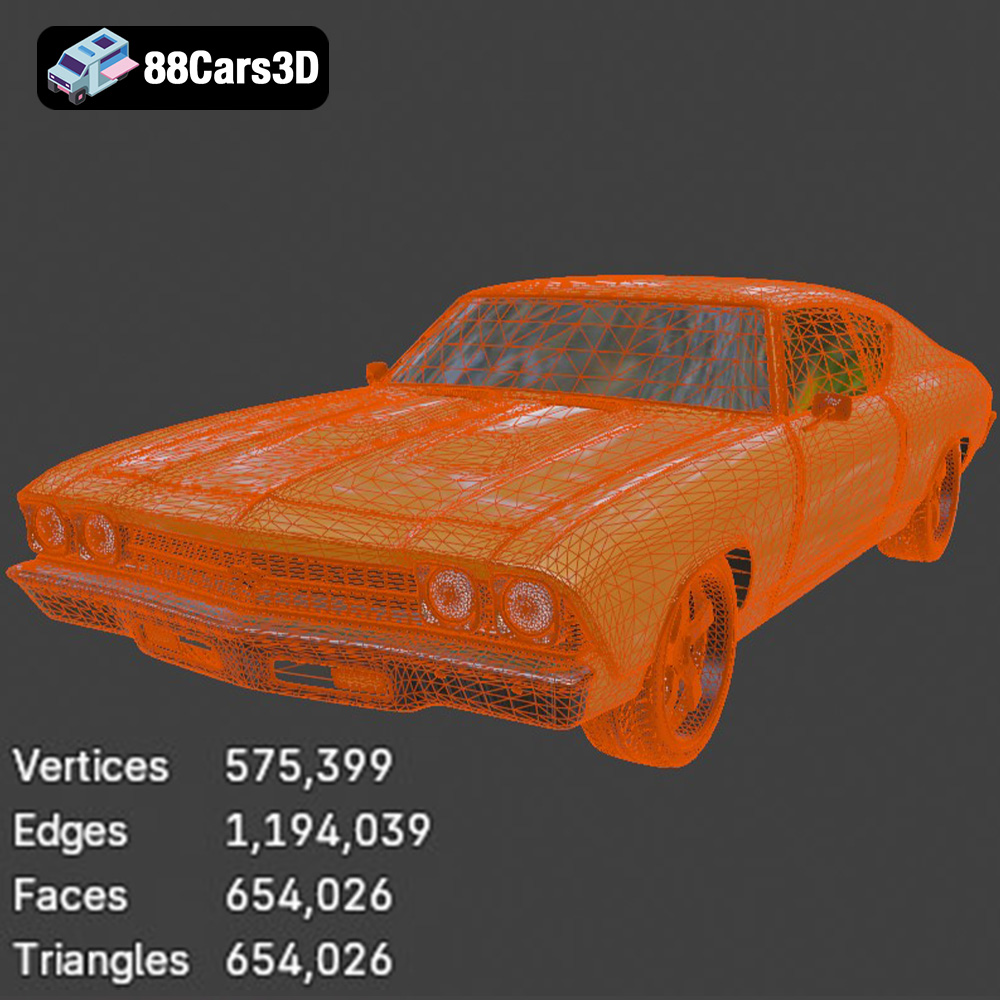
At the heart of any high-quality 3D asset is its mesh. This model features a clean and well-organized mesh structure, which is crucial for predictable subdivision, smooth deformations during animation, and efficient UV mapping. The optimized polygon flow ensures that the model is detailed where it needs to be – like the sharp edges of the body panels and the intricate grille – while remaining efficient for performance. This balance is especially important for game development and AR/VR, where polygon count directly impacts frame rates, but also benefits rendering by reducing potential artifacts and improving render times.
Accuracy in 3D modeling goes beyond just aesthetics. The Chevelle SS 1969 3D Model is built with real-world scale accuracy, meaning it will fit perfectly into architectural visualizations, vehicle simulations, or any scene requiring precise dimensions. Crucially, it includes proper pivot setup for steering and wheel rotation. This seemingly small detail is incredibly important for animation and interactive applications, allowing for realistic vehicle dynamics without complex rigging workarounds. The wheels and steering components are separated, ready for immediate animation in any 3D software.
The versatility of the Chevrolet Chevelle SS 1969 3D Model makes it an indispensable asset across a multitude of professional domains. Its comprehensive design and technical specifications ensure it can meet the rigorous demands of various creative and technical workflows.
For automotive marketing, classic car promotions, or retro-themed advertising, photorealistic renders are essential. The high-detail geometry, clean topology, and period-correct materials of the Chevelle model make it perfect for creating stunning visuals. Artists can import the .max or .blend files into their preferred renderer (like V-Ray, Corona, or Cycles) and achieve breathtaking results, showcasing the car in a studio environment, cruising down a sunset boulevard, or dominating a drag strip. The detailed chrome, glass, and paint finishes will react accurately to global illumination, producing captivating imagery.
In the fast-paced world of game development, high-quality, optimized 3D car models are a precious commodity. The Chevelle SS 1969, available in .fbx and .unreal formats, is perfectly suited for open-world driving games, drag racing simulators, and vintage car environments. Its optimized geometry and proper pivot setups mean it’s ready for physics engines and animated sequences. Game developers can easily integrate it into Unreal Engine or Unity, apply custom damage models, or add performance upgrades to create dynamic and engaging gameplay experiences for players who appreciate classic American muscle.
Augmented Reality (AR) and Virtual Reality (VR) are transforming how we interact with products. Imagine stepping into a virtual showroom where you can inspect the 1969 Chevelle SS from every angle, open the doors, and even sit inside. The .glb format, specifically optimized for AR/VR, ensures smooth performance and quick loading times for these immersive experiences. This makes the model ideal for virtual classic car showrooms, interactive automotive exhibitions, or even educational applications where users can explore the engineering and design of this legendary vehicle in a truly engaging way.
Beyond digital displays, the Chevrolet Chevelle SS 1969 3D Model opens up exciting possibilities for physical creation through 3D printing. The inclusion of the .stl format is a testament to its versatility, allowing enthusiasts and professionals to manufacture tangible replicas.
Converting a high-detail digital model into a successful physical print requires careful planning. The provided 3D print settings are invaluable here: recommending scales like 1:32, 1:24, 1:18, or 1:12 ensures a balance between detail and printability. Layer height (0.10–0.16 mm) and wall thickness (1.5–2.5 mm) are crucial for structural integrity and surface quality. For intricate details, supports are required for elements like mirrors, bumper edges, and undercarriage components to prevent sagging during printing. The suggested print orientation – body angled for smooth finish, wheels separately – is a professional tip for achieving the best results.
Once printed, the physical model enters the realm of traditional model-making. Post-processing is where the magic truly happens. Sanding to remove layer lines, applying primer for an even surface, and then a meticulously applied gloss muscle-car paint finish can transform a raw print into a stunning collectible. Optional chrome detailing, perhaps with specialized paint or actual chrome foil, can further enhance its realism. This allows designers to create custom display pieces, automotive collectibles, or prototypes that faithfully represent the digital asset, bringing the iconic Chevelle SS 1969 into the tangible world.
A high-quality 3D model is not just an endpoint; it’s a starting point for boundless creativity. The Chevrolet Chevelle SS 1969 3D Model offers extensive customization options, empowering artists and designers to truly make it their own.
The ability to change body color to classic red, black, blue, or various metallic finishes allows for personalized presentations. Adding racing stripes or SS decals can create unique liveries for virtual drag strips or custom garage scenes. Modifying wheel style and tire type instantly alters the car’s character, transforming it from a stock classic to a modern restomod or a period-correct drag racer. Adjusting ride height or configuring a specific drag racing setup opens up avenues for dynamic action shots or highly specialized simulations. These customization options ensure that the Chevelle SS 1969 can fit into virtually any narrative or visual requirement.
Beyond the car itself, how it interacts with its environment is key. Artists can configure lighting for dramatic sunset boulevard cruises, gritty urban street scenes, or pristine garage showcases. The clean geometry and well-defined materials of the Chevelle model react beautifully to advanced lighting techniques, allowing for realistic reflections, refractions through glass, and dynamic shadows. This makes the model a versatile tool for any narrative, from nostalgic retrospectives to futuristic adaptations, ensuring its timeless appeal continues to inspire new generations of digital artists and automotive enthusiasts alike.
The Chevrolet Chevelle SS 1969 is a true legend, and its 3D model embodiment lives up to that reputation. From its meticulous design fidelity and comprehensive technical advantages to its versatility across a wide array of applications—including high-end rendering, immersive game development, cutting-edge AR/VR experiences, and even tangible 3D prints—this asset is a powerhouse for any creative project. The availability of multiple industry-standard file formats, from .blend for full creative control to .stl for physical manufacturing, ensures maximum utility and compatibility across professional workflows.
Whether you are an automotive visualization specialist, a game designer, or a collector looking to bring a digital classic into the physical world, investing in a high-quality 3D car model like the Chevrolet Chevelle SS 1969 is a decision that pays dividends in both efficiency and artistic output. Explore the vast potential of premium 3D models and elevate your projects to the next level. For this exceptional model and many other high-fidelity automotive assets, visit 88cars3d.com and bring your visions to life.
The Chevrolet Chevelle SS 1969 3D Model is a high-detail digital recreation of one of the most iconic American muscle cars of the late 1960s. Known for its aggressive styling, powerful V8 performance, and bold street presence, the 1969 Chevelle SS remains a symbol of classic muscle car heritage. This 3D model accurately represents the long hood and short deck proportions, signature dual headlight front fascia, SS badging, muscular body lines, chrome bumpers, detailed grille, performance wheels, and period-correct interior layout. Built with clean topology and real-world scale accuracy, it is ideal for rendering, animation, automotive visualization, game development, and AR/VR experiences. Perfect for classic car showcases, drag racing scenes, retro urban environments, cinematic projects, and muscle car simulations.
$39.9
.1969chevelle
.arvr
.automotive
.blend
.car3dmodel
.chevelle
.chevelless
.chevrolet
.classiccar
.fbx
.gameasset
.glb
.max
.musclecar
.obj
.ply
.rendering
.simulation
.stl
.unreal
.vintagecar