⚡ FLASH SALE: Get 60% OFF All Premium 3D & STL Models! ⚡

In the dynamic world of 3D visualization, automotive rendering, and game asset development, the demand for exceptionally detailed and accurate digital assets is constant. Whether you’re a seasoned architectural visualizer needing a realistic vehicle to populate a scene, a game developer crafting an immersive open world, or an automotive designer showcasing a new concept, the quality of your 3D car models can make or break a project. The quest for photorealism and functional versatility drives professionals to seek out assets that not only look incredible but are also technically robust and adaptable.
Today, we’re taking an in-depth look at such an asset: the Ford F-250 Super Duty Super Cab XLT 2015 3D Model. This isn’t just any pickup truck model; it’s a meticulously crafted digital recreation of an iconic heavy-duty work truck, offering unparalleled detail and a wealth of potential applications. It represents a cornerstone asset for anyone looking to infuse their projects with a sense of rugged realism and the imposing presence of America’s favorite truck.
Creating a 3D model that genuinely captures the essence of a real-world vehicle requires a deep understanding of automotive design, meticulous attention to detail, and expert 3D modeling techniques. The Ford F-250 Super Duty Super Cab XLT 2015 3D Model stands as a testament to this craft, faithfully reproducing a vehicle known for its commanding presence and utility.
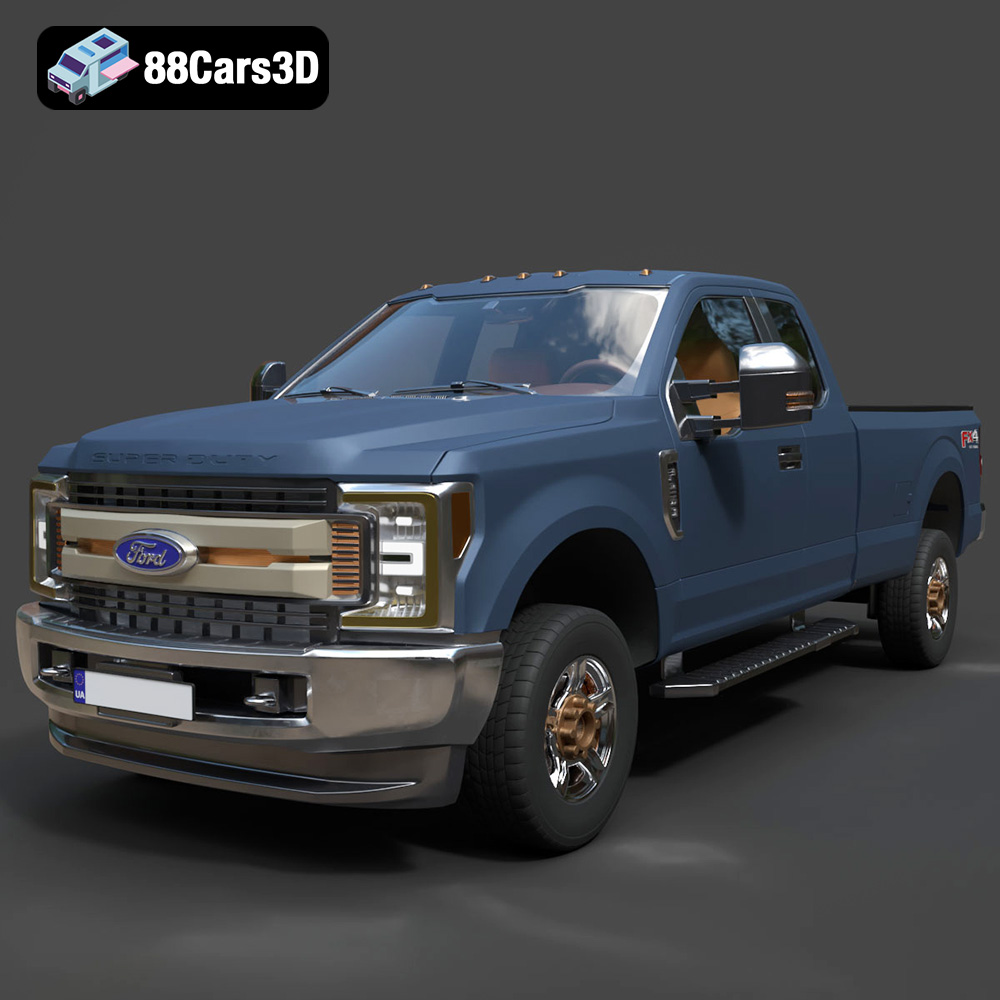
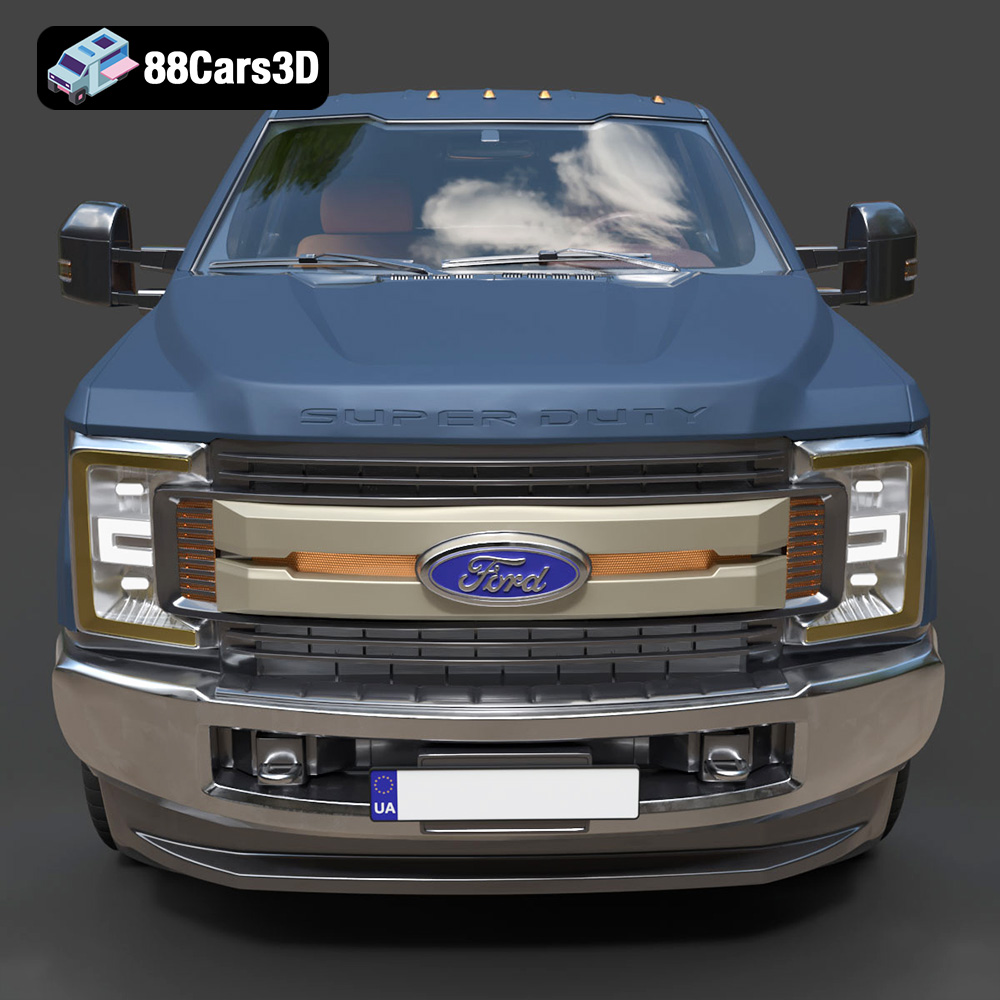
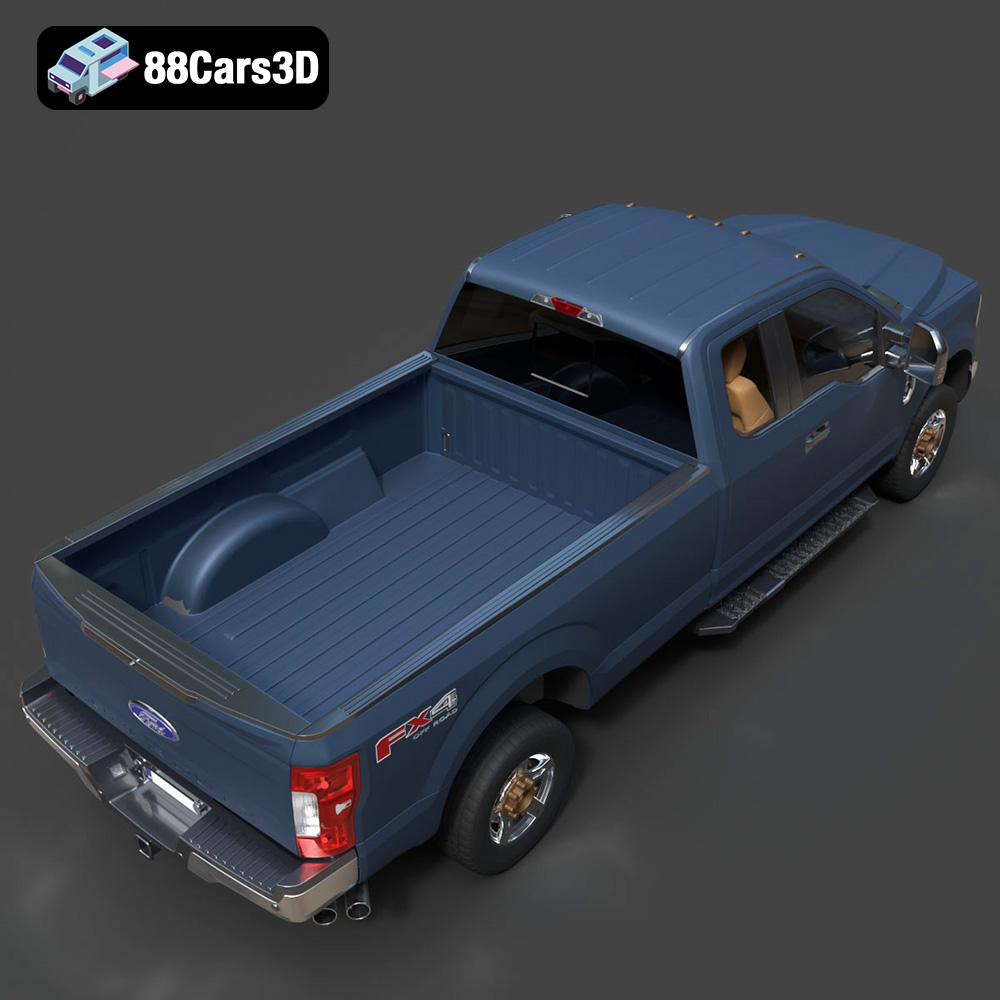
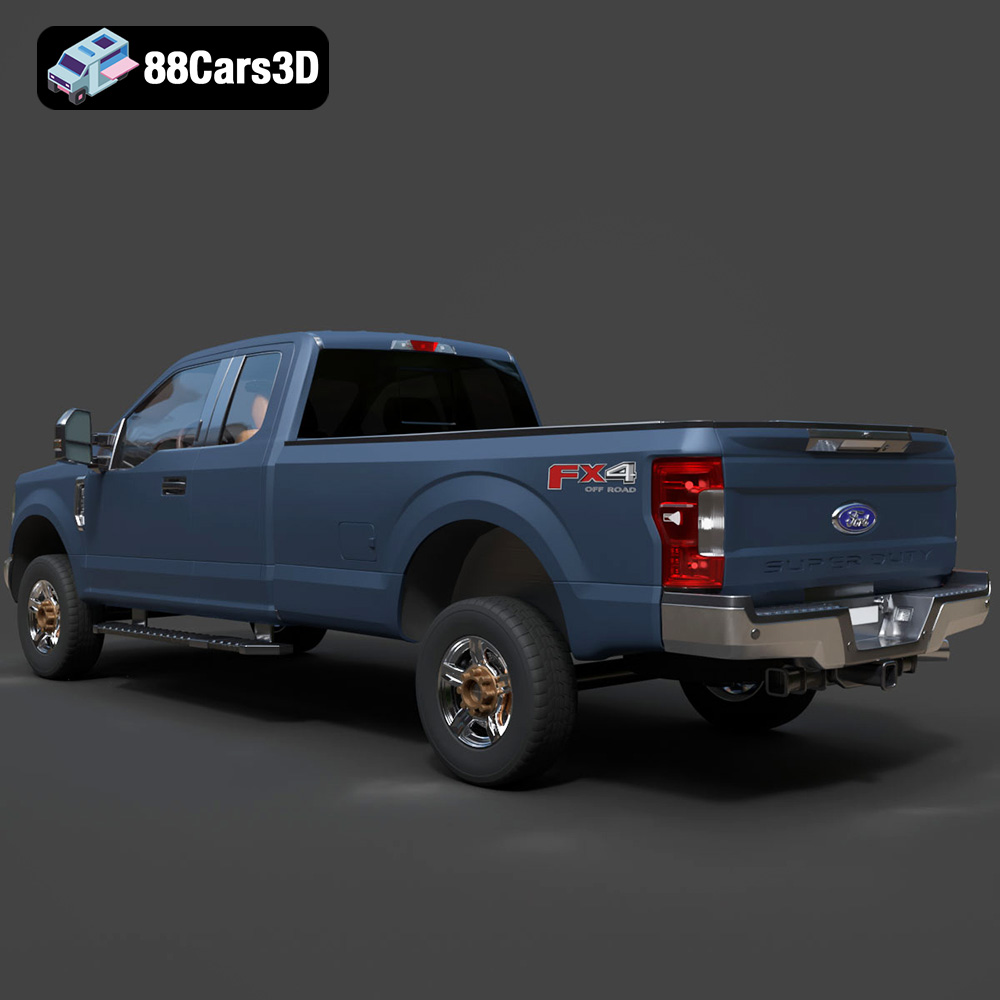
The 2015 Ford F-250 Super Duty Super Cab XLT is a particular favorite among truck enthusiasts, representing the final iteration of the legendary steel-body generation. This 3D model perfectly encapsulates its imposing, muscular stance. From the distinctive XLT-spec chrome front grille, which features the signature dual-bar design, to the massive stacked headlight clusters that define its front fascia, every exterior detail has been precisely modeled. The Super Cab extended cabin configuration, with its accurate door panel gaps and rear-hinged half doors, is faithfully represented, crucial for any animation or detailed visualization work. Further enhancing its realism are the telescoping trailer-tow side mirrors, heavy-duty chrome bumpers, and a detailed cargo bed complete with a tailgate, bed rails, and rear step details. The standard XLT alloy wheels, wrapped in rugged all-terrain tires, complete the authentic look, ready for any digital terrain, be it a construction site or an off-road trail.
A truly comprehensive 3D car model doesn’t stop at the exterior; it delves into the interior, providing a complete environment for first-person perspectives and intricate close-ups. The Ford F-250 model excels here, offering a spacious Super Cab layout featuring front bucket or bench seating and rear folding seats, all modeled with XLT-spec cloth or durable vinyl seating geometry and authentic seam detailing. The dashboard is accurately rendered with its central infotainment screen layout and the robust climate controls characteristic of a work truck. Even the heavy-duty multi-function steering wheel and column shifter are present, optimized for high-resolution first-person POV rendering. This level of interior fidelity means the model is not just a pretty shell but a fully explorable digital asset, perfect for virtual walkthroughs, detailed product shots, or even simulating in-cab experiences.
One of the most critical aspects of procuring high-quality 3D assets, especially for complex subjects like 3D car models, is the availability and understanding of various file formats. Different formats serve different purposes, optimize for specific software, or cater to particular stages of a production pipeline. The Ford F-250 Super Duty Super Cab XLT 2015 3D Model from 88cars3d.com stands out by offering a comprehensive suite of formats, ensuring maximum compatibility and utility for diverse professional workflows.
The selection of the appropriate file format for your Ford F-250 3D model depends entirely on your project’s requirements. For deep customization and scene integration within a specific DCC (Digital Content Creation) tool, .blend or .max are your best bets. If you’re targeting real-time applications like games or AR/VR, .fbx and .glb offer the necessary efficiency and feature support. For physical reproduction, .stl is indispensable. This diverse offering ensures that the Ford F-250 Super Duty Super Cab XLT 2015 3D Model is not just a high-quality asset but a versatile tool adaptable to virtually any professional 3D pipeline.
Beyond the visual appeal, the true value of a premium 3D model lies in its technical specifications. These details determine how well the model performs, how easily it can be integrated, and the level of realism it can achieve across various applications. The Ford F-250 Super Duty Super Cab XLT 2015 3D Model exemplifies this technical excellence.
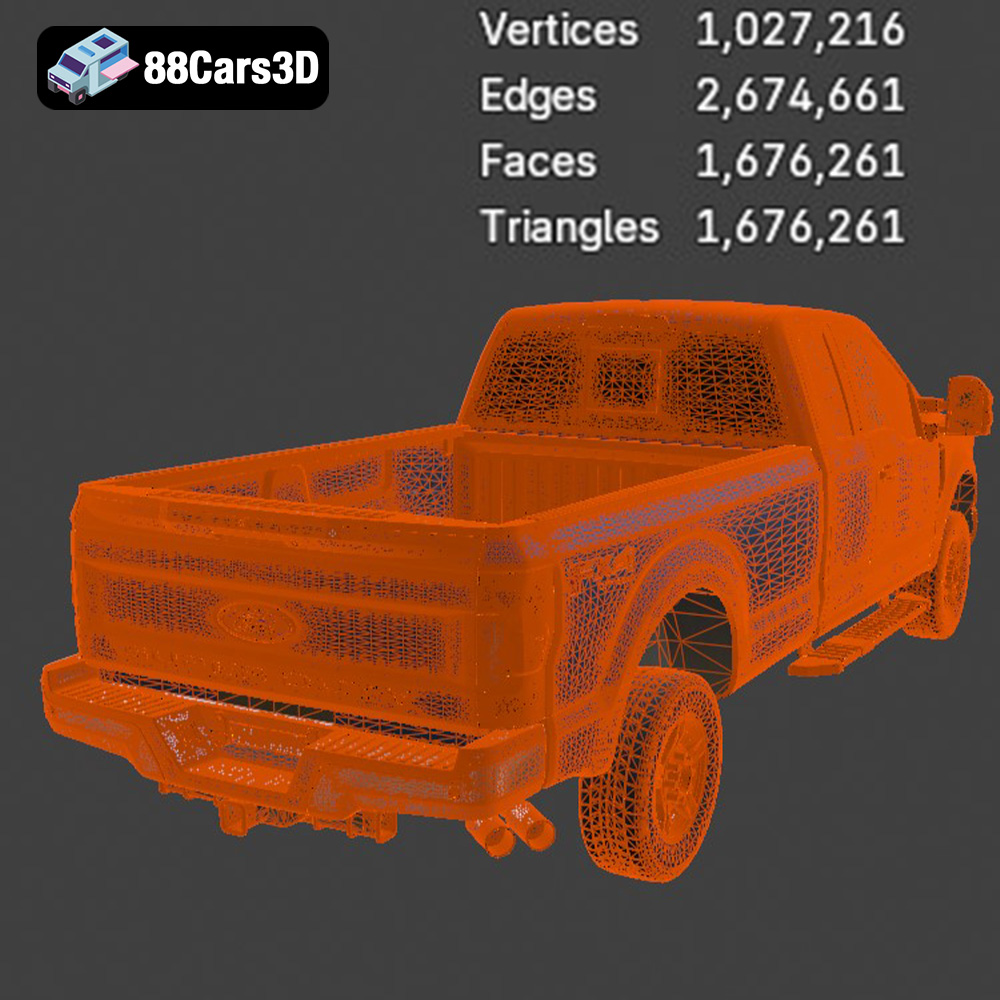
With an impressive 1,676,261 polygons (triangles), 1,027,216 vertices, and 2,674,661 edges, this Ford F-250 model is undeniably a “hero” asset. This high poly count is a deliberate choice, optimized for maximum exterior and interior realism, especially critical for extreme close-up rendering and cinematic automotive visualization. A dense mesh allows for smooth curves, sharp edges, and subtle surface details that would be impossible with lower polygon counts. The “well-organized mesh structure” indicates that the model’s topology is clean, with polygons distributed efficiently to preserve details while minimizing rendering artifacts. This also means that if retopology for real-time applications becomes necessary, the process is smoother and yields better results. Furthermore, adherence to “real-world scale accuracy based on Ford factory dimensions” ensures that the truck will fit seamlessly into any scene without appearing disproportionate, maintaining believability in architectural visualizations or precise simulations.
A static model, however detailed, has limited utility in dynamic environments. This F-250 model addresses this by featuring “separate wheels, steering components, doors, and tailgate for animation.” This means these components are individual objects, correctly pivoted and grouped, ready for animation. “Proper pivot setup for steering, wheel rotation, and tailgate articulation” is a crucial technical detail. Without correctly positioned pivots, animating these elements becomes a complex and time-consuming task of manual adjustment. For professionals, this pre-configured setup saves countless hours, enabling them to quickly integrate the truck into driving sequences, open-door presentations, or cargo loading scenarios. This thoughtfulness in construction elevates the model from a simple visual asset to a functional, animation-ready component of a larger scene or simulation.
The versatility of a high-quality 3D asset like the Ford F-250 Super Duty Super Cab XLT 2015 3D Model lies in its ability to serve a wide array of professional applications, each demanding different technical considerations and creative approaches.
For automotive studios, advertising agencies, and product visualization specialists, this 3D model is a powerful tool. It’s “ideal for rugged outdoor scenes, commercial fleet branding mockups, and automotive design showcases.” Imagine a high-resolution render of the F-250 pulling a heavy load on a construction site, showcasing its utility for a marketing campaign. Or perhaps visualizing a commercial fleet with custom liveries and branding, allowing clients to see their identity on a realistic vehicle before any physical production begins. With its high-poly count and detailed textures (if included, as suggested by the meta description), the model is perfect for generating photorealistic images and cinematic sequences using rendering engines like V-Ray, Corona Renderer, Octane, or Cycles. The ability to manipulate lighting, environments, and camera angles digitally offers immense creative freedom and cost savings compared to traditional photography.
While the model’s 1.67 million polygons make it a “hero” asset for high-end rendering, the product description correctly notes that “it will require manual retopology or decimation to be used efficiently as a drivable vehicle in real-time game engines like Unreal or Unity.” This is a crucial technical consideration for game developers. High-poly models, while visually stunning, can severely impact frame rates in real-time environments. Developers would typically use tools within Blender, 3ds Max, or dedicated retopology software like ZBrush or TopoGun to create a lower-polygon version (often referred to as a “game-res” mesh) while baking the high-poly details onto normal maps and other texture maps. This process creates a visually rich but computationally lean asset. The original high-poly model serves as an excellent base for this workflow, ensuring that even after optimization, the essence and detail of the F-250 are preserved for a high-quality game asset. Furthermore, Level of Detail (LOD) systems would be implemented, where progressively lower-poly versions of the truck are displayed as the player moves further away, optimizing performance without sacrificing visual quality up close.
Beyond the digital realm, the Ford F-250 Super Duty Super Cab XLT 2015 3D Model also serves as an “excellent base for highly detailed, large-scale custom RC truck bodies or diecast hobbyist prints.” The inclusion of the .stl format, along with detailed 3D print settings, opens up a world of physical creation. Recommended scales like 1:24, 1:18, or even 1:10 are perfect for custom RC crawler bodies, allowing enthusiasts to print a highly accurate representation of the F-250 for their remote-controlled vehicles. The suggested layer height (0.08–0.16 mm) and wall thickness (1.5–2.5 mm) are practical guidelines for FDM (Fused Deposition Modeling) printers, ensuring structural integrity for a large truck body. The need for supports for intricate details like tow mirrors, wheel arches, and undercarriage components is standard practice, as is printing the cab and bed separately for optimal results. Post-processing steps like sanding, priming, and painting with authentic factory colors (Oxford White, Blue Jeans Metallic) and silver metalizer for chrome accents are essential to bring the printed model to life, making it a truly unique automotive collectible.
A versatile 3D asset should not be a static, unchangeable object, but rather a flexible foundation upon which artists and designers can build. The Ford F-250 Super Duty Super Cab XLT 2015 3D Model offers significant customization potential, making it a valuable addition to any professional pipeline.
The product description highlights several customization options that empower users to adapt the model to specific project needs. Changing exterior paint colors to match classic 2015 Ford factory options (like Ingot Silver) is a fundamental yet impactful adjustment, allowing the truck to fit various brand identities or scene moods. The ability to “modify wheel and tire setups (swap stock wheels for aggressive aftermarket lift-kit setups)” is particularly appealing for off-road enthusiasts or designers needing to portray a more rugged, customized vehicle. Furthermore, adjusting bed accessories by adding a toolbox, tonneau cover, or fifth-wheel hitch can drastically alter the truck’s functionality and visual narrative, making it suitable for a wider range of commercial or recreational scenes. Even subtle changes like adapting lighting for sunny construction sites versus moody, rain-slicked off-road trails can transform the model’s presence, demonstrating its adaptability for diverse environmental storytelling.
Integrating a pre-made, high-quality asset like this F-250 model into a professional workflow offers significant advantages, primarily in terms of time and cost savings. Modeling a vehicle of this complexity from scratch can take hundreds of hours, diverting valuable resources from other project aspects. By acquiring this meticulously crafted 3D model, studios and freelancers can jump directly into scene assembly, lighting, rendering, or game implementation. The availability of multiple file formats (.blend, .fbx, .obj, .glb, .stl, .ply, .unreal, .max) ensures seamless compatibility with almost any DCC application or game engine, minimizing conversion issues and streamlining the import process. Websites like 88cars3d.com are essential resources for professionals, providing a curated selection of such high-fidelity 3D car models that are ready to integrate, saving time and allowing artists to focus on the creative nuances of their projects rather than the foundational modeling tasks. This synergistic approach allows for faster iteration, higher quality output, and ultimately, more efficient project delivery.
The Ford F-250 Super Duty Super Cab XLT 2015 3D Model is more than just a digital representation of a truck; it’s a testament to the power of high-fidelity 3D assets in modern production pipelines. From its uncompromising topology and accurate recreation of the iconic XLT aesthetic to its animation-ready components and broad file format compatibility, this model is built for professional demands. Whether your goal is to produce stunning automotive rendering for marketing campaigns, create immersive environments for game development (with appropriate optimization), or even bring a physical scale model to life through 3D printing, this F-250 asset provides a robust and versatile foundation.
It exemplifies the kind of detailed and technically sound 3D car models that professionals seek to elevate their projects. By investing in such an asset from a reputable source like 88cars3d.com, you acquire not just a model, but a catalyst for creativity and efficiency, enabling you to focus on the storytelling and artistic direction that truly make your projects shine. The digital workhorse awaits its next assignment, ready to enhance any scene with its unparalleled presence and intricate detail.
The Ford F-250 Super Duty Super Cab XLT 2015 3D Model is a premium, high-detail digital recreation of America’s iconic heavy-duty work truck. Representing the final iteration of the legendary steel-body generation, this 2015 model captures the imposing, muscular stance that makes the F-250 a favorite for towing, off-roading, and commercial fleets. This 3D model accurately represents the XLT trim’s signature dual-bar chrome grille, massive stacked headlights, extended “Super Cab” layout with rear-hinged half doors, and heavy-duty cargo bed. Built with dense, uncompromising topology (over 1.6 million polygons), it provides maximum visual fidelity for extreme close-up rendering, cinematic automotive visualization, commercial fleet mockups, and high-end 3D printing.
$69.99
.automotive
.blend
.fbx
.ford
.obj
.rendering
.stl
.xlt
2015-ford
3d printing
car-3d-model
f-250
heavy-duty
high poly
pickup-truck
super-cab
super-duty