⚡ FLASH SALE: Get 60% OFF All Premium 3D & STL Models! ⚡

In the dynamic world of 3D visualization, automotive rendering, and game development, the right assets can transform a project from ordinary to exceptional. While futuristic concepts and sleek supercars often grab the spotlight, there’s a growing appreciation for the charm and utility of classic, unassuming vehicles. These unsung heroes of daily life offer a unique aesthetic and narrative depth, proving invaluable for creators looking to infuse authenticity and character into their digital environments. It’s within this context that a product like the Suzuki Super Carry 1000 Microvan 3D Model emerges as a standout asset, bridging the gap between historical accuracy and contemporary technical demands.
This particular 3D car model, available on 88cars3d.com, is far more than just a digital replica of an iconic 1980s-90s utilitarian microvan. It represents a meticulously crafted piece of digital artistry engineered for diverse professional applications. From populating retro urban street scenes in architectural visualizations to serving as a quirky yet functional vehicle in an indie game, or even as a tangible scale model through 3D printing, the Suzuki Super Carry 1000 offers unparalleled versatility. Its dense, clean topology, real-world scale accuracy, and attention to period-correct detail make it a prime example of how specialized 3D models can enhance projects across industries.
This article delves into the technical intricacies, practical applications, and strategic advantages of incorporating such high-fidelity 3D assets into various creative pipelines. We will explore how a single, well-developed 3D model like the Suzuki Super Carry 1000 can be leveraged by professionals, from conceptual design to final production, ensuring both visual excellence and technical efficiency.
The utility and versatility of any 3D model are inextricably linked to the file formats it supports. For a comprehensive asset like the Suzuki Super Carry 1000 Microvan 3D Model, a wide array of formats ensures maximum compatibility and workflow flexibility across different software and platforms. Each format serves a specific purpose, optimized for particular stages of development or end-use scenarios. Understanding these distinctions is crucial for anyone working with 3D car models, whether for automotive rendering, game assets, or even 3D printing.
The .blend format is native to Blender, the popular open-source 3D creation suite. When you download a .blend file, you’re getting a fully editable Blender scene. This includes not just the mesh geometry but also materials, textures, lighting, cameras, animation data, and even modifiers or rigging information. For artists primarily working in Blender, this is the most convenient format, offering complete control over every aspect of the model. The Suzuki Super Carry 1000 Microvan in .blend format means artists can dive directly into customizing materials, adjusting lighting setups, or animating its sliding doors and steering components with ease, leveraging Blender’s robust toolset.
.fbx (Filmbox) is a proprietary file format developed by Autodesk, serving as a widely accepted interchange format between 3D applications and game engines. It excels at preserving a broad range of data, including geometry, materials, textures, skeletal animation, and camera information, making it ideal for pipelines involving Unreal Engine, Unity, 3ds Max, Maya, and more. When preparing 3D car models for real-time applications or complex animations, .fbx is often the go-to choice due to its excellent compatibility and ability to maintain hierarchy and animation data. The Suzuki Super Carry’s .fbx version ensures a smooth import into game development environments, ready for optimization and integration.
The .obj (Wavefront OBJ) format is one of the oldest and most universally supported 3D formats. It’s a simple, text-based format primarily used for transferring geometric data (vertices, normals, texture coordinates, and faces) between different 3D software. While it can reference external material files (.mtl) for basic color and texture information, it doesn’t store animation or complex scene data. Its strength lies in its widespread compatibility, making it a reliable choice for cross-software transfers where only the mesh geometry is needed. For architectural visualization or basic rendering tasks, an .obj version of the Suzuki Super Carry 1000 provides a clean mesh that can be easily imported and assigned new materials in any software.
.glb (GL Transmission Format Binary) is the binary version of glTF, a royalty-free specification for the efficient transmission and loading of 3D scenes and models by applications. It’s rapidly becoming the “JPEG of 3D” due to its optimization for web-based, AR (Augmented Reality), and VR (Virtual Reality) experiences. A .glb file packages the model’s geometry, textures, materials, and animations into a single, self-contained file, making it highly efficient for deployment on the web or mobile devices. The Suzuki Super Carry 1000 in .glb format would be perfect for embedding into a website for an interactive 3D viewer or for developing an AR application showcasing the microvan in a real-world setting.
The .stl (Stereolithography) format is the de facto standard for 3D printing. It represents a 3D model as a collection of unconnected triangles (a tessellated surface). It contains no color, texture, or material information, only the raw geometry needed by a 3D printer’s slicer software to generate toolpaths. For hobbyists or professionals looking to physically manifest the Suzuki Super Carry 1000 Microvan, the .stl file is essential. The model’s “3D Printable STL” designation means it has been prepared with manifold geometry, ready for slicing and printing at recommended scales like 1:32 or 1:24.
.ply (Polygon File Format or Stanford Triangle Format) is a versatile format for storing 3D data, particularly useful for scan data and scientific applications. It supports various properties like color, transparency, surface normals, and range data, and can store both polygonal meshes and point clouds. While less common for general asset distribution than .fbx or .obj, its precision and ability to handle complex data make it suitable for CAD environments, reverse engineering, or detailed mesh analysis. For intricate projects requiring robust mesh integrity, the .ply version of the Suzuki Super Carry 1000 can be a valuable asset.
The .unreal format, or rather, assets specifically prepared for Unreal Engine, implies a structured asset package ready for direct import and use within the engine. While not a standalone file format in the same way as .fbx or .obj, it signifies a model optimized and configured to seamlessly integrate into Unreal Engine projects. This often means proper scale, correct material setup (using Unreal’s PBR workflow), collision meshes, and sometimes even pre-configured blueprints for interactive elements. The Suzuki Super Carry 1000 with an “.unreal” designation suggests it comes pre-optimized for Unreal’s real-time rendering capabilities, saving developers significant setup time.
Finally, the .max format is the native scene file for Autodesk 3ds Max, a powerful 3D modeling, animation, rendering, and compositing software. Similar to .blend, a .max file contains the complete scene, including geometry, materials, textures, lighting, cameras, animation, and any scene-specific settings. For professionals working in 3ds Max, this format offers the highest level of editability and allows access to the original scene setup, modifiers, and intricate material graphs. The Suzuki Super Carry 1000 in .max format provides 3ds Max users with the foundation for advanced automotive rendering projects, allowing them to fully customize and animate the microvan within their preferred environment.
By offering such a comprehensive range of file formats, 88cars3d.com ensures that the Suzuki Super Carry 1000 Microvan 3D Model is not just a high-quality asset but also one that is immediately usable and adaptable across virtually any professional 3D workflow.
The art of creating compelling 3D car models lies in the meticulous balance between artistic interpretation and technical precision. For an iconic vehicle like the Suzuki Super Carry 1000 Microvan, this means honoring its distinctive 1980s/1990s aesthetic while ensuring every curve and component is structurally sound and render-ready. The Suzuki Super Carry 1000, available through 88cars3d.com, is an exemplary demonstration of this principle, faithfully recreating a piece of automotive history for modern digital applications.
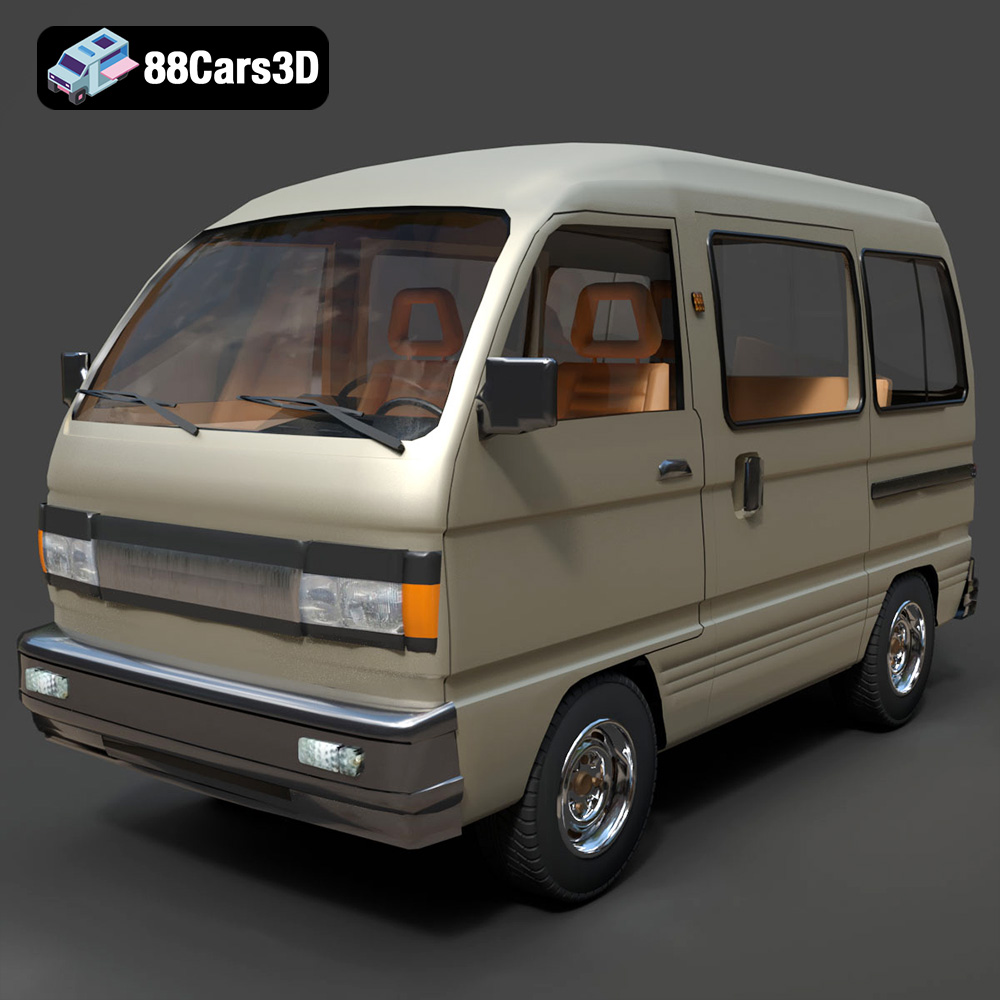
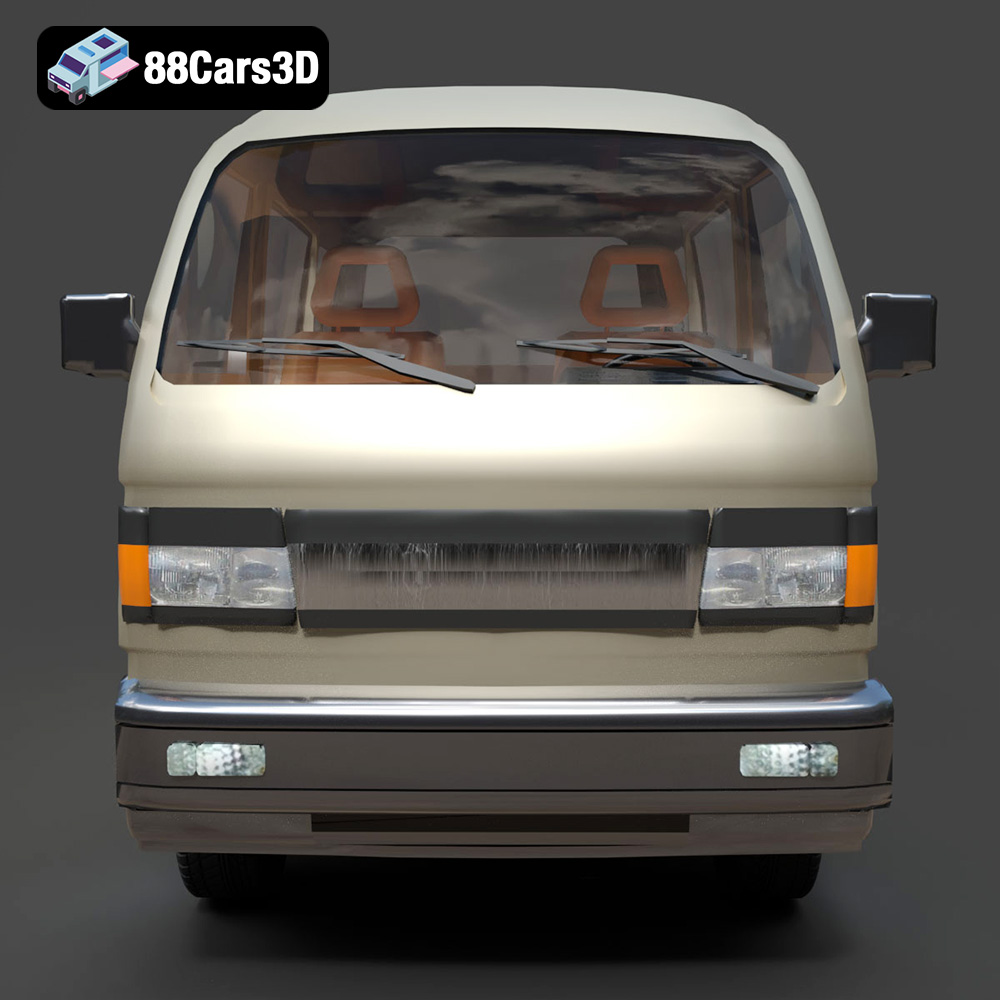
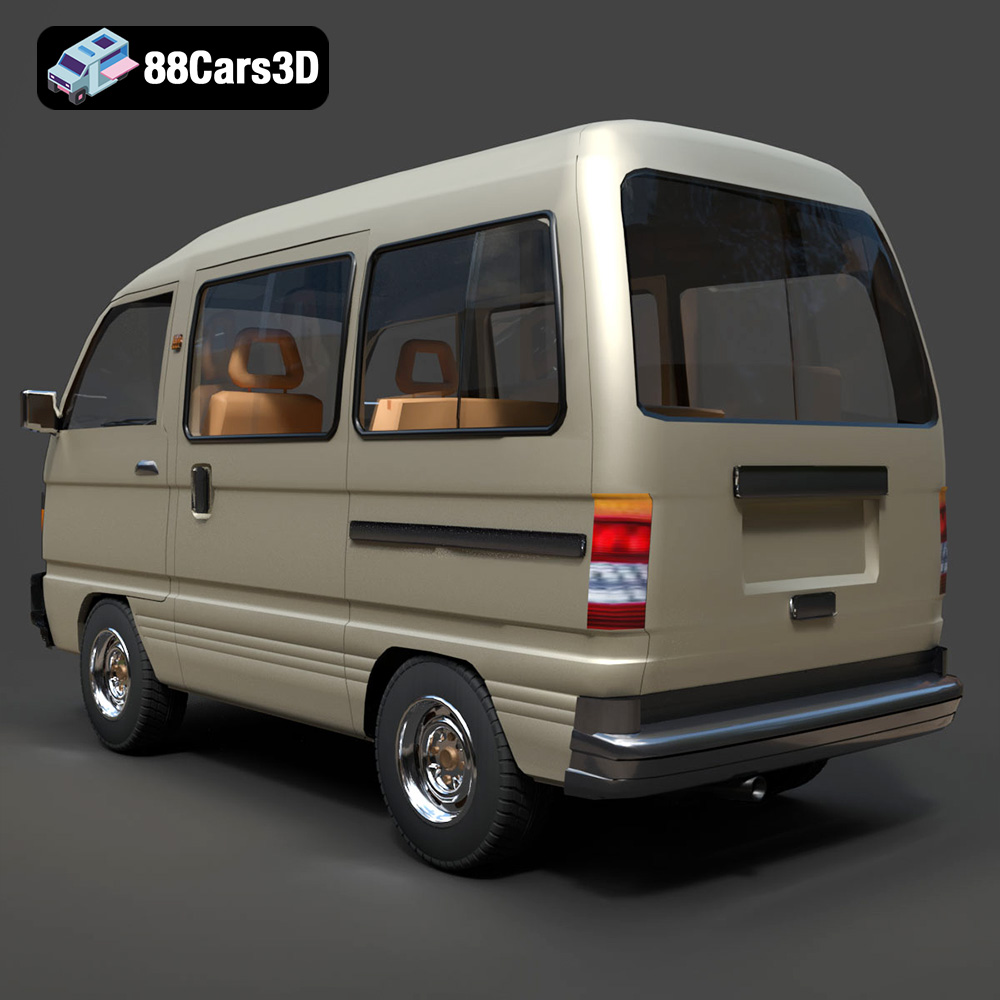
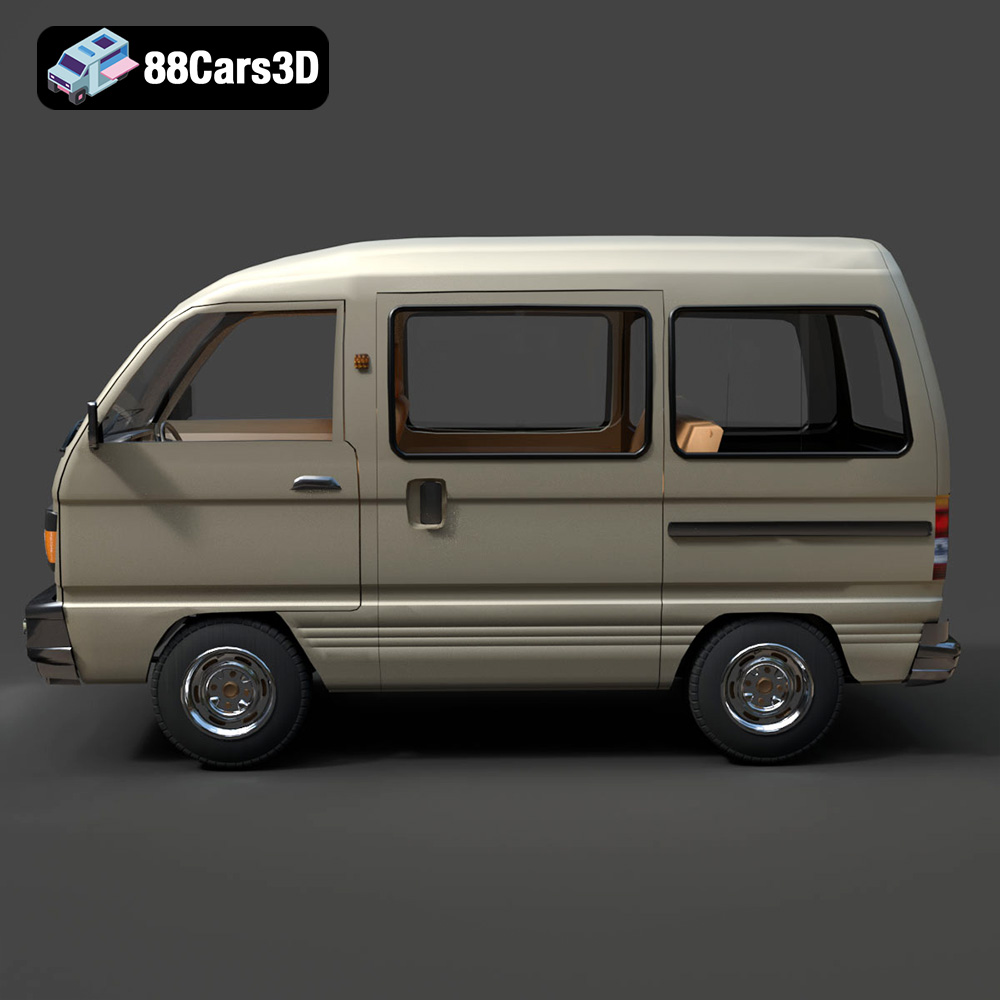
The product description highlights the model’s accurate representation of the Super Carry’s iconic boxy silhouette, flat front fascia, and cabover design. These details are crucial for any period-specific visualization or game. The design ethos of the original vehicle – its incredible space efficiency and rugged simplicity – is inherently captured in the 3D model’s geometry. From the detailed rectangular headlight housings and period-correct taillights to the utilitarian 12-inch steel wheel design, every exterior element contributes to an authentic retro vibe. Such fidelity is paramount for projects aiming for historical accuracy, whether for documentary-style renders, indie games set in the late 20th century, or even nostalgic advertising campaigns.
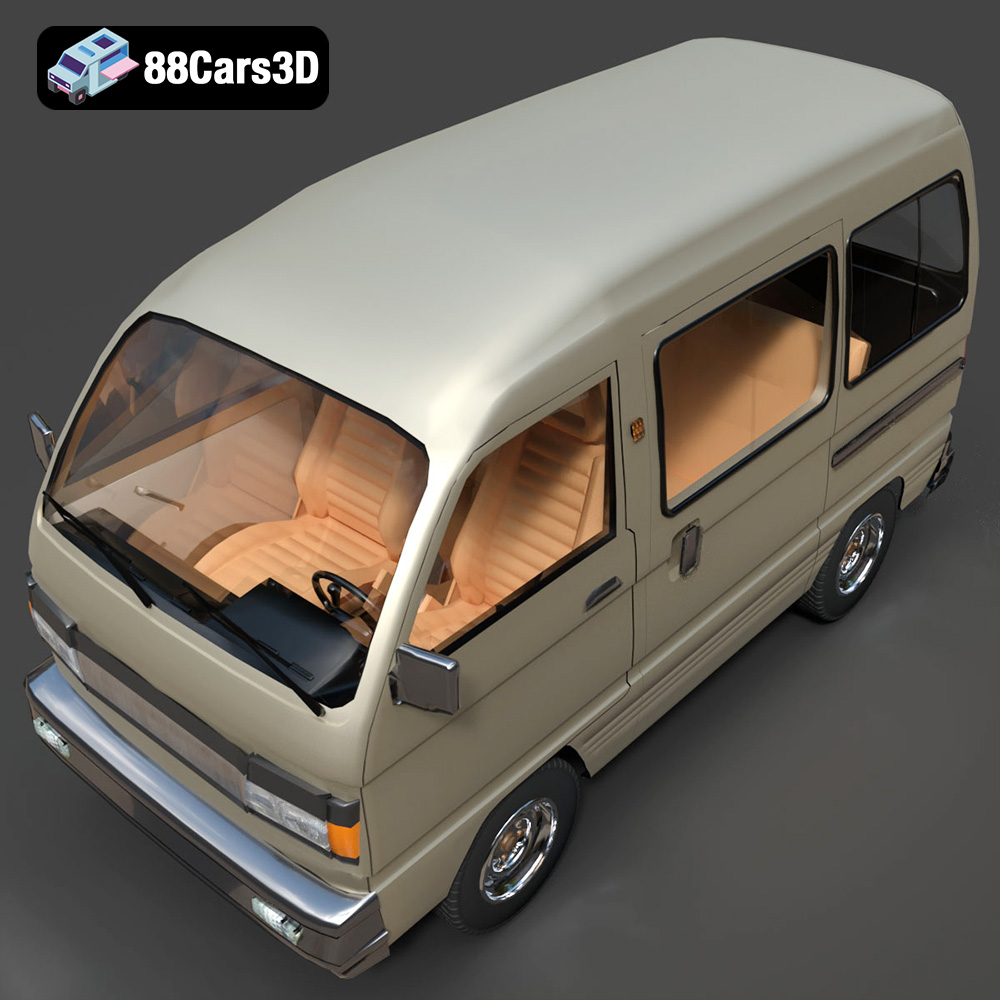
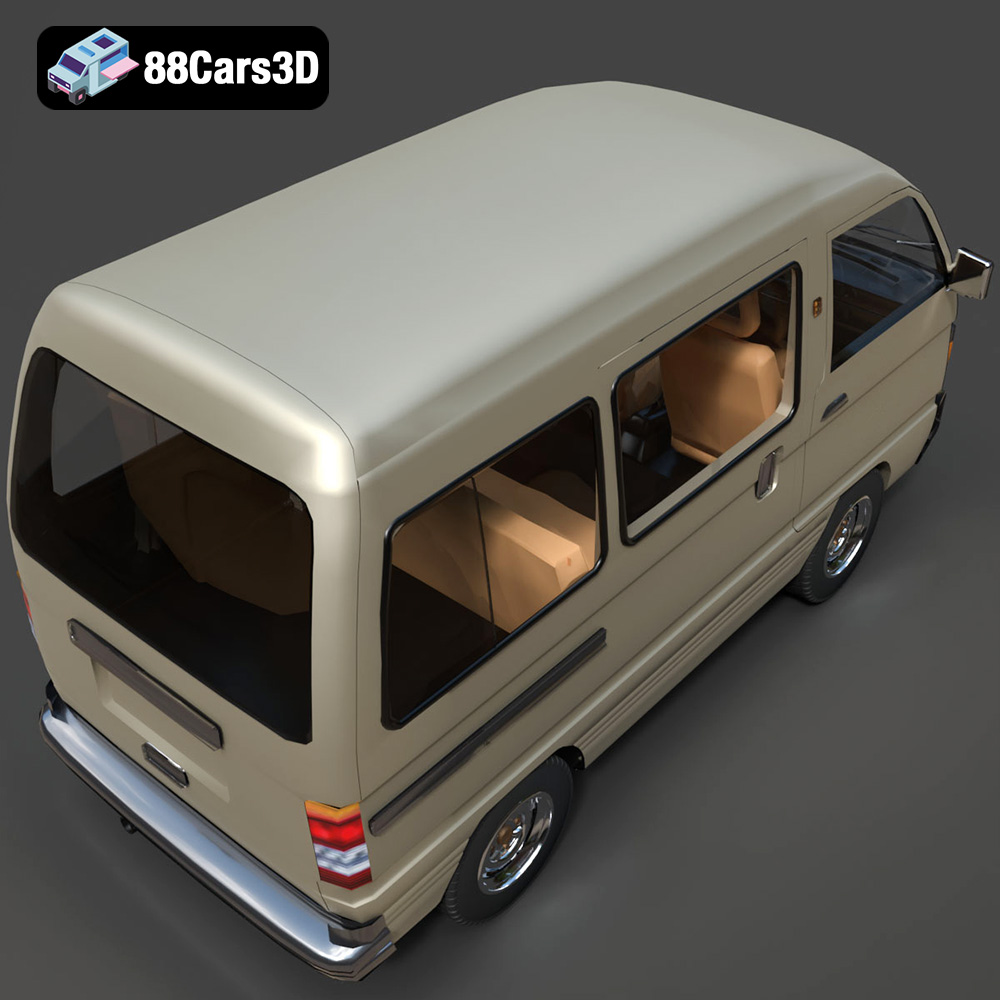
Beyond its charming exterior, the Suzuki Super Carry 1000 Microvan 3D Model boasts a well-realized interior that reflects its functional purpose. The utilitarian front cabin, with seats authentically mounted over the front axle, and the spacious, flat-folding rear utility cargo area, provide a realistic foundation for various scene types. Details like the retro, minimalist analog dashboard, simple two-spoke steering wheel, and basic cloth/vinyl upholstery representation with realistic seam lines showcase the dedication to capturing the full essence of the vehicle. This level of interior detail, with optimized geometry for close-up rendering, is invaluable for projects that require camera passes through the cabin or interactive interior experiences in AR/VR.
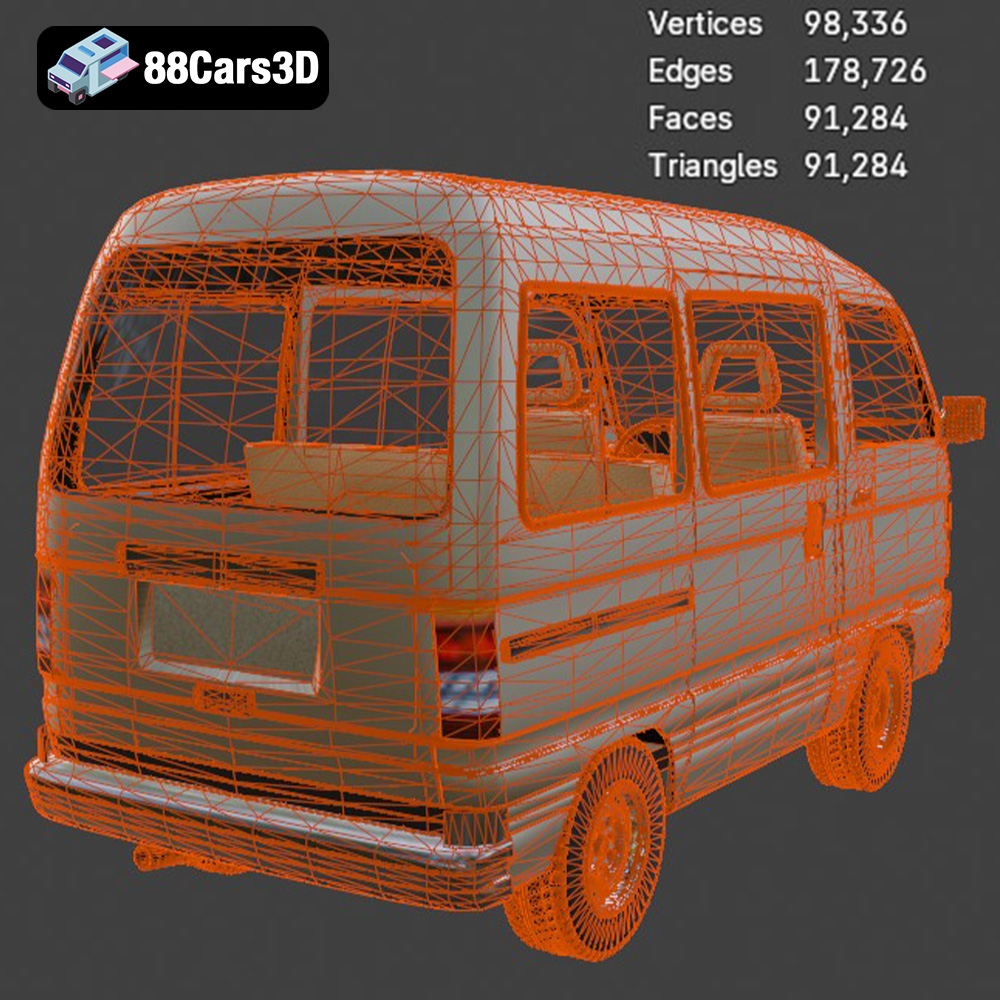
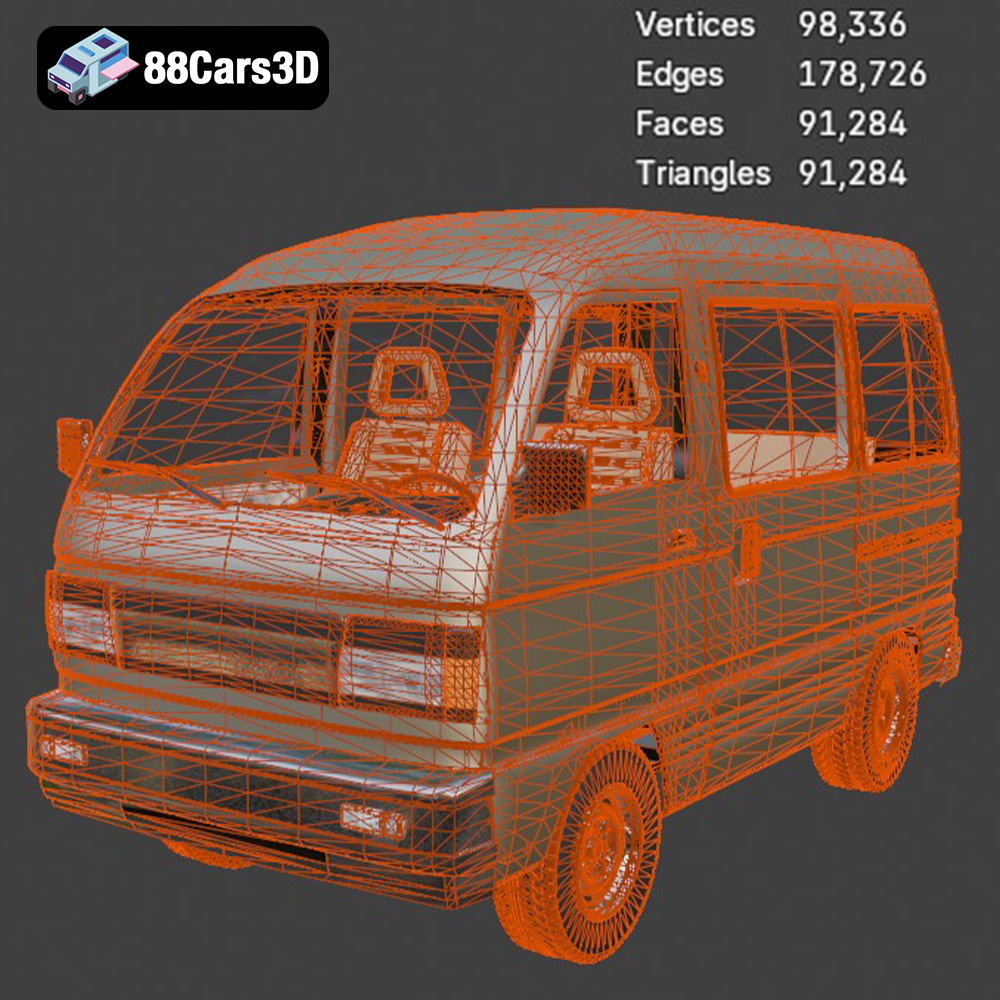
Technical excellence underpins the visual fidelity. The model is built with “dense, clean topology,” a critical factor for professional 3D car models. Clean topology ensures smooth deformations during animation, predictable subdivision for even higher detail if needed, and efficient UV unwrapping. Paired with real-world scale accuracy, this makes the Suzuki Super Carry 1000 immediately usable in any scene without scaling guesswork, integrating seamlessly with other physically accurate assets. The proper pivot setup for steering, wheel rotation, and sliding door mechanisms further enhances its functionality, enabling easy animation and dynamic scene creation.
While the visual appeal of a 3D model is often the first impression, its true value in professional pipelines is determined by its technical specifications and how effortlessly it integrates into existing workflows. The Suzuki Super Carry 1000 Microvan 3D Model shines in this regard, offering a robust foundation for a multitude of advanced uses, from automotive rendering to real-time simulations.
The detailed technical specifications provided for the Suzuki Super Carry 1000 are quite impressive:
These metrics indicate a very high-polygon model. Such a dense mesh structure is specifically designed for maximum realism, making it ideal for close-up renders, cinematic sequences, and detailed still images where visual fidelity is paramount. While such polygon counts might require optimization for highly demanding real-time game engines or mobile AR applications, the underlying clean topology makes this process manageable. For high-resolution historical and commercial visualization, this model provides an exceptional level of detail that would be arduous to achieve from scratch.
The inclusion of multiple file formats—.blend, .fbx, .obj, .glb, .stl, .ply, .unreal, .max—is a testament to the model’s compatibility with major 3D software platforms and engines.
For 3ds Max users, the .max file provides native access to the original scene. This means artists can leverage 3ds Max’s powerful modeling tools for further modifications, utilize V-Ray or Corona Renderer for photorealistic automotive rendering, and integrate the model into complex scenes with precise control over lighting and materials. The pre-set pivots for animation—doors, wheels, steering—significantly reduce setup time for dynamic sequences.
Blender artists benefit from the native .blend file, offering complete control over the model. They can instantly begin rendering with Cycles or Eevee, apply custom shader networks, or integrate it into larger environment scenes. The clean geometry is perfect for adding further procedural details or adapting the model for stylized renders while maintaining its core accuracy.
The .unreal and .fbx formats are crucial for game developers and real-time visualization specialists using Unreal Engine. The high-poly count means that for optimal performance in games, some level of LOD (Level of Detail) generation might be necessary. However, for specific cinematics within Unreal, or for experiences where performance budget is generous (e.g., high-end PC games, architectural walk-throughs), the model’s inherent detail can be directly leveraged. The provided asset is engine-ready, signifying that it’s prepared with correct scale and potentially PBR (Physically Based Rendering) materials, streamlining the import and material setup process.
The technical advantages extend beyond raw poly count. Features like “real-world scale accuracy” eliminate conversion headaches, while “proper pivot setup for steering, wheel rotation, and sliding door mechanisms” are invaluable for animators. These seemingly small details save hours of rigging and setup time, allowing artists to focus on creative execution rather than technical troubleshooting. For studios needing to quickly populate a scene or animate a fleet of vehicles, a well-prepared asset like this becomes a significant time-saver, reducing project timelines and increasing efficiency.
The Suzuki Super Carry 1000 Microvan 3D Model, with its high fidelity and versatile format support, is an exceptionally adaptable asset for a wide range of professional applications. Its unique character allows it to stand out, whether in a photorealistic visualization or an interactive real-time experience.
For architectural visualization (ArchViz) and commercial rendering, this microvan is a dream asset. Imagine populating a bustling retro urban street scene, a common requirement for depicting realistic cityscapes from a specific era. The Super Carry 1000 immediately grounds the scene in a sense of time and place.
Game developers are constantly searching for unique assets that can enhance immersion without breaking the bank. The Suzuki Super Carry 1000 fits perfectly into several gaming genres:
Augmented and Virtual Reality demand highly optimized yet visually rich 3D models. The Suzuki Super Carry 1000 offers compelling possibilities:
Beyond entertainment, the model’s accuracy makes it valuable for practical simulations:
The convergence of digital 3D modeling and physical manufacturing has opened up exciting new avenues for creators. The Suzuki Super Carry 1000 Microvan 3D Model is not just confined to screens; it’s also designed to be a tangible collectible through 3D printing, catering to hobbyists, designers, and automotive enthusiasts alike.
The inclusion of the .stl format is critical for 3D printing. This format strips away textures, materials, and animations, leaving only the raw triangular mesh geometry required by 3D slicer software. The Suzuki Super Carry model’s “3D Printable STL” designation implies that the geometry has been checked for common printing issues like non-manifold edges or inverted normals, ensuring a cleaner print. This makes it an ideal choice for “display-scale retro diecast hobbyists” who want a unique addition to their collection that isn’t available off the shelf.
To achieve the best physical representation of the Suzuki Super Carry, adhering to the recommended 3D print settings is crucial:
Once printed, the physical model benefits greatly from post-processing to achieve a refined, “diecast” quality:
The ability to transition from a digital asset on 88cars3d.com to a physical model underscores the versatility and long-term value of the Suzuki Super Carry 1000 Microvan 3D Model.
The true power of a professionally crafted 3D model like the Suzuki Super Carry 1000 Microvan lies not just in its ready-to-use quality, but also in the extensive opportunities it provides for customization and integration into diverse scene contexts. Artists and developers are not just purchasing a static object; they are acquiring a flexible foundation for boundless creative expression.
The product description highlights several customization options that empower users to adapt the Suzuki Super Carry to specific project needs:
Beyond simple customization, the Suzuki Super Carry 1000 Microvan 3D Model is built to be a seamless component of larger, more complex 3D environments.
The Suzuki Super Carry 1000 Microvan 3D Model offers a professional-grade asset that serves as a powerful tool, not just a static prop. Its inherent design and technical preparation foster an environment where creative ideas can flourish, and projects can achieve a higher level of detail and authenticity.
In the bustling landscape of 3D content creation, the difference between a good project and a truly outstanding one often lies in the quality and versatility of its core assets. The Suzuki Super Carry 1000 Microvan 3D Model stands as a prime example of such an asset, meticulously crafted to meet the rigorous demands of professional 3D artists, game developers, architects, and product designers. From its authentic 1980s/1990s retro design to its high-poly, clean topology, and real-world scale accuracy, every aspect of this model has been engineered for excellence.
We’ve explored how its comprehensive support for various file formats—from the native .blend and .max to the universal .fbx, web-optimized .glb, and 3D printing-ready .stl—ensures seamless integration into virtually any workflow. Whether you’re aiming for photorealistic automotive rendering in 3ds Max or Blender, building immersive game assets for Unreal Engine, creating interactive AR/VR experiences, or even producing a tangible scale model through 3D printing, the Suzuki Super Carry 1000 is ready for the task. Its detailed interior, animatable components, and straightforward customization options further empower creators to tell rich, nuanced stories and build compelling digital worlds.
This versatile microvan is more than just a nostalgic nod; it’s a workhorse for modern digital production, capable of injecting character, historical accuracy, and practical utility into your projects. For anyone seeking to elevate their 3D car models library with an asset that combines unique charm with uncompromising technical quality, the Suzuki Super Carry 1000 Microvan 3D Model from 88cars3d.com is an invaluable investment. Its presence can transform a static scene into a vibrant tableau, a simple game into a culturally rich experience, or a digital concept into a tangible reality.
The Suzuki Super Carry 1000 Microvan 3D Model is a high-detail digital recreation of the legendary compact utilitarian workhorse from the 1980s and 1990s. Known for its incredible space efficiency and rugged simplicity, the Super Carry (often associated with the SK410 generation) combines a classic cabover design with highly practical proportions, making it a global icon of urban logistics and everyday transport. This 3D model accurately represents the iconic boxy silhouette, flat front fascia, classic headlight housings, dual sliding side doors, rear liftgate, and tiny but functional 12-inch steel wheels. Built with dense, clean topology for premium visual fidelity and real-world scale accuracy, it is ideal for close-up rendering, retro urban environment visualization, animation, indie game development, and AR/VR classic vehicle showcases.
$39.99
.automotive
.blend
.cabover
.fbx
.obj
.rendering
.stl
.suzuki
1000cc
3d printing
car-3d-model
game asset
high poly
kei-van
microvan
retro-van
super-carry
utility-vehicle