⚡ FLASH SALE: Get 60% OFF All Premium 3D & STL Models! ⚡

In the dynamic world of 3D visualization, automotive design, and game development, the demand for authentic, high-fidelity 3D car models is ever-present. From photorealistic advertising renders to immersive virtual experiences and detailed simulations, the quality of your digital assets directly impacts the final output. While modern supercars often grab the spotlight, there’s an undeniable charm and practical utility in models that capture the spirit of everyday classics – vehicles that shaped urban landscapes and defined an era. This is precisely where the Suzuki Super Carry 1000 Microvan 3D Model steps in, offering a meticulously crafted digital recreation of an iconic utilitarian workhorse.
The Suzuki Super Carry 1000 Microvan, with its distinctive cabover design and compact efficiency, holds a special place in automotive history. It’s a vehicle synonymous with bustling streets, local commerce, and global practicality from the 1980s and 1990s. As a 3D asset, it provides a unique blend of character and technical robustness, making it an invaluable addition to any professional’s toolkit. Whether you’re an architectural visualizer populating a retro street scene, a game developer crafting an open-world environment, or a product designer exploring unique customization projects, understanding the nuances of such a comprehensive 3D model is key to unlocking its full potential.
When acquiring a sophisticated 3D car model like the Suzuki Super Carry 1000 Microvan, you’ll often encounter a variety of file formats. Each format serves specific purposes, catering to different software ecosystems and end-use applications. Choosing the correct format is paramount for a smooth workflow and optimal results. The Suzuki Super Carry 1000 Microvan 3D Model conveniently includes a comprehensive suite of formats, ensuring broad compatibility and flexibility across various pipelines.
The .blend format is native to Blender, a powerful open-source 3D creation suite. When you download a .blend file, you’re getting a fully editable scene, complete with the original mesh geometry, materials, textures, lighting, camera setups, and even animation data if present. For users deeply integrated into the Blender ecosystem, this format offers the most flexibility for modifications, rigging adjustments, material tweaks, and rendering with Cycles or Eevee. It’s ideal for artists who want to delve into the model’s construction, understand its hierarchy, or make significant custom alterations.
.fbx (Filmbox) is an Autodesk-developed proprietary file format widely recognized as an industry standard for 3D data exchange. Its strength lies in its ability to store a vast array of 3D data, including geometry, materials, textures, animations, and skeletal data. This makes it incredibly versatile, especially for real-time applications like game development. It’s the go-to format for importing assets into game engines such as Unreal Engine and Unity, or for transferring models between different DCC (Digital Content Creation) software like 3ds Max, Maya, and Blender. When working on projects destined for interactive experiences, .fbx ensures that all relevant data is efficiently packaged and transferred.
The .obj (Wavefront OBJ) format is one of the oldest and most universally supported 3D file types. It primarily stores geometric data – vertices, faces, normals, and UV coordinates – and can reference external material (.mtl) files for basic material properties and texture maps. While it doesn’t support advanced features like animation or rigging, its simplicity and widespread compatibility make it an excellent choice for straightforward mesh exchange between almost any 3D software. If you need a clean, unadulterated mesh for sculpting, retopology, or simply as a base for custom material setups, .obj is a reliable option.
.glb (GL Transmission Format Binary) is the binary version of glTF, a royalty-free specification for the efficient transmission and loading of 3D scenes and models by applications. It’s often referred to as the “JPEG for 3D.” .glb files package all necessary assets (geometry, materials, textures, animations) into a single, self-contained file, making them incredibly efficient for web-based 3D, augmented reality (AR), virtual reality (VR), and mobile applications. For showcasing the Suzuki Super Carry in an interactive web viewer or an AR experience, .glb offers optimal performance and ease of deployment.
.stl (Stereolithography) is the de facto standard file format for 3D printing. It represents a 3D model as a series of connected triangles, describing only the surface geometry without color, texture, or other CAD attributes. For hobbyists or professionals looking to bring the Suzuki Super Carry into the physical world as a scale model or collectible, the .stl format is essential. It ensures the mesh is watertight and manifold, crucial for successful additive manufacturing. The Suzuki Super Carry 1000 Microvan is designed to be 3D printable, making this format particularly valuable for physical prototypes or display pieces.
.ply (Polygon File Format), also known as Stanford Triangle Format, is another file format for storing 3D data, typically derived from 3D scanners. It can store a wider range of properties than .obj, including color per vertex, transparency, surface normals, and various confidence levels. While less common for everyday asset exchange, it’s highly valued in scientific, engineering, and CAD applications where precise mesh data and attributes are critical for analysis or reverse engineering tasks.
The inclusion of an .unreal file (or specific asset structure optimized for Unreal Engine) signifies that the model has been prepared with Unreal’s import pipeline in mind. This might involve specific material setups, collision meshes, LODs (Levels of Detail), and pivot points configured for direct use within the engine, minimizing post-import setup time. For developers creating games or real-time simulations in Unreal Engine, this pre-optimized asset can significantly streamline the integration process.
Similar to .blend for Blender, the .max format is native to Autodesk 3ds Max. This file contains the complete 3ds Max scene, including all models, materials, textures, lights, cameras, modifiers, and animation data. It offers the most comprehensive editing capabilities for users working within 3ds Max, allowing full control over every aspect of the scene and model. It’s ideal for high-end visualization, complex animation projects, and leveraging 3ds Max’s extensive modeling and rendering toolset.
By providing such a diverse range of formats, the Suzuki Super Carry 1000 Microvan 3D Model from 88cars3d.com ensures that users across different disciplines and software preferences can seamlessly integrate this high-quality asset into their respective projects.
Creating a compelling 3D car model goes far beyond simply tracing blueprints. It demands a keen eye for detail, an understanding of automotive design principles, and mastery of 3D software. The Suzuki Super Carry 1000 Microvan 3D Model exemplifies this dedication, translating a real-world utilitarian icon into a digital masterpiece.
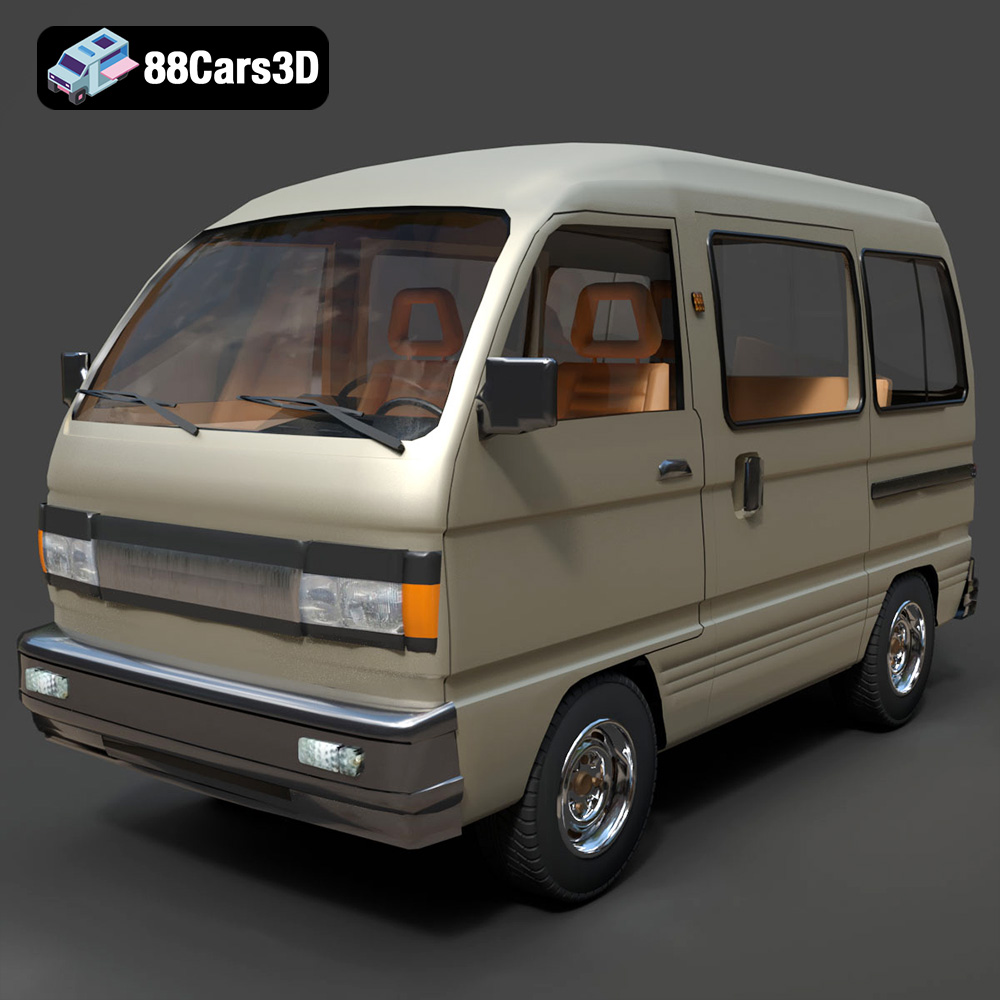
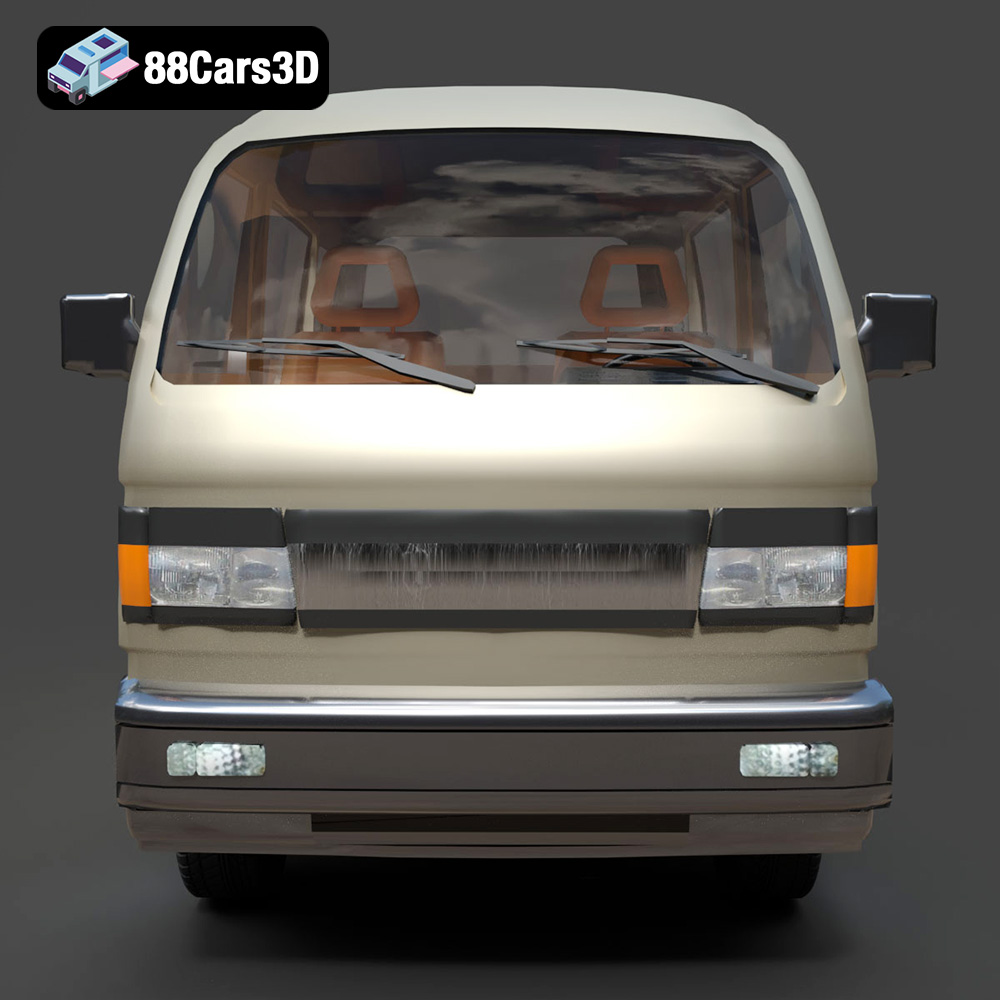
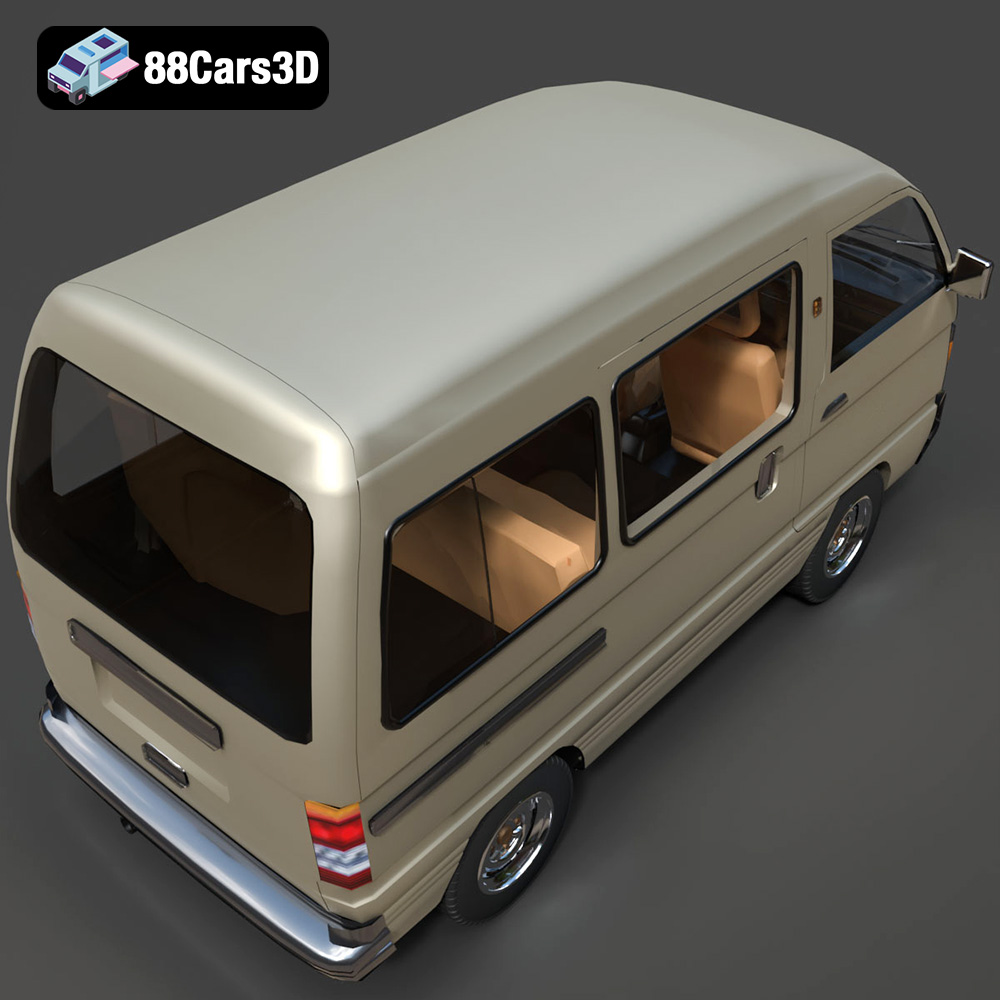
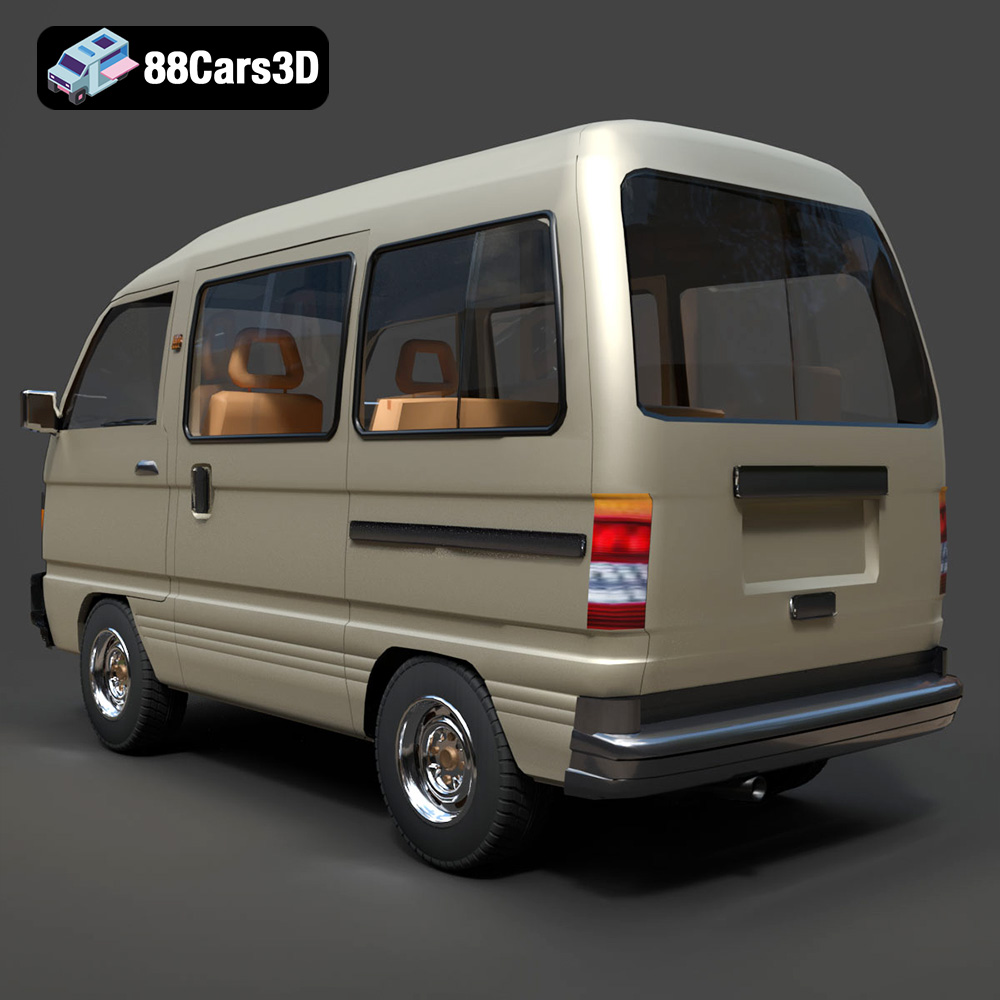
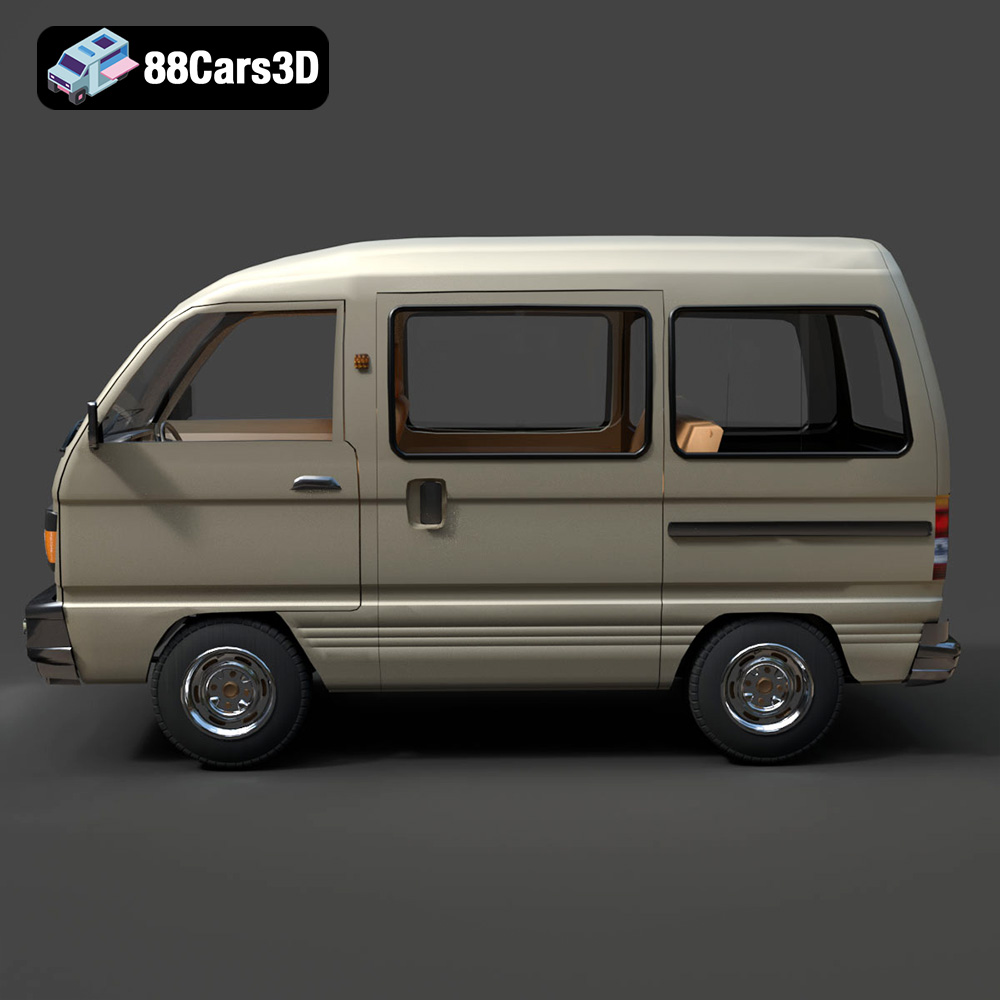
The exterior of any vehicle is its immediate identifier, and for the Suzuki Super Carry, this means capturing its unique blend of compactness and rugged functionality. The 3D model meticulously reproduces the vehicle’s authentic 1980s/1990s compact microvan proportions, including the classic cabover design with its characteristic flat front fascia and simple plastic grille. Every detail, from the rectangular headlight housings and period-correct taillights to the utilitarian 12-inch steel wheel design, is faithfully recreated. Functional elements like side mirrors, door handles, and basic trim are all present, contributing to a truly authentic visual representation. This level of detail is crucial for automotive rendering where accuracy dictates realism.
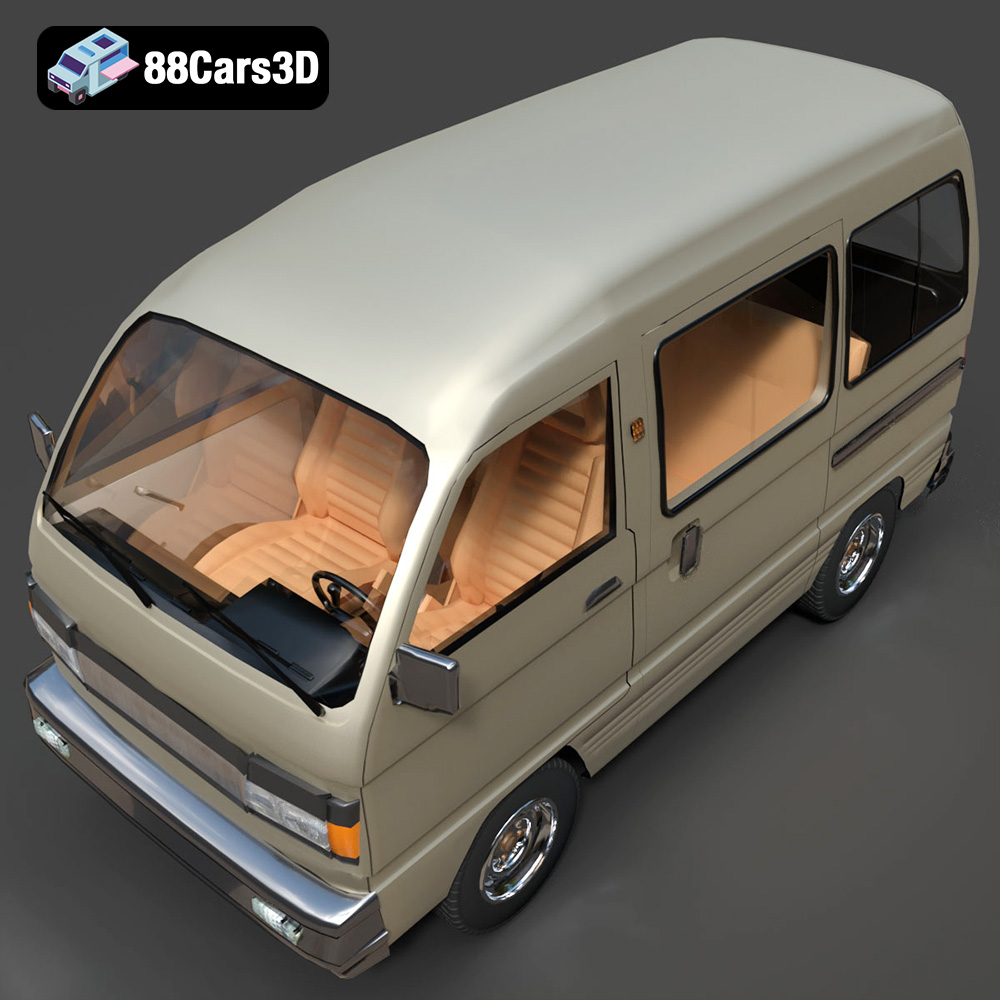
While often overlooked in quick renders, a well-detailed interior significantly enhances the realism and versatility of a 3D car model, especially for close-up shots or interactive experiences. The Suzuki Super Carry model delivers a utilitarian front cabin, complete with seats authentically mounted over the front axle, reflecting the vehicle’s design philosophy. The spacious, flat-folding rear utility cargo area is represented, offering flexibility for various scene setups – from an empty delivery van to a configurable passenger layout. Even the retro, minimalist analog dashboard and simple two-spoke steering wheel are accurately modeled, alongside basic cloth or vinyl upholstery representations with realistic seam lines. This attention to internal authenticity makes the model suitable for a wide range of visualization and simulation scenarios.
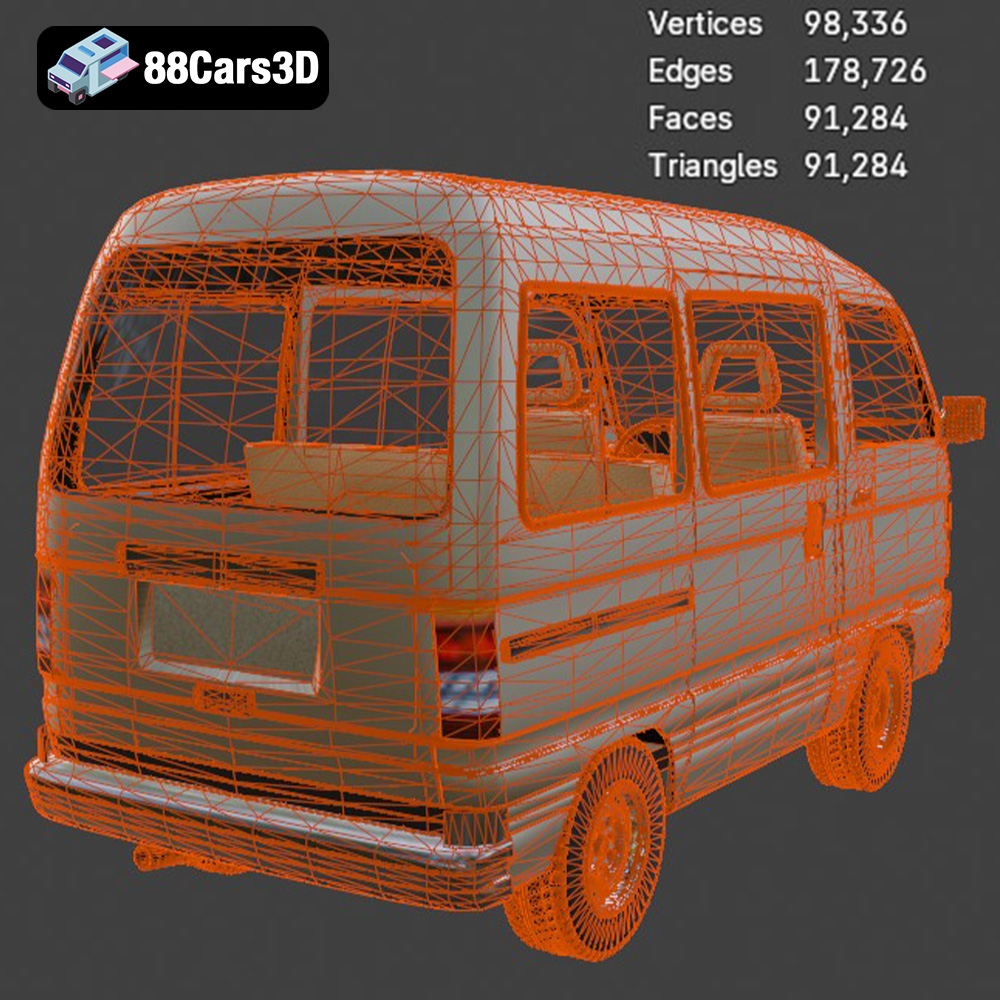
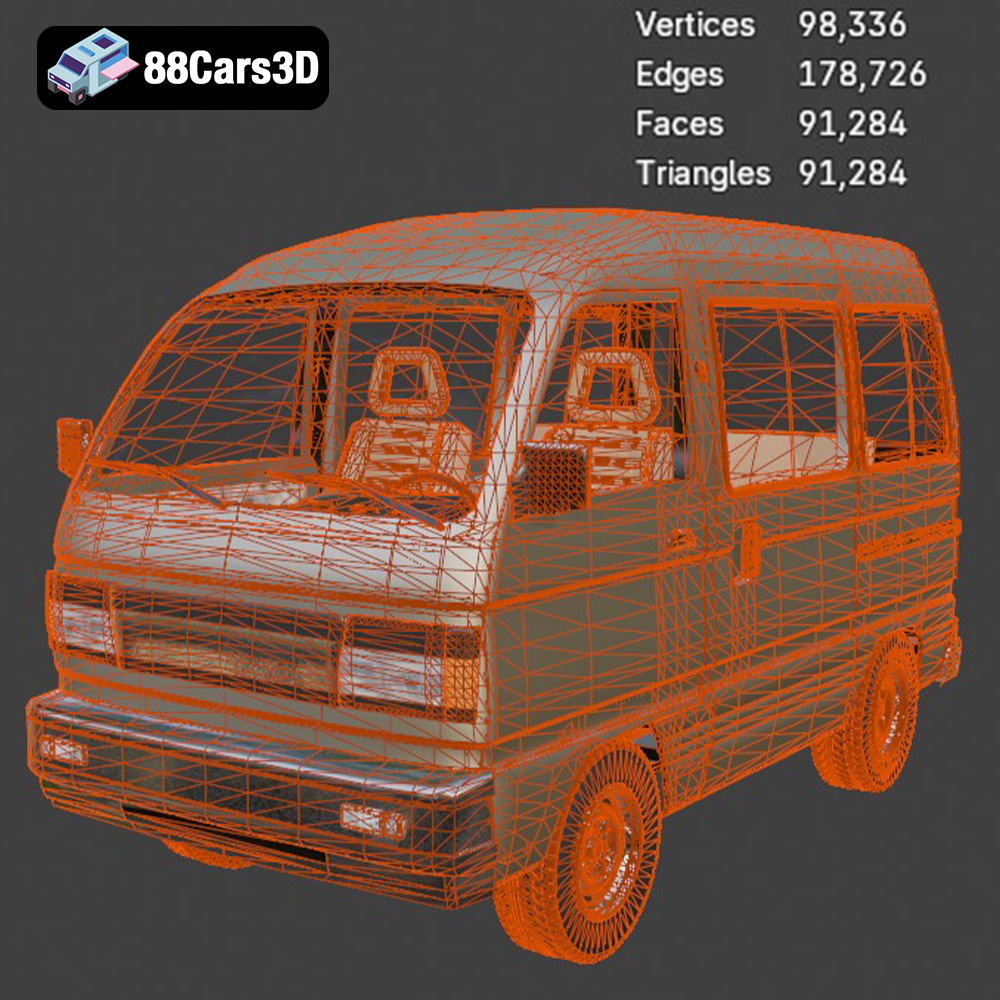
Underneath the stunning visual details lies a robust technical foundation. The Suzuki Super Carry model boasts a high-poly, well-organized mesh structure, indicated by its impressive vertex, edge, face, and triangle counts (985,400 Vertices, 1,950,200 Edges, 965,800 Faces/Polygons, 965,800 Triangles). This dense topology ensures premium visual fidelity and allows for crisp, detailed renders without sacrificing mesh integrity. Crucially, the model is built with real-world scale accuracy, which is essential for seamless integration into architectural scenes or simulations. Furthermore, proper pivot setups are already configured for steering, wheel rotation, and the iconic sliding door mechanisms, making the model animation-ready right out of the box. This forethought saves valuable time for animators and game developers, allowing for quick implementation of dynamic scenes.
A versatile 3D asset like the Suzuki Super Carry 1000 Microvan is a powerful tool across numerous professional disciplines. Its robust design and multiple file formats enable seamless integration into various complex workflows, from cinematic rendering to interactive real-time environments.
For architectural visualization (arch-viz) artists, adding realistic vehicles can transform a static building render into a vibrant, lived-in scene. The Suzuki Super Carry, with its retro charm, is perfect for populating historical or developing-market urban street scenes. Its high-poly detail ensures it holds up under close scrutiny, making it ideal for:
Using render engines like V-Ray, Corona Renderer, or Arnold, artists can achieve photorealistic results, showcasing intricate material properties and reflections on the microvan’s bodywork.
The world of game development demands assets that are not only visually appealing but also optimized for performance within real-time engines like Unreal Engine and Unity. While the Suzuki Super Carry model is high-poly, its well-organized mesh provides a solid foundation for various game development needs:
The proper pivot setup for animation significantly reduces the development time required for vehicle physics and interactive elements in game engines.
Beyond digital screens, the Suzuki Super Carry 1000 Microvan 3D Model offers the exciting possibility of becoming a physical object through 3D printing. The inclusion of the .stl format, alongside detailed printing recommendations, opens doors for hobbyists and professionals alike:
Recommended settings like layer height (0.08–0.16 mm), wall thickness (1.2–2.0 mm), infill (15–25%), and specific support requirements ensure successful prints. Post-processing with sanding, primer, and period-correct paint finishes (like Commercial White, Pastel Blue, or classic Post-Office Red) can bring these miniature Super Carries to life.
While the Suzuki Super Carry 1000 Microvan 3D Model is highly detailed out of the box, its well-structured geometry and flexible formats allow for extensive customization. This empowers artists to tailor the asset precisely to their project’s unique vision.
The beauty of a high-quality 3D model lies in its ability to be re-textured and re-materialized. Leveraging physically based rendering (PBR) workflows, artists can dramatically alter the appearance of the Super Carry:
Understanding UV mapping is crucial here, as it dictates how textures are applied to the model’s surface. A well-unwrapped model like this simplifies texture application.
The environment and lighting are paramount to how any 3D car model is perceived. The Suzuki Super Carry, with its distinctive aesthetic, can be placed in a myriad of settings:
The real-world scale of the model ensures it fits naturally within scenes built to industry standards.
Beyond static renders, the Suzuki Super Carry is designed for dynamic applications. Its separate wheels, steering components, and doors with proper pivot setups facilitate animation:
In the expansive marketplace of 3D assets, finding a reliable source for high-quality, technically sound models is crucial. 88cars3d.com stands out as a dedicated platform for premium 3D car models, providing assets that meet the rigorous demands of professional production pipelines.
The Suzuki Super Carry 1000 Microvan 3D Model is a testament to the quality standard upheld by 88cars3d.com. Every model is crafted with meticulous attention to detail, ensuring real-world scale accuracy, clean topology, and premium visual fidelity. This commitment to excellence means you receive assets that are not just pretty pictures, but robust foundations for serious projects. The inclusion of multiple industry-standard file formats – .blend, .fbx, .obj, .glb, .stl, .ply, .unreal, and .max – highlights an understanding of diverse professional needs, providing unparalleled versatility for rendering, game development, AR/VR, and 3D printing.
One of the biggest challenges with third-party assets can be their integration into existing workflows. 88cars3d.com addresses this by providing models that are “production-ready.” For the Suzuki Super Carry, this means proper pivot setups for animation, optimized geometry, and compatibility across major 3D software platforms and game engines. Whether you’re working in 3ds Max for architectural visualization, Blender for an indie animation, or Unreal Engine for a cutting-edge game, the assets are designed to drop in with minimal friction, saving valuable development time and resources.
Beyond technical specifications, a truly great 3D model inspires creativity. The Suzuki Super Carry 1000 Microvan isn’t just a vehicle; it’s a character, a piece of history, and a versatile prop for storytelling. 88cars3d.com offers a gateway to explore these narratives, providing unique vehicles that stand out from the generic crowd. By providing such detailed and flexible assets, 88cars3d.com empowers artists and developers to push the boundaries of their projects, whether recreating historical accuracy or imagining futuristic scenarios.
The digital realm offers boundless opportunities for creative expression, and at its core lies the quality of the assets we employ. The Suzuki Super Carry 1000 Microvan 3D Model is a stellar example of how a meticulously crafted 3D asset can serve a multitude of professional applications. Its high-fidelity recreation of an iconic vehicle, combined with a robust technical foundation and broad format compatibility, makes it an indispensable tool for anyone involved in automotive rendering, game development, AR/VR experiences, or 3D printing.
From its faithfully reproduced exterior and detailed utilitarian interior to its animation-ready pivot points and comprehensive file format options, this model is built for performance and versatility. It enables artists and developers to effortlessly populate retro street scenes, create immersive game environments, or even bring a tangible piece of automotive history to life through 3D printing. Investing in high-quality 3D car models like the Suzuki Super Carry from 88cars3d.com ensures that your projects not only look exceptional but are also grounded in technical excellence, allowing you to focus on your creative vision with confidence.
The Suzuki Super Carry 1000 Microvan 3D Model is a high-detail digital recreation of the legendary compact utilitarian workhorse from the 1980s and 1990s. Known for its incredible space efficiency and rugged simplicity, the Super Carry (often associated with the SK410 generation) combines a classic cabover design with highly practical proportions, making it a global icon of urban logistics and everyday transport. This 3D model accurately represents the iconic boxy silhouette, flat front fascia, classic headlight housings, dual sliding side doors, rear liftgate, and tiny but functional 12-inch steel wheels. Built with dense, clean topology for premium visual fidelity and real-world scale accuracy, it is ideal for close-up rendering, retro urban environment visualization, animation, indie game development, and AR/VR classic vehicle showcases.
$39.99
.automotive
.blend
.cabover
.fbx
.obj
.rendering
.stl
.suzuki
1000cc
3d printing
car-3d-model
game asset
high poly
kei-van
microvan
retro-van
super-carry
utility-vehicle