⚡ FLASH SALE: Get 60% OFF All Premium 3D & STL Models! ⚡

The quest for photorealism in real-time rendering has long been a driving force in industries ranging from game development to automotive visualization. For creators working with complex subjects like vehicles, achieving truly convincing lighting has traditionally been a formidable challenge. Enter Lumen Global Illumination in Unreal Engine – a revolutionary real-time lighting system that has fundamentally transformed how artists and developers approach light, reflections, and atmosphere. For those crafting stunning car visuals, whether for a next-gen game, a sophisticated automotive configurator, or an immersive virtual production, Lumen is not just an enhancement; it’s an indispensable tool.
This comprehensive deep dive will explore Lumen’s technical intricacies, guiding you through its implementation, optimization, and integration with other powerful Unreal Engine features. We’ll uncover how to leverage Lumen to elevate the visual fidelity of your 3D car models, ensuring every curve, material, and reflection reacts authentically to light. From project setup and PBR material mastery to harnessing Nanite and optimizing for peak performance, you’ll gain the knowledge to unlock the full potential of real-time automotive visualization. Prepare to render breathtaking realism that blurs the lines between virtual and reality.
Global Illumination (GI) is the holy grail of realistic rendering, simulating how light bounces off surfaces, illuminating darker areas and coloring adjacent objects. Historically, achieving high-quality GI in real-time was prohibitively expensive, often relying on pre-baked lightmaps that were static and costly to update. This limitation presented a significant hurdle for dynamic scenes, especially in automotive visualization where changing environments, opening doors, or activated headlights demand instant lighting reactions.
Unreal Engine’s Lumen changes this paradigm entirely. It is a fully dynamic, software ray-tracing solution that provides realistic indirect lighting and reflections in real time, without needing pre-baked lightmaps. This means that any light source, whether a sun, a studio light, or an emissive material on a car’s dashboard, contributes to the scene’s GI, adapting instantly to changes. For automotive artists and developers, this translates to unparalleled flexibility and visual fidelity, making it possible to create immersive, interactive experiences with truly believable lighting for every car model.
Traditional GI techniques often involve complex computations to simulate light bounces. Baked lightmaps, while providing excellent quality, are static. Screen Space Global Illumination (SSGI) offers some dynamic GI but is limited to what’s visible on screen and suffers from disocclusion artifacts. Lumen, however, employs a robust software ray-tracing approach, tracing rays through scene representations to gather indirect lighting from an infinite number of bounces. It doesn’t rely solely on screen space, nor does it require GPU hardware ray tracing (though it benefits greatly from it). This hybrid approach allows Lumen to capture detailed diffuse interreflection with an unlimited number of bounces and specular reflections for glossy materials. This is crucial for automotive scenarios where the subtle interplay of light on metallic paint, chrome trim, and glass surfaces dictates the perceived realism.
Lumen operates through several key components working in concert. Firstly, it uses Signed Distance Fields (SDFs) generated from static meshes and Mesh Distance Fields for more detailed geometry. These simplified representations allow Lumen to perform efficient ray tracing, determining scene occlusion and gathering light information. For highly detailed 3D car models, especially those sourced from platforms like 88cars3d.com, these distance fields ensure accurate bounce light and shadows even on intricate surfaces. Secondly, Lumen utilizes a Software Ray Tracer to sample these scene representations, gathering indirect light from various directions. Finally, the Surface Cache stores gathered lighting data for surfaces, enabling efficient reuse and reducing redundant calculations. These components together ensure that the car’s body reflects the environment accurately, the interior receives natural bounce light, and every material reacts realistically to its surroundings, whether it’s parked under a dazzling sun or showcased in a mood-lit studio.
Before diving deep into lighting your automotive masterpieces, it’s crucial to configure your Unreal Engine project correctly to maximize Lumen’s potential. Proper setup ensures both visual quality and optimal performance, especially when dealing with high-fidelity 3D car models and complex environments.
To enable Lumen, navigate to Project Settings > Rendering. Under the Global Illumination category, set the “Dynamic Global Illumination Method” to Lumen and “Reflection Method” to Lumen. While Lumen is a software-based solution, a modern GPU with hardware ray tracing capabilities (like NVIDIA RTX or AMD Radeon RX 6000 series and newer) will significantly enhance performance and quality. For production, aim for at least 32GB RAM and a high-end CPU. In the Post Process Volume, ensure “Global Illumination Method” and “Reflection Method” are set to “Lumen” and adjust settings like “Lumen Scene Lighting Quality” or “Max Trace Distance” to balance fidelity and performance. Starting with default settings and incrementally adjusting them based on your scene complexity is a good practice.
The quality of your 3D assets directly impacts Lumen’s output. When sourcing automotive assets from marketplaces such as 88cars3d.com, you can expect models with clean topology, proper UV mapping, and PBR-ready materials. For optimal Lumen results:
Begin your automotive scene with fundamental light sources that naturally interact with Lumen. A Directional Light simulates the sun, providing direct light and shadows. A Sky Light is crucial for capturing the ambient light of the sky or a High Dynamic Range Image (HDRI), which Lumen will then propagate throughout the scene. Ensure the Sky Light’s “Source Type” is set to “SLS Captured Scene” or “SLS Specified Cubemap” and its “Cast Shadows” property is enabled. For studio setups, supplement these with strategically placed Rect Lights or Spot Lights to highlight specific features of the car, mimicking professional studio photography. Lumen will dynamically calculate all indirect lighting from these sources, providing an instantly realistic base for your automotive visualization.
The allure of a high-fidelity car model lies not just in its geometry, but crucially in its materials and how they react to light. PBR (Physically Based Rendering) materials are the foundation of realism in modern engines, and when combined with Lumen, they create a breathtakingly authentic visual experience. Understanding how to craft these materials and integrate them with Lumen’s lighting system is paramount for automotive visualization.
Achieving realistic car materials in Unreal Engine requires meticulous attention to PBR principles. For a car paint, for instance, you’ll typically need a clear coat layer, metallic flakes, and a base color. Lumen accurately captures the subtle nuances of these materials:
Remember that even subtle changes in roughness or metallic values can dramatically alter how a surface looks under Lumen’s indirect lighting.
Beyond basic directional and skylights, Lumen empowers advanced lighting setups:
By mastering these techniques, you can transform a simple car model into a photorealistic visual spectacle, reacting dynamically and authentically to every lighting condition.
High-quality 3D car models, especially those used in automotive visualization, often feature incredibly dense geometry. Traditionally, managing these polygon counts in real-time engines was a constant battle, requiring extensive LODs (Levels of Detail) and significant optimization effort. Unreal Engine’s Nanite virtualized geometry system, combined with Lumen, has revolutionized this workflow, allowing artists to use film-quality assets directly in real-time.
Nanite enables the direct import and rendering of cinematic-quality assets with billions of polygons, without noticeable performance degradation. It achieves this by intelligently streaming and processing only the necessary geometric data at render time. For 3D car models, this means:
To enable Nanite, simply import your high-poly mesh and in the Static Mesh Editor, check “Enable Nanite Support” and apply changes. You can adjust settings like “Fallback Relative Error” to control the geometric simplification at distant views, though for automotive close-ups, you’ll want minimal error.
While Lumen is designed for efficiency, high-fidelity automotive scenes can still be demanding. Effective optimization is key to maintaining smooth frame rates:
r.Lumen.Quality in the console or through the Engine Scalability Settings. Reducing Lumen’s quality level (e.g., from 4 to 2) can yield significant performance gains, though with a trade-off in indirect lighting fidelity.r.Lumen.DiffuseTracing.MaxBounces controls the number of diffuse light bounces. Reducing this from the default of 3 to 1 or 2 can save performance while still providing good indirect lighting. Similarly, r.Lumen.ScreenProbeGather.RadiusScale can adjust the gathering radius for screen probes. Experiment with these values to find a balance.By strategically combining Nanite’s geometric efficiency with careful Lumen optimization and overall scene hygiene, you can achieve stunning automotive visuals at interactive frame rates.
Beyond static renders, Unreal Engine excels at creating interactive and cinematic experiences. When combined with Lumen, Blueprint visual scripting and Sequencer animation tools enable developers to craft dynamic automotive configurators, engaging virtual showrooms, and breathtaking cinematic sequences that truly showcase the beauty of a 3D car model.
Blueprint visual scripting empowers artists and designers to create complex interactive systems without writing a single line of code. For an automotive configurator, Blueprint can handle a multitude of dynamic interactions:
This level of real-time interactivity, enhanced by Lumen’s dynamic global illumination, provides an unparalleled user experience for automotive sales, marketing, and design reviews.
Unreal Engine’s Sequencer is a powerful non-linear editor for creating cinematic sequences, animations, and interactive cutscenes. For automotive visualization, it’s invaluable for producing high-quality promotional videos, design presentations, or virtual production content:
By leveraging Sequencer, you can tell compelling visual stories with your 3D car models, augmented by Lumen’s superior lighting fidelity.
The applications of Unreal Engine and Lumen extend far beyond traditional game development, pushing the boundaries of what’s possible in automotive design, marketing, and real-time experiences.
Virtual production, particularly with LED volumes, is transforming filmmaking and advertising. For automotive commercials, this means placing a physical car on a stage surrounded by LED screens displaying a dynamic virtual environment rendered in Unreal Engine. Lumen plays a critical role here:
This allows filmmakers and automotive marketers to achieve breathtaking visuals with unparalleled flexibility and efficiency.
Augmented Reality (AR) and Virtual Reality (VR) offer immersive ways to experience automotive designs, conduct training, or showcase features. While Lumen delivers incredible fidelity, performance is paramount in AR/VR, where high frame rates are essential to prevent motion sickness. Here’s how Lumen fits in:
r.Lumen.Quality or r.Lumen.DiffuseTracing.MaxBounces) can be scaled down significantly to meet performance targets while still providing superior dynamic GI compared to traditional baked solutions.The goal is to provide a compelling, immersive experience without compromising performance, and Lumen offers a scalable solution that can be tuned for various AR/VR hardware capabilities.
Universal Scene Description (USD) is an open-source scene description technology developed by Pixar, now a cornerstone in collaborative 3D pipelines. For automotive visualization, USD facilitates efficient asset exchange and collaboration, especially when working with high-fidelity 3D car models that need to move between different software packages (e.g., CAD, DCC tools, Unreal Engine). USD allows for layering, non-destructive editing, and packaging of geometry, materials (using schemas like USD Preview Surface or MaterialX), and animation data.
When combined with Lumen, USD streamlines the process of bringing complex automotive assets into Unreal Engine. You can import a USD stage containing your car model, its intricate PBR materials, and even animations, knowing that Unreal Engine will interpret it accurately. Lumen will then leverage this high-quality data to produce stunning, physically accurate lighting, ensuring consistency and fidelity across your entire virtual production pipeline. This adherence to open standards is vital for future-proofing automotive visualization workflows, making collaboration smoother and asset management more robust.
Lumen Global Illumination in Unreal Engine represents a monumental leap forward for real-time automotive visualization. Its ability to dynamically calculate and render complex indirect lighting and reflections in real time has transformed the creation of interactive configurators, cinematic sequences, and immersive AR/VR experiences. We’ve journeyed through the technical underpinnings of Lumen, explored essential project setup, delved into the artistry of PBR materials, and mastered optimization techniques including the power of Nanite.
By harnessing Lumen alongside powerful Unreal Engine features like Blueprint and Sequencer, artists and developers are no longer constrained by static lighting or the compromises of traditional real-time rendering. The result is an unprecedented level of visual realism, allowing every curve, material, and reflection of your 3D car models to shine with authentic, dynamic light. The future of automotive visualization is real-time, dynamic, and breathtakingly realistic, and Lumen is at the heart of this revolution.
To embark on your journey of creating stunning automotive visuals, ensure you start with high-quality 3D car models, such as those available on platforms like 88cars3d.com, which are optimized for Unreal Engine and ready for Lumen. Experiment with the techniques discussed, delve deeper into the Unreal Engine documentation, and let your creativity illuminate the digital road ahead.

Texture: Yes | Material: Yes | 3D Printable: Yes. Download the Italian Thoroughbreds Bundle featuring 5 iconic 3D models: Lamborghini Huracán Performante, Ferrari 458 Italia, Lamborghini Urus, Diablo SV, and Maserati GT. Optimized for 4K rendering and 3D printing (STL included). Save 50% with this ultimate Italian vehicle collection.
Price: $199.99

Download the Elite Future Mobility Bundle featuring 4 highly optimized 3D models: Tesla Model S, Avatr 11, Li L9, and Zoox Robotaxi. Perfect for ArchViz, Smart City renders, and game dev. Optimized for Unreal Engine and Blender. Includes .fbx, .obj, and .max formats.
Price: $99

🚗 5 Iconic German Cars (BMW M4 G82, M5 CS, X3, 1 Series & Mercedes E-Class). ✅ Optimized for ArchViz: Ready for Corona & V-Ray. 💰 Save €71 with this limited-time collection! 🚀 Instant Download after purchase.
Price: $119

Download the Extreme Off-Road & Survival 3D Models Bundle! Includes the Brabus 800 Adventure, Dodge Ram Bigfoot, Spec Truck, and a Caravan. Save over €210 on this premium 4-in-1 off-grid vehicle pack for ArchViz and game development.
Price: $149.99

Download the Heavy Duty & Commercial Logistics 3D Models Bundle! Includes the Ford Sterling, Caterpillar CT680, Mercedes Citaro Bus, and Vito Van. Save over €130 on this massive, game-ready 4-in-1 industrial vehicle pack.
Price: $109.99

Download the Ultimate Custom Motorcycles 3D Models Bundle. Includes a Custom Chopper, Ducati 916 Café Fighter, Harley XR1200X, and BMW K100. Perfect premium props for luxury ArchViz garages. Save over €250 today!
Price: $159.99

Download the ultimate JDM Street Racing 3D Models Bundle! Includes the Nissan GT-R, Toyota Supra, Mazda RX-7, Lancer Evo IX, and Honda NSX. Save big on this highly optimized, game-ready 5-in-1 Japanese legend car pack.
Price: $129.99

Download the ultimate American Muscle & Cinematic Classics 3D Models Bundle! Includes the Dodge Charger ’68, Mustang Eleanor GT500, Camaro Z28 ’79, and a custom ’69 Mustang. Save over €240 on this game-ready, premium 4-in-1 pack.
Price: $149.99

Download the Everyday City Traffic 3D Models Bundle. Includes the VW Golf, Kia Picanto, Hyundai Tucson, Toyota Yaris, and a DHL Ford Transit Van. Save big on this 5-in-1 pack, perfectly optimized for realistic ArchViz streets and game traffic.
Price: $99.99
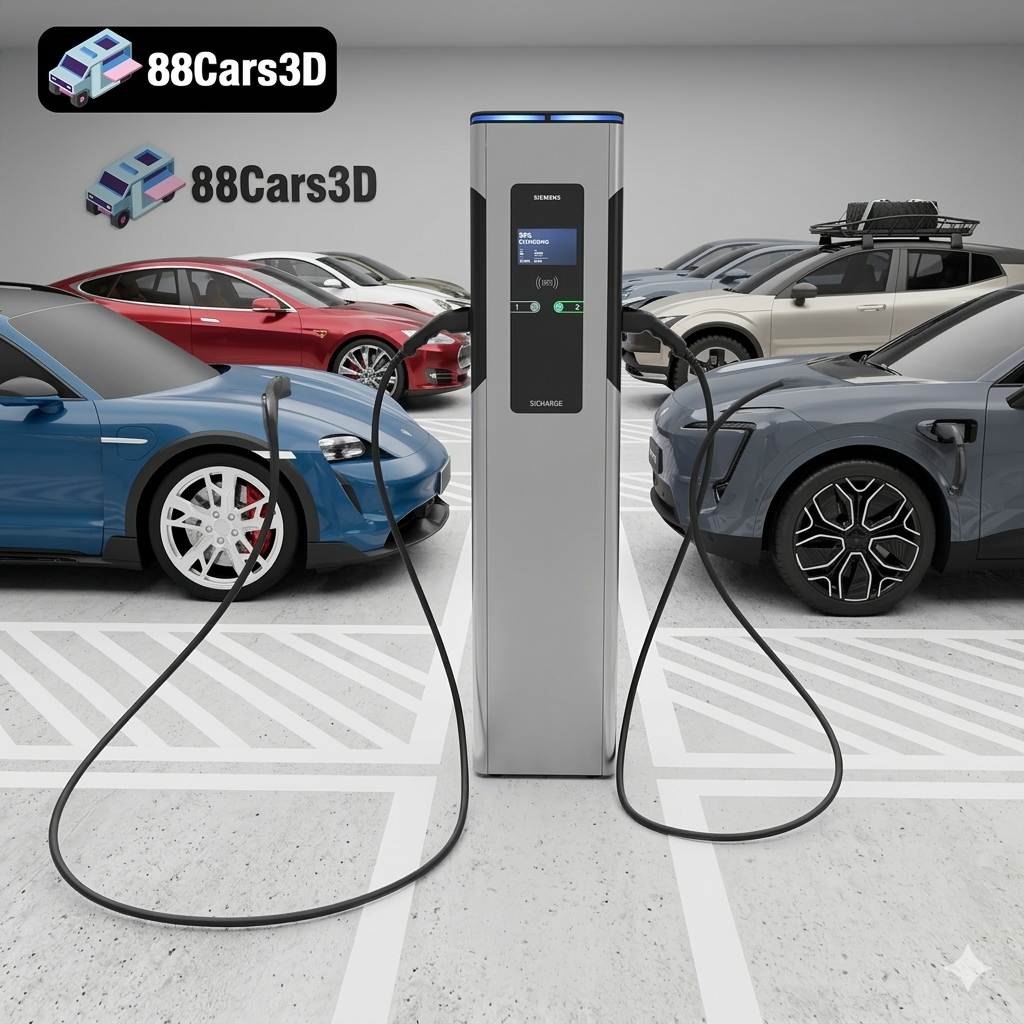
Download the Future of Mobility EV 3D Models Bundle. Includes the Volvo EX30, Tesla Model S, AVATR 11, Porsche Taycan, and a Siemens EV Charger. Save big on this highly optimized 5-in-1 pack for ArchViz and game development!
Price: $89.99

