Reviving Automotive History in 3D: The BMW 326 1941 Digital Masterpiece
In the expansive universe of 3D modeling, where innovation constantly pushes boundaries, there remains a profound appreciation for history, precision, and the art of faithful digital recreation. For automotive enthusiasts, designers, game developers, and visualization artists, the ability to access high-quality 3D car models of iconic vehicles is paramount. It bridges the gap between the tangible past and the immersive digital future. Among the pantheon of classic automobiles, the BMW 326 stands out as a testament to pre-war German engineering and elegant design. Its distinctive silhouette and refined craftsmanship left an indelible mark on automotive history.
The Enduring Legacy of the BMW 326
Introduced in 1936, the BMW 326 was a luxurious four-door sedan that quickly gained renown for its innovative features, including a torsion bar suspension, a robust 2.0-liter six-cylinder engine, and hydraulic brakes – advanced for its time. More than its technical prowess, the 326 captivated with its elegant styling: flowing body lines, rounded fenders, and the signature split kidney grille that would become a BMW hallmark. Production continued until 1941, making it a significant pre-war model that solidified BMW’s reputation for quality and sophistication. Its presence evokes a specific era, offering a rich narrative for any digital project.
Bridging History and Digital Artistry with the BMW 326 1941 3D Model
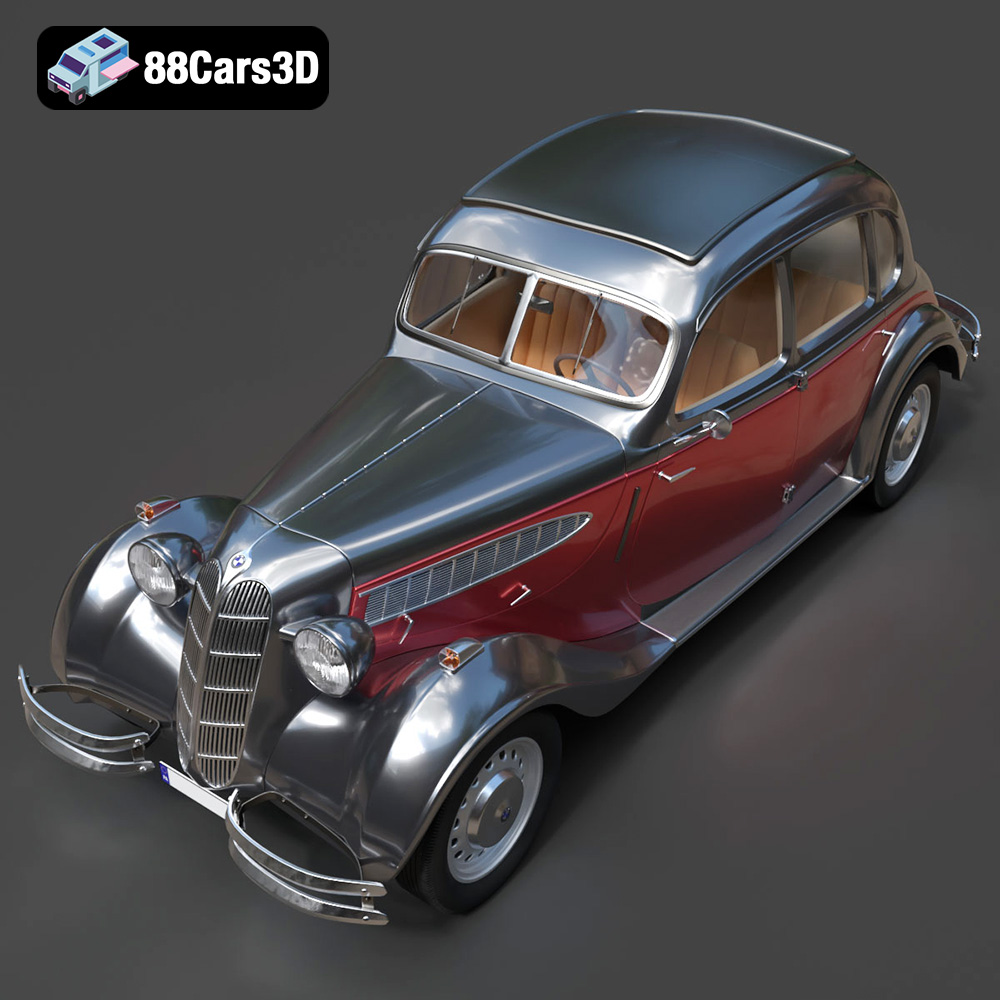
Today, this automotive icon finds new life as the BMW 326 1941 3D Model, a meticulously crafted digital asset available on 88cars3d.com. This model isn’t just a static representation; it’s a dynamic tool designed for a multitude of professional applications, from high-fidelity rendering and cinematic animation to interactive game development and historical visualization. Its creation involved a deep dive into historical references, ensuring every curve, chrome detail, and interior element accurately reflects the original vehicle. It allows creators to integrate this piece of history seamlessly into their modern digital workflows, providing authenticity and a touch of vintage class to any scene.
Understanding 3D Model File Formats: The Backbone of Digital Automotive Assets
The versatility of a 3D model hinges significantly on the file formats in which it is provided. Different applications and workflows demand specific data structures and levels of detail. When sourcing high-quality 3D car models, especially those as detailed as the BMW 326 1941, understanding the nuances of each format is crucial for optimal integration and performance. 88cars3d.com ensures that its products, including the BMW 326 1941 3D Model, are delivered in a comprehensive suite of formats to cater to diverse professional needs, ensuring maximum compatibility and utility across various platforms and engines.
Native Formats for Deep Integration: .blend and .max
For artists working primarily within specific software ecosystems, native file formats offer the deepest level of control and editability. The BMW 326 1941 3D Model includes:
- .blend: This is the native file format for Blender, a powerful and increasingly popular open-source 3D creation suite. A .blend file provides a fully editable Blender scene, preserving all aspects of the model including its clean topology, materials (often set up with Cycles or Eevee nodes), textures, rigging, animation data, cameras, and lighting. It’s ideal for Blender users who need to make extensive modifications, adjust material properties, or integrate the BMW 326 into complex Blender-specific scenes with full access to modifiers and procedural elements.
- .max: As the native file for Autodesk 3ds Max, this format provides an editable project file, preserving all scene data, including mesh geometry, advanced materials (like V-Ray, Corona, or Arnold shaders), textures, lighting, cameras, and animation data. For professionals in architectural visualization, product rendering, or animation studios that rely on 3ds Max, the .max file ensures complete control over every element, making it perfect for custom rendering setups or incorporating the BMW 326 into complex animation sequences.
Universal Formats for Broad Compatibility: .fbx, .obj, and .ply
When transferring models between different software packages or preparing them for various platforms, universal formats become indispensable. The BMW 326 1941 is available in:
- .fbx: Developed by Autodesk, FBX is an industry-standard interchange format, particularly ideal for game engines like Unreal Engine and Unity, as well as digital content creation (DCC) tools such as Maya, 3ds Max, and Blender. It excels at transferring not only geometry but also materials (basic properties), textures, rigging, and animation data. For a vehicle like the BMW 326 1941 with separate wheels and steering components designed for animation, FBX is crucial for maintaining mechanical integrity and movement capabilities across different pipelines.
- .obj: The Wavefront OBJ format is one of the most widely supported 3D file formats, making it a truly universal choice for static mesh transfer. It stores geometry (vertices, faces, UVs) and references material definitions in an accompanying .mtl file. While it doesn’t support animation or rigging, its widespread compatibility ensures that the BMW 326 can be imported into virtually any 3D software for basic rendering or further modification when animation isn’t required.
- .ply: The Polygon File Format (PLY) is a robust format often used for storing 3D data from 3D scanners, scientific applications, and precision engineering. It can store various properties like color, transparency, surface normals, and range data for each vertex or face. For the BMW 326 1941, a .ply file offers a precise mesh representation, valuable for detailed analysis, reverse engineering studies, or integration into CAD software where geometric accuracy is paramount.
Specialized Formats for Specific Needs: .glb, .stl, and .unreal
Certain applications require highly optimized or purpose-built formats:
- .glb: This is the binary form of the glTF (GL Transmission Format), designed for efficient transmission and loading of 3D scenes and models in web and mobile applications, including AR and VR experiences. A .glb file is self-contained, embedding textures, animations, and material data directly. For showcasing the BMW 326 1941 in interactive web viewers, AR/VR apps, or quick previews, .glb offers an optimized, streamlined solution.
- .stl: The Stereolithography (STL) format is the de facto standard for 3D printing. It describes only the surface geometry of a 3D object using a collection of interconnected triangles. The BMW 326 1941 3D Model is explicitly prepared for 3D printing, and the .stl format allows enthusiasts to bring this classic car into the physical world as a collectible scale model. The mesh structure is optimized for manifold geometry, ensuring a successful print, especially for intricate details like the grille and body lines.
- .unreal: While not a single file extension in the same way .fbx or .obj are, “unreal” typically refers to an asset that has been specifically prepared and packaged for direct import and optimal use within Unreal Engine. This often means the model has appropriate scaling, UVs, collision meshes, LODs (Levels of Detail), and a material setup compatible with Unreal’s Physically Based Rendering (PBR) system. For the BMW 326 1941, this ensures that the model can be immediately dropped into an Unreal project, ready for real-time visualization or game development with minimal additional setup.
Precision Engineering for Digital Realms: Technical Details of the BMW 326 Model
Creating a high-quality 3D car model, especially one with historical significance like the BMW 326 1941, goes far beyond simply replicating its shape. It involves a deep understanding of automotive design principles, meticulous attention to detail, and adherence to technical best practices for 3D asset creation. The BMW 326 1941 3D Model from 88cars3d.com exemplifies this commitment to precision.
Meticulous Exterior Craftsmanship
The BMW 326 is celebrated for its elegant and somewhat revolutionary pre-war design. This 3D model accurately captures its defining exterior characteristics:
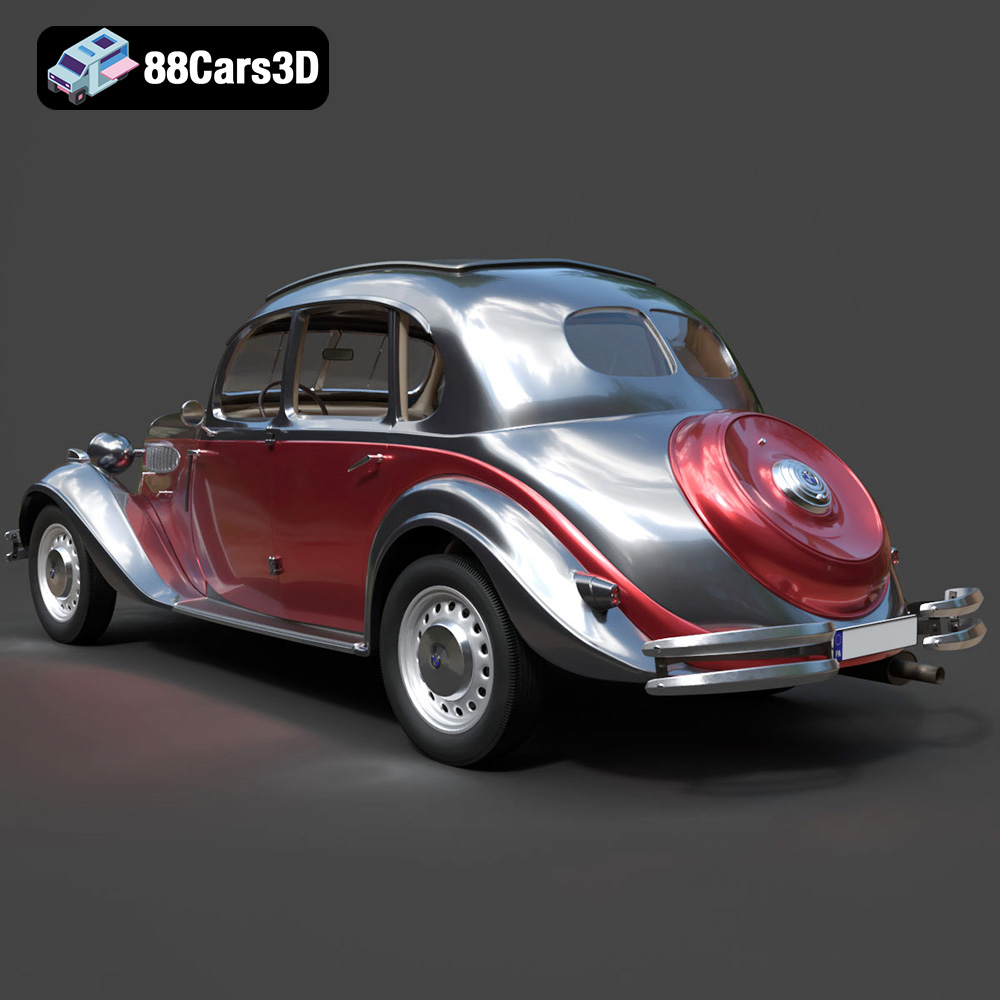
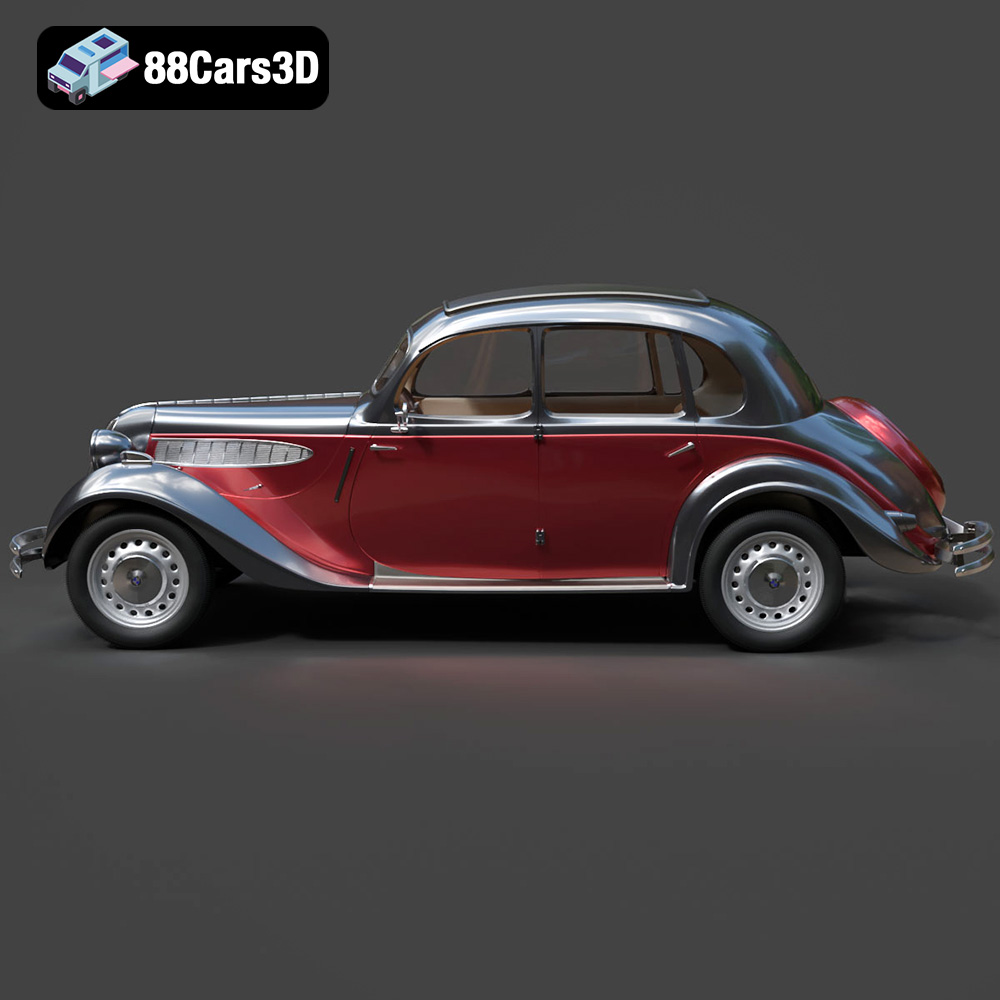
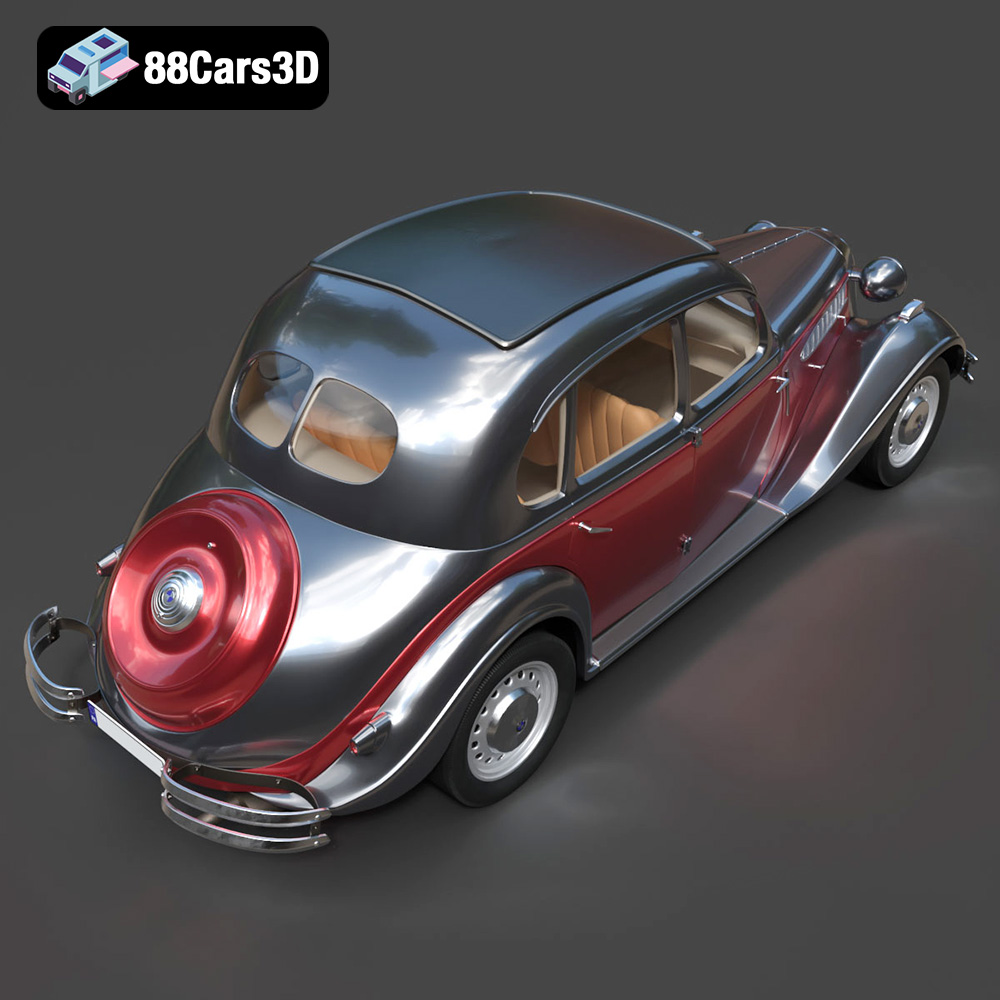
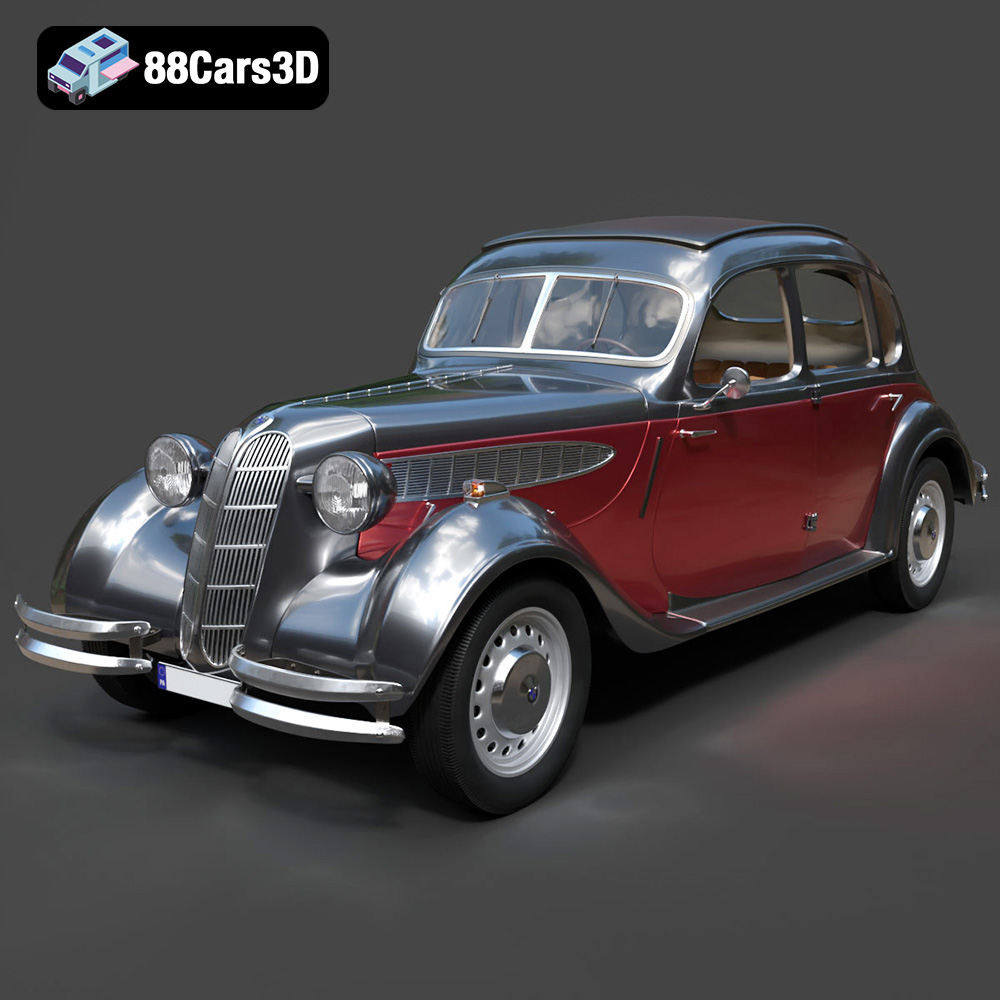
- Body Proportions and Flow: The rounded fenders, long hood, and classic sedan silhouette are faithfully recreated, preserving the vehicle’s iconic stance and gentle aerodynamic curves. This requires careful polygon modeling to ensure smooth surfaces and accurate reflections in renders.
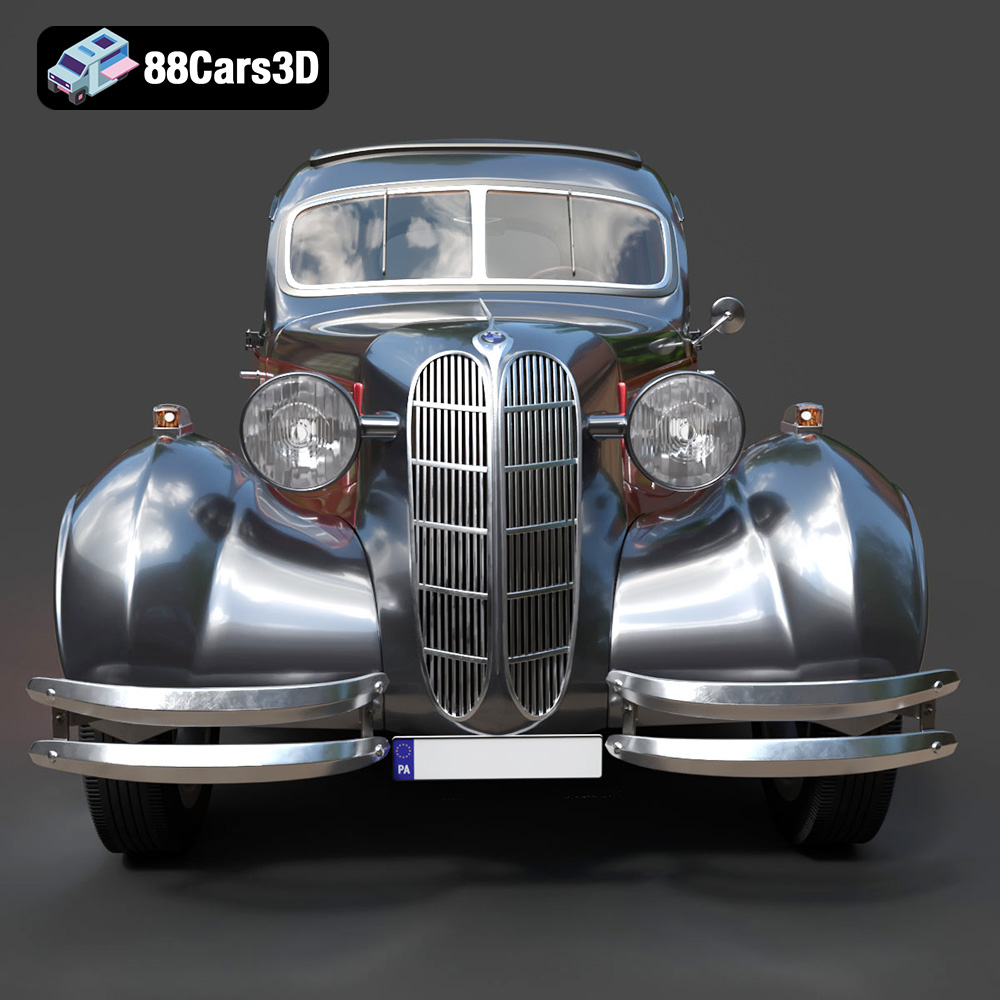
- Iconic Details: From the classic dual kidney grille, a design element that has persisted through BMW’s history, to the circular headlight housings and chrome bumper detailing, every feature is rendered with high fidelity. These elements are not merely suggested but are fully modeled to hold up under close-up scrutiny in high-resolution renders.
- Period-Correct Wheels: The wheels are designed to match the specific period, contributing to the overall authenticity. Importantly, the wheels and steering components are modeled separately, allowing for realistic animation of turning and rolling, a crucial feature for any dynamic visualization or game environment.
Authentic Interior Design and Functionality
The interior of a vintage car tells as much of its story as the exterior. The BMW 326 1941 3D Model extends its detailed craftsmanship to the cabin:
- Vintage Dashboard Layout: The model features a detailed vintage dashboard layout, complete with analog gauges that evoke the era. This level of detail is vital for first-person views, virtual tours, or close-up shots that highlight the car’s internal sophistication.
- Classic Controls and Seating: A large, classic steering wheel design, bench-style seat geometry, and accurate representations of the door panels, trim, gear shifter, and pedal detailing are included. These elements are optimized for realism without excessive polygon counts that could hinder performance in real-time applications.
- Optimized Geometry: Even with intricate interior details, the geometry is optimized for both real-time engines and high-quality renders. This means a balance between visual fidelity and computational efficiency, ensuring the model performs well in diverse applications.
Optimized Geometry and Real-World Scale
Beyond visual accuracy, technical integrity is paramount:
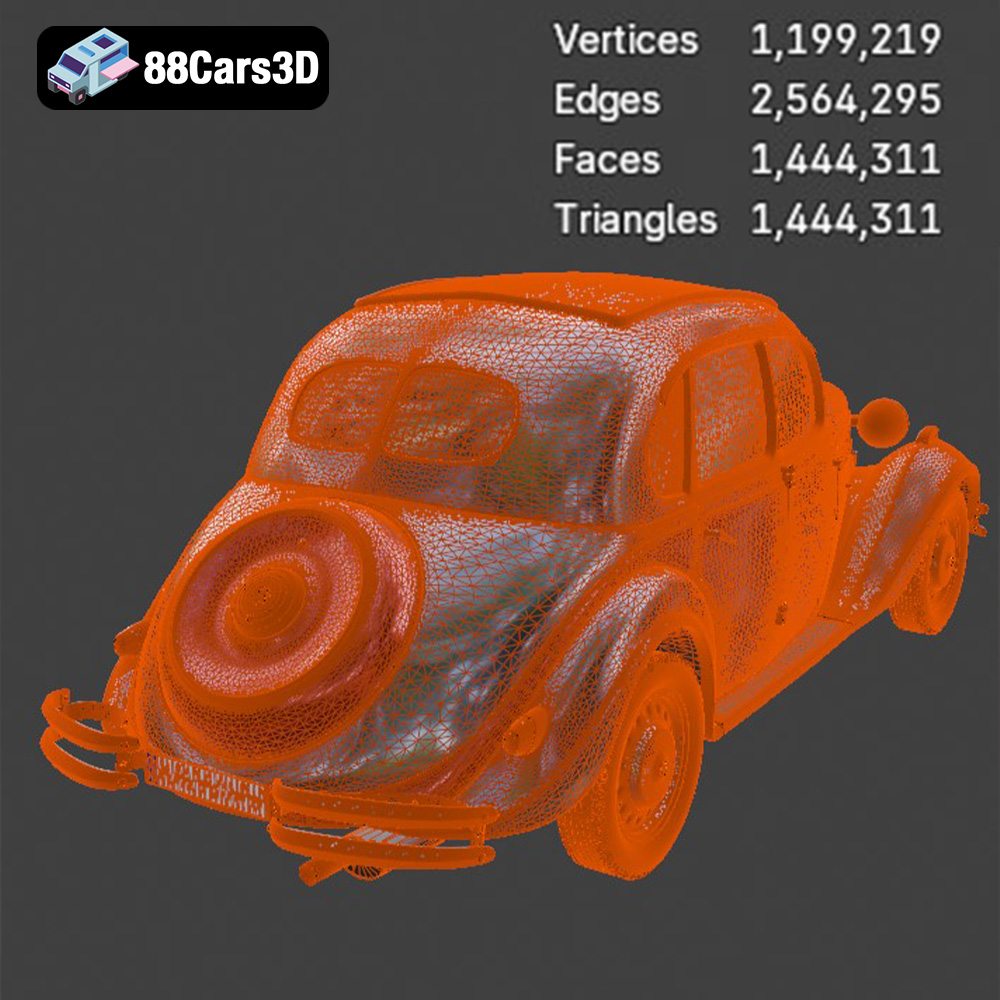
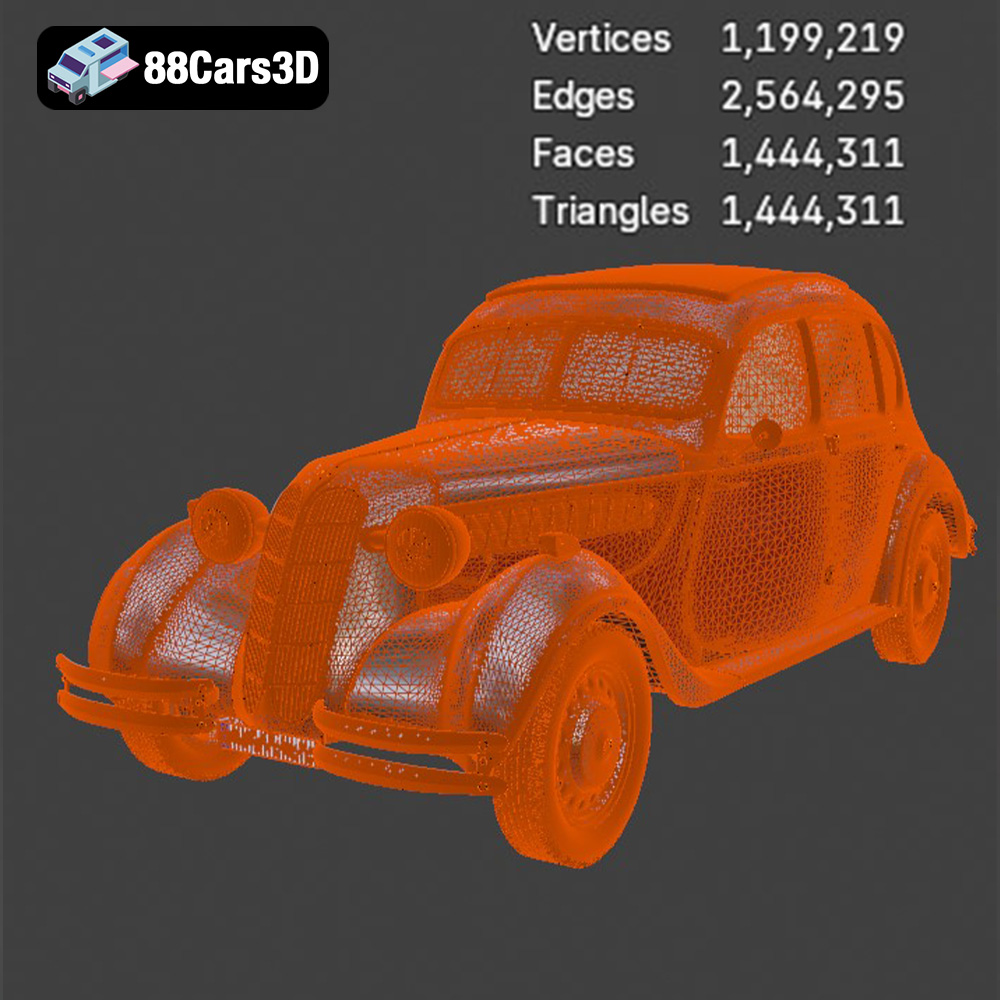
- Clean Mesh Structure: The model boasts a clean and well-organized mesh structure. This is crucial for ease of editing, UV unwrapping, and ensuring predictable subdivision surfaces if higher detail is needed. Artists can easily modify or texture the model without encountering messy geometry issues.
- Real-World Scale: Adherence to real-world scale accuracy is essential for integration into scenes and environments. The BMW 326 1941 3D Model is built to correct dimensions, ensuring it fits naturally alongside other assets without needing constant resizing or recalibration.
- Proper Pivot Setup: A critical technical advantage for animation and interaction, the model features a proper pivot setup for steering and wheel rotation. This simplifies the animation process, allowing animators to quickly set up realistic driving sequences without complex rigging work.
Applications Across Industries: From Cinematic Rendering to Interactive Experiences
The versatility of the BMW 326 1941 3D Model makes it an invaluable asset across a wide spectrum of creative and technical industries. Its blend of historical accuracy, detailed craftsmanship, and technical optimization unlocks numerous possibilities for professionals seeking authentic 3D car models.
High-Fidelity Rendering and Visualization
For cinematic productions, architectural visualizations, or high-end advertising, photorealistic rendering is non-negotiable. The BMW 326 1941 is perfectly suited for:
- Historical Automotive Marketing: Crafting compelling visuals for classic car auctions, restoration services, or luxury brand campaigns that need to evoke a sense of heritage and prestige.
- Museum Displays and Heritage Promotion: Creating stunning digital showcases for virtual museums, educational exhibits, or promotional materials highlighting automotive history. Imagine the BMW 326 as the centerpiece of a digital exhibition, bathed in dramatic lighting.
- Cinematic Productions: Integrating the model into period-correct films, documentaries, or television series that require authentic vehicles from the late 1930s and early 1940s. Its animation-ready components allow for realistic driving sequences.
Game Development and Real-Time Environments
In the realm of interactive experiences, performance and visual quality must go hand-in-hand. This 3D model is designed with game developers in mind:
- Historical Open-World Games: Populate virtual cities set in pre-war Europe or wartime scenarios with an authentic fleet of vehicles, bringing unparalleled immersion to players.
- Vintage Driving Simulations: Offer players a chance to experience driving a classic BMW 326 with realistic physics and handling, delivering a unique historical perspective on automotive performance.
- Pre-War City Environments: Use the model as a key prop or background element to establish the time period and atmosphere of a virtual environment, enhancing environmental storytelling.
AR/VR and Immersive Historical Simulations
Augmented Reality (AR) and Virtual Reality (VR) platforms offer unparalleled opportunities for immersive learning and entertainment. The BMW 326 1941 3D Model excels here:
- Immersive Vintage Showroom Experiences: Allow users to virtually walk around, inspect, and even “sit inside” the BMW 326 in a virtual showroom, complete with interactive elements and historical facts.
- Interactive Historical Exhibitions: Create educational AR applications where users can place the BMW 326 in their physical space, examining its details and learning about its significance.
- Restoration Study Projects: For automotive design students or restorers, the model can serve as a detailed reference for studying the car’s construction, aiding in both digital and physical restoration efforts.
Bringing History to Life: Workflow Integration for 3D Artists
Integrating a complex 3D car model like the BMW 326 1941 3D Model into a professional workflow requires a structured approach. The versatility offered by its multiple file formats ensures seamless integration into various software and engines. Whether you’re a seasoned professional or an aspiring artist, understanding the workflow for each platform is key to unlocking the model’s full potential.
Setting Up in 3ds Max and Blender
For artists operating within traditional DCC (Digital Content Creation) software, the native `.max` and `.blend` files, alongside versatile `.fbx` and `.obj` options, provide a robust starting point:
- Importing and Scene Setup: In 3ds Max, open the provided `.max` file directly. For Blender, simply open the `.blend` file. If using `.fbx` or `.obj`, ensure proper import settings for scale and up-axis. The real-world scale of the BMW 326 1941 3D Model means it will drop into your scene with accurate dimensions, reducing setup time.
- Material and Texture Assignment: The native files will typically retain materials and textures. For `.fbx` or `.obj`, you might need to relink textures and adjust material shaders to match your renderer (e.g., V-Ray, Cycles, Arnold). Pay attention to the chrome detailing, which often benefits from sophisticated reflective materials to capture the period-correct look.
- Animation and Rigging: With separate wheels and steering components, animators can quickly set up simple rotations for driving sequences. The proper pivot setup simplifies the process, allowing for direct keyframing or integration into existing vehicle rigs. This makes the BMW 326 1941 an excellent asset for cinematic animations or automotive design presentations.
Integrating into Unreal Engine
Real-time rendering and interactivity are where game engines like Unreal Engine shine. The `.fbx` and optimized `.unreal` assets for the BMW 326 1941 streamline this process:
- Importing the Asset: Utilize the `.fbx` file for robust import into Unreal Engine. Ensure “Skeletal Mesh” is selected if you plan to animate parts (though a static mesh with separate components is often sufficient for vehicle dynamics), and check “Import Materials” and “Import Textures.” For the provided `.unreal` asset, the process is even simpler, as it’s typically pre-optimized for direct engine use.
- Material Setup and Shaders: Upon import, Unreal will create basic materials. You’ll want to refine these using Unreal’s robust material editor, converting them to PBR (Physically Based Rendering) shaders for optimal visual fidelity. Focus on realistic car paint, rubber for tires, and reflective chrome for bumpers and trim to make the BMW 326 truly shine in a real-time environment.
- Physics and Interaction: For game development, set up basic physics assets and collision meshes. The separate wheel geometry allows for realistic suspension and tire dynamics. You can also implement interactive blueprints for opening doors or turning on lights, creating an immersive experience for the BMW 326 in virtual showrooms or historical simulations.
Preparing for 3D Printing and Physical Models
The BMW 326 1941 3D Model is also designed with 3D printing in mind, enabling the creation of physical scale models and collectibles:
- Exporting to STL: Convert or export the model to the `.stl` format. This format triangulates the mesh, which is the standard for 3D printers. The product description’s mention of “3D Printable STL” indicates the geometry is manifold and ready for this process.
- Slicing Software and Settings: Import the `.stl` file into your preferred slicing software (e.g., Cura, PrusaSlicer, Chitubox). Adhere to the recommended print settings:
- Scale: Recommended scales like 1:32, 1:24, 1:18, or 1:12 allow for varying levels of detail and print time.
- Layer Height: Use a fine layer height (e.g., 0.08–0.16 mm) for smoother surfaces, especially for the elegant curves of the BMW 326’s body. Resin printing is often recommended for smaller scales to capture intricate details.
- Supports: Supports will be essential for overhangs like the side mirrors, bumper elements, and the subtle curvatures that define the vehicle. Proper placement prevents warping and ensures fidelity.
- Orientation: Print the body angled for optimal surface finish, and print wheels separately for superior detail and easier post-processing.
- Post-Processing: After printing, post-processing is key. Sanding, priming, and a vintage paint finish (gloss or two-tone) will bring out the full character of this pre-war classic. Chrome detailing can be achieved with metallic paints or specialized finishes.
Customization and Creative Freedom with Vintage 3D Car Models
Owning a high-quality 3D model like the BMW 326 1941 3D Model is just the beginning. The real power lies in the creative freedom it offers for customization, allowing artists to tailor the asset to their specific vision and project requirements. Whether for historically accurate representations or imaginative scenarios, the potential for personalization is vast.
Personalizing the Digital Finish
The first step in making any 3D car model truly your own is often through its aesthetic presentation:
- Change Body Color to Period-Correct Finishes: While the BMW 326 1941 had a range of factory colors, you can research historical paint charts to apply authentic shades like deep blues, maroons, or muted greens, instantly transporting the vehicle to its era.
- Add Vintage License Plates: Small details like custom license plates pertinent to 1941 or specific regions can significantly enhance realism and storytelling. This often involves simple texture work or adding a minor mesh element.
- Modify Wheel Style and Tire Appearance: While the model comes with period-correct wheels, you might explore subtle variations of hubcaps or tire tread patterns common to the era for even greater authenticity or a slightly different visual appeal.
Modifying for Specific Project Requirements
Beyond aesthetics, the well-structured geometry of the BMW 326 1941 3D Model allows for deeper modifications to fit diverse project needs:
- Adjust Ride Height for Restored or Original Stance: Depending on whether you’re depicting a pristine restored vehicle or one that has endured years, modifying the ride height can significantly alter its character. This is easily achieved by adjusting the position of the wheels relative to the body.
- Configure Lighting for Museum or Historical Street Scenes: Beyond direct manipulation of the model itself, how you light the BMW 326 1941 in your scene drastically changes its mood. Implement soft, diffused lighting for a museum display, or sharp, directional light for a dramatic street scene under a setting sun.
- Damage and Wear: For game assets or cinematic sequences depicting wartime scenarios, artists can add procedural or sculpted damage, rust, and wear to reflect the passage of time or conflict, transforming the elegant sedan into a battle-hardened survivor.
Unleashing Creative Possibilities
The beauty of a versatile 3D asset lies in its ability to be reinterpreted. The BMW 326 1941 3D Model provides a robust foundation:
- Stylized Renderings: While designed for realism, the model can be used as a base for stylized or illustrative renderings, exploring different artistic interpretations of this classic vehicle.
- Conceptual Modifications: For educational or speculative projects, imagine a “what-if” scenario where the 326 was adapted for different purposes, perhaps as a rally car or a luxury convertible. The clean topology of the model facilitates such creative deformations.
- Integration with Environmental Storytelling: Place the BMW 326 1941 in a crumbling historical setting, a bustling pre-war market, or a desolate landscape to craft powerful visual narratives. Its historical accuracy grounds these stories in a believable context, enhancing the overall impact of your automotive rendering or game scene.
Conclusion: Drive Your Projects Forward with Authentic 3D Car Models
The digital world thrives on detail, accuracy, and the ability to seamlessly integrate high-quality assets. The BMW 326 1941 3D Model stands as a shining example of this principle, offering a meticulously crafted piece of automotive history ready for a myriad of professional applications. From its elegant pre-war design to its optimized geometry and wide range of file formats, this model is designed to empower artists and developers across industries.
Whether you’re crafting a photorealistic automotive rendering, developing an immersive game environment, creating an interactive AR/VR experience, or even producing a physical scale model through 3D printing, this asset provides the foundation for exceptional results. Its technical advantages, including clean topology, real-world scale, and animation-ready components, ensure a smooth workflow and stunning visual output.
At 88cars3d.com, the commitment to providing high-quality 3D car models is unwavering. The BMW 326 1941 3D Model is more than just data; it’s an invitation to explore, create, and bring history to life in your digital projects. Elevate your visualizations and simulations with an asset that combines historical authenticity with cutting-edge 3D production standards. Dive into the past and accelerate your creative future today.
Featured 3D Model
BMW 326 1941 3D Model
The BMW 326 1941 3D Model is a high-detail digital recreation of the pre-war German luxury sedan known for its elegant curves, refined craftsmanship, and early aerodynamic styling. This model accurately represents the rounded fenders, flowing body lines, split front grille design, and vintage four-door sedan layout. It includes .blend, .fbx, .obj, .glb, .stl, .ply, .unreal, and .max formats for rendering, simulation, AR/VR, game development, and 3D printing, making it perfect for period-correct city scenes, cinematic productions, and collectible scale models.
$19.9
View This Model
Related Tags
.1941car
.arvr
.automotive
.blend
.bmw
.bmw326
.car3dmodel
.fbx
.gameasset
.glb
.historicalvehicle
.max
.obj
.ply
.prewarcar
.rendering
.simulation
.stl
.unreal
.vintagecar
classicbmw