⚡ FLASH SALE: Get 60% OFF All Premium 3D & STL Models! ⚡

In the dynamic world of 3D visualization, where photorealism and interactive experiences reign supreme, the demand for meticulously crafted assets is ever-growing. Whether you’re an automotive rendering artist striving for marketing perfection, a game developer building an immersive open world, or an architect pre-visualizing a complex project, the quality of your foundational 3D models dictates the success of your output. This is particularly true for specialized assets like high-performance vehicles, which require an exceptional blend of artistic fidelity and technical precision.
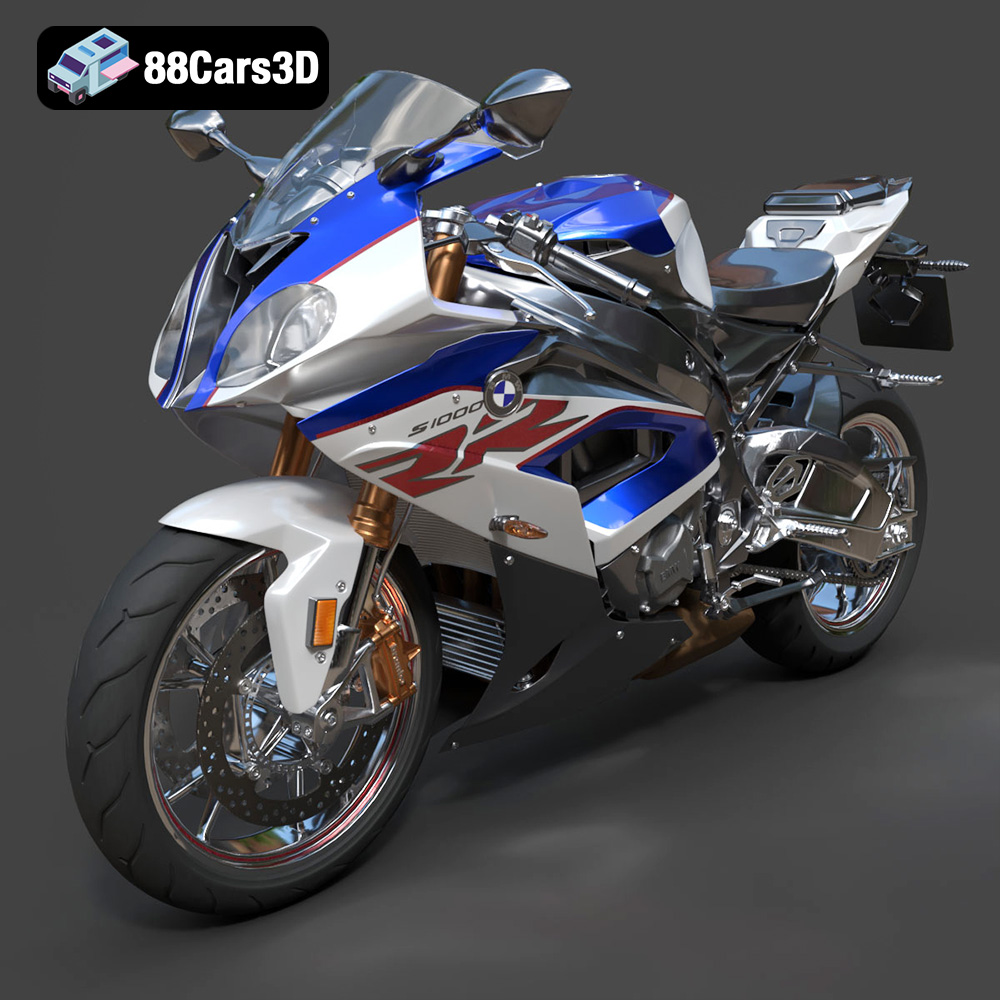
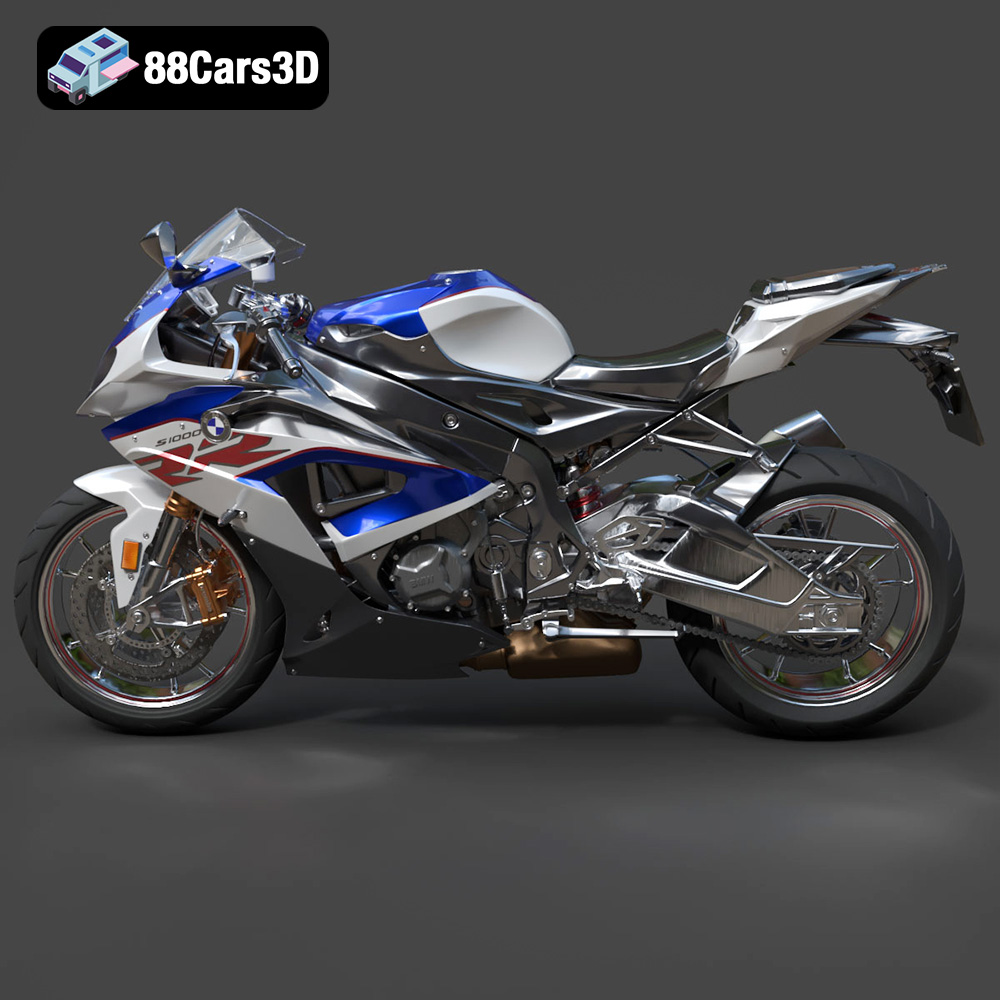
Today, we’re diving deep into an exemplary instance of such a high-quality asset: the BMW S 1000 RR 2018 3D Model. This isn’t just a digital representation; it’s a meticulously engineered digital twin of one of BMW Motorrad’s most iconic superbikes. From its aggressive aerodynamics to its powerful inline-four engine, every curve and component has been replicated with an eye for detail, making it an indispensable resource for professionals. Available through platforms like 88cars3d.com, such premium 3D car models and vehicle assets provide the bedrock for breathtaking visuals and engaging interactive content, seamlessly integrating into a myriad of professional workflows.
The versatility of a 3D model is often defined by the range of file formats it supports. Each format serves a distinct purpose, optimized for specific software, workflows, or output types. Understanding these nuances is crucial for any professional working with 3D content, especially when dealing with complex assets like high-detail 3D car models. The BMW S 1000 RR 2018 3D Model, designed for maximum compatibility, provides a comprehensive suite of formats, each tailored for different applications.
The .blend format is the native file type for Blender, a powerful open-source 3D creation suite. When you receive a .blend file, you’re getting a complete Blender scene, often fully editable with all its materials, textures, lighting, and animation setups intact. This is ideal for artists who primarily work in Blender, offering the highest level of control and flexibility for modifications, rigging, and rendering within the Blender ecosystem. For the BMW S 1000 RR 2018 3D Model, a .blend file would allow for immediate scene integration, material adjustments, or even detailed component animations directly within Blender.
.fbx (Filmbox) is arguably the most widely used proprietary 3D exchange format, developed by Autodesk. It’s the go-to format for transferring 3D data between different software applications like 3ds Max, Maya, Cinema 4D, and most importantly, game engines like Unreal Engine and Unity. FBX supports not just mesh data, but also materials, textures, lights, cameras, animation, and even rigging information. This makes it an ideal choice for game assets, facilitating a smooth pipeline from DCC (Digital Content Creation) tools to real-time rendering environments. The .fbx version of the BMW S 1000 RR 2018 3D Model ensures that it can be dropped into an Unreal project with minimal fuss, preserving hierarchies and UVs.
The .obj (Wavefront OBJ) format is a universal, open-standard format primarily used for transferring basic 3D geometry data. It stores vertex positions, UV coordinates, normals, and face information, making it highly compatible across virtually all 3D software. While it doesn’t typically embed animations or complex material nodes, it’s excellent for clean mesh transfer. For artists who need just the raw geometry to build their own materials or rigging from scratch, or for those working with less common 3D software, the .obj version of the BMW S 1000 RR 2018 3D Model provides a robust and reliable foundation.
.glb (GL Transmission Format Binary) is a relatively newer format, but one that has rapidly gained traction, particularly for web-based 3D applications, augmented reality (AR), and virtual reality (VR). It’s a binary version of glTF (GL Transmission Format), designed to be a compact, efficient, and runtime-deliverable asset. A single .glb file can contain models, textures, animations, and PBR (Physically Based Rendering) materials, making it self-contained and easy to deploy. For interactive showcases of the BMW S 1000 RR 2018 3D Model on a website or in an AR app, .glb is the superior choice, offering fast loading and excellent visual quality.
When the digital world meets the physical, formats like .stl (Stereolithography) and .ply (Polygon File Format) come into play. .stl is the de facto standard for 3D printing, representing a 3D model as a collection of triangular facets. It’s simple, robust, and universally accepted by 3D slicing software. The 3D printable aspect of the BMW S 1000 RR 2018 3D Model means an .stl version is provided, allowing enthusiasts to bring a physical miniature of the superbike to life. .ply is another precision mesh format, often used in CAD, 3D scanning, and scientific applications, capable of storing more complex information like color per vertex or additional properties, which can be valuable for intricate engineering analyses or detailed prototype output.
The .unreal format, or more accurately, assets packaged for Unreal Engine (often via .fbx import and subsequent conversion within the engine), signifies an asset that is pre-optimized and configured for immediate use in Unreal. This means materials, collision meshes, LODs (Levels of Detail), and sometimes even basic blueprints are already set up, significantly accelerating game development workflows. Finally, .max is the native file format for Autodesk 3ds Max, one of the most powerful and widely used 3D modeling, animation, and rendering software in the industry. A .max file of the BMW S 1000 RR 2018 3D Model offers the highest level of detail and editability for professional studios working within a 3ds Max pipeline, providing complete access to modifiers, scene organization, and advanced rendering setups.
The true value of a premium 3D model lies in its meticulous attention to detail and robust technical construction. The BMW S 1000 RR 2018 3D Model exemplifies this, capturing the essence of the superbike through a blend of accurate proportions and intricate component modeling. This level of fidelity makes it an invaluable asset for any project demanding high-quality 3D car models or two-wheeled counterparts.
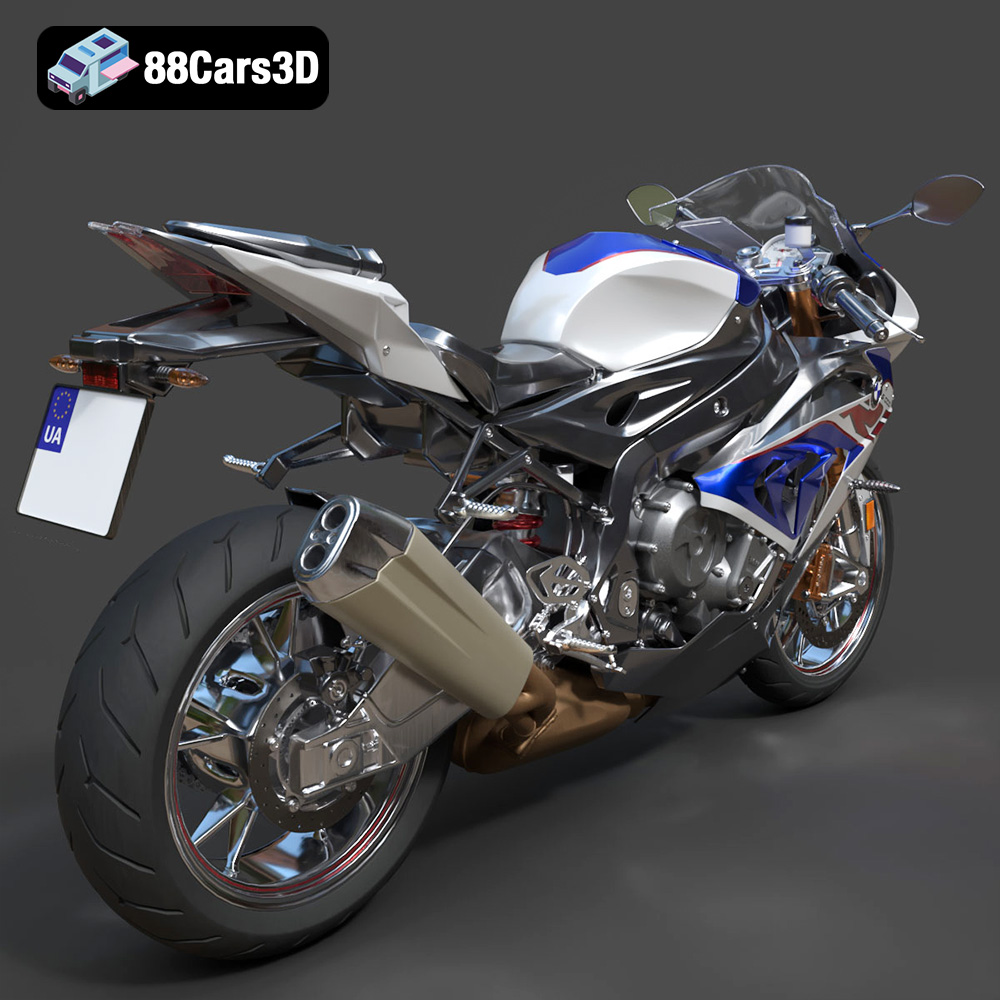
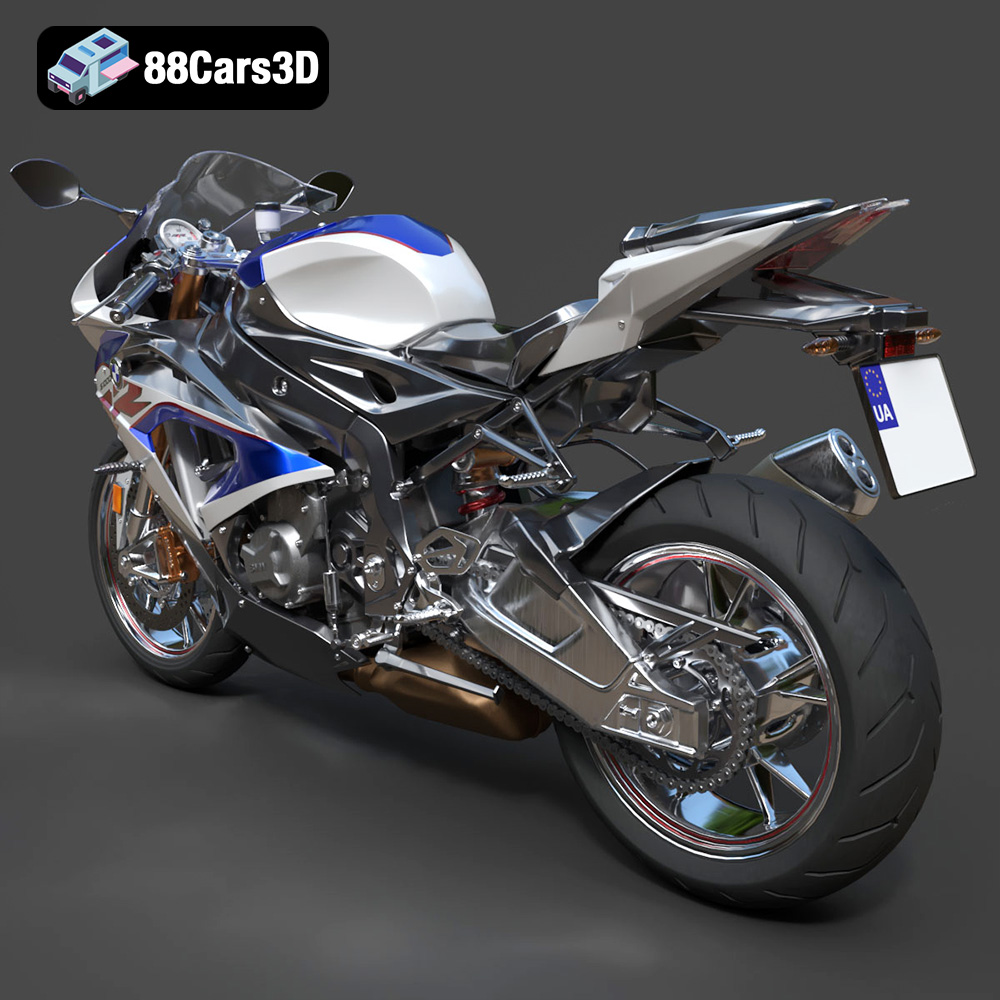
The exterior of the S 1000 RR is its most striking feature, known for its aggressive, asymmetrical styling. This 3D model faithfully reproduces the 2018 generation’s distinctive fairing design, the iconic asymmetrical headlight configuration (a signature pre-2019 element), and the aerodynamic windscreen. Every panel, vent, and line adheres to real-world specifications, ensuring that the digital model is a true reflection of its physical counterpart. Beyond the bodywork, critical mechanical elements are also highly detailed. This includes the sculpted fuel tank, designed for sport ergonomics, the exposed inline-four engine block with its surrounding frame structure, and the high-performance braking system, complete with accurately modeled discs and calipers. The rear swingarm assembly and mono-shock suspension are also meticulously crafted, with separate wheels and steering components ensuring full animation readiness. Such intricate modeling is crucial for automotive rendering, where close-up shots demand absolute accuracy.
Stepping beyond the exterior, the rider’s area and cockpit are often overlooked in lesser models, but not here. The BMW S 1000 RR 2018 3D Model includes a detailed instrument cluster, vital for any realistic driving or riding simulation. The sport clip-on handlebar assembly, along with precisely modeled brake and clutch levers, further enhances realism. Even the rear-set foot peg positioning, essential for the bike’s aggressive riding posture, is accurately represented. The aerodynamic seat and tail section geometry complete the rider interface, ensuring that the model holds up even in cinematic close-ups and virtual reality experiences where immersion is paramount.
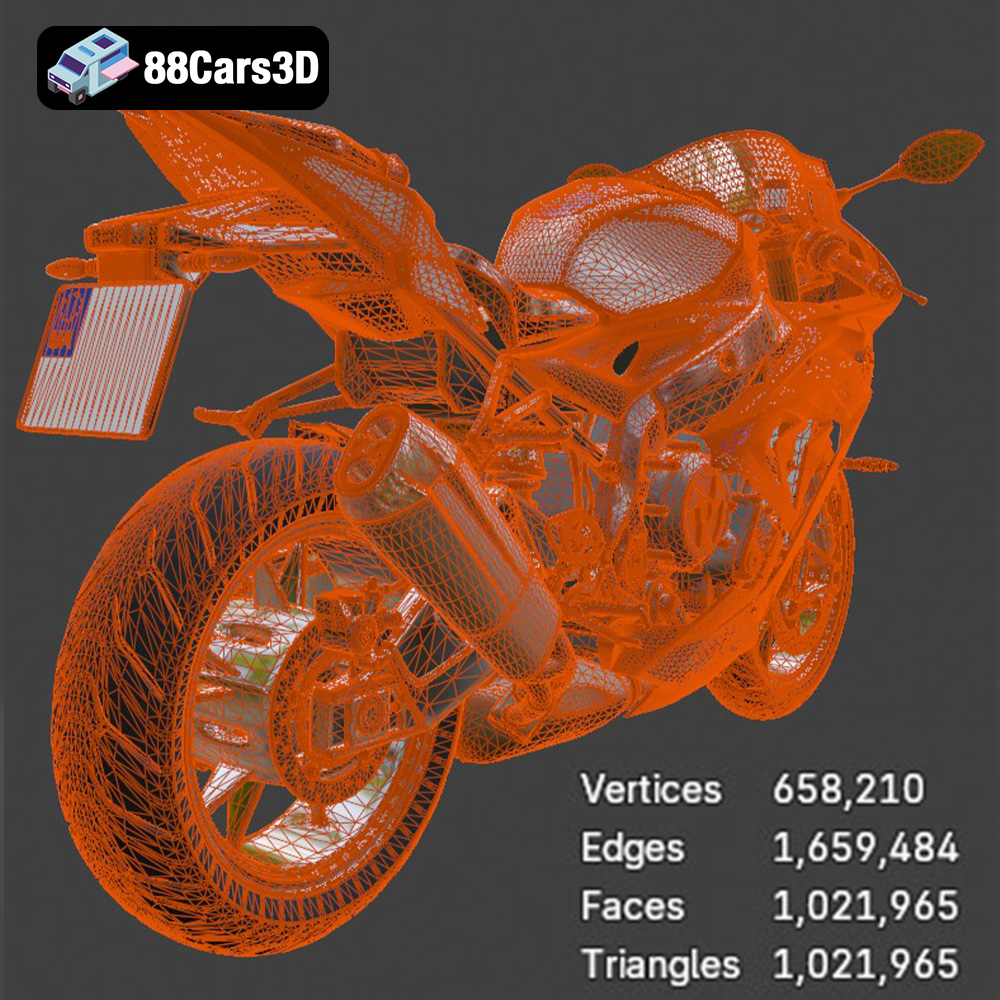
Beyond visual fidelity, the technical underpinnings of the model are paramount for its usability. This model boasts a clean and well-organized mesh structure, a critical aspect for smooth subdivision, efficient rendering, and seamless integration into various pipelines. Real-world scale accuracy is maintained throughout, meaning the digital model’s dimensions correspond precisely to the actual motorcycle, crucial for realistic physics simulations and scene composition. Furthermore, proper pivot setup for steering and wheel rotation is implemented. This seemingly small detail is incredibly important for animation and game development, allowing for effortless rigging and believable movement without complex manual adjustments. Optimized polygon flow strikes a balance between visual realism and performance, making the model suitable for both high-end renders and real-time game assets.
A high-quality 3D model is only as valuable as its ability to integrate seamlessly into professional production pipelines. The BMW S 1000 RR 2018 3D Model is engineered with this principle in mind, providing artists and developers with a robust foundation for diverse projects, from automotive rendering to immersive game experiences.
For artists focused on photorealistic imagery, the model’s clean topology and detailed geometry make it an ideal candidate for high-fidelity rendering. In 3ds Max, artists can leverage V-Ray or Corona Renderer to achieve stunning levels of realism. The model’s separate components (wheels, steering, engine parts) allow for individual material assignments, enabling fine-tuned control over shaders, reflections, and refractions for paintwork, chrome, rubber, and glass. For instance, creating a studio shot highlighting the S 1000 RR’s aerodynamic lines would involve setting up a physically accurate lighting environment, adding complex layered materials for the metallic flake paint, and refining the subtle imperfections on the tire rubber – all tasks made easier by the model’s organized mesh. Similarly, Blender users can harness Cycles or Eevee, applying advanced node-based materials to bring the superbike to life in a variety of scene contexts, from a sun-drenched racetrack to a dramatic urban environment. Such detailed 3D car models are essential for marketing and promotional content.
When it comes to game development, performance and visual quality must coexist. The BMW S 1000 RR 2018 3D Model is optimized for this challenge. Its efficient polygon flow and well-defined UV mapping are crucial for creating high-performance game assets. In Unreal Engine, developers can import the .fbx or .unreal versions, leveraging Unreal’s robust material editor to create PBR materials that respond realistically to dynamic lighting. The properly set up pivots for wheels and steering mean animators can quickly rig the bike for in-game physics and player control. Imagine integrating this model into a next-generation racing game, where players can customize the bike’s livery, or featuring it as a key vehicle in an open-world action title. The model’s optimized mesh ensures smooth framerates even when multiple bikes are on screen, while retaining visual fidelity for an immersive gameplay experience.
The immersive capabilities of AR and VR demand highly optimized yet visually rich assets. The .glb format, included with the BMW S 1000 RR 2018 3D Model, is specifically designed for these platforms. This allows for the creation of interactive showcases where users can examine the superbike from any angle, virtually sit on it, or even place it in their real-world environment via AR. Businesses can use this for virtual showrooms, allowing potential customers to explore the bike’s features without physical presence. Training simulations can also benefit, providing mechanics or riders with a safe, interactive environment to learn about the bike’s components and handling. The realistic scale and detail enhance the sense of presence, making these experiences truly impactful.
While digital rendering and interactive experiences are primary applications, the BMW S 1000 RR 2018 3D Model offers another exciting dimension: physical creation through 3D printing. This capability allows enthusiasts and professionals to transcend the screen and hold a tangible piece of automotive excellence.
The inclusion of .stl and .ply formats specifically caters to additive manufacturing. The .stl file converts the intricate mesh data into a series of interconnected triangles, which is the universal language for 3D printers. This ensures manifold geometry, meaning the model is watertight and ready for slicing software without complex repairs. For those who might want to use the model for more advanced analysis or perhaps for CNC machining, the .ply format offers additional precision. The ability to generate collectible sportbike miniatures or display models is a significant advantage, opening up opportunities for customized physical products or prototypes.
Achieving a high-quality physical print requires attention to detail in the printing process. The recommended scales (1:18, 1:12, 1:10, 1:8) for the BMW S 1000 RR 2018 3D Model offer flexibility depending on the desired size and level of detail. A layer height of 0.08–0.16 mm is suggested for FDM printers, balancing speed and detail, while resin printers (SLA/DLP) would allow for even finer layers, capturing the minute intricacies of the superbike. Wall thickness between 1.2–2.0 mm ensures structural integrity for the printed model. Supports are critical for overhanging parts like fairings, the exhaust, rear swingarm, and handlebar area to prevent print failures and maintain geometry. The model is also optimized for print orientation: the frame angled for optimal detail preservation and wheels printed separately to minimize support marks and achieve smoother finishes.
Choosing the right scale and material can dramatically impact the final printed model. Smaller scales (e.g., 1:18) might be perfect for desk display, while larger scales (e.g., 1:8) offer more room for intricate painting and detailing. PLA is a common FDM material, easy to print and good for initial prototypes. ABS offers more durability and heat resistance. For resin printers, a standard UV-cured resin will yield exceptional detail. Post-processing is where the model truly shines. After printing, sanding, priming, and applying a gloss sport paint finish will transform the raw print into a stunning replica. The option to add racing decals allows for personalized liveries, making each printed model unique. This feature truly sets this asset apart, extending its utility beyond purely digital realms.
The inherent quality and structured nature of the BMW S 1000 RR 2018 3D Model provide an excellent foundation for extensive customization. Professional artists and designers can unlock vast creative potential, tailoring the model to perfectly fit specific project requirements or artistic visions. This flexibility is what transforms a generic asset into a bespoke solution.
One of the most immediate customization options is altering the bike’s aesthetics. Changing the body color and racing livery can instantly adapt the model for different brands, racing teams, or narrative contexts. Imagine a sleek black S 1000 RR for a shadowy urban scene, or a vibrant, sponsor-laden livery for a high-octane motorsport visual. Adjusting wheel and brake caliper colors further enhances personalization, allowing for subtle or dramatic visual shifts. Adding track number decals can ground the model in a specific racing event or give it a unique identity. Even modifying the exhaust finish—from a polished titanium look to a raw carbon fiber texture—can dramatically alter the bike’s character and perceived performance. This granular control is invaluable for creating unique 3D car models for diverse campaigns.
Beyond the model itself, customizing the lighting and environment around the BMW S 1000 RR 2018 3D Model is paramount for impactful rendering and visualization. Artists can configure lighting for various scenarios: a bright, clinical showroom setup to highlight its engineering, or a dramatic, low-key lighting scheme for a cinematic action sequence. Placing the bike in a racetrack scene with dynamic motion blur, or a high-speed urban environment with reflections of neon lights, can evoke different emotions and tell distinct stories. The model’s optimized mesh and clean UVs facilitate easy texture modifications and material swaps, enabling artists to create custom damage maps for racing scenarios or pristine showroom finishes for promotional materials. This level of creative freedom ensures the model remains versatile across an array of high-end visual productions.
In the competitive landscape of 3D content creation, the difference between a good project and an exceptional one often comes down to the quality of its core assets. The BMW S 1000 RR 2018 3D Model stands as a testament to this principle, offering unparalleled detail, technical precision, and versatility. From its meticulously crafted exterior and cockpit to its robust file format support (.blend, .fbx, .obj, .glb, .stl, .ply, .unreal, .max) and readiness for 3D printing, it is a truly comprehensive digital asset.
Whether your goal is to produce stunning automotive rendering, build immersive game assets for high-speed racing simulations, create engaging AR/VR experiences, or even bring a physical miniature to life through 3D printing, this model provides the foundational excellence required. Its clean topology, real-world scale, and professional pivot setup streamline workflows across major 3D software and game engines. For studios and individual artists seeking top-tier 3D car models and vehicle assets that inspire creativity and deliver outstanding results, the BMW S 1000 RR 2018 3D Model from 88cars3d.com is an investment in quality and efficiency that will undoubtedly elevate your projects to the next level.
The BMW S 1000 RR 2018 3D Model is a high-detail digital recreation of BMW Motorrad’s iconic superbike, engineered for high performance on both road and track. Known for its aggressive aerodynamic styling, inline-four engine power, and advanced electronic systems, the 2018 S 1000 RR represents precision German sportbike engineering. This 3D model accurately captures the sharp fairing design, asymmetrical headlight styling (pre-2019 generation), aerodynamic windscreen, sculpted fuel tank, exposed frame elements, high-performance braking system, rear swingarm assembly, and race-inspired exhaust configuration. Built with clean topology and real-world scale accuracy, it is ideal for rendering, animation, simulation, game development, and AR/VR motorcycle experiences. Perfect for racetrack scenes, high-speed urban environments, motorsport visuals, and cinematic action productions.
$29.99
.2018superbike
.arvr
.blend
.bmw
.fbx
.gameasset
.glb
.max
.motorcycle3dmodel
.obj
.performancebike
.ply
.racingbike
.rendering
.s1000rr
.simulation
.sportbike
.stl
.twowheeler
.unreal