⚡ FLASH SALE: Get 60% OFF All Premium 3D & STL Models! ⚡

In the vibrant world of digital design, the allure of custom vehicles extends far beyond the physical realm. From roaring engines on asphalt to meticulously rendered scenes on screen, the spirit of bespoke craftsmanship captivates designers, artists, and enthusiasts alike. Creating a truly compelling digital replica of a custom motorcycle requires a blend of artistic vision and rigorous technical execution, marrying the raw, rebellious aesthetic with the precision of 3D modeling.
Imagine bringing a one-of-a-kind two-wheeled marvel to life, not just for a static image, but for dynamic animations, immersive game environments, or even as a tangible 3D-printed collectible. This is where high-quality 3D car models – or in this case, a truly exceptional motorcycle model – become indispensable assets. Today, we’re diving deep into the intricate world of such creations, spotlighting the Custom_Motorcycle 3D Model. This asset embodies the pinnacle of digital motorcycle design, offering unparalleled detail and versatility for a multitude of professional applications, from cinematic rendering to interactive AR/VR experiences. Whether you’re an automotive visualization expert, a game developer seeking authentic vehicles, or a hobbyist eager to 3D print your dream bike, understanding the technical intricacies behind such a model is key to unlocking its full potential.
The journey of a 3D model, from its creation to its final application, often involves navigating a diverse landscape of file formats. Each format is designed with specific use cases, compatibility requirements, and technical advantages in mind. Understanding these distinctions is crucial for anyone working with 3D assets, ensuring smooth integration into various workflows. The Custom_Motorcycle 3D Model, available on 88cars3d.com, is offered in a comprehensive suite of formats, catering to virtually any professional need.
The .blend format is the native file type for Blender, the popular open-source 3D creation suite. When you download a .blend file, you’re getting a complete Blender scene, often including not just the mesh data but also materials, textures (packed within the file or linked externally), lighting setups, cameras, animation data, and even modifiers. This provides the ultimate flexibility for artists who use Blender, allowing them to dissect the model’s construction, understand its material assignments, and make extensive modifications or integrate it seamlessly into existing Blender projects. It’s ideal for deep customization, re-texturing, or preparing assets for Blender’s powerful Cycles or Eevee rendering engines.
.fbx (Filmbox) is a proprietary file format developed by Autodesk, serving as a robust standard for 3D data exchange across different software applications and game engines. It’s highly versatile, supporting geometry, materials, textures, animations, skinning, and camera data. For pipelines involving Unreal Engine, Unity, 3ds Max, Maya, or Substance Painter, .fbx is often the go-to choice due to its reliable compatibility and ability to preserve complex scene information. Its efficiency makes it particularly well-suited for real-time applications and complex animated sequences, acting as a bridge between various stages of a production workflow.
.obj (Wavefront OBJ) is one of the oldest and most widely supported 3D file formats. It’s a universal format primarily used for transferring geometry data (vertices, normals, texture coordinates, and faces) between different 3D applications. While it can reference external material (.mtl) files for basic color and texture information, it typically doesn’t support advanced material properties, rigging, or animation. Its strength lies in its simplicity and ubiquitous compatibility, making it an excellent choice for basic mesh exchange, archival purposes, or when you need to bring a model into software that has limited support for other formats.
.glb (GL Transmission Format Binary) is the binary version of the glTF (GL Transmission Format), a modern, open-standard format for 3D scenes and models. Designed to be compact and efficient for transmission and loading, .glb files embed all assets (geometry, textures, animations, PBR materials) into a single binary file. This makes it incredibly popular for augmented reality (AR), virtual reality (VR), and web-based 3D applications, where quick loading times and small file sizes are paramount. For interactive experiences or browser-based configurators featuring the Custom_Motorcycle 3D Model, .glb is an optimal choice.
The .stl (Stereolithography) format is the cornerstone of 3D printing. It represents a 3D model as a collection of unconnected triangular facets, without any color, texture, or material information. This simplicity makes it ideal for defining the surface geometry of an object for fabrication. When preparing the Custom_Motorcycle 3D Model for physical output, converting or providing an .stl file is essential. It’s universally recognized by slicing software, which translates the triangular mesh into machine-specific instructions for FDM, SLA, or DLP 3D printers.
.ply (Polygon File Format) is another format for storing 3D data, often used in applications involving 3D scanning, scientific visualization, and CAD. Unlike .stl, .ply can store a wider range of properties, including color, transparency, surface normals, texture coordinates, and even reliability information for each vertex and face. It’s a more comprehensive format for representing complex scan data or precise geometric models, making it suitable for engineering analysis or highly detailed archival of intricate objects like the custom motorcycle’s engine block.
While not a standalone file format in the conventional sense, a “.unreal” offering typically signifies an asset that has been specifically prepared, imported, and configured for seamless integration into Unreal Engine. This often means the model is provided as an Unreal Engine asset package or part of an Unreal project, with correctly set up materials, LODs (Levels of Detail), collision meshes, and potentially even blueprint functionality. For game developers or architectural visualization artists using Unreal, this format streamlines the workflow dramatically, allowing for immediate placement and interaction within the engine, minimizing setup time for the Custom_Motorcycle 3D Model.
.max is the native file format for Autodesk 3ds Max, a powerful 3D modeling, animation, and rendering software widely used in architectural visualization, film, and game development. Similar to .blend, a .max file contains a complete scene, including geometry, materials (often V-Ray, Corona, or standard Max materials), lighting, cameras, and animation data. Providing the Custom_Motorcycle 3D Model in .max format grants 3ds Max users the full creative control to modify, animate, and render the model using their preferred renderers and workflows, leveraging the software’s extensive toolset for high-fidelity output.
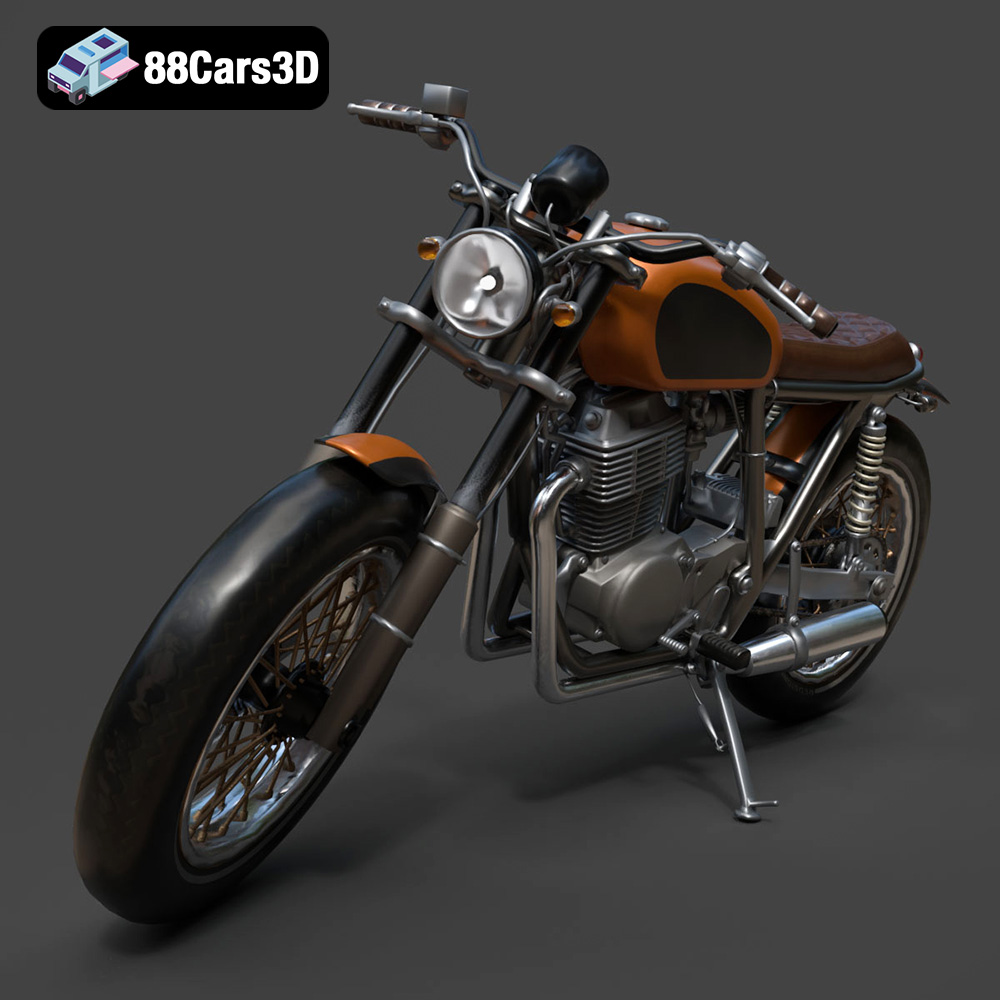
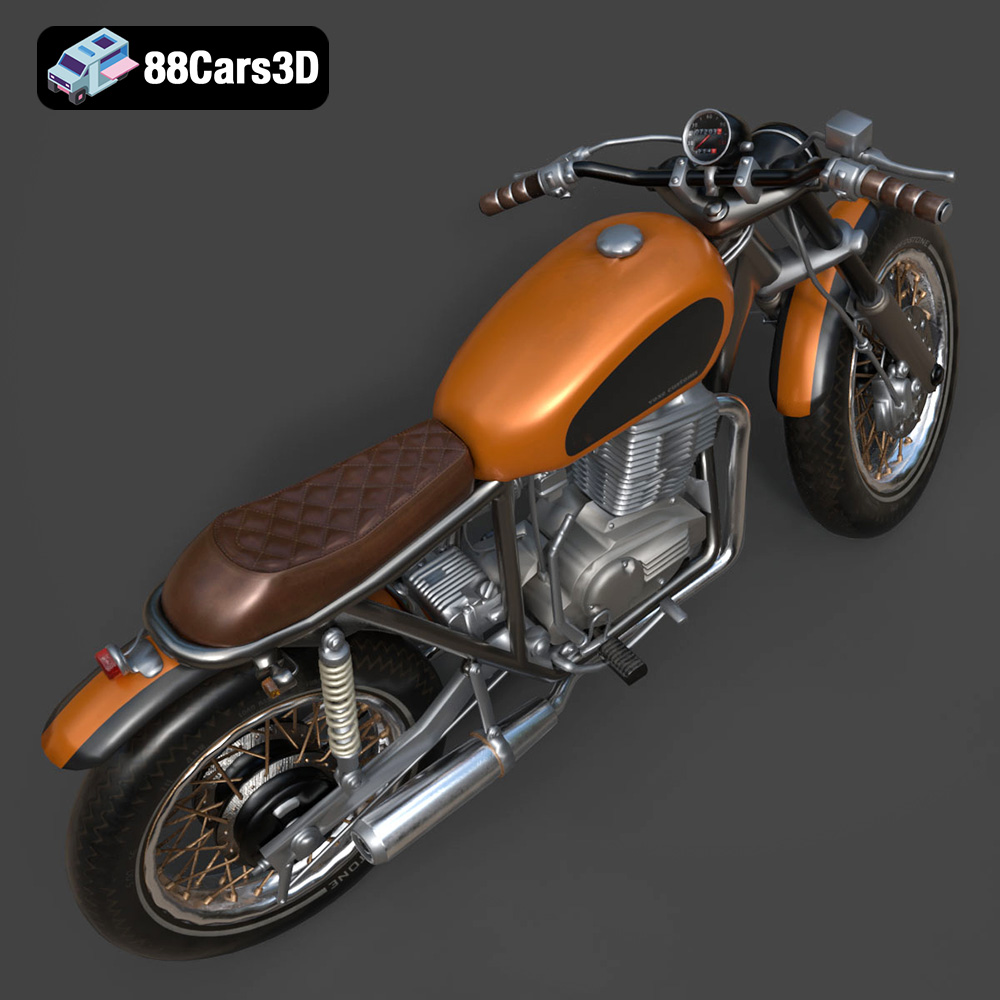
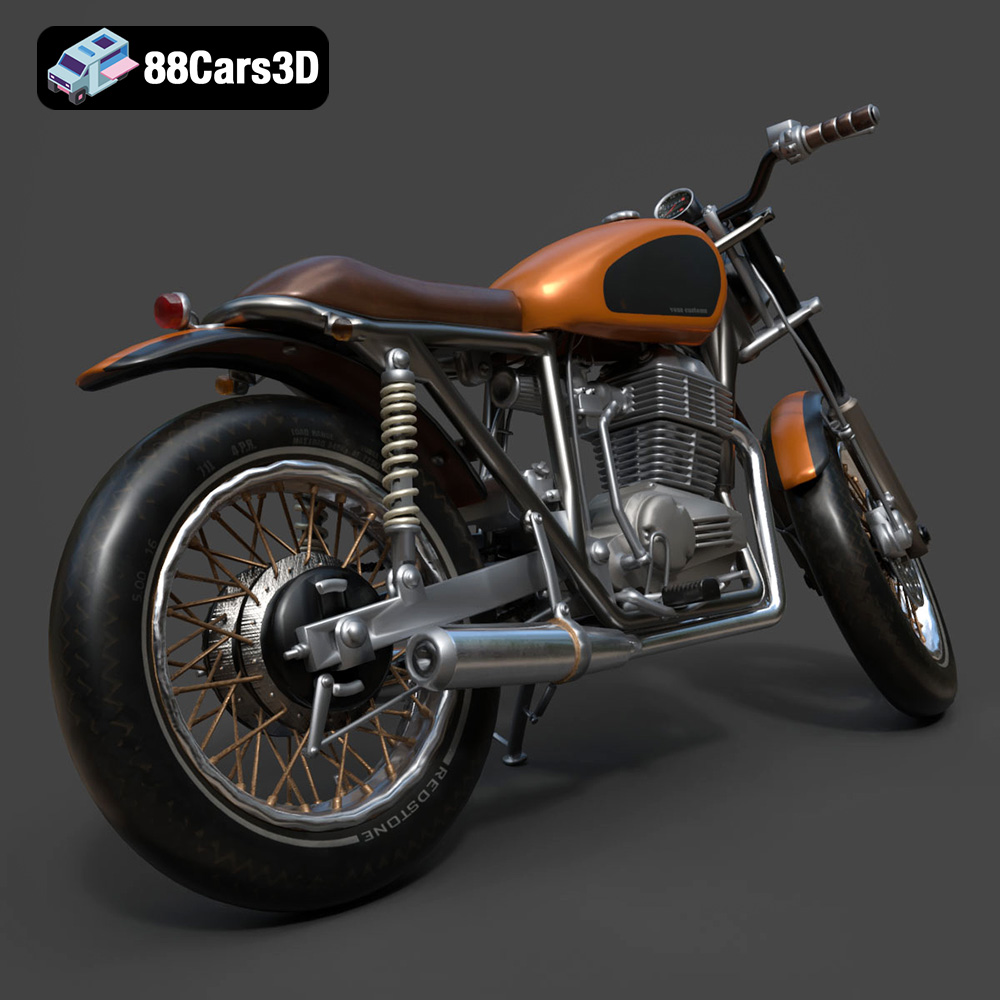
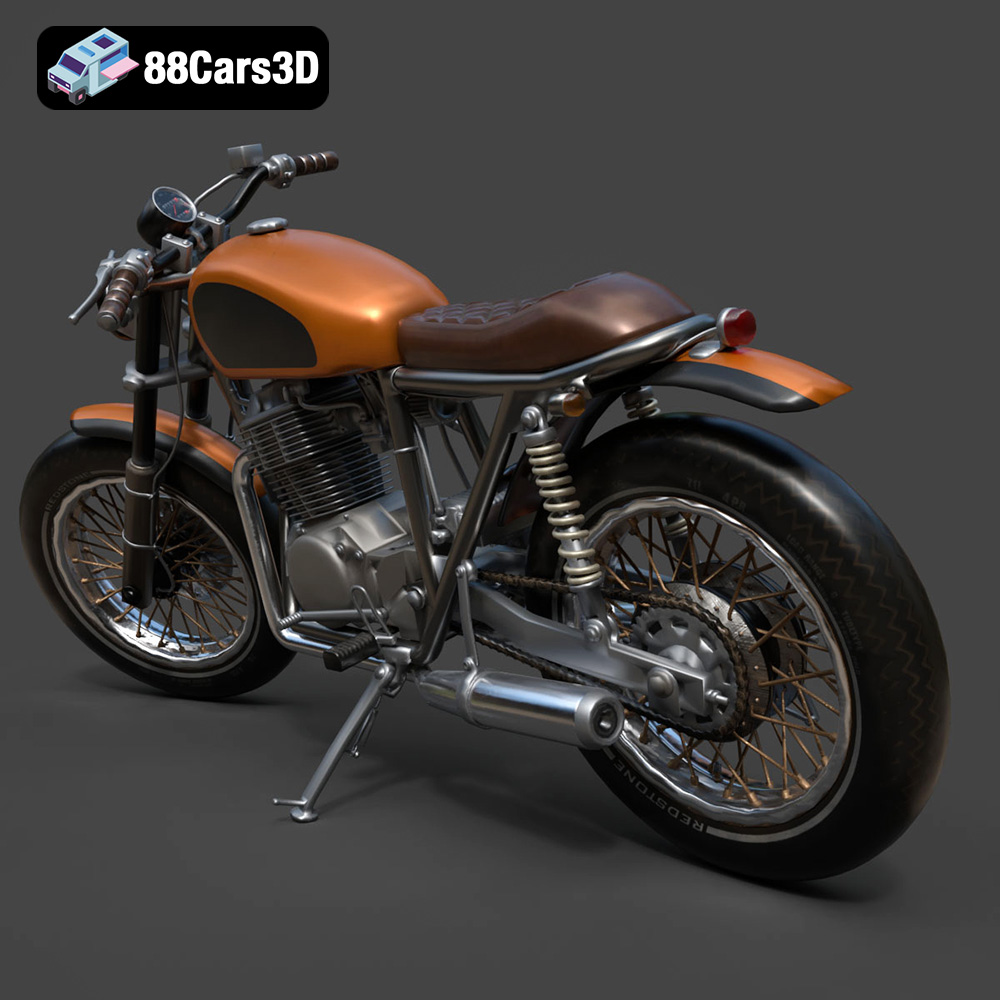
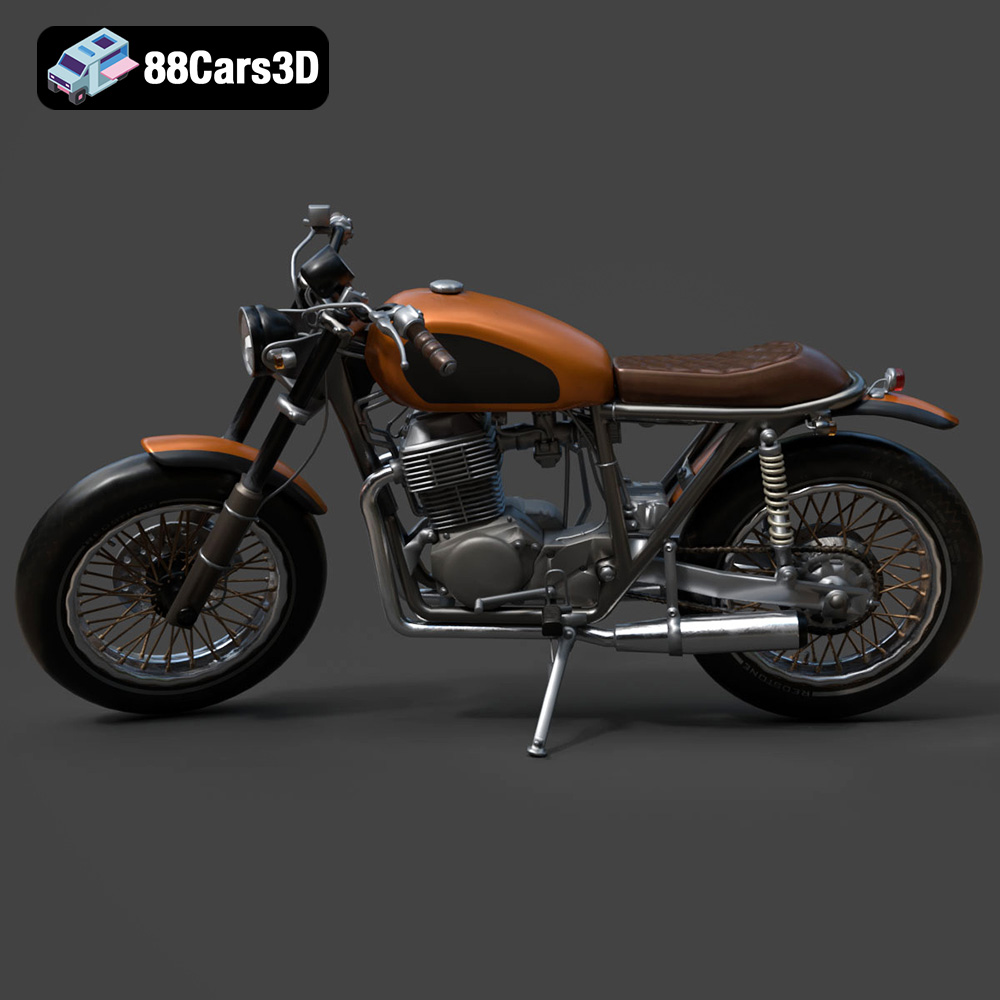
At the heart of any compelling visual project lies a foundation of high-quality assets. The Custom_Motorcycle 3D Model stands out as a testament to meticulous digital craftsmanship, capturing the raw mechanical beauty and rebellious spirit of bespoke bike culture. This isn’t just a generic motorcycle; it’s a digital recreation of a one-of-a-kind build, infused with aggressive styling and premium aftermarket detailing.
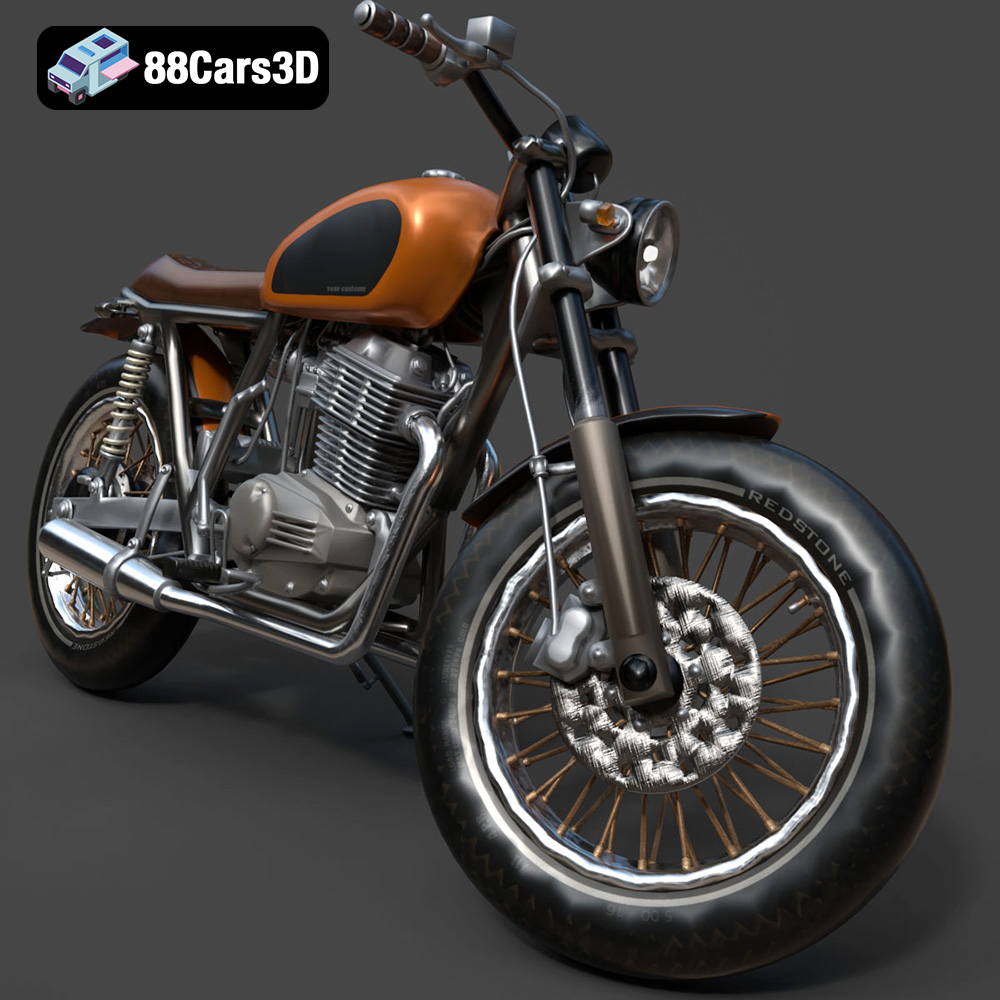
One of the most striking features of this model is its highly detailed, exposed engine block and transmission assembly. Unlike simplified models, this asset embraces complexity, allowing for close-up renders that showcase every pipe, cylinder, and mechanical nuance. The custom sweeping exhaust pipes, for instance, are not just generic shapes; they boast realistic weld and heat-stain material zones, hinting at the powerful performance and history of the bike. This level of granular detail is critical for projects demanding extreme realism, from cinematic productions to high-end automotive galleries.
The model accurately represents a modified frame geometry, serving as an adaptable base for various custom bike aesthetics—be it a bobber, chopper, or cafe racer. The handcrafted-style fuel tank with its smooth aerodynamic lines adds to the unique personality. Furthermore, key components like the wheels, suspension forks, and steering assemblies are separate elements, meticulously modeled to allow for animation and customization. Whether it’s intricate wire-spoke wheels or machined alloy designs, the attention to specific detail ensures visual fidelity. Even the lighting, featuring aftermarket LED or classic halogen headlight and minimalist taillight assemblies, contributes to the overall custom vibe.
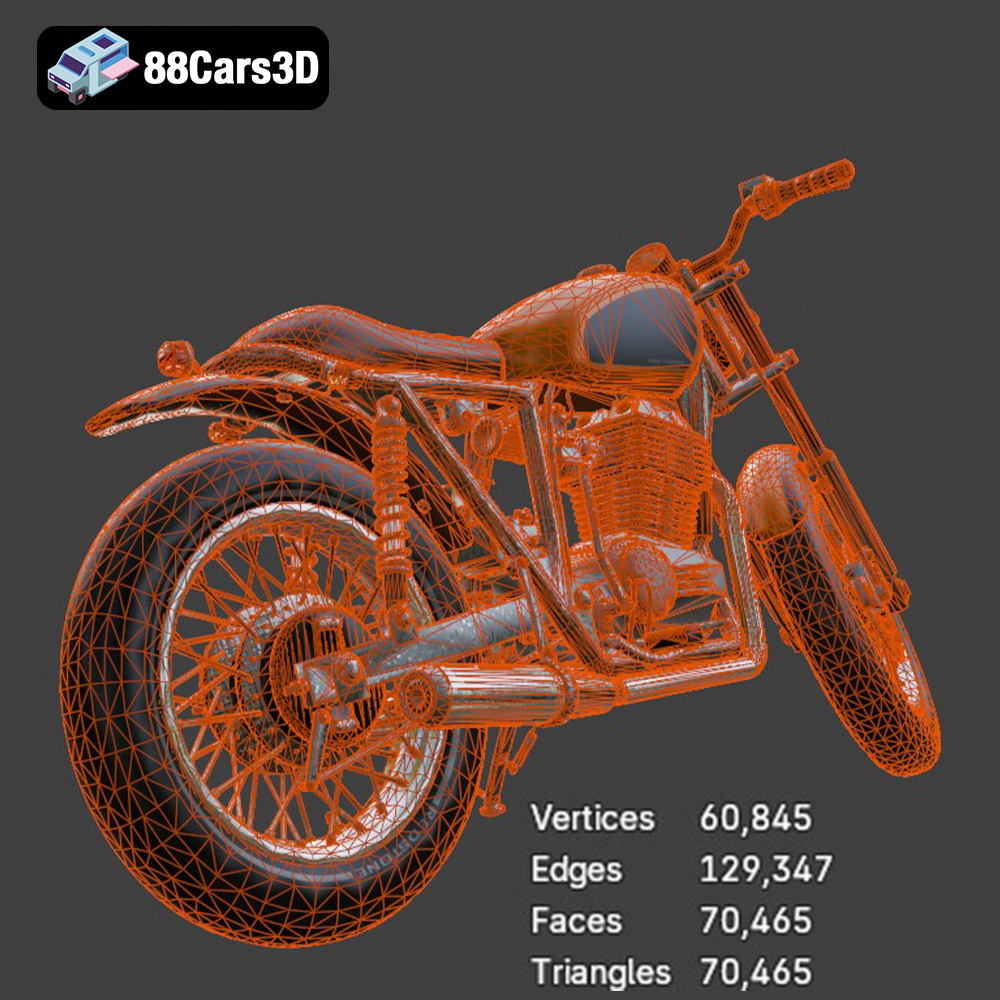
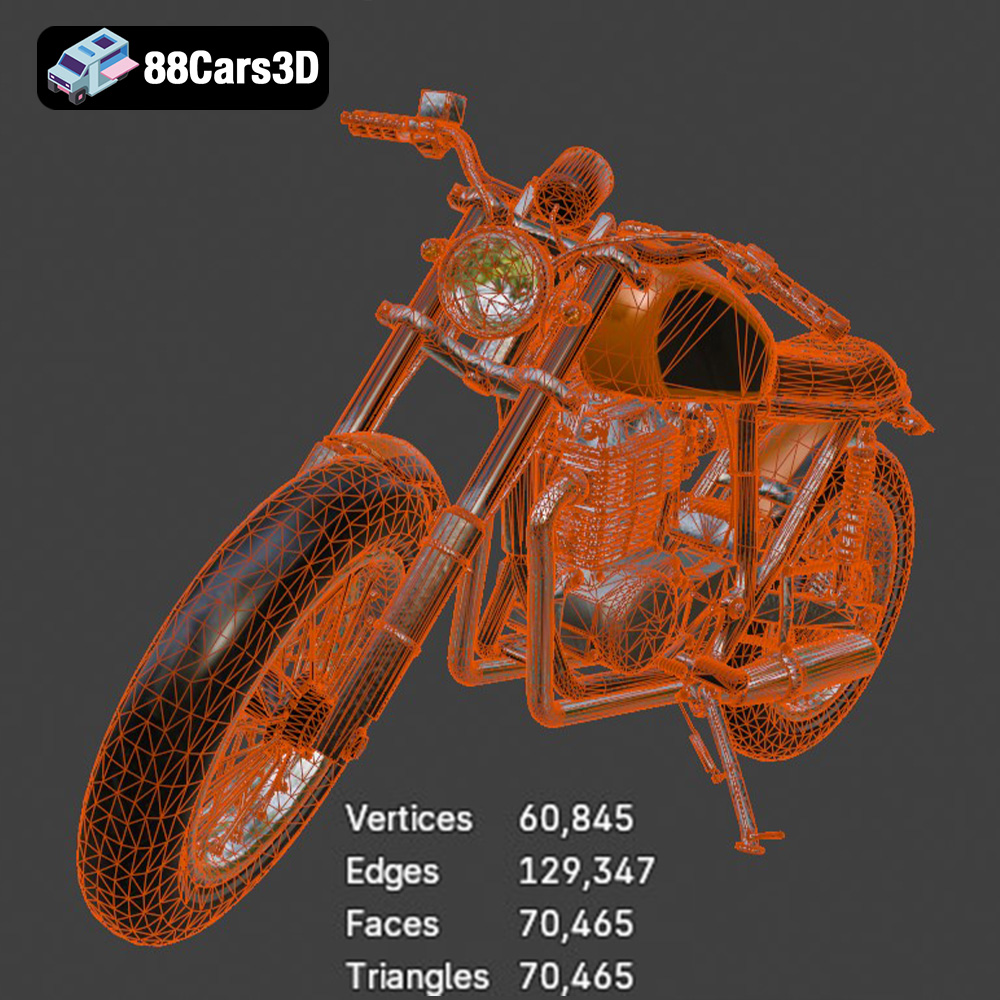
Beyond its aesthetic appeal, the Custom_Motorcycle 3D Model boasts impressive technical specifications that underscore its professional-grade quality. With 945,800 vertices, 1,860,200 edges, and 910,500 faces/polygons, it offers a high-poly, well-organized mesh structure designed for maximum mechanical realism. This dense topology is crucial for smooth subdivisions, realistic reflections, and intricate shadow casting in high-resolution studio rendering. Crucially, the model is built with real-world scale accuracy and proper pivot setups for steering, wheel rotation, and even kickstand articulation, simplifying animation workflows and ensuring physical accuracy in simulations. This robust foundation makes it an ideal asset for critical visualization tasks and demanding production pipelines.
The true value of a high-quality 3D asset lies in its seamless integration into diverse professional workflows. The Custom_Motorcycle 3D Model is engineered with this versatility in mind, offering immediate utility for rendering, visualization, and design iterations across multiple software platforms.
For automotive artists and visualization specialists, the model serves as a premium base for creating breathtaking renders. Imagine this custom bike positioned in a moody urban street scene, its chrome glinting under neon lights, or displayed proudly in a pristine virtual showroom. With its high-poly count and clean topology, the model is perfectly suited for detailed close-ups, where every bolt, weld, and leather stitch needs to hold up to scrutiny. Using industry-standard renderers like V-Ray, Corona, or Blender’s Cycles, artists can leverage its well-defined geometry to apply physically based rendering (PBR) materials, achieving photorealistic results. The separate components, like wheels and suspension, also facilitate dynamic lighting setups and sophisticated animation sequences for marketing campaigns or design showcases.
The thoughtful construction of the Custom_Motorcycle 3D Model, with its separated and properly pivoted components, makes it an excellent candidate for animation. Animators can easily rig the steering, articulate the suspension, and spin the wheels for dynamic shot compositions. This is invaluable for cinematic productions, commercials, or even interactive product configurators where the bike needs to move and react realistically. From a subtle tilt into a turn to a full-throttle acceleration, the model provides the foundational integrity required for believable motion. The cockpit’s optimized geometry is also suitable for first-person POV rendering, offering engaging perspectives for riders.
Beyond its ready-to-use state, the model offers significant customization options, making it a powerful tool for design exploration. Designers can quickly iterate on visual themes by changing fuel tank and fender colors—experimenting with Candy Apple Red, Metal Flake, Matte Black, or even a scratched rat-rod patina. Engine and exhaust finishes can be toggled between high-polish chrome and blacked-out thermal wraps. The custom stitched leather saddle geometry, with its authentic seam detailing, can be adapted with distressed brown leather or sleek black Alcantara. This flexibility allows studios to present clients with multiple design variations swiftly, accelerating the creative process and demonstrating the model’s adaptability within a bespoke project.
One of the most exciting applications of digital 3D models is the ability to bridge the gap between virtual and physical reality through 3D printing. The Custom_Motorcycle 3D Model is not just for digital rendering; it’s also designed to be convertible to .stl format, making it an excellent candidate for display-scale custom motorcycle hobbyists and collectors.
3D printing a complex model like a custom motorcycle requires careful consideration of scale, material, and print settings. The recommended scales for this model—1:12, 1:10, or 1:8—allow for a substantial physical representation that can highlight the intricate details present in the digital file. While FDM (Fused Deposition Modeling) printers can work, resin printing (SLA/DLP) is highly recommended for achieving the fine mechanical details, such as the wire spokes, the exposed engine components, and the delicate handlebars, which might be lost or too fragile with FDM’s layer lines.
The provided print settings are crucial guidelines for success. A layer height of 0.04–0.12 mm is recommended, especially for resin printers, to capture the subtle contours and sharp edges. Wall thickness between 1.2–2.0 mm ensures structural integrity, particularly for the more delicate parts. An infill of 20–30% strikes a balance between strength and material consumption. Due to the model’s complex geometry, supports are unequivocally required for areas like the handlebars, exhaust pipes, kickstand, and footpegs to prevent print failures and maintain intricate forms. A strategic print orientation, such as printing the frame angled for structural integrity and wheels/exhaust separately, further optimizes the print process and surface finish.
The journey from a raw 3D print to a stunning scale model involves significant post-processing. Sanding is essential to smooth out layer lines and support marks. A good primer creates a uniform surface for painting. For a truly authentic look, modelers can use metalizer paints for the engine block, chrome or matte black finishes for various components, and custom tank liveries to replicate the bespoke nature of the original design. This post-processing stage is where the passion for craftsmanship truly comes alive, transforming a plastic print into a miniature work of art that reflects the model’s high-fidelity digital origins.
The demand for high-quality, performance-optimized assets is constant in the rapidly evolving fields of game development, augmented reality (AR), and virtual reality (VR). The Custom_Motorcycle 3D Model offers a fantastic starting point for these applications, although some considerations are essential to ensure optimal real-time performance.
For game developers looking to feature this bike in biker-themed open-world games or custom vehicle packs, the Custom_Motorcycle 3D Model provides an unparalleled level of detail. Its high-poly nature, while excellent for cinematic renders, often requires careful retopology or decimation for real-time performance, depending on the target engine (Unreal, Unity) and platform (PC, console, mobile). Developers can create lower-poly versions (LODs – Levels of Detail) that automatically swap out based on distance from the camera, maintaining visual quality while optimizing frame rates. The provided .fbx and .unreal formats are particularly beneficial here, offering a streamlined path for importing and configuring the model within game engines, including material setup, collision geometry, and animation integration.
The Custom_Motorcycle 3D Model is perfectly suited for creating immersive virtual custom shops, interactive bike configurators, or even virtual garage showcases in AR/VR environments. Imagine donning a VR headset and being able to walk around this exquisitely detailed bike, examining its components up close, or using AR to place it directly into your living room. The .glb format is especially valuable for these applications due to its optimized nature for web and mobile-based 3D content, ensuring quick loading and smooth interaction. For AR/VR, the real-world scale accuracy of the model is a tremendous asset, allowing for truly believable and immersive experiences that would make any motorcycle enthusiast’s heart race.
Beyond entertainment, the model’s detailed mechanical structure makes it useful for simulation and training. Engineers could use it for mechanical breakdown animations, visualizing custom parts, or understanding assembly sequences. This precision allows for educational content, virtual maintenance guides, or even interactive diagnostic tools where individual components can be highlighted, disassembled, or animated to demonstrate function. The high-fidelity details of the engine block and transmission are particularly beneficial for these specialized simulation scenarios, providing a clear visual reference for complex internal mechanisms.
The journey through the creation, application, and technical considerations of the Custom_Motorcycle 3D Model highlights the evolving capabilities within digital design. From the intricate details of its exposed engine to its versatile compatibility across numerous file formats, this model represents a powerful asset for professionals across industries. Whether your goal is to render a photorealistic masterpiece, develop an engaging game asset, or craft a tangible 3D-printed replica, this model provides the necessary foundation.
Its high-poly, well-organized mesh structure, real-world scale accuracy, and thoughtful separation of components ensure it can meet the demanding requirements of high-resolution studio rendering, complex animation, and immersive AR/VR experiences. The availability in formats like .blend, .fbx, .obj, .glb, .stl, .ply, .unreal, and .max ensures maximum compatibility, empowering artists and developers to integrate it seamlessly into their preferred workflows.
For anyone seeking premium 3D car models or, more specifically, an exceptional custom motorcycle, the Custom_Motorcycle 3D Model from 88cars3d.com is a testament to digital excellence. It’s more than just polygons and textures; it’s a meticulously crafted digital artifact that brings the rebellious spirit and mechanical artistry of custom bikes to life, ready to be unleashed in your next groundbreaking project. Explore this model and many other high-quality 3D assets at 88cars3d.com to elevate your automotive rendering and game asset development to new heights.
The Custom_Motorcycle 3D Model is a high-detail digital recreation of a bespoke, one-of-a-kind two-wheeled build. Designed to capture the raw mechanical beauty and rebellious spirit of custom bike culture, this model combines aggressive styling, exposed engine components, and premium aftermarket detailing that reflects top-tier motorcycle craftsmanship. This 3D model accurately represents a modified frame geometry, a handcrafted fuel tank, an intricate custom exhaust system, specialized wheels, and a highly detailed engine block. Built with dense, clean topology for premium visual fidelity and real-world scale accuracy, it is ideal for close-up rendering, automotive visualization, animation, game development, and AR/VR garage showcases. Perfect for gritty urban street scenes, high-end automotive galleries, biker lifestyle campaigns, and cinematic productions.
$29.99
.biker
.blend
.bobber
.chopper
.fbx
.obj
.rendering
.stl
3d printing
cafe-racer
custom-bike
custom-motorcycle
engine-details
game asset
high poly
motorcycle-3d-model
two-wheeler
VR/AR