⚡ FLASH SALE: Get 60% OFF All Premium 3D & STL Models! ⚡

In the dynamic world of 3D visualization, the quality of your assets directly impacts the realism and impact of your projects. From cutting-edge automotive rendering to immersive game development and detailed architectural visualization, a meticulously crafted vehicle model can elevate a scene from good to outstanding. Whether you’re a seasoned professional seeking the perfect hero asset or an enthusiast looking to bring a digital dream car to life, the demand for highly accurate and versatile 3D car models is constant.
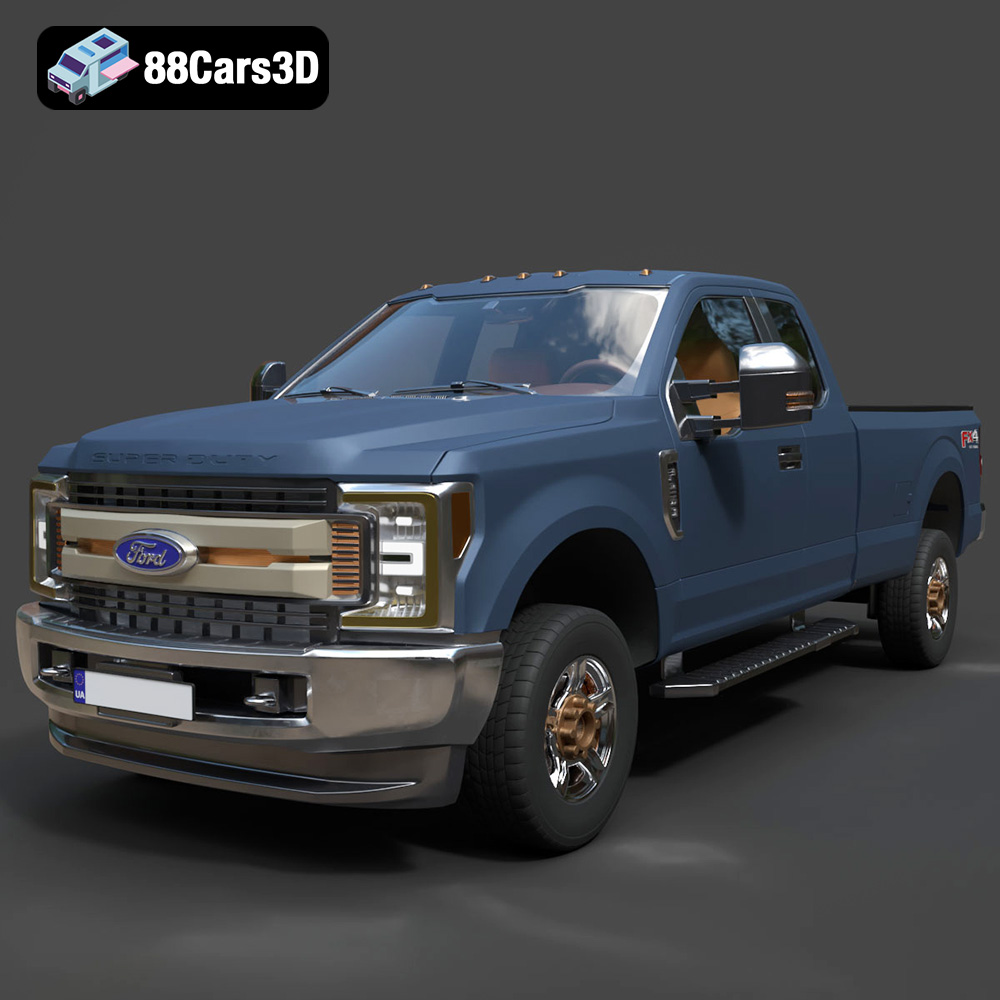
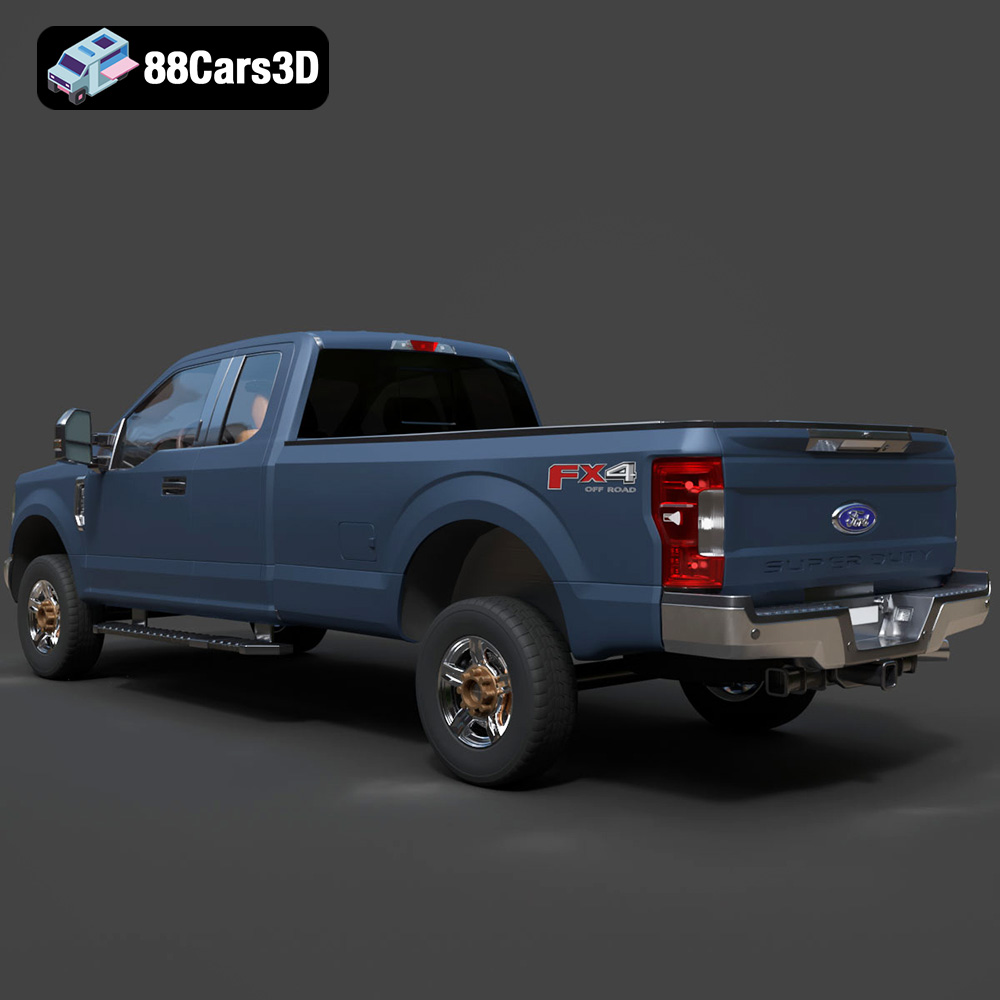
Today, we’re putting a spotlight on a particular standout from the extensive collection at 88cars3d.com: the Ford F-250 Super Duty Super Cab XLT 2015 3D Model. This premium asset is a prime example of what high-fidelity modeling can achieve, offering an unparalleled level of detail that caters to a wide array of professional applications. Representing the final iteration of Ford’s legendary steel-body heavy-duty trucks, this 2015 F-250 model captures the imposing, muscular stance that has made it a favorite for towing, off-roading, and commercial fleets across America.
Throughout this comprehensive guide, we’ll explore the technical intricacies that make such 3D car models invaluable, discuss specific workflows in leading software like 3ds Max, Blender, and Unreal Engine, and demonstrate how this F-250 model, with its dense topology and accurate features, fits seamlessly into diverse creative pipelines. We’ll also delve into the critical aspects of file formats, the nuances of 3D printing, and the immense customization potential that a well-built asset provides.
The utility of any 3D model, especially one as complex and detailed as a high-fidelity vehicle, is significantly influenced by the file formats it supports. Different formats are optimized for various purposes, software compatibility, and industry-specific workflows. Understanding these distinctions is crucial for selecting the right asset for your project and ensuring a smooth integration into your pipeline. The Ford F-250 Super Duty Super Cab XLT 2015 3D Model, available at 88cars3d.com, is delivered with a comprehensive suite of formats, ensuring maximum flexibility for any professional.
The .blend format is Blender’s native file type, offering a complete, editable scene with all associated materials, textures, lighting, cameras, and animation data embedded. For artists working primarily in Blender, this is the most convenient format as it opens directly into the software with everything ready to go. It preserves modifiers, rigging, and custom properties, allowing for full parametric control and easy modifications. If you plan to delve deep into the model’s structure, adjust its materials, or integrate it into an existing Blender scene with minimal fuss, the .blend file is your best choice.
FBX (Filmbox) is a proprietary file format developed by Autodesk, widely regarded as the industry standard for exchanging 3D data between different software applications. Its strength lies in its ability to store not just geometry, but also materials, textures, animations, and skeletal deformation. This makes .fbx an ideal choice for pipelines involving Unreal Engine, Unity, and other real-time game engines, as well as for transferring models between DCC (Digital Content Creation) tools like 3ds Max, Maya, and Cinema 4D. When seeking a balance between comprehensive data transfer and broad compatibility, .fbx is generally the go-to format.
The .obj (Wavefront OBJ) format is one of the oldest and most widely supported 3D file types. It primarily stores geometry (vertices, normals, texture coordinates, and faces) and can reference external material files (.mtl). Its universality makes it excellent for cross-software compatibility, ensuring that almost any 3D application can open and interpret the model’s core structure. While it doesn’t typically store animation or rigging data, its simplicity and widespread adoption make it a reliable choice for pure geometric exchange, particularly when you intend to rebuild materials or rigging in your target software.
GLB (GL Transmission Format Binary) is the binary version of the glTF format, designed for efficient transmission and loading of 3D scenes and models by applications. It packages textures and other assets directly into a single file, making it incredibly convenient for web-based 3D viewers, AR (Augmented Reality), and VR (Virtual Reality) experiences. For developers aiming to integrate the Ford F-250 model into a browser-based configurator or an AR application, the .glb format offers optimized performance and ease of deployment.
STL (STereoLithography) is the de facto standard file format for 3D printing. It represents a 3D model as a series of connected triangles, describing only the surface geometry of an object without color, texture, or other CAD attributes. While it lacks visual fidelity for rendering, it is precisely what 3D printers need to understand an object’s form for manufacturing. The Ford F-250 model’s inclusion of an .stl file means it’s ready for direct translation into a physical object, perfect for hobbyists creating custom RC truck bodies or designers prototyping automotive components.
PLY (Polygon File Format or Stanford Triangle Format) is another common format for storing 3D data, particularly from 3D scanners. It can store a wider range of properties than .obj, including color, transparency, and sometimes even normal vectors, making it suitable for scientific visualization, CAD applications, and precise mesh analysis. While less common for general rendering assets, its inclusion offers an alternative for highly precise geometric applications or academic research.
The “.unreal” format likely refers to an asset specifically prepared or packaged for direct import into Unreal Engine, potentially including optimized meshes, PBR (Physically Based Rendering) materials, and level-of-detail (LOD) setups. While .fbx is the primary import format for Unreal, providing a tailored .unreal file indicates a focus on streamlining integration into this powerful real-time engine, potentially saving valuable setup time for game developers or virtual production artists.
Similar to .blend for Blender, .max is the native file format for Autodesk 3ds Max. This format retains all scene data, including geometry, materials, lighting, cameras, animations, and plugins specific to 3ds Max. For users of this industry-leading software, the .max file provides the most complete and editable version of the model, allowing for comprehensive customization, complex animation setups, and integration into existing 3ds Max projects without any loss of data or fidelity.
The availability of such a diverse range of formats for the Ford F-250 Super Duty Super Cab XLT 2015 3D Model highlights 88cars3d.com’s commitment to providing versatile and professional-grade 3D car models that cater to every imaginable workflow.
Achieving photorealism and functional versatility in 3D car models demands an meticulous approach to geometry, texturing, and structural organization. The Ford F-250 Super Duty Super Cab XLT 2015 3D Model exemplifies this dedication, built from the ground up to serve as a “hero” asset in demanding professional environments.
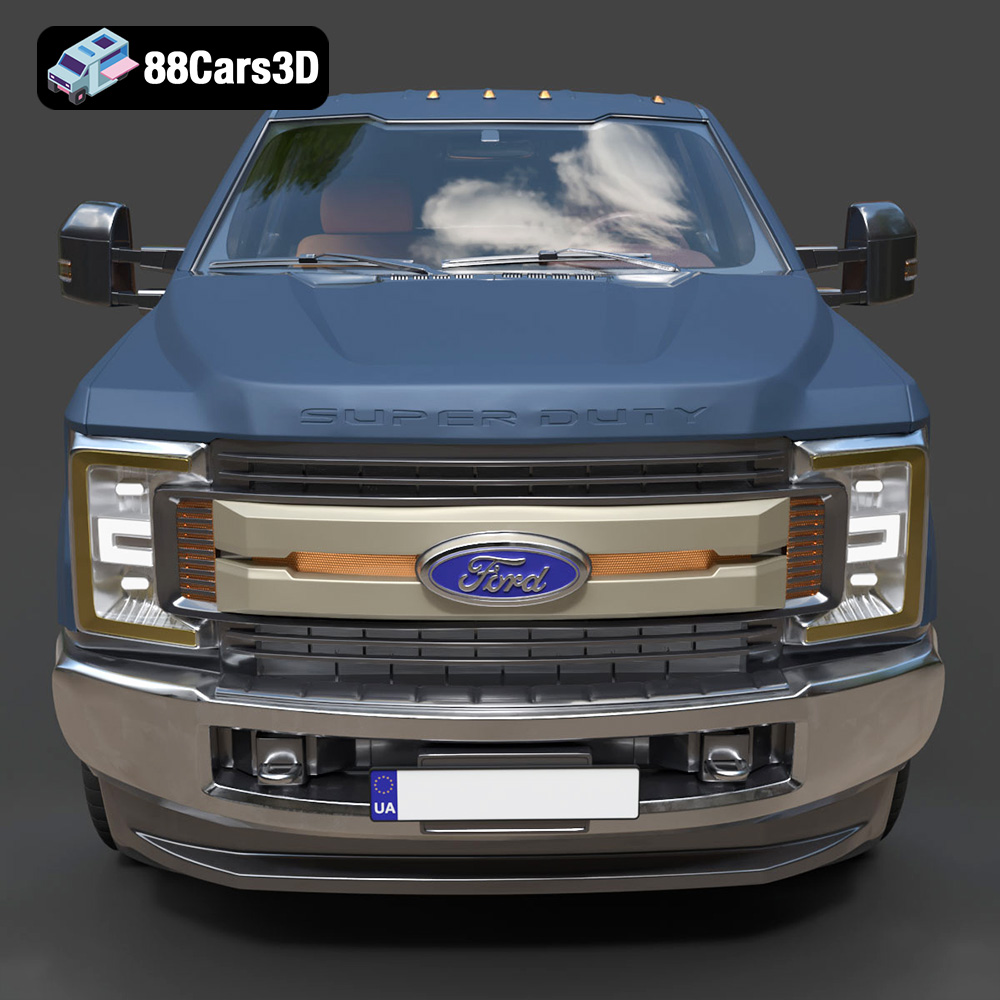
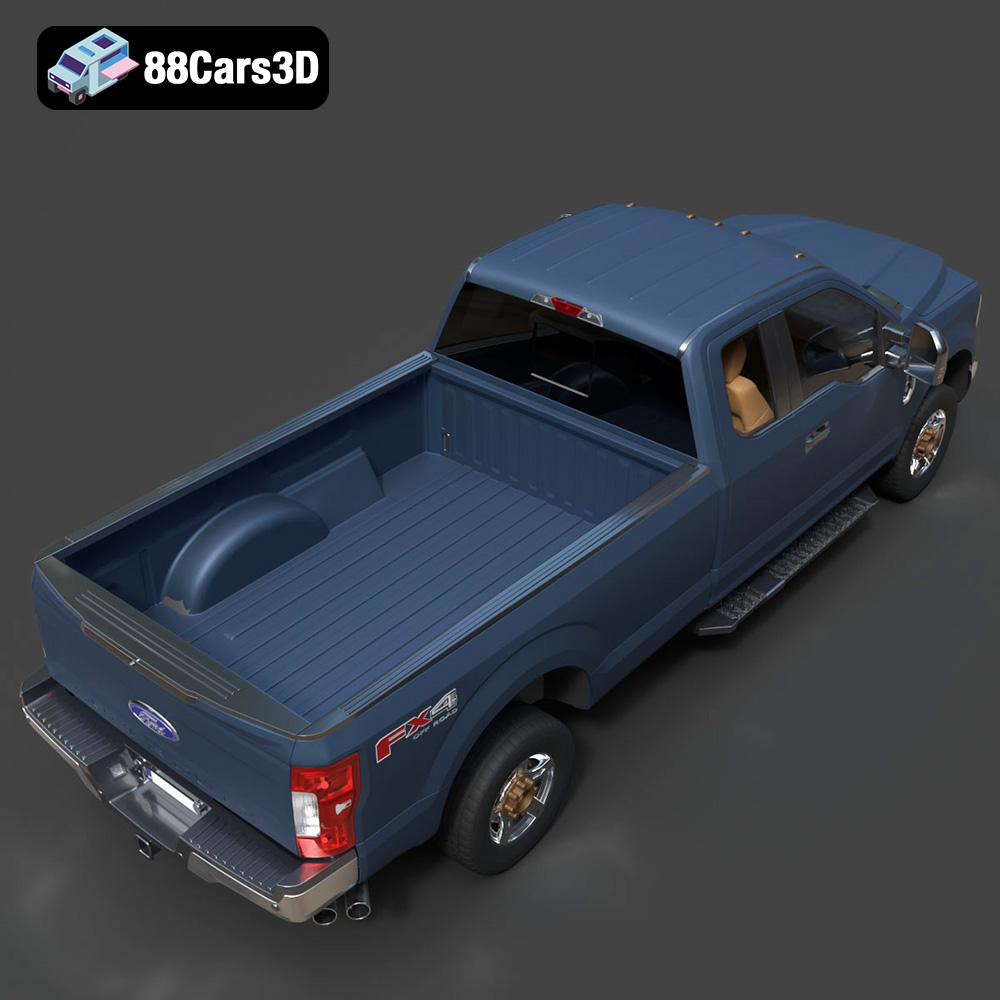
The foundation of any great automotive model is its adherence to real-world proportions and design intent. This F-250 model meticulously recreates the distinctive XLT trim, from its bold dual-bar chrome grille to the massive stacked headlight clusters that define its imposing front fascia. The extended “Super Cab” layout with its rear-hinged half doors is accurately modeled, ensuring realistic panel gaps and overall vehicle dimensions. Details like the telescoping trailer-tow side mirrors, heavy-duty chrome bumpers, and the nuanced geometry of the cargo bed with its tailgate and rails all contribute to an authentic digital representation of this iconic workhorse. Even the standard XLT alloy wheels, wrapped in rugged all-terrain tires, are faithfully reproduced, ensuring the vehicle looks convincing from every angle and distance.
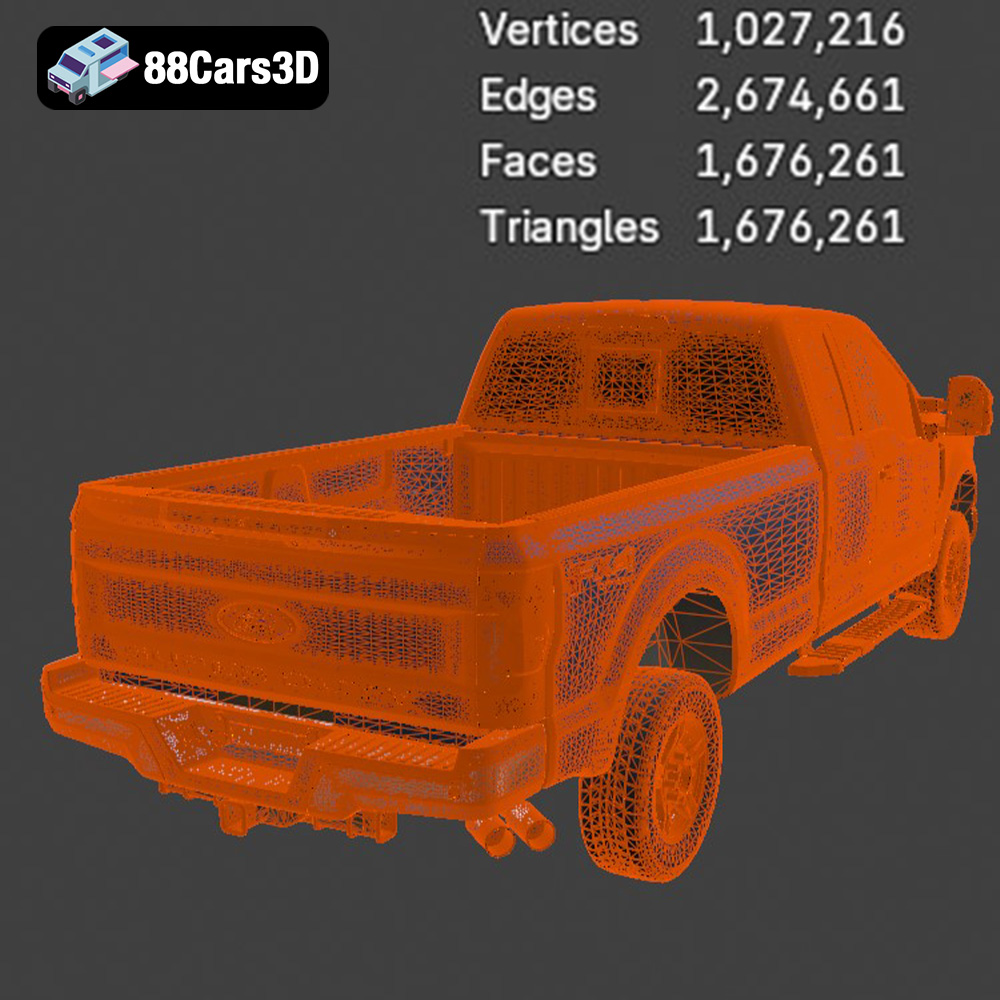
Beyond visual accuracy, the true strength of this 3D model lies in its robust technical specifications. With over 1.6 million polygons (specifically, 1,676,261 triangles and faces), 1,027,216 vertices, and 2,674,661 edges, this is undeniably a high-poly asset. This dense topology is not arbitrary; it is crucial for maximizing visual fidelity, particularly for extreme close-up rendering and cinematic automotive visualization where every curve, seam, and hard edge must appear perfectly smooth and detailed. The model boasts a well-organized mesh structure, which is vital for ease of manipulation and ensures clean subdivision if further smoothing is required. Furthermore, the real-world scale accuracy, based on Ford factory dimensions, guarantees that the vehicle will integrate correctly into any scene, whether it’s a bustling construction site or a serene wilderness trail.
A static model, however detailed, has limited utility in dynamic productions. This Ford F-250 3D model is designed with animation in mind. Key components such as the wheels, steering elements, all doors, and the tailgate are separated and feature proper pivot setups. This thoughtful organization allows animators to easily articulate the vehicle for dynamic sequences: turning wheels, opening doors for interior shots, or dropping the tailgate to load cargo. This pre-rigged functionality saves significant time in production, making it an ideal choice for complex narrative animations, interactive presentations, or virtual reality experiences where user interaction is key.
The versatility of a high-quality 3D car model is best demonstrated by its seamless integration into various professional pipelines. The Ford F-250 Super Duty Super Cab XLT 2015 3D Model is engineered to be a flexible asset, capable of meeting the rigorous demands of diverse creative industries.
For studios specializing in automotive rendering and visualization, this F-250 model is an invaluable tool. Its high polygon count and accurate details make it perfect for creating photorealistic stills and animations in rendering engines like V-Ray, Corona, Redshift, or Octane within 3ds Max or Blender. Artists can effortlessly use it for commercial fleet branding mockups, showcasing how a company logo would look on a real-world vehicle. It’s also ideal for product showcases, where the truck can serve as a hero product or a contextual element for accessories. In architectural visualization, adding this rugged truck to a scene can inject realism and convey a specific mood or purpose, such as a construction site, a rural homestead, or an industrial complex. The model’s optimized geometry and real-world scale ensure that it responds authentically to sophisticated lighting setups and material assignments, producing stunning visual outputs.
In the realm of cinematic production and visual effects (VFX), high-detail assets are paramount for pre-rendered sequences. The Ford F-250 3D model excels here as a “hero” vehicle, capable of withstanding extreme close-ups and dramatic camera moves without losing fidelity. Whether it’s driving through a rugged landscape in a film, serving as a character’s vehicle in an animated short, or appearing as a background element in a complex digital matte painting, its detailed exterior and interior provide the necessary realism. The clean topology and organized structure facilitate further subdivision for even smoother surfaces and enable robust deformation should the narrative require, for example, a fender-bender or off-road impacts. The pre-set pivots for doors, wheels, and steering components significantly streamline the animation process, allowing artists to focus on performance rather than setup.
While the Ford F-250 Super Duty 3D model is initially provided as a high-poly asset (over 1.6 million polygons), its potential in game development and real-time applications like AR/VR is immense, albeit requiring an essential optimization step. As a “hero” asset, it provides an excellent base for creating multiple Levels of Detail (LODs) that are crucial for efficient real-time rendering. Game developers would typically employ retopology or decimation techniques to reduce the polygon count significantly, creating versions suitable for in-game drivable vehicles, distant props, or mobile AR experiences. For example, a high-detail LOD0 could be used for immediate vicinity views, while LOD1, LOD2, and LOD3 models with progressively lower poly counts would load as the vehicle moves further from the camera. The detailed interior geometry also makes it a strong candidate for first-person perspective shots or VR experiences once optimized. The provided .fbx and potentially .unreal formats make the import process into engines like Unreal Engine and Unity straightforward, after the necessary poly reduction and material re-application for PBR workflows.
One of the most exciting applications for a robust 3D model like the Ford F-250 Super Duty Super Cab XLT 2015 is its capability for 3D printing. The transition from a digital mesh to a tangible object opens up a world of possibilities for hobbyists, collectors, and prototyping enthusiasts.
The inclusion of the .stl file format specifically caters to the 3D printing community. An STL file defines the surface geometry of a 3D object using a collection of triangles, providing the necessary data for a 3D printer to build the object layer by layer. The Ford F-250 model’s high detail in its digital form translates directly into a highly detailed physical print, allowing for incredibly accurate scale models or custom components. Imagine holding a miniature replica of this powerful truck, perfectly scaled and ready for display or as a base for further customization.
The product description highlights recommended scales for 3D printing: 1:24, 1:18, and 1:10. These scales are particularly popular among RC (radio-controlled) crawler enthusiasts and model builders. At 1:10 scale, the F-250 model can become the body for a custom RC truck, offering an unprecedented level of realism for off-road adventures. The dense topology of the digital model ensures that even at these larger scales, subtle details like the XLT-spec grille, headlight clusters, and interior elements retain their fidelity, making for an impressive physical replica. This attention to detail is a hallmark of the 3D car models found on 88cars3d.com.
Successful 3D printing, especially for complex automotive models, relies on careful preparation and appropriate print settings. The recommended layer height of 0.08–0.16 mm strikes a balance between detail and print time, while a wall thickness of 1.5–2.5 mm is crucial for structural integrity, especially for a large truck body. An infill of 15–25% provides sufficient internal support without excessive material usage. Supports are essential for overhangs and delicate features like tow mirrors, wheel arches, exhaust, and undercarriage details to prevent warping or collapse during printing. For optimal results, printing the cab and bed separately or angling them on the print bed can improve surface finish and structural strength. Post-processing is where the model truly comes to life: sanding to smooth layer lines, applying primer for an even base, and then painting with authentic factory colors like Oxford White, Blue Jeans Metallic, or Ingot Silver. Finishing touches include using silver metalizer paints for chrome accents, mimicking the truck’s real-world appearance with stunning accuracy.
One of the greatest advantages of acquiring a high-quality 3D car model is the unparalleled freedom it offers for customization. The Ford F-250 Super Duty Super Cab XLT 2015 3D Model provides a robust foundation upon which artists can build bespoke creations, tailoring the vehicle to perfectly fit their artistic vision or project requirements.
The ability to change exterior paint colors is fundamental, allowing the truck to match classic 2015 Ford factory options or be reimagined in entirely new hues. Beyond paint, the model serves as an excellent canvas for modifying wheel and tire setups. Imagine swapping the stock XLT alloy wheels for aggressive aftermarket lift-kit setups, complete with oversized knobby tires, transforming the work truck into an extreme off-roader. This level of modification is not limited to performance; artists can also adjust bed accessories, adding a toolbox, a sleek tonneau cover, or a heavy-duty fifth-wheel hitch to suit various commercial or recreational scenarios. Such detailed customization capability ensures that the truck can play many roles within a narrative, from a rugged construction vehicle to a weekend adventure rig.
The versatility of the F-250 model extends to its integration into diverse environments. With careful texturing and lighting adjustments, the same truck can convincingly appear in a sunny, dusty construction site, reflecting the harsh realities of heavy labor. Alternatively, with a change in materials to show wear and tear, and atmospheric lighting, it can traverse moody, rain-slicked off-road trails, conveying a sense of adventure or challenging terrain. This adaptability makes the model incredibly valuable for visual storytellers who need to place their vehicles within a specific context. Whether depicting a pristine fleet vehicle or a weathered, beloved farm truck, the high-fidelity geometry provides the detail necessary to support any narrative. This deep level of customization is a key reason why professionals choose premium 3D car models from marketplaces like 88cars3d.com, knowing they are investing in an asset that can be continually re-purposed and adapted across countless projects.
The journey through the technical specifications, versatile applications, and customization potential of the Ford F-250 Super Duty Super Cab XLT 2015 3D Model underscores the profound impact of high-quality assets in modern 3D production. From its robust, high-polygon mesh designed for extreme close-ups and cinematic rendering to its meticulously organized components ready for animation and its manifold geometry suitable for 3D printing, this model is a testament to precision engineering in the digital realm.
Whether you’re developing photorealistic automotive rendering projects, crafting immersive game assets, or bringing detailed scale models to life through 3D printing, the F-250 offers a reliable and highly adaptable foundation. Its compatibility with various file formats—including .blend, .fbx, .obj, .glb, .stl, .ply, .unreal, and .max—ensures seamless integration into virtually any professional workflow, making it a truly versatile asset for any designer or studio.
Investing in such a detailed 3D car model not only saves invaluable production time but also elevates the realism and professional polish of your final output. Explore this exceptional Ford F-250 Super Duty model and many other premium 3D car models designed for professional use at 88cars3d.com, where quality and versatility drive creative possibilities.
The Ford F-250 Super Duty Super Cab XLT 2015 3D Model is a premium, high-detail digital recreation of America’s iconic heavy-duty work truck. Representing the final iteration of the legendary steel-body generation, this 2015 model captures the imposing, muscular stance that makes the F-250 a favorite for towing, off-roading, and commercial fleets. This 3D model accurately represents the XLT trim’s signature dual-bar chrome grille, massive stacked headlights, extended “Super Cab” layout with rear-hinged half doors, and heavy-duty cargo bed. Built with dense, uncompromising topology (over 1.6 million polygons), it provides maximum visual fidelity for extreme close-up rendering, cinematic automotive visualization, commercial fleet mockups, and high-end 3D printing. Perfect for rugged off-road scenes, construction site environments, commercial vehicle pitches, and high-end cinematic productions.
$69.99
.automotive
.blend
.fbx
.ford
.obj
.rendering
.stl
.xlt
2015-ford
3d printing
car-3d-model
f-250
heavy-duty
high poly
pickup-truck
super-cab
super-duty