⚡ FLASH SALE: Get 60% OFF All Premium 3D & STL Models! ⚡

In the demanding world of 3D visualization, creating highly accurate and versatile industrial assets is a significant challenge. Artists and developers often spend countless hours perfecting intricate details, ensuring real-world scale, and optimizing geometry for diverse applications, from high-fidelity renders to real-time simulations. This meticulous process is essential for delivering authenticity, whether you’re building a sprawling virtual logistics hub, developing a cutting-edge training simulator, or producing compelling automotive rendering for marketing campaigns. The need for robust, production-ready 3D car models and industrial vehicles is constant, driving the market for reliable digital assets that save valuable development time and resources.
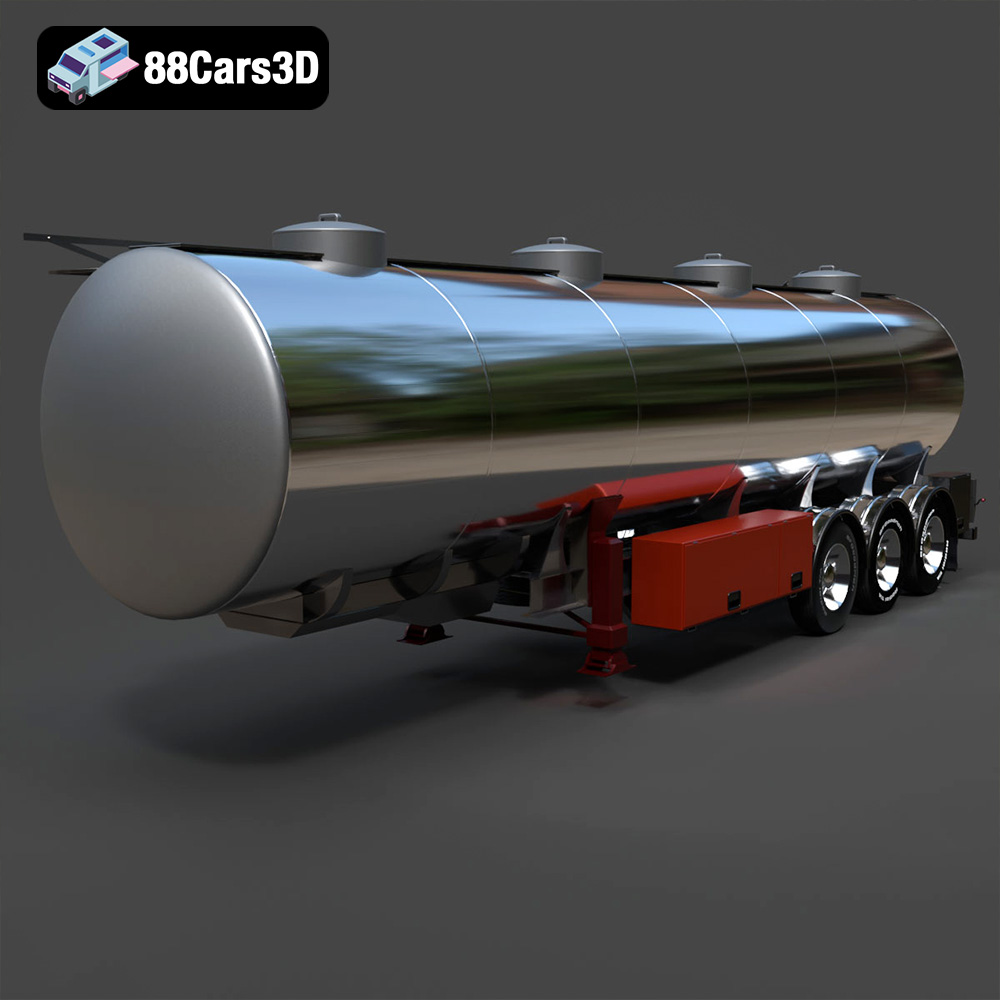
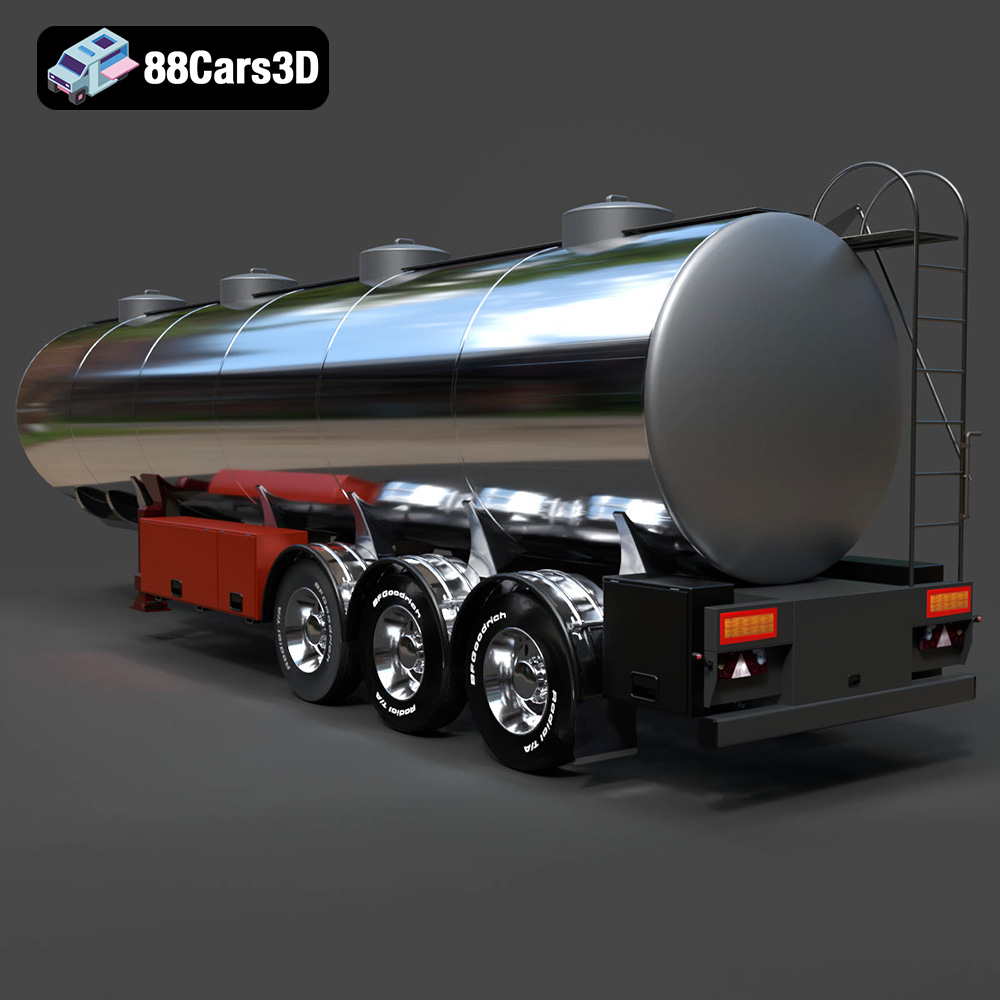
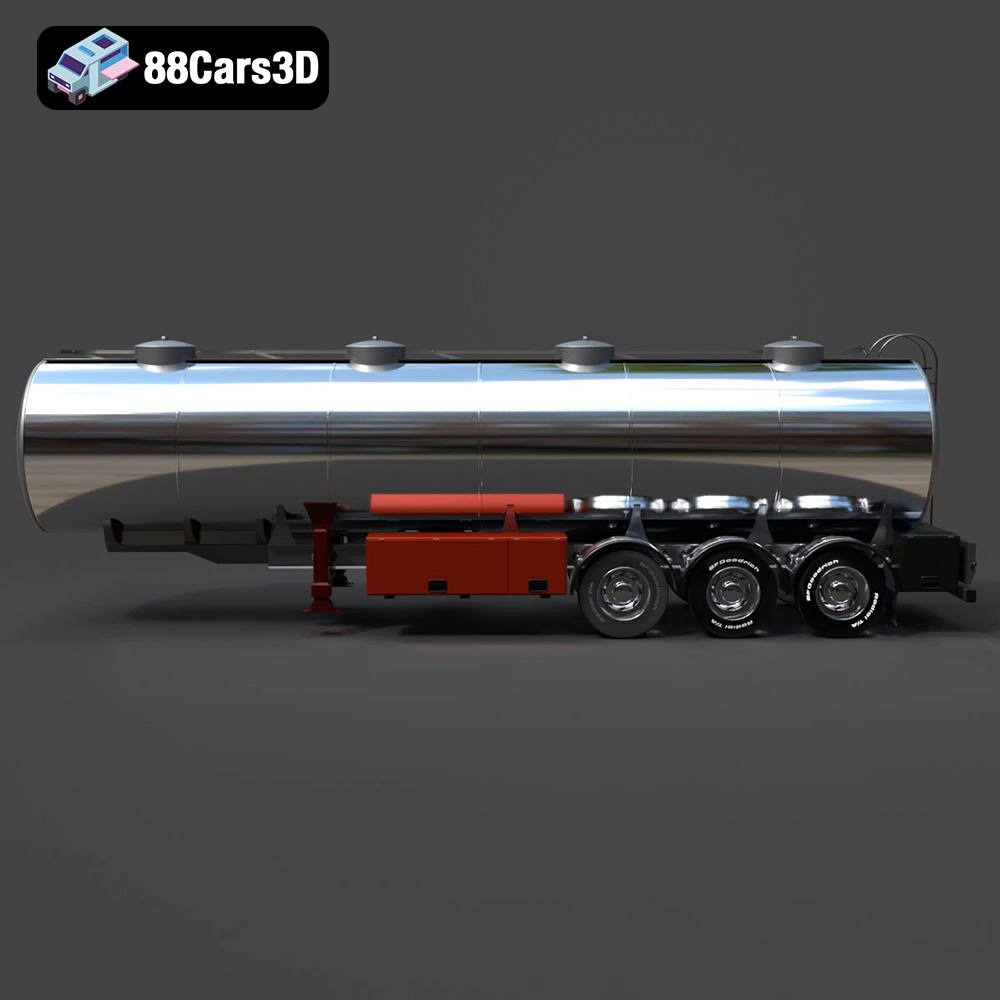
Today, we’ll explore an exemplary asset that meets these exacting standards: the Fuel Tank Trailer 3D Model. This highly detailed digital recreation of a heavy-duty tanker trailer is not just a visual representation; it’s a meticulously engineered piece of digital art designed for peak performance across a spectrum of professional uses. From its accurate cylindrical tank body to its reinforced chassis and finely modeled discharge valves, this model embodies the precision and versatility that professionals demand. Let’s delve into how such a specialized asset fits into modern 3D workflows and the technical considerations that make it indispensable.
Industrial 3D modeling goes beyond mere aesthetics; it’s about capturing the functional essence and structural integrity of real-world machinery. For assets like a fuel tank trailer, this means a deep understanding of mechanical components, material properties, and operational contexts. Every rivet, weld, and panel must contribute to a believable and functional digital twin.
Recreating heavy transport vehicles in 3D demands an obsessive attention to detail. The Fuel Tank Trailer 3D Model exemplifies this with its accurately proportioned cylindrical tank body, the backbone of any tanker. Beyond the main structure, details like the reinforced chassis frame and the complex axle system with a believable suspension setup are critical for conveying weight and operational realism. These elements ensure that when the model is placed in an environment, it not only looks correct but feels grounded and substantial, impacting the overall believability of any scene or simulation.
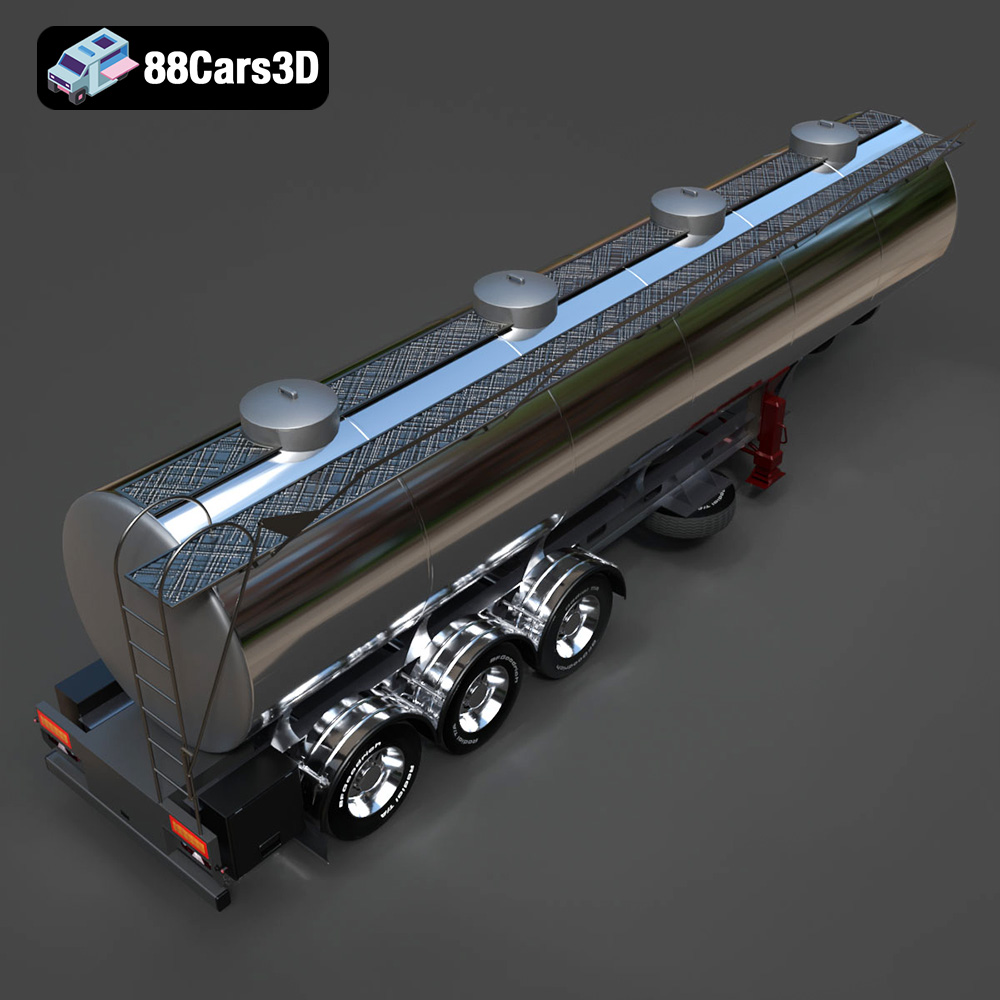
A truly professional 3D model integrates design and functionality. For a fuel tank trailer, this translates to the meticulous modeling of functional components such as the rear ladder access, safety railings, hose compartments, and fuel discharge valves. These aren’t just decorative; they indicate potential points of interaction in a simulation or provide visual cues for technical understanding in a visualization. The model’s clean topology and adherence to real-world proportions are paramount, ensuring that it can be animated, textured, and integrated into complex scenes without issue, providing a solid foundation for high-quality automotive rendering or immersive game environments.
Choosing the correct file format is a critical decision in any 3D workflow, directly impacting compatibility, performance, and the fidelity of your assets. The Fuel Tank Trailer 3D Model from 88cars3d.com is provided in a comprehensive suite of formats, each serving distinct purposes for professionals across various industries.
The .blend format represents a fully editable Blender scene. For users deeply integrated into the Blender ecosystem, this format offers maximum flexibility. It includes the entire scene setup, materials, textures, lighting, cameras, and even animation data if present. Artists can open the file and immediately begin customizing the Fuel Tank Trailer 3D Model – adjusting geometry, modifying materials, or integrating it into existing Blender projects with ease. It’s ideal for those who want to leverage Blender’s powerful modeling, sculpting, and rendering capabilities.
.fbx (Filmbox) is arguably the most widely adopted format for exchanging 3D data between different software applications. Developed by Autodesk, it supports geometry, materials, textures, animation, and rigging. The Fuel Tank Trailer 3D Model in .fbx format is perfect for migrating the asset to Unreal Engine, Unity, 3ds Max, Maya, or Cinema 4D, preserving as much data as possible during the transfer. Its robust support for skeletal animation makes it particularly valuable for real-time pipelines and game development, where consistent data transfer is crucial for creating dynamic game assets.
The .obj (Wavefront OBJ) format is a universal standard known for its simplicity and broad compatibility. It primarily stores geometry (vertices, normals, texture coordinates, and faces) and can link to external material (.mtl) and texture files. While it doesn’t support animation or rigging, its widespread support across virtually all 3D software makes it an excellent choice for basic mesh exchange. When using the Fuel Tank Trailer 3D Model in .obj format, you can be confident that almost any 3D application will be able to import and display the model’s core structure accurately, making it ideal for foundational asset integration or archival purposes.
.glb (GL Transmission Format Binary) is a relatively newer format designed specifically for the efficient transmission and loading of 3D scenes and models in web and AR/VR environments. It’s a binary container format that includes geometry, materials, textures, and animation in a single, self-contained file. For displaying the Fuel Tank Trailer 3D Model on a website, in an AR experience on a mobile device, or within a VR application, .glb offers optimized file sizes and quick loading times. This makes it an invaluable asset for interactive product showcases or immersive training modules.
.stl (Stereolithography) is the de facto standard format for 3D printing. It represents a 3D model as a series of connected triangles, describing only the surface geometry without color, texture, or material information. When you want to bring the Fuel Tank Trailer 3D Model into the physical world as a miniature or scale model, the .stl format is what your 3D printer slicing software will use. Ensuring the model is “manifold” (watertight with no gaps or intersecting geometry) is crucial for successful .stl exports, and high-quality models like this one are designed with this in mind.
.ply (Polygon File Format or Stanford Triangle Format) is another format for storing 3D data, often used in scientific and technical applications, particularly for scanned data. It can store various properties beyond just geometry, such as color, transparency, and even material properties per vertex or face. While less common for direct asset exchange in creative pipelines than .fbx or .obj, the .ply format offers precision and flexibility for specific engineering, analysis, or academic visualization tasks involving the Fuel Tank Trailer 3D Model.
The .unreal format signifies an asset specifically optimized or directly packaged for Unreal Engine. This could refer to a native Unreal Engine asset (e.g., a Static Mesh, Blueprint, or Level Sequence) or an .fbx file pre-configured for optimal import into Unreal. For game developers and real-time visualization specialists, having the Fuel Tank Trailer 3D Model available in an Unreal-ready format streamlines the import process, ensures correct material setup, and often includes proper collision meshes and LODs (Levels of Detail) right out of the box, saving significant time in engine integration.
The .max format is the native file format for Autodesk 3ds Max. Similar to .blend for Blender, it contains the entire scene data, including geometry, materials, textures, lighting, animation, and renderer-specific settings. For professionals working within 3ds Max, the .max version of the Fuel Tank Trailer 3D Model offers the highest level of editability and direct compatibility with their primary modeling and rendering software, allowing for immediate customization and integration into complex scenes for high-end automotive rendering and architectural visualization.
The Fuel Tank Trailer 3D Model is a testament to meticulous craftsmanship, engineered to meet the stringent demands of professional 3D environments. Its design reflects a thorough understanding of real-world industrial vehicles, translated into optimized digital form.
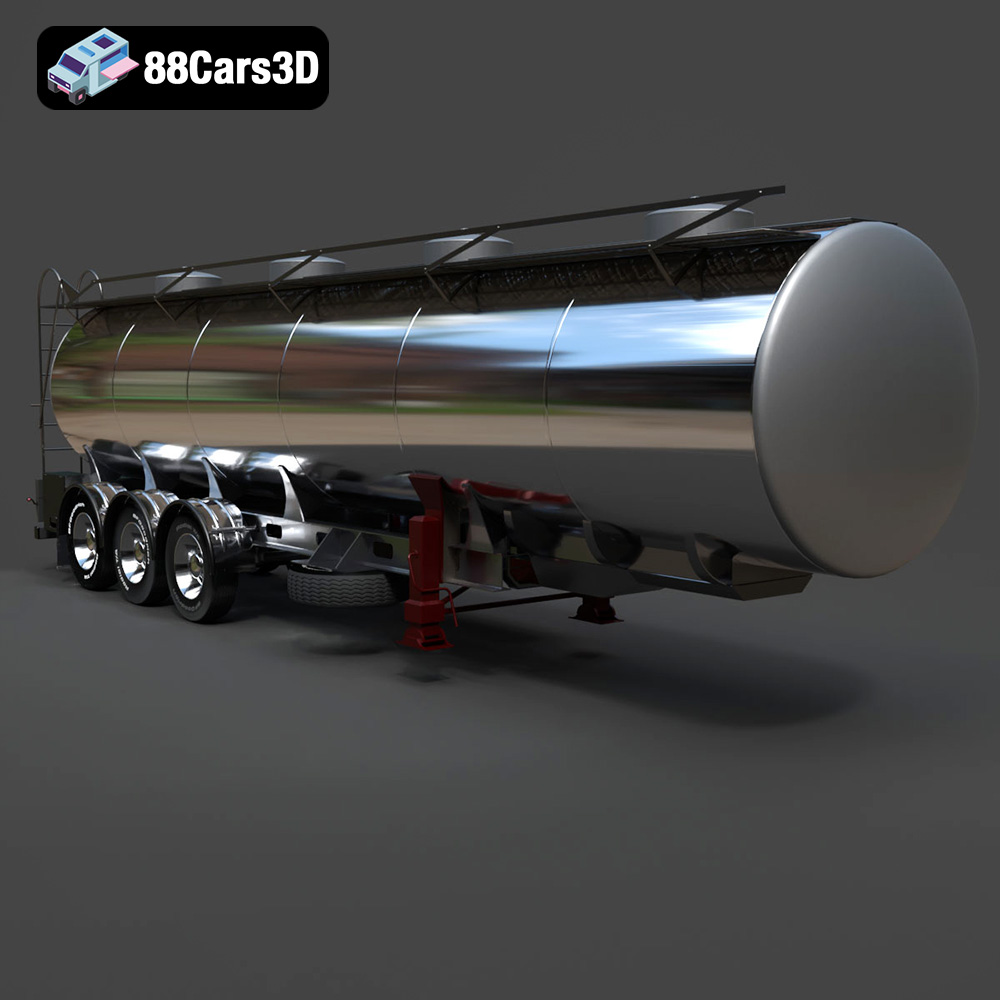
The model’s exterior features are designed for both aesthetic realism and functional accuracy. The accurate cylindrical tank body proportions are instantly recognizable, giving it an authentic presence. This is complemented by a detailed chassis frame and robust support structure, underscoring the trailer’s heavy-duty nature. The realistic axle configuration, complete with a suspension system, adds another layer of mechanical believability, crucial for animation and simulation contexts where dynamic movement is expected. Furthermore, essential operational elements like modeled fuel discharge valves, a comprehensive piping system, a rear ladder, top safety railing, and hose storage compartments are all faithfully recreated. Small yet vital details like mudguards, reflectors, and safety markings contribute significantly to the overall realism, making it suitable for any high-quality automotive rendering project. Crucially, the wheels are separated, ensuring proper pivot setup for animation and rotation, a critical feature for any vehicle asset.
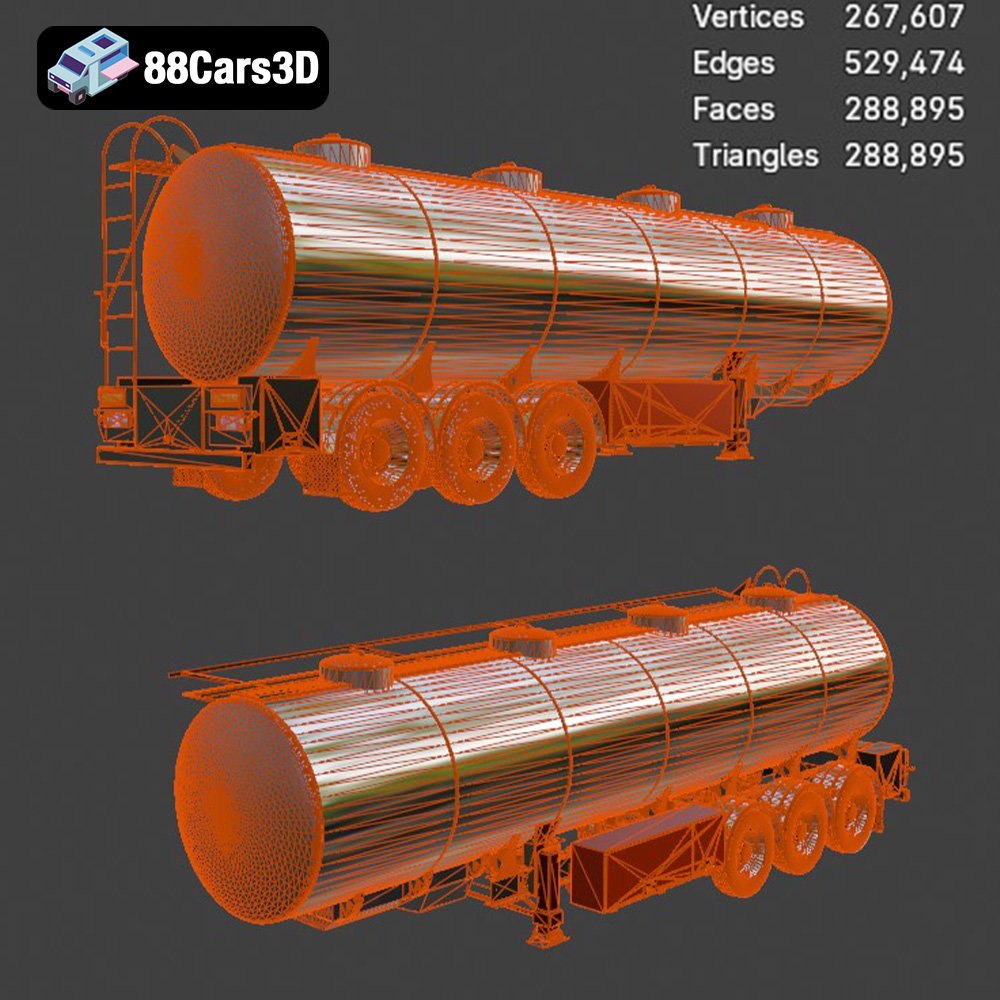
While often unseen, the structural details beneath the surface are just as important. The Fuel Tank Trailer 3D Model includes considerations for internal tank segmentation, which would be essential for multi-compartment versions or for visually depicting internal liquid dynamics in advanced simulations. Reinforced mounting brackets ensure the tank’s secure attachment to the chassis, mimicking real-world construction. Realistic connection points for tractor attachment are modeled, allowing for seamless integration with other vehicle assets. This focus on hidden yet impactful details speaks to the model’s overall integrity and suitability for demanding applications. Moreover, the optimized geometry ensures that even with high detail, the model performs efficiently in real-time engines and renders flawlessly in high-quality production environments.
Professional users require more than just good looks; they need technical robustness. This model boasts a clean and well-organized mesh structure, simplifying UV unwrapping, texturing, and potential modifications. Its real-world scale accuracy ensures that it fits seamlessly into environments without needing tedious scaling adjustments. The proper pivot setup for wheel rotation is a fundamental technical advantage, facilitating straightforward animation for driving simulations or cinematic sequences. The optimized polygon flow strikes a perfect balance between visual fidelity and performance, making it suitable for both demanding renders and efficient real-time applications like game development or AR/VR. This comprehensive attention to technical detail ensures compatibility with major 3D software platforms and game engines, truly making it a versatile game asset.
The versatility of the Fuel Tank Trailer 3D Model lies in its adaptability across various professional 3D pipelines. Its design and optimized formats make it a valuable asset for diverse projects.
For studios specializing in industrial advertising, logistics presentations, or architectural visualization, high-fidelity rendering is key. Using the .max or .blend format, artists can import the Fuel Tank Trailer 3D Model into 3ds Max or Blender, pair it with renderers like V-Ray, Corona Renderer, or Cycles, and achieve stunning photographic realism. The model’s clean topology facilitates smooth subdivision for close-up shots, and its organized mesh makes applying complex PBR (Physically Based Rendering) materials straightforward. Imagine a scene with dynamic lighting, reflections bouncing off the cylindrical tank, and detailed textures showing slight weathering – this model provides the ideal foundation for creating such compelling automotive rendering visuals for petroleum marketing or commercial fleet presentations.
In game development, performance is as crucial as visual quality. The Fuel Tank Trailer 3D Model, particularly in .fbx or .unreal format, is engineered to excel in real-time environments like Unreal Engine and Unity. Its optimized polygon flow ensures low draw calls and efficient rendering, while its real-world scale makes it drop-in ready for truck simulators, open-world logistics games, or even hazardous material transport systems. Developers can easily implement custom physics, add interactivity, and create immersive driving experiences. The separate wheels with proper pivot points are invaluable for setting up vehicle locomotion, allowing for realistic turning and suspension deformation within the game engine. This model serves as a prime example of a ready-to-use game asset that streamlines development.
Augmented Reality (AR) and Virtual Reality (VR) applications demand highly optimized models for smooth frame rates and believable interactions. The Fuel Tank Trailer 3D Model, especially in .glb format, is perfectly suited for interactive fleet demonstrations and immersive industrial training simulations. Imagine a trainee walking around a virtual fuel depot, inspecting the trailer’s components in VR, or a salesperson showcasing a new fleet addition through an AR app on a tablet. The model’s clean geometry and efficient texture mapping ensure it loads quickly and performs optimally in these demanding, interactive environments, providing rich visual detail without compromising performance.
Beyond digital screens, the Fuel Tank Trailer 3D Model offers the unique advantage of being convertible to a physical object through 3D printing. This capability opens doors for scale models, prototypes, and educational tools.
The included .stl format is specifically designed for 3D printing. The model is structured with manifold geometry, meaning it’s “watertight” and ready for slicing software. When preparing for print, deciding on the scale is paramount. The Fuel Tank Trailer 3D Model is recommended for scales such as 1:32, 1:24, 1:18, and 1:14. These scales allow for varying levels of detail and physical presence, catering to different display preferences or model railway enthusiasts. Converting to .stl and choosing the appropriate scale are the first steps in bringing this digital asset into the tangible world.
Successful 3D printing hinges on careful preparation and understanding of printer capabilities. For the Fuel Tank Trailer 3D Model, layer heights between 0.12–0.20 mm are recommended for FDM printers, offering a good balance of detail and print time. A wall thickness of 2–3 mm ensures structural integrity for the printed parts, preventing brittleness. An infill of 20–35% provides sufficient internal support without excessive material consumption. Given the model’s intricate details like the ladder, railings, and valve assemblies, supports will be required during printing to prevent sagging. Printing orientation is also key: the tank is best printed horizontally for minimal supports on its main surface, while the chassis can be printed flat for stability and strength. The wheels, for enhanced detail and rotational capability, should be printed separately, then assembled with the main body.
Once printed, the physical model can be further enhanced through post-processing. This typically involves sanding to remove layer lines or support marks, followed by primer to create a uniform surface. An industrial paint finish can then be applied, replicating real-world tanker aesthetics. For an authentic touch, optional hazard decals and company logos can be added, allowing for significant customization to match specific fleet designs or display requirements. This makes the Fuel Tank Trailer 3D Model an excellent base for creating unique scale tanker trailer models or display miniatures, whether for collectors, hobbyists, or educational purposes.
The Fuel Tank Trailer 3D Model isn’t just a static asset; it’s a dynamic tool with broad applications across various industries. Its versatility allows for integration into diverse projects, solving real-world challenges.
Consider a large logistics company that needs to train new drivers on the safe handling and transport of hazardous materials. Traditionally, this involves expensive, real-world equipment and facilities. With the Fuel Tank Trailer 3D Model, a virtual training environment can be created in Unreal Engine or Unity. Trainees can practice coupling and uncoupling the trailer, maneuvering it in tight depot spaces, and even simulating emergency procedures without risk. The model’s accurate proportions and separate, animatable wheels are critical here, allowing for realistic physics and interaction. This provides a cost-effective, repeatable, and safe method for industrial safety visualization and fuel transport training modules.
For manufacturers of tanker trailers or petroleum distribution companies, compelling visual content is essential for marketing. Instead of costly physical photoshoots, a studio can leverage the Fuel Tank Trailer 3D Model for high-quality automotive rendering. Imagine a promotional video showcasing the trailer’s features, with dynamic camera angles highlighting the detailed chassis, valve systems, and safety railings, all rendered with photorealistic materials. Customization options allow for quick branding changes, adding company logos or specific hazard markings for targeted campaigns. This enables the creation of stunning visuals for petroleum marketing or commercial fleet presentations with unparalleled efficiency and creative control.
Open-world games, architectural visualizations, and urban planning simulations often require a rich array of background assets to create believable environments. The Fuel Tank Trailer 3D Model seamlessly integrates into these larger scenes. A game developer building a truck simulator can populate highways and industrial yards with these trailers, adding depth and realism to the game world. An architect visualizing a new port facility might include the model to demonstrate operational flows and scale. Its optimized geometry ensures that even when used en masse, it doesn’t bog down performance, making it a valuable asset for creating expansive and immersive industrial yards or refinery visuals.
The creation of high-quality 3D car models and industrial vehicles is a meticulous process, demanding technical prowess and an unwavering commitment to realism. The Fuel Tank Trailer 3D Model stands as a prime example of such an asset, offering unparalleled detail, technical advantages, and broad compatibility across professional workflows. From captivating automotive rendering for marketing to powering immersive game development and vital AR/VR training simulations, its versatility is a powerful asset for any project.
Whether you’re a professional looking to populate a virtual world, a designer needing a base for a high-fidelity render, or a hobbyist keen on 3D printing a detailed scale model, this Fuel Tank Trailer provides a robust, production-ready solution. The inclusion of multiple industry-standard file formats – from .blend and .max for comprehensive editing, to .fbx and .unreal for real-time engines, and .stl for 3D printing – ensures that this model is ready for any challenge you throw at it. By choosing expertly crafted assets like this, available at 88cars3d.com, you invest in quality that accelerates your projects and elevates your final output, transforming digital concepts into tangible or highly realistic virtual experiences.
The Fuel Tank Trailer 3D Model is a high-detail digital recreation of a heavy-duty tanker trailer designed for transporting fuel and liquid petroleum products. Engineered for realism and industrial accuracy, this model reflects the structural integrity and cylindrical tank design commonly used in logistics, petroleum distribution, and hazardous material transport operations. This 3D model accurately represents the elongated cylindrical tank body, reinforced chassis frame, axle system, rear ladder access, safety railings, hose compartments, and fuel discharge valves. Designed with clean topology and real-world proportions, it is ideal for rendering, animation, simulation, game development, and AR/VR industrial visualization. Perfect for highway transport scenes, fuel depot environments, logistics simulations, industrial yards, refinery visuals, and commercial fleet presentations.
$14.9
.arvr
.blend
.fbx
.fueltanktrailer
.fueltransport
.gameasset
.glb
.industrialvehicle
.logisticsvehicle
.max
.obj
.petroleumtransport
.ply
.rendering
.simulation
.stl
.tankertrailer
.trucktrailer
.unreal