⚡ FLASH SALE: Get 60% OFF All Premium 3D & STL Models! ⚡

In the dynamic world of digital content creation, the demand for highly detailed and versatile 3D assets continues to grow. From blockbuster game titles and photorealistic architectural visualizations to sophisticated industrial simulations and interactive AR/VR experiences, high-quality 3D models are the backbone of compelling visual narratives. Automotive rendering, in particular, relies on precision and fidelity to bring designs to life, whether for marketing, engineering, or entertainment.
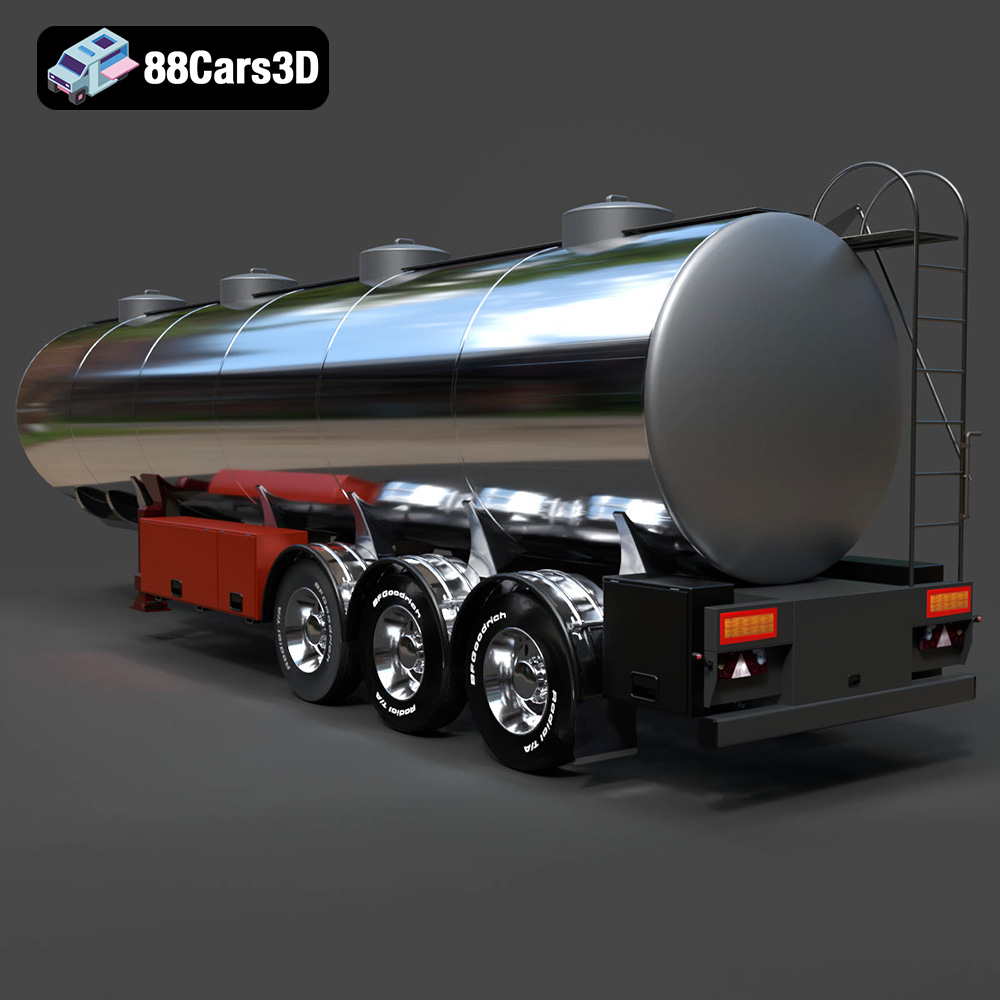
The core challenge for professionals lies in sourcing assets that are not only visually stunning but also technically robust and adaptable to diverse pipelines. This is where platforms like 88cars3d.com excel, offering a curated selection of premium 3D models designed to meet exacting industry standards. Today, we’re diving deep into an exemplary asset that showcases this versatility: the Fuel Tank Trailer 3D Model. This highly detailed digital recreation of a heavy-duty tanker trailer is not just a static object; it’s a meticulously engineered component ready to integrate into an array of projects, from highway transport scenes in a simulator to scale models for 3D printing.
We will explore the intricate details that make this Fuel Tank Trailer 3D Model an invaluable asset, delve into the critical role of various file formats, examine its utility across different professional applications, and highlight how such assets streamline workflows and elevate the quality of final output.
The journey of a 3D model from creation to its final application often involves traversing multiple software environments and platforms. The choice of file format is paramount, dictating compatibility, data integrity, and the specific capabilities of the asset within a given pipeline. Understanding these formats is crucial for any professional working with 3D car models or industrial assets like the Fuel Tank Trailer 3D Model.
The .blend format is the native file type for Blender, the powerful open-source 3D creation suite. A .blend file is a complete scene package, containing not just the mesh data but also materials, textures, lighting setups, cameras, animations, physics simulations, and even custom scripts. For the Fuel Tank Trailer 3D Model, a .blend file means you receive a fully editable Blender scene, allowing for direct manipulation of the model’s geometry, easy adjustment of its PBR (Physically Based Rendering) materials, and full access to its clean topology. This format is ideal for artists who primarily work in Blender or those who need to make extensive modifications to the model before exporting it to another platform, ensuring maximum flexibility and control over every aspect of the asset.
.fbx (Filmbox) is an Autodesk-developed proprietary file format that has become an industry standard for 3D data exchange, especially in game development, film, and animation. Its strength lies in its ability to store comprehensive scene information, including geometry, materials, textures, animations, skinning, and camera data, in a single, robust file. When working with the Fuel Tank Trailer 3D Model, the .fbx format is ideal for importing into game engines like Unreal Engine and Unity, or other DCC (Digital Content Creation) software like 3ds Max or Maya. It maintains hierarchical relationships, ensuring that elements like separate wheels for animation and rotation are preserved, making it highly efficient for real-time pipelines and complex animated sequences.
The .obj (Wavefront OBJ) format is one of the oldest and most widely supported 3D file formats, renowned for its universality. It primarily stores geometric data – vertices, normals, UV coordinates, and faces – and can reference external .mtl (Material Template Library) files for basic material properties and texture maps. While it doesn’t support advanced features like animation or rigging, its simplicity and widespread compatibility make it an excellent choice for cross-software transfers when basic mesh data is required. For the Fuel Tank Trailer 3D Model, an .obj file ensures that the core geometric structure, including its accurate cylindrical tank body and detailed chassis, can be opened and worked on in virtually any 3D software without compatibility headaches.
.glb (GL Transmission Format Binary) is the binary version of glTF, an open-standard 3D file format designed for efficient transmission and loading of 3D scenes and models by applications. It’s particularly optimized for AR (Augmented Reality), VR (Virtual Reality), and browser-based display due to its compact size and ability to embed all asset data (geometry, textures, animations) into a single file. This “all-in-one” characteristic makes it perfect for quickly deploying interactive fleet demonstrations or immersive industrial training simulations featuring the Fuel Tank Trailer 3D Model on web or mobile platforms, ensuring rapid loading times and consistent visual quality.
The .stl (Stereolithography) format is the de facto standard for 3D printing. It represents a 3D model as a series of interconnected triangles (a triangulated surface mesh) without color, texture, or other advanced attributes. Its primary purpose is to define the surface geometry of a 3D object for additive manufacturing. For the Fuel Tank Trailer 3D Model, providing an .stl ensures direct printability, allowing enthusiasts and professionals to convert the digital asset into a tangible scale model. The model’s optimized geometry and real-world scale accuracy make it ideal for generating precise physical representations.
.ply (Polygon File Format, or Stanford Triangle Format) is a file format for storing three-dimensional data from 3D scanners. It can store a list of vertices, faces, and other attributes like color, transparency, and normals. While less common for general 3D asset exchange than .fbx or .obj, it is a precision mesh format often used in scientific, CAD (Computer-Aided Design), and analysis applications where dense point clouds or polygon data with specific attributes are critical. For highly accurate industrial simulations or reverse engineering workflows involving the Fuel Tank Trailer 3D Model, .ply could be used for specific analytical tasks or when integrating with engineering software.
The .unreal format signifies an asset specifically packaged and optimized for direct import into Unreal Engine. While often referring to .uasset files, it generally implies a pipeline where the model is pre-processed, has proper collision, LODs (Levels of Detail), and materials set up for immediate use within the engine. For the Fuel Tank Trailer 3D Model, an .unreal asset streamlines integration into complex game environments or high-fidelity real-time visualizations, saving developers significant time on setup and optimization, and ensuring optimal performance within the engine.
Similar to .blend for Blender, .max is the native project file format for Autodesk 3ds Max. This format retains all scene information, including the model’s geometry, modifiers, materials (especially V-Ray or Corona setups), lighting, cameras, animations, and scene organization. The Fuel Tank Trailer 3D Model provided in .max format offers 3ds Max users full editability and direct access to the model’s structure, allowing for complex animation sequences, advanced rendering setups, and seamless integration into existing 3ds Max projects for automotive rendering or architectural visualization scenes.
Automotive rendering demands an unparalleled level of detail and realism. Whether it’s for marketing, product design reviews, or cinematic sequences, the ability to portray vehicles with photorealistic accuracy is paramount. The Fuel Tank Trailer 3D Model provides an excellent foundation for achieving stunning results in these scenarios, thanks to its meticulous design and technical considerations.
The essence of a compelling render lies in its materials. For the Fuel Tank Trailer 3D Model, this means accurately simulating the worn paint of the tank, the metallic sheen of the chassis, the rubber of the tires, and the reflective surfaces of safety markings. A high-quality 3D model, such as those found on 88cars3d.com, typically comes with well-defined UV mapping and PBR-ready materials. This allows artists to easily apply or modify textures for diffuse, roughness, metallic, normal, and displacement maps, creating believable wear and tear, subtle imperfections, and realistic reflections that mimic real-world physics. The separate wheels and detailed sub-components of the trailer mean that each element can have its own material definition, enhancing granular control over the final look.
Effective lighting is crucial for setting the mood and highlighting the industrial accuracy of the Fuel Tank Trailer 3D Model. In rendering software like V-Ray, Corona Renderer, or Cycles (Blender), artists can employ various techniques:
In game development and real-time simulations, performance is as critical as visual fidelity. High-detail 3D car models and industrial vehicles need to be optimized for smooth frame rates without sacrificing visual quality. The Fuel Tank Trailer 3D Model is engineered precisely for these demanding environments, making it an ideal game asset.
The provided .fbx and .unreal formats are specifically tailored for game engine integration. When importing the Fuel Tank Trailer 3D Model into Unreal Engine or Unity:
Integrating assets like the Fuel Tank Trailer into vast, open-world environments requires careful optimization. Beyond LODs and collision meshes, techniques include:
The burgeoning fields of Augmented Reality (AR) and Virtual Reality (VR) are transforming how industries visualize, train, and interact with complex machinery. The Fuel Tank Trailer 3D Model is perfectly suited for these immersive applications, providing realistic and interactive experiences.
For AR/VR, the goal is to provide a sense of presence and interactivity. The .glb format, optimized for web and mobile AR/VR, facilitates rapid deployment. Imagine:
Beyond visualization, AR/VR excels in training simulations, particularly for hazardous material transport and logistics. The Fuel Tank Trailer 3D Model can be a core component of such systems:
The ability to transform a digital asset into a physical object opens up new avenues for product display, prototyping, and collectible creation. The Fuel Tank Trailer 3D Model, with its detailed design and .stl export option, is an excellent candidate for 3D printing, enabling the creation of impressive scale models.
The journey from a digital 3D car model to a physical 3D print requires careful preparation, especially for a complex industrial vehicle like the fuel tank trailer:
Achieving a professional-looking physical model goes beyond the print itself:
In professional environments, efficiency and adaptability are key. A high-quality base asset like the Fuel Tank Trailer 3D Model provides a flexible starting point, reducing development time and allowing for significant customization.
The technical advantages of the Fuel Tank Trailer 3D Model, such as its clean mesh structure and real-world scale accuracy, make it highly customizable. Users can:
For studios and individual artists, purchasing pre-made, high-quality 3D models like the Fuel Tank Trailer from 88cars3d.com offers significant benefits:
The modern landscape of 3D content creation demands not just aesthetically pleasing models, but technically superior and highly adaptable assets. The Fuel Tank Trailer 3D Model stands as a prime example of such an asset, meticulously designed for realism and industrial accuracy, making it indispensable for a wide range of professional applications.
From captivating automotive rendering and robust game development to immersive AR/VR experiences and precise 3D printed scale models, its versatility is unmatched. The availability of multiple industry-standard file formats ensures seamless integration into virtually any workflow, whether you’re using 3ds Max, Blender, Unreal Engine, or preparing for 3D printing. This model’s clean topology, real-world scale, and attention to detail streamline production, enabling artists and developers to focus on creativity rather than wrestling with technical complexities.
Investing in high-quality 3D car models and industrial assets like the Fuel Tank Trailer 3D Model from trusted sources such as 88cars3d.com is a strategic decision that accelerates workflows, enhances visual fidelity, and ultimately drives innovation across industries. It’s more than just a model; it’s a foundation for building the next generation of digital experiences.
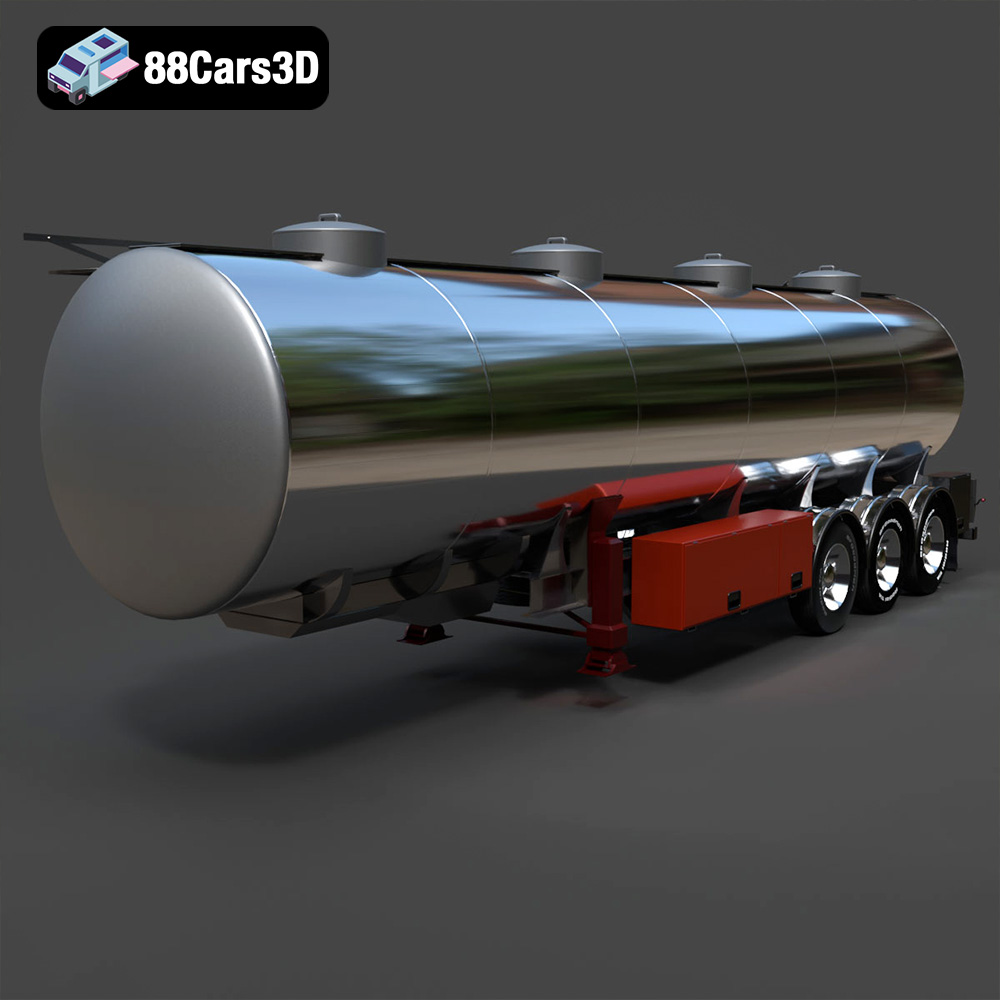
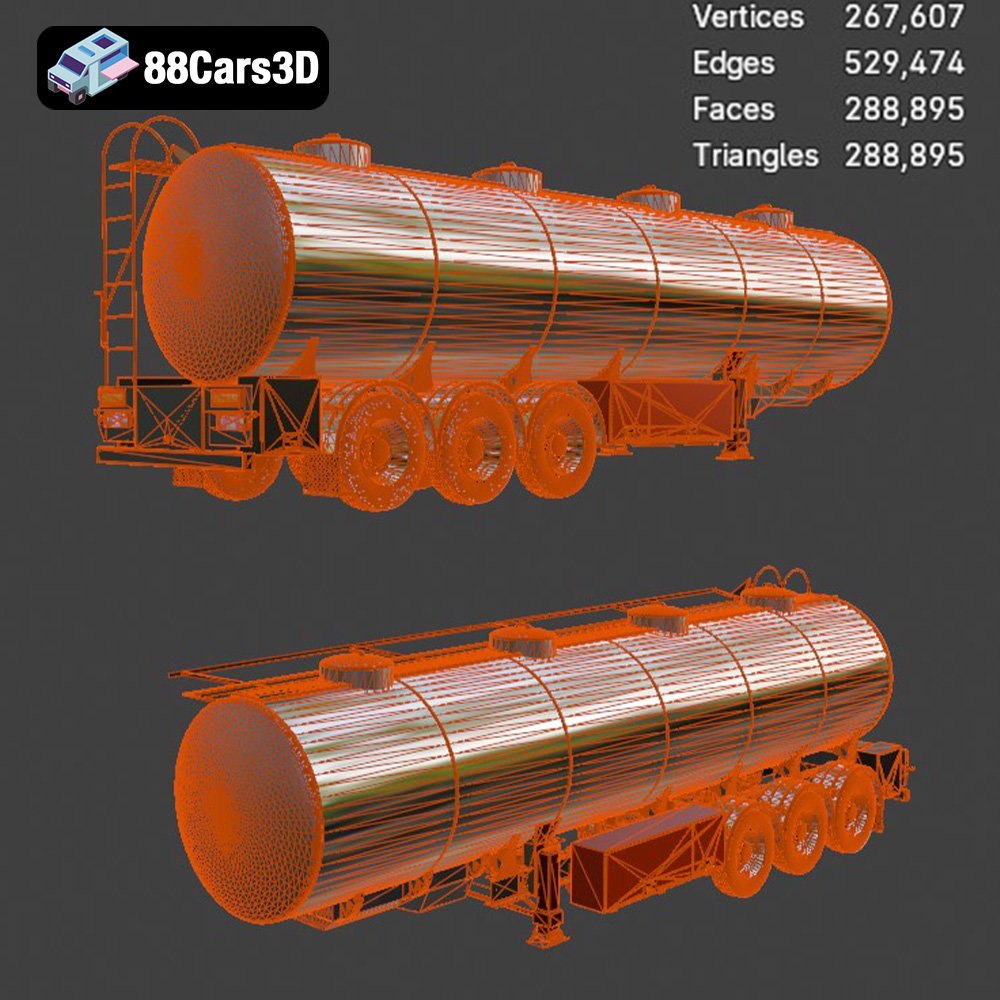
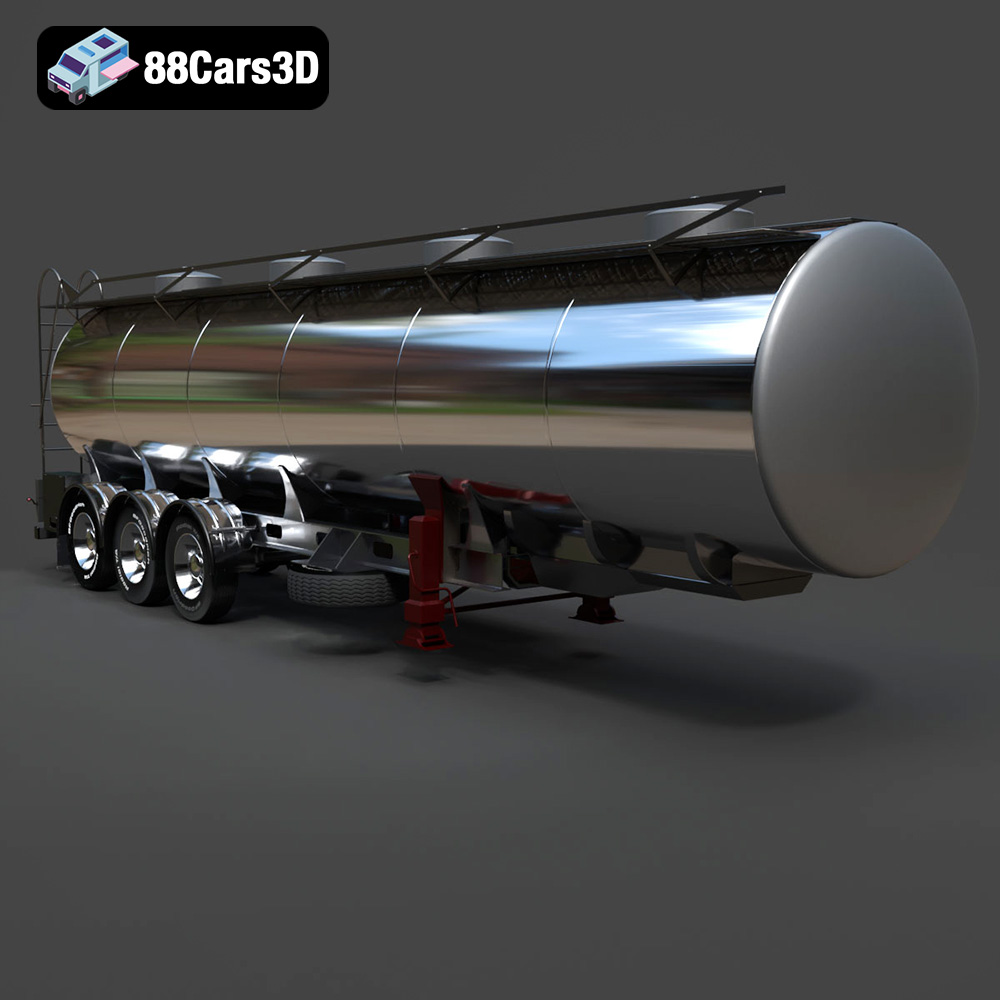
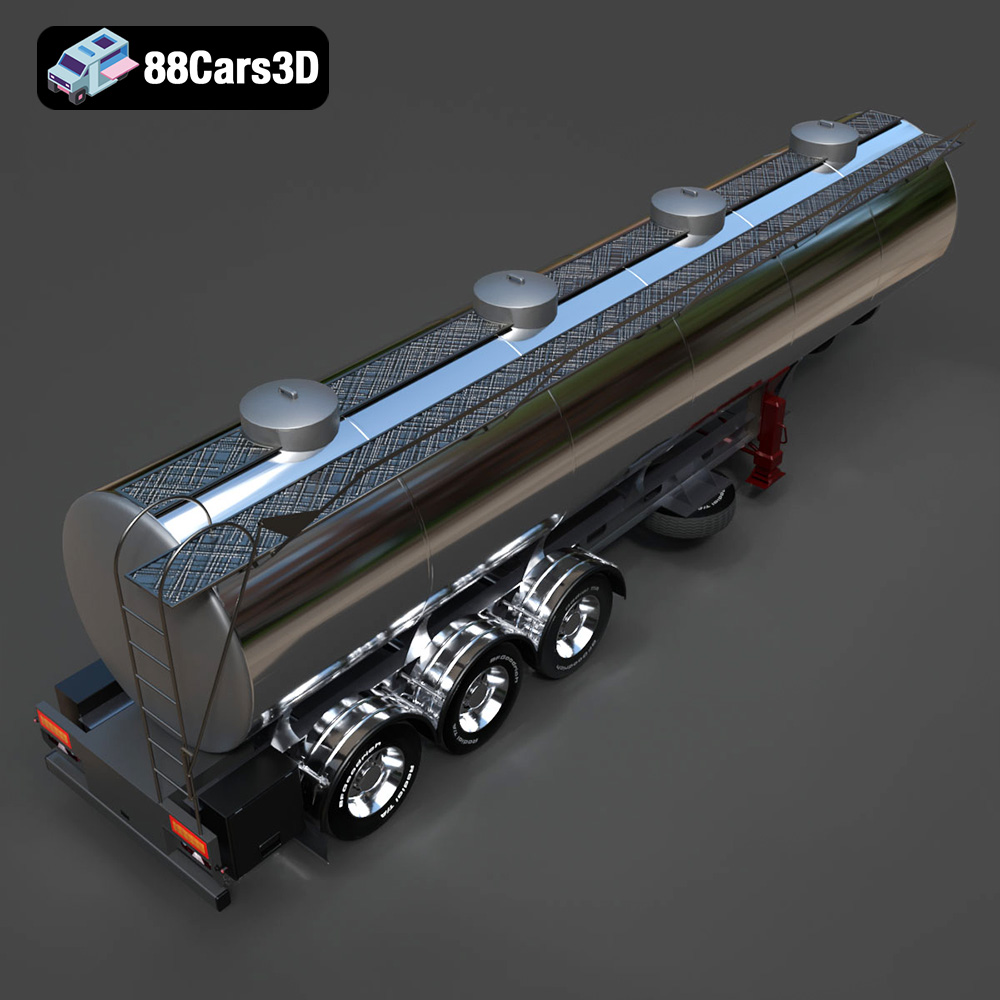
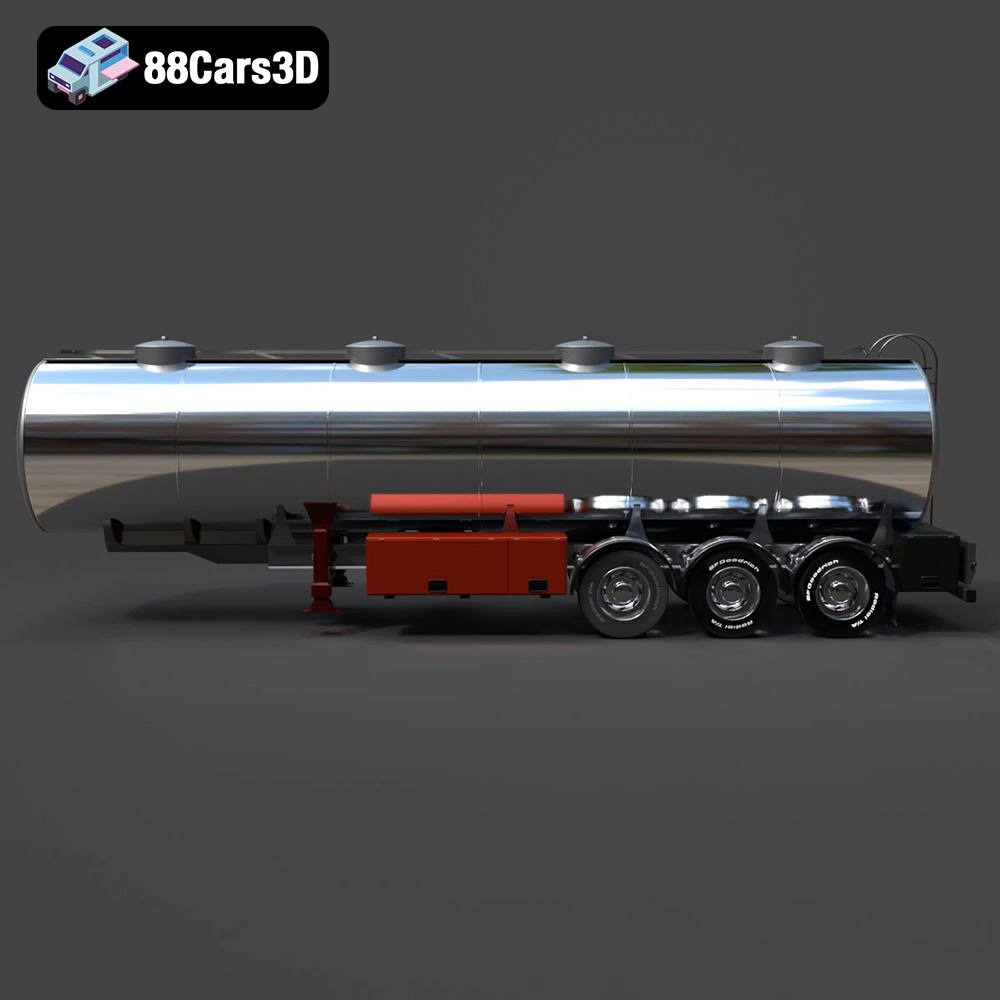
The Fuel Tank Trailer 3D Model is a high-detail digital recreation of a heavy-duty tanker trailer designed for transporting fuel and liquid petroleum products. Engineered for realism and industrial accuracy, this model reflects the structural integrity and cylindrical tank design commonly used in logistics, petroleum distribution, and hazardous material transport operations. This 3D model accurately represents the elongated cylindrical tank body, reinforced chassis frame, axle system, rear ladder access, safety railings, hose compartments, and fuel discharge valves. Designed with clean topology and real-world proportions, it is ideal for rendering, animation, simulation, game development, and AR/VR industrial visualization. Perfect for highway transport scenes, fuel depot environments, logistics simulations, industrial yards, refinery visuals, and commercial fleet presentations.
$14.9
.arvr
.blend
.fbx
.fueltanktrailer
.fueltransport
.gameasset
.glb
.industrialvehicle
.logisticsvehicle
.max
.obj
.petroleumtransport
.ply
.rendering
.simulation
.stl
.tankertrailer
.trucktrailer
.unreal