⚡ FLASH SALE: Get 60% OFF All Premium 3D & STL Models! ⚡

In the fast-evolving landscape of digital content creation, the demand for realistic and versatile 3D assets has never been higher. From breathtaking cinematic sequences to immersive gaming experiences and precise engineering visualizations, high-quality 3D car models stand as fundamental building blocks. They empower designers, developers, and artists to bring their automotive visions to life with unparalleled detail and efficiency. Whether it’s showcasing a new vehicle concept, populating a virtual world, or even creating a physical prototype, the right 3D model can be the catalyst for success.
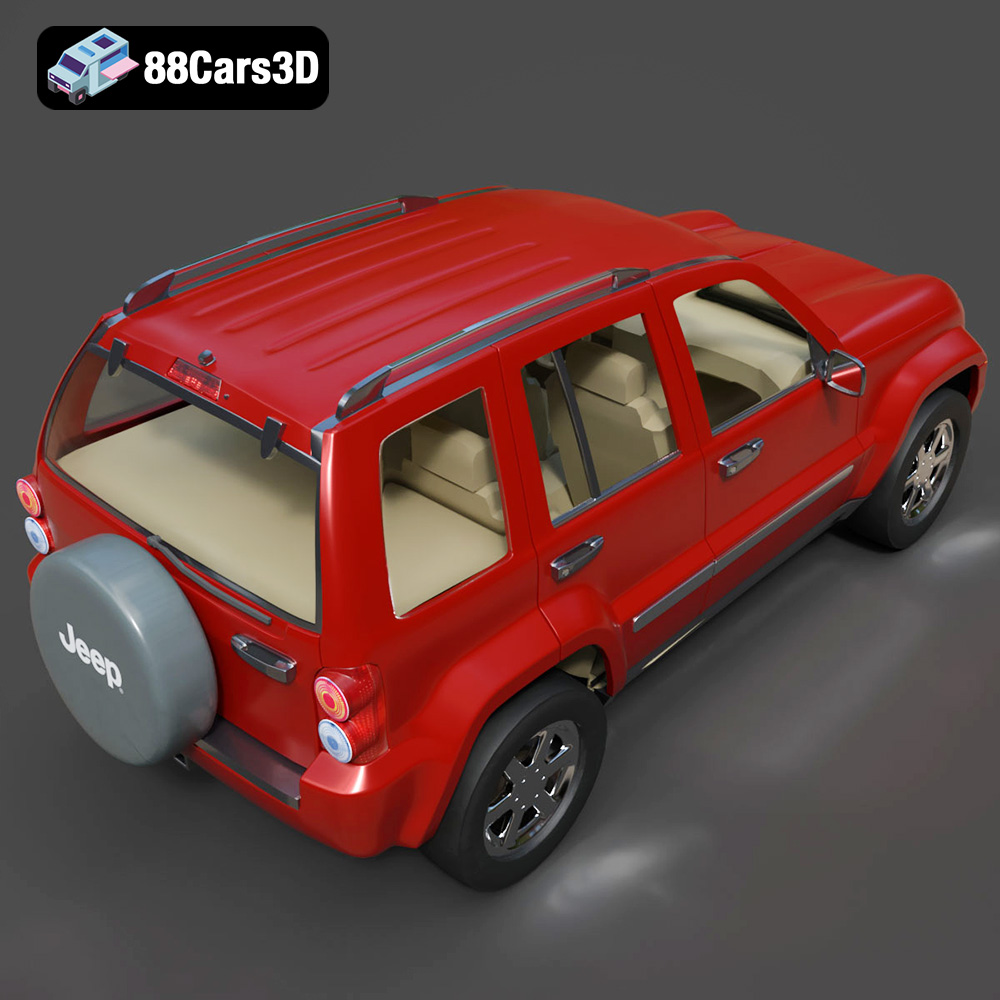
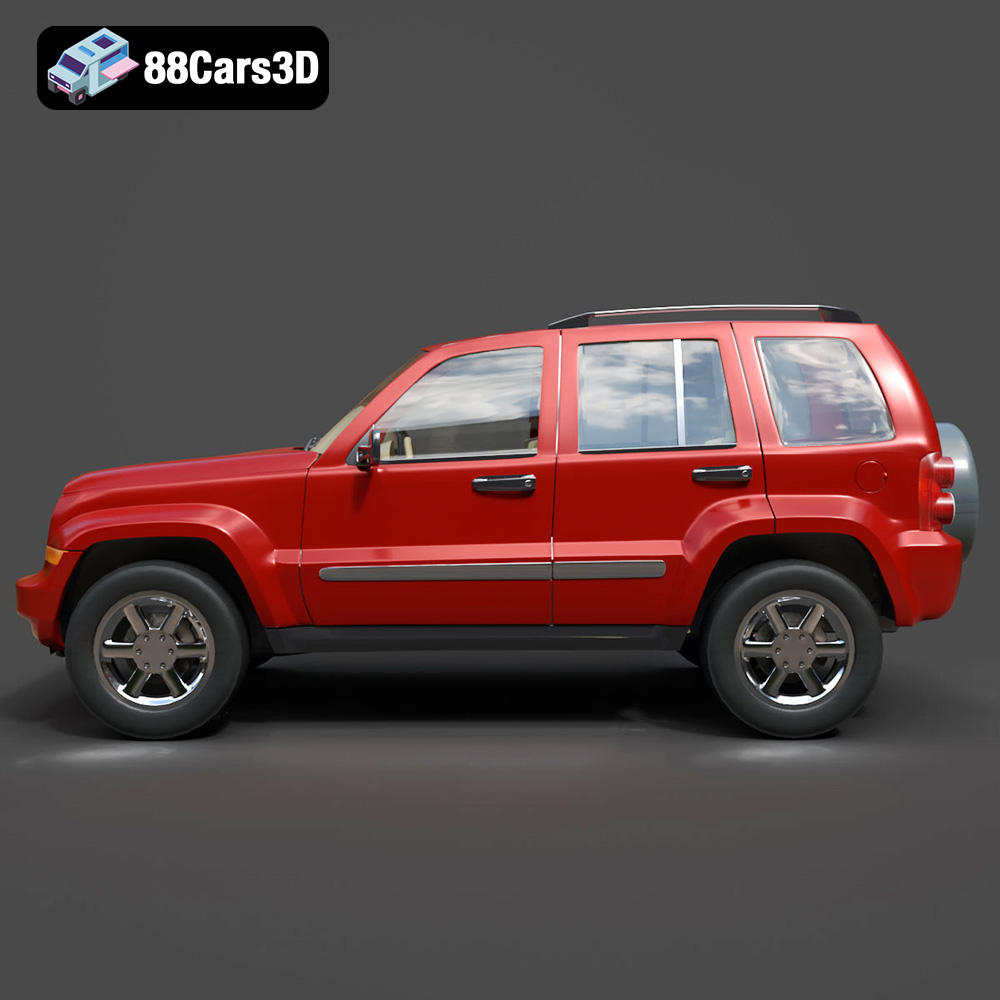
A prime example of such a versatile asset is the Jeep Liberty 3D Model, a meticulously crafted digital recreation that embodies the spirit of a compact SUV known for its blend of off-road capability and urban practicality. This model is more than just a visual representation; it’s a robust technical asset designed to integrate seamlessly into a multitude of professional workflows. Its attention to detail, clean topology, and multi-format availability make it an invaluable resource for anyone seeking to elevate their automotive projects. Let’s delve into the intricate world of 3D car models and discover how assets like the Jeep Liberty are shaping the future of digital automotive design and entertainment.
The choice of a 3D model file format is often as critical as the model itself, dictating its compatibility, functionality, and optimal use case. Professional 3D car models, such as those found on 88cars3d.com, typically come in a range of formats, each serving distinct purposes. Understanding these formats is crucial for streamlining workflows and maximizing the utility of your assets, whether you’re working on automotive rendering, game assets, or specialized applications like AR/VR and 3D printing.
The .blend format is the native file type for Blender, a powerful open-source 3D creation suite. When a 3D car model like the Jeep Liberty is provided in .blend format, it means you’re getting a fully editable Blender scene. This typically includes all mesh data, materials (often set up for Blender’s Cycles or Eevee render engines), textures, lighting, cameras, and sometimes even basic animation setups. Artists using Blender can dive directly into the file, tweak materials, modify geometry, or extend animations without conversion issues. It offers maximum flexibility for Blender users who require full control over the asset’s original setup and properties, making it excellent for advanced customization and rendering projects.
.fbx (Filmbox) is arguably one of the most popular and robust 3D file formats, widely adopted across the entertainment industry. Developed by Autodesk, it’s designed for excellent interoperability between various 3D software applications and real-time engines like Unreal Engine and Unity. An .fbx file can encapsulate not just geometry, but also materials, textures, animations (including skeletal animation and blend shapes), cameras, and lights. For 3D car models, .fbx is ideal for transferring animated car rigs, ensuring that pivots, hierarchies, and keyframe data are preserved. It’s the go-to format for game developers and animation studios requiring reliable data exchange between different software pipelines, making it essential for creating high-performance game assets and cinematic sequences.
The .obj (Wavefront OBJ) format is a venerable and widely supported standard for exchanging 3D geometry data. It’s a universal format because almost every 3D application can import and export it. An .obj file primarily stores vertex positions, UV coordinates, normals, and face information, defining the shape of the 3D model. Material definitions are typically stored in a companion .mtl (Material Template Library) file, which references external texture maps. While .obj is excellent for static mesh exchange and cross-software compatibility, it generally does not support animation data, rigging, or advanced material properties beyond basic color and texture references. It’s a reliable choice for static renders, modeling base meshes, and archival purposes, ensuring your 3D car models can be accessed across virtually any platform.
.glb (GL Transmission Format Binary) is the binary version of .gltf, an open-standard, royalty-free specification for 3D scenes and models. .glb files are highly optimized for efficiency, making them perfect for AR (Augmented Reality), VR (Virtual Reality), and browser-based 3D applications. They package all necessary data—geometry, materials, textures, animations—into a single, compact file, reducing load times and simplifying distribution. For interactive virtual showrooms or immersive AR experiences showcasing a vehicle like the Jeep Liberty, .glb ensures quick loading and smooth performance on web browsers and mobile devices, bringing automotive visualization to a broader audience.
.stl (STereoLithography) is the de facto standard for 3D printing. This format represents a 3D model as a collection of unconnected triangular facets, defining the surface geometry without color, texture, or material information. While it might seem simplistic, this format is precisely what 3D printers need to understand the shape they are meant to create. For the Jeep Liberty 3D Model, providing an .stl means it’s ready for conversion into a physical object, allowing enthusiasts to print scale models, prototypes, or collectible automotive miniatures. Successful .stl files for printing require manifold geometry (no holes or self-intersections) to ensure a watertight mesh.
The .ply (Polygon File Format, also known as Stanford Triangle Format) is a file format for storing 3D data, particularly suitable for scientific and engineering applications. It can store a wide range of properties, including color, transparency, normals, texture coordinates, and even properties like confidence values for data acquisition. While less common for general entertainment assets, .ply is valuable for precision mesh analysis, CAD, and storing data from 3D scanners, offering a robust solution for detailed inspection or reconstruction of complex geometries in automotive engineering or archaeological documentation.
The inclusion of an .unreal file (or an Unreal Engine-specific asset package) signifies a model optimized and prepared for direct integration into Unreal Engine. This often means materials are converted to Unreal’s PBR (Physically Based Rendering) standard, textures are properly linked, and collision meshes might be pre-generated. For game development, this format is a huge time-saver, as it bypasses much of the manual setup typically required when importing generic .fbx files. It ensures that the Jeep Liberty 3D Model is truly “plug-and-play” for real-time environments, maintaining visual fidelity and performance straight out of the box.
Similar to .blend for Blender, the .max format is the native file type for Autodesk 3ds Max, another industry-leading 3D software. An editable .max project file provides users with the complete 3ds Max scene, including all modifiers, lights, cameras, materials (often V-Ray, Corona, or Arnold compatible), and animation rigs. This offers maximum flexibility for 3ds Max artists to dissect the model, make complex modifications, and leverage 3ds Max’s powerful rendering and animation toolsets. It’s invaluable for high-end automotive rendering, architectural visualization, and intricate animation projects where 3ds Max is the primary platform.
The availability of such a diverse range of formats for a single asset, like the Jeep Liberty 3D Model from 88cars3d.com, underscores its professional utility and adaptability across various creative pipelines, catering to nearly every conceivable application from static renders to interactive simulations and physical prototypes.
Achieving photorealism and functional versatility in 3D car models requires meticulous attention to technical details. The Jeep Liberty 3D Model exemplifies this commitment, showcasing features that make it suitable for a wide array of demanding applications, from automotive rendering to real-time game development.
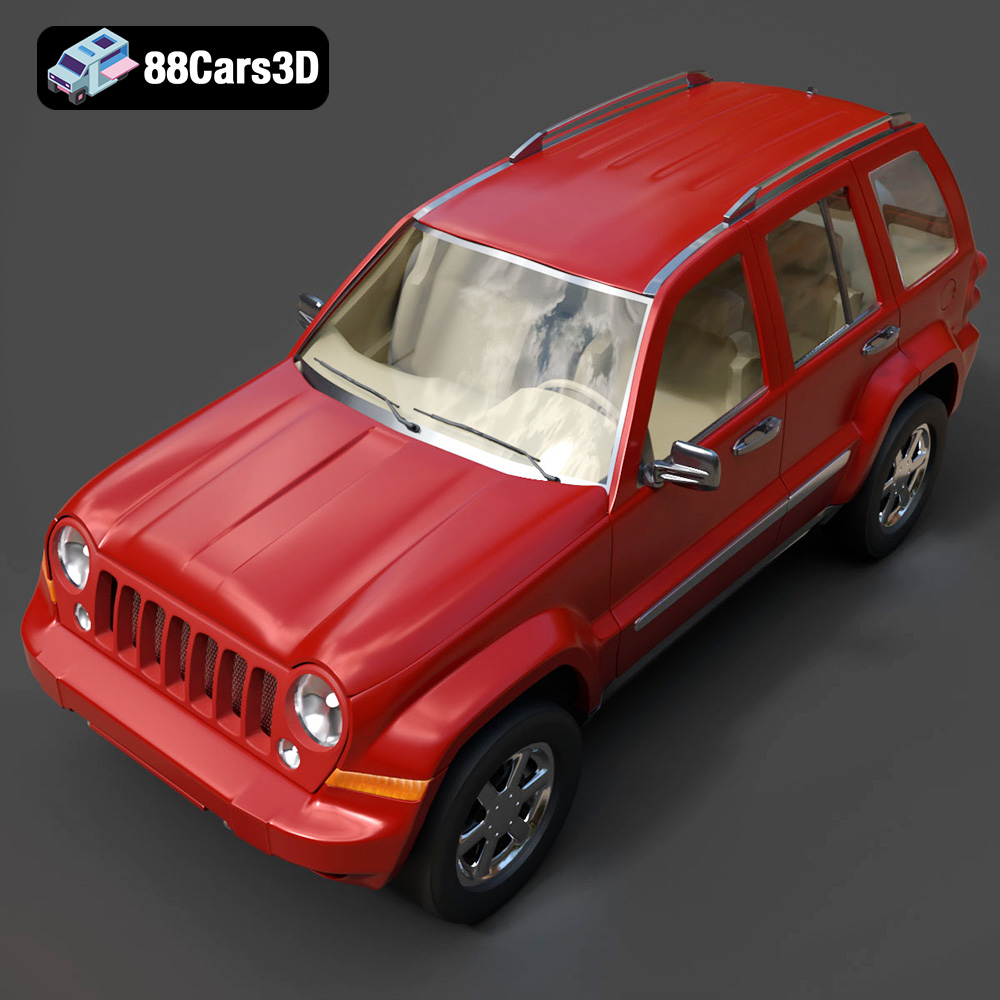
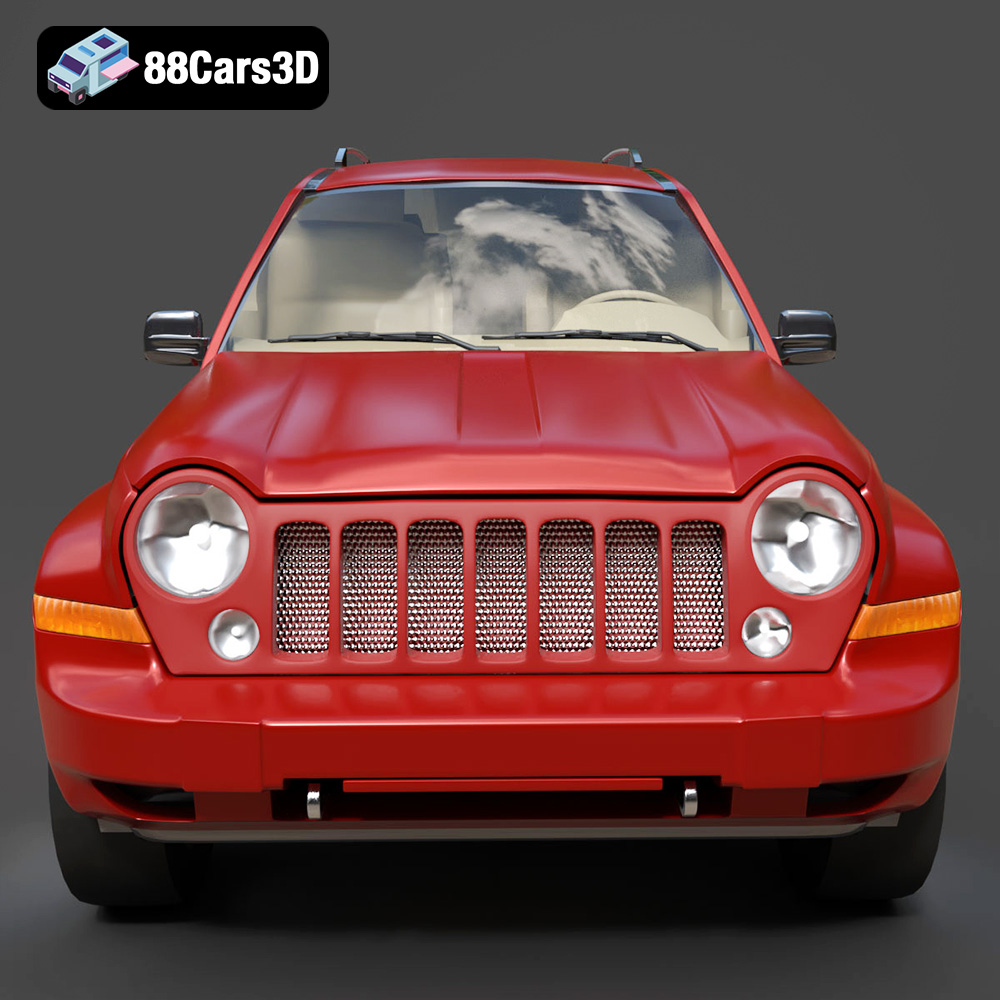
The foundation of any believable 3D vehicle lies in its accuracy. The Jeep Liberty 3D Model faithfully recreates the compact SUV’s body proportions and distinctive styling details. This includes the vehicle’s bold front fascia, the iconic seven-slot grille, and the characteristic headlamp design (whether the rounded first generation or the squared second generation). Such precision ensures that the model is not merely a generic vehicle but a recognizable and authentic representation of the Jeep Liberty, crucial for branding, marketing, and visual storytelling. Exterior features like detailed headlights, taillights, bumpers, mirrors, and roof rails are all meticulously modeled, contributing to the overall visual integrity and realism.
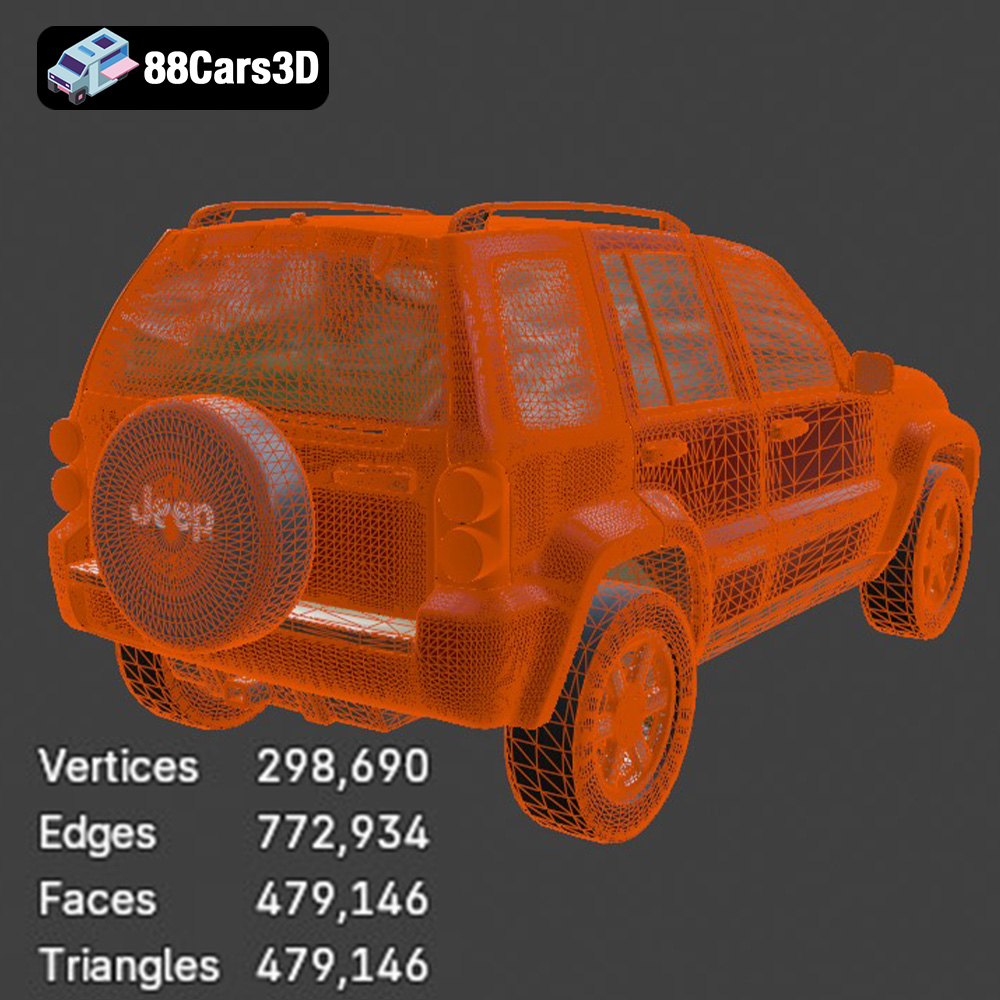
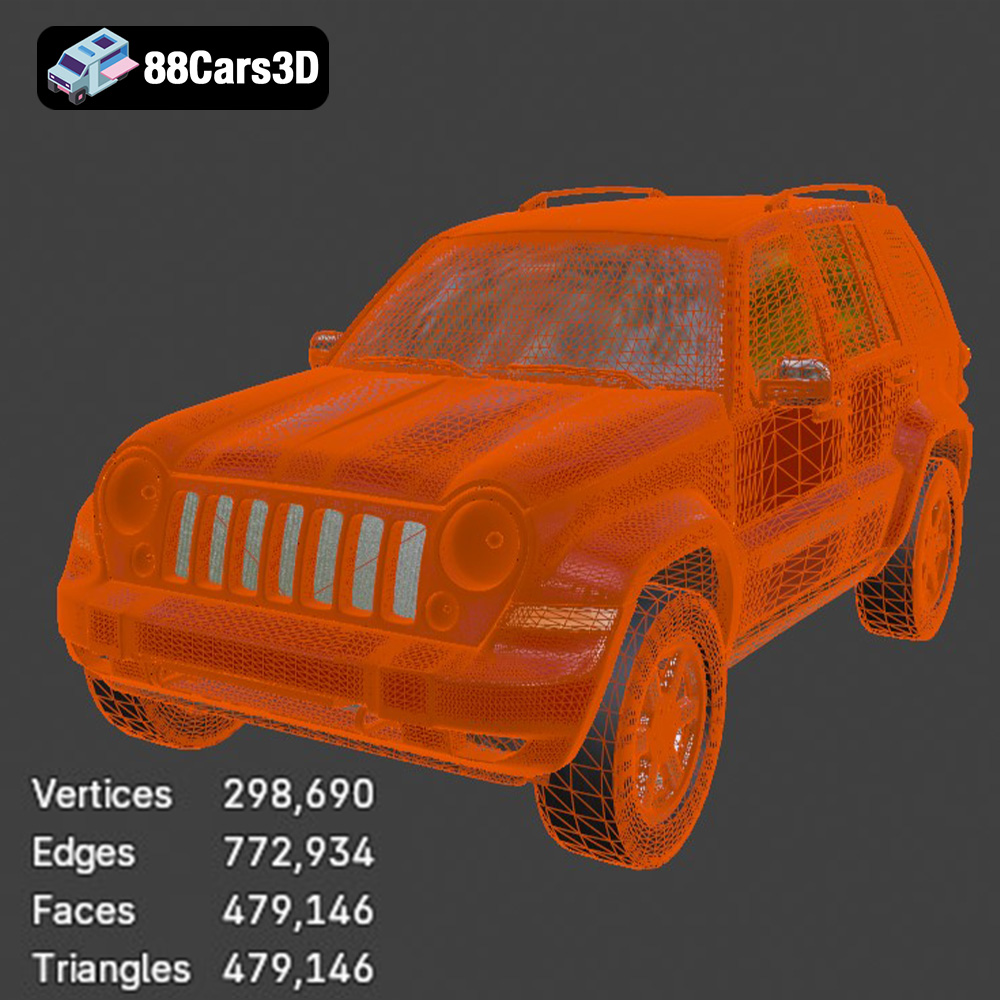
Behind the polished surface, the model boasts clean and organized mesh topology. This is a critical technical advantage, ensuring smooth shading, predictable deformation during animation, and ease of customization. Clean topology prevents visual artifacts and makes the model robust for subdivision surfacing, if higher detail is required. Furthermore, the model adheres to real-world scale, matching the actual dimensions of a Jeep Liberty. This might seem like a minor detail, but it’s paramount for integration into scenes alongside other assets, ensuring correct proportions for architectural visualizations, urban environments, or simulation platforms. Incorrect scale can break immersion and necessitate time-consuming adjustments, which are avoided with a precisely scaled asset.
For any interactive or animated application, a proper hierarchy and pivot setup are indispensable. The Jeep Liberty 3D Model features separated elements for doors, hood, tailgate, and wheels, each with correctly placed pivots. This enables realistic wheel rotation, steering, and opening/closing animations without complex rigging setups from scratch. This pre-configured functionality saves significant development time for game developers and animators. Alongside this, the model maintains a balanced polygon count. This optimization strikes a crucial balance between visual fidelity and performance. A model with too many polygons can bog down real-time engines, while too few might lack detail. The Jeep Liberty model is designed to perform efficiently in game engines and AR/VR applications while still holding up under close-up renders, demonstrating a thoughtful approach to its technical construction.
The versatility of a 3D car model is best measured by its seamless integration into various professional workflows. The Jeep Liberty 3D Model, available in multiple formats, provides flexibility for artists and developers working across different software ecosystems, from high-fidelity rendering to real-time interactive experiences.
For cinematic quality automotive rendering, software like Autodesk 3ds Max and Blender are industry powerhouses. When utilizing the Jeep Liberty 3D Model, artists can import the native .max or .blend files to access the full scene setup, including optimized materials and textures. In 3ds Max, artists can leverage powerful renderers like V-Ray or Corona to create photorealistic studio renders or environmental shots. They can customize paint colors, adjust material reflectivity for metallic or matte finishes, and integrate the model into a vast array of virtual backdrops—from urban streets to rugged off-road trails. Similarly, Blender users can utilize Cycles or Eevee, experimenting with advanced lighting setups, dynamic weather effects, and particle systems to create stunning visualizations for SUV marketing visuals or product showcases.
For game development and interactive AR/VR experiences, real-time engines like Unreal Engine and Unity are paramount. The Jeep Liberty 3D Model excels here, particularly with its .fbx and dedicated .unreal formats. Game developers can import the .fbx, which efficiently transfers geometry, UVs, and animation data. Unreal Engine users can benefit even further from the dedicated .unreal asset, often containing pre-configured PBR materials, collision meshes, and optimized LODs (Levels of Detail) that ensure smooth performance across various platforms. This allows for rapid prototyping and integration into open-world driving games, off-road simulations, or even traffic systems.
While the digital realm offers limitless possibilities, there’s an undeniable allure to bringing 3D models into the physical world. The Jeep Liberty 3D Model’s availability in .stl format bridges this gap, opening doors for creators to produce tangible scale models, prototypes, and collectibles through 3D printing.
The .stl file format is the universal language of 3D printers. It represents the surface geometry of the Jeep Liberty as a mesh of triangles, which the printer then translates into precise layers of material. This capability is incredibly powerful for automotive enthusiasts, designers, and hobbyists alike. Imagine holding a meticulously crafted miniature of the Jeep Liberty, suitable for display on a desk, integration into a diorama, or even as a personalized gift. The transition from a digital asset to a physical object is made straightforward thanks to this dedicated format.
Successful 3D printing requires more than just a good .stl file; it also depends on carefully chosen print settings. For the Jeep Liberty 3D Model, the product description provides excellent guidelines to ensure high-quality output. Recommended scales (1:32, 1:24, 1:18, 1:12) cater to various preferences for detail and display size. Layer height, wall thickness, and infill percentages are crucial for structural integrity and surface finish. For instance, a layer height of 0.12–0.20 mm balances print time with detail. Supports are often necessary for complex overhangs, such as mirrors, roof rails, bumper overhangs, and underbody sections, preventing print failures. Printing the body upside-down can improve the surface finish of prominent areas like the roof and hood, while printing wheels separately ensures enhanced detail and roundness. Post-processing steps like sanding, priming, and painting are highly recommended to achieve a professional, finished look, mimicking real automotive finishes.
The demand for high-quality 3D car models extends far beyond simple imagery, impacting various industries by providing powerful tools for visualization, interaction, and development. The Jeep Liberty 3D Model serves as an excellent illustration of how such an asset can be deployed across diverse professional contexts.
In the automotive industry, compelling visuals are paramount for marketing, concept presentation, and sales. High-quality 3D car models like the Jeep Liberty are indispensable for creating stunning rendering and visualization content. Instead of costly and time-consuming physical photoshoots, manufacturers and marketers can generate a multitude of images and animations in virtual studios. This includes dynamic hero shots for advertisements, detailed close-ups for brochures, or interactive 360-degree views for online configurators. The ability to customize paint colors, wheel types, and environmental settings instantly provides unparalleled flexibility and cost efficiency, making it ideal for SUV marketing visuals and cinematic productions that require pristine automotive scenes.
The interactive entertainment sector heavily relies on robust 3D assets. For game development, the Jeep Liberty 3D Model provides a ready-made vehicle for open-world driving games, off-road simulations, and even traffic systems. Its optimized polygon count and proper hierarchy make it a performance-friendly game asset that can be easily integrated into game engines. In the burgeoning fields of AR (Augmented Reality) and VR (Virtual Reality), the model is perfectly suited for interactive virtual showrooms and immersive SUV experiences. Users can “walk around” the virtual Jeep Liberty, inspect its interior, or even “drive” it in a simulated environment, offering a level of engagement impossible with traditional media.
Beyond entertainment, high-fidelity 3D car models are critical for serious applications in simulation and training. The Jeep Liberty 3D Model can be used in terrain driving simulations for driver training, off-road navigation practice, or even military applications, providing a realistic visual component to complex scenarios. Its accurate scale and detailed features contribute significantly to the authenticity of these simulations. Furthermore, such models serve an important role in digital archiving, preserving detailed representations of vehicles for historical records, design studies, or future reference, ensuring that the legacy of vehicles like the Jeep Liberty is maintained digitally for generations to come.
A truly valuable 3D car model offers more than just static beauty; it provides the foundation for limitless creative expression and adaptation. The Jeep Liberty 3D Model is built with customization in mind, ensuring it can evolve with your project’s needs and remain relevant across future endeavors.
The ability to customize a 3D model is a significant advantage, allowing artists and developers to tailor the asset to specific project requirements or unique artistic visions. With the Jeep Liberty 3D Model, customization options are extensive. Users can easily modify paint colors, selecting from an infinite palette to match branding, personal preference, or specific scene requirements. Swapping out wheel types and sizes can dramatically alter the vehicle’s character, from urban sophistication to rugged off-road readiness. Furthermore, modifying trim levels or adding various off-road accessories like roof racks, bull bars, winches, or trail equipment can transform the Liberty into a bespoke vehicle. This flexibility ensures that the model can serve multiple roles within a single project or be repurposed for entirely different contexts, maximizing its return on investment.
Beyond direct aesthetic modifications, the model’s adaptability to various lighting and environmental setups is crucial. The Jeep Liberty 3D Model can be seamlessly integrated into diverse scenes, whether it’s an urban day/night setting, a dense forest trail, a gleaming showroom, or a dramatic cinematic backdrop. This means artists can adjust lighting setups to convey different moods and emphasize specific design elements. A studio render might use soft, even lighting to highlight the body lines, while an off-road scene could feature harsh sunlight and dynamic shadows to emphasize its rugged capability. This versatility ensures the model remains visually compelling and contextually appropriate, regardless of the scene’s complexity or narrative.
The digital automotive landscape thrives on precision, versatility, and visual fidelity. High-quality 3D car models are not just static representations; they are dynamic tools that empower creators across a multitude of industries. From shaping realistic game environments and delivering immersive AR/VR experiences to producing photorealistic marketing visuals and even enabling physical 3D prints, the impact of well-crafted assets is profound and far-reaching.
The Jeep Liberty 3D Model stands as a testament to this principle, offering a robust, technically sound, and highly adaptable asset. Its meticulous detail, optimized topology, real-world scale, and broad file format compatibility (including .blend, .fbx, .obj, .glb, .stl, .ply, .unreal, and .max) position it as an invaluable resource for any professional endeavor. Whether you are an automotive designer visualizing a concept, a game developer populating a virtual city, an architect adding context to a new development, or a hobbyist creating a custom 3D print, this model provides the foundation for exceptional results. Investing in such a comprehensive asset streamlines workflows, reduces development costs, and ultimately elevates the quality of your final output.
For those seeking to equip their projects with leading-edge 3D car models, exploring reputable marketplaces like 88cars3d.com is essential. The diverse collection of high-quality vehicles, including this impressive Jeep Liberty, ensures that creative professionals have access to the resources needed to bring their most ambitious automotive visions to life with unparalleled realism and efficiency.
The Jeep Liberty 3D Model is a high-quality digital recreation of the compact SUV produced by Jeep. Known for its rugged styling and practical size, the Liberty blends off-road capability with everyday usability, making it a versatile SUV for both urban and trail environments. This 3D model accurately captures the Liberty’s bold front fascia, signature seven-slot grille, rounded headlamp design (first generation) or squared styling (second generation), elevated ground clearance, and compact SUV proportions. Built with clean topology and real-world scale accuracy, it is ideal for rendering, animation, visualization, simulation, AR/VR, and game development projects.
$39.99
.4x4vehicle
.arvr
.blend
.car3dmodel
.compactSUV
.fbx
.gameasset
.glb
.jeep
.liberty
.max
.obj
.offroadsuv
.ply
.rendering
.simulation
.stl
.suv3dmodel
.unreal
.vehicle3D