⚡ FLASH SALE: Get 60% OFF All Premium 3D & STL Models! ⚡

In the dynamic world of 3D visualization, automotive design, and game development, the demand for high-fidelity 3D car models is ever-present. These digital assets are not merely decorative elements; they are foundational tools that empower creators to build immersive environments, produce stunning photorealistic renders, and develop engaging interactive experiences. From sprawling open-world games to precision architectural visualizations and cutting-edge AR/VR applications, the quality and flexibility of a vehicle model can significantly impact a project’s overall success.
Today, we’re diving deep into what makes a truly exceptional 3D car model, exploring the technical intricacies, diverse applications, and the workflows that bring these digital vehicles to life. We’ll examine how a meticulously crafted asset, such as the Suzuki Super Carry 1000 Microvan 3D Model, serves as a prime example of versatility and quality for a myriad of creative endeavors. This iconic microvan, known for its utilitarian charm, translates into a powerful digital asset ready for anything from retro street scenes to detailed 3D printable collectibles.
The choice of file format for a 3D model is often as critical as the model itself, dictating compatibility, feature support, and downstream workflow efficiency. A high-quality 3D model like the Suzuki Super Carry 1000 Microvan offered on 88cars3d.com typically comes in a range of formats to ensure maximum utility across different software and applications. Understanding these formats is paramount for any professional working with 3D assets.
The .blend format is native to Blender, a powerful open-source 3D creation suite. When you receive a .blend file, you’re getting the complete, fully editable Blender scene. This means all modifiers, curves, procedural textures, rigging, animation data, and lighting setups are preserved. It’s ideal for artists who use Blender as their primary DCC (Digital Content Creation) tool, offering unparalleled flexibility for customization, tweaking materials, adjusting geometry, or even re-rigging components. For the Suzuki Super Carry model, having the .blend file allows for deep dives into its construction, enabling users to modify its interior layout or even create custom animation cycles directly within Blender.
Autodesk’s .fbx (Filmbox) is arguably the most widely adopted 3D exchange format in the industry. Its strength lies in its ability to store not just geometry, but also materials, textures, animations, skinning, and even camera and light data. This makes it an invaluable format for transferring assets between different software packages, particularly for real-time applications. For game development in Unreal Engine or Unity, .fbx is often the go-to. The Suzuki Super Carry 1000 Microvan in .fbx format is therefore perfect for integration into game engines as a ready-to-use asset, ensuring efficient import and minimal setup.
The .obj (Wavefront OBJ) format is a nearly universal standard for exchanging 3D geometry data. It’s simpler than .fbx, primarily focusing on vertex positions, UV coordinates, normals, and face definitions. While it doesn’t typically store animation or rigging data, its widespread compatibility makes it a safe bet for cross-software integration where pure geometry is the priority. If you need to import the Suzuki Super Carry into a niche renderer or a CAD package, .obj is a reliable choice, often accompanied by an .mtl (material) file for basic material definitions.
The .glb (GL Transmission Format Binary) is a relatively newer format gaining rapid traction, especially for web-based 3D, augmented reality (AR), and virtual reality (VR) applications. It’s a binary version of the glTF format, designed for efficient transmission and loading of 3D scenes and models. Crucially, .glb bundles all assets – geometry, materials, textures, and animations – into a single, self-contained file. This makes the Suzuki Super Carry .glb model perfect for interactive browser-based showcases or for deployment in AR/VR experiences, offering a streamlined workflow and optimized performance.
.stl (Stereolithography) is the most common file format for 3D printing. It represents a 3D model as a collection of interconnected triangles forming the surface geometry of an object. Crucially, .stl files do not contain color or texture information, focusing solely on the shape. When preparing the Suzuki Super Carry for physical production, such as creating a display-scale model, the .stl format is essential. The model’s manifold geometry ensures it’s print-ready, allowing hobbyists to bring this microvan to life on their own 3D printers.
The .ply (Polygon File Format) is another common format for storing 3D data, particularly useful for scanned data, CAD models, and scientific analysis. It can store a wider range of properties than .obj, including color, transparency, and sometimes even normal and texture coordinates per vertex or per face. While less common for general animation, a .ply version of the Suzuki Super Carry could be valuable for precise measurements, simulations, or reverse engineering tasks.
When a product like the Suzuki Super Carry 1000 Microvan is offered in .unreal format, it signifies an asset specifically prepared and optimized for direct integration into Unreal Engine projects. This can include pre-configured materials, collision meshes, LODs (Levels of Detail), and sometimes even basic blueprints for interactive elements. This format drastically reduces setup time for game developers and real-time visualization artists, allowing them to drop the model into their scene and begin working immediately with minimal adjustments.
The .max format is the native file type for Autodesk 3ds Max, a long-standing industry standard for 3D modeling, animation, and rendering. Similar to .blend, a .max file contains the complete scene, including geometry, lights, cameras, materials, textures, and animation data. For professionals whose pipelines are built around 3ds Max, having the Suzuki Super Carry model in .max format ensures full editability and seamless integration into their existing projects, making it ideal for high-end cinematic rendering and complex animation sequences.
The availability of the Suzuki Super Carry 1000 Microvan 3D Model in these diverse formats highlights the commitment to providing versatile and professional-grade assets at 88cars3d.com, catering to a broad spectrum of creative and technical requirements.
Creating high-quality 3D car models is a meticulous process that blends artistic vision with technical precision. It’s about more than just replicating a vehicle’s shape; it’s about capturing its essence, its history, and its functional beauty in a digital form. The Suzuki Super Carry 1000 Microvan 3D Model exemplifies this dedication, offering a highly detailed rendition of a beloved utilitarian vehicle.
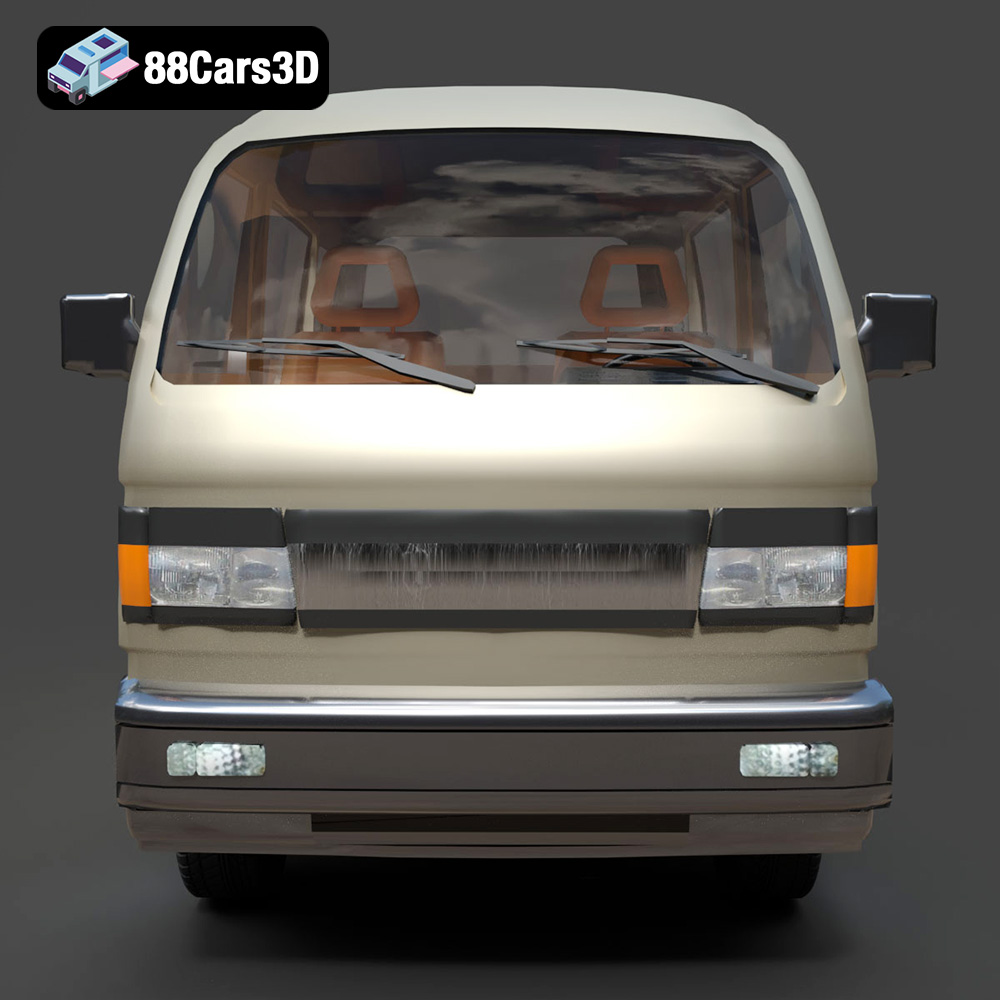
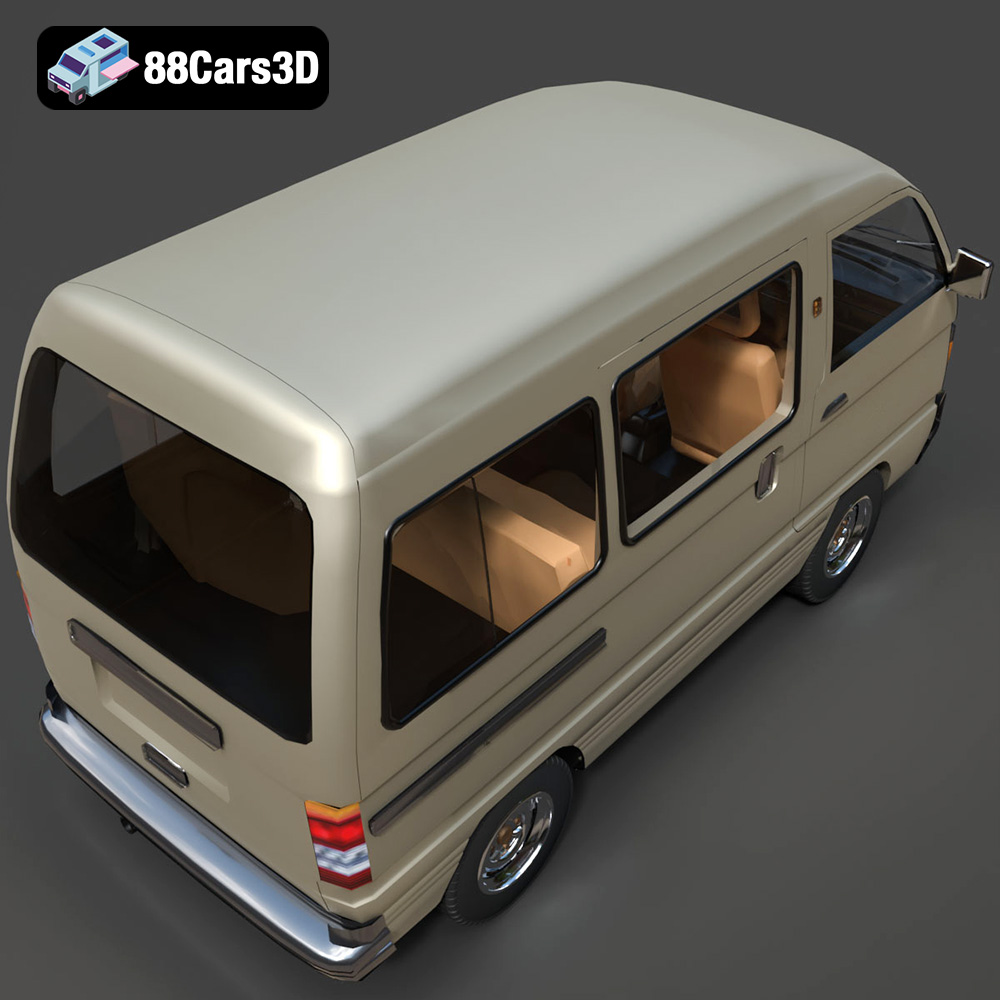
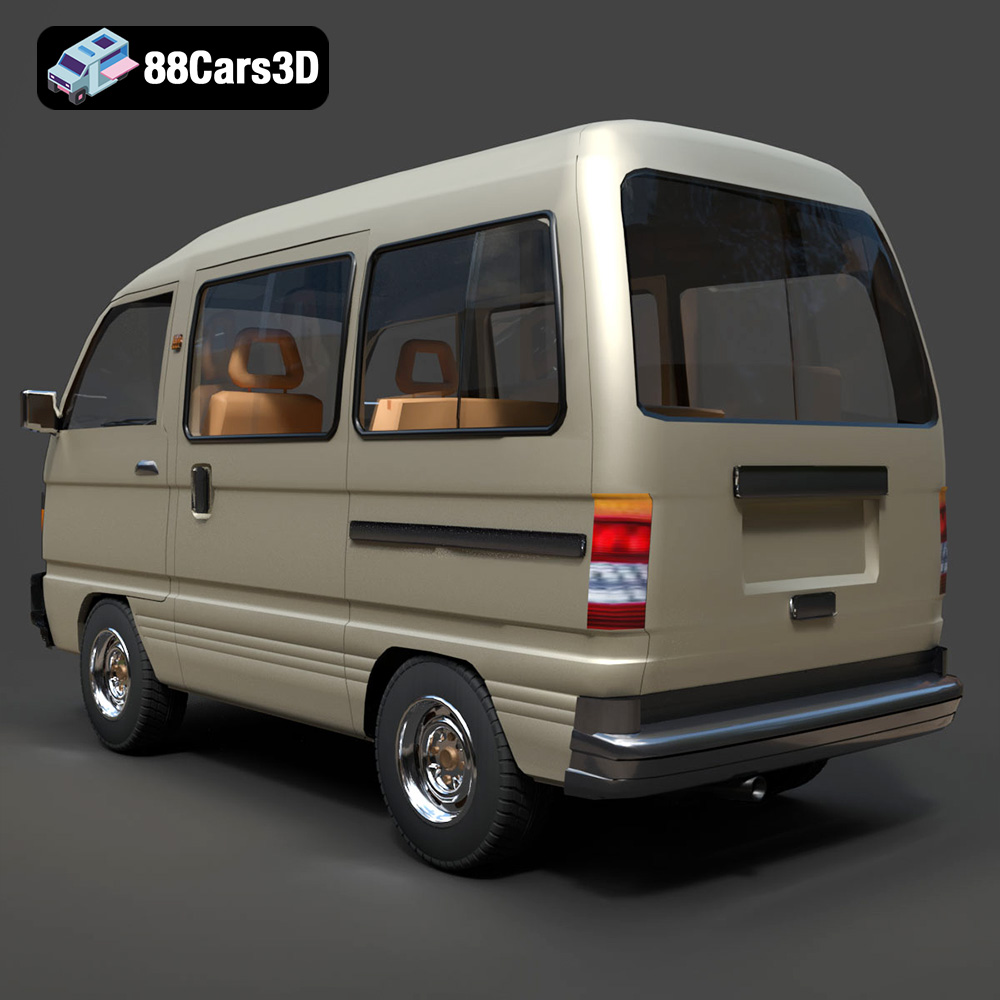
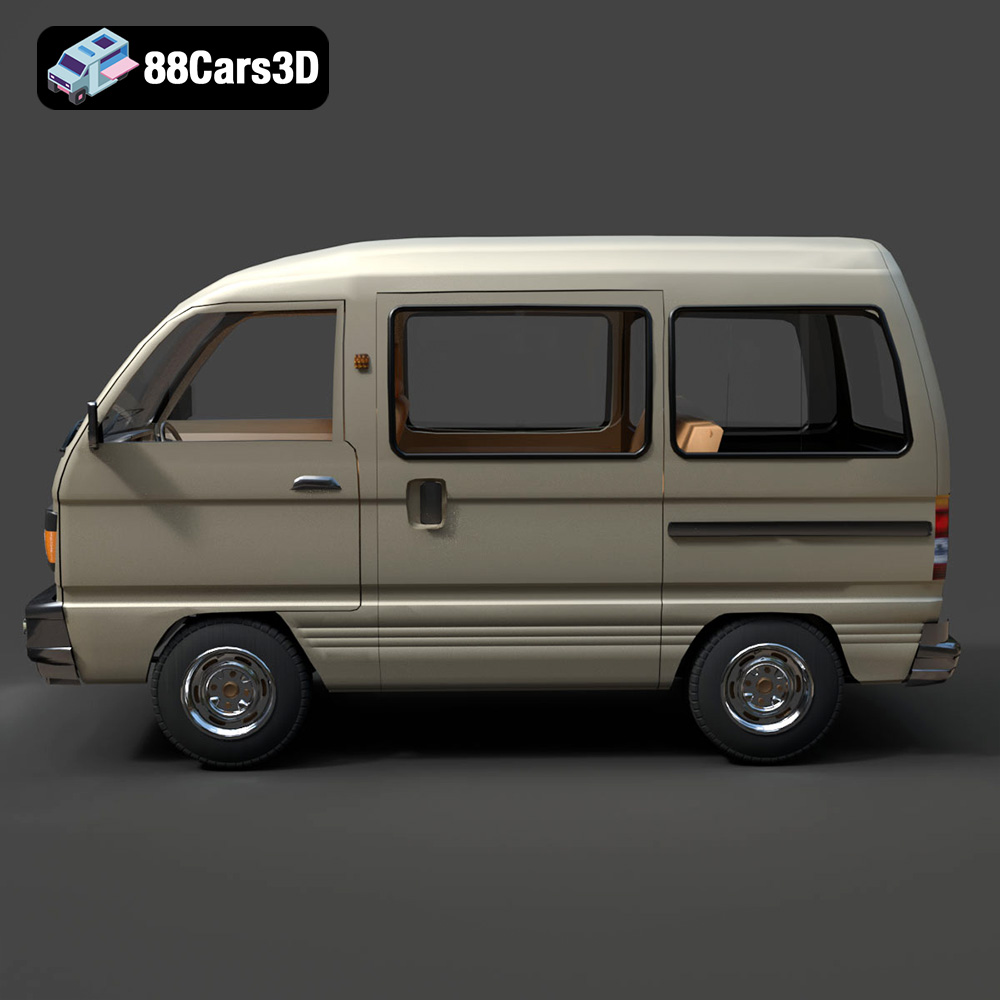
The first step in crafting any credible 3D car model is an exhaustive study of the real-world counterpart. For the Suzuki Super Carry 1000 Microvan, this means accurately translating its distinctive 1980s/1990s cabover design, flat front fascia, and utilitarian proportions. Reference images, blueprints, and even physical inspections are crucial for ensuring every curve, angle, and panel gap is precisely represented. The goal is not just a resemblance, but an exact digital twin that evokes the same character as the original. Details like the rectangular headlight housings, period-correct taillights, and authentic 12-inch steel wheels are meticulously recreated to ensure historical accuracy and visual fidelity. This attention to detail extends to the interior, with a utilitarian front cabin, authentic analog dashboard, and realistic seat upholstery, all contributing to a convincing digital representation.
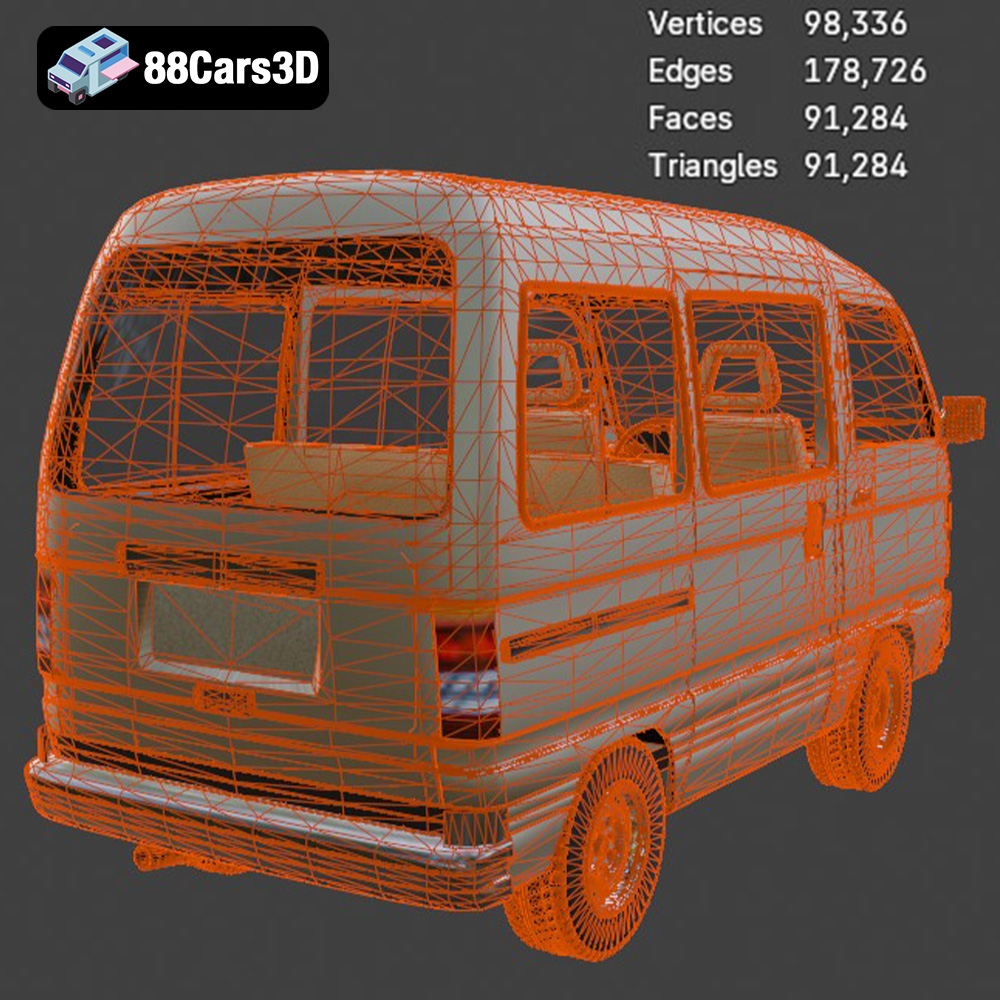
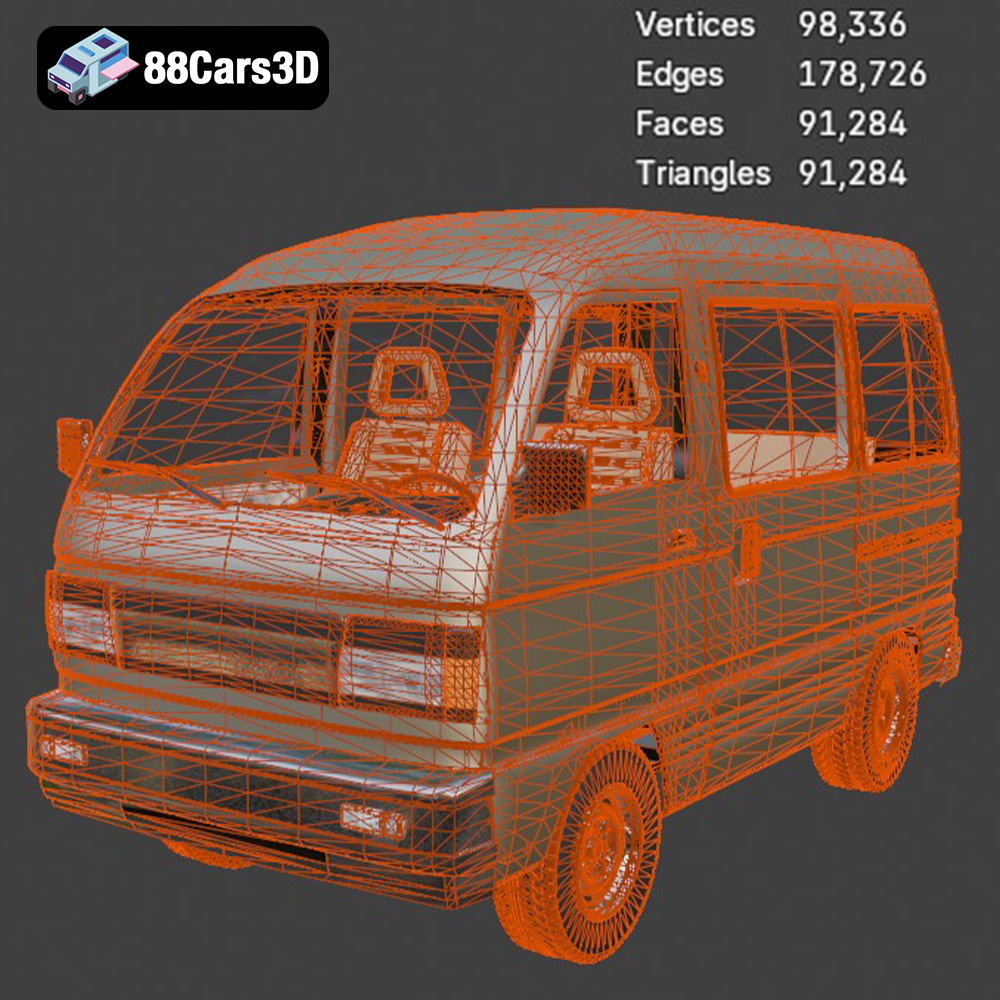
Underneath the surface, the technical foundation of a 3D model is its topology – the arrangement of vertices, edges, and faces that form the mesh. A well-organized, clean mesh is paramount for smooth deformations during animation, efficient UV mapping for texturing, and predictable subdivision for close-up rendering. The Suzuki Super Carry 1000 Microvan 3D Model boasts a high-poly, well-organized mesh structure with 985,400 vertices, 1,950,200 edges, and 965,800 faces/polygons. This dense geometry allows for maximum realism, capturing subtle contours and details without relying excessively on normal maps. While a high poly count might seem prohibitive for real-time applications, such models are often provided with multiple Levels of Detail (LODs) or can be easily optimized for specific uses, offering both high-end rendering potential and game-ready versatility. Proper pivot setup for steering, wheel rotation, and the iconic sliding door mechanisms further demonstrates technical excellence, ensuring the model is animation-ready right out of the box.
The applications for high-quality 3D car models extend across numerous industries, each with unique demands and workflows. The Suzuki Super Carry 1000 Microvan 3D Model, with its detailed design and technical flexibility, is a versatile asset that can enhance a wide range of professional projects.
For architectural visualization (arch-viz) artists, advertising agencies, and film/VFX studios, photorealistic rendering is the ultimate goal. A detailed 3D car model can elevate a scene from static to dynamic, adding crucial context and realism. Imagine the Suzuki Super Carry 1000 Microvan nestled within a retro urban street scene, delivering goods in a commercial fleet presentation, or serving as a quirky detail in an animated short. Its authentic design and high-poly count make it ideal for close-up renders where every detail counts. Artists can leverage its .max or .blend formats to integrate it seamlessly into their rendering software, applying advanced materials and lighting to achieve stunning, lifelike imagery that captures the nostalgic charm of the microvan.
In the realm of game development, 3D car models serve as essential game assets, populating virtual worlds and driving interactive experiences. The Suzuki Super Carry model, available in formats like .fbx and .unreal, is perfectly suited for integration into popular engines like Unreal Engine and Unity. For historically set open-world games, indie simulators, or even urban traffic vehicle packs, this microvan can add a unique character and authenticity. Its proper pivot setup for wheels and doors means it’s ready for animation and physics simulations, allowing developers to quickly implement driving mechanics or interactive elements. Even with its high poly count, it provides an excellent base for creating optimized LODs, ensuring smooth performance across various gaming platforms without sacrificing visual quality when viewed up close.
Augmented Reality (AR) and Virtual Reality (VR) are pushing the boundaries of immersive experiences, and 3D car models are central to these new frontiers. The Suzuki Super Carry 1000 Microvan 3D Model, particularly in its .glb format, is ideal for creating interactive virtual retro vehicle showcases or even configurable camper conversion projects within AR/VR environments. Users could walk around, open the sliding doors, and explore the utilitarian interior of the microvan in a completely immersive digital space. This kind of interaction can be incredibly powerful for product visualization, virtual showrooms, or even educational simulations, allowing users to engage with the vehicle in ways that were previously impossible.
Among the vast selection of 3D car models available, the Suzuki Super Carry 1000 Microvan stands out due to its specific historical context and charming utilitarian design. This particular model, available at 88cars3d.com, is not just another vehicle; it’s a piece of automotive history meticulously recreated for modern 3D applications.
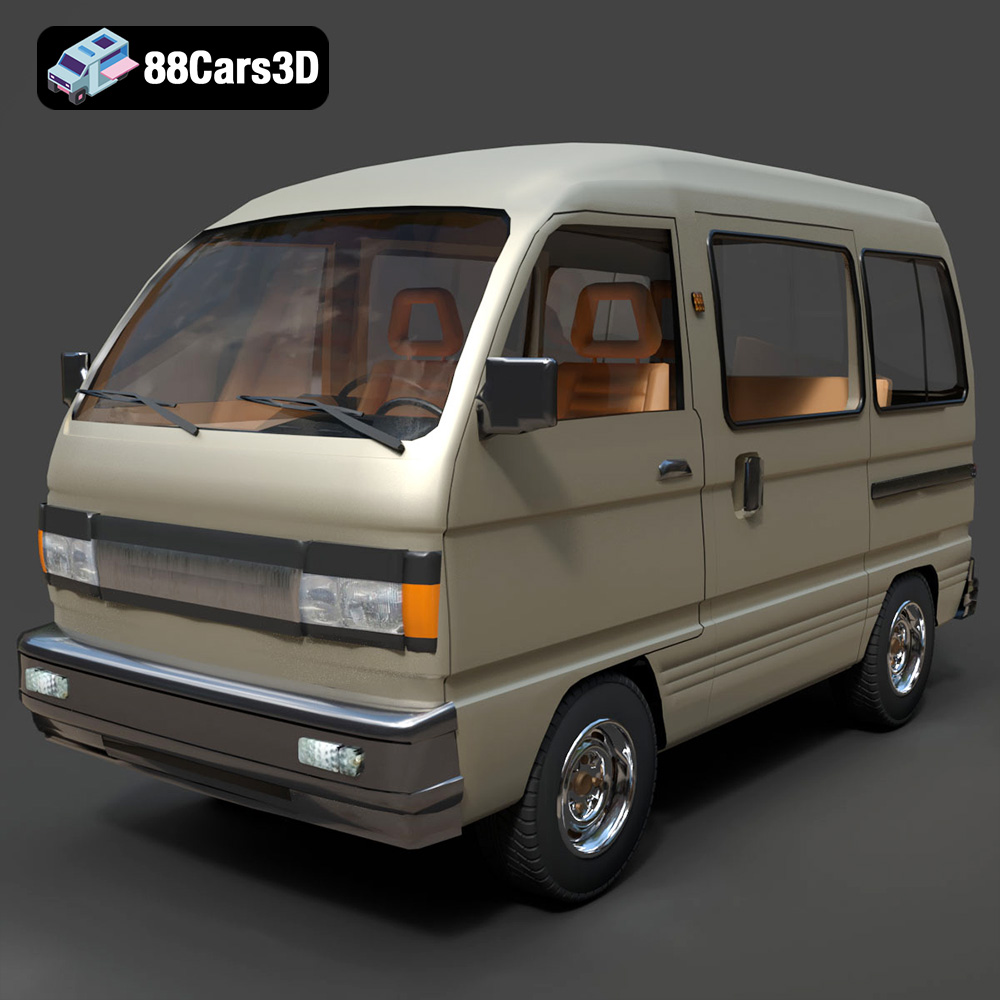
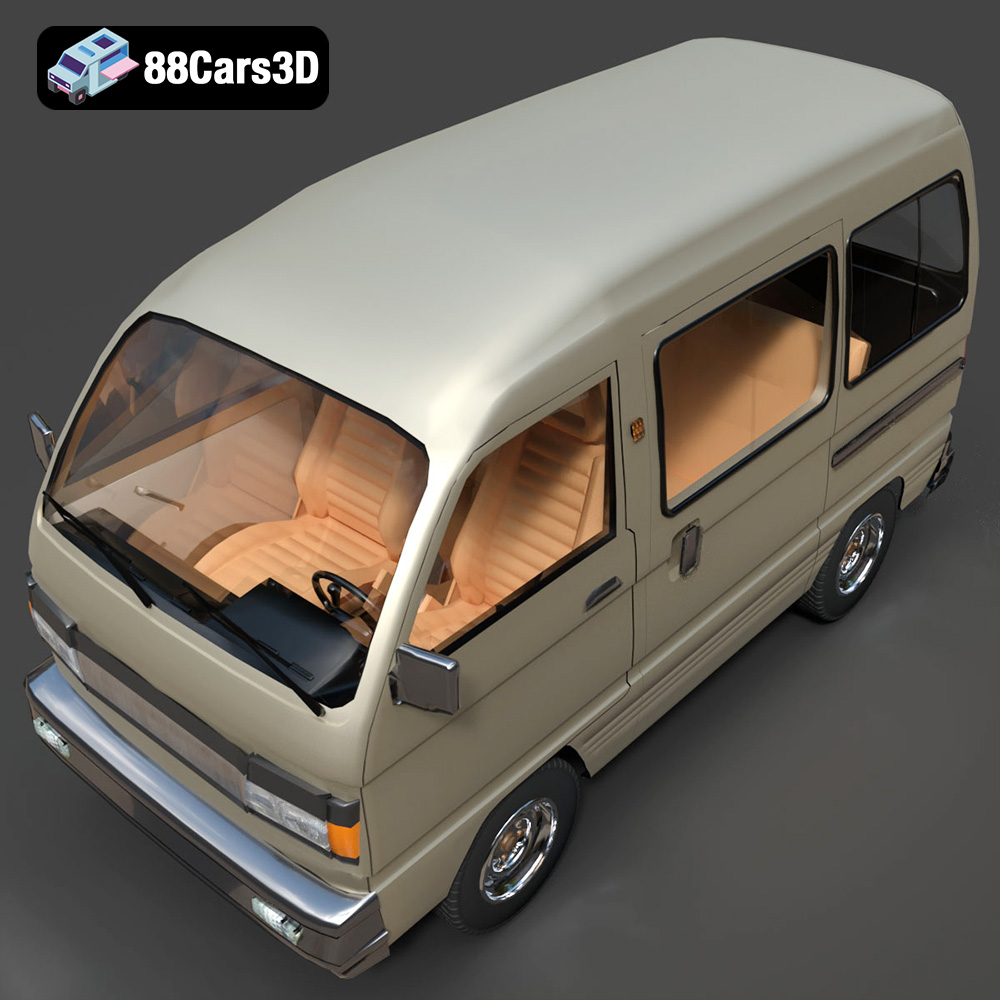
The Suzuki Super Carry 1000 Microvan 3D Model faithfully captures the essence of this legendary compact workhorse from the 1980s and 1990s. Externally, it showcases accurate kei-style proportions, the classic cabover design with its characteristic flat front fascia, and a simple plastic grille that defined the era. The detailed rectangular headlight housings and period-correct taillights are spot-on, as are the authentic utilitarian 12-inch steel wheels. Crucially, functional details like side mirrors, door handles, and basic trim are all present, adding to the overall realism. The dual sliding rear side doors and large rear tailgate are modeled with precision, allowing for realistic animation and posing. Inside, the model continues its commitment to authenticity with a utilitarian front cabin where seats are mounted over the front axle, a spacious and flat-folding rear cargo area, a retro minimalist analog dashboard, and a simple two-spoke steering wheel. Even the basic cloth or vinyl upholstery representation with realistic seam lines and the manual gear shifter are carefully rendered, making the interior suitable for close-up views and immersive experiences.
Beyond its visual accuracy, the Suzuki Super Carry 1000 Microvan 3D Model offers significant technical advantages. Its high-poly, well-organized mesh structure provides premium visual fidelity suitable for high-resolution rendering and historical visualization projects. The model maintains real-world scale accuracy, which is vital for seamless integration into architectural scenes or simulations. Crucially, the model features proper pivot setups for all critical components: steering, wheel rotation, and the dual sliding door mechanisms. This means animators can effortlessly bring the microvan to life, creating dynamic scenes with accurate vehicle movement and interactive elements. The clean topology also ensures that if any modifications or custom animations are required, the process will be smooth and efficient, making it a truly professional-grade asset.
One of the most exciting capabilities of a meticulously crafted 3D model like the Suzuki Super Carry 1000 Microvan is its potential for physical manifestation through 3D printing. The .stl format included with this model opens up a world of possibilities for hobbyists, collectors, and even prototyping.
Transforming a digital 3D model into a tangible object requires careful consideration of 3D printing settings. The Suzuki Super Carry model is designed with manifold geometry, making it inherently suitable for conversion to .stl and subsequent printing. Recommended scales (1:32, 1:24, 1:18) provide flexibility for different display or project needs. For optimal results, specific print settings are advised: a layer height of 0.08–0.16 mm for FDM printers (or even finer for resin, like 0.04-0.12mm, especially for smaller scale details), a wall thickness of 1.2–2.0 mm for structural integrity, and an infill of 15–25% to balance strength and material usage. Supports will be necessary for overhangs such as side mirrors, bumpers, and wheel arches to prevent sagging during printing. Printing the body angled can result in a smoother surface finish, while wheels are best printed separately to capture their intricate details. These considerations ensure that the printed model accurately reflects the digital design.
For retro diecast hobbyists and model car enthusiasts, printing their own Suzuki Super Carry microvan is an appealing prospect. They can customize colors, add unique decals, or even create a fleet of microvans for a diorama. Post-processing, including sanding, priming, and painting in period-correct hues like Commercial White, Pastel Blue, or classic post-office red, can bring the printed model to life. Beyond hobbies, the ability to 3D print this model makes it valuable for rapid prototyping in design and engineering fields. Companies can quickly produce physical models for design reviews, ergonomic testing, or marketing presentations. It offers a tangible bridge between the digital design phase and real-world application, showcasing the versatility of high-quality 3D car models in a practical sense.
The true power of a professional 3D car model lies in its adaptability. The Suzuki Super Carry 1000 Microvan 3D Model is designed not just for immediate use but also for extensive customization, allowing artists and developers to tailor it precisely to their project’s needs.
One of the most straightforward yet impactful customization options is changing the exterior color. The product description suggests typical factory colors like Commercial White, Pastel Blue, Forest Green, or Bright Red, but the flexibility of a 3D model means artists can apply any shade imaginable. This allows the microvan to fit perfectly into any scene, whether it’s a sunny urban street or a moody, rain-slicked neon alley. Beyond color, the flat side panels of the Super Carry are ideal for adding custom decals, business branding, or intricate liveries, transforming it from a generic vehicle into a personalized storytelling element. Adjusting the wheel design, from the standard steelies to retro aftermarket alloys, can also significantly alter the vehicle’s character, enabling it to match specific periods or styles. These aesthetic tweaks make the Suzuki Super Carry an incredibly flexible asset for creating diverse visual narratives.
The internal structure of the Suzuki Super Carry 1000 Microvan 3D Model also offers considerable potential for functional adaptation. Its spacious, flat-folding rear utility cargo area is highly configurable. Artists can modify the interior to represent a classic cargo van, a multi-seat passenger layout, or even a quirky camper conversion. This interior flexibility is invaluable for game developers creating interactive environments where players might enter or customize the vehicle, or for architectural visualization artists needing to depict different interior usage scenarios. The model’s separate components (wheels, steering, doors) are ready for animation, allowing for dynamic interactions in real-time applications or cinematic sequences. This inherent customizability makes the Suzuki Super Carry 1000 Microvan 3D Model a robust foundation for a wide array of creative projects, proving its worth as a premier automotive 3D model.
The landscape of 3D modeling is continually evolving, yet the core principles of quality, versatility, and technical precision remain paramount. High-fidelity 3D car models are more than just digital assets; they are the engines that drive compelling visuals, immersive experiences, and innovative projects across diverse industries. From the intricacies of automotive rendering and meticulous game asset creation to the tangible reality of 3D printing and the boundless potential of AR/VR, a well-crafted model empowers creators to achieve their vision.
The Suzuki Super Carry 1000 Microvan 3D Model stands as a testament to this commitment to excellence. Its detailed recreation of an iconic vehicle, coupled with its robust technical specifications and broad file format compatibility, makes it an indispensable tool for professionals. Whether you’re populating a retro street scene in 3ds Max, integrating a unique vehicle into an Unreal Engine game, or bringing a miniature version to life on your 3D printer, this model offers the flexibility and quality you need. Exploring the vast selection of high-quality 3D car models at 88cars3d.com provides access to a world of meticulously crafted assets, ready to elevate your next project.
The Suzuki Super Carry 1000 Microvan 3D Model is a high-detail digital recreation of the legendary compact utilitarian workhorse from the 1980s and 1990s. Known for its incredible space efficiency and rugged simplicity, the Super Carry (often associated with the SK410 generation) combines a classic cabover design with highly practical proportions, making it a global icon of urban logistics and everyday transport. This 3D model accurately represents the iconic boxy silhouette, flat front fascia, classic headlight housings, dual sliding side doors, rear liftgate, and tiny but functional 12-inch steel wheels. Built with dense, clean topology for premium visual fidelity and real-world scale accuracy, it is ideal for close-up rendering, retro urban environment visualization, animation, indie game development, and AR/VR classic vehicle showcases. Perfect for retro street scenes, developing-market architectural visualizations, commercial fleet renders, and quirky camper conversion projects.
$39.99
.automotive
.blend
.cabover
.fbx
.obj
.rendering
.stl
.suzuki
1000cc
3d printing
car-3d-model
game asset
high poly
kei-van
microvan
retro-van
super-carry
utility-vehicle