⚡ FLASH SALE: Get 60% OFF All Premium 3D & STL Models! ⚡

In the vibrant world of 3D design and digital content creation, the demand for meticulously crafted assets that tell a story is ever-growing. Whether you are an architectural visualizer aiming for a touch of nostalgic charm, a game developer building immersive historical environments, or a filmmaker seeking authentic period props, the quality and accuracy of your 3D models are paramount. We understand that details matter, and sometimes, it’s the subtle, unexpected elements that truly elevate a scene from good to extraordinary.
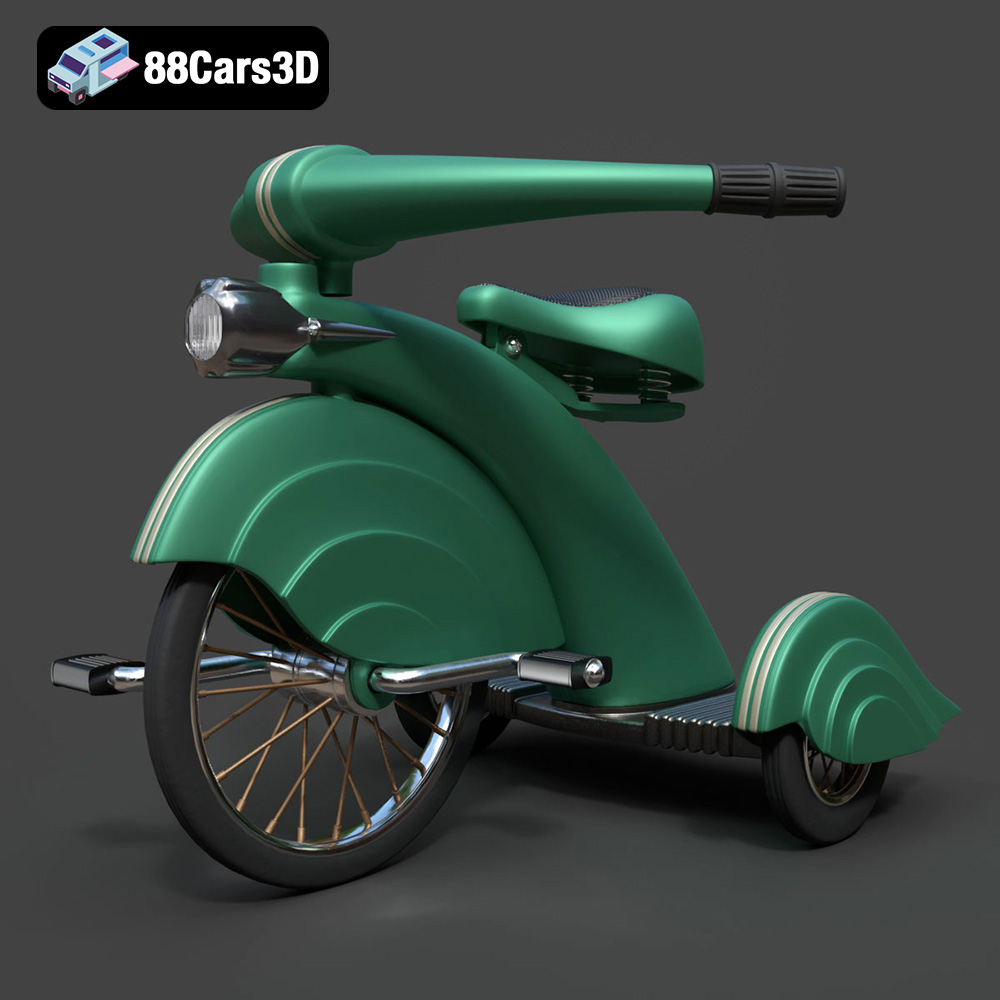
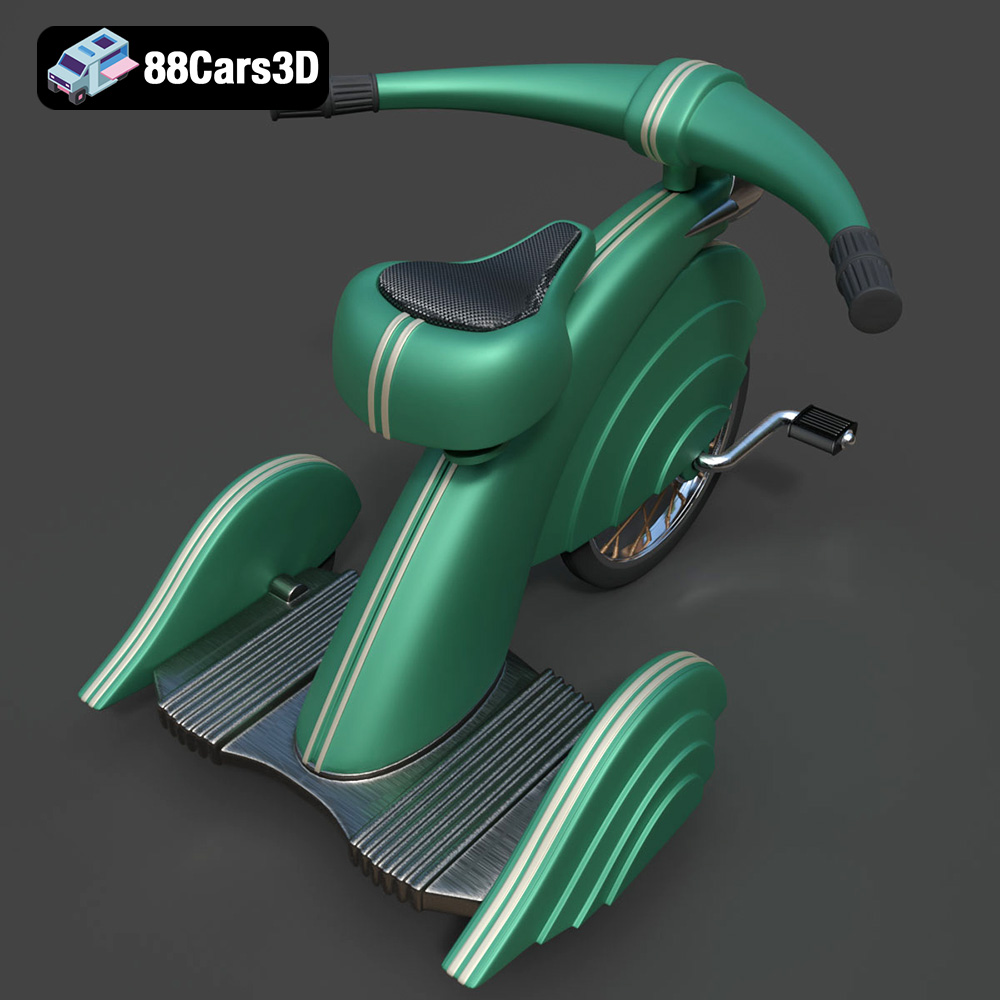
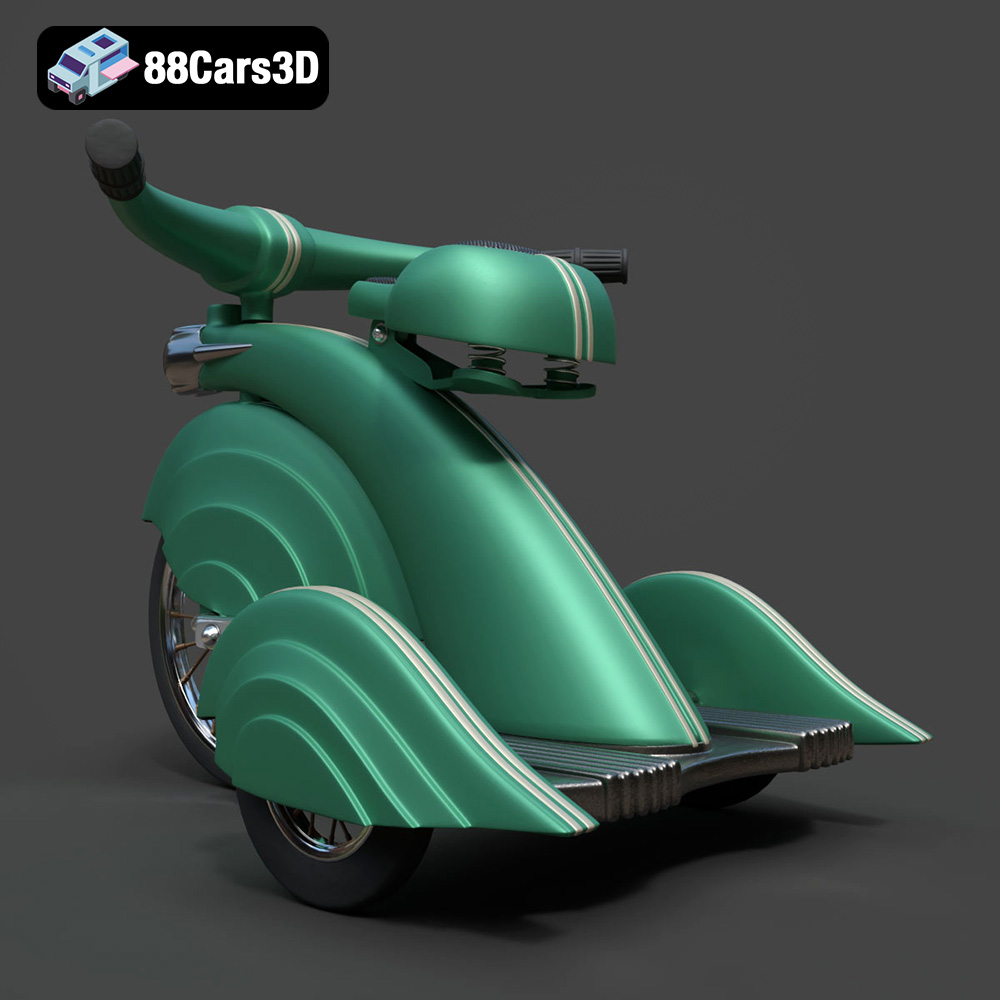
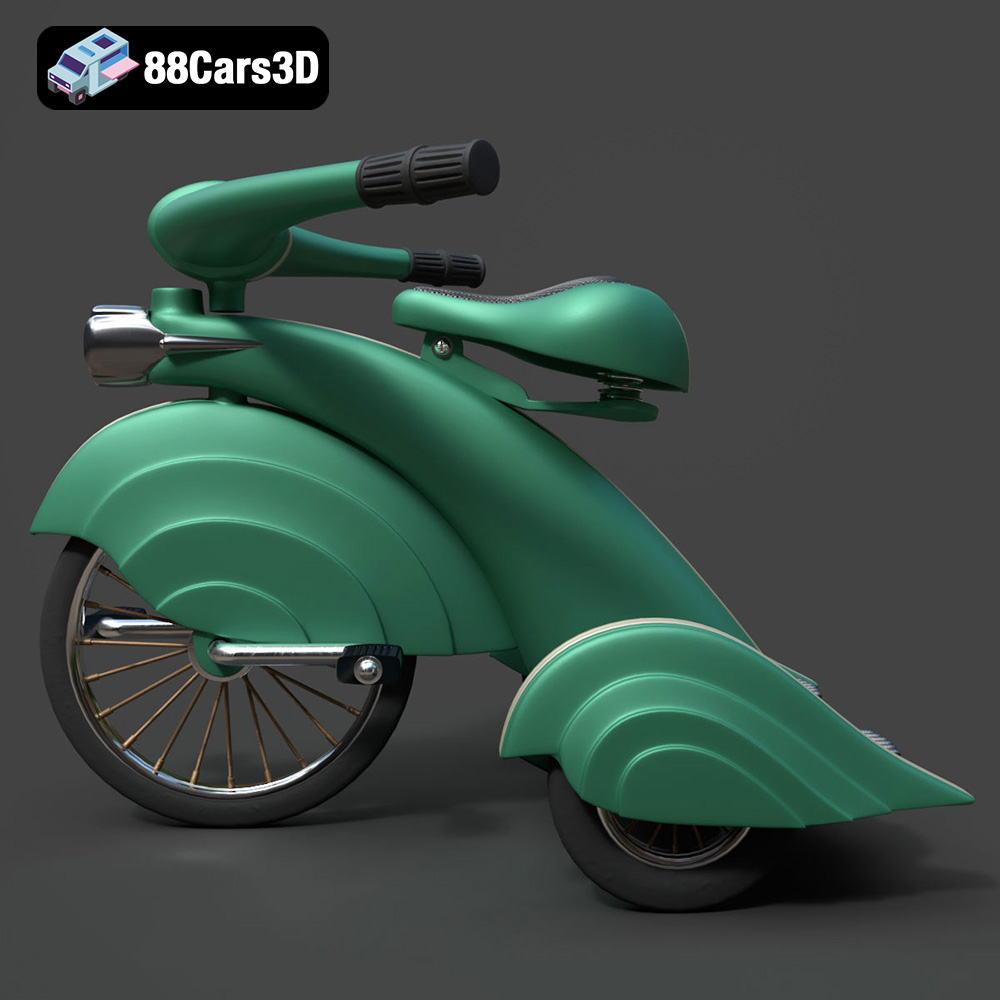
Today, we’re delving into a particularly charming example of such an asset: the Vintage Tricycle 1930 3D Model. This exceptional piece, available at 88cars3d.com, is far more than just a static object; it’s a meticulously recreated slice of history, ready to breathe life into your next project. Capturing the essence of early 20th-century design, this model offers a blend of historical accuracy and technical finesse, making it an invaluable addition to any professional’s toolkit.
When working with 3D assets, particularly intricate ones like the Vintage Tricycle 1930 3D Model, understanding the various file formats is crucial. Each format serves a specific purpose, offering different levels of compatibility, editability, and optimization for distinct workflows, from high-end automotive rendering to real-time game development and even 3D printing. The versatility offered by including a wide range of formats ensures that your purchased asset from 88cars3d.com seamlessly integrates into your preferred software pipeline.
The .blend format is the native file type for Blender, a powerful and popular open-source 3D creation suite. A .blend file typically contains everything within the Blender scene: mesh data, materials, textures, lighting, cameras, animations, rigging, and even internal scripts. For artists primarily working in Blender, this format provides the most complete and editable version of the asset. It’s ideal for making significant modifications, dissecting the model’s construction, or rendering it directly within Blender’s Cycles or Eevee render engines. If you need to tweak the topology, adjust UVs, or experiment with shader graphs, the .blend file is your go-to.
.fbx (Filmbox) is one of the most widely adopted proprietary file formats for 3D data exchange, especially favored in game development and animation pipelines. Developed by Autodesk, FBX excels at preserving a broad range of 3D data, including geometry, materials, textures, animations, and skeletal deformation. Its robust nature makes it ideal for transferring assets between different 3D software packages (like 3ds Max, Maya, Blender, Cinema 4D) and, critically, into real-time engines such as Unreal Engine and Unity. For the Vintage Tricycle, the .fbx format ensures that the pivot points, mesh hierarchy, and any potential basic animations are preserved when importing into your game engine or other DCC application.
The .obj (Wavefront OBJ) format is a simple, universal 3D data format that is highly compatible across virtually all 3D software. It primarily stores geometry (vertices, normals, texture coordinates, and faces) and can reference external material files (.mtl) for basic shading information. While .obj doesn’t typically store advanced features like animation, rigging, or complex shader networks, its widespread support makes it an excellent choice for basic mesh exchange and ensuring cross-software compatibility. It’s often used as a fallback or for simple static model imports.
.glb (GL Transmission Format Binary) is a relatively newer format that’s rapidly gaining traction, particularly for augmented reality (AR), virtual reality (VR), and web-based 3D applications. It’s a binary version of the glTF format, designed to be compact, efficient, and “render-ready.” A single .glb file can embed all necessary data—geometry, materials, textures, animations—making it incredibly convenient for distribution and quick loading in web browsers or mobile AR/VR viewers. The Vintage Tricycle in .glb format would be perfect for an interactive web display or an AR app showcasing historical toys.
.stl (STereoLithography) is the de facto standard file format for 3D printing. It represents a 3D model as a series of connected triangles, defining only the surface geometry without any color, texture, or material information. While simple, its ubiquity ensures compatibility with nearly every 3D printer and slicer software. The Vintage Tricycle 1930 3D Model’s availability in .stl format means you can bring this digital antique into the physical world, creating a tangible replica or a collectible scale toy. Precision in the mesh is critical for clean prints, which this model provides.
The .ply (Polygon File Format, or Stanford Triangle Format) is a versatile format capable of storing a wide range of properties, including color, transparency, normals, texture coordinates, and even confidence values. While also storing polygonal meshes, it’s often used in academic and scientific fields for storing data from 3D scanners, CAD applications, and for analytical purposes where precise vertex and face data, along with additional properties, are important. For the Vintage Tricycle, it offers a robust representation of the mesh for applications requiring detailed geometric analysis or precise reconstruction.
The .unreal format, or rather, assets configured specifically for Unreal Engine, refers to models, textures, and materials that are optimized and packaged for direct use within the Unreal Engine ecosystem. While often imported via .fbx, the “engine-ready” designation implies that the asset is already set up with proper material instances, collision meshes, LODs (Levels of Detail), and pivot points within an Unreal project structure. This significantly streamlines the workflow for game developers and real-time visualization specialists, allowing them to drag and drop the Vintage Tricycle directly into their Unreal scenes with minimal setup.
Similar to .blend for Blender, the .max format is the native scene file for Autodesk 3ds Max, a leading software for 3D modeling, animation, and rendering. A .max file encapsulates the entire scene, including geometry, modifiers, materials, textures, lighting, cameras, animation tracks, and render settings. For users of 3ds Max, this format offers full editability, allowing for complex scene assembly, animation setups, and high-fidelity rendering using engines like V-Ray or Corona. The inclusion of a .max file for the Vintage Tricycle means professionals can leverage 3ds Max’s powerful toolset to fully customize and integrate the model into their projects.
The comprehensive range of file formats available for the Vintage Tricycle 1930 3D Model highlights its adaptability, ensuring that whether your pipeline involves intricate 3ds Max animations, rapid Unreal Engine game development, or precise 3D printing, this asset is ready to perform.
Bringing a piece of history to life in 3D requires more than just modeling shapes; it demands an understanding of the era’s design principles, material characteristics, and functional mechanics. The Vintage Tricycle 1930 3D Model from 88cars3d.com excels in this regard, offering a digital recreation that resonates with authentic nostalgic charm.
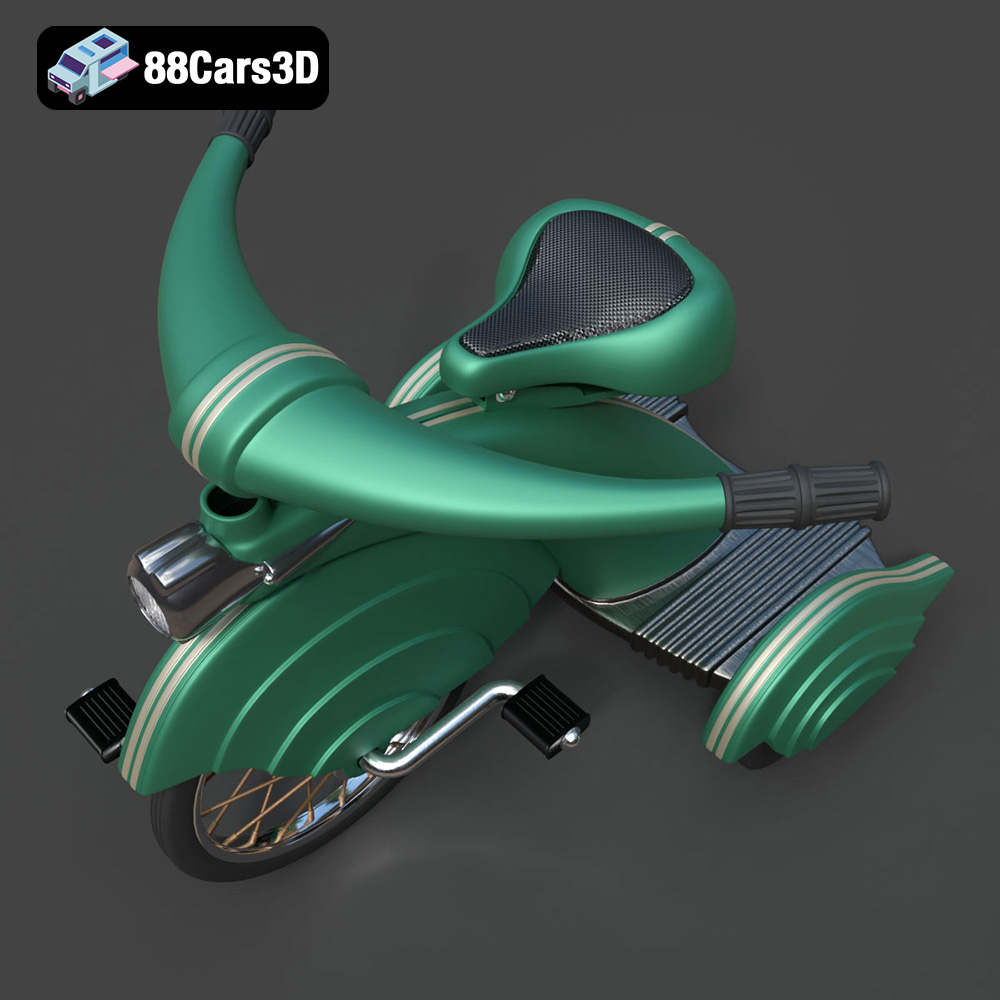
The model’s creators meticulously researched 1930s tricycles to ensure every visual cue speaks of the era. You’ll notice the distinctive proportions, characterized by an oversized front wheel—a common feature in early children’s tricycles designed for stability and simple propulsion. The aesthetic leans into vintage steel construction, reflected in the smooth, tubular frame curves. The handlebars feature the classic upward sweep, and the simple molded saddle seat evokes the practicality and durability of toys from that period. Even the “solid rubber tires” are represented with appropriate texture and form, eschewing modern pneumatic designs for a historically accurate look. This attention to detail is crucial for projects requiring high historical fidelity, such as museum visualizations or period film sets.
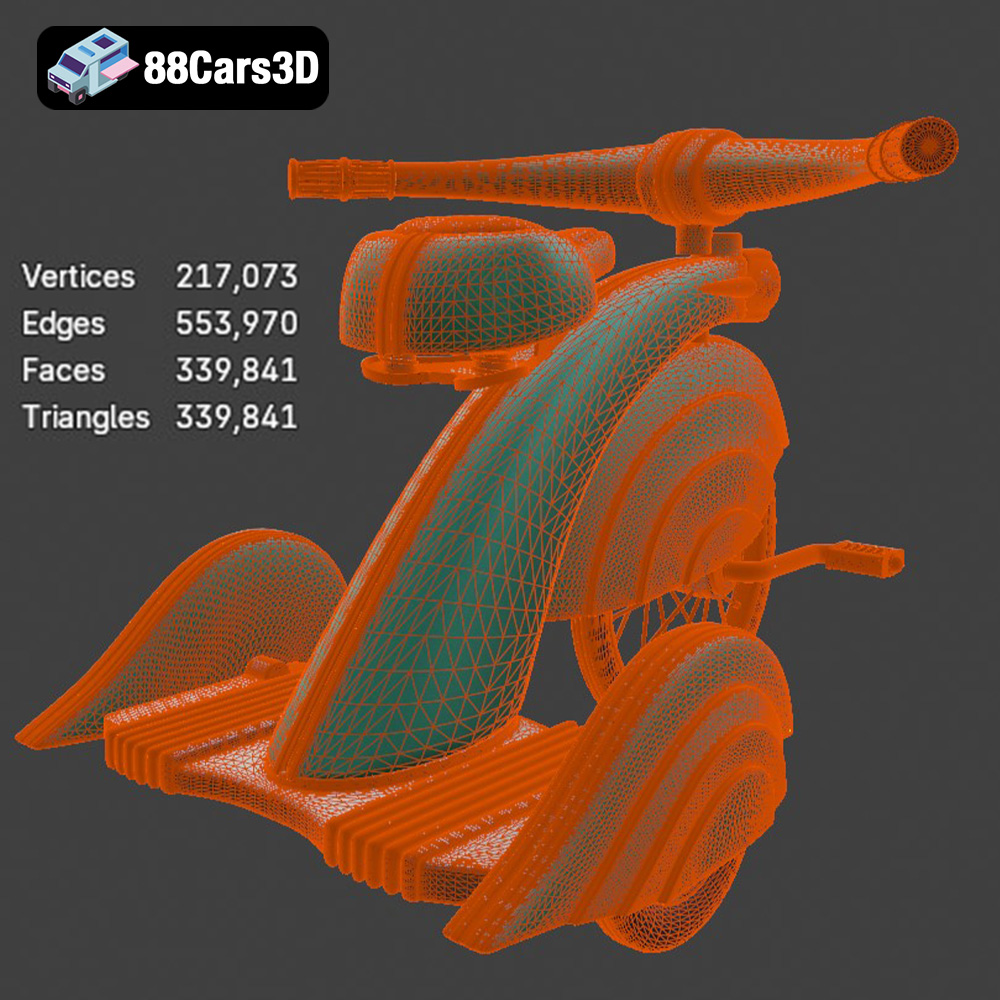
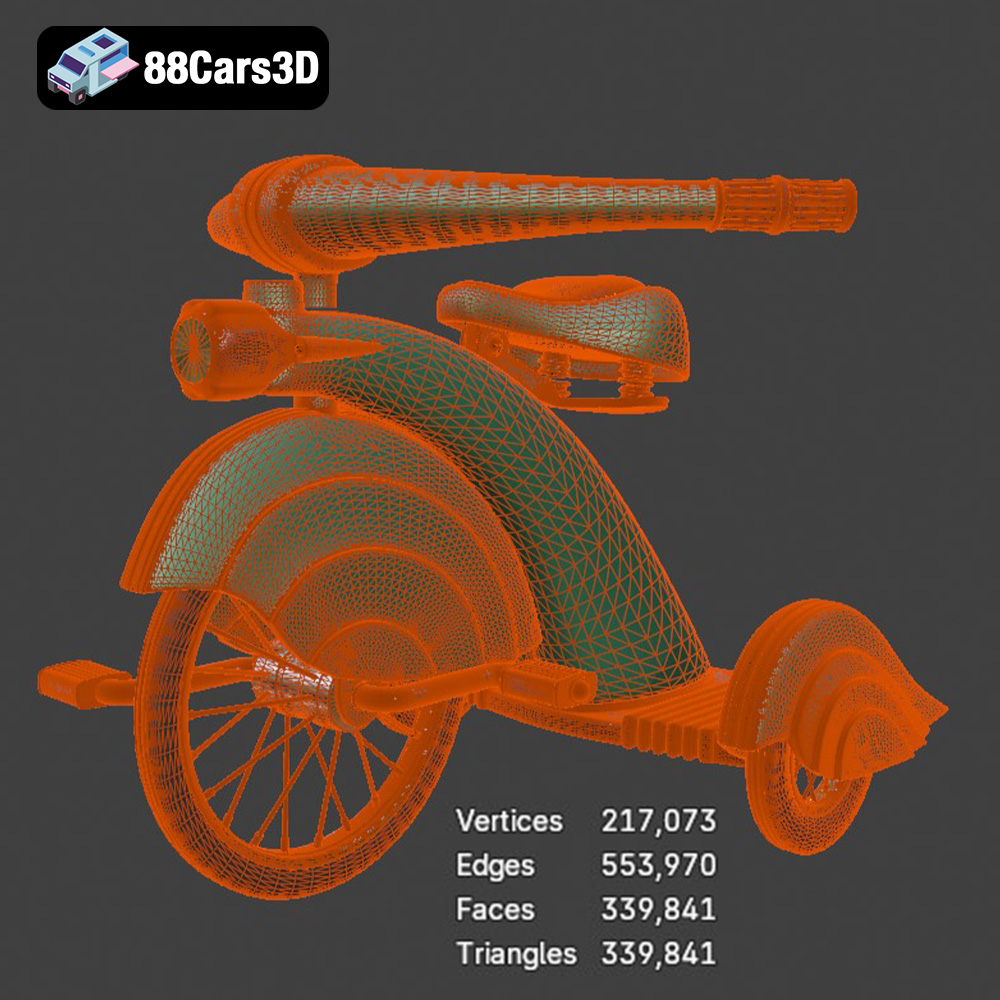
Beyond the surface aesthetics, the Vintage Tricycle model boasts a foundation of technical precision. The topology is clean and well-organized, ensuring smooth subdivisions and efficient rendering. Built to real-world scale accuracy, it integrates seamlessly into scenes without requiring tedious resizing. The underlying structure faithfully represents the sturdy tubular frame, the front drive wheel with integrated pedal crank, and the dual rear wheels connected by a realistic rear axle structure. Elements like classic fender detailing and period-correct handlebar design are not merely cosmetic but are built with consideration for their historical construction. This level of precision is vital for professional automotive rendering and visualization projects, where realism is paramount.
A beautiful 3D model is only truly valuable if it’s also technically robust and easy to integrate into a professional pipeline. The Vintage Tricycle 1930 3D Model is engineered with this principle in mind, providing features that streamline workflows for artists and developers alike.
The model’s clean and well-organized mesh structure is a testament to its optimization for both high-quality renders and real-time performance. This means you can achieve stunning photorealistic images without excessive render times, and the model will run smoothly in demanding game engines or AR/VR applications. The polygon flow is carefully considered, balancing detail with efficiency, which is critical for maintaining high frame rates in interactive experiences. Furthermore, the proper pivot setup for wheel rotation and steering ensures that the model is animation-ready right out of the box, allowing for effortless integration into cinematic sequences or interactive simulations. This focus on optimization saves valuable production time and resources.
One of the significant technical advantages of this 3D car model is its wide compatibility. As discussed earlier, the inclusion of multiple industry-standard file formats (.blend, .fbx, .obj, .glb, .stl, .ply, .unreal, .max) means it can be readily imported into virtually any major 3D software platform or game engine. This eliminates the common headache of format conversion issues, broken materials, or lost data, allowing artists to focus on creativity rather than technical hurdles. Whether you’re working in 3ds Max for architectural visualization, Blender for animation, or Unreal Engine for a cutting-edge game, the Vintage Tricycle 1930 3D Model integrates smoothly, making it a truly versatile game asset for diverse projects.
The versatility of the Vintage Tricycle 1930 3D Model extends across numerous professional applications, making it a highly adaptable asset for various creative and technical endeavors. From stunning visuals to interactive experiences, its detailed design and optimized structure open up a world of possibilities.
For professionals in advertising, marketing, and product visualization, this model is a dream come true. Imagine it as a centerpiece in nostalgic marketing visuals, evoking a sense of timeless charm for a modern product. It’s ideal for creating captivating toy catalogs, antique showcases, or themed presentations that require a touch of historical accuracy and warmth. Cinematic projects can leverage its authentic detailing to populate period scenes, while nostalgic advertising visuals can use it to craft engaging narratives that resonate deeply with audiences. The clean mesh and real-world scale make it perfect for integrating into complex scenes, delivering photorealistic results with ease. This is where the model shines in demanding automotive rendering scenarios, adding a unique, non-vehicular twist to a scene.
In the realm of game development, the Vintage Tricycle 1930 3D Model serves as an excellent game asset for enriching virtual worlds. It is perfectly suited for retro-style games, helping to establish authentic historical environments, or serving as a decorative scene prop that adds character and depth. Its optimized polygon flow ensures efficient performance, crucial for maintaining fluid frame rates in interactive settings. Beyond traditional gaming, it’s an exceptional candidate for AR/VR applications, allowing for interactive museum experiences where users can virtually inspect a classic toy, or for vintage product demonstrations in immersive virtual spaces. The .fbx and .unreal formats ensure seamless integration into popular game engines, making development straightforward.
One of the unique applications of this 3D model is its suitability for 3D printing. The availability in .stl format means you can transform this digital asset into a physical object. This opens doors for creating collectible scale toy replicas, display miniatures, or even unique desktop ornaments. The product description provides specific 3D print settings, which are crucial for achieving high-quality physical output:
This level of detail in the printing instructions highlights the model’s readiness for physical creation, offering a versatile avenue for designers and hobbyists to bring their digital assets to life.
While the Vintage Tricycle 1930 3D Model is presented with exceptional detail and ready-to-use textures, its design allows for extensive customization, empowering artists to tailor it perfectly to their specific project needs.
The model’s clean mesh and material setup facilitate easy visual modifications. You can effortlessly change the frame color to suit different moods or branding—from classic red or cream to playful blue or soft pastel tones, capturing a diverse range of period aesthetics. Adding vintage decals or logo markings can further personalize the tricycle, making it unique to your scene or client. Imagine a rusted, weathered finish for a gritty historical scene, or a pristine, restored look for a high-end commercial. The ability to modify the seat material texture also adds another layer of realism, whether you want worn leather, aged fabric, or a simple plastic look for specific scenarios. These customization options provide immense creative freedom, allowing the tricycle to fit into any narrative.
Beyond material and color adjustments, the model is designed for seamless integration into diverse 3D environments. Configure lighting specifically for studio shots that highlight its classic lines or for nostalgic indoor scenes that evoke a cozy, bygone era. Its real-world scale and proper pivot setup make it easy to position, animate, and interact with other objects in your scene. Whether it’s sitting idle in a child’s bedroom, parked against a brick wall on a cobblestone street, or featured prominently in a stylized product showcase, the Vintage Tricycle 1930 3D Model adapts effortlessly to your creative vision, enhancing the realism and narrative depth of your compositions.
For professionals seeking high-quality 3D models, the choice of marketplace is just as critical as the models themselves. 88cars3d.com stands out as a premier destination, offering meticulously crafted assets like the Vintage Tricycle 1930 3D Model that meet the rigorous demands of various industries.
The hallmark of assets found on 88cars3d.com is uncompromising quality. Every model, including our featured Vintage Tricycle, is developed with an obsessive attention to detail, historical accuracy, and technical integrity. From clean topology and real-world scale to optimized polygon flow and proper pivot setups, these assets are built to perform at the highest level. This commitment to excellence ensures that when you download a 3D car model or any other vehicle from 88cars3d.com, you are investing in a product that will elevate your work, whether for advanced automotive rendering, game asset development, or compelling visualizations.
Beyond the inherent quality, 88cars3d.com prioritizes a user-friendly experience. The comprehensive file format support, encompassing everything from .blend and .max for native software compatibility to .fbx for universal exchange and .stl for 3D printing, means that integration into your existing workflow is as smooth as possible. You spend less time troubleshooting and more time creating. The clear product descriptions, technical specifications, and application guides further ensure that you have all the necessary information to leverage your purchased assets to their fullest potential. Choosing 88cars3d.com means choosing efficiency, reliability, and outstanding results for your projects.
The journey of creating compelling 3D content, whether for automotive rendering, game development, or realistic visualizations, often hinges on the quality and authenticity of individual assets. The Vintage Tricycle 1930 3D Model exemplifies this principle, offering a meticulously crafted piece of digital history that is both visually captivating and technically robust. Its faithful recreation of a bygone era, combined with optimized geometry and extensive file format support, makes it an invaluable asset for any professional 3D artist.
From enhancing nostalgic marketing campaigns and populating immersive game environments to creating tangible 3D-printed collectibles, this model’s versatility is unmatched. It serves as a perfect example of how high-quality 3D car models, or in this case, a charming tricycle, can breathe life and historical depth into your projects. When you choose assets from 88cars3d.com, you’re not just acquiring a file; you’re gaining a tool that empowers your creativity and elevates your professional output. We encourage you to explore this exceptional model and discover how its unique charm can transform your next project.
The Vintage Tricycle 1930 3D Model is a high-detail digital recreation of a classic early 20th-century three-wheeled bicycle designed for children. Inspired by 1930s craftsmanship, this model captures the nostalgic charm of vintage steel construction, oversized front wheel, curved handlebars, simple saddle seat, and solid rubber tires. This 3D model accurately represents the sturdy tubular frame, large front drive wheel with pedals, dual rear wheels, rear axle structure, classic fender detailing, and period-correct handlebar design. Built with clean topology and real-world scale accuracy, it is ideal for rendering, animation, historical visualization, game development, and AR/VR experiences. Perfect for retro-themed scenes, antique toy collections, museum displays, cinematic projects, and nostalgic advertising visuals.
$15.9
.1930s
.antiquetoy
.arvr
.blend
.classictricycle
.fbx
.gameasset
.glb
.max
.nostalgicdesign
.obj
.ply
.rendering
.retrobike
.simulation
.stl
.toy3dmodel
.unreal
.vintagetricycle