⚡ FLASH SALE: Get 60% OFF All Premium 3D & STL Models! ⚡

In the competitive world of 3D visualization, automotive design, and game asset development, a stunning 3D car model is only as good as its presentation. And at the heart of every breathtaking car render lies exceptional studio lighting. It’s the magic that transforms a mere collection of polygons and textures into a captivating, photorealistic masterpiece that evokes emotion and communicates design intent. Whether you’re showcasing the sleek lines of a supercar, the rugged utility of an off-roader, or preparing assets for an immersive AR/VR experience, understanding and mastering studio lighting in 3ds Max is paramount.
This comprehensive guide will take you on a deep dive into the technical intricacies of setting up professional studio lighting for your 3D car models in 3ds Max. We’ll explore everything from fundamental lighting principles and software-specific techniques to advanced strategies for creating compelling reflections, optimizing your scene, and troubleshooting common issues. By the end of this article, you’ll possess the knowledge and practical tips to elevate your automotive renders from good to truly extraordinary, ensuring your creations stand out in portfolios, presentations, and digital marketplaces.
Before diving into the specifics of 3ds Max, it’s crucial to grasp the foundational principles that govern how light interacts with and defines a car’s surface. Automotive lighting is less about illuminating the object and more about revealing its form through reflections and highlights. A car’s complex curves and reflective materials act like mirrors, reflecting every light source in the environment. Understanding this interaction is key to crafting truly photorealistic results.
Light isn’t just brightness; it has several critical attributes that artists manipulate. Hard light, typically from a small, distant source (like the sun or a spotlight), produces sharp, well-defined shadows and intense highlights. While dramatic, it can be unforgiving on car surfaces, highlighting imperfections. Soft light, from a larger, diffused source (like a softbox or an overcast sky), creates gentler shadows and smoother transitions, ideal for revealing the contours of a car without harshness. Most studio setups favor soft light for automotive renders.
The direction of light profoundly impacts how a car’s shape is perceived. Front lighting can flatten details, while side lighting emphasizes curves and depth. Backlighting (or rim lighting) is crucial for separation from the background and highlighting edges. Experimenting with light angles, such as 45-degree angles from the front-side, often yields the most balanced and aesthetically pleasing results.
Color temperature, measured in Kelvin (K), dictates the warmth or coolness of light. Lower Kelvin values (e.g., 2700K-3000K) produce warm, yellowish light, similar to incandescent bulbs. Higher values (e.g., 5500K-6500K) result in cool, bluish light, akin to daylight or studio fluorescents. For automotive renders, a neutral white light (around 6000K-6500K) is often preferred for accuracy, but creative choices can be made to evoke specific moods. Consistency in color temperature across your lighting setup is vital to avoid unwanted color casts.
A car’s paintwork, chrome accents, and glass are highly reflective, and these reflections are what define the vehicle’s shape and material properties. The placement, size, and shape of your light sources directly dictate the shape, intensity, and quality of these reflections. A large, rectangular softbox will produce a large, soft, rectangular reflection on a car’s body panel, elegantly highlighting the curve. Conversely, a small, intense light will create a sharp, pinpoint highlight.
This concept, often referred to as “reflection mapping,” is fundamental. You are not just lighting the car; you are carefully crafting the environment that the car reflects. Understanding how to shape these reflections is an advanced skill. It involves visualizing how a light source, its size, and its distance from the car will appear on the surface. For example, a common technique involves placing long, narrow strip lights parallel to the car’s body to create elegant, elongated reflections that emphasize speed and form.
With the theoretical groundwork laid, let’s translate these principles into practical application within 3ds Max. Setting up a robust virtual studio environment is the first step towards achieving professional automotive renders.
3ds Max is a powerful host application, but the actual rendering is performed by dedicated render engines. For photorealistic automotive visualization, the industry standards are Corona Renderer, V-Ray, and Arnold. Each has its strengths, but all are capable of producing stunning results.
Regardless of your choice, the core principles of light placement and manipulation remain consistent. For this guide, we’ll discuss general approaches applicable across these renderers, highlighting specific settings where differences occur.
A neutral studio environment is crucial for controlling reflections and focusing attention on the car. The most common setup is an infinite seamless backdrop, created using a curved plane. In 3ds Max:
This setup prevents harsh horizons, unwanted environment reflections, and ensures a clean, professional look. Ensure your backdrop is large enough to encompass all potential camera angles and reflections from your car.
The first lights you’ll introduce are typically large area lights or an HDRI (High Dynamic Range Image) environment. Area lights (Plane lights in Corona/V-Ray, Quad lights in Arnold) are digital equivalents of studio softboxes. They emit soft, diffused light over a defined area.
Alternatively, or in conjunction with area lights, HDRIs are invaluable. An HDRI is a panoramic image containing a full range of light information, from darkest shadows to brightest highlights. When used as an environment map in your renderer, it provides realistic global illumination and detailed reflections.
To use an HDRI in 3ds Max:
Rotate the HDRI (via its UVW mapping or a dedicated rotation parameter in the light/environment settings) to find the most appealing lighting and reflection scenario for your car. High-quality studio HDRIs often include softbox setups, making them perfect for automotive renders. While we focus on 3ds Max, the principles of using HDRI maps for global illumination and reflections are universal. For those working in Blender, similar functionalities can be found. For detailed information on setting up HDRIs and environment lighting in Blender, you can refer to the official Blender 4.4 documentation.
Once you have a basic illumination, the real artistry begins: sculpting light to define the car’s form and material properties with precision. This is where you move beyond simple illumination to strategically crafting every highlight and shadow.
The classic three-point lighting setup (key, fill, rim) is a fantastic starting point but needs adaptation for automotive work. For cars, reflections are key, so you often use multiple "key" or "reflection shaping" lights.
Experimentation is vital here. Each car model will respond differently to light. Spend time moving lights, adjusting their size, intensity, and temperature until the reflections beautifully articulate the car’s design.
To gain even more control over your reflections and light distribution, delve into light shaper properties and IES (Illuminating Engineering Society) profiles.
Beyond simply providing general illumination, HDRIs are powerful tools for managing your scene’s global illumination (GI) and background reflections. A well-chosen HDRI can dramatically enhance realism. Look for studio HDRIs that already contain professional lighting setups, such as large softboxes and bounce cards. These can serve as an excellent foundation for your lighting, providing realistic ambient light and reflections that would be incredibly complex to build manually with individual lights.
You can use an HDRI for ambient lighting, while still using individual area lights for specific, controlled reflections and highlights. Many renderers allow you to decouple the HDRI’s contribution to direct illumination, indirect illumination, and reflections/refractions, giving you granular control. This hybrid approach – combining the realism of an HDRI with the precision of individual lights – often yields the best results for automotive rendering.
The most sophisticated lighting setup will fall flat if your 3D car model’s materials and underlying mesh aren’t up to par. Good lighting accentuates good assets.
Physically Based Rendering (PBR) materials are the cornerstone of modern photorealism. They accurately simulate how light interacts with surfaces by defining properties like Albedo (base color), Roughness/Glossiness, Metallic, Normal, and Displacement. For automotive renders, understanding how these PBR parameters react to light is paramount:
Ensure your PBR materials are correctly configured for your chosen renderer (Corona Physical Mtl, V-Ray PBR Mtl, Arnold Standard Surface) to achieve accurate light interaction. The way light reflects off the car is a direct result of both your lighting setup and these material properties.
The foundation of any great render is a great model. High-quality 3D car models are characterized by clean topology, accurate dimensions, and well-organized UV mapping. Platforms like 88cars3d.com specialize in providing such assets, which are essential for professional results. When sourcing models, always look for:
Even the best lighting can’t fix fundamental flaws in a poorly constructed 3D model. Investing in or creating high-quality base models is a non-negotiable step.
While aiming for photorealism, it’s also important to consider performance, especially if your renders are destined for interactive applications like game development or real-time AR/VR. High-polygon models, while detailed, can significantly increase render times. Similarly, excessively high-resolution textures can consume vast amounts of memory.
When selecting models from marketplaces such as 88cars3d.com, pay attention to these specifications to ensure they meet your project’s performance requirements without compromising visual fidelity. Effective lighting can often compensate for slightly lower polygon counts by creating compelling reflections that suggest high detail.
After perfecting your lighting and materials, the final steps involve rendering your image and applying post-processing touches to bring out its full potential.
Your renderer’s settings significantly impact the quality and speed of your final image. Understanding key parameters is crucial:
Experiment with your render settings. A common workflow is to do quick, low-quality renders to test lighting, then increase settings for the final output. Always save your rendered image as a high-dynamic range format (EXR or TIFF) to retain maximum color information for post-processing.
Post-processing is where you add the final polish, much like a photographer’s darkroom work. It’s an essential step, even for renders fresh out of 3ds Max.
Working with render passes in external software offers maximum creative freedom. For example, you can adjust the intensity of reflections or the color of diffuse light independently, allowing for non-destructive edits.
Your final automotive renders have many potential destinations. Tailoring them for specific applications is crucial.
Even experienced artists encounter challenges. Knowing how to diagnose and solve common lighting issues can save countless hours.
Hotspots: Overly bright, blown-out areas on your car’s surface are often caused by small, intense light sources placed too close to the object, or reflections from unintended bright elements in your scene/HDRI.
Solution:
Streaky Reflections: These usually indicate either poor light source geometry, artifacts from low-resolution textures, or problems with your model’s surface normal.
Solution:
When rendering multiple cars, maintaining a consistent lighting environment is crucial for comparison and brand presentation.
Solution:
Lighting is an iterative process. Rarely will your first attempt be perfect.
Solution:
Mastering studio lighting for 3D car models in 3ds Max is a journey that combines technical understanding with artistic vision. It’s about more than just illuminating an object; it’s about crafting an environment that meticulously sculpts reflections, defines form, and evokes the emotion inherent in automotive design. From understanding the nuances of hard and soft light to strategically placing area lights and leveraging the power of HDRIs, every decision contributes to the final masterpiece.
We’ve explored essential tools, advanced techniques for sculpting light and reflections, and the critical interplay between lighting and high-quality PBR materials and models. Remember that clean topology and proper UV mapping on your 3D car models are just as vital as your lighting setup, ensuring that every reflection behaves as intended. For artists and designers, sourcing premium models from platforms like 88cars3d.com can provide an excellent foundation for your lighting endeavors, allowing you to focus on the artistry of illumination.
The journey doesn’t end with the render button; post-processing is the final polish that brings your automotive visualization to life, enhancing contrast, color, and mood. Embrace iteration, troubleshoot common pitfalls, and constantly seek inspiration from the real world. By diligently applying these principles and techniques, you’ll not only create stunning automotive renders but also develop a keen eye for light that will serve you across all your 3D projects, from game assets to intricate visualization pieces. Now, go forth and illuminate!

Texture: Yes | Material: Yes | 3D Printable: Yes. Download the Italian Thoroughbreds Bundle featuring 5 iconic 3D models: Lamborghini Huracán Performante, Ferrari 458 Italia, Lamborghini Urus, Diablo SV, and Maserati GT. Optimized for 4K rendering and 3D printing (STL included). Save 50% with this ultimate Italian vehicle collection.
Price: $199.99

Download the Elite Future Mobility Bundle featuring 4 highly optimized 3D models: Tesla Model S, Avatr 11, Li L9, and Zoox Robotaxi. Perfect for ArchViz, Smart City renders, and game dev. Optimized for Unreal Engine and Blender. Includes .fbx, .obj, and .max formats.
Price: $99

🚗 5 Iconic German Cars (BMW M4 G82, M5 CS, X3, 1 Series & Mercedes E-Class). ✅ Optimized for ArchViz: Ready for Corona & V-Ray. 💰 Save €71 with this limited-time collection! 🚀 Instant Download after purchase.
Price: $119

Download the Extreme Off-Road & Survival 3D Models Bundle! Includes the Brabus 800 Adventure, Dodge Ram Bigfoot, Spec Truck, and a Caravan. Save over €210 on this premium 4-in-1 off-grid vehicle pack for ArchViz and game development.
Price: $149.99

Download the Heavy Duty & Commercial Logistics 3D Models Bundle! Includes the Ford Sterling, Caterpillar CT680, Mercedes Citaro Bus, and Vito Van. Save over €130 on this massive, game-ready 4-in-1 industrial vehicle pack.
Price: $109.99

Download the Ultimate Custom Motorcycles 3D Models Bundle. Includes a Custom Chopper, Ducati 916 Café Fighter, Harley XR1200X, and BMW K100. Perfect premium props for luxury ArchViz garages. Save over €250 today!
Price: $159.99

Download the ultimate JDM Street Racing 3D Models Bundle! Includes the Nissan GT-R, Toyota Supra, Mazda RX-7, Lancer Evo IX, and Honda NSX. Save big on this highly optimized, game-ready 5-in-1 Japanese legend car pack.
Price: $129.99

Download the ultimate American Muscle & Cinematic Classics 3D Models Bundle! Includes the Dodge Charger ’68, Mustang Eleanor GT500, Camaro Z28 ’79, and a custom ’69 Mustang. Save over €240 on this game-ready, premium 4-in-1 pack.
Price: $149.99
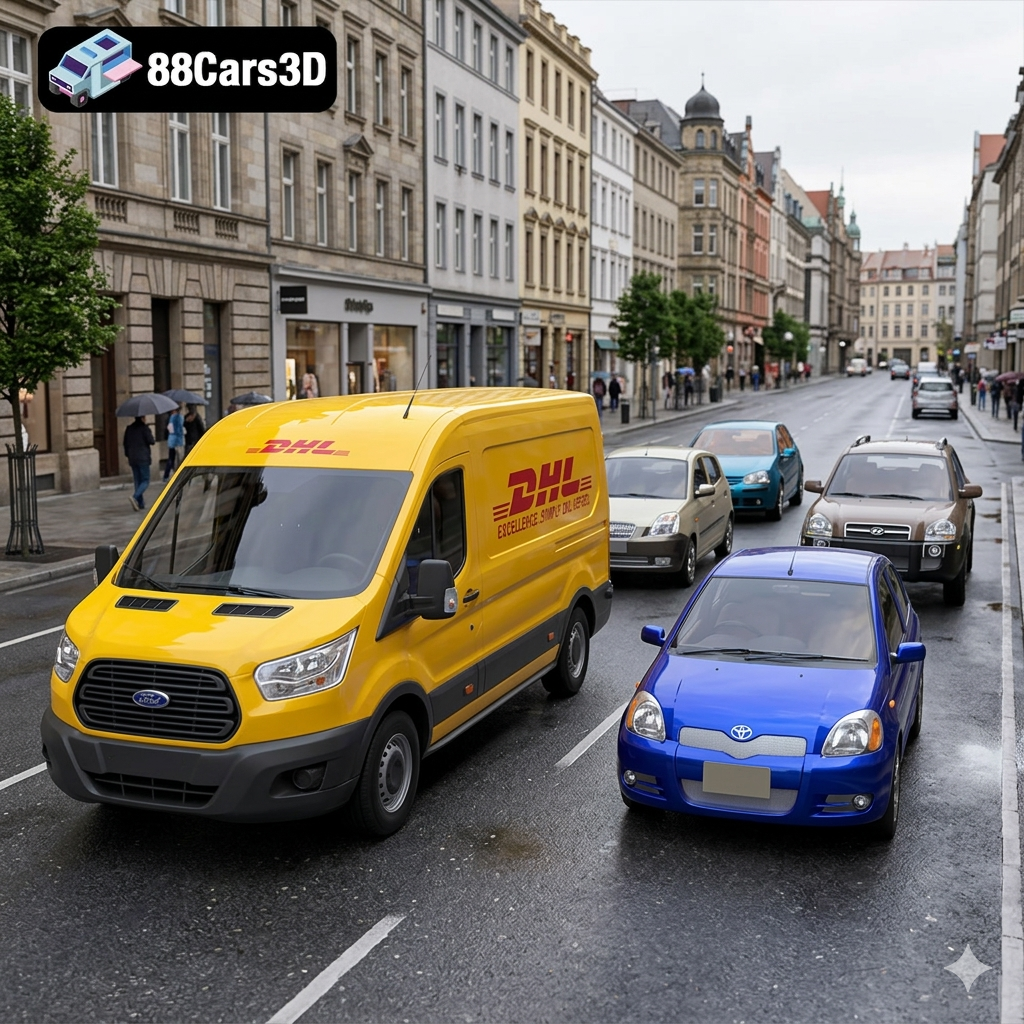
Download the Everyday City Traffic 3D Models Bundle. Includes the VW Golf, Kia Picanto, Hyundai Tucson, Toyota Yaris, and a DHL Ford Transit Van. Save big on this 5-in-1 pack, perfectly optimized for realistic ArchViz streets and game traffic.
Price: $99.99
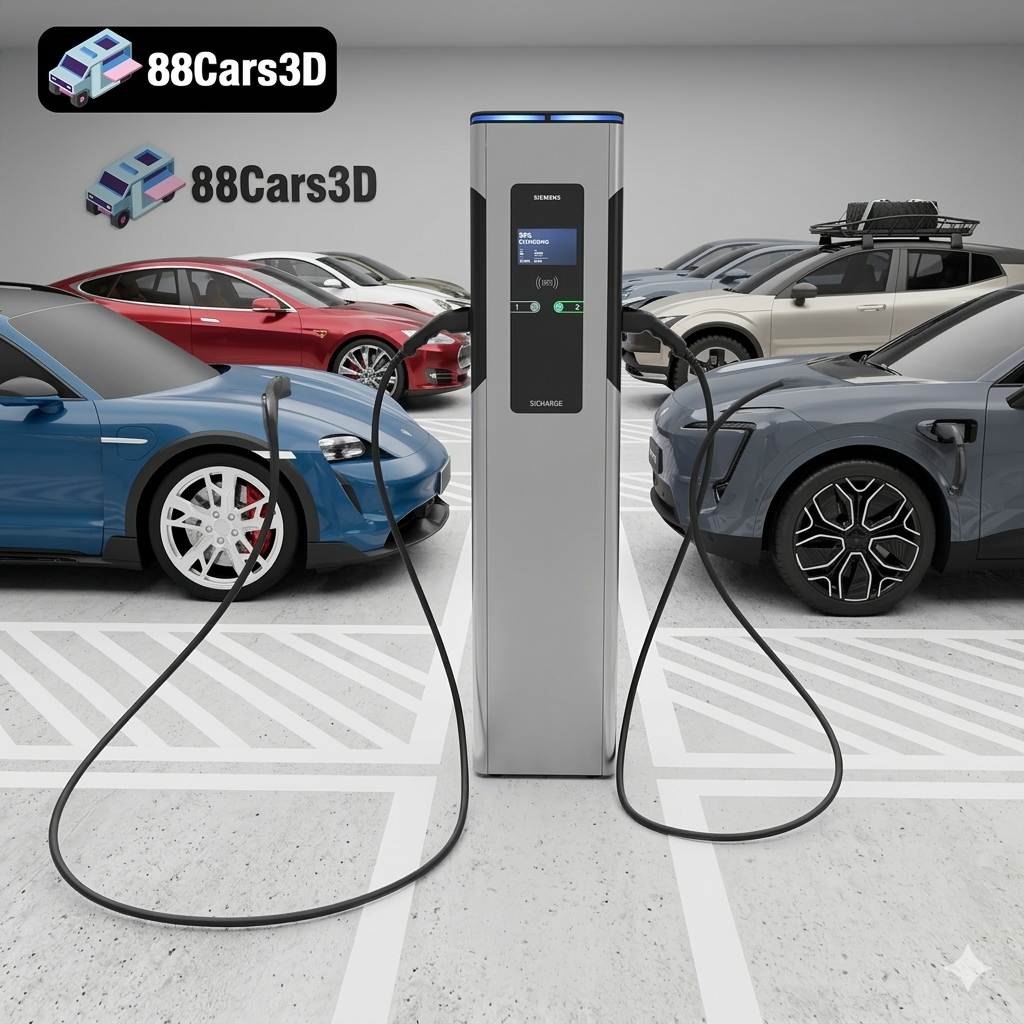
Download the Future of Mobility EV 3D Models Bundle. Includes the Volvo EX30, Tesla Model S, AVATR 11, Porsche Taycan, and a Siemens EV Charger. Save big on this highly optimized 5-in-1 pack for ArchViz and game development!
Price: $89.99

