⚡ FLASH SALE: Get 60% OFF All Premium 3D & STL Models! ⚡

In the fast-paced worlds of industrial design, logistics, and real-time simulation, the ability to visualize and interact with complex machinery in a virtual environment is no longer a luxury—it’s a fundamental necessity. From optimizing warehouse layouts to developing immersive training simulations and creating stunning marketing visuals, high-quality 3D assets serve as the digital backbone for innovation. Professionals across automotive rendering, game development, and AR/VR projects consistently seek models that combine meticulous detail with robust technical specifications.
Today, we’re delving into a prime example of such an asset: the Toyota Forklift 3D Model. This versatile digital recreation isn’t just a static object; it’s a gateway to enhancing operational efficiency, delivering engaging user experiences, and bridging the gap between design and practical application. Whether your project demands realistic material handling simulations, lifelike factory scene compositions, or interactive virtual training, understanding the nuances of such a model is crucial for success.
Navigating the diverse landscape of 3D software and engines requires a solid grasp of file formats. Each format is designed with specific use cases and technical advantages, impacting everything from portability and editability to real-time performance and 3D printing readiness. The Toyota Forklift 3D Model, available on 88cars3d.com, exemplifies this versatility by offering a comprehensive suite of formats, ensuring it integrates seamlessly into virtually any professional pipeline.
The .blend format is the native file type for Blender, an incredibly powerful open-source 3D creation suite. When you acquire a .blend file, you’re getting a fully editable Blender scene, complete with all its intricacies: mesh data, materials, textures, lighting, camera setups, and even animation data. This format is ideal for artists who use Blender as their primary DCC (Digital Content Creation) tool, offering maximum flexibility for modifications, re-texturing, and scene integration. Its self-contained nature ensures that all necessary assets are bundled together, simplifying project management.
.fbx (Filmbox) stands as one of the most widely adopted proprietary file formats for 3D data exchange between various software applications. Developed by Autodesk, it’s particularly ideal for game engines like Unreal Engine and Unity, as well as real-time visualization pipelines. FBX can store comprehensive scene data, including geometry, materials, textures, rigging, animation, and even camera and lighting information. Its strength lies in its ability to maintain crucial animation data and hierarchical structures, making it the go-to format for animated 3D car models and complex rigged assets like the Toyota Forklift 3D Model when moving between different software packages.
The .obj (Wavefront Object) format is a venerable and highly compatible format known for its universality. It primarily stores geometry (vertices, normals, texture coordinates, and faces) and can reference external material (.mtl) files for basic shading information. While .obj doesn’t typically store animation or rigging data, its widespread support across almost all 3D software makes it excellent for cross-software compatibility. It’s often used for static meshes or as a fallback when more complex formats encounter issues. Its simplicity ensures a clean import into new environments.
.glb (GL Transmission Format Binary) is the binary version of glTF, specifically optimized for efficient transmission and loading of 3D scenes and models in web applications, augmented reality (AR), and virtual reality (VR) environments. It encapsulates geometry, materials, textures, animations, and skeletal data into a single, compact file, making it incredibly easy to share and display 3D content in browser-based viewers or mobile AR apps. For the Toyota Forklift 3D Model, a .glb file means rapid deployment into immersive experiences or online product showcases.
When it comes to physical fabrication, .stl (STereoLithography) is the undisputed king. This format represents 3D models as a collection of triangular facets, defining only the surface geometry of an object without color, texture, or other CAD attributes. It is the primary file type understood by 3D printers and slicing software. The Toyota Forklift 3D Model’s availability in .stl format is crucial for users looking to create tangible scale models for prototyping, display, or even functional miniature parts. Ensuring manifold geometry and appropriate wall thickness are key technical considerations when preparing an .stl file for reliable printing.
.ply (Polygon File Format, or Stanford Triangle Format) is a versatile format for storing 3D data, particularly useful for scanned data, CAD models, and scientific applications where precision and a rich dataset are required. It can store a wide range of properties for each vertex and face, including color, transparency, surface normals, and texture coordinates. While less common for general-purpose asset exchange than FBX or OBJ, it offers a robust solution for specific workflows requiring detailed mesh attributes or precise analytical modeling of components like the forklift’s mechanical parts.
The .unreal format, or more accurately, assets packaged for direct import into Unreal Engine projects, signifies a level of optimization and preparation specifically for Epic Games’ powerful real-time engine. This often means assets are already correctly scaled, have appropriate materials set up (or PBR textures ready for material creation), and sometimes even include basic collision meshes or LODs (Levels of Detail). For a complex industrial asset like a forklift, having an “engine-ready” version greatly streamlines the integration process for game developers or virtual simulation creators, saving valuable time on conversion and optimization.
Finally, the .max format is the native file type for Autodesk 3ds Max, another industry-leading DCC application. Similar to .blend, a .max file provides a fully editable project, containing all scene elements: geometry, materials, textures, lights, cameras, modifiers, and animation data. This format is essential for users who rely on 3ds Max for high-end automotive rendering, complex animation sequences, or detailed architectural visualization, offering complete control over every aspect of the Toyota Forklift 3D Model within that environment.
By providing such a comprehensive array of formats, 88cars3d.com ensures that the Toyota Forklift 3D Model is not just a high-quality asset but a highly adaptable one, ready for any challenge across diverse 3D pipelines.
While the term “3D car models” often conjures images of sleek sports cars or family sedans, its scope extends far beyond consumer vehicles to encompass the workhorses of industry. Industrial 3D models, such as the detailed Toyota Forklift, are critical tools that empower designers, engineers, and marketers to bring complex operations to life long before physical construction begins. These assets are vital for strategic planning, operational safety, and compelling communication.
Before a single beam is laid in a new warehouse or a new logistics process is implemented, 3D models allow stakeholders to visualize and validate concepts. A highly accurate model like the Toyota Forklift 3D Model enables architects and logistics planners to test layouts, identify potential bottlenecks, and optimize traffic flow within a virtual environment. This predictive capability saves significant resources, prevents costly errors, and ensures that the final physical implementation is as efficient as possible. It’s a fundamental part of digital twin initiatives, where a virtual representation mirrors a physical system.
Operating heavy machinery like a forklift requires extensive training. Traditional methods can be expensive, time-consuming, and carry inherent risks. Here, 3D industrial vehicle models revolutionize the process. Immersive AR/VR simulations, powered by detailed game assets like our featured forklift, provide safe, repeatable, and scalable training environments. Operators can learn controls, practice maneuvering, and handle virtual cargo without the dangers or costs associated with real equipment. The realistic visual feedback and physics simulations offered by such models drastically improve retention and preparedness, making it an invaluable tool for vocational training and safety compliance.
The Toyota Forklift 3D Model available on 88cars3d.com isn’t just a generic industrial vehicle; it’s a meticulously crafted digital twin designed for realism and functionality. Its creation adheres to the highest standards of 3D modeling, ensuring it meets the demanding requirements of professional applications from high-resolution automotive rendering to real-time game development.
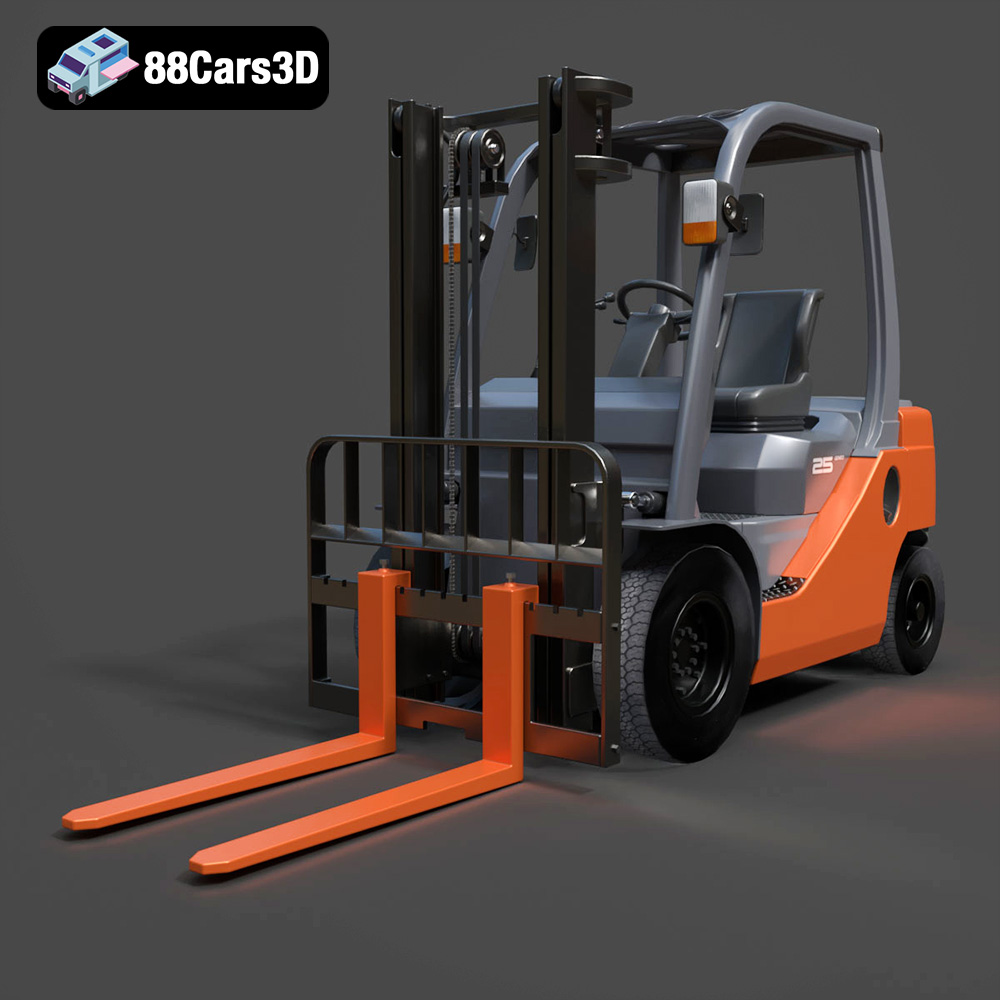
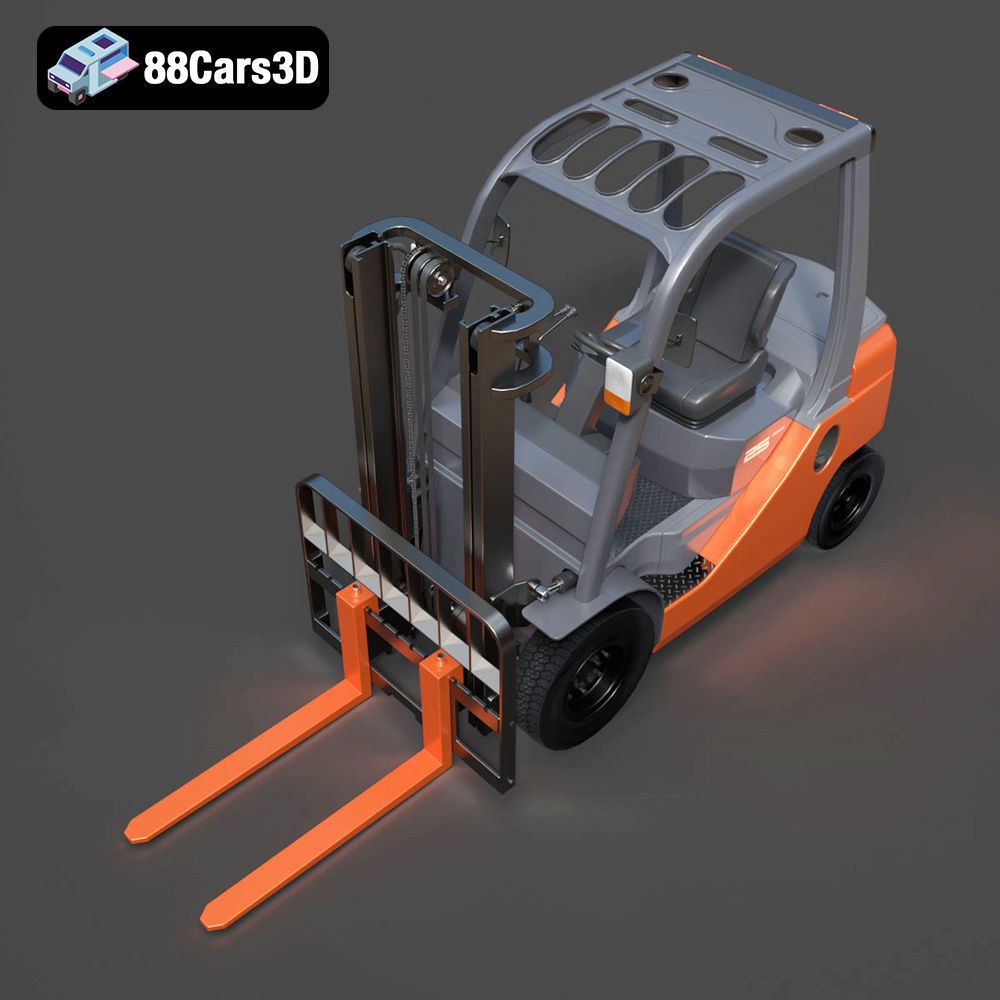
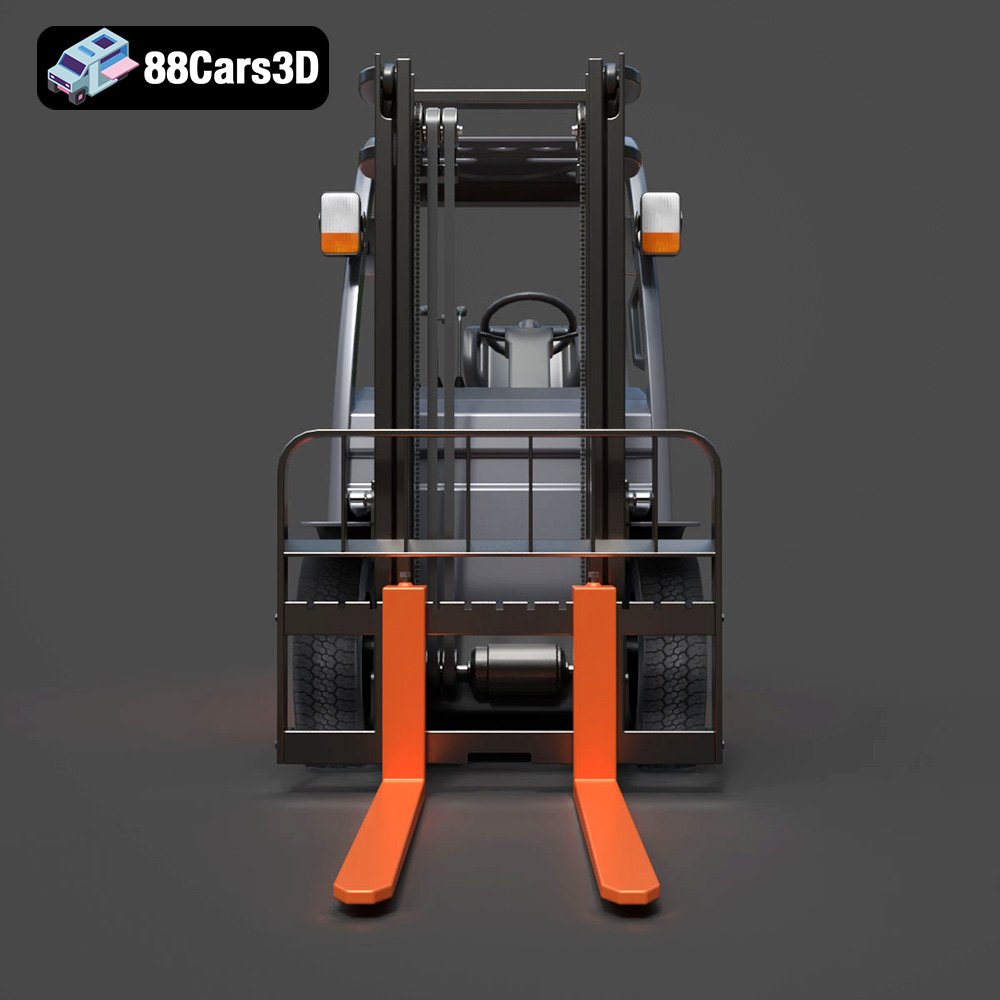
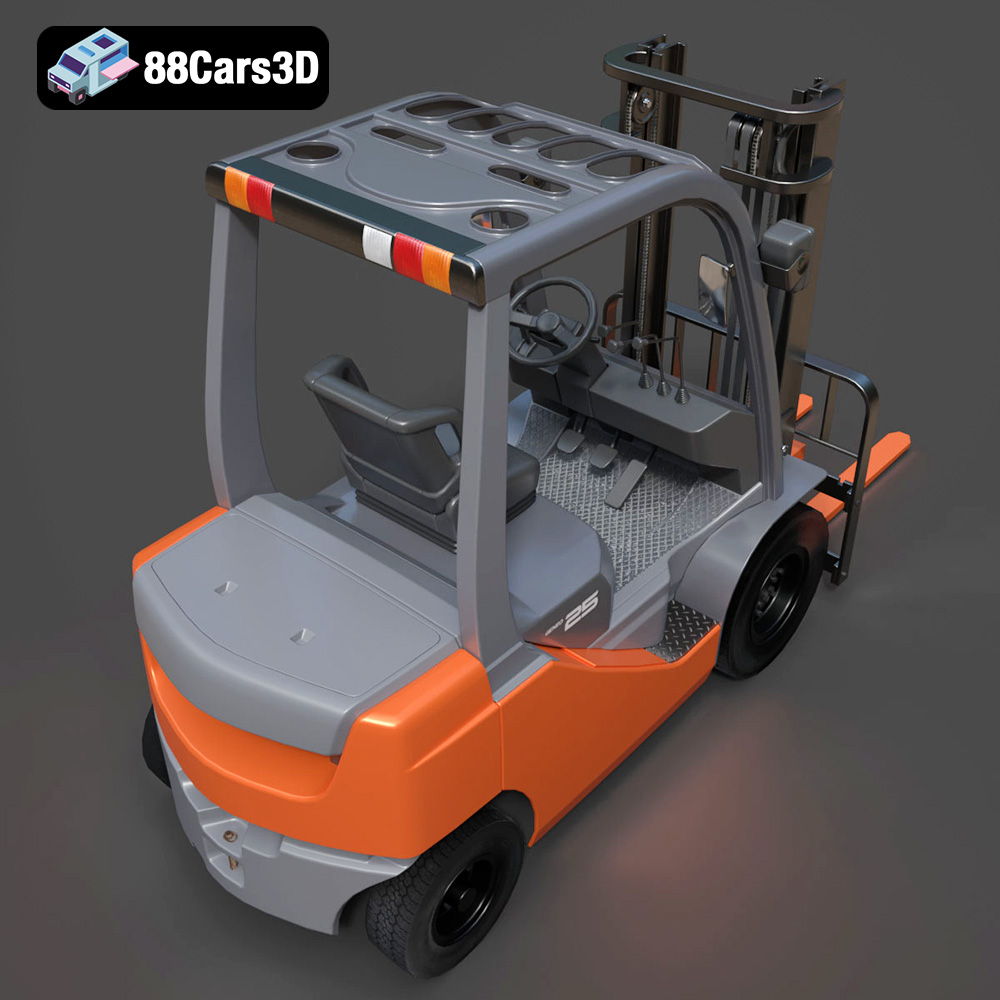
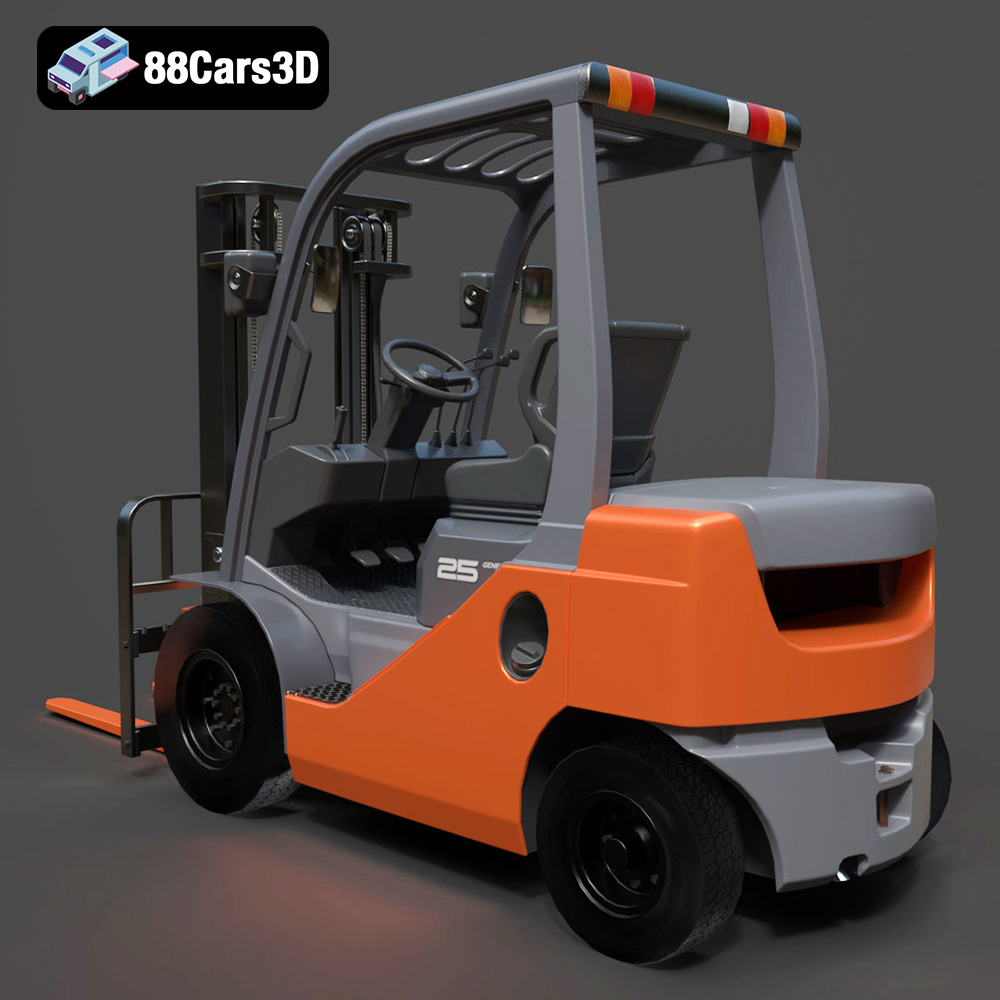
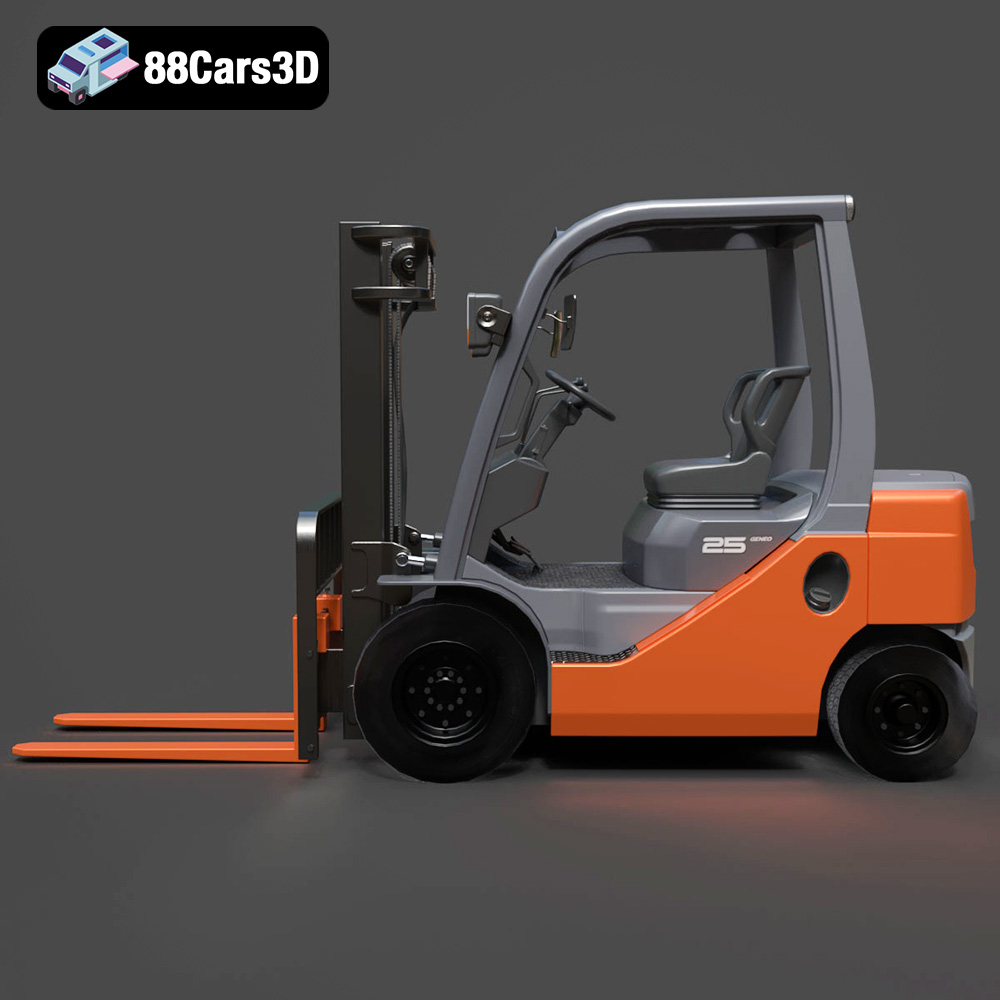
The model accurately captures the essence of a modern Toyota forklift. From the reinforced mast assembly with its intricate lift rails to the realistic fork arms with adjustable spacing, every external component has been carefully replicated. Details like the hydraulic cylinders, chain mechanisms, and the protective overhead safety guard are not merely suggested but fully modeled. Even the industrial tire geometry includes authentic tread patterns, enhancing realism for close-up shots and physically accurate ground interaction in simulations. This level of detail is paramount for projects demanding visual fidelity, such as marketing materials or high-end architectural visualizations that feature logistics operations.
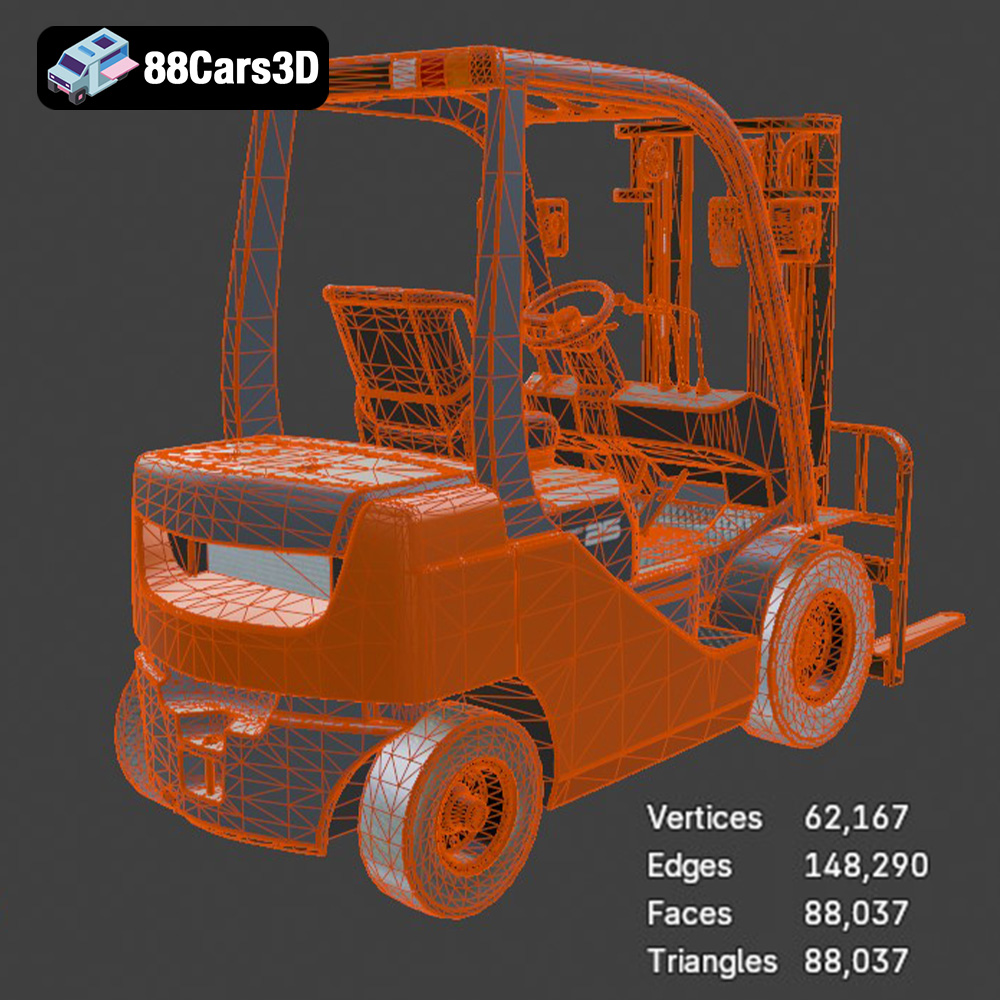
Beyond the exterior, the operator area is equally detailed, providing a comprehensive and functional interior for first-person perspectives or interactive simulations. The modeled driver seat, backrest, steering wheel, and control levers offer an authentic feel. The dashboard and instrument panel are present, along with the pedal layout and operator floor platform, all contributing to an immersive experience. Safety bars and structural framing within the cabin complete the realistic environment, making the model suitable for driver training modules where visual cues and control interaction are critical.
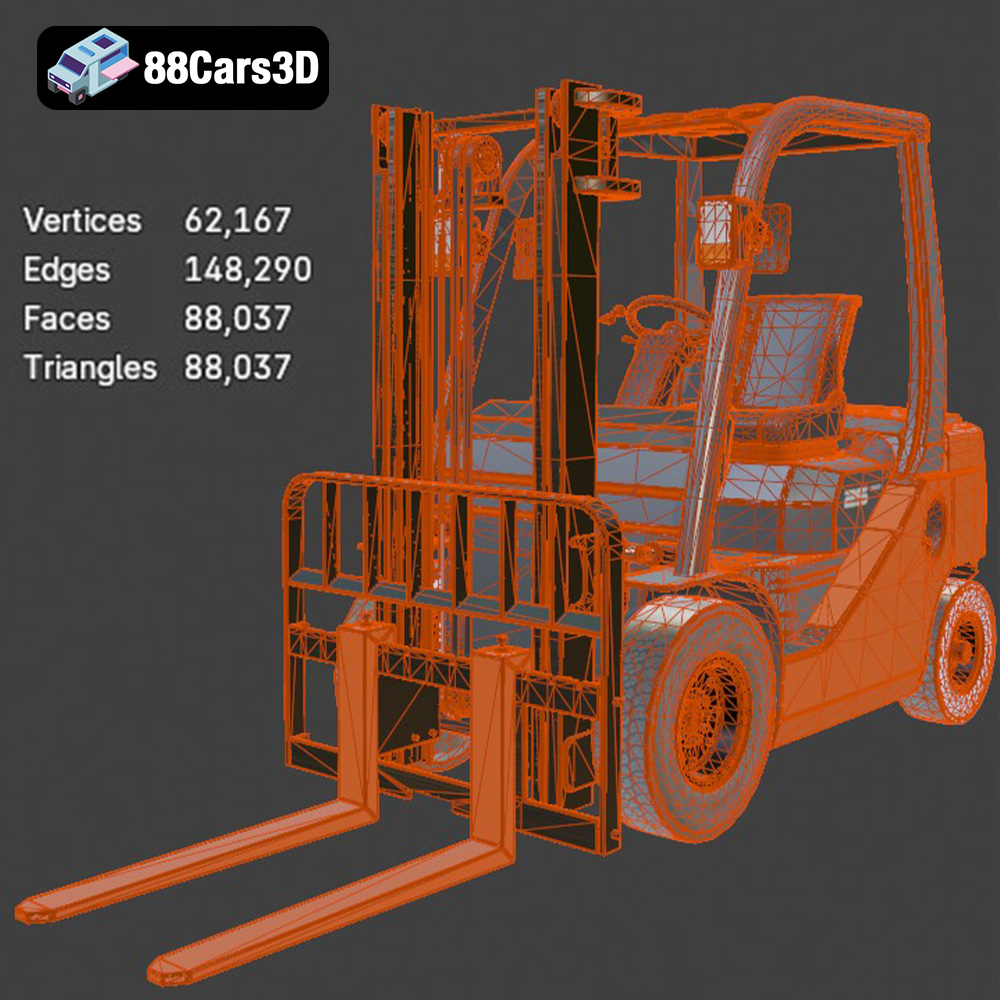
A static model can only go so far. The Toyota Forklift 3D Model is built with animation in mind. It boasts a clean and well-organized mesh structure, optimized polygon flow, and, crucially, proper pivot setups for key animated components. This means the wheels are separate and correctly aligned for rotation, and the mast assembly is ready for realistic lifting and tilting motions. For animators, this translates to significant time savings, allowing them to jump directly into creating dynamic warehouse scenes, cargo loading sequences, or compelling promotional videos without extensive rigging work. This technical advantage makes it a true asset for game assets development and cinematic rendering.
The true value of a versatile asset like the Toyota Forklift 3D Model lies in its adaptability across various professional creative pipelines. Whether your expertise lies in high-fidelity rendering, interactive game design, or tangible product creation, this model provides a solid foundation.
For those specializing in photorealistic visualizations, the Toyota Forklift 3D Model is an excellent starting point. In environments like 3ds Max, artists can leverage advanced rendering engines such as V-Ray or Corona to achieve stunning results. The model’s clean topology and real-world scale ensure accurate light interaction and shadow casting. Material assignments can be effortlessly enhanced with PBR (Physically Based Rendering) textures for scratches, dirt, and wear, simulating years of industrial use. Animators can utilize 3ds Max’s robust animation tools to create complex sequences of the forklift navigating a warehouse, lifting pallets, or interacting with other industrial equipment. Similarly, Blender users can harness Cycles or Eevee renderers to produce captivating visuals. The .blend file format offers immediate access to the model’s structure, allowing for easy material tweaks, lighting setups, and scene composition. Imagine a marketing presentation featuring a new logistics solution, rendered with cinematic quality, made possible by a detailed 3D car model like this forklift.
In the realm of game development and real-time visualization, performance and fidelity are key. The Toyota Forklift 3D Model’s optimized geometry and engine-ready .unreal or .fbx formats streamline its integration into platforms like Unreal Engine. Developers can import the model, set up PBR materials, and immediately begin creating interactive environments. For a warehouse simulator, the separate wheels and lifting components can be easily rigged to a control system via blueprints, allowing players to drive and operate the forklift realistically. Collision meshes can be generated for accurate physical interactions with virtual cargo and environments. Furthermore, LODs (Levels of Detail) can be implemented to maintain high frame rates even in complex scenes, ensuring that the forklift functions efficiently as a game asset without compromising visual quality. This is crucial for developing robust training applications, virtual tours of industrial facilities, or intricate simulation games.
Beyond digital screens, the Toyota Forklift 3D Model shines in the physical world through 3D printing. With its manifold geometry and suitability for conversion to .stl format, creators can produce scale industrial vehicle models. This is invaluable for rapid prototyping, creating physical models for tabletop displays, or even manufacturing custom parts for larger dioramas. The recommended 3D print settings – specifying scales like 1:32 or 1:24, layer height, wall thickness, and infill – guide users to achieve optimal results. Components requiring support, such as the forks and mast assembly, are clearly identified, ensuring a successful print. The ability to print and post-process with sanding, primer, and authentic industrial paint finishes brings the digital model into tangible existence, bridging the gap between virtual design and physical reality.
A premium 3D asset should not only be technically sound but also offer avenues for customization to meet specific project needs. The Toyota Forklift 3D Model provides just that, allowing artists and developers to tailor it for a wide array of real-world scenarios, amplifying its utility and impact.
The customization options for this model are extensive. Imagine needing to integrate the forklift into a specific company’s branding. Artists can easily change the body color, apply custom company logos or warehouse decals, and even modify the “Toyota” branding to suit a generic industrial vehicle if proprietary elements are not desired. For specialized tasks, the fork length or width can be adjusted, or the mast height configuration altered to reflect different lifting capacities or operational requirements. Even environmental details, such as configuring appropriate lighting for indoor warehouse scenes or outdoor yard operations, can be dynamically adjusted. This flexibility ensures that the investment in a high-quality 3D car model from 88cars3d.com is adaptable to numerous unique contexts, from a factory floor simulation to a detailed architectural walkthrough.
Consider a major logistics firm planning a new automated distribution center. They could import the Toyota Forklift 3D Model into a virtual environment alongside models of conveyor belts, shelving units, and robotic arms. By simulating traffic flow and material handling with the forklift, they can identify potential collision points, optimize routing algorithms, and even predict operational throughput, all before breaking ground. This kind of visualization, using highly accurate 3D car models, is a game-changer for industrial planning.
Another powerful application is in AR/VR. A vocational training center might use the Toyota Forklift 3D Model in an augmented reality app. Trainees could view a virtual forklift overlaid onto a real-world warehouse floor, practicing movements and safety procedures with interactive digital controls. This provides a highly engaging and practical training experience that goes beyond traditional classroom instruction. For game developers, this forklift serves as an authentic game asset in titles focused on construction, industrial management, or even complex puzzle games involving material handling. The robust technical foundations of the model ensure it performs reliably in these interactive, dynamic settings.
The journey through the capabilities and applications of the Toyota Forklift 3D Model underscores a crucial point: high-quality 3D assets are indispensable tools for modern industry. From conceptual design and architectural visualization to immersive training simulations and engaging game development, precision-engineered models offer unparalleled versatility and value. The meticulous detail, real-world scale, animation readiness, and broad file format compatibility of this particular forklift model exemplify the standard that professionals should seek.
Whether you’re an automotive renderer aiming for photorealism, a game developer crafting believable industrial environments, or an AR/VR specialist building interactive experiences, investing in robust 3D car models like the Toyota Forklift is a strategic move. It streamlines workflows, enhances visual fidelity, and ultimately drives innovation across diverse sectors. Explore this and many other premium 3D car models at 88cars3d.com to accelerate your next project.
The Toyota Forklift 3D Model is a high-detail digital recreation of a modern industrial forklift designed for warehouse, logistics, and material handling operations. Known for reliability, maneuverability, and industrial durability, Toyota forklifts are widely used in factories, storage facilities, and distribution centers worldwide. This 3D model accurately represents the reinforced mast assembly, lifting forks, hydraulic cylinders, overhead guard, operator seat, steering controls, counterweight body, industrial tires, and rear steering configuration. Built with clean topology and real-world scale proportions, it is ideal for rendering, animation, simulation, game development, and AR/VR industrial visualization. Perfect for warehouse scenes, logistics centers, factory environments, cargo loading simulations, and commercial presentations.
$29.99
.arvr
.blend
.fbx
.forklift
.forklift3dmodel
.gameasset
.glb
.industrialvehicle
.logistics
.materialhandling
.max
.obj
.ply
.rendering
.simulation
.stl
.toyota
.unreal
.warehouseequipment