⚡ FLASH SALE: Get 60% OFF All Premium 3D & STL Models! ⚡

The world of automotive visualization has always pushed the boundaries of real-time rendering. From showcasing concept cars with unparalleled fidelity to developing interactive virtual showrooms, the demand for photorealism and seamless performance is constant. For years, 3D artists and developers wrestled with an inherent dilemma: the higher the polygon count, the greater the visual detail, but also the more significant the performance bottleneck. This often led to agonizing optimization processes, culling details, and compromising on visual quality to achieve playable frame rates.
Enter Unreal Engine 5’s revolutionary Nanite virtualized geometry system. Nanite isn’t just an incremental update; it’s a paradigm shift, fundamentally changing how high-detail assets, especially complex ones like 3D car models, are handled in real-time. It liberates artists from the constraints of poly budgets, allowing them to import film-quality assets directly into the engine without laborious manual LOD creation or aggressive polygon reduction. For professionals leveraging high-quality assets from platforms like 88cars3d.com, Nanite transforms the workflow, enabling truly stunning automotive visualizations, interactive experiences, and game development with unprecedented fidelity and efficiency. This comprehensive guide will delve deep into Nanite, exploring its technical underpinnings, practical implementation for 3D car models, and how it’s revolutionizing the future of automotive real-time rendering.
At its core, Nanite is a virtualized geometry system that micro-polygon meshes and streams them on demand, eliminating traditional polygon count limitations. Instead of rendering every triangle in a model, Nanite intelligently processes only the pixel-sized details visible to the camera. This means artists can import models with millions, even billions, of polygons and have Unreal Engine 5 handle them efficiently, without a noticeable performance hit. It’s a game-changer for industries where detail is paramount, such as automotive design and visualization, where every curve, seam, and reflection matters.
The magic of Nanite lies in its innovative approach to geometry management. It converts source meshes into a specialized internal format comprised of clusters of triangles. During rendering, Nanite efficiently culls these clusters, streaming only the necessary detail directly to the GPU. This eliminates the CPU bottleneck associated with traditional rendering pipelines, where scene geometry must first be processed by the CPU before being sent to the GPU. The result is an unprecedented level of geometric detail, smoother workflows, and a significant boost in performance, allowing developers to focus on artistic vision rather than technical constraints.
Nanite operates on several key principles:
These principles combine to offer immense architectural benefits. Artists are freed from the painstaking task of creating multiple LOD levels, simplifying asset pipelines significantly. The engine automatically handles geometric complexity, allowing for truly photorealistic scenes with complex environmental details alongside exquisitely detailed car models. For a deeper dive into Nanite’s technical specifications and how it manages complex geometry, refer to the official Unreal Engine documentation at dev.epicgames.com/community/unreal-engine/learning.
While Nanite dramatically improves performance by offloading CPU geometry processing to the GPU, it’s not without its own performance profile. Nanite is heavily GPU-bound, meaning a powerful GPU is essential to fully leverage its capabilities. The system thrives on throughput, processing millions of triangles per frame. Key performance metrics to monitor include Nanite triangle count, shader complexity, and overall GPU frame time. The engine provides powerful visualization modes (e.g., Nanite Overdraw, Triangles) to help identify potential bottlenecks.
From a hardware perspective, GPUs with excellent shader performance and ample VRAM are highly recommended. While Nanite is designed to scale, pushing billions of triangles across an entire scene will naturally demand higher-end hardware. However, compared to traditional rendering methods, Nanite scales much more gracefully with increased geometric complexity, allowing for detail previously only achievable in offline renderers to be experienced in real-time. This makes it an ideal solution for high-end automotive visualization where fidelity cannot be compromised.
Integrating high-quality 3D car models into Unreal Engine 5 with Nanite is a streamlined process, especially when starting with well-prepared assets. The key is to ensure your source models, such as those obtained from 88cars3d.com, adhere to some fundamental principles for optimal Nanite performance and visual fidelity. While Nanite handles geometric complexity, clean topology, proper UV mapping, and correct material setup remain crucial for the overall quality of your scene.
The beauty of Nanite is that it greatly simplifies the import workflow for dense meshes. You no longer need to decimate your models aggressively or spend hours generating multiple LODs. Instead, you can focus on preserving the maximum detail from your source asset. This empowers artists to work with CAD data, scanned assets, or highly detailed models directly from digital content creation (DCC) tools, translating directly into photorealistic results within the engine.
Even with Nanite, good asset hygiene is important. Here are some recommendations:
When you acquire a model from a reputable source like 88cars3d.com, these best practices are typically already followed, giving you a head start.
Unreal Engine provides robust import pipelines, with Datasmith being particularly powerful for complex scene transfers and CAD data, and USD (Universal Scene Description) emerging as a universal standard. Both support bringing in high-fidelity models with materials, hierarchies, and metadata.
.fbx or .udatasmith file into the Content Browser..usd, .usdc, or .usdz file directly into your viewport or import it via the Content Browser.Once imported, Unreal Engine will process the mesh, converting it to the Nanite internal format. This process may take some time for extremely high-poly models, but it’s a one-time conversion per mesh. The result is a Nanite-enabled static mesh asset ready for your scene, allowing you to bypass traditional LOD generation and focus on artistic refinements.
Having geometrically detailed car models powered by Nanite is only half the battle; achieving photorealism demands equally sophisticated materials and lighting. Unreal Engine’s Physically Based Rendering (PBR) material system, combined with the dynamic global illumination and reflections of Lumen, creates an environment where high-fidelity automotive assets truly shine. This synergy is crucial for believable visualizations, whether for a marketing campaign or an interactive vehicle configurator.
PBR materials accurately simulate how light interacts with surfaces in the real world, relying on properties like base color (albedo), roughness, metallic, and normal maps. Lumen then takes this a step further by calculating realistic indirect lighting and reflections in real-time, adapting to scene changes such as moving lights or opening car doors. The combination allows for a level of visual fidelity that was once the exclusive domain of offline renderers, now available for real-time applications.
Automotive finishes are notoriously complex, often involving multi-layer paints, clear coats, metallic flakes, and subtle reflections. Crafting these in Unreal Engine’s Material Editor requires a nuanced approach:
Utilize high-resolution texture maps (e.g., 4K or 8K) for critical surfaces, especially for close-up shots. For efficiency, use packed textures (e.g., Metallic, Roughness, Ambient Occlusion in separate channels of a single texture) and instance your master materials to allow for easy variations (e.g., different paint colors) without recompiling shaders.
Lumen is Unreal Engine 5’s default global illumination and reflections system, providing real-time indirect lighting that dynamically adapts to scene changes. For automotive visualization, Lumen is indispensable for achieving realistic environmental interaction and reflections on car surfaces.
By leveraging Nanite for geometry, PBR for materials, and Lumen for dynamic lighting, you can create breathtakingly realistic automotive scenes that react convincingly to light and environmental changes, setting a new standard for real-time visualization.
Beyond static renders, the true power of real-time visualization lies in interactivity. For automotive applications, this translates into dynamic experiences like interactive configurators, virtual test drives, and immersive walkthroughs. Unreal Engine’s Blueprint visual scripting system empowers developers and artists to create complex interactivity without writing a single line of code, while the Chaos Vehicle Physics system provides a robust framework for realistic vehicle dynamics.
Integrating these features with Nanite-enabled car models opens up a world of possibilities. Imagine a high-fidelity car model, with every detail preserved, where users can instantly change paint colors, swap wheels, open doors, and even drive the vehicle in a realistic simulation, all in real-time. This level of engagement significantly enhances the user experience for potential customers, designers, and enthusiasts alike.
A car configurator is a prime example of Blueprint’s utility. Here’s a simplified workflow:
Blueprint enables rapid prototyping and iteration, allowing designers to quickly implement and test interactive features. This iterative process is crucial in automotive design and marketing, where quick adjustments to visual and interactive elements are often required.
For virtual test drives or realistic vehicle dynamics, Unreal Engine 5 uses the Chaos Physics engine. The Chaos Vehicle Plugin offers a comprehensive framework for setting up cars, trucks, and other wheeled vehicles with realistic suspension, engine, transmission, and tire models.
Chaos Physics allows for a highly customizable and realistic driving experience. By combining Nanite’s visual fidelity with detailed physics, you can create engaging automotive simulators or even integrate realistic vehicle handling into game projects, showcasing the performance characteristics of high-end vehicles with unparalleled realism. While Nanite primarily handles static meshes, ensuring your vehicle chassis and wheels are well-modeled and separate for physics interaction is crucial. Explore the Unreal Engine learning resources for in-depth tutorials on Chaos Vehicle setup.
The impact of Nanite extends far beyond traditional game development and architectural visualization. In fields like virtual production and augmented/virtual reality (AR/VR), Nanite is proving to be a transformative technology, enabling unprecedented detail and realism for automotive applications. The ability to render incredibly high-fidelity 3D car models in real-time, regardless of polygon count, unlocks new creative and technical possibilities.
Virtual production, especially with LED volumes, demands assets that hold up to extreme scrutiny from live cameras. AR/VR experiences, while requiring strict performance budgets, benefit immensely from visually rich and detailed models that contribute to immersion. Nanite addresses these challenges by making complex geometry manageable, allowing automotive designers and marketers to showcase their vehicles in the most compelling real-time environments possible.
Virtual Production (VP) utilizes real-time engines to create virtual environments that blend seamlessly with physical sets and actors, often displayed on massive LED walls. High-detail cars are frequently central to these scenes, whether they are driven into virtual worlds or serve as interactive props. Nanite is a game-changer for VP because:
The combination of Nanite’s geometric prowess and Lumen’s real-time global illumination ensures that vehicles within virtual production environments are lit and rendered with exceptional realism, contributing to truly immersive and believable scenes.
AR/VR applications for automotive visualization (e.g., virtual test drives, interactive showrooms, design reviews) require extremely low latency and high frame rates (typically 90 FPS or higher). While Nanite dramatically helps with geometric complexity, VR still presents unique optimization challenges:
By carefully balancing Nanite’s detail with efficient material creation and targeted lighting, automotive AR/VR experiences can achieve a level of visual fidelity and immersion that was previously unattainable, allowing users to interact with high-quality 3D car models in compelling virtual and augmented spaces.
While Nanite is a revolutionary technology, it’s not a magic bullet that solves all optimization challenges. Understanding its capabilities and limitations is key to leveraging it effectively for your automotive visualization projects. As with any powerful tool, there are best practices to follow and common pitfalls to avoid to ensure your Nanite-enabled 3D car models perform optimally and look their best in Unreal Engine.
The goal is to maximize the benefits of Nanite’s geometric efficiency while maintaining overall project performance and visual quality. This involves strategic asset preparation, careful material creation, and intelligent scene construction, complementing Nanite’s strengths with traditional optimization techniques where necessary. Successfully navigating these considerations will lead to truly stunning and performant real-time automotive experiences.
Despite its power, Nanite has specific use cases and certain types of meshes are not ideal candidates:
When troubleshooting, use the Nanite debug views (e.g., ‘Nanite Triangles’, ‘Nanite Clusters’) to understand how Nanite is processing your geometry. If performance drops, check the ‘Stat GPU’ command for Nanite-specific timings, and ‘Stat RHI’ to look for draw call issues that Nanite typically reduces but can still occur with complex rendering features. Ensure your engine is running with DirectX 12 or Vulkan, as Nanite requires these modern APIs.
Nanite handles geometry, but a high-performing project requires holistic optimization:
By combining Nanite’s unprecedented geometric efficiency with a comprehensive approach to optimizing textures, materials, lighting, and scripting, you can achieve truly stunning and highly performant real-time automotive visualizations that set new industry benchmarks. Remember to continually profile your project using Unreal Engine’s built-in tools to identify and address bottlenecks proactively.
Unreal Engine 5’s Nanite technology marks a watershed moment for 3D workflows, particularly within the demanding realm of automotive visualization. By effectively abolishing traditional polygon count limitations, Nanite empowers artists and developers to import and render film-quality 3D car models with unprecedented detail and efficiency. This revolutionary system streamlines asset pipelines, reduces optimization overheads, and enables a new era of photorealistic real-time experiences, from interactive configurators to cutting-edge virtual production. The synergy between Nanite’s geometric prowess, PBR materials, Lumen’s dynamic global illumination, and the versatility of Blueprint scripting creates a powerful toolkit for crafting immersive and visually stunning automotive content.
For professionals seeking to push the boundaries of real-time automotive rendering, embracing Nanite is no longer optional—it’s essential. It allows you to focus on artistic vision and design integrity, confident that the engine will handle the underlying technical complexities. Whether you’re designing the next generation of vehicles, creating compelling marketing experiences, or developing high-fidelity simulators, Nanite paves the way for a future where visual fidelity is no longer a compromise but a given. To start your journey with high-quality, optimized 3D car models ready for Nanite integration, explore the extensive collection available at 88cars3d.com and unlock the full potential of Unreal Engine 5.
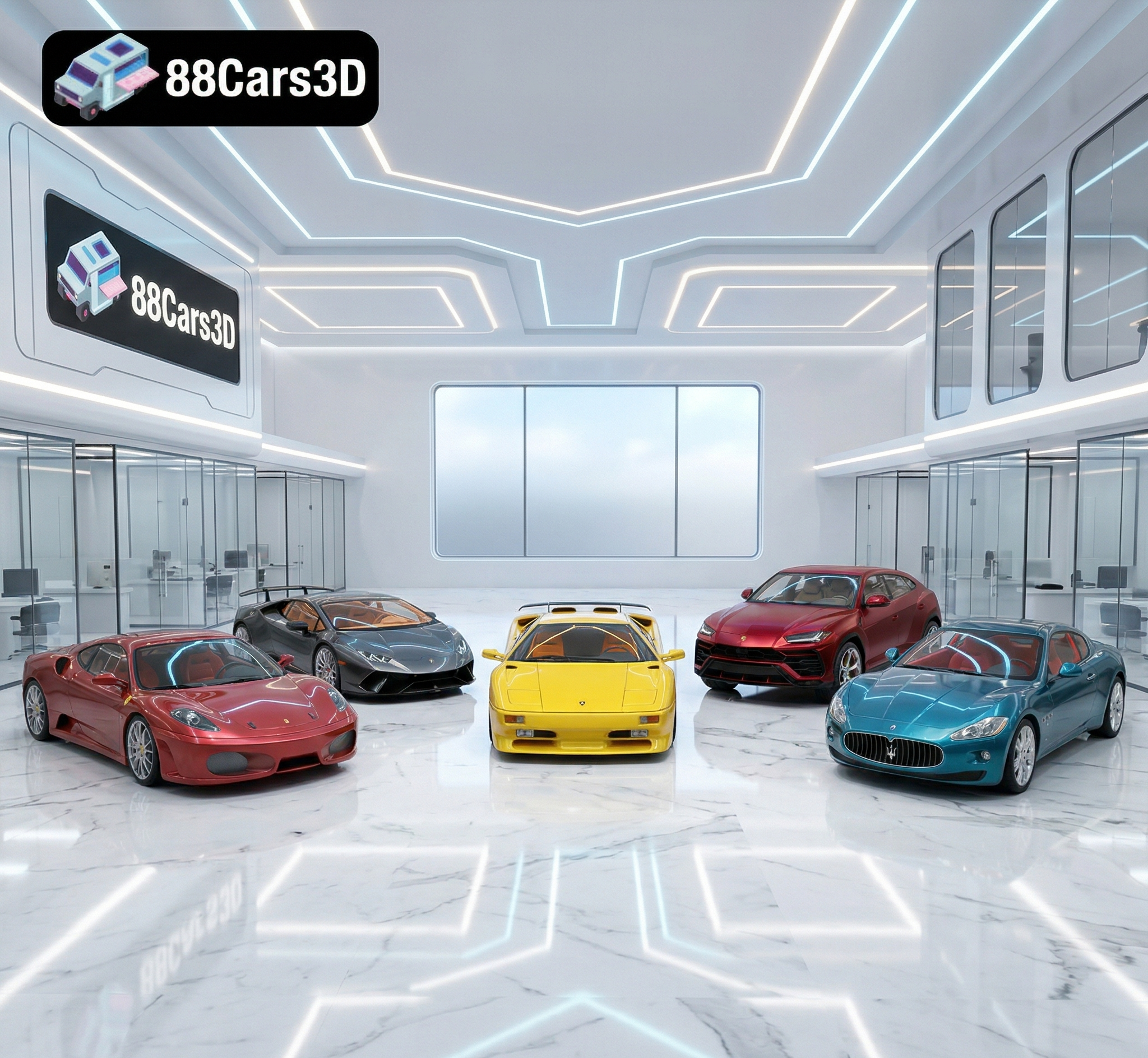
Texture: Yes | Material: Yes | 3D Printable: Yes. Download the Italian Thoroughbreds Bundle featuring 5 iconic 3D models: Lamborghini Huracán Performante, Ferrari 458 Italia, Lamborghini Urus, Diablo SV, and Maserati GT. Optimized for 4K rendering and 3D printing (STL included). Save 50% with this ultimate Italian vehicle collection.
Price: $199.99

Download the Elite Future Mobility Bundle featuring 4 highly optimized 3D models: Tesla Model S, Avatr 11, Li L9, and Zoox Robotaxi. Perfect for ArchViz, Smart City renders, and game dev. Optimized for Unreal Engine and Blender. Includes .fbx, .obj, and .max formats.
Price: $99
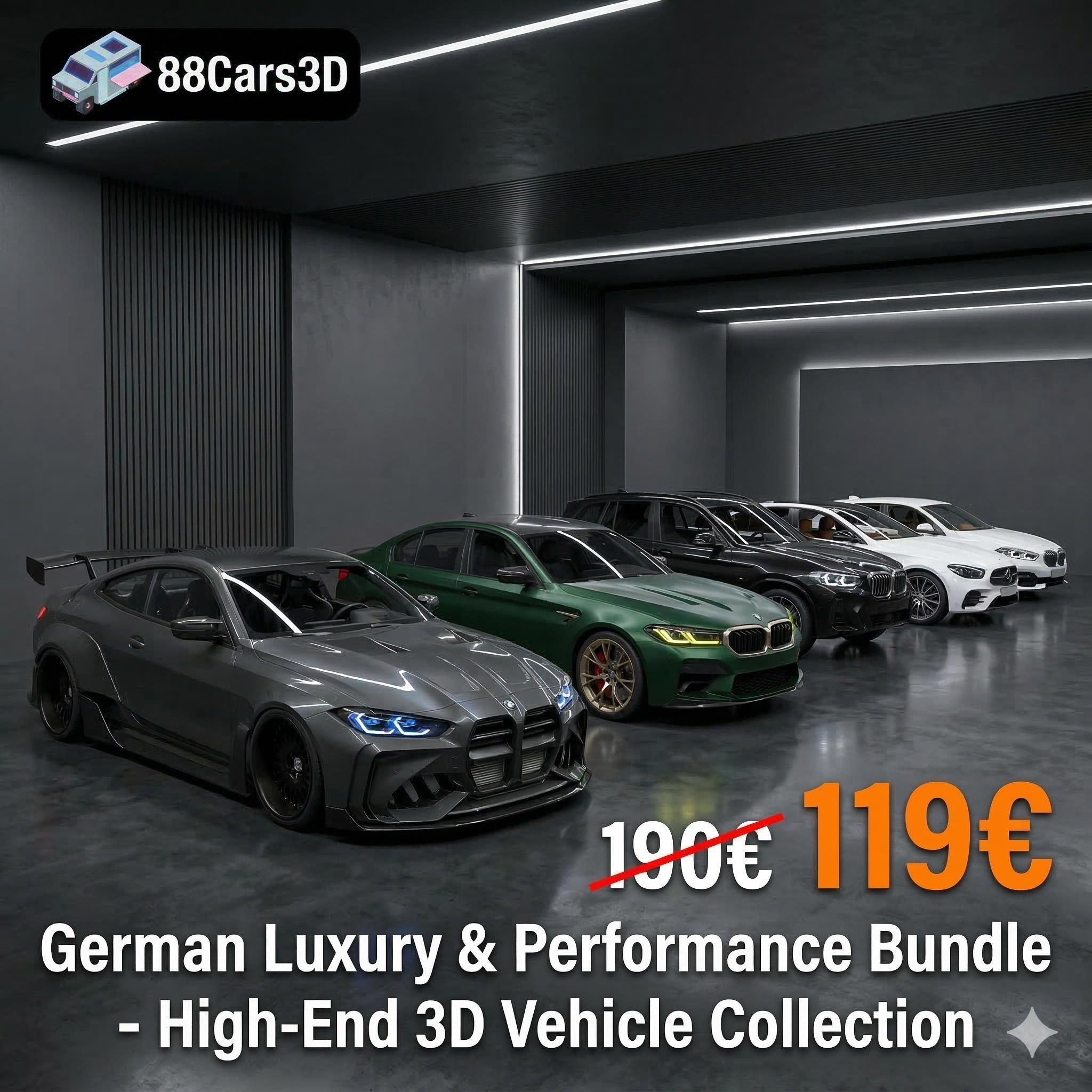
🚗 5 Iconic German Cars (BMW M4 G82, M5 CS, X3, 1 Series & Mercedes E-Class). ✅ Optimized for ArchViz: Ready for Corona & V-Ray. 💰 Save €71 with this limited-time collection! 🚀 Instant Download after purchase.
Price: $119
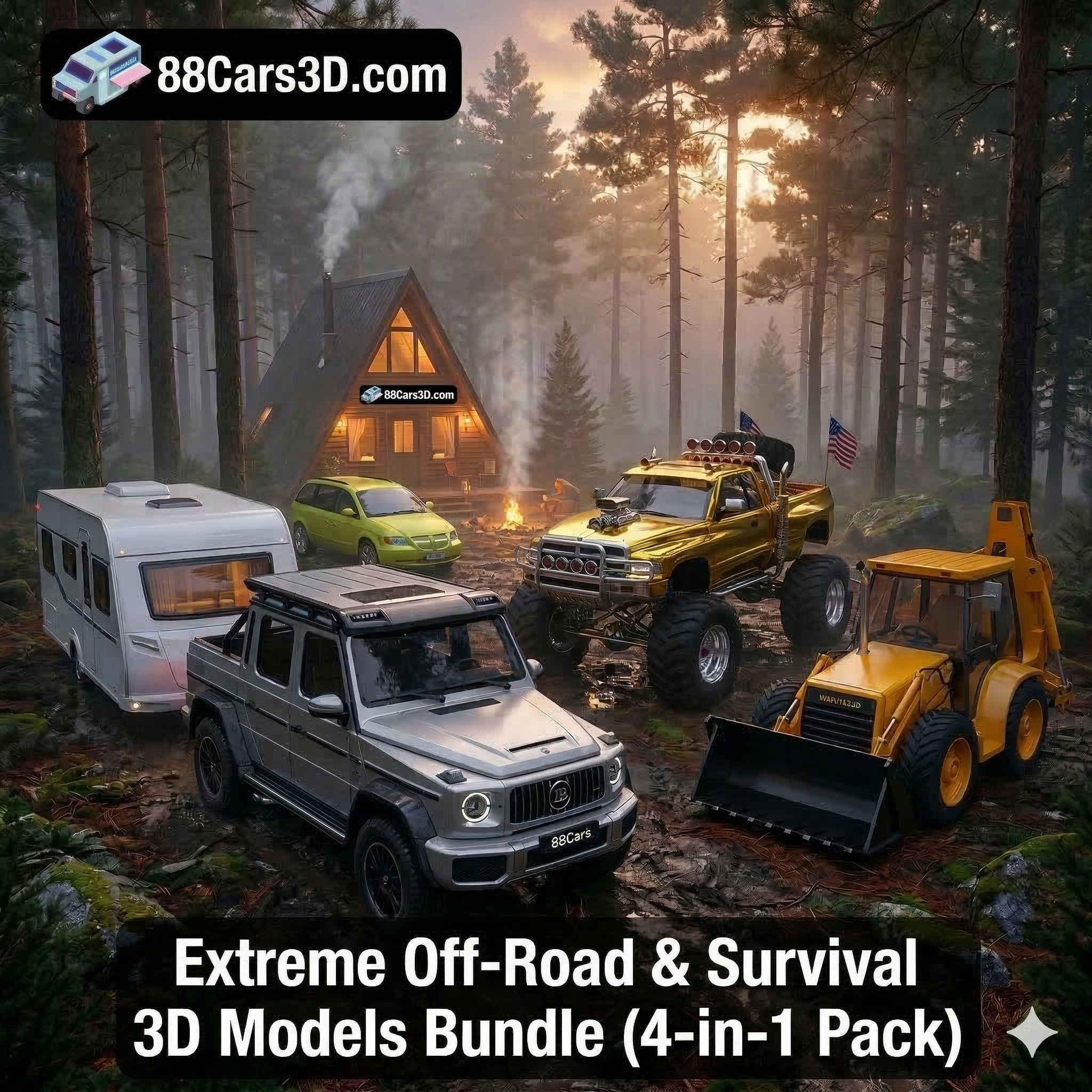
Download the Extreme Off-Road & Survival 3D Models Bundle! Includes the Brabus 800 Adventure, Dodge Ram Bigfoot, Spec Truck, and a Caravan. Save over €210 on this premium 4-in-1 off-grid vehicle pack for ArchViz and game development.
Price: $149.99
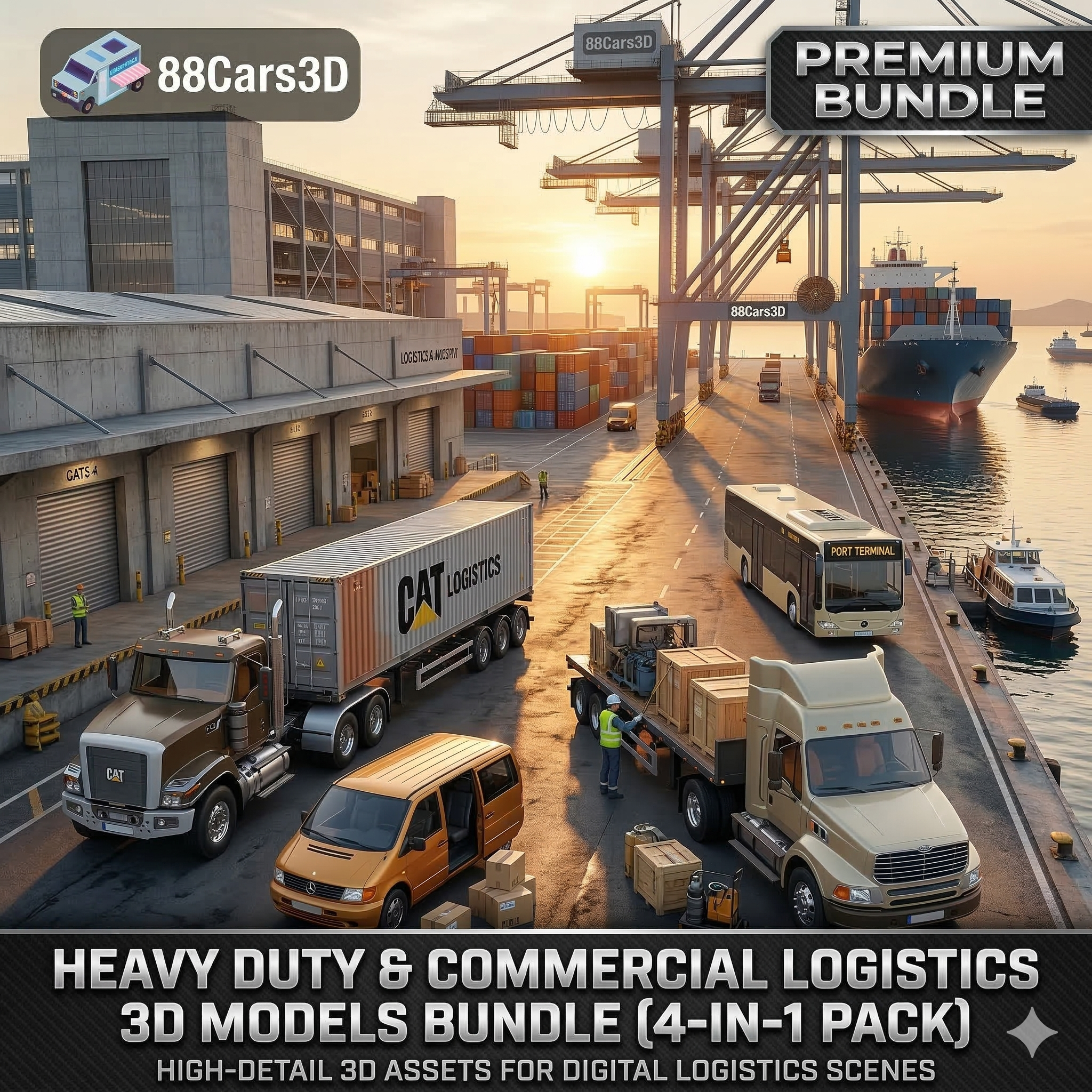
Download the Heavy Duty & Commercial Logistics 3D Models Bundle! Includes the Ford Sterling, Caterpillar CT680, Mercedes Citaro Bus, and Vito Van. Save over €130 on this massive, game-ready 4-in-1 industrial vehicle pack.
Price: $109.99

Download the Ultimate Custom Motorcycles 3D Models Bundle. Includes a Custom Chopper, Ducati 916 Café Fighter, Harley XR1200X, and BMW K100. Perfect premium props for luxury ArchViz garages. Save over €250 today!
Price: $159.99

Download the ultimate JDM Street Racing 3D Models Bundle! Includes the Nissan GT-R, Toyota Supra, Mazda RX-7, Lancer Evo IX, and Honda NSX. Save big on this highly optimized, game-ready 5-in-1 Japanese legend car pack.
Price: $129.99

Download the ultimate American Muscle & Cinematic Classics 3D Models Bundle! Includes the Dodge Charger ’68, Mustang Eleanor GT500, Camaro Z28 ’79, and a custom ’69 Mustang. Save over €240 on this game-ready, premium 4-in-1 pack.
Price: $149.99
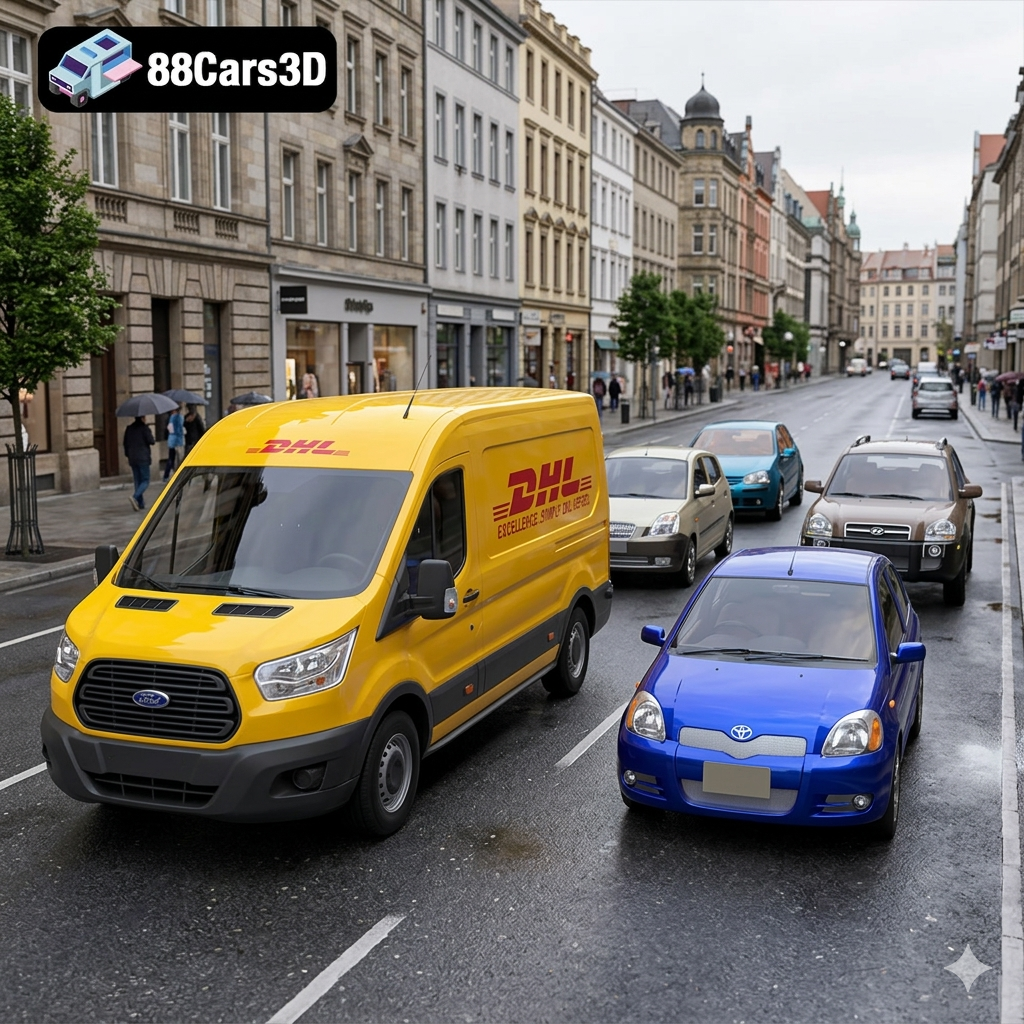
Download the Everyday City Traffic 3D Models Bundle. Includes the VW Golf, Kia Picanto, Hyundai Tucson, Toyota Yaris, and a DHL Ford Transit Van. Save big on this 5-in-1 pack, perfectly optimized for realistic ArchViz streets and game traffic.
Price: $99.99
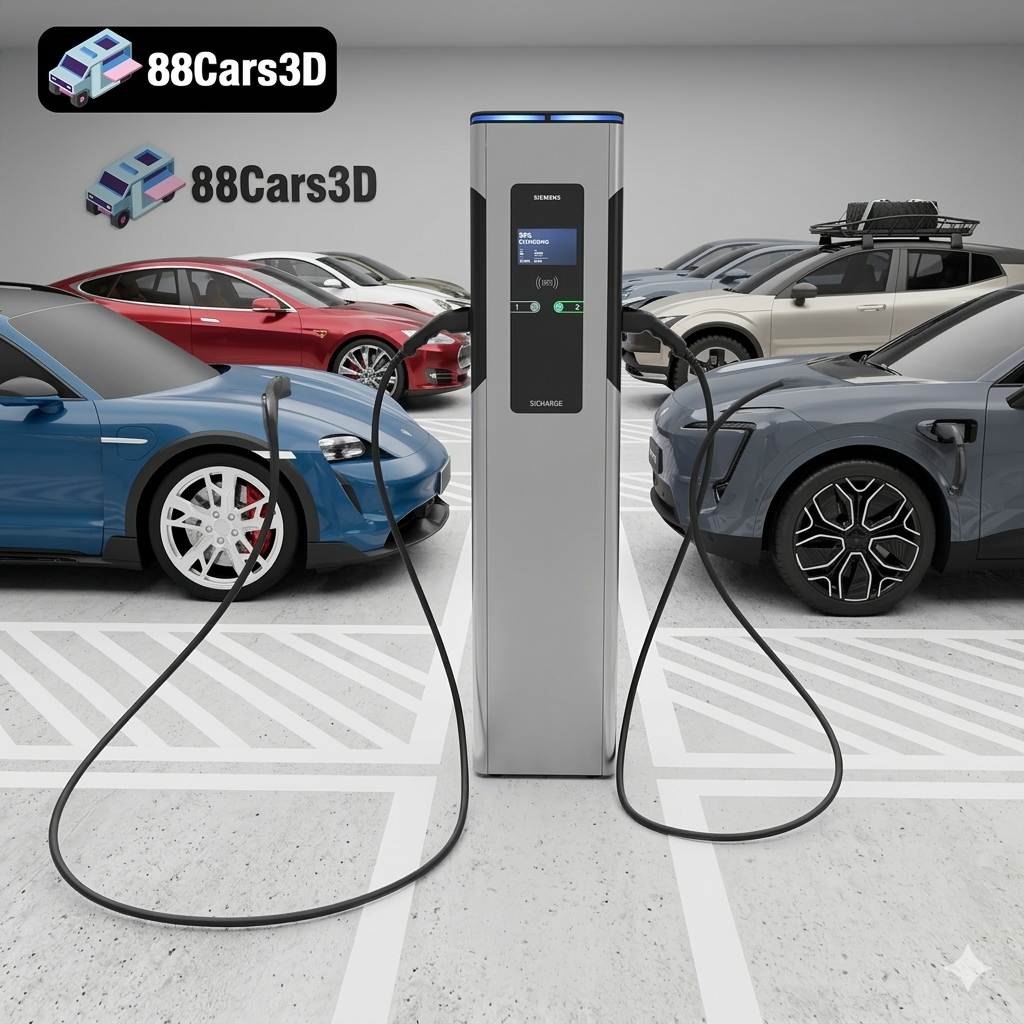
Download the Future of Mobility EV 3D Models Bundle. Includes the Volvo EX30, Tesla Model S, AVATR 11, Porsche Taycan, and a Siemens EV Charger. Save big on this highly optimized 5-in-1 pack for ArchViz and game development!
Price: $89.99

