⚡ FLASH SALE: Get 60% OFF All Premium 3D & STL Models! ⚡

In the dynamic world of digital creation, high-quality 3D models are the backbone of everything from cinematic masterpieces and immersive game environments to cutting-edge product visualizations and interactive AR/VR experiences. The demand for accurate, detailed, and production-ready assets has never been greater, especially within the automotive and vehicle design sectors. Whether you’re an architect integrating vehicles into a scene, a game developer populating an open-world, or a product designer showcasing a new accessory, the foundational element is a robust 3D model.
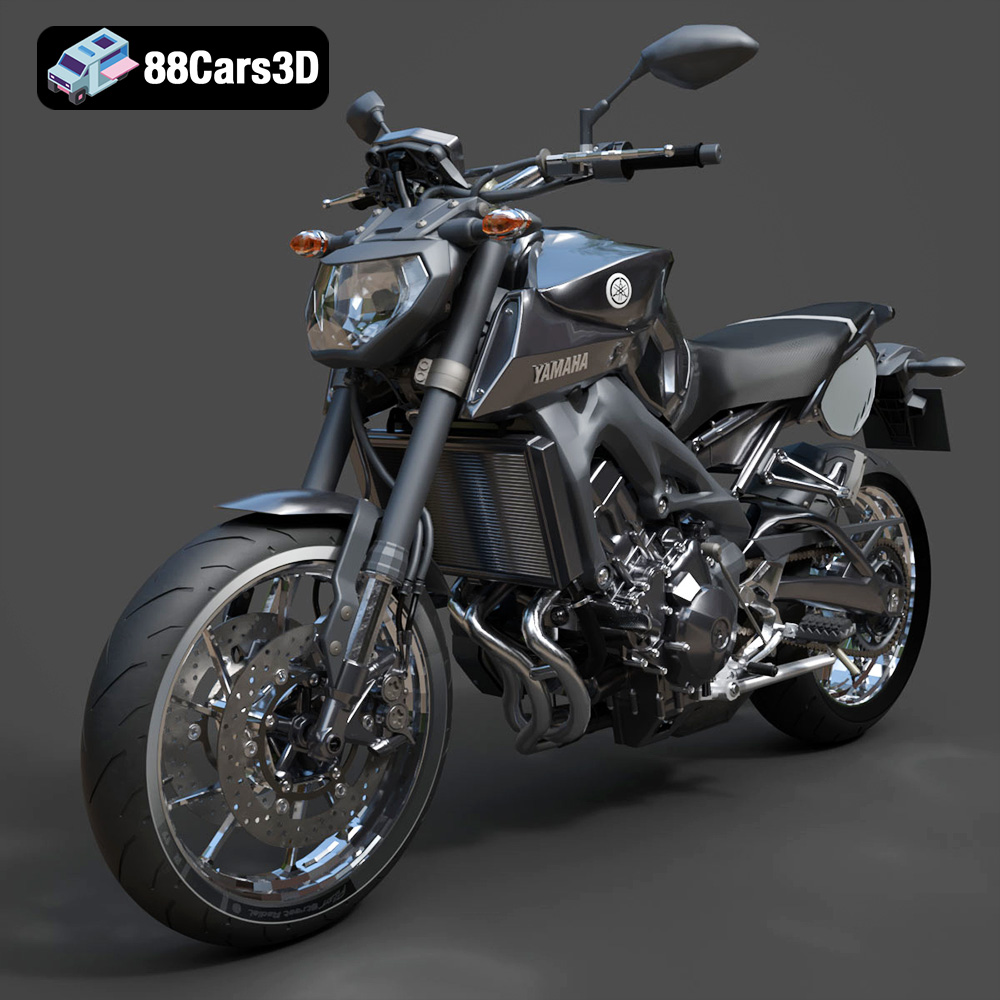
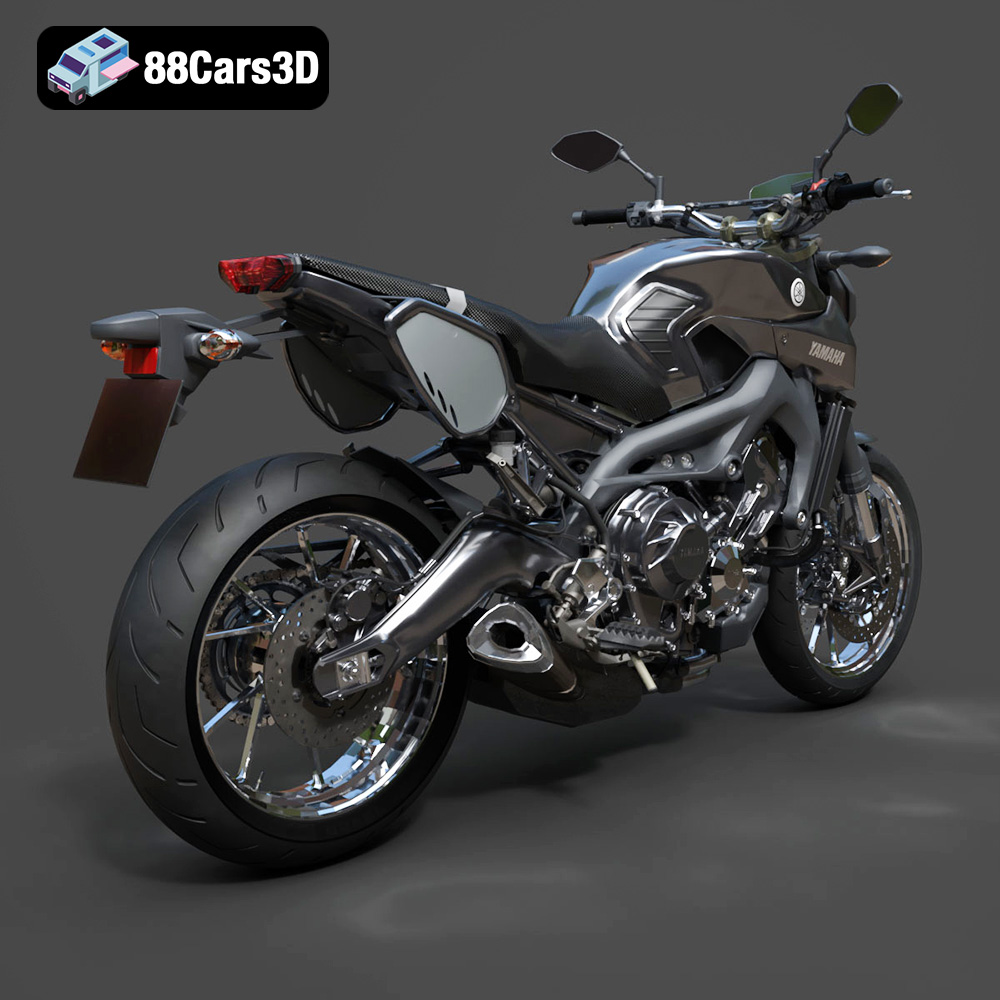
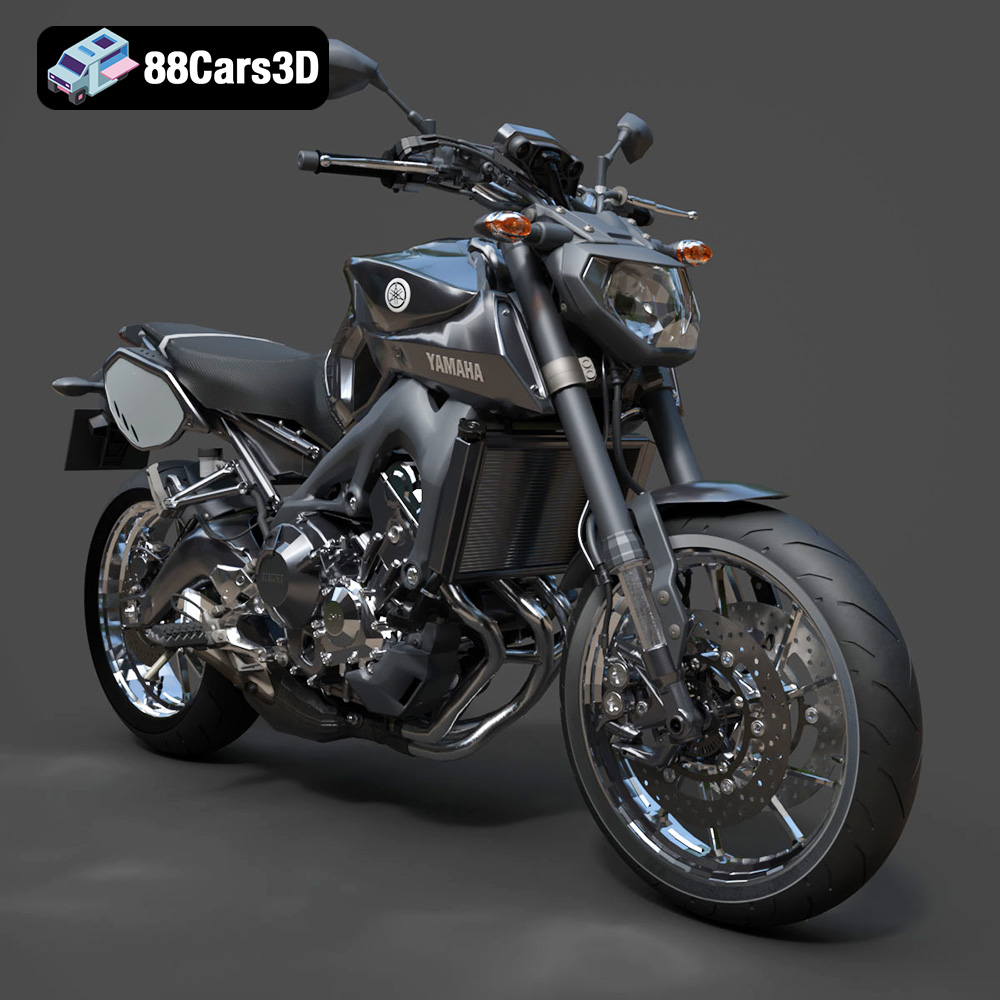
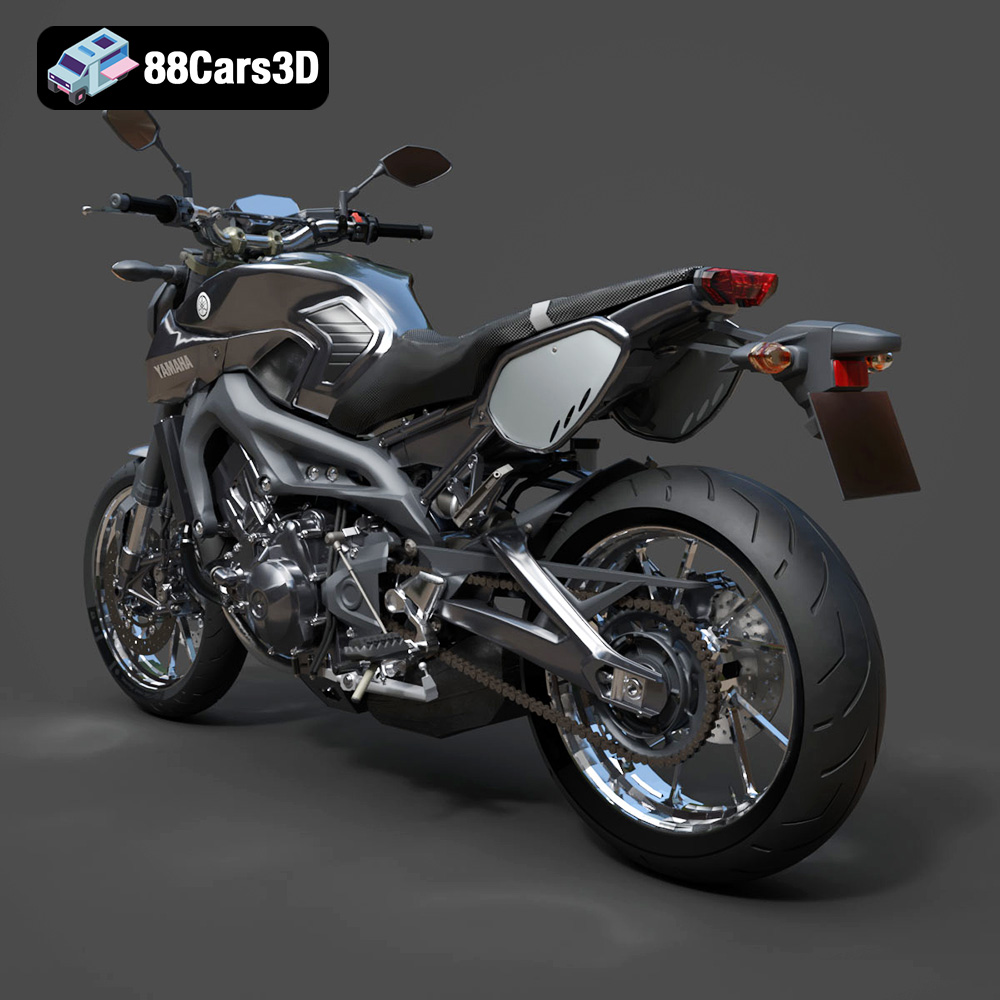
Today, we’re diving deep into the technical intricacies and professional applications of such a model, exemplified by the remarkable Yamaha MT-09 Tracer 2015 3D Model available on 88cars3d.com. This asset is more than just a digital representation; it’s a meticulously crafted tool designed to accelerate workflows and elevate the realism of any project it’s integrated into. Known for its aggressive styling and dynamic performance, the 2015 MT-09 Tracer is a prime subject for a detailed 3D recreation, capturing its essence from its sharp fairing to its sport-touring exhaust system.
The success of any 3D project often hinges on choosing the right file format for the task at hand. A versatile 3D asset, like the Yamaha MT-09 Tracer 2015 3D Model, is typically offered in a range of formats to ensure maximum compatibility and utility across diverse professional pipelines. Understanding the nuances of each is crucial for optimizing workflows and achieving desired outcomes.
The .blend format is Blender’s native file type, offering a complete, fully editable scene. When you download a .blend file, you’re not just getting the mesh; you’re getting the entire Blender project. This includes materials, textures, lighting setups, cameras, animations (if present), modifiers, and even custom node groups. For artists who primarily work within Blender, this is the most convenient format as it allows for immediate, unhindered customization and integration without any import/export conversions that could potentially alter data. It’s ideal for deep creative modifications, advanced rendering in Cycles or Eevee, and leveraging Blender’s robust animation tools.
.fbx (Filmbox) is a proprietary file format developed by Autodesk, widely regarded as the industry standard for exchanging 3D data between different software applications and game engines. Its strength lies in its ability to store a comprehensive range of data, including mesh geometry, materials (with some limitations on complex shader networks), textures, animations (skeletal and blend shapes), cameras, and lights. For pipelines involving Unreal Engine, Unity, 3ds Max, Maya, or Cinema 4D, .fbx is often the go-to choice. Its robustness makes it ideal for real-time applications where animation and hierarchical data are paramount, offering a balanced approach between file size and data integrity.
The .obj (Wavefront OBJ) format is one of the oldest and most universally supported 3D file formats. It’s an excellent choice for straightforward geometry exchange, as almost every 3D software can import and export it. An .obj file primarily stores vertex positions, UV coordinates, normals, and polygon faces. Material definitions are typically handled by an accompanying .mtl (material template library) file. While .obj excels at mesh data, it does not support animations, rigging, or complex scene data. It’s perfect for static renders, sculpting applications, or as a foundational mesh for re-topology and further development in various software, ensuring broad cross-software compatibility.
.glb (GL Transmission Format Binary) is the binary version of glTF, an open standard for 3D scenes and models. It’s highly optimized for efficient transmission and loading of 3D content, making it particularly suitable for AR (Augmented Reality), VR (Virtual Reality), and browser-based applications. A single .glb file can embed all necessary data, including geometry, materials, textures, and animations, into one compact package, minimizing HTTP requests and speeding up load times. This format is crucial for interactive web experiences, virtual showrooms, and mobile AR apps, providing a streamlined path for modern digital visualization.
The .stl (STereoLithography) format is the ubiquitous standard for 3D printing. It represents a 3D model as a collection of unconnected triangular facets, defining only the surface geometry without color, texture, or material information. For designers looking to transform digital models into physical objects, .stl is indispensable. While simple, its universal acceptance by 3D slicing software makes it the primary format for manufacturing. The Yamaha MT-09 Tracer 2015 3D Model, explicitly advertised as 3D printable, is well-suited for conversion to .stl, requiring careful consideration of manifold geometry and print settings as detailed in its product specifications.
.ply (Polygon File Format or Stanford Triangle Format) is another format that stores 3D data, often used for scanned data, CAD, and scientific applications where precision and a complete representation of a mesh, including color per vertex, normal information, and additional properties, are needed. While less common for general animation or game development compared to .fbx, it offers a robust solution for complex geometries and point cloud data, making it valuable for specific engineering, reverse engineering, or analytical visualization tasks.
The inclusion of an .unreal file (or an equivalent directly optimized asset package for Unreal Engine) signifies an asset that has undergone specific preparation for Unreal Engine’s unique architecture. This often means optimized meshes, PBR (Physically Based Rendering) material setups, proper collision geometry, LODs (Levels of Detail), and potentially Blueprints or animation systems already configured. For Unreal Engine developers, this format can significantly reduce integration time and ensure the model performs optimally within the engine, adhering to its specific requirements for real-time rendering and interactivity.
Similar to .blend for Blender, .max is the native file format for Autodesk 3ds Max. It contains the complete scene information, including geometry, materials, textures, lights, cameras, animations, and render settings. For professionals working within 3ds Max, this format provides full editability and access to all modifiers and scene elements, making it ideal for high-end architectural visualization, automotive rendering, and complex animation projects that leverage 3ds Max’s extensive toolset and rendering capabilities like V-Ray or Corona. The Yamaha MT-09 Tracer 2015 3D Model’s availability in .max ensures seamless integration for a vast user base.
For designers and marketers, the ability to render a vehicle with photorealistic precision is paramount. The Yamaha MT-09 Tracer 2015 3D Model is meticulously crafted to shine in high-fidelity rendering applications, providing a robust foundation for stunning visuals.
When working within 3ds Max, integrating the MT-09 Tracer model becomes a streamlined process, especially with the provided .max file. Artists can leverage powerful renderers like V-Ray or Corona to achieve breathtaking realism. The model’s clean topology and real-world scale are critical here. For instance, creating a studio render involves setting up a nuanced lighting environment, perhaps a three-point lighting system with softboxes and reflectors to highlight the bike’s aggressive lines and sculpted fuel tank. Detailed material setup, utilizing PBR textures for the paint, chrome, rubber, and exposed frame, will capture subtle reflections and refractions, making the digital model indistinguishable from a physical photograph. Imagine showcasing the MT-09 Tracer in a vibrant urban setting or against a scenic mountain backdrop, its metallic paint reflecting the environment accurately. This level of detail makes the model from 88cars3d.com invaluable for marketing visuals and promotional materials.
Blender users, benefiting from the native .blend file, can immediately tap into Cycles for unbiased, physically accurate rendering or Eevee for real-time visualization. The model’s well-organized mesh structure and proper pivot setup are key advantages. In Cycles, artists can focus on intricate material nodes to simulate realistic tire tread, the sheen of the digital instrument cluster, or the subtle textures of the stepped seat. Environmental lighting, perhaps an HDRI of a sun-drenched highway or a moody street scene, can instantly set the tone. For dynamic previews or animations, Eevee offers stunning results at interactive frame rates, ideal for quick iterations or showcasing the separate wheels, steering, and suspension components in motion. The ability to easily change body color, add touring side cases, or modify the windshield height directly within Blender provides immense creative freedom for various touring simulations or cinematic projects.
Beyond static renders, the true test of a 3D vehicle model lies in its performance within interactive environments, where real-time rendering and dynamic gameplay are critical. The Yamaha MT-09 Tracer 2015 3D Model is engineered for this challenge.
Game developers utilizing Unreal Engine will find the .fbx and dedicated .unreal formats exceptionally useful. Importing the .fbx file allows for a straightforward transfer of geometry, UVs, and basic material assignments. The model’s optimized polygon flow is crucial for maintaining high frame rates in a game environment. Once in Unreal, artists can convert standard materials to physically based ones, ensuring accurate lighting and reflections. Crucially, the proper pivot setup for steering and wheel rotation mentioned in the product description is a massive time-saver for animation and vehicle physics implementation. Developers can quickly rig the bike, set up its suspension system, and even add custom collision meshes. Imagine the Tracer as a central asset in a realistic open-world motorcycle racing game or an engaging touring simulation, navigating diverse terrains with authentic handling and visual fidelity. This model provides a solid foundation for robust game assets.
Similarly, for Unity developers, the .fbx format provides a clean entry point. After importing, the model can be easily integrated into Unity’s game object hierarchy. The “optimized geometry for real-time engines” ensures that performance overhead is minimized. Artists can create new PBR materials, apply included textures, and set up dynamic lighting to bring the motorcycle to life. For a simulation, the separate wheel and steering components are invaluable. Developers can attach wheel colliders, implement custom suspension physics, and script realistic throttle and braking responses. The ability to modify accent trims or configure lighting for different scenarios (urban night, highway, mountain roads) allows for dynamic environmental shifts and personalized player experiences, making the Tracer model an adaptable asset for diverse interactive applications.
The utility of a premium 3D vehicle model extends far beyond traditional screen-based rendering and gaming. Emerging technologies like Augmented Reality (AR), Virtual Reality (VR), and 3D printing unlock new dimensions for interaction and physical manifestation.
The Yamaha MT-09 Tracer 2015 3D Model is perfectly suited for AR/VR experiences, thanks in part to the inclusion of the .glb format. In an AR application, a potential buyer could view a life-sized virtual MT-09 Tracer in their driveway via their smartphone, inspecting its aggressive dual headlight design and sculpted fuel tank from every angle. They could even customize its body color or add touring side cases in real-time, offering an unparalleled pre-purchase experience. For VR, the model could be integrated into a virtual showroom, allowing users to “walk around” the bike, sit on the stepped seat, and interact with the digital instrument cluster. Such immersive experiences are revolutionary for automotive visualization and rider training simulations, providing a dynamic and engaging platform for product demonstration and education. The optimized geometry ensures these experiences run smoothly on various AR/VR hardware.
One of the most compelling applications for this particular model is 3D printing. The product description explicitly states its suitability for conversion to .stl for collectible scale motorcycle models. This transforms the digital asset into a tangible object, a miniature representation of the MT-09 Tracer. The provided 3D print settings are invaluable for anyone looking to undertake this. Recommended scales like 1:18, 1:12, 1:10, or 1:8 allow for a balance between detail and manageable print size. Using a layer height of 0.08–0.16 mm ensures a smooth finish, while a wall thickness of 1.2–2.0 mm provides structural integrity. Critical details like mirrors, the windscreen, and the exhaust will require supports, and the specific print orientation (frame angled, wheels separately) is crucial for detail preservation and minimizing support artifacts. Post-processing, including sanding, priming, and applying a matte or gloss finish, can elevate the printed model to a high-quality collectible, perfect for display or even creating custom dioramas. This dual digital-to-physical capability underscores the model’s versatility.
The true value of a premium 3D model lies in its underlying technical quality. The Yamaha MT-09 Tracer 2015 3D Model exemplifies this with its robust construction and thoughtful design, making it a reliable asset for any professional workflow.
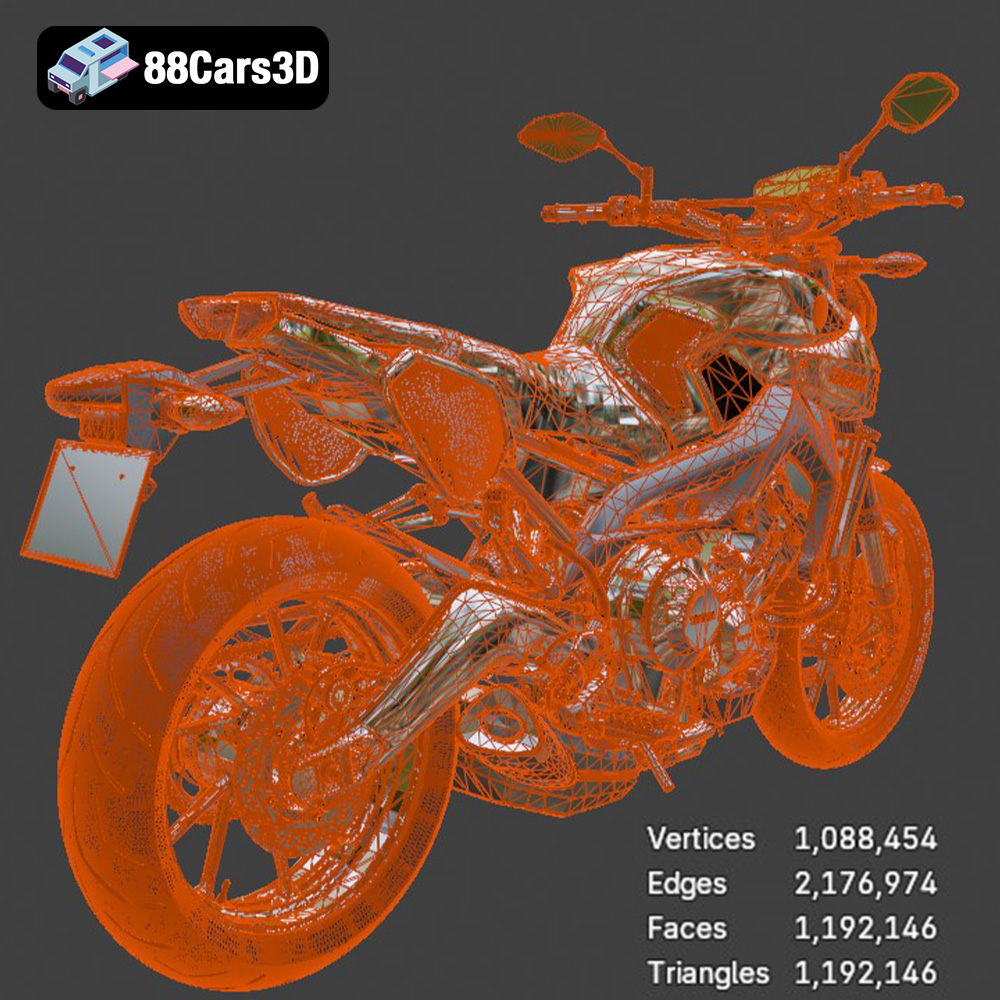
The product’s emphasis on “clean and well-organized mesh structure” and “optimized polygon flow” is not just marketing jargon; it’s a testament to its professional pedigree. Clean topology means the mesh has consistent quad-based polygons (where possible), minimal Ngons (polygons with more than four sides), and efficient edge loops. This is crucial for smooth subdivision, deformation during animation, and clean UV unwrapping. Real-world scale accuracy ensures that when the model is imported into any scene or engine, its proportions are correct relative to other objects, eliminating the need for tedious scaling adjustments. Furthermore, the “proper pivot setup for steering and wheel rotation” is a huge advantage for animators. Instead of manually finding and setting pivot points for each rotational part, they are pre-configured, allowing for immediate rigging and animation of the front wheel, handlebars, and swingarm. This attention to detail dramatically reduces setup time and potential errors in complex animation sequences.
A high-quality 3D model isn’t just about static perfection; it’s about adaptability. The MT-09 Tracer model offers extensive customization options, reflecting a deep understanding of user needs. The ability to easily change body color and accent trims means a single model can represent multiple variations without needing to generate new geometry. Adding touring side cases or a top box transforms the bike’s utility, showcasing its versatility as a sport-tourer. Modifying windshield height or adjusting wheel color and brake caliper finish allows for fine-tuning specific visual details to match a client’s brief or a game’s aesthetic. Even configuring lighting for urban night, highway, or mountain road scenes speaks to its readiness for diverse environmental presentations. This inherent flexibility makes the model a versatile base for a wide array of projects, saving designers and developers countless hours of modeling and texturing from scratch.
In the demanding landscape of 3D production, investing in high-quality, technically sound assets is a strategic decision that pays dividends in efficiency, realism, and creative freedom. The Yamaha MT-09 Tracer 2015 3D Model stands as a prime example of such an asset, meticulously crafted for a diverse range of applications, from stunning automotive rendering and immersive game development to compelling AR/VR experiences and even tangible 3D prints.
Its comprehensive technical features, including clean topology, real-world scale, optimized polygon flow, and pre-configured pivots, ensure seamless integration into industry-standard workflows. The availability across multiple crucial file formats – .blend, .fbx, .obj, .glb, .stl, .ply, .unreal, and .max – guarantees its utility for virtually any professional working with 3D content. Whether you’re an artist seeking to create photorealistic visualizations in 3ds Max or Blender, a developer needing robust game assets for Unreal Engine or Unity, or a designer looking to prototype a physical model through 3D printing, this model provides the reliable foundation you need.
The Yamaha MT-09 Tracer 2015 3D Model is more than just a digital file; it’s an accelerator for creative projects, empowering professionals to deliver exceptional results with greater speed and precision. For those seeking premium 3D vehicle models that meet the highest standards of quality and versatility, exploring offerings like this on 88cars3d.com is an essential step towards elevating your digital productions.
The Yamaha MT-09 Tracer 2015 3D Model is a high-detail digital recreation of the versatile sport-touring motorcycle known for its aggressive styling, lightweight chassis, and dynamic three-cylinder performance. Designed for both urban riding and long-distance touring, the 2015 MT-09 Tracer combines sporty DNA with comfort-oriented ergonomics. This 3D model accurately represents the sharp front fairing, dual headlight assembly, adjustable windscreen, exposed frame structure, sculpted fuel tank, stepped seat configuration, and sport-touring exhaust system. Built with clean topology and real-world scale accuracy, it is ideal for rendering, animation, automotive visualization, game development, and AR/VR experiences. Perfect for urban environments, mountain road scenes, touring simulations, cinematic projects, and motorcycle games.
$39.99