⚡ FLASH SALE: Get 60% OFF All Premium 3D & STL Models! ⚡

In the vast landscape of automotive history, certain vehicles transcend their function to become true legends. The BMW 328 Mille Miglia Touring Coupe is unequivocally one such icon. A marvel of pre-war engineering and aerodynamic design, its triumph in the grueling 1940 Mille Miglia endurance race cemented its place in motorsport lore. For designers, animators, game developers, and collectors, this car represents not just a piece of history, but a profound inspiration for intricate detail and timeless form. Recreating such a masterpiece in the digital realm demands precision, technical prowess, and an understanding of its historical significance.
Today, the accessibility of high-quality 3D car models allows enthusiasts and professionals alike to bring these legends to life in unprecedented ways. The BMW 328 Mille Miglia Touring Coupe 3D Model, available on platforms like 88cars3d.com, offers an exceptional opportunity to explore this automotive heritage. Whether for high-fidelity automotive rendering, integrating into immersive game environments as game assets, or even for physical 3D printing, this model serves as a robust foundation. This article delves into the technical considerations, workflows, and vast applications that make such a detailed 3D model an invaluable asset in modern digital production.
The choice of file format is a critical technical decision that dictates a 3D model’s compatibility, functionality, and optimal use across various software and pipelines. When acquiring a premium 3D car model, such as the BMW 328 Mille Miglia Touring Coupe, understanding the nuances of its included formats is paramount for efficient workflow and successful project execution. The model from 88cars3d.com thoughtfully includes a comprehensive suite of formats, each serving distinct purposes.
The .blend format represents a fully editable Blender scene. For users deeply integrated into the Blender ecosystem, this is often the preferred choice. It encapsulates not just the mesh geometry, but also materials, textures, lighting, cameras, animation data, and even modifiers, all within a single, self-contained file. This offers unparalleled flexibility for further customization, rigging, animation, or advanced material setup directly within Blender, whether you’re using Cycles for photorealistic automotive rendering or Eevee for real-time visualization. Technical details like clean topology, UV unwrapping, and pivot points are preserved, allowing for immediate modification or integration into existing Blender projects.
.fbx (Filmbox) is an industry-standard format developed by Autodesk, renowned for its ability to transfer 3D data between various software applications and game engines while retaining essential information. It’s ideal for complex scenes, supporting not only geometry and materials but also animations, cameras, and skeletal data. For game development, .fbx is often the go-to format for importing 3D car models into engines like Unreal Engine and Unity, making it a cornerstone for creating high-performance game assets. It ensures smooth interoperability and predictable results when transitioning from a modeling package to a real-time environment. The .unreal format, on the other hand, signifies an asset specifically optimized and ready for direct import into Unreal Engine. This often means pre-configured materials, collision meshes, and potentially even LODs (Levels of Detail) tailored for the engine’s real-time rendering pipeline, streamlining the integration process significantly for game developers.
.obj (Wavefront OBJ) is perhaps the most universal 3D file format. It’s a simple, widely supported format that primarily stores geometric data like vertices, normals, UV coordinates, and groups. While it doesn’t embed animations or advanced material properties, its broad compatibility makes it excellent for cross-software transfers when you primarily need the mesh itself. It’s an excellent fallback format and ensures the model can be opened and worked with in virtually any 3D application. .ply (Polygon File Format or Stanford Triangle Format) is a precision mesh format primarily used for storing 3D data from 3D scanners, CAD software, or scientific analysis. It supports properties like color, transparency, normals, texture coordinates, and data confidence values for each vertex. While less common for general-purpose model exchange than .obj or .fbx, it offers robust data integrity for specific engineering or highly detailed visualization tasks.
.glb (GL Transmission Format Binary) is an increasingly important format optimized for efficient transmission and loading of 3D scenes and models in web and AR/VR applications. It’s a binary version of glTF, bundling all assets (geometry, materials, textures, animations) into a single file, making it perfect for rapid deployment in browser-based viewers, augmented reality experiences, and virtual reality platforms. For showcasing classic 3D car models interactively online or in AR/VR, .glb provides a compact and performant solution, offering immediate visual feedback without complex setup.
The .stl (STereoLithography) format is the ubiquitous standard for 3D printing. It represents a 3D object as a collection of unconnected triangles, forming the surface geometry. While it lacks color or texture information, its simplicity makes it ideal for direct consumption by slicing software to generate print instructions. The BMW 328 Mille Miglia Touring Coupe 3D Model, being 3D printable, is perfectly suited for conversion to .stl for creating physical scale models. Finally, .max refers to a native 3ds Max project file. For professionals working within Autodesk 3ds Max, this format provides full editability, allowing access to all scene data, modifiers, animation curves, and proprietary render settings. It’s the most flexible option for deep dives into scene structure, animation workflows, and high-end automotive rendering using renderers like V-Ray or Corona. This extensive range of file formats ensures that the BMW 328 model is ready for almost any professional pipeline imaginable.
The process of transforming a historical vehicle into a high-fidelity 3D model is an art form itself, blending technical skill with a deep appreciation for the original design. The BMW 328 Mille Miglia Touring Coupe 3D Model exemplifies this fusion, offering a meticulously crafted digital asset that respects the original’s engineering and aesthetic.
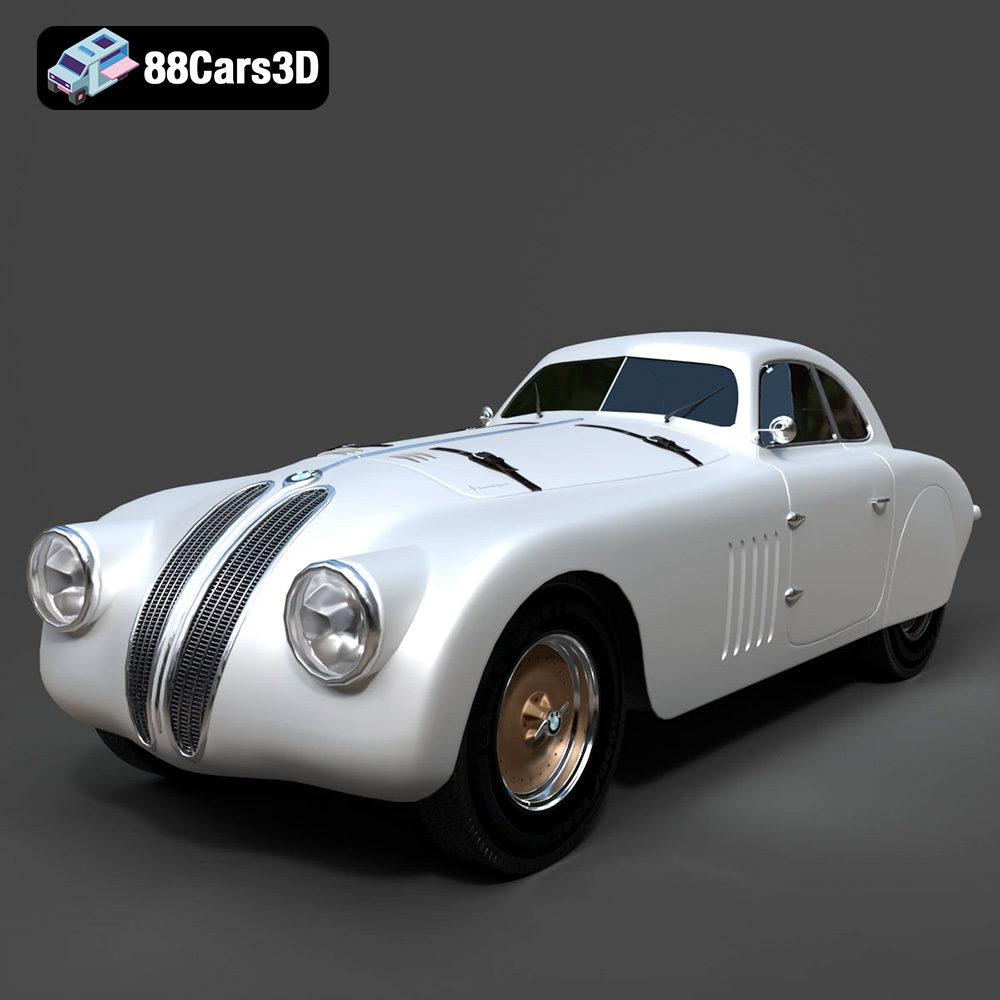
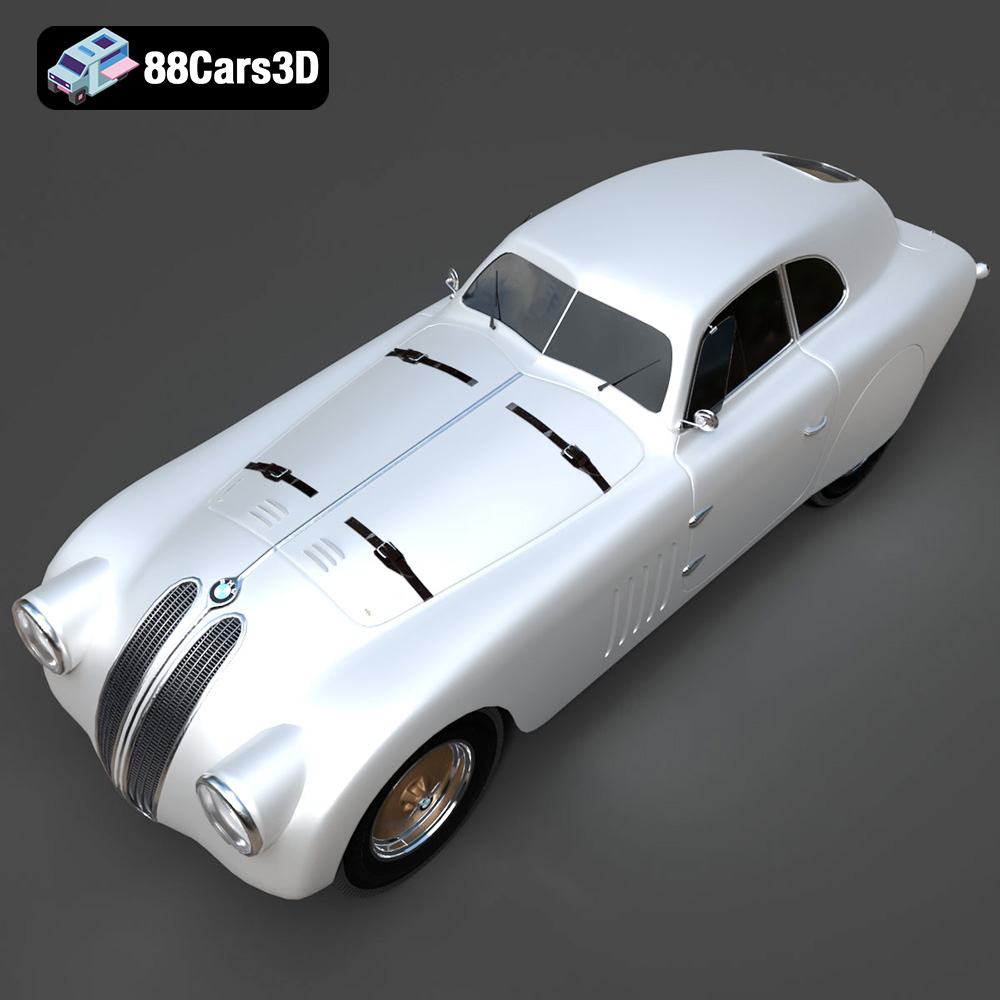
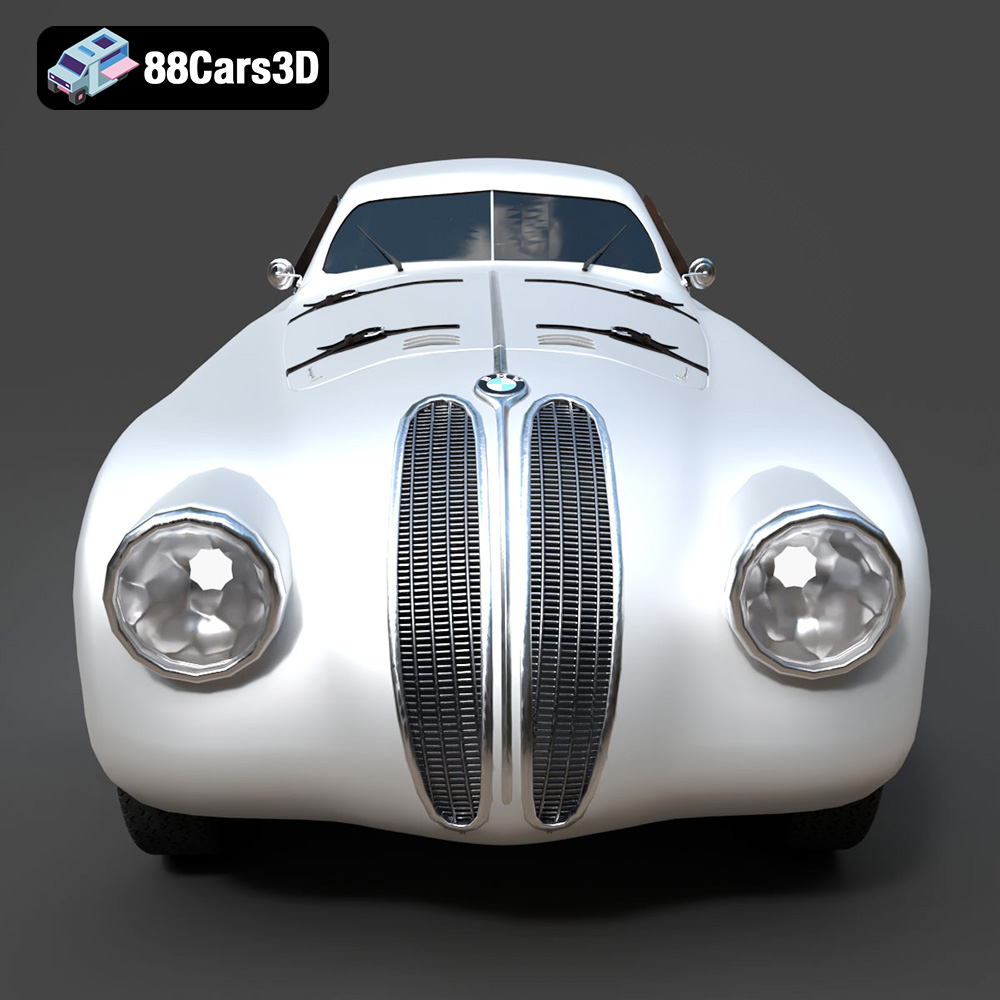
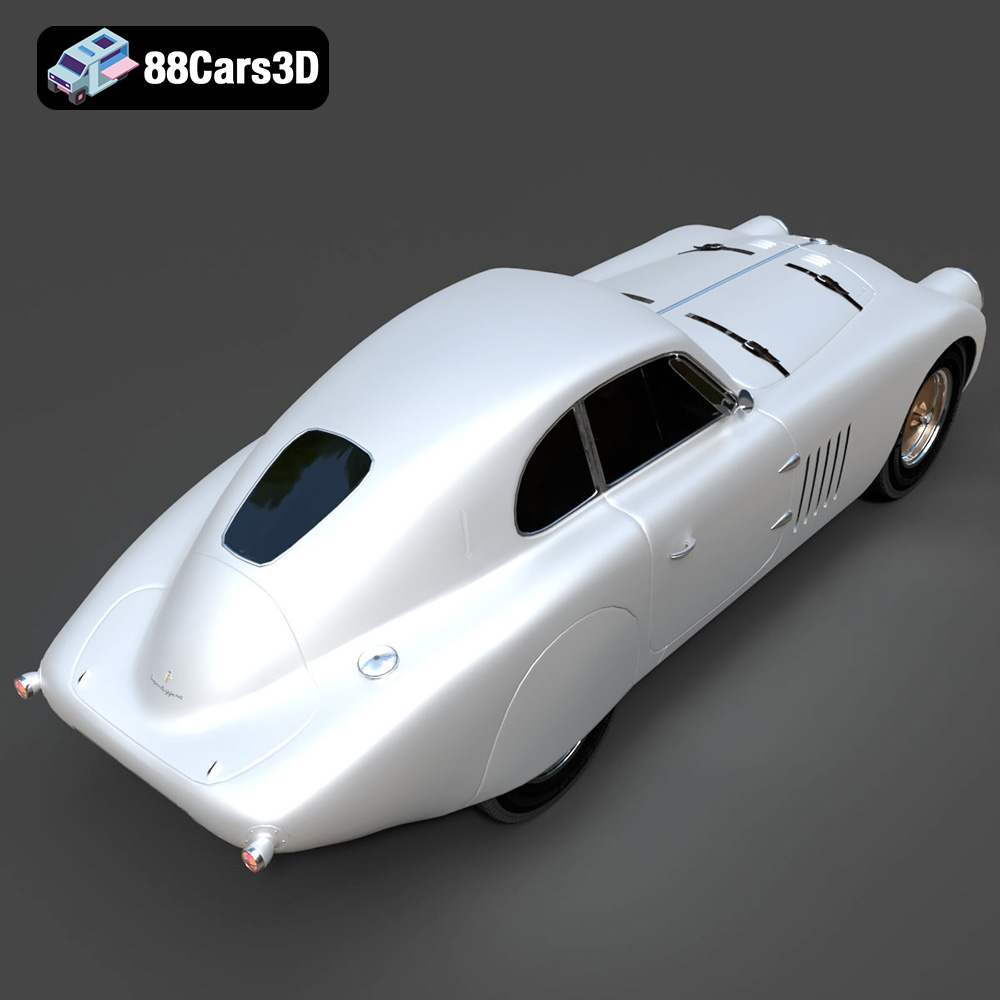
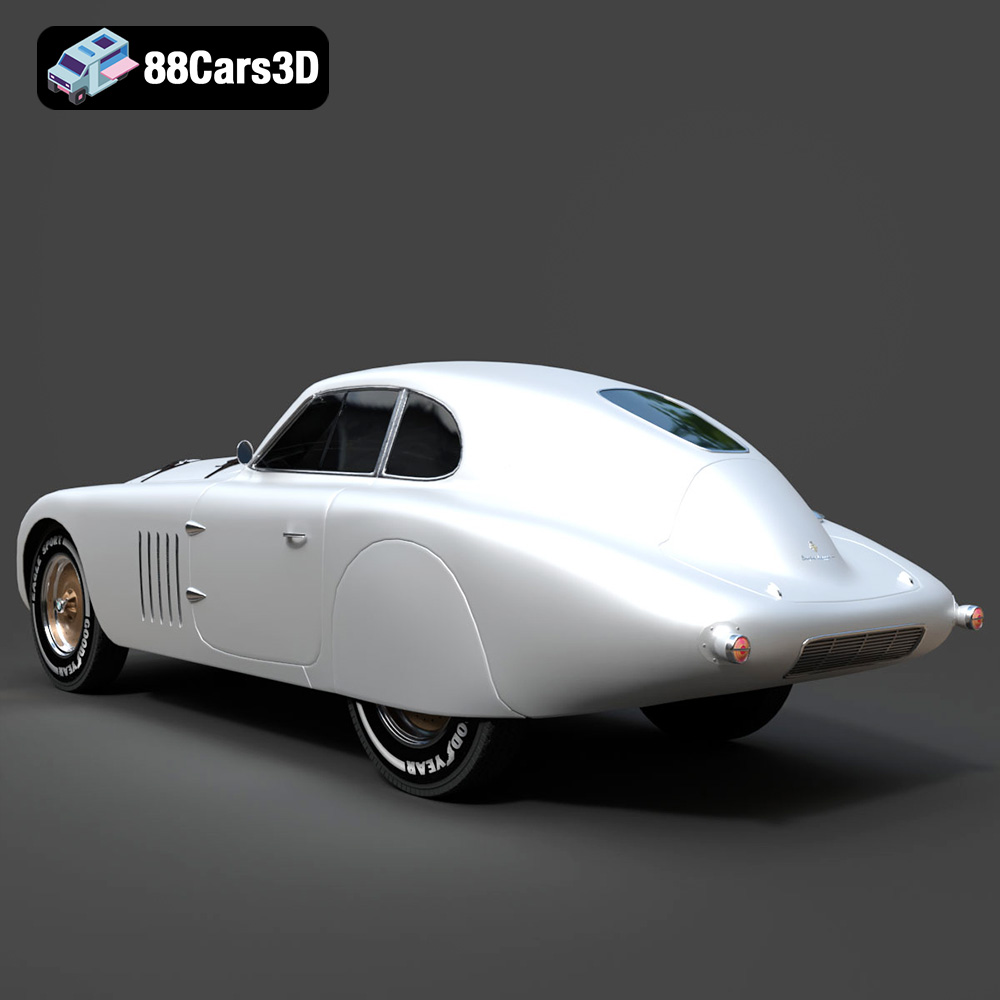
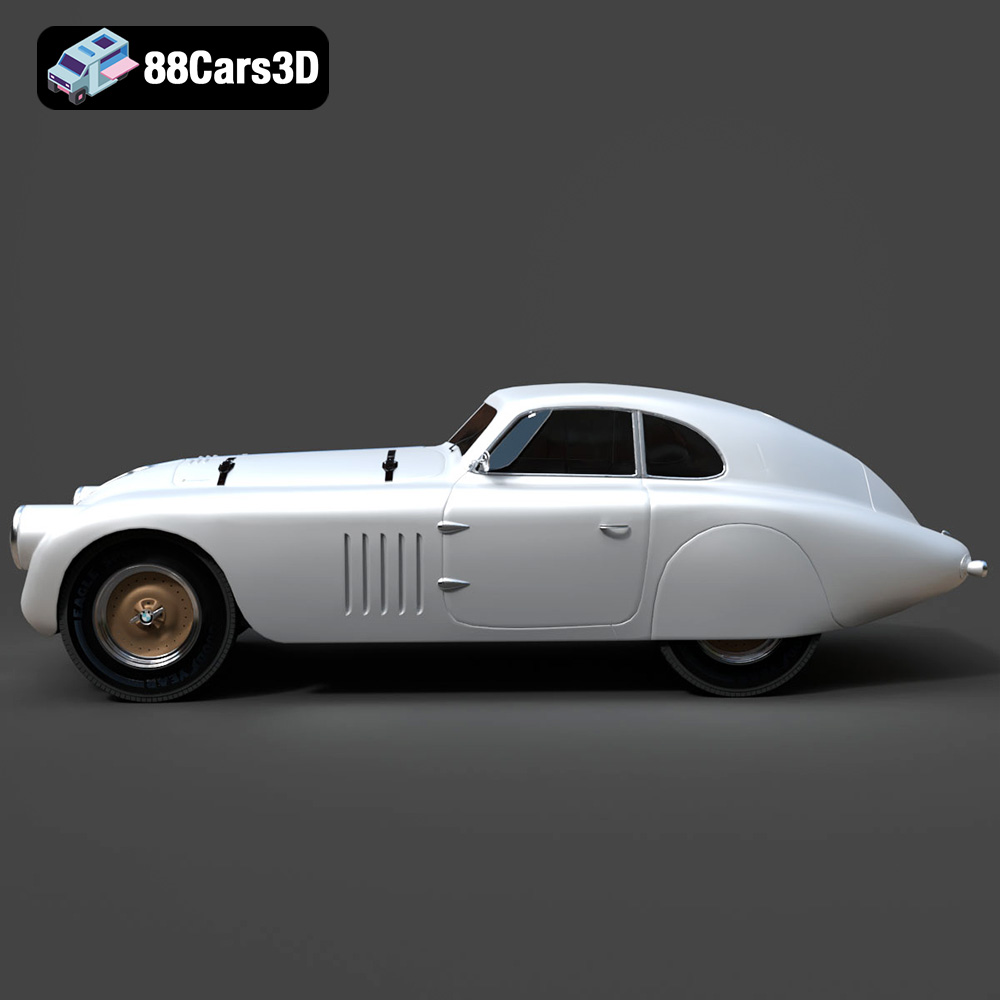
The essence of the BMW 328 Mille Miglia Coupe lies in its revolutionary aerodynamic aluminum body, designed by Touring of Milan. This 3D model accurately reflects its streamlined fastback design, a defining feature that contributed to its racing success. Details such as the iconic kidney grille, faired-in headlights, and aerodynamic wheel covers are faithfully replicated. Every curve, panel gap, and subtle surface undulation has been carefully modeled to maintain historical accuracy. This level of exterior detail is crucial for authentic automotive rendering, allowing artists to create stunning visualizations that capture the vehicle’s true character and its pioneering design principles from the pre-war era.
Beyond the impressive exterior, the model extends its meticulous attention to the interior. The BMW 328’s cockpit was a testament to minimalist racing functionality. The 3D model features a period-style steering wheel, an analog instrument cluster, and race-specific seating. These elements are vital for immersive applications like AR/VR experiences or game development, where users might enter and interact with the vehicle. The optimized geometry ensures that even with these details, the model maintains performance efficiency, a key consideration for real-time environments where polygon count management is critical for smooth frame rates.
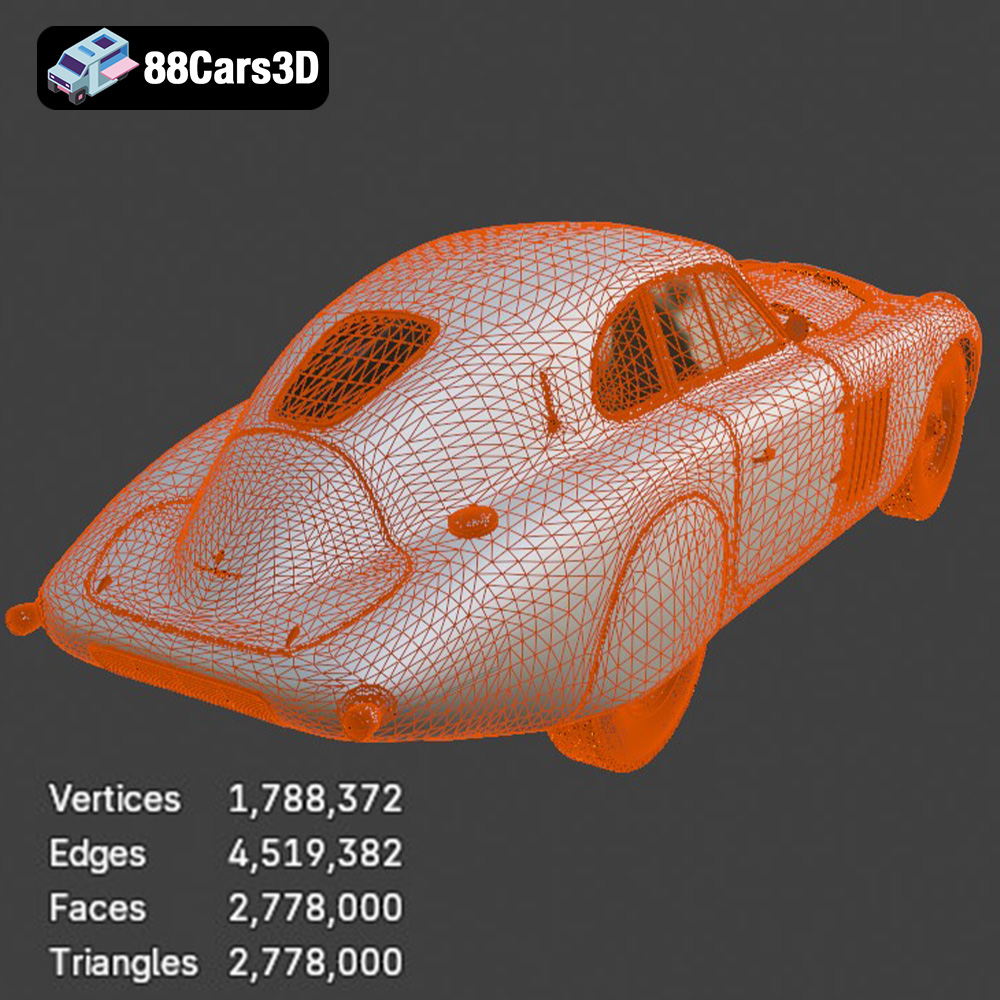
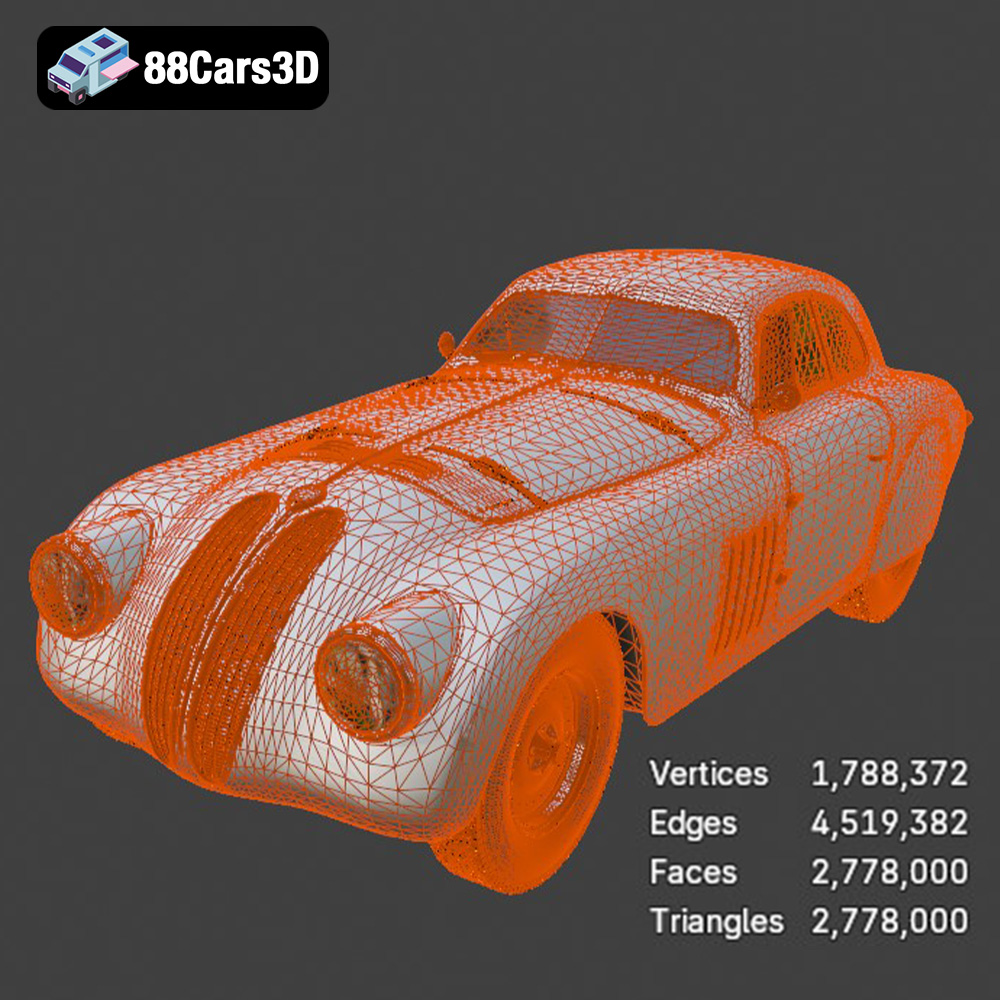
A truly professional 3D model is defined not just by its visual accuracy, but by its underlying technical structure. The BMW 328 Mille Miglia model boasts a clean and well-organized mesh, which is fundamental for seamless texturing, rigging, and animation. Real-world scale accuracy is another non-negotiable feature, ensuring the model integrates perfectly into any scene without requiring manual adjustments, saving invaluable time for artists. Furthermore, proper pivot setups for elements like the wheels and steering components are essential for realistic animation, allowing for accurate rotation and movement in simulations or cinematic sequences. This robust technical foundation ensures versatility and ease of use across various professional workflows.
Automotive rendering is a specialized field where the quality of 3D car models directly impacts the final output. For advertising, historical preservation, or cinematic projects, the BMW 328 Mille Miglia Touring Coupe 3D Model offers an unparalleled foundation for creating breathtaking visuals.
For professionals utilizing 3ds Max, the included .max file provides native access to all model data. The workflow for automotive rendering typically begins with setting up the scene, which includes studio lighting or environment HDRIs to simulate real-world conditions. Material creation is paramount; for the BMW 328, this involves meticulously crafting materials that replicate the look of smooth aluminum body panels, vintage chrome trim, and period-correct racing paint finishes. Using advanced renderers like V-Ray or Corona, artists can achieve photorealistic results, accurately simulating reflections, refractions, and global illumination. The clean topology and proper UV mapping of the model ensure that textures and materials apply flawlessly, resulting in believable surface details that capture the essence of this classic vehicle.
Blender users benefit from the native .blend file, which allows for immediate integration into their projects. With Cycles, Blender’s physically based path tracer, artists can achieve stunningly realistic renders comparable to those from commercial render engines. This involves setting up complex node-based materials to simulate painted metal, glass, and worn leather, and utilizing advanced lighting techniques. For faster, real-time feedback and animation previews, Eevee offers a powerful alternative, leveraging PBR materials and real-time reflections to produce high-quality visuals without extensive render times. The BMW 328 model’s clean mesh and pre-configured materials in the .blend file significantly accelerate this process, enabling artists to focus on creative lighting and composition.
The BMW 328 Mille Miglia model is perfectly suited for cinematic historical projects. Imagine recreating the tense moments of the 1940 Mille Miglia race, or showcasing the vehicle in a virtual museum exhibit. The high detail allows for close-up shots without loss of fidelity, and the animation-ready components (separate wheels, steering) enable dynamic sequences. For historical visualizations, accuracy is key, and this 3D model provides the foundational geometry to build authentic scenes, whether it’s configuring lighting for a dramatic concours display or applying accurate race livery and numbers through customization options. This makes it an ideal asset for educational content, documentaries, or advertising campaigns that leverage the nostalgia and prestige of classic automotive design.
The demand for realistic and performant game assets in the automotive sector is ever-growing. The BMW 328 Mille Miglia Touring Coupe 3D Model is an excellent example of how a high-quality asset can bridge the gap between historical fidelity and real-time performance.
For game developers, the .fbx and .unreal formats are critical. When importing the BMW 328 model into Unreal Engine, the clean mesh and proper pivot setup (for steering and wheel rotation) are immediate advantages. Developers can quickly set up vehicle physics, integrate it into a racing game framework, or use it as a static prop in a historical open-world environment. Unreal’s robust material editor allows for converting and optimizing the model’s materials to PBR standards, ensuring consistent visual quality under varying lighting conditions within the engine. Similarly, for Unity users, the .fbx format provides the necessary data for import, where it can be configured with Unity’s HDRP or URP pipelines for stunning visuals, even on mobile or VR platforms. This model provides the high-quality starting point required for engaging vintage racing games or interactive automotive simulations.
While the BMW 328 model boasts high detail, true game-ready assets often require further optimization. This includes generating Levels of Detail (LODs) – simplified versions of the model that swap in as the camera moves further away, significantly reducing polygon count and improving performance without noticeable visual degradation. For game assets, collision meshes are also essential, defining how the vehicle interacts with the environment. The model’s clean topology makes it easier for developers to create these optimizations efficiently. Whether it’s for a high-fidelity racing simulator or a mobile-optimized historical showcase, the base model provides a solid foundation for these performance-critical modifications, ensuring the classic car runs smoothly across various platforms.
The .glb format makes the BMW 328 Mille Miglia Touring Coupe 3D Model particularly well-suited for AR/VR applications. Imagine an augmented reality experience where this legendary car appears in your living room, allowing you to walk around it, examine its details, and even peek into the cockpit. Or a virtual reality museum where you can sit inside and “drive” it through a historical Mille Miglia recreation. The optimized nature of .glb ensures fast loading times and smooth interaction within these immersive environments. These applications offer unique educational and entertainment opportunities, allowing a global audience to experience automotive history firsthand, making the car a powerful tool for interactive classic car exhibitions and engaging racing history experiences.
Beyond digital screens, the BMW 328 Mille Miglia Touring Coupe 3D Model offers the exciting prospect of becoming a physical collectible. The inclusion of the .stl format, alongside its "3D Printable" description, opens up a world of possibilities for scale model enthusiasts and collectors.
The .stl file is the cornerstone for 3D printing. For successful printing, the model must be "manifold," meaning it has no holes, inversed normals, or intersecting geometry – characteristics typical of well-prepared 3D car models like this one. For FDM (Fused Deposition Modeling) printers, larger scales like 1:12 or 1:18 are ideal, allowing for greater detail retention with layer heights of 0.08–0.16 mm. Wall thickness recommendations of 1.5–2.5 mm ensure structural integrity. For finer details, especially at smaller scales (1:24 or 1:32), resin printing (SLA/DLP) is highly recommended, allowing for layer heights as low as 0.04 mm and capturing intricate elements like the kidney grille and covered headlights with exceptional fidelity. Supports will be necessary for overhangs like mirrors, underbody details, and wheel arches, and the recommended print orientation (body angled, wheels separate) helps achieve optimal surface finish and detail resolution.
The journey from a raw 3D print to a display-ready scale model involves careful post-processing. This typically includes removing supports, sanding to smooth layer lines or resin marks, and applying a primer. The choice of paint finish is crucial for recreating the car’s historical look. A gloss vintage racing paint, perhaps an accurate period-correct BMW color, coupled with optional historical race decals, can bring the model to life. Achieving a polished aluminum or painted body finish requires skill in painting techniques, often involving multiple thin coats and clear coats for a deep, lustrous shine. The separate wheels and steering components allow for easier painting and assembly, enabling modelers to replicate the car with museum-quality accuracy. This hands-on process transforms the digital asset into a unique, tangible piece of automotive history.
The 3D printable nature of the BMW 328 Mille Miglia Touring Coupe 3D Model invites endless customization. Modelers can experiment with different scales, paint schemes (perhaps other Mille Miglia liveries), or even modify elements like wheel styles to create unique interpretations. Displaying these models goes beyond a simple shelf placement; imagine a custom diorama recreating a pit stop from the 1940 race, or a stylish plinth showcasing the model alongside historical information. The potential for creating bespoke automotive collectibles, prototyping custom parts, or even producing limited-edition runs for enthusiasts is immense, making this model not just a digital asset, but a gateway to physical creation and personalized expression.
In today’s fast-paced digital content creation landscape, the ability to quickly access and integrate high-quality 3D assets is a significant competitive advantage. The BMW 328 Mille Miglia Touring Coupe 3D Model exemplifies this, offering more than just a beautiful rendition of a classic car.
Developing 3D car models from scratch is an incredibly time-consuming and resource-intensive process, requiring specialized skills in modeling, texturing, and optimization. By leveraging professionally created 3D car models like the one available on 88cars3d.com, studios and individual artists can drastically cut down production timelines and costs. This particular model, with its clean mesh, real-world scale, and multiple file formats, allows for immediate integration into diverse projects. Artists can focus their energy on creative aspects like lighting, animation, and scene composition, rather than the intricate details of vehicle modeling. This efficiency is crucial for meeting deadlines in advertising, game development, and architectural visualization.
The broad applicability of this 3D model across rendering, game development, AR/VR, simulation, education, and 3D printing highlights its incredible versatility. A single asset can serve multiple departments or project types within an organization. An automotive design firm might use it for historical context in a new concept car presentation, while a game studio incorporates it into a vintage racing title. Educators can utilize it for interactive learning modules on automotive history or aerodynamics, and hobbyists can print and paint their own detailed scale models. This multi-purpose utility maximizes the return on investment for acquiring such a high-quality asset, proving its value far beyond a single-use scenario.
The value of a premium 3D model also lies in its reliability and technical quality. Platforms like 88cars3d.com specialize in providing high-quality 3D car models that meet professional standards. This means consistent topology, accurate detailing, proper UVs, and a range of useful file formats, as demonstrated by the BMW 328 Mille Miglia Touring Coupe 3D Model. Such an asset ensures that professionals can trust its integrity and focus on creative endeavors without worrying about underlying mesh issues or compatibility headaches. Investing in well-crafted assets from reputable sources is a strategic decision for any serious 3D artist or studio.
The BMW 328 Mille Miglia Touring Coupe is more than just a car; it’s a testament to innovation and a symbol of automotive excellence. Its digital rendition as a high-quality 3D model provides an unparalleled opportunity to engage with this legacy across a multitude of applications. From the intricate details captured for stunning automotive rendering to its optimized structure for dynamic game assets and its tangible potential through 3D printing, this model serves as a versatile and robust foundation for any creative endeavor.
The technical advantages, including its clean mesh, real-world scale, proper pivot setups, and comprehensive file format support (from .blend and .max for editable scenes to .fbx and .unreal for real-time engines, and .stl for manufacturing), ensure that it seamlessly integrates into any professional workflow. By providing such a meticulously crafted asset, 88cars3d.com empowers designers, developers, and enthusiasts to explore, visualize, and even physically replicate a pivotal piece of racing history. Whether you’re crafting a cinematic masterpiece, developing the next great racing simulation, or bringing a classic to life on your workbench, the BMW 328 Mille Miglia Touring Coupe 3D Model offers the quality and flexibility needed to achieve your vision.
The BMW 328 Mille Miglia Touring Coupe 3D Model is a high-detail digital recreation of the legendary pre-war racing coupe that achieved historic success in the 1940 Mille Miglia endurance race. Renowned for its aerodynamic aluminum body crafted by Touring of Milan and its lightweight tubular frame, the BMW 328 Mille Miglia Coupe stands as an icon of classic motorsport engineering. This 3D model accurately represents the streamlined fastback body, covered headlamps, signature kidney grille design, aerodynamic wheel covers, racing cockpit layout, and period-correct detailing. Built with clean topology and real-world scale accuracy, it is ideal for rendering, animation, historical visualization, game development, and AR/VR classic automotive showcases.
$29.99
.arvr
.blend
.bmw328
.car3dmodel
.classicracecar
.fbx
.gameasset
.glb
.max
.millemiglia
.motorsport
.obj
.ply
.prewarcar
.rendering
.simulation
.stl
.touringcoupe
.unreal
.vintagecar