⚡ FLASH SALE: Get 60% OFF All Premium 3D & STL Models! ⚡

In the vast landscape of automotive history, some vehicles capture the imagination with their sheer elegance, blazing speed, or groundbreaking technology. Others, however, earn their legendary status through an entirely different route: rugged reliability, everyday utility, and an indelible presence in the fabric of daily life. The Daewoo Nexia N100, a humble yet ubiquitous budget sedan from the 1990s, is precisely one such icon. Born from the proven architecture of the Opel Kadett E, the Nexia (also known as the Cielo or Heaven in various markets) became an absolute workhorse, particularly across Eastern Europe, Russia, and Central Asia, where it remains a familiar sight as a trusted commuter and taxi.
For 3D artists, game developers, architectural visualization specialists, and simulation creators, capturing the essence of such culturally significant vehicles is paramount. It’s about more than just a car; it’s about invoking a sense of place, time, and authenticity. This is where high-quality 3D car models become indispensable. The Daewoo Nexia N100 (Classic) 3D Model from 88cars3d.com stands out as a meticulously crafted digital recreation, designed to bring this quintessential 90s aesthetic into your projects with unparalleled fidelity and optimization. Whether you’re aiming for a gritty, realistic street scene, a nostalgic game environment, or precise architectural renders, understanding the technical depth and versatility of such an asset is key to unlocking its full potential.
The true value of a 3D model often extends beyond its polygons and textures; it encompasses the story it tells and the atmosphere it helps create. The Daewoo Nexia N100 embodies a unique narrative, making it an invaluable asset for specific project types.
The Nexia N100 isn’t just another car; it’s a cultural touchstone. For generations, it has been the car that families relied on, the vehicle that shuttled commuters, and the workhorse of countless taxi fleets. Its boxy yet functional design, unpretentious demeanor, and widespread presence evoke a very particular sense of time and place. Incorporating this vehicle into a 3D scene instantly roots it in a specific socio-economic and geographical context. Imagine an architectural visualization of a residential area in a post-Soviet city, or a game level set in a rural Eastern European town. A fleet of gleaming, modern supercars would feel jarring and out of place. Instead, the sight of a weathered Daewoo Nexia, perhaps with a touch of digital dust and grime, immediately lends authenticity and a powerful sense of realism. The Daewoo Nexia N100 (Classic) 3D Model is built to capture this rugged reliability and everyday aesthetic, making it perfect for scenes demanding historical or regional accuracy.
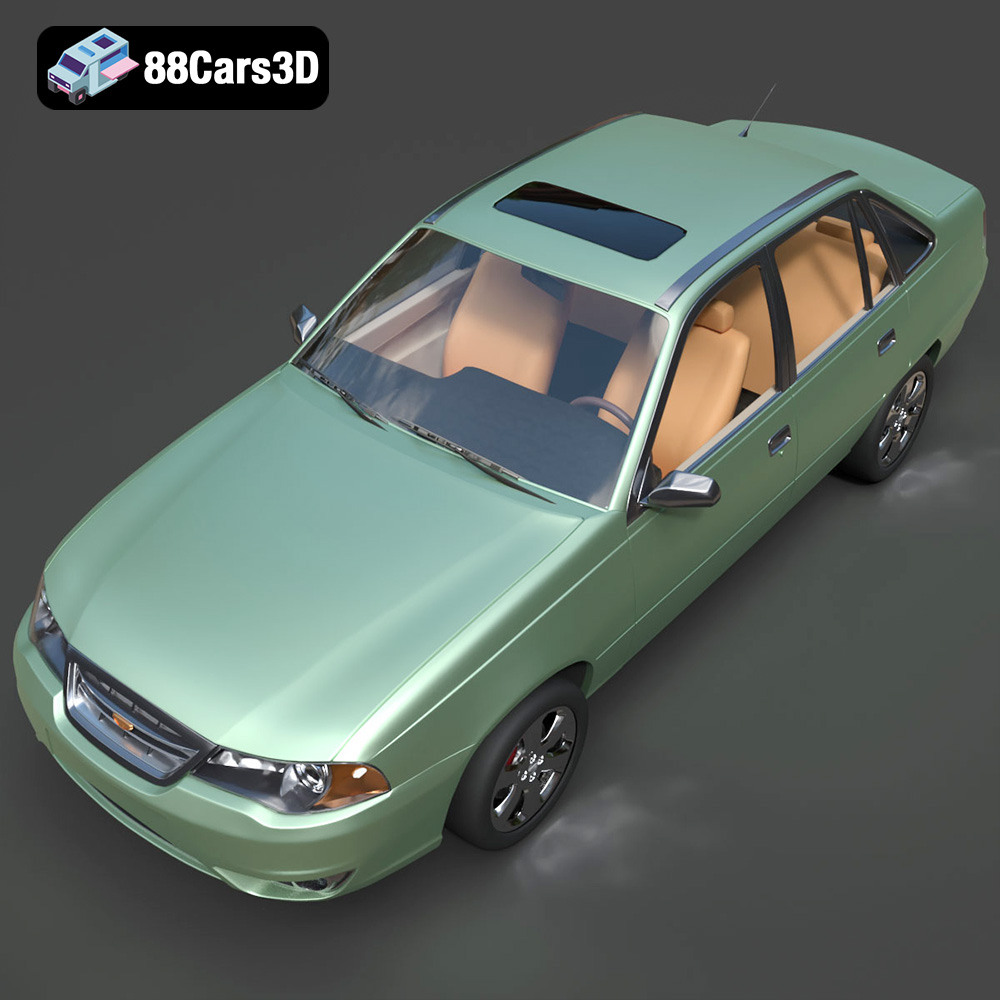
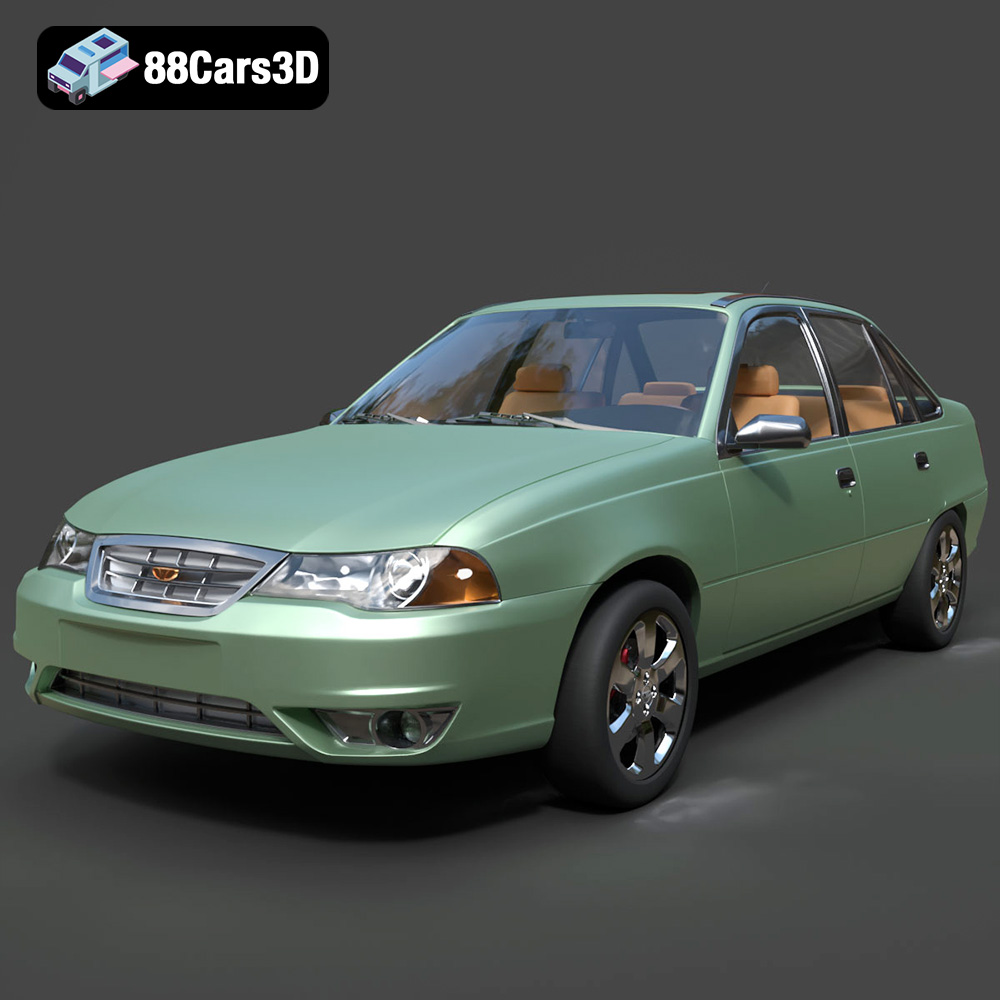
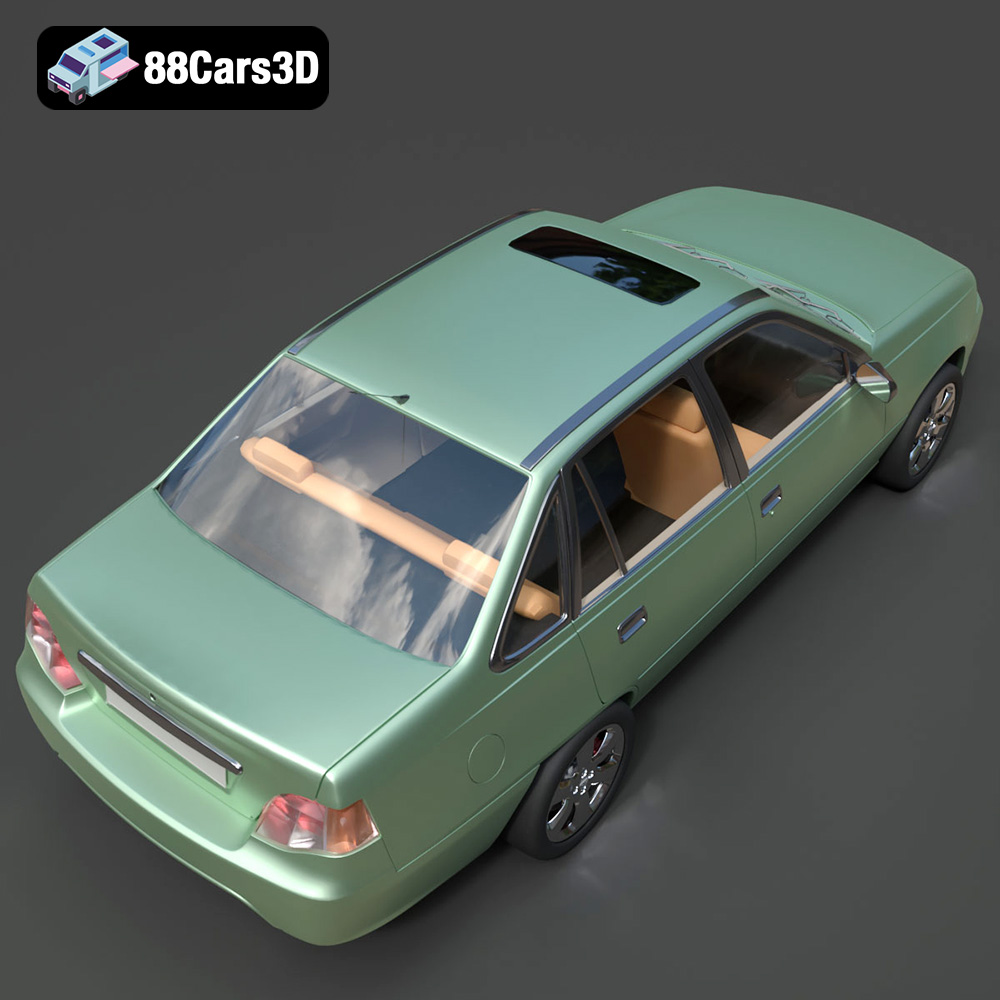
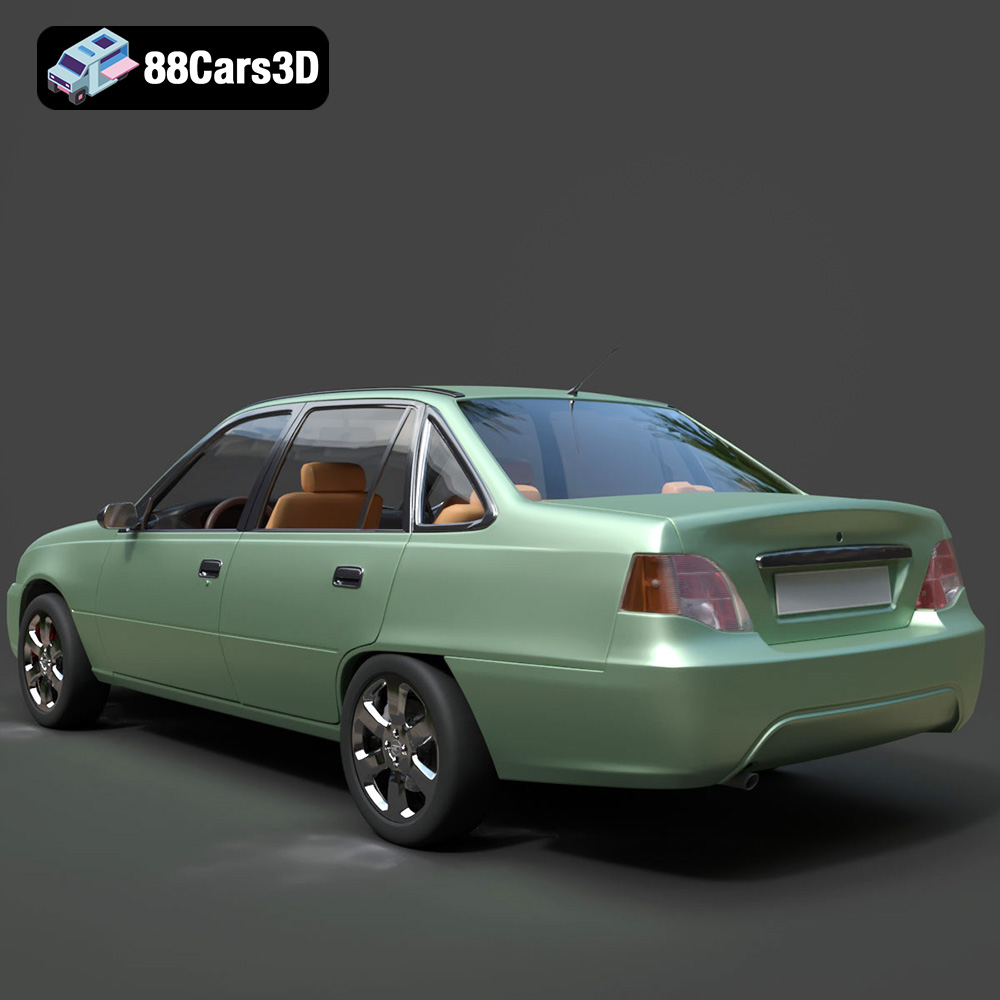
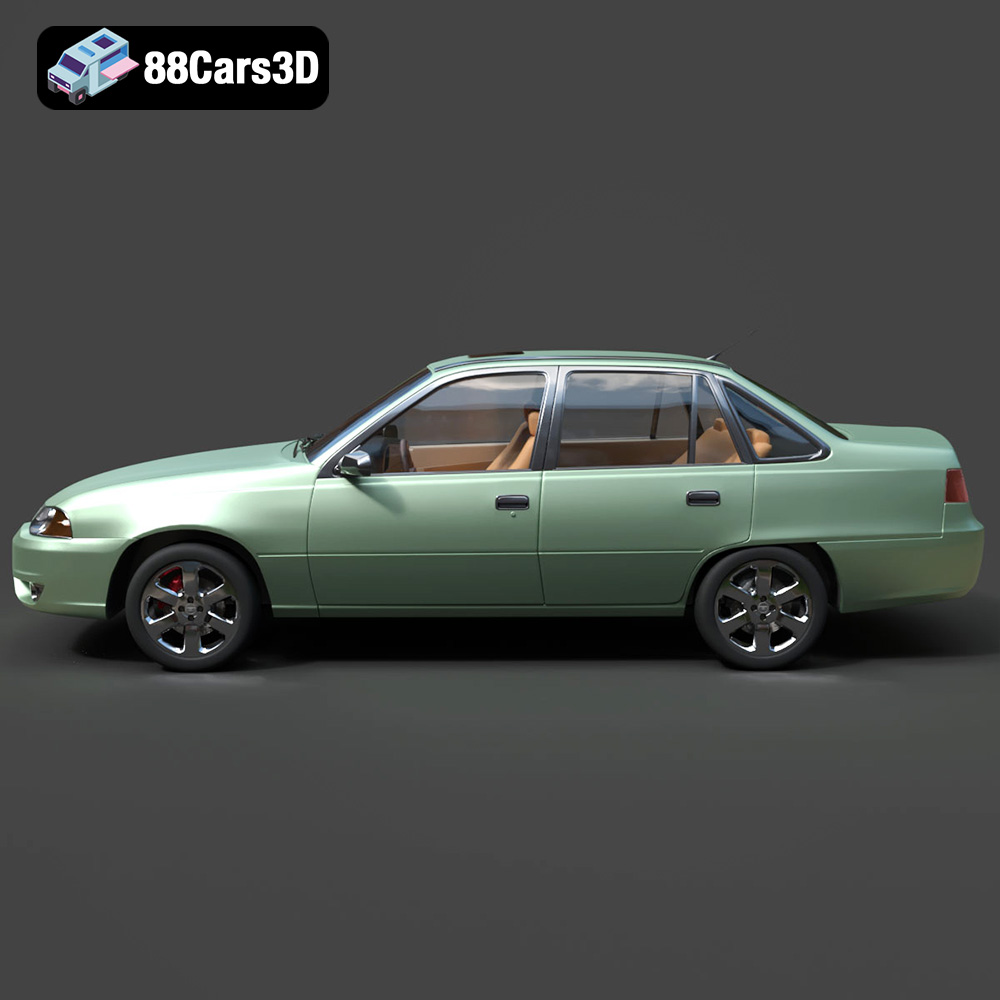
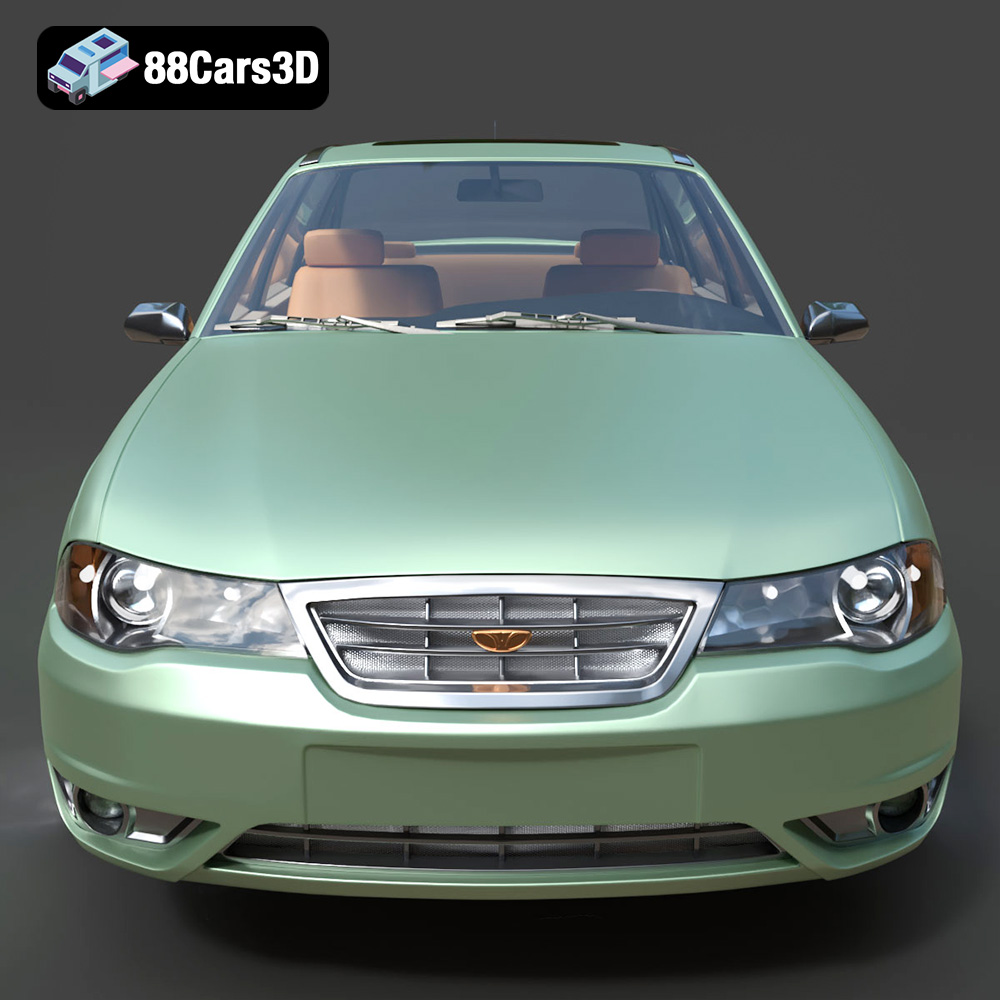
One of the model’s strongest attributes is its unwavering commitment to the quintessential 90s aesthetic of the pre-facelift N100. Every detail has been carefully considered to reflect the original design cues that defined this era. The exterior features the classic rectangular headlight housings, a distinctive departure from the sleek, rounded lights of later models. The iconic split front grille, a signature element, is meticulously reproduced, along with the simple yet functional black plastic body molding and bumpers that characterize its utilitarian design. The timeless three-box sedan silhouette is accurately proportioned, ensuring the vehicle feels authentic from every angle.
Inside, the attention to detail continues with an authentic, practical driver-centric cabin layout. The detailed dashboard, featuring the classic center console and analog instrument cluster, immediately transports viewers back to an era of simpler automotive interfaces. Realistic seating geometry accommodates a five-passenger layout, complete with retro cloth or vinyl texture mapping. Even the classic two-spoke or three-spoke steering wheel and manual gear shifter representation contribute to the model’s overall immersion. This optimized interior geometry is tailored to look exceptional whether viewed from the exterior or in a VR environment, providing robust visual fidelity even for closer inspection within interactive experiences.
The power and versatility of a 3D model often depend on the file formats it supports. Different formats are optimized for various purposes, software compatibility, and workflow requirements. The Daewoo Nexia N100 (Classic) 3D Model from 88cars3d.com offers a comprehensive array of formats, ensuring it seamlessly integrates into virtually any professional pipeline. Understanding each one is crucial for making informed decisions in your projects.
The availability of the Daewoo Nexia N100 (Classic) 3D Model in this diverse range of formats means unparalleled flexibility. Whether your project demands high-fidelity rendering in 3ds Max, real-time interactivity in Unity or Unreal, web-based AR experiences, or even physical manufacturing through 3D printing, this model is prepared to integrate seamlessly into your workflow.
Beyond aesthetic appeal and format versatility, the true measure of a high-quality 3D model lies in its technical specifications and underlying structure. These details dictate performance, ease of use, and adaptability across various demanding applications.
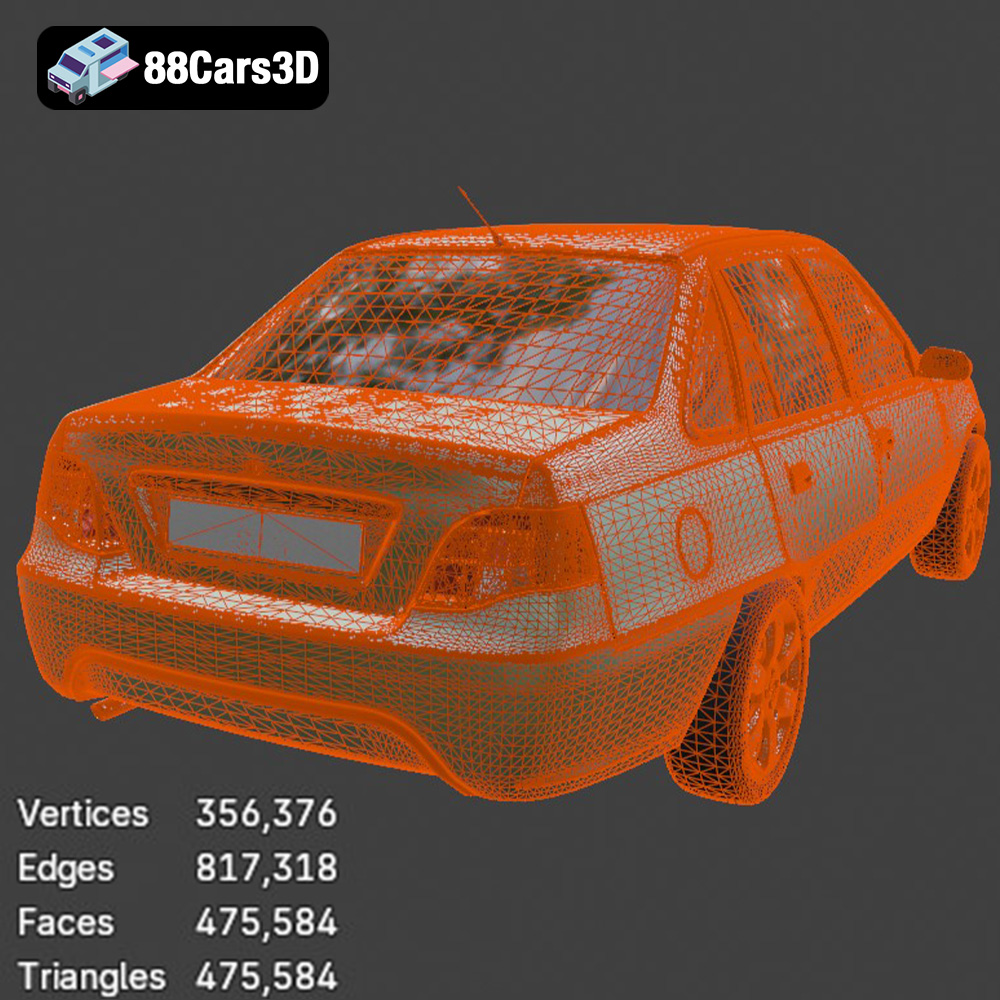
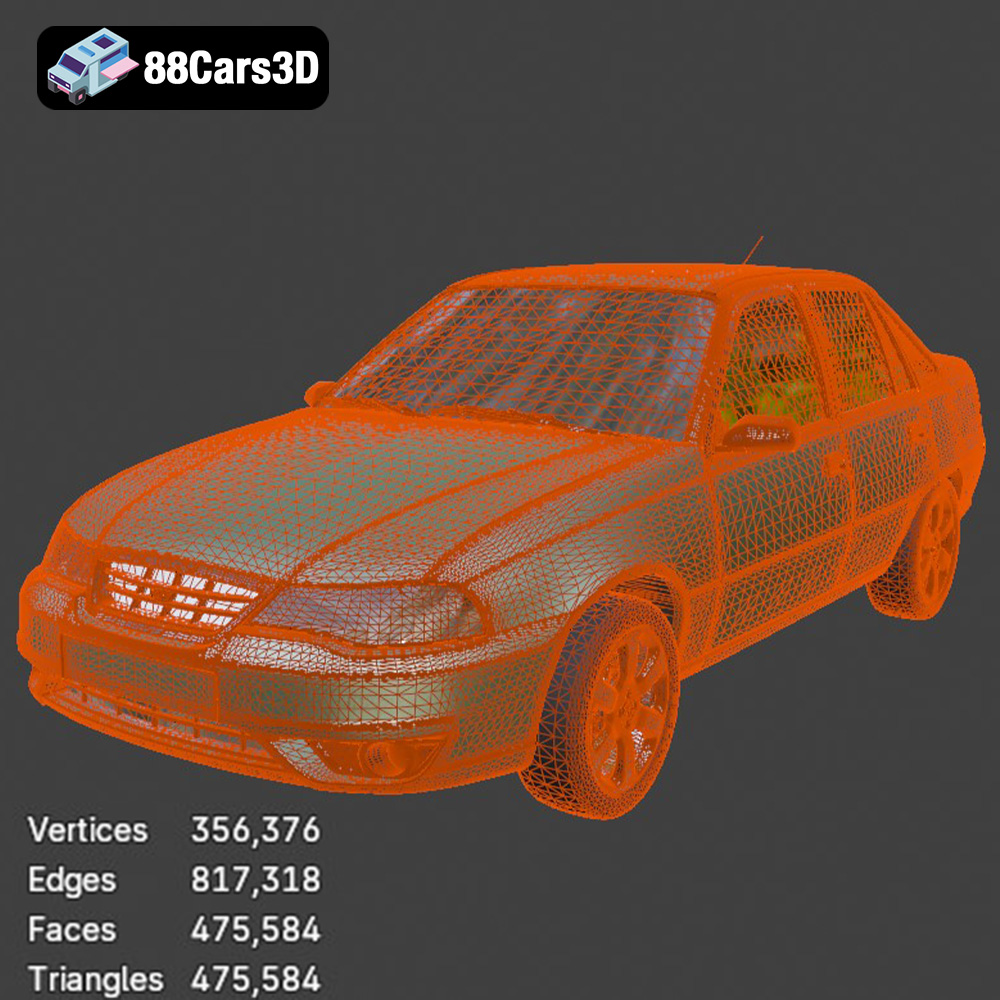
The Daewoo Nexia N100 (Classic) 3D Model boasts an impressive and incredibly clean topology, with approximately 475,584 triangles, 356,376 vertices, and 475,584 faces/polygons. This “mid-to-high polygon” count places it firmly in what can be described as the “Goldilocks zone” for 3D assets. It’s detailed enough to provide excellent visual fidelity for close-up automotive rendering in high-resolution stills or cinematic animations, capturing the nuances of its classic design elements. Yet, it is simultaneously optimized enough to be used efficiently in real-time environments, such as modern game engines, without causing severe performance bottlenecks. This balance is critical for versatility.
A “clean and well-balanced topology” signifies that the mesh flows logically, minimizing Ngons (polygons with more than four sides) and T-junctions, which can lead to rendering artifacts or issues with deformation and subdivision. This meticulous construction makes the model robust for a variety of tasks, from smooth shading and texture application to potential further optimization or modification. For a game developer, this means the model can serve as a drivable hero car in a city simulator or function as dense background traffic, populating an urban environment without overwhelming the engine’s resources.
Accuracy extends beyond visual appearance to physical dimensions. The Daewoo Nexia model is built to real-world scale, based on classic Daewoo factory dimensions. This is crucial for applications like architectural visualization, where vehicles need to fit naturally into their surroundings, or for simulations where physical accuracy is paramount. An incorrectly scaled car can instantly break immersion or create logistical problems within a virtual environment.
Furthermore, the model is designed with animation and interactivity in mind. Key components such as the wheels, steering components, and doors are separated. This modularity means the asset is immediately ready for rigging, allowing for realistic wheel rotation, steering articulation, and opening/closing door animations. The inclusion of a proper pivot setup for these elements further streamlines the rigging process, saving valuable development time. For game developers, this is an essential feature, enabling the creation of fully functional vehicles for driving mechanics or interactive elements in cutscenes and gameplay.
The technical robustness and aesthetic accuracy of the Daewoo Nexia N100 (Classic) 3D Model allow it to excel across a wide spectrum of professional 3D applications.
For architectural visualization artists, contextual elements are just as important as the building itself. A highly detailed, era-appropriate vehicle can dramatically enhance the realism and narrative depth of a scene. The Daewoo Nexia N100 is the absolute perfect vehicle for breathing life into architectural visualizations set in specific regions like Eastern Europe or Central Asia. Its recognizable silhouette and vintage charm provide highly accurate, region-specific, and era-appropriate traffic, instantly grounding a scene in reality. Imagine a stunning render of a Soviet-era apartment block, or a bustling street in a modern post-Soviet city. Populating these scenes with a few Nexias immediately adds a layer of authenticity that generic, often anachronistic, vehicles simply cannot provide. It can serve as a foreground detail for a product shot, a key element in a historical reconstruction, or simply as an everyday vehicle that makes a street scene feel genuinely lived-in.
The gaming industry constantly seeks assets that strike a balance between visual quality and performance. The Nexia’s “Goldilocks zone” topology makes it an excellent choice for game development. It can function as a drivable hero vehicle in open-world titles, allowing players to experience driving a culturally iconic car, or it can be deployed en masse as everyday traffic in urban environments. Consider games set in retro 90s delivery simulators, taxi driving games taking place in regional settings, or even police chase scenarios requiring era-accurate vehicles. Its optimization ensures that even a dense concentration of these 3D car models won’t severely impact frame rates, making it suitable for both high-fidelity and more resource-conscious projects. Full compatibility with major game engines like Unreal Engine and Unity ensures a smooth integration process for developers.
The utility of high-quality 3D assets extends beyond traditional rendering and game engines into emerging technologies. For AR/VR experiences, the Daewoo Nexia can play a vital role in interactive digital city-planning VR environments or historical neighborhood reconstructions. Imagine walking through a virtual rendition of a 90s Moscow street, where the Nexia provides a familiar visual anchor. Its optimized geometry ensures smooth performance in these immersive, real-time applications.
Furthermore, the model’s inclusion of the .stl format opens up a world of physical creation through 3D printing. This means enthusiasts can convert the digital asset into a tangible object, perfect for display-scale classic diecast hobbyists. The recommended scales (1:24, 1:32, 1:43) are ideal for urban dioramas, allowing for detailed physical reproductions. Specific print settings are provided for optimal results, including recommended layer height (0.04–0.12 mm, with resin printing suggested for finer details), wall thickness (1.2–2.0 mm), and infill (15–25%). Critical details like supports for side mirrors, wheel arches, and the exhaust pipe are outlined, along with optimal print orientation and post-processing steps like sanding, priming, and painting in classic 90s factory colors. This transforms a digital asset into a physical collectible, bridging the gap between virtual design and tangible craftsmanship.
A truly versatile 3D model offers more than just accuracy; it provides a canvas for creative expression and adaptation to specific project needs. The Daewoo Nexia N100 (Classic) 3D Model is built with customization in mind, allowing artists to tailor its appearance to perfectly match their vision.
The fundamental geometry and material setup of the model provide an excellent starting point for extensive customization. Artists can easily change exterior paint colors, moving beyond factory defaults to create striking, vibrant, or even heavily weathered city-car palettes. This is particularly useful for game development, where multiple variations of a single vehicle add visual diversity without requiring entirely new models.
For projects aiming for specific regional authenticity, customization is key. Artists can easily add classic yellow “Taxi” roof signs and checker decals, transforming the Nexia into a highly recognizable taxi from cities like Moscow or Tashkent. This instantly imbues the model with a strong narrative element and enhances its regional accuracy.
Environmental storytelling can be significantly enhanced through material customization. Applying weathering materials such as dust, mud, or snow can realistically place the vehicle within gritty, realistic winter scenes, rural settings, or simply a well-used urban environment. This adds character and a sense of history to the model, reflecting the harsh conditions many of these vehicles faced daily. Furthermore, adapting lighting setups can drastically alter the mood and context of the model, allowing it to seamlessly fit into sunny urban commutes, moody, rainy night-time city streets, or dramatic cinematic sequences.
Ultimately, the Daewoo Nexia N100 (Classic) 3D Model is more than just a detailed mesh; it’s a powerful storytelling element. In a world saturated with sleek, futuristic designs, the Nexia offers a refreshing dose of reality, nostalgia, and understated character. Its presence in a scene can instantly evoke specific memories, cultural contexts, or historical periods. For creators aiming for authenticity and a nuanced understanding of global aesthetics, an asset like this is invaluable. It represents a particular chapter in automotive history, a vehicle that, despite its humble origins, left an indelible mark on millions of lives. Integrating such specific, recognizable cultural assets elevates digital art, making it more relatable, immersive, and impactful.
In the dynamic world of 3D content creation, the demand for high-quality, versatile, and culturally relevant assets is ever-growing. The Daewoo Nexia N100 (Classic) 3D Model stands as a testament to meticulous digital craftsmanship, offering an unparalleled blend of aesthetic accuracy, technical precision, and broad application compatibility. From its faithfully recreated 90s aesthetic, embodying the spirit of a global workhorse, to its optimized topology and extensive file format support, this model is designed to empower artists and developers across diverse disciplines.
Whether your project calls for highly detailed automotive rendering, authentic game assets for a bustling cityscape, precise architectural visualizations, engaging AR/VR experiences, or even the tangible satisfaction of 3D printing a classic icon, this model delivers. Its ready-for-rigging components and real-world scale further enhance its utility, making it a robust foundation for interactive and animated content. By choosing such a thoughtfully constructed asset, you not only save valuable development time but also elevate the authenticity and visual impact of your creations.
The Daewoo Nexia N100 (Classic) 3D Model is more than just a car; it’s a piece of history, ready to be integrated into your next masterpiece. Explore this exceptional model and a wide range of other high-quality 3D car models at 88cars3d.com, and bring your creative visions to life with assets that truly stand out.
The Daewoo Nexia N100 3D Model is a highly accurate digital recreation of the classic 1990s budget sedan that became a global phenomenon. Built on the proven architecture of the Opel Kadett E, the original N100 Nexia (also known in various markets as the Cielo or Heaven) earned a legendary reputation for rugged reliability. It remains an absolute icon of everyday commuting and taxi fleets across Eastern Europe, Russia, and Central Asia to this day. This 3D model beautifully captures the quintessential 90s aesthetic of the pre-facelift N100. It features the classic rectangular headlight housings, the iconic split front grille, the simple yet functional body molding, and the timeless three-box sedan silhouette. Built with an incredibly clean and well-balanced mid-to-high polygon topology (approx. 475k triangles), it provides excellent visual fidelity for close-up automotive rendering while remaining highly optimized for background traffic in modern game engines and simulations. Perfect for populating realistic 90s or modern CIS (Commonwealth of Independent States) street scenes, architectural visualizations, urban taxi simulators, and mobile game development.
$35