⚡ FLASH SALE: Get 60% OFF All Premium 3D & STL Models! ⚡

In the vast and evolving landscape of 3D design, certain vehicles transcend mere transportation to become cultural touchstones. The Land Rover Defender is undeniably one such icon, revered for its rugged capability, utilitarian elegance, and storied history of exploration across the globe. For 3D artists, game developers, automotive visualization specialists, and even hobbyists, capturing the essence of such a legendary vehicle with precision and fidelity is paramount. This demands not just artistic skill, but access to incredibly detailed and technically sound 3D car models.
Enter the Land Rover Defender 110 3D Model, a digital masterpiece designed to meet the rigorous demands of professional workflows. Whether you’re aiming to create breathtaking cinematic renders, populate an immersive open-world game, develop realistic AR/VR experiences, or even bring a tangible miniature to life through 3D printing, this model provides an exceptional foundation. Sourced from the expert collection at 88cars3d.com, this asset exemplifies the blend of aesthetic accuracy and technical robustness that defines premium 3D content.
This comprehensive guide delves into the multifaceted world of high-quality 3D car models, using the Land Rover Defender 110 as our prime example. We’ll explore its features, understand the critical file formats that enable its versatility, examine how it integrates into various professional pipelines, and uncover the technical considerations that make it an invaluable asset for any creative endeavor.
The Land Rover Defender 110 isn’t just a vehicle; it’s a narrative. Its boxy silhouette, flat hood, signature grille, and external hinges tell a story of adventure, resilience, and unyielding capability. Translating this rich narrative into a 3D model requires meticulous attention to detail, ensuring that every curve and component contributes to the authentic representation of its real-world counterpart.
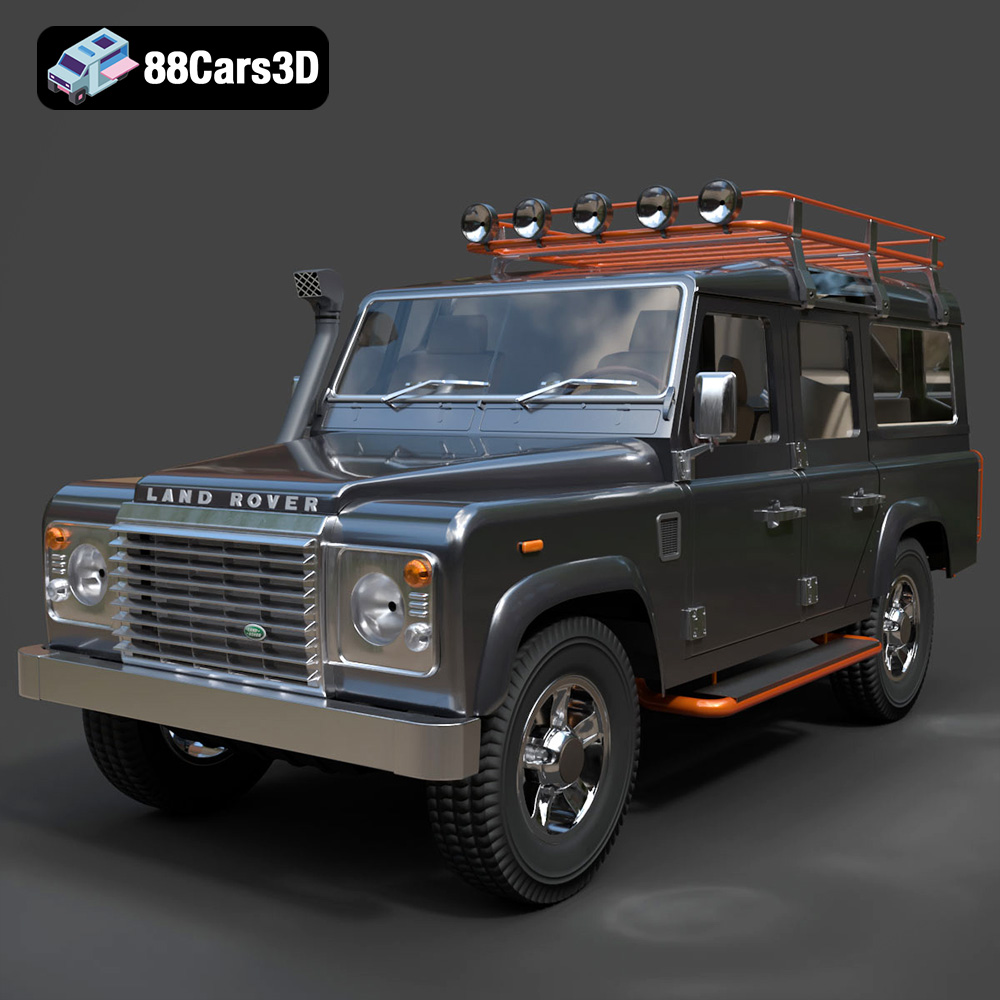
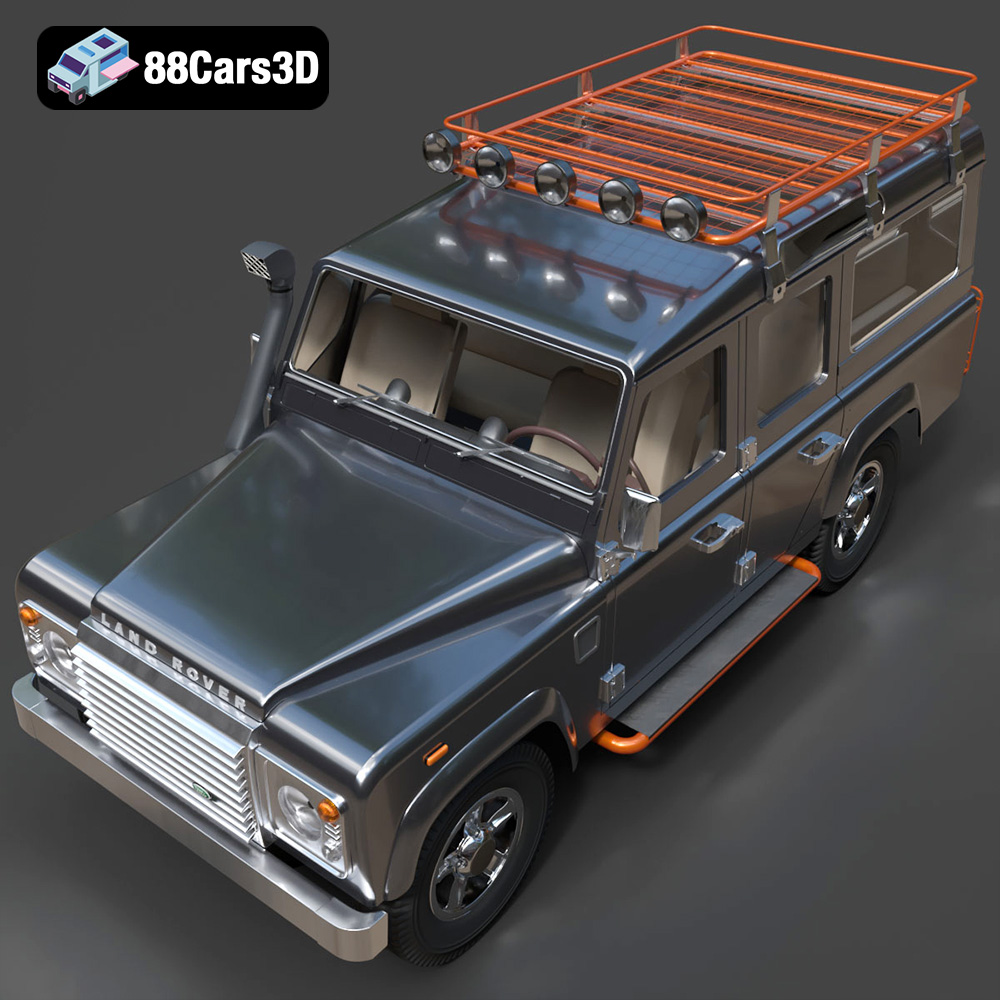
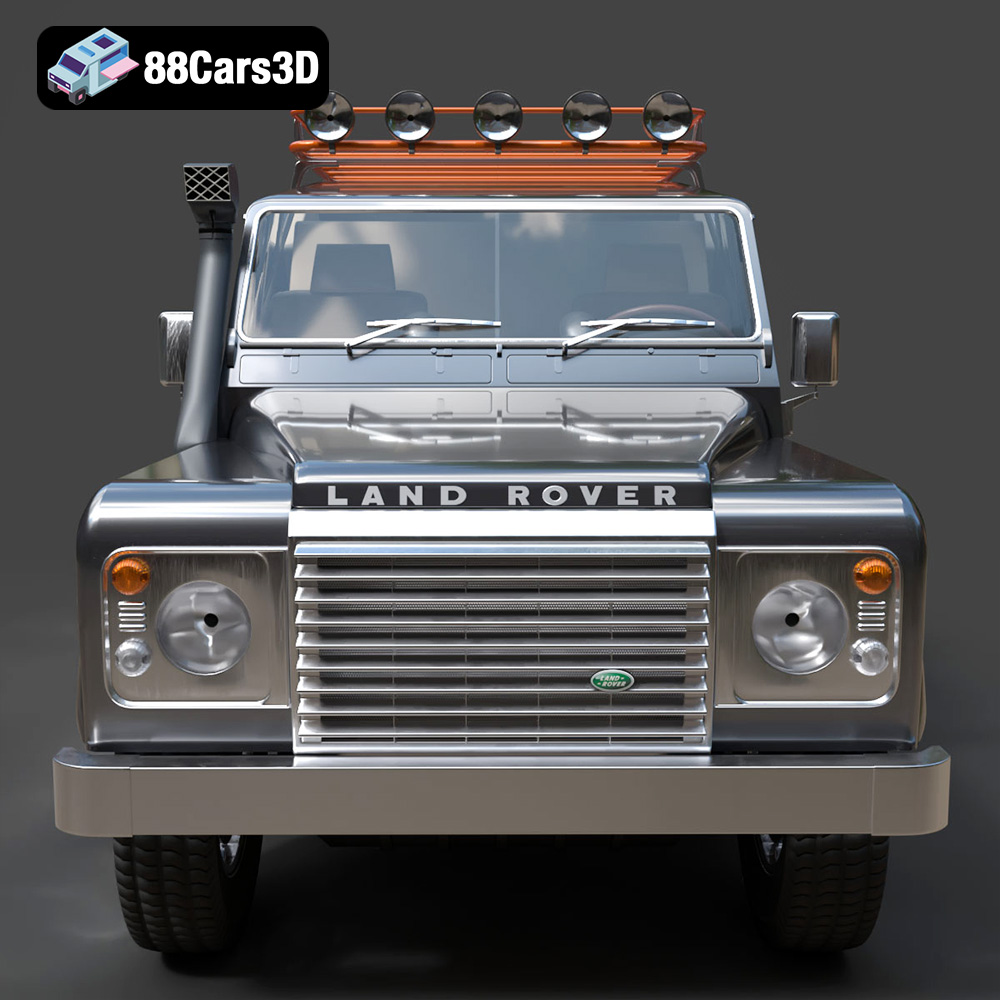
A truly high-quality 3D model begins with a deep understanding of the subject’s design philosophy. For the Land Rover Defender 110, this means accurately depicting its long-wheelbase proportions, the distinctive aluminum body panel styling, and the robust aesthetic that hints at its off-road prowess. The model boasts a detailed front grille and round headlight assembly, rugged front and rear bumpers, and even hood-mounted air vents—elements that are crucial for visual authenticity. Inside, a functional dashboard layout with an analog instrument cluster, detailed steering wheel, and accurate seating arrangement provide a complete and immersive experience.
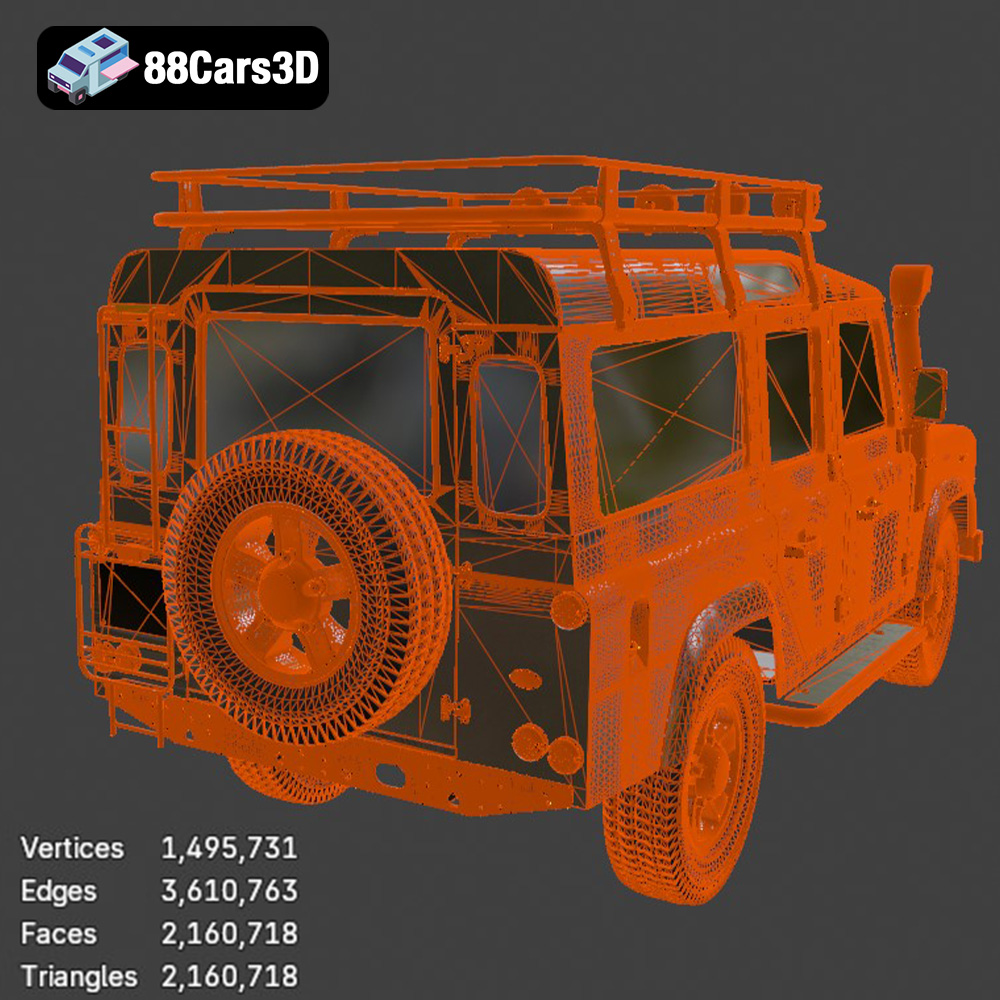
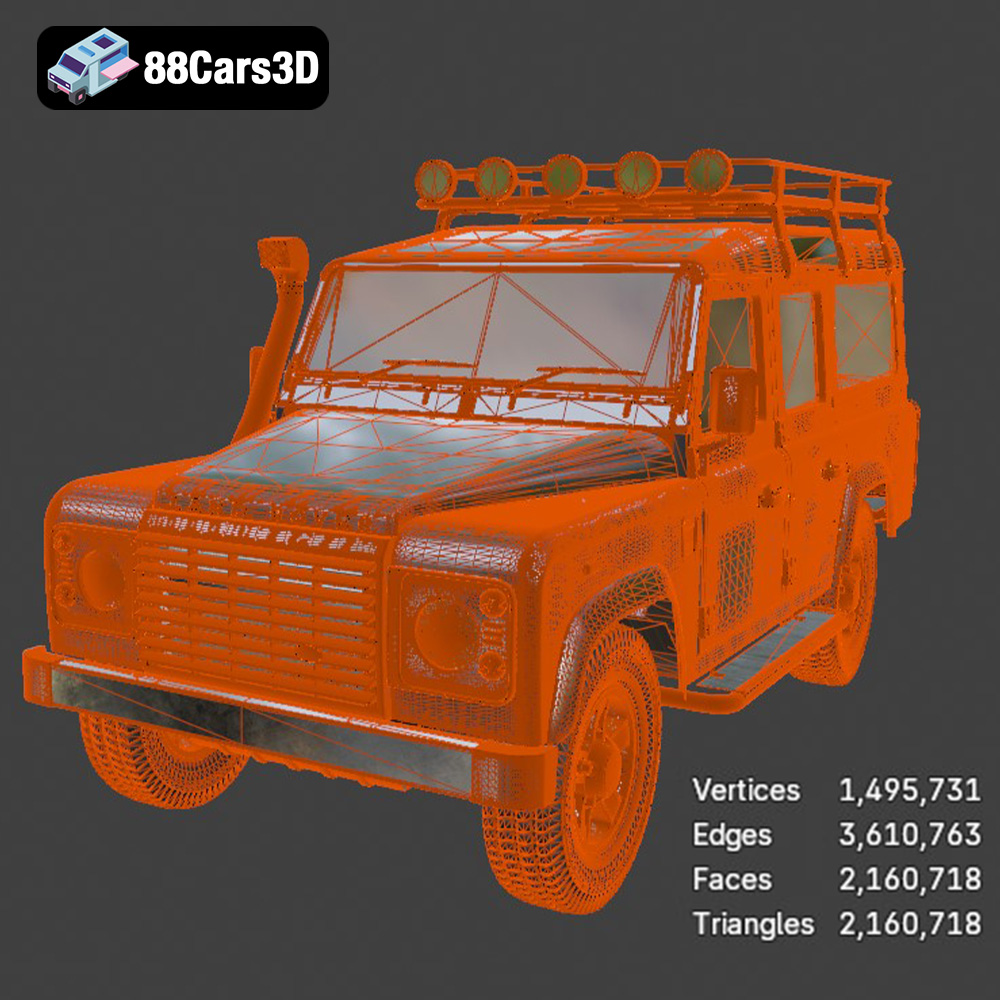
Beyond external aesthetics, technical accuracy is critical. This model is built to real-world scale, a fundamental requirement for accurate rendering, simulation, and integration into existing scenes. Its clean and well-organized mesh structure, coupled with optimized polygon flow, ensures both visual fidelity and efficient performance across various applications. The separation of wheels and steering components, along with proper pivot setups, makes it animation-ready right out of the box, facilitating dynamic scenes and interactive elements.
The Land Rover Defender’s iconic status makes it a highly sought-after subject across numerous industries. In automotive rendering, it’s perfect for crafting compelling marketing visuals, outdoor advertising, and adventure-themed promotions. For game development, its rugged nature lends itself perfectly to open-world exploration games, off-road simulators, and survival scenarios. AR/VR environments benefit from its robust design for immersive expedition simulations and interactive vehicle demonstrations. Furthermore, its structured geometry makes it an excellent candidate for 3D printing, allowing enthusiasts to create detailed scale models or collectibles.
The versatility of a 3D model is often defined by the range and quality of its supported file formats. Each format has its strengths, optimized for specific software, engines, or applications. The Land Rover Defender 110 3D Model is provided in a comprehensive suite of formats, ensuring maximum compatibility and utility for professionals across various disciplines.
The .blend format is the native file type for Blender, a powerful open-source 3D creation suite. A .blend file for the Defender 110 would contain the fully editable scene, including the mesh, materials, textures, lighting, camera setups, and even animation data if present. Artists working in Blender will find this format ideal for direct modification, rigging, custom rendering with Cycles or Eevee, and leveraging Blender’s extensive toolkit for sculpting, texturing, and more. It offers the most flexibility for those deeply integrated into the Blender workflow, ensuring that all aspects of the model are accessible for comprehensive edits.
.fbx (Filmbox) is arguably the most widely adopted proprietary file format for 3D data exchange, especially prevalent in game development and real-time pipelines like Unreal Engine and Unity. An .fbx file for the Land Rover Defender 110 would typically include mesh geometry, materials, textures, skeletal animation, and even embedded collision data. Its strength lies in its ability to transfer complex scene information between different 3D software packages (like 3ds Max, Maya, Blender, and Substance Painter) with a high degree of fidelity. For integrating the Defender into an interactive game world or a virtual reality experience, .fbx offers a robust and reliable pathway, preserving vital animation and material assignments.
The .obj (Wavefront Object) format is a universal standard, highly compatible across almost all 3D software. It primarily stores geometric data (vertices, normals, texture coordinates, and faces) and can reference external material files (.mtl) and texture images. While it doesn’t support animation or rigging information, its simplicity and widespread adoption make it an excellent choice for straightforward mesh transfer, archival, or when you need a clean base model to start a new project in an unfamiliar software. For the Defender 110, an .obj file provides a pure, unadulterated mesh, ready for new material assignments and custom setups in any program.
.glb (GL Transmission Format Binary) is an increasingly popular format, especially optimized for web-based 3D, augmented reality (AR), and virtual reality (VR) applications. It’s a single-file wrapper that bundles 3D model data, textures, and animations into a compact, efficient package. The Defender 110 in .glb format would be perfect for embedding directly into websites for interactive viewing, deploying in AR apps on mobile devices, or integrating into browser-based VR experiences with minimal loading times and broad compatibility across different platforms without requiring external dependencies.
The .stl (Stereolithography) format is the de facto standard for 3D printing. It represents a 3D model as a series of connected triangles (a triangular mesh) without any color, texture, or material information. When the Land Rover Defender 110 3D Model is provided as .stl, it means the geometry is “manifold” (watertight and error-free), making it suitable for direct slicing in 3D printer software. This format is crucial for manufacturing physical replicas, scale models, or prototypes of the Defender, enabling the transition from digital asset to tangible object.
.ply (Polygon File Format or Stanford Triangle Format) is a file format designed to store 3D data from 3D scanners, CAD software, and other technical applications. Similar to .obj, it represents geometric data, but it can also store additional properties like color per vertex, transparency, and even normal vectors. While less common for general rendering than .fbx or .obj, a .ply version of the Defender 110 can be valuable for specific engineering, scientific visualization, or detailed mesh analysis tasks where rich vertex data is required.
The .unreal format, or more accurately, assets imported and packaged within an Unreal Engine project, signifies an asset specifically optimized and ready for deployment within the Unreal Engine ecosystem. This means the Defender 110 model would likely come with appropriate materials, textures, LODs (Levels of Detail), and potentially even pre-configured blueprints or collision meshes, making it a plug-and-play solution for game developers and architectural visualizers using Unreal Engine. This vastly speeds up integration into real-time environments, allowing immediate use for simulations, cinematics, or interactive applications.
Finally, the .max format is the native file type for Autodesk 3ds Max, a leading software for 3D modeling, animation, and rendering. A .max file of the Defender 110 provides the full scene with all its modifiers, cameras, lighting setups, and intricate material definitions intact. This format is indispensable for professionals who use 3ds Max as their primary creative tool, offering complete editability for complex animations, high-fidelity rendering with V-Ray or Corona Renderer, and precise control over every aspect of the model. It’s the ultimate format for advanced customizations and integration into highly detailed production pipelines.
Automotive rendering is an art form that demands exceptional precision and realism. The Land Rover Defender 110 3D Model, with its detailed geometry and technical advantages, is an ideal candidate for producing stunning photorealistic visuals, whether for marketing campaigns, conceptual designs, or film productions.
When working within 3ds Max, the .max file of the Defender 110 provides the ultimate control. Professionals can leverage its clean mesh and proper pivot setups to create dynamic scenes. Combining this with powerful rendering engines like V-Ray or Corona Renderer allows for physically accurate lighting, material properties, and global illumination. Imagine the Defender parked against a dramatic sunset in the desert, its rugged body panels reflecting the golden light, or battling a stormy, muddy trail, with realistic rain and environmental effects. The model’s real-world scale ensures accurate camera perspectives and environmental interactions, making the scene believable.
The optimization of polygon flow on the model is critical here. It allows for smooth subdivision for close-up shots without excessive rendering times, while also preventing artifacts. The ability to separate wheels and steering components enables precise animation for vehicle turnarounds or drive-by shots, adding a layer of dynamism to any automotive rendering project.
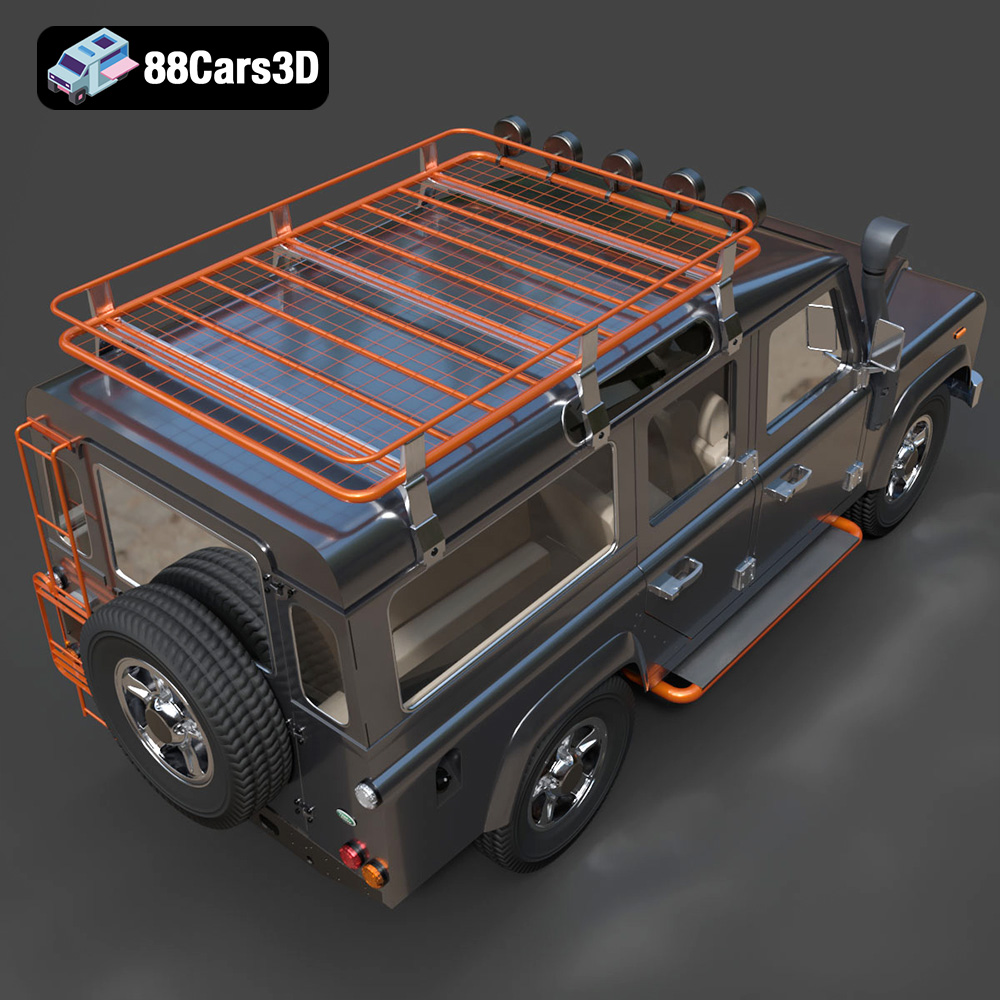
In the competitive world of automotive marketing, compelling visuals are key. The Land Rover Defender 110 3D Model offers an unparalleled asset for creating advertising visuals, digital brochures, and online configurators. Artists can easily change the body color, add roof racks, snorkels, or other off-road accessories, and modify wheel and tire configurations to showcase different trim levels or customization options. This flexibility allows brands and designers to rapidly iterate on ideas and present a diverse range of concepts without the need for physical prototypes, saving significant time and resources.
Beyond static images, the model’s animation-ready structure facilitates the creation of engaging video content, from product walkarounds to thrilling expedition scenarios, perfect for social media campaigns or high-definition commercials. The precision of the 3D model ensures that the vehicle’s unique character and appeal are communicated effectively to the target audience.
The realism of a render heavily relies on its materials and textures. A well-constructed 3D car model, like the Land Rover Defender 110, provides a solid foundation for applying advanced shading and texturing techniques. This could involve creating intricate PBR (Physically Based Rendering) materials that accurately simulate metallic paint, matte plastic trim, rubber tires, and glass. High-resolution texture maps for diffuse color, roughness, normal, and metallic values can be painted in software like Substance Painter, then seamlessly integrated into rendering packages. This allows for highly detailed surfaces, showing subtle wear and tear, mud splatters, or polished reflections, pushing the realism to cinematic levels.
For game developers, performance and visual quality must coexist. High-quality 3D car models are essential for immersive game worlds, but they must also be optimized for real-time rendering. The Land Rover Defender 110 3D Model is designed with this balance in mind, making it an excellent game asset.
The inclusion of the .fbx and .unreal formats makes the Land Rover Defender 110 3D Model incredibly suitable for Unreal Engine workflows. Developers can import the .fbx directly, leveraging its material and skeletal data. For maximum efficiency, the .unreal asset, when provided, often comes pre-configured with optimized materials, collision meshes, and even blueprints for interactive vehicle controls. This significantly reduces setup time, allowing developers to focus on gameplay and scene building. The model’s clean topology and optimized polygon flow are crucial for maintaining high frame rates in open-world environments, where many assets are rendered simultaneously.
In real-time environments, managing poly count is paramount. While the Land Rover Defender 110 model offers high detail, professional game development often requires multiple Levels of Detail (LODs). This involves creating lower-polygon versions of the model that automatically switch in as the player moves further away, maintaining visual quality while drastically reducing GPU load. A high-quality base model, such as this Defender, provides an excellent starting point for generating these LODs efficiently.
Beyond visual meshes, accurate collision meshes are vital for realistic physics and player interaction. The Defender 110’s solid geometry allows for straightforward creation of these simplified collision models. Proper UV mapping is also critical for texture atlasing and efficient material drawing, ensuring that the detailed textures load and render quickly without performance bottlenecks.
The Land Rover Defender 110 3D Model comes with separate wheels and steering components, along with proper pivot setups, making it primed for animation and rigging. In game engines, this means developers can easily set up vehicle physics, wheel rotation, steering animations, and even suspension articulation. Combined with realistic sound effects and particle systems (like dust kicked up by tires or exhaust fumes), the Defender can become a fully interactive and immersive element within a game world, providing players with a tangible and responsive driving experience. Whether it’s navigating treacherous terrains in an off-road simulator or serving as a key vehicle in an adventure game, the model’s structure facilitates robust interactivity.
The evolution of 3D printing has bridged the gap between digital creation and physical manifestation. The Land Rover Defender 110 3D Model, with its .stl format, offers an exciting opportunity for creators to bring this iconic vehicle into the real world as a tangible collectible or functional prototype.
The .stl format is specifically designed for 3D printing, representing the model as a series of triangles. For the Land Rover Defender 110, this means the digital mesh has been prepared to be “manifold” or watertight, which is crucial for slicer software to correctly interpret the geometry for printing. Depending on the desired scale and level of detail, users can opt for FDM (Fused Deposition Modeling) or resin (SLA/DLP) printing. FDM printers are excellent for larger, more robust prints at scales like 1:18 or 1:10, while resin printers excel at capturing the finer details, making them ideal for smaller scales such as 1:32 or 1:24, where features like door hinges, mirror stalks, and the intricate grille benefit from the higher resolution.
The provided print settings (layer height, wall thickness, infill) offer a strong starting point, guiding users to achieve optimal results and structural integrity for their physical Defender model.
Achieving a high-quality 3D print requires careful consideration of scale, support structures, and post-processing. The Land Rover Defender 110 model is recommended for scales like 1:32, 1:24, 1:18, and 1:10, each offering a different balance of detail and printability. For elements with overhangs, such as side mirrors, roof racks, and the rear-mounted spare wheel, supports are essential to prevent printing failures. The suggested print orientation—body printed angled or upright for surface detail, wheels separately—is a common technique to minimize visible layer lines and maximize detail on critical surfaces.
Post-processing is where the model truly comes to life. Sanding, priming, and painting (perhaps in classic Land Rover green, sand, or a custom tone) can transform a raw print into a museum-quality collectible. Adding optional weathering effects can further enhance its rugged character, creating a realistic miniature expedition vehicle that tells its own story.
Beyond collectibles, 3D printing the Land Rover Defender 110 3D Model also opens doors for prototyping and custom modifications. Engineers or designers might print specific components to test fitment, or hobbyists could design and print custom accessories (like a unique roof rack or specialized lighting rigs) before integrating them digitally. This iterative process, facilitated by the precision of the .stl format, democratizes rapid prototyping and allows for unparalleled customization, fostering a deeper connection between the digital asset and its physical realization.
The utility of a high-quality 3D car model extends far beyond traditional rendering and game development. The Land Rover Defender 110 is a prime example of an asset that can drive innovation in immersive technologies and specialized simulations.
With its .glb format and general optimization for real-time engines, the Land Rover Defender 110 3D Model is perfectly suited for augmented reality (AR) and virtual reality (VR) applications. Imagine placing a lifelike Defender 110 in your driveway using an AR app, allowing you to walk around it, change its color, and even peek inside, all before it exists physically. In VR, users could embark on virtual expeditions, driving the Defender through simulated terrains, experiencing the vehicle from a first-person perspective in a truly immersive way. These applications are transformative for vehicle showrooms, educational tools, and interactive entertainment, offering unparalleled engagement.
The detailed and accurate nature of the Defender 110 model makes it an invaluable asset for simulation and training. From military and emergency services training to civilian off-road driving schools, digital simulations provide a safe and cost-effective way to practice complex maneuvers and familiarize personnel with vehicle dynamics. The model’s accurate proportions and separate, animatable components (wheels, steering) are crucial for creating realistic driving physics. This allows for the development of sophisticated terrain-driving simulations, utility vehicle modeling for logistics planning, or even virtual repair and maintenance training, enhancing operational readiness and skill development.
One of the significant advantages of working with a professional-grade 3D car model is the extensive customization potential. The Land Rover Defender 110 3D Model, as offered by 88cars3d.com, explicitly lists various customization options. Users can change the body color to classic green, sand, black, or custom tones, allowing for historical accuracy or personalized aesthetics. The ability to add roof racks, snorkels, or off-road accessories means the model can be configured for specific expedition scenarios or military operations. Modifying wheel and tire configurations, applying expedition decals, or military markings further enhances its adaptability. Even adjusting lighting for desert, forest, or mountain scenes transforms the mood and narrative, giving artists limitless creative freedom to tell their unique stories with this iconic vehicle.
The Land Rover Defender 110 is more than just a vehicle; it’s a symbol of adventure and resilience. Its digital counterpart, the Land Rover Defender 110 3D Model available at 88cars3d.com, is an equally impressive feat of technical artistry. From its meticulous exterior and interior detailing to its clean topology and real-world scale, this asset is engineered for professional demands across a spectrum of industries.
We’ve explored how its comprehensive array of file formats—from .blend and .max for comprehensive editing, to .fbx and .unreal for game development, .glb for AR/VR, and .stl for 3D printing—ensures unparalleled versatility. Whether you’re crafting photorealistic automotive renders with advanced shading in 3ds Max, optimizing performance for an immersive game in Unreal Engine, or bringing a physical miniature to life through 3D printing, this model provides a robust and reliable foundation.
For designers, artists, developers, and enthusiasts seeking a high-quality, technically sound 3D car model that embodies the spirit of an icon, the Land Rover Defender 110 from 88cars3d.com represents an indispensable resource. It’s not just a model; it’s a gateway to new creative possibilities, allowing you to tell compelling visual stories and build immersive experiences that resonate with audiences worldwide.
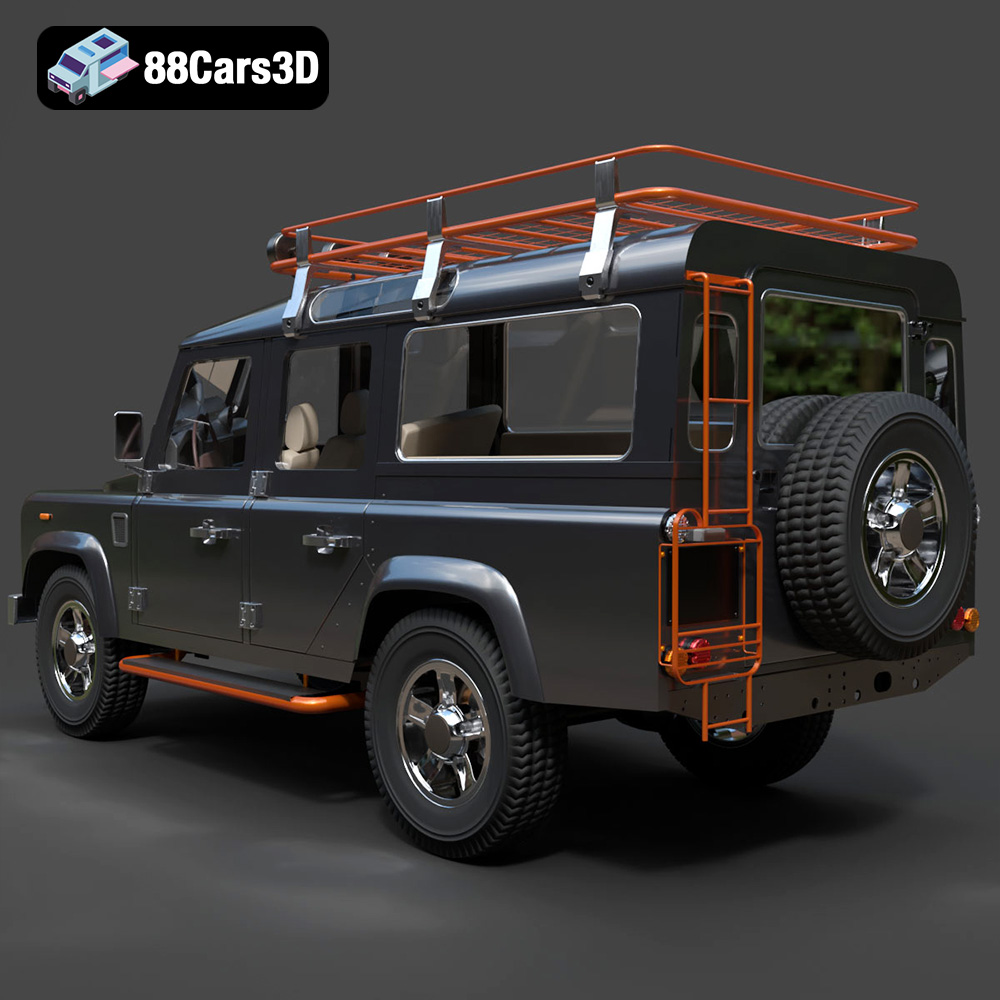
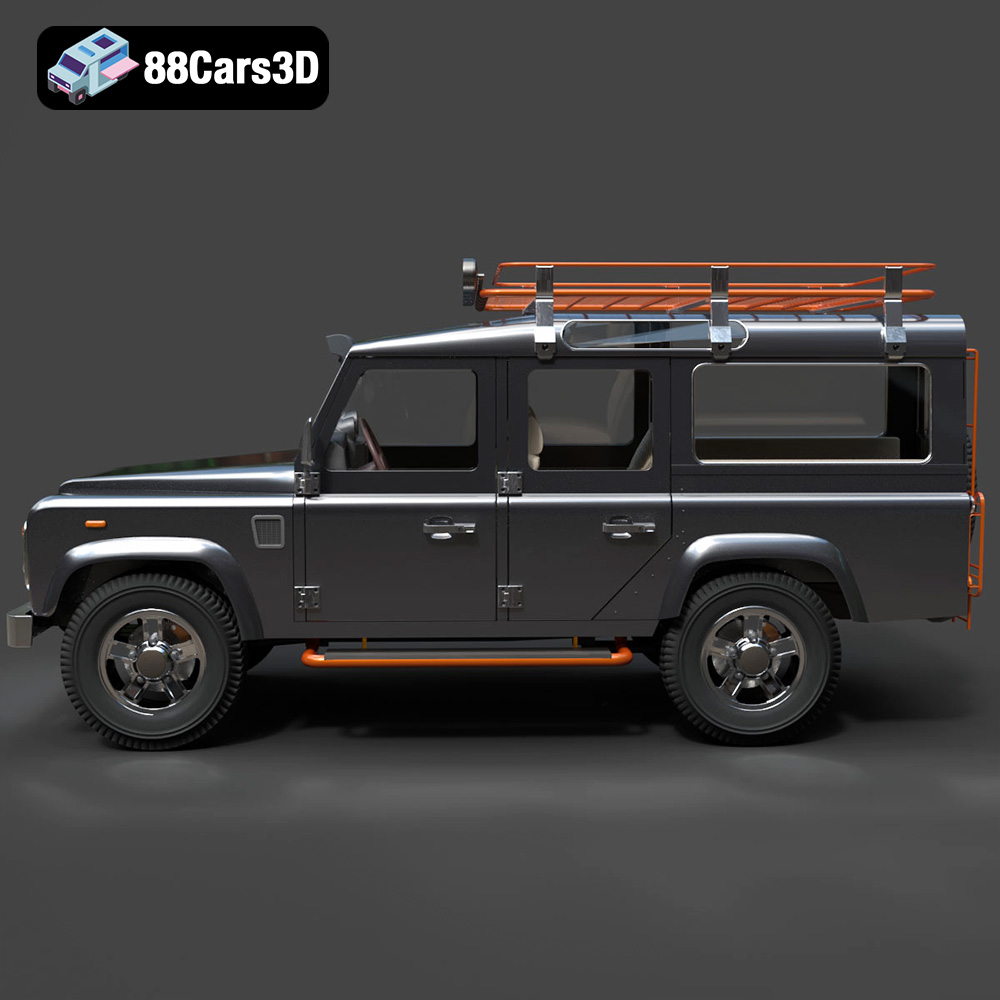
The Land Rover Defender 110 3D Model is a high-detail digital recreation of the legendary long-wheelbase off-road SUV known for its rugged durability, utilitarian design, and global expedition heritage. Built to conquer extreme terrains, the Defender 110 has become an icon of adventure, military service, agriculture, and exploration worldwide. This 3D model accurately captures the boxy body structure, flat hood design, signature front grille, round headlamps, reinforced bumpers, extended wheelbase proportions, roof configuration, exposed hinges, and rear-mounted spare wheel. Designed with clean topology and real-world scale accuracy, it is ideal for rendering, animation, simulation, game development, and AR/VR environments. Perfect for off-road trails, safari landscapes, military scenes, rural environments, expedition visuals, and cinematic productions.
$29.99
.4×4
.arvr
.automotive
.blend
.car3dmodel
.defender110
.expeditionvehicle
.fbx
.gameasset
.glb
.landrover
.max
.obj
.offroadvehicle
.ply
.rendering
.simulation
.stl
.unreal
.utilityvehicle
SUV